
Struts 2常用的Ajax标签
<!-- 引入Ajax标签 -->

<%@ taglib uri="/struts-dojo-tags" prefix="sx"%>
    <head>

        <!-- 在JSP页面中加入head标签

            负责在页面上导入Dojo所需要的CSS库和JavaScript库 -->

        <sx:head />

    </head>
|
方法名
|
说 明
|
|
<sx:div>
|
创建一个div区域,可以通过Ajax向其中加载内容,以实现局部刷新
|
|
<sx:submit>
|
通过Ajax来更新某个元素的内容或提交表单
|
|
<sx:a>
|
通过Ajax来更新某个元素的内容或提交表单
|
|
<sx:tabbedPanel>
|
创建一个标签面板,由<s:div>来提供内容。
|
|
<sx:autocompleter>
|
根据用户输入提供输入建议,或者帮助用户自动完成输入
|
|
<sx:tree>
|
创建一个支持Ajax的树形组件(Widget)
|
div标签例子
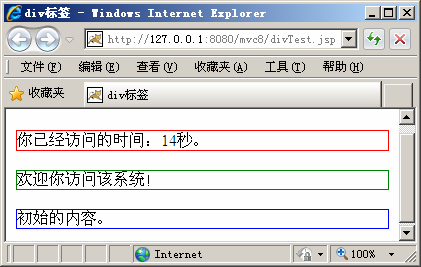
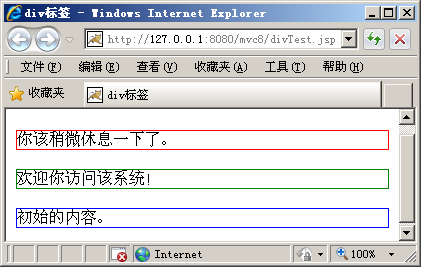
实现代码:
<%@ page language="java" import="java.util.*" pageEncoding="UTF-8"%>

<!-- 引入struts2的标签库 -->

<%@ taglib uri="/struts-tags" prefix="s"%>

<!-- 引入Ajax标签 -->

<%@ taglib uri="/struts-dojo-tags" prefix="sx"%>

<%

    String path = request.getContextPath();

    String basePath = request.getScheme() + "://"

            + request.getServerName() + ":" + request.getServerPort()

            + path + "/";

%>

<!DOCTYPE HTML PUBLIC "-//W3C//DTD HTML 4.01 Transitional//EN">

<html>

    <head>

        <base href="<%=basePath%>">

        <title>My JSP 'ajaxTime.jsp' starting page</title>

        <meta http-equiv="pragma" content="no-cache">

        <meta http-equiv="cache-control" content="no-cache">

        <meta http-equiv="expires" content="0">

        <meta http-equiv="keywords" content="keyword1,keyword2,keyword3">

        <meta http-equiv="description" content="This is my page">

        <!--

    <link rel="stylesheet" type="text/css" href="styles.css">

    -->

        <!-- 在JSP页面中加入head标签

            负责在页面上导入Dojo所需要的CSS库和JavaScript库 -->

        <sx:head />

    </head>

    <body>

        <s:url id="time" value="time.action" />

        <s:url id="welcome" value="welcome.action" />

        <!-- 每隔1秒异步访问一次 -->

        <sx:div href="%{time}" updateFreq="1000" />

        <!-- 只异步访问一次 -->

        <sx:div href="%{welcome}" />

        <!-- 无异步访问-->

        <sx:div>

            初始化的内容!

        </sx:div>

    </body>

</html>
ajaxTime.jsp
<%@ page language="java" import="java.util.*" pageEncoding="UTF-8"%>

<%@ taglib uri="/struts-tags" prefix="s"%>

<%

    String path = request.getContextPath();

    String basePath = request.getScheme() + "://"

            + request.getServerName() + ":" + request.getServerPort()

            + path + "/";

%>

<!DOCTYPE HTML PUBLIC "-//W3C//DTD HTML 4.01 Transitional//EN">

<html>

    <head>

        <base href="<%=basePath%>">

        <title>My JSP 'time.jsp' starting page</title>

        <meta http-equiv="pragma" content="no-cache">

        <meta http-equiv="cache-control" content="no-cache">

        <meta http-equiv="expires" content="0">

        <meta http-equiv="keywords" content="keyword1,keyword2,keyword3">

        <meta http-equiv="description" content="This is my page">

        <!--

    <link rel="stylesheet" type="text/css" href="styles.css">

    -->

    </head>

    <body>

        <%

            //获得当前时间

            long currentTime = System.currentTimeMillis();

            //取出session中存入的现在时间

            Long stratTime = (Long) session.getAttribute("currentTime");

            if (stratTime == null) {

                //第一次访问

                session.setAttribute("currentTime", currentTime);

            } else {

                //以秒计算计算已用时间

                long used = (currentTime - stratTime) / 1000;

                session.setAttribute("used", used);

                //当用户浏览网页时间超过60秒则提示用户休息一下。

                boolean flag = false;

                if (used > 60) {

                    flag = true;

                }

                session.setAttribute("flag", flag);

            }

        %>

        <s:if test="#session.flag==true">

         你该稍微休息一下了。

         </s:if>

        <s:else>

         你已经访问的时间:<s:property value="#session.used" default="0" />秒

         </s:else>

    </body>

</html>
time.jsp
<?xml version="1.0" encoding="UTF-8"?>

<!DOCTYPE struts PUBLIC "-//Apache Software Foundation//DTD Struts Configuration 2.1//EN" "struts-2.1.dtd" >

<struts>

    <package name="struts2" extends="struts-default" namespace="/" >

        <action name="time">

            <!-- name属性不写默认success -->

            <result>/time.jsp</result>

        </action>

        <action name="welcome">

            <result>/welcome.jsp</result>

        </action>

    </package>

</struts>
struts.xml
<%@ page language="java" import="java.util.*" pageEncoding="UTF-8"%>

<%

String path = request.getContextPath();

String basePath = request.getScheme()+"://"+request.getServerName()+":"+request.getServerPort()+path+"/";

%>

<!DOCTYPE HTML PUBLIC "-//W3C//DTD HTML 4.01 Transitional//EN">

<html>

  <head>

    <base href="<%=basePath%>">

    <title>My JSP 'welcome.jsp' starting page</title>

    <meta http-equiv="pragma" content="no-cache">

    <meta http-equiv="cache-control" content="no-cache">

    <meta http-equiv="expires" content="0">

    <meta http-equiv="keywords" content="keyword1,keyword2,keyword3">

    <meta http-equiv="description" content="This is my page">

    <!--

    <link rel="stylesheet" type="text/css" href="styles.css">

    -->

  </head>

  <body>

        欢迎你登录本系统!

  </body>

</html>
welcome.jsp

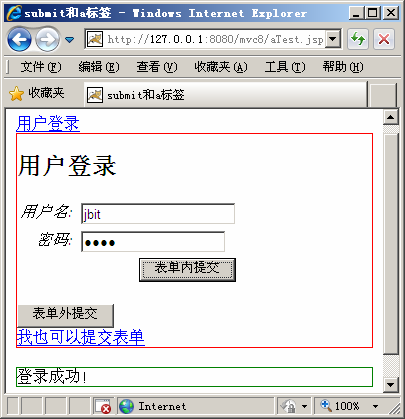
实现代码:
package com.entity;

/**

 * 用户类

 * @author asus

 *

 */

public class Users {

    /** 属性 */

    private String name;

    private String password;

    /** 构造方法 */

    public Users() {

        super();

    }

    public Users(String name, String password) {

        super();

        this.name = name;

        this.password = password;

    }

    /** javaBean */

    public String getName() {

        return name;

    }

    public void setName(String name) {

        this.name = name;

    }

    public String getPassword() {

        return password;

    }

    public void setPassword(String password) {

        this.password = password;

    }

}
Users实体类
<%@ page language="java" import="java.util.*" pageEncoding="UTF-8"%>

<!-- 引入Struts2标签库 -->

<%@ taglib uri="/struts-tags" prefix="s" %>

<!-- 引入Ajax标签库 -->

<%@ taglib uri="/struts-dojo-tags" prefix="sx" %>

<%

String path = request.getContextPath();

String basePath = request.getScheme()+"://"+request.getServerName()+":"+request.getServerPort()+path+"/";

%>

<!DOCTYPE HTML PUBLIC "-//W3C//DTD HTML 4.01 Transitional//EN">

<html>

  <head>

    <base href="<%=basePath%>">

    <title>My JSP 'home.jsp' starting page</title>

    <meta http-equiv="pragma" content="no-cache">

    <meta http-equiv="cache-control" content="no-cache">

    <meta http-equiv="expires" content="0">

    <meta http-equiv="keywords" content="keyword1,keyword2,keyword3">

    <meta http-equiv="description" content="This is my page">

    <!--

    <link rel="stylesheet" type="text/css" href="styles.css">

    -->

<!-- 在JSP页面中加入head标签

            负责在页面上导入Dojo所需要的CSS库和JavaScript库 -->

        <sx:head/>

  </head>

  <body>

          <!-- url标签 用于生成一个URL地址 -->

          <s:url id="login" value="tologin.action" />

          <!-- 单击超链接异步访问指定Action -->

        <sx:a href="%{login}" targets="div1" >登录</sx:a>

        <sx:div id="div1" cssStyle="border:1px solid red;" >

            第一个sx:div显示登录

        </sx:div><br>

        <sx:div id="div2" cssStyle="border:1px solid green" >

            第二个DIV,显示登录结果。

        </sx:div>

  </body>

</html>
home.jsp 主页面
<%@ page language="java" import="java.util.*" pageEncoding="UTF-8"%>

<!-- 引入struts2的标签库 -->

<%@ taglib uri="/struts-tags" prefix="s"%>

<!-- 引入Ajax标签 -->

<%@ taglib uri="/struts-dojo-tags" prefix="sx"%>

<%

    String path = request.getContextPath();

    String basePath = request.getScheme() + "://"

            + request.getServerName() + ":" + request.getServerPort()

            + path + "/";

%>

<!DOCTYPE HTML PUBLIC "-//W3C//DTD HTML 4.01 Transitional//EN">

<html>

    <head>

        <base href="<%=basePath%>">

        <title>My JSP 'ajaxTime.jsp' starting page</title>

        <meta http-equiv="pragma" content="no-cache">

        <meta http-equiv="cache-control" content="no-cache">

        <meta http-equiv="expires" content="0">

        <meta http-equiv="keywords" content="keyword1,keyword2,keyword3">

        <meta http-equiv="description" content="This is my page">

        <!--

    <link rel="stylesheet" type="text/css" href="styles.css">

    -->

        <!-- 在JSP页面中加入head标签

            负责在页面上导入Dojo所需要的CSS库和JavaScript库 -->

        <sx:head />

    </head>

    <body>

        <h2>用户登录</h2>

        <!-- Struts2 表单标签 -->

        <s:form id="s_form" action="login.action" method="post" theme="simple">

            <br>

                   用户名: <s:textfield label="用户名" name="user.name" />

            <br>

                   密码:     <s:textfield label="密码" name="user.password" />

            <br>

                <!-- 表单内异步提交表单  -->

                <sx:submit type="button" value="表单内异步提交按钮" targets="div2" />

        </s:form>

            <!-- 表单外异步提交 -->

            <sx:submit type="button" value="表单外异步提交按钮" formId="s_form" targets="div2"/>

            <sx:a formId="s_form" targets="div2" >我也可以提交表单</sx:a>

    </body>

</html>
login.jsp 嵌入登陆页面
<?xml version="1.0" encoding="UTF-8"?>

<!DOCTYPE struts PUBLIC "-//Apache Software Foundation//DTD Struts Configuration 2.1//EN" "struts-2.1.dtd" >

<struts>

    <package name="struts2" extends="struts-default" namespace="/" >

        <!-- 单击“用户登录”超链接显示登录菜单 -->

        <action name="tologin" >

            <result >/login.jsp</result>

        </action>

        <!-- 单击表单提交按钮显示登录结果 -->

        <action name="login" class="com.struts.LoginAction" method="login" >

            <result>/success.jsp</result>

            <result name="error">/error.jsp</result>

        </action>

    </package>

</struts>
struts.xml 配置
package com.struts;

import com.entity.Users;

import com.opensymphony.xwork2.ActionSupport;

/**

 * 控制器类

 * 作用:处理登录的请求

 * @author asus

 *

 */

public class LoginAction extends ActionSupport {

    /** 属性 */

    private Users user;

    /** 重写execute方法 :此方法作用,为指定处理请求的方法时,默认走此方法*/

    public String execute(){

        return "";

    }

    /** 登录验证的方法 */

    public String login(){

        if(user!=null){

            if(user.getName().equals("admin") && user.getPassword().equals("admin")){

                return SUCCESS;

            }

        }

        return ERROR;

    }

    /** JavaBean */

    public Users getUser() {

        return user;

    }

    public void setUser(Users user) {

        this.user = user;

    }

}
LoginAction 控制器
<%@ page language="java" import="java.util.*" pageEncoding="UTF-8"%>

<%

String path = request.getContextPath();

String basePath = request.getScheme()+"://"+request.getServerName()+":"+request.getServerPort()+path+"/";

%>

<!DOCTYPE HTML PUBLIC "-//W3C//DTD HTML 4.01 Transitional//EN">

<html>

  <head>

    <base href="<%=basePath%>">

    <title>My JSP 'success.jsp' starting page</title>

    <meta http-equiv="pragma" content="no-cache">

    <meta http-equiv="cache-control" content="no-cache">

    <meta http-equiv="expires" content="0">

    <meta http-equiv="keywords" content="keyword1,keyword2,keyword3">

    <meta http-equiv="description" content="This is my page">

    <!--

    <link rel="stylesheet" type="text/css" href="styles.css">

    -->

  </head>

  <body>

        登录成功!

  </body>

</html>
success.jsp 登录成功页面
<%@ page language="java" import="java.util.*" pageEncoding="UTF-8"%>

<%

String path = request.getContextPath();

String basePath = request.getScheme()+"://"+request.getServerName()+":"+request.getServerPort()+path+"/";

%>

<!DOCTYPE HTML PUBLIC "-//W3C//DTD HTML 4.01 Transitional//EN">

<html>

  <head>

    <base href="<%=basePath%>">

    <title>My JSP 'file.jsp' starting page</title>

    <meta http-equiv="pragma" content="no-cache">

    <meta http-equiv="cache-control" content="no-cache">

    <meta http-equiv="expires" content="0">

    <meta http-equiv="keywords" content="keyword1,keyword2,keyword3">

    <meta http-equiv="description" content="This is my page">

    <!--

    <link rel="stylesheet" type="text/css" href="styles.css">

    -->

  </head>

  <body>

        登陆失败!

  </body>

</html>
error.jsp 登录失败页面
Struts 2常用的Ajax标签的更多相关文章
- struts2视频学习笔记 29-30(Struts 2常用标签,防止表单重复提交)
课时28 Struts 2常用标签解说 property标签 property标签用于输出指定值: <s:set name="name" value="'kk'&q ...
- Struts 2 常用技术
目录 Struts 2 常用技术 1. 常用类和接口 1.1 getter 和 setter 方法 1.2 Action 接口 1.3 ActionSupport 类 1.4 通过 Act ...
- JSF中使用f:ajax标签无刷新页面改变数据
ajax本是用在前端的一种异步请求数据的操作,广泛用于js中,一般的js框架如jq都有被封装好的方法,用于发起异步请求操作.异步操作可以增强用户体验和操作,越来越多的程序都在使用ajax.JSF的fa ...
- struts2与常用表格ajax操作的json传值问题
struts与常用的dataTables和jqueryGrid等表格进行ajax传值时,经常会传值不适配的问题,这是因为struts在进行ajax操作时已经对你要操作的json数据进行了处理,所以不需 ...
- HTML之:fieldset——一个不常用的HTML标签
2016年4月14日17:10:02记录 一个不常用的HTML标签fieldset,不过我觉得比较有意思,其语法如下: <fieldset><legend>fieldset名称 ...
- JSP 标准标签库(JSTL)之最常用的JSTL标签总结
JSP标准标签库(JSTL)是一个JSP标签集合,它封装了JSP应用的通用核心功能. Apache Tomcat安装JSTL 库步骤如下: 从Apache的标准标签库中下载的二进包(jakarta-t ...
- 常用HTML meta 标签属性(网站兼容与优化需要),meta标签
常用HTML meta 标签属性(网站兼容与优化需要),meta标签 标签提供关于HTML文档的元数据.元数据不会显示在页面上,但是对于机器是可读的.它可用于浏览器(如何显示内容或重新加载页面),搜索 ...
- Struts 有哪些经常使用标签库
Struts 有哪些经常使用标签库 1.html标签库 2.bean标签库 3.logic标签库
- Django常用的模板标签
django 目前了解的各个文件的作用: manage.py: 运行服务 urls: 路由 views: 处理数据 传递给 html模板 html文件: 通过 {{变量名}}接收变量 通过 模板标 ...
随机推荐
- 第50讲:Scala中Variance变化点
王家林亲授<DT大数据梦工厂>大数据实战视频 Scala 深入浅出实战经典(1-64讲)完整视频.PPT.代码下载:百度云盘:http://pan.baidu.com/s/1c0noOt6 ...
- 【转】重新封装FetchUrl函数一枚,支持COOKIES,喜欢领走~!
mjj520 发表于 2012-6-2 09:14 唉 cpu超级耗芸豆的 查了下开发文档,fetchurl原来是不算CPU的,是我误导了大家. 发表于 2012-6-1 17:30:17 |只看该 ...
- 如何启动ResourceManager和NodeManager
登录到bigtop1上,vagrant ssh bigtop1 将/usr/lib/hadoop/libexec/init-hdfs.sh文件内容替换为: #!/bin/bash -ex # # Li ...
- Myeclipse 2015 stable 1.0 完美破解方法(转自 http://yangl.net/2015/07/14/myeclipse_2015stable_1/)
Myeclipse 2015 stable 1.0 完美破解方法 http://yangl.net/2015/07/14/myeclipse_2015stable_1/ 破解包(注册机)下载地址:链接 ...
- [GraphQL] Use Arguments in a GraphQL Query
In GraphQL, every field and nested object is able to take in arguments of varying types in order to ...
- 仿iReader切换皮肤进度条
仿iReader切换皮肤进度条 标签(空格分隔): 自定义View [TOC] 本以为使用paint.setXfermode(new PorterDuffXfermode(Mode.XOR));可以轻 ...
- Rxlifecycle(三):坑
坑1 Observable.just("hello world!") .compose(this.<String>bindUntilEvent(ActivityEven ...
- GET到新技能,SharpCEF,C#和JS的互相调用
winform程序内嵌谷歌浏览器,使用大名鼎鼎的“SharpCEF”.这里科普一下: CEF是什么 CEF是Chromium Embedded Framework的缩写,是个基于Google Chro ...
- CentOS 6上安装xfce桌面环境
[日期:2012-01-30] 在新的CentOS 6上默认没有包含xfce的桌面环境,使用yum也找不到这些包,但是自己又喜欢这种简单的桌面环境,此时可以使用下面的方法来安装 [plain] $ ...
- C#多线程管理代码
/// <summary> /// 多线程执行 /// </summary> public class MultiThreadingWorker { /// <summa ...