
Java IO (3) - Reader
Java IO (3) - Reader
前言
JavaIO一共包括两种,一种是stream,一种是reader/writer,每种又包括in/out,所以一共是四种包。Java 流在处理上分为字符流和字节流。字符流处理的单元为 2 个字节的 Unicode 字符,分别操作字符、字符数组或字符串,而字节流处理单元为 1 个字节,操作字节和字节数组。
Java 内用 Unicode 编码存储字符,字符流处理类负责将外部的其他编码的字符流和 java 内 Unicode 字符流之间的转换。而类 InputStreamReader 和 OutputStreamWriter 处理字符流和字节流的转换。字符流(一次可以处理一个缓冲区)一次操作比字节流(一次一个字节)效率高。
0. 目录
- Reader
- BufferedReader
- InputStreamReader
- FileReader
- 总结
1. Reader
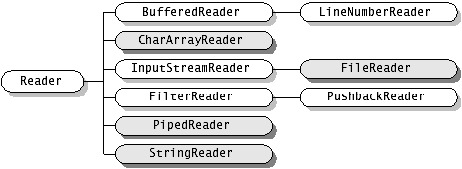
Reader是一个抽象类,其介绍如下:
Abstract class for reading character streams. The only methods that a subclass must implement are read(char[], int, int) and close(). Most subclasses, however, will override some of the methods defined here in order to provide higher efficiency, additional functionality, or both.
1.1 主要方法
abstract void	close()

Closes the stream and releases any system resources associated with it.

void	mark(int readAheadLimit)

Marks the present position in the stream.

boolean	markSupported()

Tells whether this stream supports the mark() operation.

int	read()

Reads a single character.

int	read(char[] cbuf)

Reads characters into an array.

abstract int	read(char[] cbuf, int off, int len)

Reads characters into a portion of an array.

int	read(CharBuffer target)

Attempts to read characters into the specified character buffer.

boolean	ready()

Tells whether this stream is ready to be read.

void	reset()

Resets the stream.

long	skip(long n)

Skips characters.
注意,不同于stream的是reader读的是char[]。
其常见的子类包括BufferedReader和InputStreamReader,InputStreamReader的子类FileReader也很常见,下面简单介绍一下。
2. BufferedReader
BufferedReader继承Reader,本身的方法非常简单,其官方解释如下:
Reads text from a character-input stream, buffering characters so as to provide for the efficient reading of characters, arrays, and lines.
The buffer size may be specified, or the default size may be used. The default is large enough for most purposes.
简单翻译一下:
从流里面读取文本,通过缓存的方式提高效率,读取的内容包括字符、数组和行。
缓存的大小可以指定,也可以用默认的大小。大部分情况下,默认大小就够了。
2.1. 构造函数
BufferedReader有两个构造函数,其声明如下:
BufferedReader(Reader in)

Creates a buffering character-input stream that uses a default-sized input buffer.

BufferedReader(Reader in, int sz)

Creates a buffering character-input stream that uses an input buffer

 of the specified size.
一个是传一个Reader,另外一个增加了缓存的大小。
常见的初始化方法
BufferedReader br = new BufferedReader(new FileReader("d:/123.txt"));

BufferedReader br = new BufferedReader(new InputStreamReader(System.in));
第一个方法是读取一个文件;第二个方法是从标准输入读。
2.2. 主要方法
void	close()

Closes the stream and releases any system resources associated with it.

void	mark(int readAheadLimit)

Marks the present position in the stream.

boolean	markSupported()

Tells whether this stream supports the mark() operation, which it does.

int	read()

Reads a single character.

int	read(char[] cbuf, int off, int len)

Reads characters into a portion of an array.

String	readLine()

Reads a line of text.

boolean	ready()

Tells whether this stream is ready to be read.

void	reset()

Resets the stream to the most recent mark.

long	skip(long n)

Skips characters.
提供了三种读数据的方法read、read(char[] cbuf, int off, int len)、readLine(),其中常用的是readLine。
3. InputStreamReader
InputStreamReader的介绍如下:
An InputStreamReader is a bridge from byte streams to character streams: It reads bytes and decodes them into characters using a specified charset. The charset that it uses may be specified by name or may be given explicitly, or the platform's default charset may be accepted.
Each invocation of one of an InputStreamReader's read() methods may cause one or more bytes to be read from the underlying byte-input stream. To enable the efficient conversion of bytes to characters, more bytes may be read ahead from the underlying stream than are necessary to satisfy the current read operation.
For top efficiency, consider wrapping an InputStreamReader within a BufferedReader. For example:
 BufferedReader in

   = new BufferedReader(new InputStreamReader(System.in));
也就是说,InputStreamReader是把字节翻译成字符的。
3.1构造函数
InputStreamReader(InputStream in)

Creates an InputStreamReader that uses the default charset.

InputStreamReader(InputStream in, Charset cs)

Creates an InputStreamReader that uses the given charset.

InputStreamReader(InputStream in, CharsetDecoder dec)

Creates an InputStreamReader that uses the given charset decoder.

InputStreamReader(InputStream in, String charsetName)

Creates an InputStreamReader that uses the named charset.
可以看到,InputStreamReader的构造函数会传入一个字符编码,通常用InputStreamReader来解决乱码问题。
3.2. 主要方法
void	close()

Closes the stream and releases any system resources associated with it.

String	getEncoding()

Returns the name of the character encoding being used by this stream.

int	read()

Reads a single character.

int	read(char[] cbuf, int offset, int length)

Reads characters into a portion of an array.

boolean	ready()

Tells whether this stream is ready to be read.
3.3. 示例代码
经常用InputStreamReader解决乱码问题,示例代码如下:
	private void test() throws Throwable {

		BufferedReader in = null;

		try {

			InputStreamReader isr = new InputStreamReader(new FileInputStream(

					"d:/123.txt"), "UTF-8");

			in = new BufferedReader(isr);

			while (true) {

				String lineMsg = in.readLine();

				if (lineMsg == null || lineMsg.equals("")) {

					break;

				}

			}

		} catch (Throwable t) {

			throw t;

		} finally {

			try {

				if (in != null) {

					in.close();

				}

			} catch (Throwable t) {

				throw t;

			}

		}

	}
编码集见本文末尾。
4. FileReader
其介绍如下:
Convenience class for reading character files. The constructors of this class assume that the default character encoding and the default byte-buffer size are appropriate. To specify these values yourself, construct an InputStreamReader on a FileInputStream.
FileReader is meant for reading streams of characters. For reading streams of raw bytes, consider using a FileInputStream.
FileReader是方便读取字符文件的。
4.1. 构造函数
FileReader(File file)

Creates a new FileReader, given the File to read from.

FileReader(FileDescriptor fd)

Creates a new FileReader, given the FileDescriptor to read from.

FileReader(String fileName)

Creates a new FileReader, given the name of the file to read from.
可以看到,FileReader的构造函数主要是读取文件。
5. 总结一下:
1. BufferedReader可以更高效的读取文件
2. InputStreamReader可以处理乱码问题
3. FileReader可以直接读取文件,方便
4. 常见编码
- 7位ASCII字符,也叫作ISO646-US、Unicode字符集的基本拉丁块
"US-ASCII" - *ISO 拉丁字母表 No.1,也叫作 ISO-LATIN-1 *
"ISO-8859-1" - *8 位 UCS 转换格式 *
"UTF-8" - *16 位 UCS 转换格式,Big Endian(最低地址存放高位字节)字节顺序 *
"UTF-16BE" - *16 位 UCS 转换格式,Little-endian(最高地址存放低位字节)字节顺序 *
"UTF-16LE" - *16 位 UCS 转换格式,字节顺序由可选的字节顺序标记来标识 *
"UTF-16" - *中文超大字符集 *
"GBK"
Java IO (3) - Reader的更多相关文章
- Java IO: Reader And Writer
原文链接 作者: Jakob Jenkov 译者: 李璟(jlee381344197@gmail.com) Java IO的Reader和Writer除了基于字符之外,其他方面都与InputStre ...
- Java IO 之 InputStream源码
Writer :BYSocket(泥沙砖瓦浆木匠) 微 博:BYSocket 豆 瓣:BYSocket FaceBook:BYSocket Twitter ...
- Java基础17:Java IO流总结
更多内容请关注微信公众号[Java技术江湖] 这是一位阿里 Java 工程师的技术小站,作者黄小斜,专注 Java 相关技术:SSM.SpringBoot.MySQL.分布式.中间件.集群.Linux ...
- Java io概述
内容来源:http://ifeve.com/java-io/ Java IO 概述 输入流可以理解为向内存输入,输出流可以理解为从内存输出 Java的IO包主要关注的是从原始数据源的读取以及输出原始数 ...
- Java:IO流之字符流Reader、Writer详解
java.io包中:字符流 字符流的两个抽象基类: Reader Writer 文件的读取:Reader抽象类(java.io包中) 直接子类的构造方法: FileRead ...
- java IO文件读写例子(OutputStream,InputStream,Writer,Reader)
一,File创建文件 File file = new File("D:" + File.separator + "yi.txt"); 代码示例: package ...
- java IO之字节流和字符流-Reader和Writer以及实现文件复制拷贝
接上一篇的字节流,以下主要介绍字符流.字符流和字节流的差别以及文件复制拷贝.在程序中一个字符等于两个字节.而一个汉字占俩个字节(一般有限面试会问:一个char是否能存下一个汉字,答案当然是能了,一个c ...
- 【java】io流之字符输入流:java.io.Reader类及子类的子类java.io.FileReader
package 文件操作; import java.io.File; import java.io.FileReader; import java.io.IOException; import jav ...
- 系统学习 Java IO (十三)----字符读写 Reader/Writer 及其常用子类
目录:系统学习 Java IO---- 目录,概览 Reader Reader 类是 Java IO API 中所有 Reader 子类的基类. Reader 类似于 InputStream ,除了它 ...
随机推荐
- Java中静态代码块,代码块,构造方法优先级、区别及代码示例
在项目中遇到了代码块的知识点,跑了下测试,写下结论 代码优先级:静态代码块 -> 构造代码块 -> 构造方法 多个代码块优先级,按照“先定义的代码先执行,后定义的代码后执行”原则执行 静态 ...
- super.getClass()方法
下面程序的输出结果是多少? importjava.util.Date; public class Test extends Date{ public static void main(String[] ...
- uva1349Optimal Bus Route Design
二分图最小权完美匹配. 一个最小费用流就能跑了,记住检查一下,容量是否跑满,如果没有跑满,就说明没有完美匹配. #include<cstdio> #include<algorithm ...
- 庖丁解牛-----Live555源码彻底解密(RTP解包)
Live555 客户端解包 以testRTSPClient.cpp为例讲解: Medium<-MediaSource<-FramedSource<-RTPSource<-Mul ...
- 【Unity3D】枪战游戏—弹孔设置
以子弹为原点,发射射线,如果射线检测到障碍物,则返回射线与障碍物的碰撞点 在该点处实例化出弹孔贴图 void Update () { transform.Translate (Vector3.forw ...
- RubyWin32Api Win32OLE
#ruby提供了多种运行外部程序的方法 #1.%x %x不需要使用引号包含. #2. system方法 #3.exec类似system但是会中断当前的代码执行 #system和exec不能捕获执行程序 ...
- Nmap / NetCat(nc) / 网络安全工具
nmap - 网络探测工具和安全/端口扫描器 nmap [ <扫描类型> ...] [ <选项> ] { <扫描目标说明> } 描述 Nmap ("Net ...
- wifi详解(三)
1 WLAN驱动结构介绍 1.1 SDIO驱动 在drivers/mmc下面是mmc卡,SD卡和SDIO卡驱动部分,其中包括host驱动,card驱动和core部分,由于网络接 ...
- 【c++内存分布系列】单继承
父类包括成员函数.静态函数.静态方法,子类包括成员函数.静态函数.静态方法的情况与一个类时完全一致,这里就不做分析了.子类单独包含虚函数时继承无关,也不做分析了. 一.父类子类都为空 #include ...
- Oracle 数据乱码
原文 Oracle 数据乱码 服务器配置环境变量 NLS_LANG:American_america.ZHS16GBK