
从源码分析 SpringBoot 的 LoggingSystem → 它是如何绑定日志组件的
开心一刻
今天心情不好,想约哥们喝点
我:心情不好,给你女朋友说一声,来我家,过来喝点
哥们:行!我给她说一声
我:你想吃啥?我点外卖
哥们:你俩定吧,我已经让她过去了
我:???我踏马让你过来!和她说一声
哥们:哈哈哈,我踏马寻思让她过去呢

前情回顾
SpringBoot2.7 霸王硬上弓 Logback1.3 → 不甜但解渴 实现了 spring-boot 2.x.x 与 logback 1.3.x 的集成,分两步
- 关闭 Spring Boot 的 LoggingSystem
- 配置文件用 logback.xml
从示例看,集成是成功的;但有些问题是没有分析的,比如
- System.setProperty("org.springframework.boot.logging.LoggingSystem", "none") 是如何生效的
- Spring Boot 的 LoggingSystem 是如何与日志组件绑定的
- Spring Boot 默认依赖 3 个日志组件:logback、log4j、jul,为什么默认启用的是 logback,而非其它两个?
基于如上 3 个问题,我们一起去翻一翻 Spring Boot 的源码;在看源码之前,我先带大家回顾一些内容,方便下文的源码分析
-
讲了观察者模式的实现,以及在 JDK 中的应用(JDK 事件模型)、Spring 中的应用(事件机制);大家可以重点看下 Spring 的那个案例,使用非常简单,总结一句就是
SpringBoot 启动过程中发送的事件,所有 ApplicationListener 都会收到(即 onApplicationEvent 方法会被调用)
spring-boot-2.0.3启动源码篇一 - SpringApplication构造方法
大家不要通篇去读,重点看
getSpringFactoriesInstances,与本文息息相关的归纳成一句查找类路径下全部的 META-INF/spring.factories 的文件路径,并加载所有 spring.factories 中的内容到 SpringFactoriesLoader 的 cache 中,然后从缓存中获取 ApplicationListener 类型的类并进行实例化
下文是基于 Spring Boot 默认情况下的源码分析,而非集成 logback 1.3.x 的源码分析,大家注意下
集成 logback 1.3.x 需要关闭 Spring Boot 的 LoggingSystem,那还分析个毛
源码分析
问题来了,从哪开始跟?我就不绕圈子了,从 LoggingApplicationListener 开始跟,首先它在 META-INF/spring.factories 中
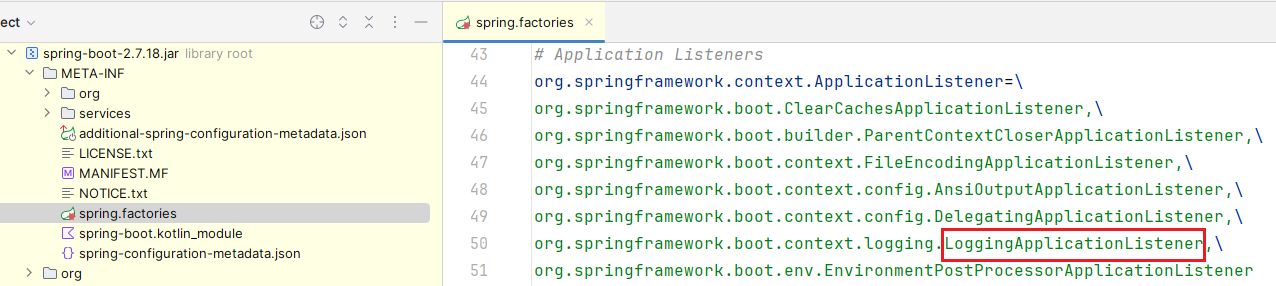
其次它实现了 ApplicationListener
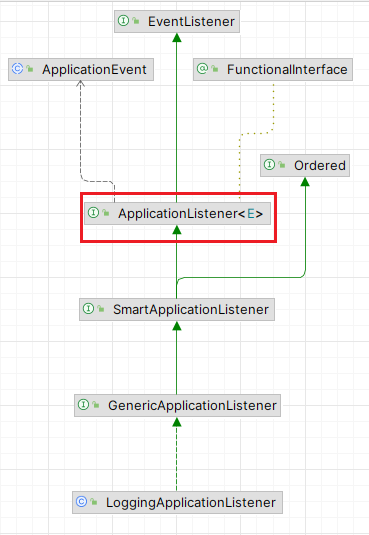
那么 Spring Boot 在启动过程中会实例化 LoggingApplicationListener,Spring Boot 启动过程中发送的事件都会来到 LoggingApplicationListener 的 onApplicationEvent 方法
@Override

public void onApplicationEvent(ApplicationEvent event) {

	if (event instanceof ApplicationStartingEvent) {

		onApplicationStartingEvent((ApplicationStartingEvent) event);

	}

	else if (event instanceof ApplicationEnvironmentPreparedEvent) {

		onApplicationEnvironmentPreparedEvent((ApplicationEnvironmentPreparedEvent) event);

	}

	else if (event instanceof ApplicationPreparedEvent) {

		onApplicationPreparedEvent((ApplicationPreparedEvent) event);

	}

	else if (event instanceof ContextClosedEvent) {

		onContextClosedEvent((ContextClosedEvent) event);

	}

	else if (event instanceof ApplicationFailedEvent) {

		onApplicationFailedEvent();

	}

}
Spring Boot 启动过程分不同的阶段,在每个阶段都会发送对应阶段的事件,LoggingApplicationListener 针对这些事件会有不同的处理,我们暂且只需要关注以下事件
ApplicationStartingEvent,对应的处理方法:onApplicationStartingEvent
ApplicationEnvironmentPreparedEvent,对应的处理方法:onApplicationEnvironmentPreparedEvent
ApplicationPreparedEvent,对应的处理方法:onApplicationPreparedEvent
onApplicationStartingEvent
private void onApplicationStartingEvent(ApplicationStartingEvent event) {

	this.loggingSystem = LoggingSystem.get(event.getSpringApplication().getClassLoader());

	this.loggingSystem.beforeInitialize();

}
方法很简单,获取日志系统,然后调用其 beforeInitialize 方法,我们跟进 LoggingSystem.get
public static LoggingSystem get(ClassLoader classLoader) {

	String loggingSystemClassName = System.getProperty(SYSTEM_PROPERTY);

	if (StringUtils.hasLength(loggingSystemClassName)) {

		if (NONE.equals(loggingSystemClassName)) {

			return new NoOpLoggingSystem();

		}

		return get(classLoader, loggingSystemClassName);

	}

	LoggingSystem loggingSystem = SYSTEM_FACTORY.getLoggingSystem(classLoader);

	Assert.state(loggingSystem != null, "No suitable logging system located");

	return loggingSystem;

}
打个断点调试下,你们就会发现 SYSTEM_PROPERTY 的值是 org.springframework.boot.logging.LoggingSystem
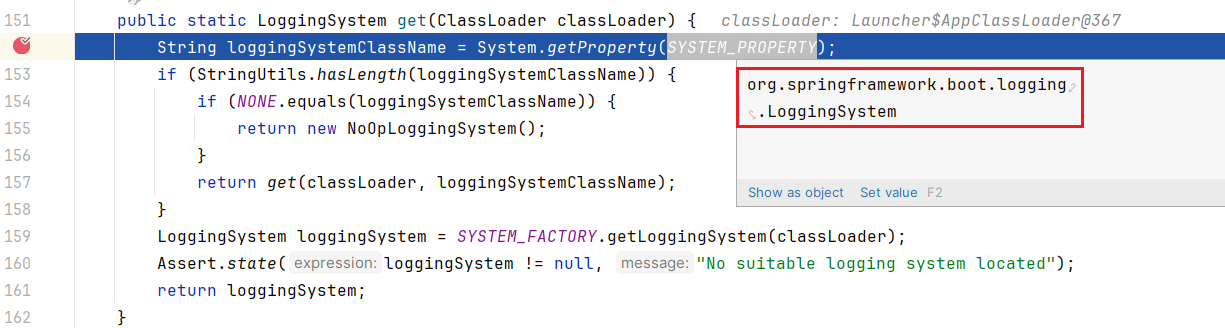
从系统属性中获取 org.springframework.boot.logging.LoggingSystem ,是不是和
System.setProperty("org.springframework.boot.logging.LoggingSystem", "none") 是如何生效的
对应上了?如果获取的值是 none,直接返回 NoOpLoggingSystem 实例
/**

 * {@link LoggingSystem} that does nothing.

 */

static class NoOpLoggingSystem extends LoggingSystem {

	@Override

	public void beforeInitialize() {

	}

	@Override

	public void setLogLevel(String loggerName, LogLevel level) {

	}

	@Override

	public List<LoggerConfiguration> getLoggerConfigurations() {

		return Collections.emptyList();

	}

	@Override

	public LoggerConfiguration getLoggerConfiguration(String loggerName) {

		return null;

	}

}
全是空实现,相当于关闭了 Spring Boot 的 LoggingSystem;org.springframework.boot.logging.LoggingSystem 还可以设置成其他值,但需要有对应的实现。默认情况下 loggingSystemClassName 的值是 null ,会跳过 if 来到 SYSTEM_FACTORY.getLoggingSystem(classLoader);
@Override

public LoggingSystem getLoggingSystem(ClassLoader classLoader) {

	List<LoggingSystemFactory> delegates = (this.delegates != null) ? this.delegates.apply(classLoader) : null;

	if (delegates != null) {

		for (LoggingSystemFactory delegate : delegates) {

			LoggingSystem loggingSystem = delegate.getLoggingSystem(classLoader);

			if (loggingSystem != null) {

				return loggingSystem;

			}

		}

	}

	return null;

}
这里推荐用断点调试去跟源码,按 F7 之后会来到 LoggingSystemFactory#fromSpringFactories
/**

 * Return a {@link LoggingSystemFactory} backed by {@code spring.factories}.

 * @return a {@link LoggingSystemFactory} instance

 */

static LoggingSystemFactory fromSpringFactories() {

	return new DelegatingLoggingSystemFactory(

			(classLoader) -> SpringFactoriesLoader.loadFactories(LoggingSystemFactory.class, classLoader));

}
SpringFactoriesLoader.loadFactories 是不是很眼熟?(不眼熟的去看:spring-boot-2.0.3启动源码篇一 - SpringApplication构造方法)此时它会做三件事
从 SpringFactoriesLoader#cache 中获取 LoggingSystemFactory 类型的工厂类的类名列表
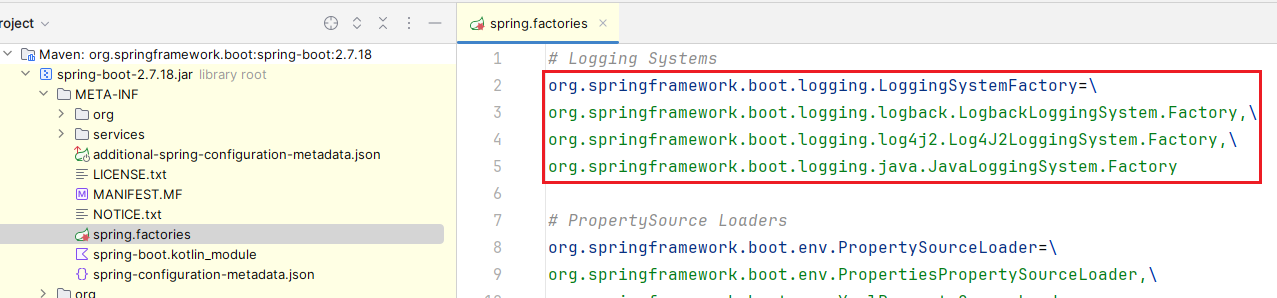
之前已经加载到 SpringFactoriesLoader#cache 中,所以此时从缓存中获取;注意看三个实现类的顺序,
LogbackLoggingSystem.Factory在最前面实例化这些工厂类
对这些工厂类实例按 @Order 升序排序
这三个工厂类的 @Order 值是一样的,都是
@Order(Ordered.LOWEST_PRECEDENCE),所以顺序不变,LogbackLoggingSystem.Factory仍在最前面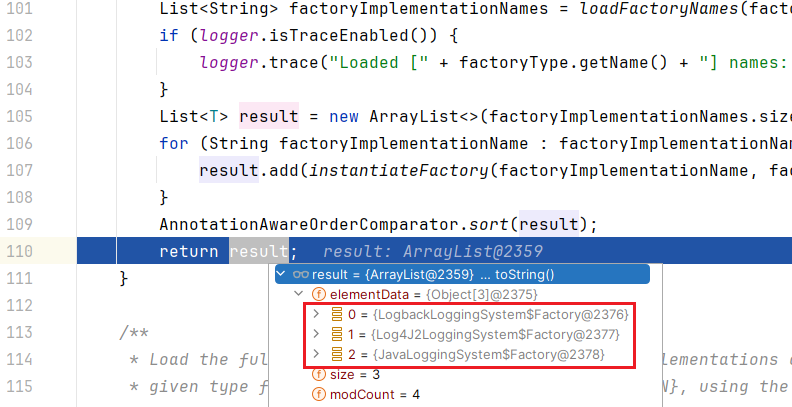
回到 DelegatingLoggingSystemFactory#getLoggingSystem,对这些工厂类实例逐个遍历,得到 LoggingSystem 立即返回,不再遍历后面的工厂实例;第一个遍历的的是 LogbackLoggingSystem.Factory,调用其 getLoggingSystem 方法
private static final boolean PRESENT = ClassUtils.isPresent("ch.qos.logback.classic.LoggerContext",

		Factory.class.getClassLoader());

@Override

public LoggingSystem getLoggingSystem(ClassLoader classLoader) {

	if (PRESENT) {

		return new LogbackLoggingSystem(classLoader);

	}

	return null;

}
ch.qos.logback.classic.LoggerContext 存在(即存在logback依赖),直接创建 LogbackLoggingSystem 实例并返回;至此 Spring Boot 的 LoggingSystem 确定将基于 logback,而非 log4j,也非 jul,问题
Spring Boot 的 LoggingSystem 是如何与日志组件绑定的
Spring Boot 默认依赖 3 个日志组件:logback、log4j、jul,为什么默认启用的是 logback,而非其它两个?
是不是清楚了?LoggingSystem 确定为 LogbackLoggingSystem 后回到 LoggingApplicationListener#onApplicationStartingEvent 方法的第二行,即调用 LogbackLoggingSystem#beforeInitialize 方法
@Override

public void beforeInitialize() {

	LoggerContext loggerContext = getLoggerContext();

	if (isAlreadyInitialized(loggerContext)) {

		return;

	}

	super.beforeInitialize();

	loggerContext.getTurboFilterList().add(FILTER);

}
主要初始化 LoggerContext,跟进 getLoggerContext()
private LoggerContext getLoggerContext() {

	ILoggerFactory factory = StaticLoggerBinder.getSingleton().getLoggerFactory();

	Assert.isInstanceOf(LoggerContext.class, factory,

			() -> String.format(

					"LoggerFactory is not a Logback LoggerContext but Logback is on "

							+ "the classpath. Either remove Logback or the competing "

							+ "implementation (%s loaded from %s). If you are using "

							+ "WebLogic you will need to add 'org.slf4j' to "

							+ "prefer-application-packages in WEB-INF/weblogic.xml",

					factory.getClass(), getLocation(factory)));

	return (LoggerContext) factory;

}
StaticLoggerBinder 有没有很熟悉?看下它的全类名:org.slf4j.impl.StaticLoggerBinder,在 logback-classic-1.2.12.jar 下 ,而 logback 1.3.x 没有这个类
所以 spring-boot 2.x.x 默认不支持 logback 1.3.x
总结下,onApplicationStartingEvent 方法确定了日志系统是 LogbackLoggingSystem
onApplicationEnvironmentPreparedEvent
private void onApplicationEnvironmentPreparedEvent(ApplicationEnvironmentPreparedEvent event) {

	SpringApplication springApplication = event.getSpringApplication();

	if (this.loggingSystem == null) {

		this.loggingSystem = LoggingSystem.get(springApplication.getClassLoader());

	}

	initialize(event.getEnvironment(), springApplication.getClassLoader());

}
很显然 loggingSystem 不为 null,我们直接跟 initialize 方法
protected void initialize(ConfigurableEnvironment environment, ClassLoader classLoader) {

	getLoggingSystemProperties(environment).apply();

	this.logFile = LogFile.get(environment);

	if (this.logFile != null) {

		this.logFile.applyToSystemProperties();

	}

	// 日志分组,暂不关注

	this.loggerGroups = new LoggerGroups(DEFAULT_GROUP_LOGGERS);

	// 设置早期日志级别,主要debug和trace之间的抉择

	initializeEarlyLoggingLevel(environment);

	// 初始化日志系统

	initializeSystem(environment, this.loggingSystem, this.logFile);

	// 设置最终日志级别

	initializeFinalLoggingLevels(environment, this.loggingSystem);

	registerShutdownHookIfNecessary(environment, this.loggingSystem);

}
我们暂时只关注 initializeSystem 方法
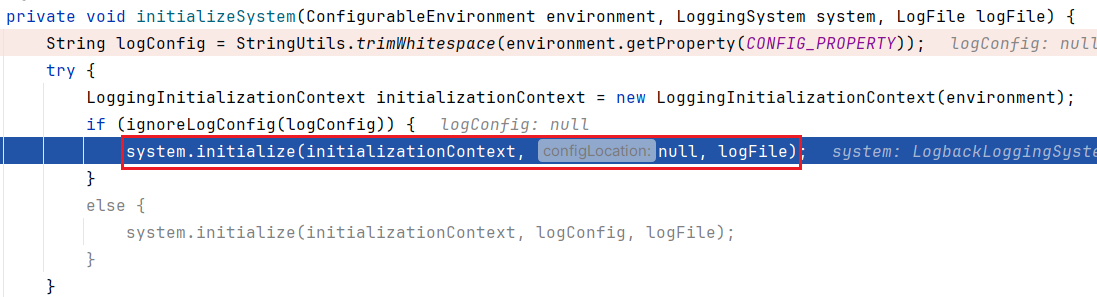
继续往下跟,来到 LogbackLoggingSystem#initialize
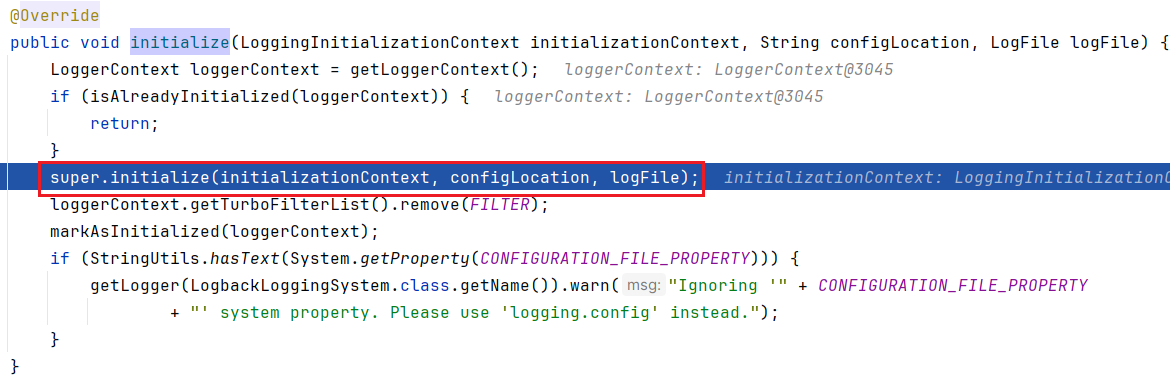
继续往下跟,来到 AbstractLoggingSystem#initialize

继续往下跟,来到 AbstractLoggingSystem#initializeWithConventions
private void initializeWithConventions(LoggingInitializationContext initializationContext, LogFile logFile) {

	String config = getSelfInitializationConfig();

	if (config != null && logFile == null) {

		// self initialization has occurred, reinitialize in case of property changes

		reinitialize(initializationContext);

		return;

	}

	if (config == null) {

		config = getSpringInitializationConfig();

	}

	if (config != null) {

		loadConfiguration(initializationContext, config, logFile);

		return;

	}

	loadDefaults(initializationContext, logFile);

}
其中 getSelfInitializationConfig() 就是从 classpath 下逐个寻找
logback-test.groovy, logback-test.xml, logback.groovy, logback.xml
这四个文件,一旦找到则直接返回;因为找到了 logback.xml,所以来到第一个 if
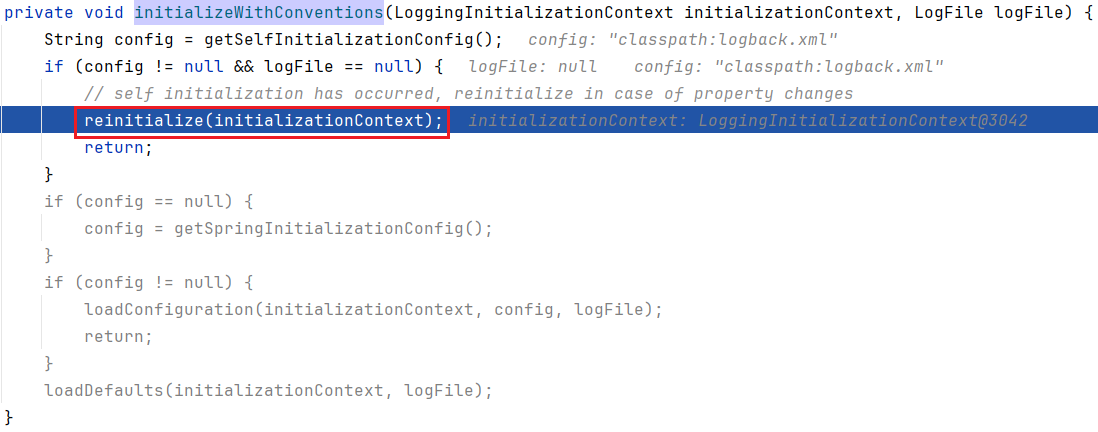
继续跟进,来到 LogbackLoggingSystem#reinitialize

将logback.xml 中的配置进行加载;至此,Spring Boot 的 LoggingSystem 与 Logback 的绑定就完成了,你们清楚了吗?
我们重新回到 AbstractLoggingSystem#initializeWithConventions ,如果 classpath 下
logback-test.groovy, logback-test.xml, logback.groovy, logback.xml
这四个文件都没有,会来到 config = getSpringInitializationConfig();,逐步跟下去会来到 AbstractLoggingSystem#getSpringConfigLocations
protected String[] getSpringConfigLocations() {

	String[] locations = getStandardConfigLocations();

	for (int i = 0; i < locations.length; i++) {

		String extension = StringUtils.getFilenameExtension(locations[i]);

		locations[i] = locations[i].substring(0, locations[i].length() - extension.length() - 1) + "-spring."

				+ extension;

	}

	return locations;

}
这个方法大家都能看懂吧,locations 的值
logback-test.groovy, logback-test.xml, logback.groovy, logback.xml
逐个遍历,然后进行拼接,最终得到
logback-test-spring.groovy, logback-test-spring.xml, logback-spring.groovy, logback-spring.xml
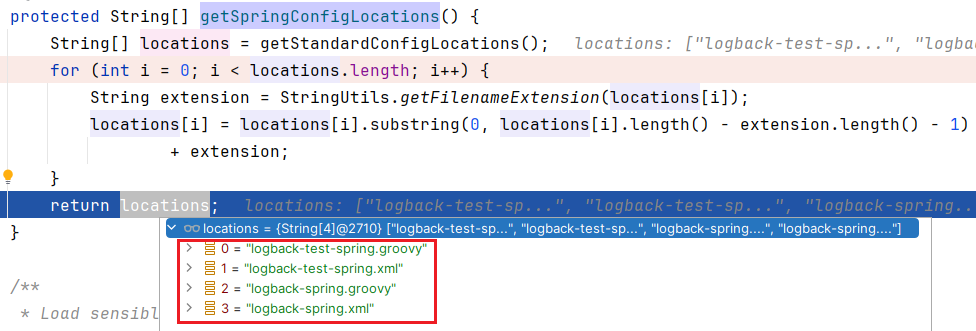
同样从 classpath 下逐个寻找,一旦找到直接返回;这也是为什么我们的日志配置文件是 logback-spring.xml 也能生效的原因。我们可以给 Spring Boot 的日志配置文件排个优先级
logback-test.groovy > logback-test.xml > logback.groovy > logback.xml > logback-test-spring.groovy > logback-test-spring.xml > logback-spring.groovy > logback-spring.xml
总结下,onApplicationEnvironmentPreparedEvent 完成了日志系统的初始化(日志配置文件的加载)
onApplicationPreparedEvent
private void onApplicationPreparedEvent(ApplicationPreparedEvent event) {

	ConfigurableApplicationContext applicationContext = event.getApplicationContext();

	ConfigurableListableBeanFactory beanFactory = applicationContext.getBeanFactory();

	if (!beanFactory.containsBean(LOGGING_SYSTEM_BEAN_NAME)) {

		beanFactory.registerSingleton(LOGGING_SYSTEM_BEAN_NAME, this.loggingSystem);

	}

	if (this.logFile != null && !beanFactory.containsBean(LOG_FILE_BEAN_NAME)) {

		beanFactory.registerSingleton(LOG_FILE_BEAN_NAME, this.logFile);

	}

	if (this.loggerGroups != null && !beanFactory.containsBean(LOGGER_GROUPS_BEAN_NAME)) {

		beanFactory.registerSingleton(LOGGER_GROUPS_BEAN_NAME, this.loggerGroups);

	}

	if (!beanFactory.containsBean(LOGGING_LIFECYCLE_BEAN_NAME) && applicationContext.getParent() == null) {

		beanFactory.registerSingleton(LOGGING_LIFECYCLE_BEAN_NAME, new Lifecycle());

	}

}
代码不复杂,就是注册了几个 Bean 到 Spring 容器,其中的 loggingSystem 是我们暂时比较关注的,默认情况下其类型是:LogbackLoggingSystem
日志打印
Spring Boot 的 LoggingSystem 完成与 Logback 的绑定后,它是如何使用然后打印日志的呢?是不是也像
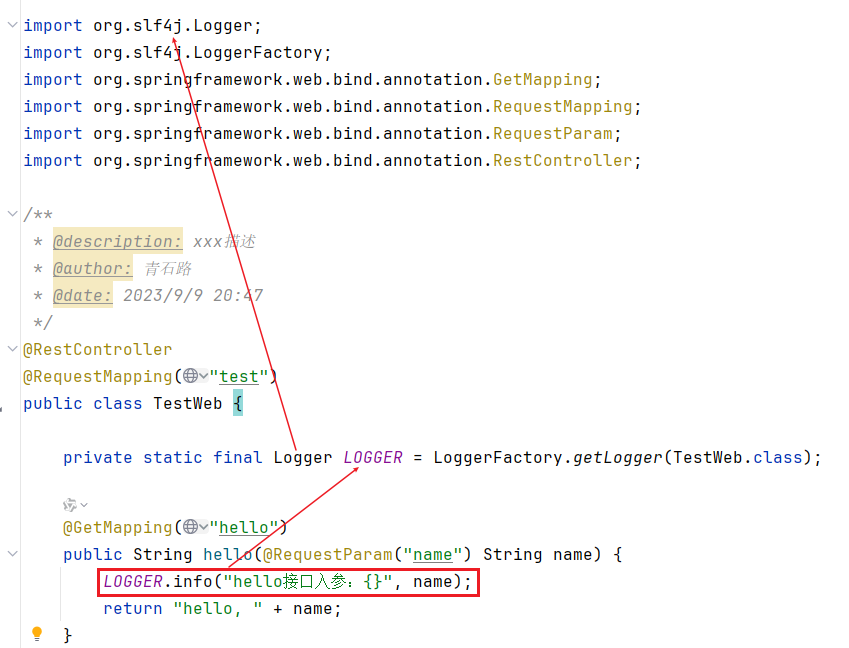
这样来使用的?那绝对不可能的!

这么使用的话,跟 Spring Boot 的 LoggingSystem 有鸡毛的关系?我们来看下 Spring Boot 中日志的使用,SpringApplication 179 行就用到了
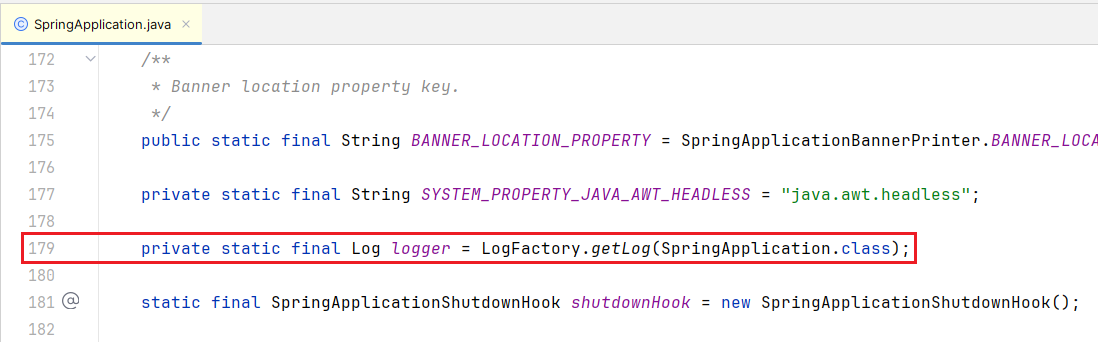
我们会发现 Log、LogFactory 在 spring-jcl-5.3.31.jar 包下
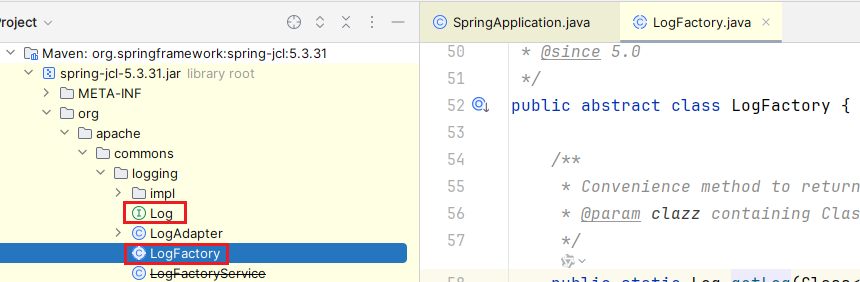
spring-jcl 类似 slf4j,也是一个日志门面,本文不展开
跟进 LogFactory.getLog ,一路跟下去会来到 LogAdapter#createLog
public static Log createLog(String name) {

	switch (logApi) {

		case LOG4J:

			return Log4jAdapter.createLog(name);

		case SLF4J_LAL:

			return Slf4jAdapter.createLocationAwareLog(name);

		case SLF4J:

			return Slf4jAdapter.createLog(name);

		default:

			// Defensively use lazy-initializing adapter class here as well since the

			// java.logging module is not present by default on JDK 9. We are requiring

			// its presence if neither Log4j nor SLF4J is available; however, in the

			// case of Log4j or SLF4J, we are trying to prevent early initialization

			// of the JavaUtilLog adapter - e.g. by a JVM in debug mode - when eagerly

			// trying to parse the bytecode for all the cases of this switch clause.

			return JavaUtilAdapter.createLog(name);

	}

}
logApi 的值获取如下
private static final String LOG4J_SPI = "org.apache.logging.log4j.spi.ExtendedLogger";

private static final String LOG4J_SLF4J_PROVIDER = "org.apache.logging.slf4j.SLF4JProvider";

private static final String SLF4J_SPI = "org.slf4j.spi.LocationAwareLogger";

private static final String SLF4J_API = "org.slf4j.Logger";

private static final LogApi logApi;

static {

	if (isPresent(LOG4J_SPI)) {

		if (isPresent(LOG4J_SLF4J_PROVIDER) && isPresent(SLF4J_SPI)) {

			// log4j-to-slf4j bridge -> we'll rather go with the SLF4J SPI;

			// however, we still prefer Log4j over the plain SLF4J API since

			// the latter does not have location awareness support.

			logApi = LogApi.SLF4J_LAL;

		}

		else {

			// Use Log4j 2.x directly, including location awareness support

			logApi = LogApi.LOG4J;

		}

	}

	else if (isPresent(SLF4J_SPI)) {

		// Full SLF4J SPI including location awareness support

		logApi = LogApi.SLF4J_LAL;

	}

	else if (isPresent(SLF4J_API)) {

		// Minimal SLF4J API without location awareness support

		logApi = LogApi.SLF4J;

	}

	else {

		// java.util.logging as default

		logApi = LogApi.JUL;

	}

}
根据优先级逐个去类路径下寻找类,找到了直接返回;Spring Boot 默认情况下用的是 SLF4J + Logback,所以 logApi 的值是 SLF4J_SPI,那么 LogAdapter#createLog 的返回值的类型是 LogAdapter$Slf4jLocationAwareLog

相当于完成了 spring-jcl 到 slf4j 的适配;这么说来,Spring Boot 日志还是走的 SLF4J + Logback ?跟 Spring Boot 的 LoggingSystem 有什么关系呢?敬请期待下篇

总结
onApplicationStartingEvent
确定日志系统类型并创建对应的
LoggingSystem,默认情况下是LogbackLoggingSystemonApplicationEnvironmentPreparedEvent
完成日志配置文件的加载以及
LoggingSystem的初始化Spring Boot 的日志打印貌似与 LoggingSystem 没有关系?下篇分析
从源码分析 SpringBoot 的 LoggingSystem → 它是如何绑定日志组件的的更多相关文章
- asp.net mvc源码分析-DefaultModelBinder 自定义的普通数据类型的绑定和验证
原文:asp.net mvc源码分析-DefaultModelBinder 自定义的普通数据类型的绑定和验证 在前面的文章中我们曾经涉及到ControllerActionInvoker类GetPara ...
- 源码分析springboot自定义jackson序列化,默认null值个性化处理返回值
最近项目要实现一种需求,对于后端返回给前端的json格式的一种规范,不允许缺少字段和字段值都为null,所以琢磨了一下如何进行将springboot的Jackson序列化自定义一下,先看看如何实现,再 ...
- 源码分析SpringBoot启动
遇到一个问题,需要从yml文件中读取数据初始化到static的类中.搜索需要实现ApplicationRunner,并在其实现类中把值读出来再set进去.于是乎就想探究一下SpringBoot启动中都 ...
- jQuery-1.9.1源码分析系列(十) 事件系统——事件绑定
事件绑定的方式有很多种.使用了jQuery那么原来那种绑定方式(elem.click = function(){...})就不推荐了,原因? 最主要的一个原因是elem.click = fn这种方式只 ...
- xUtils3源码分析(一):view的绑定
概述 xUtils3是国人开发的一款功能丰富的Android快速开发框架,值得研究下.zip包下载:[ZIP]xutils主要分以下几个模块 视图绑定模块 网络请求模块 数据库模块 图片加载模块 我们 ...
- [WPF源码分析]ContentControl依赖项属性的双向绑定,two-way binding view's DependencyProperty and ViewModel's variable
问题:自定义控件的依赖项属性和VIewModel中的变量不能双向绑定 解决思路:对比.net源码 PresentationFramework / System.Windows.Controls ...
- antd源码分析之——标签页(tabs 2.Tabs关键组件功能实现)
由于ant Tabs组件结构较复杂,共分三部分叙述,本文为目录中第二部分(高亮) 目录 一.组件结构 antd代码结构 rc-ant代码结构 1.组件树状结构 2.Context使用说明 3.rc-t ...
- jQuery-1.9.1源码分析系列完毕目录整理
jQuery 1.9.1源码分析已经完毕.目录如下 jQuery-1.9.1源码分析系列(一)整体架构 jQuery-1.9.1源码分析系列(一)整体架构续 jQuery-1.9.1源码分析系列(二) ...
- NIO-SocketChannel源码分析
目录 NIO-SocketChannel源码分析 目录 前言 ServerSocketChannelImpl 创建ServerSocketChannel 绑定和监听 接收 SocketChannelI ...
- Spring笔记(5) - 声明式事务@EnableTransactionManagement注解源码分析
一.背景 前面详解了实现Spring事务的两种方式的不同实现:编程式事务和声明式事务,对于配置都使用到了xml配置,今天介绍Spring事务的注解开发,例如下面例子: 配置类:注册数据源.JDBC模板 ...
随机推荐
- 小白也能懂的Mysql数据库索引详解
核心概念 主键索引/二级索引 聚簇索引/非聚簇索引 回表/索引覆盖 索引下推 联合索引/最左联合匹配 前缀索引 explain 一.[索引定义] 1.索引定义 在数据之外,数据库系统还维护着满足特定查 ...
- W801单片机入门开发环境设置
W801单片机入门开发环境设置 开发软件下载 烧录工具和SDK 在 WinnerMicro的网站 https://www.winnermicro.com/html/1/156/158/558.html ...
- python基础-字符串str " "
字符串的定义和操作 字符串的特性: 元素数量 支持多个 元素类型 仅字符 下标索引 支持 重复元素 支持 可修改性 不支持 数据有序 是 使用场景 一串字符的记录场景 字符串的相关操作: my_str ...
- MerkleTree in BTC
Merkle 树是一种用于高效且安全地验证大数据结构完整性和一致性的哈希树.它在比特币网络中起到至关重要的作用.Merkle 树是一种二叉树结构,其中每个叶子节点包含数据块的哈希值,每个非叶子节点包含 ...
- python3 中的装饰器总结
前言 python3 中有很多好用的装饰器,本编文章作为个人笔记使用,随时更新. 正文 1. @dataclass 内容来源:chatgpt3.5 @dataclass是一个装饰器,用于给类提供自动生 ...
- Python数据分析代码示例
数据清洗 在进行数据分析之前,通常需要对原始数据进行清洗,即处理缺失值.异常值.重复值等问题. 下面是一个数据清洗的示例代码: import pandas as pd # 读取原始数据 data = ...
- FairMOT复现报错存档
FairMOT复现 使用pip命令单独安装Cython包即可 修改下载的cython-bbox包里的setup.py里的代码 将#extra_compile_args=['-Wno-cpp'], 修改 ...
- 数据存储为json或数据库
1.数据存储 In [ ]: import requests from bs4 import BeautifulSoup rqq = requests.get('http://www.tipdm.co ...
- vue项目的简单创建与插件下载
准备工作 安装node.js 安装node.js过程全部采用默认配置,一步一步next即可 检验node.js是否安装成功:在cmd命令行中输入node -v以及npm -v 通过cmd创建 安装vu ...
- Vscode控制台乱码的最终解决方案
Vscode控制台乱码的最终解决方案 vscode运行项目时控制台打印日志乱码.网上也有许多解决办法. 方法一[管用]推荐,避免过多设置 Java项目时,像Springboot微服务项目默认使用的是l ...