
侯捷C++STL源码分析
STL六大部件
容器(Containers):放东西,需要占用内存。
分配器(Allocators):支持容器。
算法(Algorithms):操作容器里面的数据。
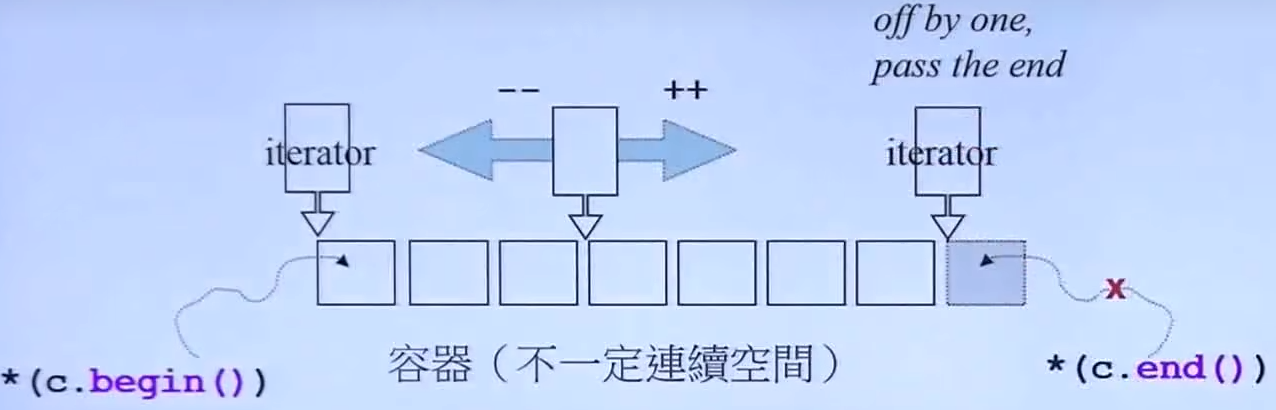
迭代器(Iterators):容器和算法之间的桥梁,泛化的指针。
适配器(A dapters)
仿函数(Functors)
#include<vector>

#include<algorithm>

#include<functional>

#include<iostream>

using namespace std;

int main()

{

 int ia[6] = {27,210,12,47,109,83};

 vector<int,allocator<int>> vi(ia,ia+6)//vector<类型,分配器(/*一般不会写*/)>

 cout<<cout_if(vi.begin(),vi.end(),not1(bind2nd(less<int>(),40)));//其中cout_if为algorithm,not1为functionadapter(negator) bind2nd为functionadapter(binder) less<int>为functionobject

 return 0;

}
复杂度 Complexity,Big-oh
O(1)或O(c)常数时间(constant time)
O(n):称为线性时间(linear time)
O(log2 n)称为二次线性时间(sub—linlear time)
O(n*n)称为平方时间(quadratic time)
O(nnn)称为立方时间(cubic time)
O(2的n次方)称为指数时间
O(nlog2 n):
前闭后开区间
range-based for statement (since C++11)
for(decl:coll){

  statement

}
for(int i :{2,3,57,9,13,17,19}){

    std::cout<<i<<std::endl;

}
std::vector<double> vec;

...

for(auto elem:vec){

   std::cout<<elem<<std::endl;

}

for(auto& elem:vec){

  elem *= 3;

}
auto key
list<string> c;

list<string>::iterator ite;

ite = ::find(c.begin,c.end(),target);

list<string> c;

....

auto ite = ::find(c.begin,c.end(),target);
容器——结构及分类
Sequence Contaioners(序列式容器)
Array:数组(c++11增加的,连续空间)

Vector:动态数组(分配器去处理)

Deque:双向队列(先进先出)

List:双向链表

Forward-List:单向链表

Associative Containers(关联式容器)适合快速查找
Set/Multiset(红黑树是高度平衡二叉树,Set放的元素不能重复,Multiset放的元素可以重复)

Map/Multimap(key:value)

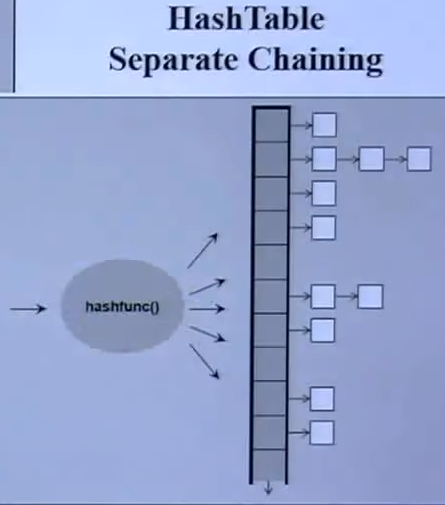
Unordered Containers(HashTable)
一次测试程序之辅助函数
using std::cin;

using std::cout;

using std::string;

long get_a_target_long()

{

  long target = 0 ;

  cout<<"target 0~"<<RAND_MAX<<"):";

  cin>>target;

  return target;

}

string get_a_target_string()

{

  long target =  0 ;

  char buf[10];

  cout <<"target (0~"<<RAND_MAX<<"):"

  cin>> target;

  snprintf(buf,10,"%d",target);//把后面的字符串赋值给buf,长度为min(10,后面那个字符串长度)-1

  return string(buf);

}
int compareLongs(const void* a,const void* b)

{

return (*(long*)a - *(long*)b);

}
使用容器array
#include<array>

#include<iostream>

#include<ctime>

#include<cstdlib>//qsort bsearch NULL

namespace jj01

{

void test_arry()

{

  cout<<"\ntest_array()............\n";

  array<long,ASIZE> c;

  clock_t timeStart = clock();

  for(long i = 0 ; i<ASIZE;++i){

    c[i] = rand();

  }

  cout<<"milli-seconds:"<<(clock()-timeStart<<endl;

  cout<<"array.size()="<<c.size()<<endl;

  cout<<"array.front()="<<c.front()<<endl;

  cout<<"array.back()="<<c.back()<<endl;

  cout<<"array.data()="<<c.data()<<endl;

long target = get_a_target_long();

timeStart = clock();

qsort(c.data(),ASIZE,sizeof(long),compareLongs);

long* pItem = (long*)bsearch(&target,(c.data()),ASIZE,siezeof(long), compareLongs);

cout<<"qsort()+bsearch(),milli-seconds:"<<(clock()-timeStart)<<endl;//要使用二分查找之前,数据一定要排序

if(pItem != NULL)

  cout<<"found,"<<*pItem<<endl;

else

  cout<<"not found"<<endl;

}

}
使用容器Vector
#include<vector>

#include<stdexcept>

#include<string>

#include<cstdlib>

#include<cstdio>

#include<iostream>

#include<ctime>

#include<algorithm>

namespace jj02

{

void test_vector(long& value)

{

  cout<"\ntest_vector()..........\n";

  vector<string> c;

  char buf[10];

  clock_t timeStart = clock();

  for(long i = 0; i<value;++i)

  {

     try{

      snprintf(buf,10,"%d",rand());

      c.push_back(string(buf));

   }catch(exception& p){

  cout<<"i="<<i<<""<<p.what()<<endl;

  //曾经最高i=58389486 then std::dac_alloc

   abort();

}

}

cout <<"milli-seconds:"<<(clock()-timeStart)<<endl;

cout <<"vector.size():"<<c.size()<<endl;

cout<<"vector.front():"<<c.front<<endl;

cout<<"vector.back():"<<c.back()<<endl;

cout<<"vector.data():"<<c.data()<<endl;

cout<<"vector.capacity()="<<c.capacity()<<endl;

  string target = get_a_target_string();

  {

  timeStart = clock();

  auto pItem=::find(c.begin,c.end(),target);

//find模板函数跟普通函数是一样的。其中双冒号是一个全局的东西

if(pItem != c.end())

  cout<<"found,"<<*pItem<<endl;

else

  cout<<"not found!" <<endl;

  }

{

timeStart = clock();

sort(c.begin,c,end())

string* pItem = (string*) bsearch(&target,(c.data()),c.size(),sizeof(string)),compareLongs);

cout<<"sort()+bsearch(),milli-seconds:"<<(clock-timeStart);

  if(pItem != NULL)

  cout<<"found,"<<*pItem<<endl;

  else

  cout<<"not found" <<endl;

}

}

}

//总结:不一定排序+二分查找 查找速度就快。
使用容器list
#include<vector>

#include<stdexcept>

#include<string>

#include<cstdlib>

#include<cstdio>

#include<iostream>

#include<ctime>

#include<algorithm>

namespace jj03

{

  void test_list(long& value)

  {

cout<<"\ntest_list()....................\n"

list<string> c;

char buf[10];

clock_t timeStart = clock();

for(long i = 0; i< value;++i)

{

   try{

snprintf(buf,10,"%d",rand());

c.push_back(string(buf));

}catch(exception& p){

cout<<"i="<<i""<<p.what()<<endl;

abort();

}

}

cout<<"milli-seconds:"<<(clock()-timeStart)<<endl;

cout<<"list.size():"<<c.size()<<endl;

cout<<"list.max_size()"<<c.max_size()<<endl;

cout<<"list.front()"<<c.front<<endl;

cout<<"list.back()"<<c.back()<<endl;

string target = get_a_target_string();

timeStart = clock();

auto pItem = ::find(c.begin,c.end(),target);

cout<<"::find(),milli-seconds"<<(clock()-timeStart)<<endl;

if(pItem != c.end())

cout<<"found,"<<*pItem<<endl;

else

cout<<"not found"<<endl;

timeStart = clock();

c.sort();

cout<<"c.sort,milli-seconds:"<<(clock()-timeStart)<<endl;

}

}
侯捷C++STL源码分析的更多相关文章
- STL源码分析《4》----Traits技术
在 STL 源码中,到处可见 Traits 的身影,其实 Traits 不是一种语法,更确切地说是一种技术. STL库中,有一个函数叫做 advance, 用来将某个迭代器(具有指针行为的一种 cla ...
- STL 源码分析《1》---- list 归并排序的 迭代版本, 神奇的 STL list sort
最近在看 侯捷的 STL源码分析,发现了以下的这个list 排序算法,乍眼看去,实在难以看出它是归并排序. 平常大家写归并排序,通常写的是 递归版本..为了效率的考虑,STL库 给出了如下的 归并排序 ...
- STL源码分析《3》----辅助空间不足时,如何进行归并排序
两个连在一起的序列 [first, middle) 和 [middle, last) 都已经排序, 归并排序最核心的算法就是 将 [first, middle) 和 [middle, last) 在 ...
- STL源码分析读书笔记--第二章--空间配置器(allocator)
声明:侯捷先生的STL源码剖析第二章个人感觉讲得蛮乱的,而且跟第三章有关,建议看完第三章再看第二章,网上有人上传了一篇读书笔记,觉得这个读书笔记的内容和编排还不错,我的这篇总结基本就延续了该读书笔记的 ...
- stl源码分析之allocator
allocator封装了stl标准程序库的内存管理系统,标准库的string,容器,算法和部分iostream都是通过allocator分配和释放内存的.标准库的组件有一个参数指定使用的allocat ...
- STL 源码分析六大组件-allocator
1. allocator 基本介绍 分配器(allocator))是C ++标准库的一个组件, 主要用来处理所有给定容器(vector,list,map等)内存的分配和释放.C ++标准库提供了默认使 ...
- STL 源码分析《2》----nth_element() 使用与源码分析
Select 问题: 在一个无序的数组中 找到第 n 大的元素. 思路 1: 排序,O(NlgN) 思路 2: 利用快排的 RandomizedPartition(), 平均复杂度是 O(N) 思路 ...
- STL源码分析与实现-stl_list容器
1. stl_list 介绍 今天我们来总结一下stl_List, 通过之前介绍单链表的文章,其实对链表的基本操作已经十分熟悉了,那对于stl_list,无非就是链表结构不一样,至于其中的增删改查的细 ...
- STL源码分析之迭代器
前言 迭代器是将算法和容器两个独立的泛型进行调和的一个接口. 使我们不需要关系中间的转化是怎么样的就都能直接使用迭代器进行数据访问. 而迭代器最重要的就是对operator *和operator-&g ...
- STL 源码分析 (SGI版本, 侯捷著)
前言 源码之前,了无秘密 algorithm的重要性 效率的重要性 采用Cygnus C++ 2.91 for windows cygwin-b20.1-full2.exe 下载地址:http://d ...
随机推荐
- 在Linux上安装redis7
1.检测虚拟机环境 1.1 bit检测命令:getconf LONG_BIT(建议使用64bit做开发) 1.2 gcc环境检测:gcc -v 如果不具备gcc环境,则使用yum -y install ...
- C# 反射 操作列表类型属性
本文介绍对列表进行创建及赋值的反射操作 我们现在有TestA.TestB类,TestA中有TestB类型列表的属性List,如下: 1 public class TestA 2 { 3 public ...
- Python-tomorrow应用于UI自动化的简单使用
一.简介 tomorrow属于第三方的一个模块,使用threads方法作为装饰器去修饰一个普通的函数,使其可以达到并发效果.使用起来非常简单. 二.安装 pip install tomorrow 使用 ...
- Windows亚克力特效代码实现(Dev c++可以编译通过)
#include <windows.h> #include <dwmapi.h> // 定义一个枚举类型,表示不同的窗口组合状态 enum AccentState { ACCE ...
- 2021-01-30:redis中,Pipeline有什么好处?
福哥答案2021-01-30:可以将多次 IO 往返的时间缩减为一次,减少多次IO延迟的开销.前提是 pipeline 执行的指令之间没有因果相关性. 多个指令之间没有依赖关系,可以使用 pipeli ...
- 2021-01-19:mysql中,一张表里有3亿数据,未分表,其中一个字段是企业类型,企业类型是一般企业和个体户,个体户的数据量差不多占50%,根据条件把个体户的行都删掉。请问如何操作?
2021-01-19:mysql中,一张表里有3亿数据,未分表,其中一个字段是企业类型,企业类型是一般企业和个体户,个体户的数据量差不多占50%,根据条件把个体户的行都删掉.请问如何操作?福哥答案20 ...
- 2022-04-03:k8s安装srs,yaml如何写?
2022-04-03:k8s安装srs,yaml如何写? 答案2022-04-03: yaml如下: apiVersion: apps/v1 kind: Deployment metadata: la ...
- 2022-03-20:给定一棵多叉树的头节点head, 每个节点的颜色只会是0、1、2、3中的一种, 任何两个节点之间的都有路径, 如果节点a和节点b的路径上,包含全部的颜色,这条路径算达标路径, (
2022-03-20:给定一棵多叉树的头节点head, 每个节点的颜色只会是0.1.2.3中的一种, 任何两个节点之间的都有路径, 如果节点a和节点b的路径上,包含全部的颜色,这条路径算达标路径, ( ...
- 如何从命令行启动 CST 软件?
众所周知,CST 一贯以优良的界面友好性而著称,用户可以方便快捷的在其 windows 式的界面下进行建模.仿真及结果查看和处理等操作.然而,在某些特定情况下,也需要 CST 进行后台式的运行,比如需 ...
- es笔记六之聚合操作之指标聚合
本文首发于公众号:Hunter后端 原文链接:es笔记六之聚合操作之指标聚合 聚合操作,在 es 中的聚合可以分为大概四种聚合: bucketing(桶聚合) mertic(指标聚合) matrix( ...