
LeetCode-Queue
简单题
1. 数据流中的移动平均值 $(leetcode-346)
暂无
2. 最近的请求次数(leetcode-933)
写一个 RecentCounter 类来计算最近的请求。 它只有一个方法:ping(int t),其中 t 代表以毫秒为单位的某个时间。 返回从 3000 毫秒前到现在的 ping 数。

任何处于 [t - 3000, t] 时间范围之内的 ping 都将会被计算在内,包括当前(指 t 时刻)的 ping。

保证每次对 ping 的调用都使用比之前更大的 t 值。

示例:

输入:inputs = ["RecentCounter","ping","ping","ping","ping"], inputs = [[],[1],[100],[3001],[3002]]

输出:[null,1,2,3,3]

提示:

每个测试用例最多调用 10000 次 ping。

每个测试用例会使用严格递增的 t 值来调用 ping。

每次调用 ping 都有 1 <= t <= 10^9。

Related Topics 队列
1)队列
只会考虑最近 3000 毫秒到现在的 ping 数,因此可以使用队列存储这些 ping 的记录。当收到一个时间 t 的 ping 时,将它加入队列,并且将所有在时间 t - 3000 之前的 ping 移出队列。
队列
import java.util.LinkedList;
import java.util.Queue; class RecentCounter {private Queue<Integer> q;
public RecentCounter() {
q = new LinkedList<>();
} public int ping(int t) {
q.offer(t);
while(q.peek()<t-3000){
q.poll();
}
return q.size();
}
}
2)数组存储(不推荐!)
使用数组存储数据,每次遍历判断是否在区间内。浪费存储空间,3000ms以前的数据已经不需要了。
数组存储
import java.util.ArrayList; class RecentCounter {private ArrayList<Integer> time;
public RecentCounter() {
time = new ArrayList<Integer>();
} public int ping(int t) {
time.add(t);
int count = 0;
for(int i:time){
if((i>=t-3000)&&(i<=t)){
count++;
}
}
return count;
}
}
中等
3. 贪吃蛇 $(leetcode-353)
暂无
4. 杀死进程 $(leetcode-582)
暂无
5. 任务调度器(leetcode-621)
暂无
给定一个用字符数组表示的 CPU 需要执行的任务列表。其中包含使用大写的 A - Z 字母表示的26 种不同种类的任务。任务可以以任意顺序执行,并且每个任务都可以在 1 个单位时间内执行完。CPU 在任何一个单位时间内都可以执行一个任务,或者在待命状态。

然而,两个相同种类的任务之间必须有长度为 n 的冷却时间,因此至少有连续 n 个单位时间内 CPU 在执行不同的任务,或者在待命状态。

你需要计算完成所有任务所需要的最短时间。

示例 :

输入:tasks = ["A","A","A","B","B","B"], n = 2

输出:8

解释:A -> B -> (待命) -> A -> B -> (待命) -> A -> B.

在本示例中,两个相同类型任务之间必须间隔长度为 n = 2 的冷却时间,而执行一个任务只需要一个单位时间,所以中间出现了(待命)状态。

提示:

任务的总个数为 [1, 10000]。

n 的取值范围为 [0, 100]。

Related Topics 贪心算法 队列 数组
展示代码
代码
展示代码
代码
6. 设计循环队列(leetcode-622)
设计你的循环队列实现。 循环队列是一种线性数据结构,其操作表现基于 FIFO(先进先出)原则并且队尾被连接在队首之后以形成一个循环。它也被称为“环形缓冲器”。

循环队列的一个好处是可以利用这个队列之前用过的空间。在一个普通队列里,一旦一个队列满了,就不能插入下一个元素,即使在队列前面仍有空间。但是使用循环

队列,能使用这些空间去存储新的值。

你的实现应该支持如下操作:

MyCircularQueue(k): 构造器,设置队列长度为 k 。

Front: 从队首获取元素。如果队列为空,返回 -1 。

Rear: 获取队尾元素。如果队列为空,返回 -1 。

enQueue(value): 向循环队列插入一个元素。如果成功插入则返回真。

deQueue(): 从循环队列中删除一个元素。如果成功删除则返回真。

isEmpty(): 检查循环队列是否为空。

isFull(): 检查循环队列是否已满。

示例:

MyCircularQueue circularQueue = new MyCircularQueue(3); // 设置长度为 3

circularQueue.enQueue(1);  // 返回 true

circularQueue.enQueue(2);  // 返回 true

circularQueue.enQueue(3);  // 返回 true

circularQueue.enQueue(4);  // 返回 false,队列已满

circularQueue.Rear();  // 返回 3

circularQueue.isFull();  // 返回 true

circularQueue.deQueue();  // 返回 true

circularQueue.enQueue(4);  // 返回 true

circularQueue.Rear();  // 返回 4

提示:

所有的值都在 0 至 1000 的范围内;

操作数将在 1 至 1000 的范围内;

请不要使用内置的队列库。

Related Topics 设计 队列
1)数组
思路一:
front直线对列首元素,rear指向队列尾元素的后一个位置。因此,当front==rear时表示队列为空,front == (rear+1)%maxsize时,队列满。
有一个闲置元素,因此对k个大小容量的队列,需要k+1个元素的数组。
实现1
import java.util.ArrayList;

class MyCircularQueue {


private int front;


private int rear;


private int maxSize;


private int[] l;
/** Initialize your data structure here. Set the size of the queue to be k. */

public MyCircularQueue(int k) {

    front = 0;

    rear = 0;

    maxSize = k+1;  //预留一个空位,数组长度若为4 实际数据长度为3

    l = new int[maxSize];

}

/** Insert an element into the circular queue. Return true if the operation is successful. */

public boolean enQueue(int value) {

    if(!isFull()){

        l[rear] = value;

        rear = (rear + 1) % maxSize;

        return true;

    }else{

        return false;

    }

}

/** Delete an element from the circular queue. Return true if the operation is successful. */

public boolean deQueue() {

    if(!isEmpty()){

        front = (front + 1) % maxSize;

        return true;

    }else{

        return false;

    }

}

/** Get the front item from the queue. */

public int Front() {

    if(!isEmpty()){

        return l[front];

    }else{

        return -1;

    }

}

/** Get the last item from the queue. */

public int Rear() {

    if(!isEmpty()){

        return l[(rear-1+maxSize)%maxSize];

    }else{

        return -1;     //找不到,题目要求返回-1

    }

}

/** Checks whether the circular queue is empty or not. */

public boolean isEmpty() {

    return front == rear;

}

/** Checks whether the circular queue is full or not. */

public boolean isFull() {

    return (rear + 1) % maxSize == front;

}


}
思路二:
queue:一个固定大小的数组,用于保存循环队列的元素。
headIndex:一个整数,保存队首 head 的索引。
count:循环队列当前的长度,即循环队列中的元素数量。使用 hadIndex 和 count 可以计算出队尾元素的索引,因此不需要队尾属性。
capacity:循环队列的容量,即队列中最多可以容纳的元素数量。该属性不是必需的,因为队列容量可以通过数组属性得到,但是由于该属性经常使用,所以我们选择保留它。这样可以不用在 Python 中每次调用 len(queue) 中获取容量。但是在 Java 中通过 queue.length 获取容量更加高效。为了保持一致性,在两种方案中都保留该属性。
实现2
class MyCircularQueue {

private int[] queue;


private int headIndex;


private int count;


private int capacity;

/** Initialize your data structure here. Set the size of the queue to be k. */


public MyCircularQueue(int k) {


this.capacity = k;


this.queue = new int[k];


this.headIndex = 0;


this.count = 0;


}

/** Insert an element into the circular queue. Return true if the operation is successful. */


public boolean enQueue(int value) {


if (this.count == this.capacity)


return false;


this.queue[(this.headIndex + this.count) % this.capacity] = value;


this.count += 1;


return true;


}

/** Delete an element from the circular queue. Return true if the operation is successful. */


public boolean deQueue() {


if (this.count == 0)


return false;


this.headIndex = (this.headIndex + 1) % this.capacity;


this.count -= 1;


return true;


}

/** Get the front item from the queue. */


public int Front() {


if (this.count == 0)


return -1;


return this.queue[this.headIndex];


}

/** Get the last item from the queue. */


public int Rear() {


if (this.count == 0)


return -1;


int tailIndex = (this.headIndex + this.count - 1) % this.capacity;


return this.queue[tailIndex];


}

/** Checks whether the circular queue is empty or not. */


public boolean isEmpty() {


return (this.count == 0);


}

/** Checks whether the circular queue is full or not. */


public boolean isFull() {


return (this.count == this.capacity);


}


}
时间复杂度:O(1)。该数据结构中,所有方法都具有恒定的时间复杂度。
空间复杂度:O(N),其中 N 是队列的预分配容量。循环队列的整个生命周期中,都持有该预分配的空间。
上述代码不能用于并发,是非线程安全的。参考
线程安全
class MyCircularQueue {

private Node head, tail;


private int count;


private int capacity;


// Additional variable to secure the access of our queue


private ReentrantLock queueLock = new ReentrantLock();

/** Initialize your data structure here. Set the size of the queue to be k. */


public MyCircularQueue(int k) {


this.capacity = k;


}

/** Insert an element into the circular queue. Return true if the operation is successful. */


public boolean enQueue(int value) {


// ensure the exclusive access for the following block.


queueLock.lock();


try {


if (this.count == this.capacity)


return false;
  Node newNode = new Node(value);

  if (this.count == 0) {

    head = tail = newNode;

  } else {

    tail.nextNode = newNode;

    tail = newNode;

  }

  this.count += 1;

} finally {

  queueLock.unlock();

}

return true;


}


}
2)单链表
单链表实现
class Node {

public int value;


public Node nextNode;

public Node(int value) {


this.value = value;


this.nextNode = null;


}


}

class MyCircularQueue {

private Node head, tail;


private int count;


private int capacity;

/** Initialize your data structure here. Set the size of the queue to be k. */


public MyCircularQueue(int k) {


this.capacity = k;


}

/** Insert an element into the circular queue. Return true if the operation is successful. */


public boolean enQueue(int value) {


if (this.count == this.capacity)


return false;
Node newNode = new Node(value);

if (this.count == 0) {

  head = tail = newNode;

} else {

  tail.nextNode = newNode;

  tail = newNode;

}

this.count += 1;

return true;


}
/** Delete an element from the circular queue. Return true if the operation is successful. */


public boolean deQueue() {


if (this.count == 0)


return false;


this.head = this.head.nextNode;


this.count -= 1;


return true;


}
/** Get the front item from the queue. */


public int Front() {


if (this.count == 0)


return -1;


else


return this.head.value;


}
/** Get the last item from the queue. */


public int Rear() {


if (this.count == 0)


return -1;


else


return this.tail.value;


}
/** Checks whether the circular queue is empty or not. */


public boolean isEmpty() {


return (this.count == 0);


}
/** Checks whether the circular queue is full or not. */


public boolean isFull() {


return (this.count == this.capacity);


}


}
7. 设计循环双端队列(leetcode-641)
设计实现双端队列。

你的实现需要支持以下操作:

MyCircularDeque(k):构造函数,双端队列的大小为k。

insertFront():将一个元素添加到双端队列头部。 如果操作成功返回 true。

insertLast():将一个元素添加到双端队列尾部。如果操作成功返回 true。

deleteFront():从双端队列头部删除一个元素。 如果操作成功返回 true。

deleteLast():从双端队列尾部删除一个元素。如果操作成功返回 true。

getFront():从双端队列头部获得一个元素。如果双端队列为空,返回 -1。

getRear():获得双端队列的最后一个元素。 如果双端队列为空,返回 -1。

isEmpty():检查双端队列是否为空。

isFull():检查双端队列是否满了。

示例:

MyCircularDeque circularDeque = new MycircularDeque(3); // 设置容量大小为3

circularDeque.insertLast(1);			        // 返回 true

circularDeque.insertLast(2);			        // 返回 true

circularDeque.insertFront(3);			        // 返回 true

circularDeque.insertFront(4);			        // 已经满了,返回 false

circularDeque.getRear();  				// 返回 2

circularDeque.isFull();				        // 返回 true

circularDeque.deleteLast();			        // 返回 true

circularDeque.insertFront(4);			        // 返回 true

circularDeque.getFront();				// 返回 4

提示:

所有值的范围为 [1, 1000]

操作次数的范围为 [1, 1000]

请不要使用内置的双端队列库。

Related Topics 设计 队列
数组实现
数组实现
class MyCircularDeque {private int[] queue;
private int front;
private int rear;
private int maxSize; /** Initialize your data structure here. Set the size of the deque to be k. */
public MyCircularDeque(int k) {
front = 0;
rear = 0;
maxSize = k+1;
queue = new int[maxSize];
} /** Adds an item at the front of Deque. Return true if the operation is successful. */
public boolean insertFront(int value) {
if(isFull()){
return false;
}else{
front = (front - 1 + maxSize) % maxSize;
queue[front] = value;
return true;
}
} /** Adds an item at the rear of Deque. Return true if the operation is successful. */
public boolean insertLast(int value) {
if(isFull()){
return false;
}else{
queue[rear] = value;
rear = (rear + 1) % maxSize;
return true;
}
} /** Deletes an item from the front of Deque. Return true if the operation is successful. */
public boolean deleteFront() {
if(isEmpty()){
return false;
}else{
front = (front + 1) % maxSize;
return true;
}
} /** Deletes an item from the rear of Deque. Return true if the operation is successful. */
public boolean deleteLast() {
if(isEmpty()){
return false;
}else{
rear = (rear - 1 + maxSize) % maxSize;
return true;
}
} /** Get the front item from the deque. */
public int getFront() {
if(isEmpty()){
return -1;
}else{
return queue[front];
}
} /** Get the last item from the deque. */
public int getRear() {
if(isEmpty()){
return -1;
}else{
return queue[(rear - 1 + maxSize )%maxSize];
}
} /** Checks whether the circular deque is empty or not. */
public boolean isEmpty() {
return front == rear;
} /** Checks whether the circular deque is full or not. */
public boolean isFull() {
return front == (rear + 1)%maxSize;
}
}
8. 第K个数(面试题 17.09)
有些数的素因子只有 3,5,7,请设计一个算法找出第 k 个数。注意,不是必须有这些素因子,而是必须不包含其他的素因子。

例如,前几个数按顺序应该是 1,3,5,7,9,15,21。

示例 1:

输入: k = 5

输出: 9

Related Topics 堆 队列 数学
1)动态规划
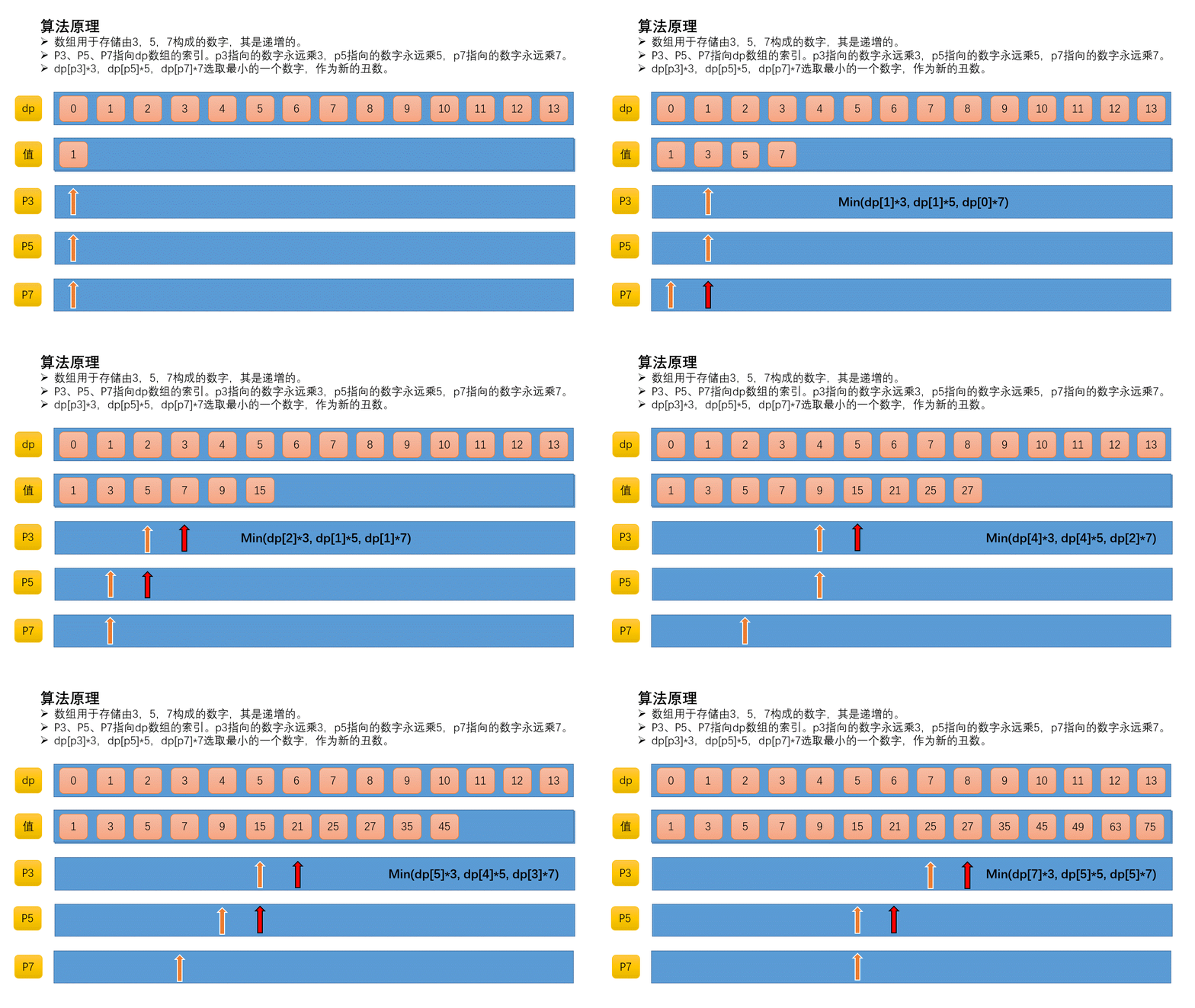
定义三个索引p3、p5、p7。p3指向的数字永远乘3,p5指向的数字永远乘5,p7指向的数字永远乘7。初始化所有指针都指向第一个丑数,即1。
从dp[p3]*3、dp[p5]*5、dp[p7]*7选取最小的一个数字,作为新的丑数。新的丑数就是3*dp[p3]=3*1=3,执行p3++。此时p5和p7指向第1个丑数,p3指向第2个丑数。然重复上一步。
这里基于的一个事实是,丑数数列是递增的,当p5指针在当前位置时,后面的数乘以5必然比前面的数乘以5大,所以下一个丑数必然是先考虑前面的数乘以5。p3、p7同理,所以才可以使用索引指针。
动态规划
class Solution {public int getKthMagicNumber(int k) {
if(k<=0){
throw new IllegalArgumentException("para is error");
}
int []dp = new int[k];
dp[0] = 1;
int p3=0,p5=0,p7=0; for(int i=1; i<k; i++){
dp[i] = Math.min(dp[p3]*3, Math.min(dp[p5]*5, dp[p7]*7));
if(dp[i]==dp[p3]*3) p3++;
if(dp[i]==dp[p5]*5) p5++;
if(dp[i]==dp[p7]*7) p7++;
}
return dp[k-1];
}
}
2)优先队列(堆排序)
每一个magic number乘以3,5,7也是一个magic number。
通过优先队列,每次取出最小的一个,然后乘以3,5,7得到的值放入队列中。
注意处理重复的数据,比如3*5和5*3为重复数据。
展示代码
import java.util.HashSet;
import java.util.PriorityQueue;
import java.util.Queue; class Solution {public int getKthMagicNumber(int k) {
HashSet<Long> set = new HashSet<>();
Queue<Long> queue = new PriorityQueue<>(); queue.offer(1L); while(true){
Long v = queue.poll(); if(!set.contains(v)){
set.add(v); //将最小值添加到集合中 queue.offer(v*3);
queue.offer(v*5);
queue.offer(v*7);
} if(set.size()==k) {
return v.intValue(); //将Long转为int类型
}
}
}
}
困难
9. 矩形区域不超过K的最大数值和(leetcode-363)
暂无
10. 和至少为K的最短子数组(leetcode-862)
暂无
11. 滑动窗口最大值(leetcode-239)
暂无
LeetCode-Queue的更多相关文章
- [LeetCode] Queue Reconstruction by Height 根据高度重建队列
Suppose you have a random list of people standing in a queue. Each person is described by a pair of ...
- LeetCode: Queue Reconstruction by Height
这题的关键点在于对数组的重排序方法,高度先由高到低排列不会影响第二个参数,因为list.add的方法在指定index后面插入,因此对于同高的人来说需要对第二个参数由低到高排,具体代码如下 public ...
- [LeetCode] Implement Queue using Stacks 用栈来实现队列
Implement the following operations of a queue using stacks. push(x) -- Push element x to the back of ...
- sort学习 - LeetCode #406 Queue Reconstruction by Height
用python实现多级排序,可以像C语言那样写个my_cmp,然后在sort的时候赋给参数cmp即可 但实际上,python处理cmp 是很慢的,因为每次比较都会调用my_cmp:而使用key和rev ...
- 【一天一道LeetCode】#232. Implement Queue using Stacks
一天一道LeetCode 本系列文章已全部上传至我的github,地址:ZeeCoder's Github 欢迎大家关注我的新浪微博,我的新浪微博 欢迎转载,转载请注明出处 (一)题目 Impleme ...
- [LeetCode] Design Circular Queue 设计环形队列
Design your implementation of the circular queue. The circular queue is a linear data structure in w ...
- LeetCode算法题-Implement Queue Using Stacks(Java实现)
这是悦乐书的第195次更新,第201篇原创 01 看题和准备 今天介绍的是LeetCode算法题中Easy级别的第57题(顺位题号是232).使用栈实现队列的以下操作. push(x) - 将元素x推 ...
- 【LeetCode OJ 232】Implement Queue using Stacks
题目链接:https://leetcode.com/problems/implement-queue-using-stacks/ 题目:Implement the following operatio ...
- LeetCode 622:设计循环队列 Design Circular Queue
LeetCode 622:设计循环队列 Design Circular Queue 首先来看看队列这种数据结构: 队列:先入先出的数据结构 在 FIFO 数据结构中,将首先处理添加到队列中的第一个元素 ...
- [LeetCode] 899. Orderly Queue 有序队列
A string S of lowercase letters is given. Then, we may make any number of moves. In each move, we c ...
随机推荐
- JQuery实现对html结点的操作(创建,添加,删除)
效果图: <!DOCTYPE html> <html> <head> <meta charset="utf-8" /> <ti ...
- Java实现 LeetCode 50 Pow(x,n)
50. Pow(x, n) 实现 pow(x, n) ,即计算 x 的 n 次幂函数. 示例 1: 输入: 2.00000, 10 输出: 1024.00000 示例 2: 输入: 2.10000, ...
- Java实现第九届蓝桥杯第几天
第几天 题目描述 2000年的1月1日,是那一年的第1天. 那么,2000年的5月4日,是那一年的第几天? 注意:需要提交的是一个整数,不要填写任何多余内容. import java.util.Cal ...
- Python3 源码阅读-深入了解Python GIL
今日得到: 三人行,必有我师焉,择其善者而从之,其不善者而改之. 今日看源码才理解到现在已经是2020年了,而在2010年的时候,大佬David Beazley就做了讲座讲解Python GIL的设计 ...
- 使用PD(Power Designer)设计数据库,并且生成可执行的SQL文件创建数据库(本文以SQL Server Management Studio软件执行为例)
下载和安装PD: 分享我的软件资源,里面包含了对PD汉化包(链接出问题时可以留言,汉化包只能对软件里面部分菜单栏汉化) 链接:https://pan.baidu.com/s/1lNt1UGZhtDV8 ...
- Php7安装pdo_pgsql,pgsql扩展
通过地址http://pecl.php.net/package/PDO_PGSQL下载PDO扩展包 找到php自带的ext目录里的pgsql库 第二步: 切换目录到pgsql 第三步: 找到phpiz ...
- Lavarel 执行:php artisan migrate时报错
错误如下: 执行:php artisan migrate时报错: [PDOException]SQLSTATE[HY000] [2002] Connection refused 解决办法: 第一步:. ...
- python抓取网页引用的模块和类
在Python3.x中,我们可以使用urlib这个组件抓取网页,urllib是一个URL处理包,这个包中集合了一些处理URL的模块,如下:1.urllib.request模块用来打开和读取URLs:2 ...
- C语言中main函数的参数argc和argv
参考资料: http://wiki.opencv.org.cn/index.php/Main%E5%87%BD%E6%95%B0%E5%8F%82%E6%95%B0argc%EF%BC%8Cargv% ...
- vc6.0转vs2012的一些错误与解决方法
1>------ 已启动生成: 项目: NMW210, 配置: Debug Win32 ------ abs_position = fabs((float)posiTemp1 - (float) ...