
Pyhon进阶9---类的继承
类的继承
基本概念
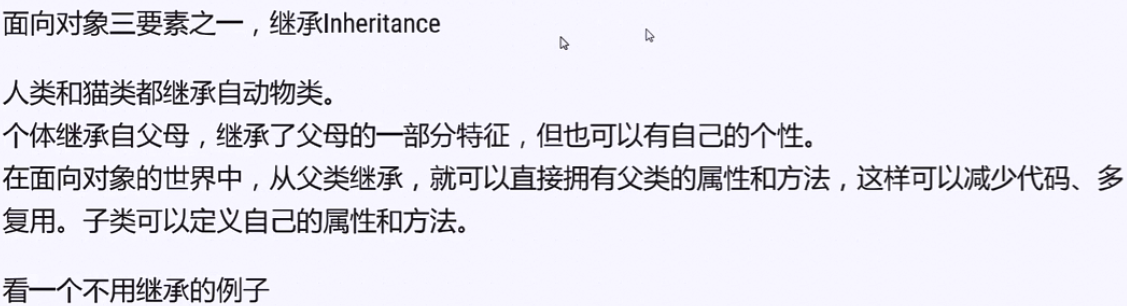
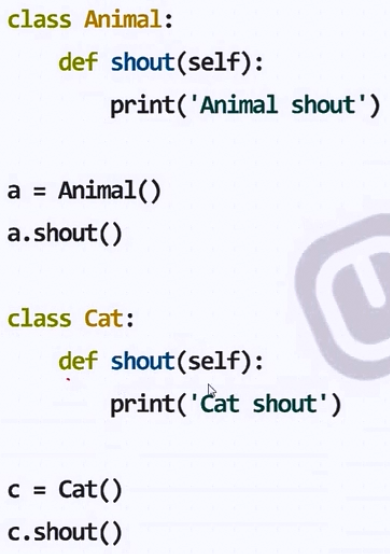

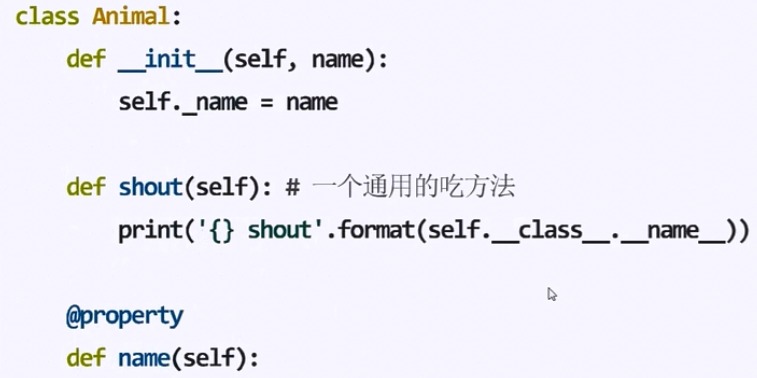
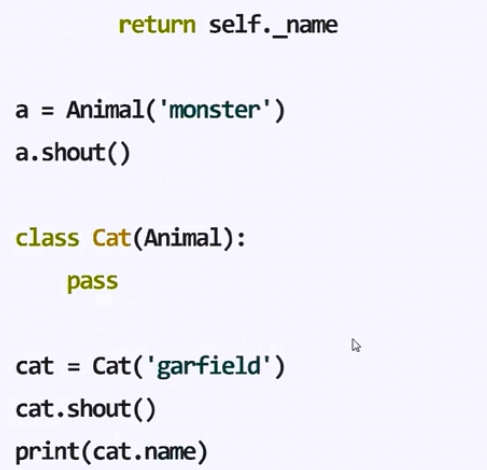
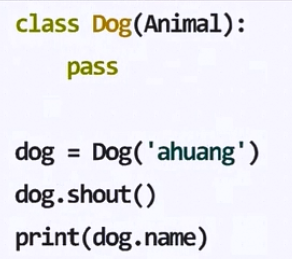
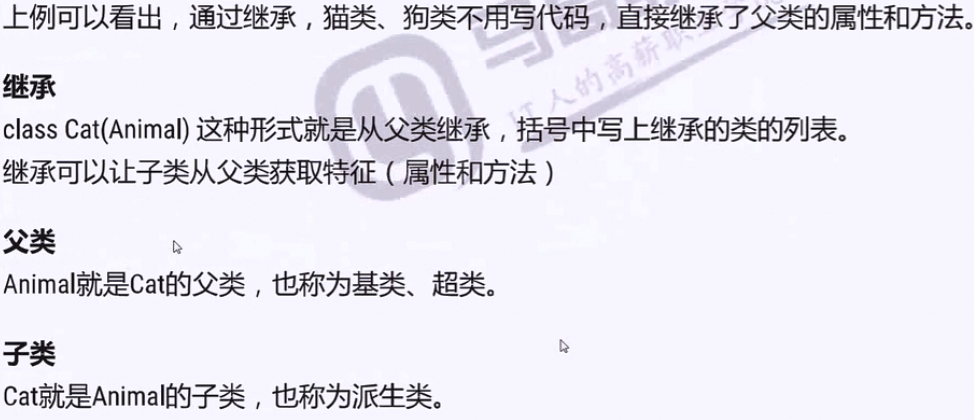
定义
格式如下
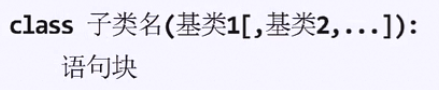

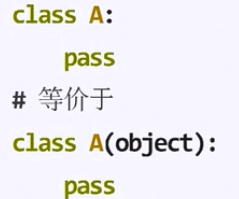
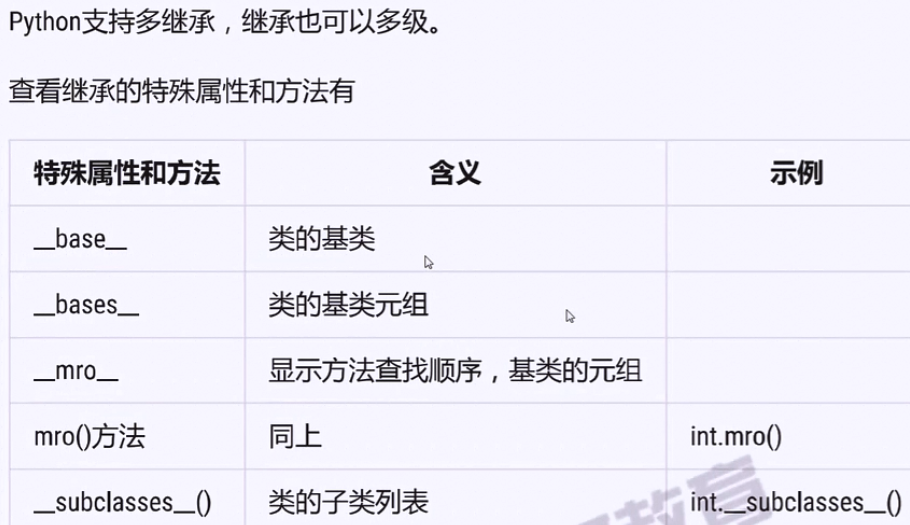
继承中的访问控制
class Animal:

    __CNOUT = 0

    HEIGHT = 0

    def __init__(self,age,weight,height):

        self.__CNOUT =self.__CNOUT + 1

        self.age = age

        self.__weight = weight

        self.HEIGHT = height

    def eat(self):

        print('{} eat'.format(self.__class__.__name__))

    def __getweight(self):

        print(self.__weight)

    @classmethod

    def showcount1(cls):

        print(cls.__CNOUT)

    @classmethod

    def __showcount2(cls):

        print(cls.__CNOUT)

class Cat(Animal):

    NAME = 'CAT'

c = Cat(3,5,15)

c.eat()

c.showcount1()#注意此处的cls.__COUNT仍为0

print(c.NAME)

print(c.__dict__)#{'_Animal__CNOUT': 1, 'age': 3, '_Animal__weight': 5, 'HEIGHT': 15}

print(Cat.__dict__)#{'__module__': '__main__', 'NAME': 'CAT', '__doc__': None}

print(Animal.__dict__)#{'__module__': '__main__', '_Animal__CNOUT': 0, 'HEIGHT': 0,...}
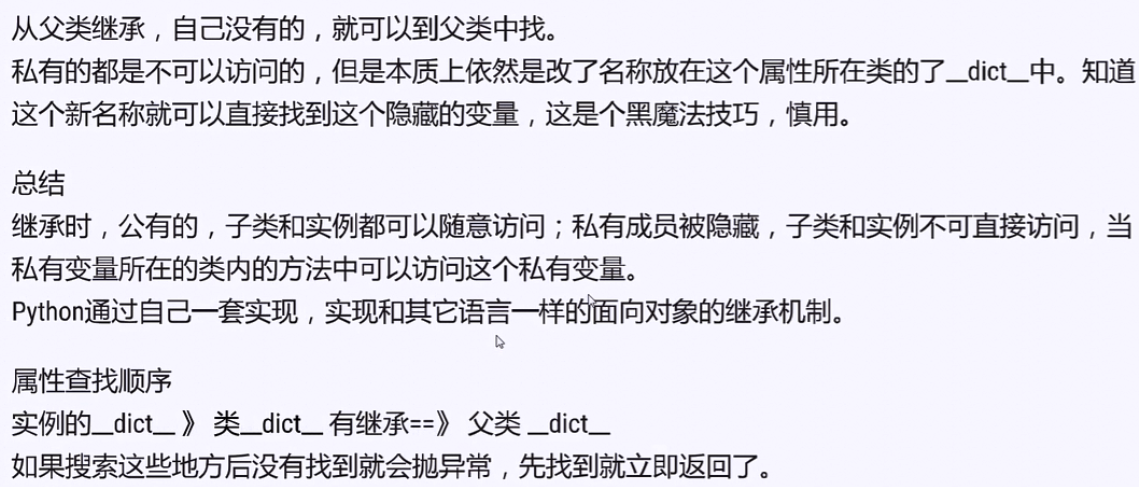
方法的重写、覆盖override


class Animal:

    def shout(self):

        print('Animal shout')

class Cat(Animal):

    #覆盖父类的方法

    def shout(self):

        print('miao')

    #覆盖自身的方法,显示调用了父类的方法

    def shout(self):

        print(super(Cat, self))

        super().shout()

a = Animal()

a.shout()

c =Cat()

c.shout()

#输出结果:

# Animal shout

# <super: <class 'Cat'>, <Cat object>>

# Animal shout

class Animal:

    @classmethod

    def class_method(cls):

        print('class_method_animal')

    @staticmethod

    def static_method():

        print('static_method_animal')

class Cat(Animal):

    @classmethod

    def class_method(cls):

        print('class_method_cat')

    @staticmethod

    def static_method():

        print('static_method_cat')

c = Cat()

c.class_method()

c.static_method()

#输出结果:

# class_method_cat

# static_method_cat

继承中的初始化

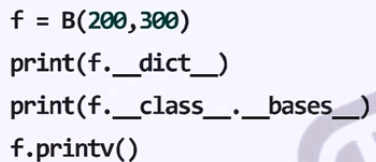
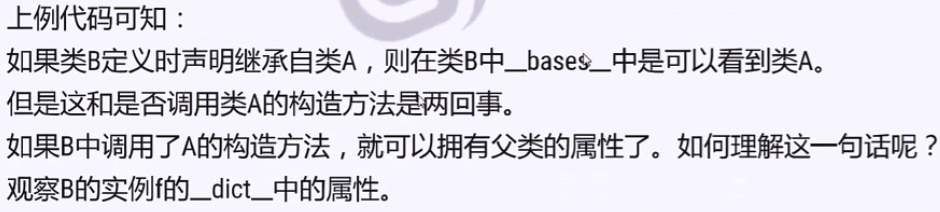


示例1
class A:

    def __init__(self):

        self.a1 = 'a1'

        self.__a2 = 's2'

        print('A init')

class B(A):

    pass

b = B()

print(b.__dict__)       #{'a1': 'a1', '_A__a2': 's2'}

示例2
class A:

    def __init__(self):

        self.a1 = 'a1'

        self.__a2 = 's2'

        print('A init')

class B(A):

    def __init__(self):

        self.b1 = 'b1'

        print('B init')

b = B()

print(b.__dict__)    #{'b1': 'b1'}

class A:

    def __init__(self):

        self.a1 = 'a1'

        self.__a2 = 's2'

        print('A init')

class B(A):

    def __init__(self):

        # A.__init__(self)

        # super(B,self).__init__()

        super().__init__()

        self.b1 = 'b1'

        print('B init')

b = B()

print(b.__dict__)   #{'a1': 'a1', '_A__a2': 's2', 'b1': 'b1'}
如何正确初始化




class Animal:

    def __init__(self,age):

        print('Animal init')

        self.age =age

    def show(self):

        print(self.age)

class Cat(Animal):

    def __init__(self,age,weight):

        super().__init__(age)#c.show()结果为11

        print('Cat init')

        self.age = age + 1

        self.weight = weight

        # super().__init__(age)#c.show()结果为10

c = Cat(10,5)

c.show()
# c.__dict__   {'age': 11, 'weight': 5}

class Animal:

    def __init__(self,age):

        print('Animal init')

        self.__age =age

    def show(self):

        print(self.__age)

class Cat(Animal):

    def __init__(self,age,weight):

        super().__init__(age)

        print('Cat init')

        self.__age = age + 1

        self.__weight = weight

c = Cat(10,5)

c.show()

print(c.__dict__)#{'_Animal__age': 10, '_Cat__age': 11, '_Cat__weight': 5}
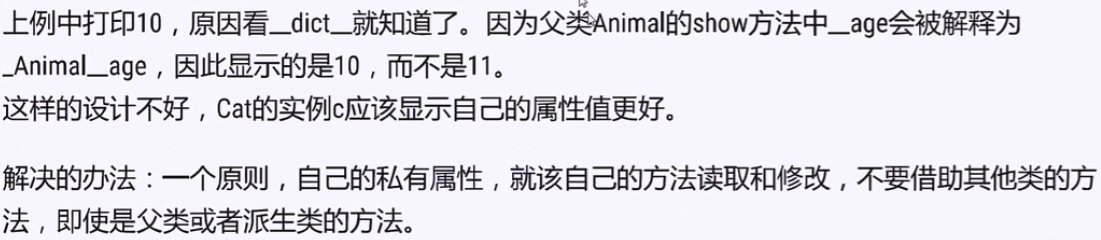
Python不同版本的类

多继承
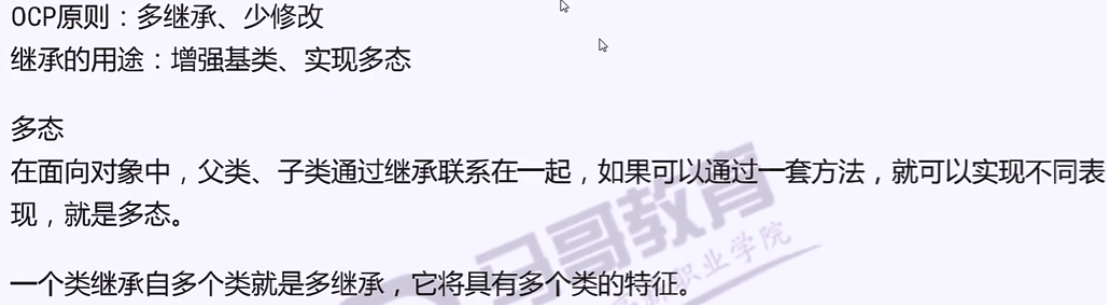
多继承弊端
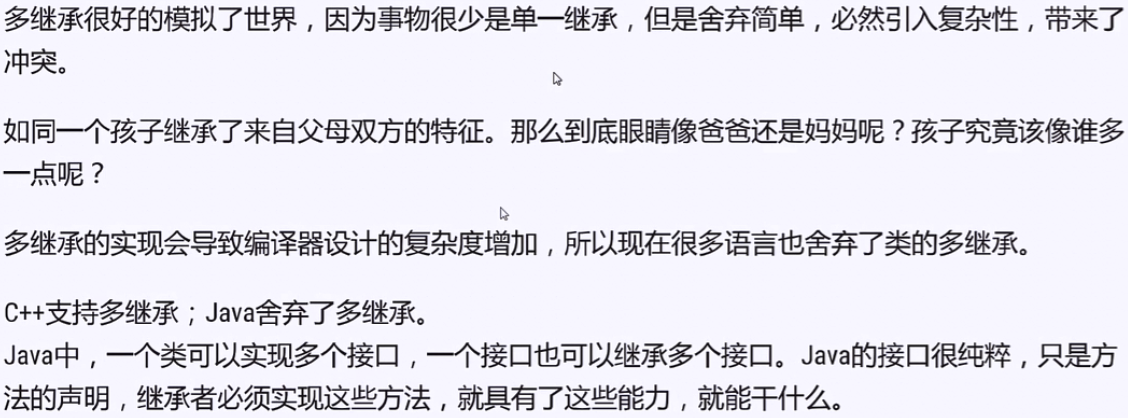

Python多继承实现
class ClassName(基类列表):

    类体
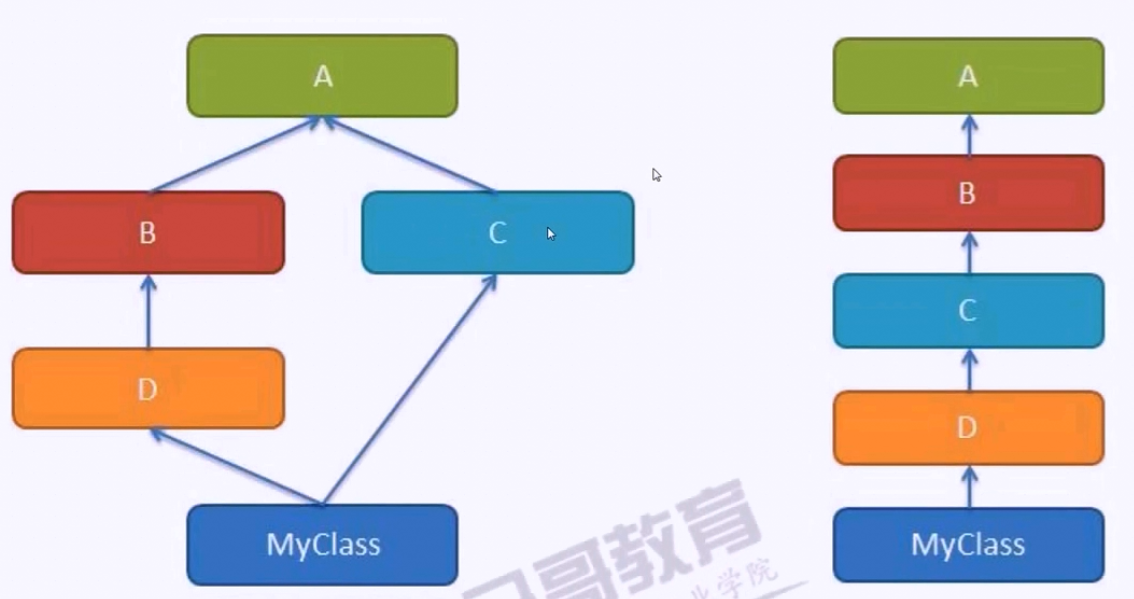

多继承的缺点


Mixin


class Printable:

    def _print(self):

        print(self.content)

class Document:#假设为第三方库,不允许修改

    def __init__(self,content):

        self.content = content

class Word(Document):pass#假设为第三方库,不允许修改

class Pdf(Document):pass#假设为第三方库,不允许修改

class PrintableWord(Printable,Word):pass

print(PrintableWord.__dict__)

print(PrintableWord.mro())

pw = PrintableWord('test string')

pw._print()
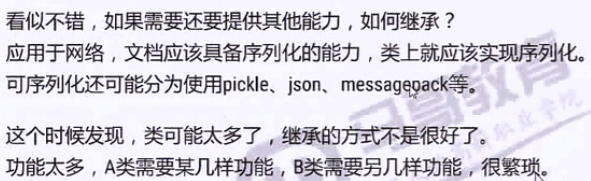

def printable(cls):

    def _print(self):

        print(self.content,'装饰器')

    cls.print = _print

    return cls

class Document:#假设为第三方库,不允许修改

    def __init__(self,content):

        self.content = content

class Word(Document):pass#假设为第三方库,不允许修改

class Pdf(Document):pass#假设为第三方库,不允许修改

@printable

class PrintableWord(Word):pass

print(PrintableWord.__dict__)#{'__module__': '__main__', '__doc__': None, 'print': <function printable.<locals>._print at 0x0000000002961730>}

PrintableWord('test').print()#test 装饰器

4.Mixin
#Mixin示例1

class PrintableMixin:

    def print(self):

        print(self.content,'Mixin')

class Document:

    def __init__(self,content):

        self.content = content

class Word(Document):pass

class Pdf(Document):pass

class PrintableWord(PrintableMixin,Word):pass

print(PrintableWord.__dict__)

print(PrintableWord.mro())

pw = PrintableWord('test\nstring')

pw.print()

#Mixin示例2

class PrintableMixin:

    def print(self):

        print(self.content,'Mixin')

class Document:

    def __init__(self,content):

        self.content = content

class Word(Document):pass

class Pdf(Document):pass

class SuperPrintableMixin(PrintableMixin):

    def print(self):

        print('~'*20)

        super().print() #通过继承复用

        print('~'*20)

class SuperPrintablePdf(SuperPrintableMixin,Pdf):pass

print(SuperPrintablePdf.__dict__)

print(SuperPrintablePdf.mro())

spp = SuperPrintablePdf('super print pdf')

spp.print()
Mixin类

练习

#1.Shape基类,要求所有子类都必须提供面积的计算,子类有三角形、矩形、圆

import  math

class Shape:

    @property

    def area(self):

        raise NotImplementedError('基类未实现')

class Triangle(Shape):

    def __init__(self,a,b,c):

        self.a = a

        self.b = b

        self.c = c

    @property

    def area(self):

        p  = (self.a+self.b+self.c)/2

        return math.sqrt(p*(p-self.a)*(p-self.b)*(p-self.c))

class Circle(Shape):

    def __init__(self,radius):

        self.radius = radius

    @property

    def area(self):

        return math.pi*self.radius**2

class Rectangle(Shape):

    def __init__(self,width,height):

        self.width = width

        self.height = height

    @property

    def area(self):

        return self.width*self.height

# shapes = [Triangle(3,4,5),Rectangle(3,4),Circle(4)]

# for s in shapes:

#     print('The area of {} = {}'.format(s.__class__.__name__,s.area))

#2.圆类的数据可序列化

import json

import msgpack

def mydump(cls):

    def _dumps(self, t='json'):

        if t == 'json':

            return json.dumps(self.__dict__)

        elif t == 'msgpack':

            return msgpack.packb(self.__dict__)

        else:

            raise NotImplementedError('没有实现的序列化')

    cls.dumps = _dumps

    return cls

#使用Mixin类

# class SerializableMixin:

#     def dumps(self,t='json'):

#         if t == 'json':

#             return json.dumps(self.__dict__)

#         elif t == 'msgpack':

#             return msgpack.packb(self.__dict__)

#         else:

#             raise NotImplementedError('没有实现的序列化')

#

#使用装饰器

@mydump

class SerializableCircleMixin(Circle):pass

scm  = SerializableCircleMixin(1)

print(scm.area)#3.141592653589793

print(scm.__dict__)#{'radius': 1}

print(scm.dumps('json'))#{"radius": 1}
作业

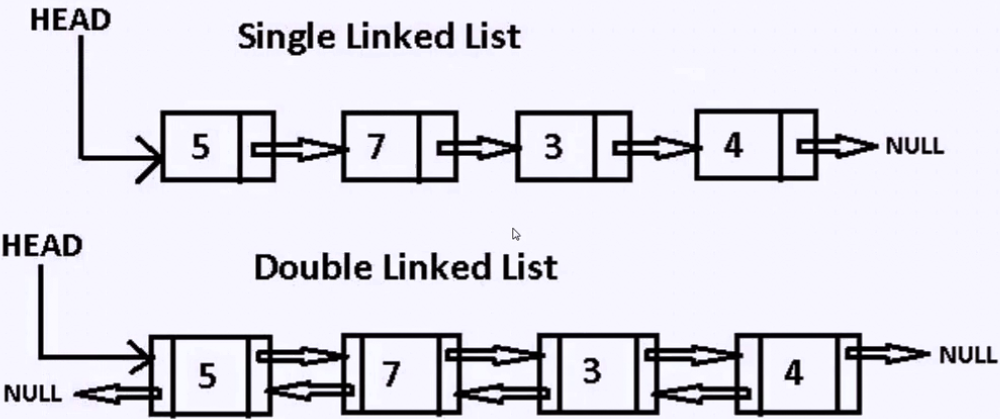
#单链表

class SingleNode:

    #代表一个节点

    def __init__(self,val,next=None):

        self.val = val

        self.next = None

class LinkedList:

    #容器类,某种方式存储一个个节点

    def __init__(self):

        self.head = None

        self.tail = None

    def append(self,val):

        node = SingleNode(val)

        if self.head is None:#

            self.head = node

            self.tail = node

        self.tail.next = node

        self.tail = node

    def iternodes(self):

        while self.head:

            yield self.head.val

            self.head = self.head.next
 #实现双向链表

 class SingleNode:

     #代表一个节点

     def __init__(self,val,next=None,prev=None):

         self.val = val

         self.next = next

         self.prev = prev

     def __repr__(self):

         return str(self.val)

 class LinkedList:

     #容器类,某种方式存储一个个节点

     def __init__(self):

         self.head = None

         self.tail = None

     def append(self,val):

         node = SingleNode(val)

         if self.head is None:#

             self.head = node

         else:

             self.tail.next = node

             node.prev = self.tail

         self.tail = node

     def pop(self):

         if self.tail is None:#

             raise NotImplementedError('Empty')

         tail = self.tail

         prev= self.tail.prev

         if prev is None:#1个节点

             self.head = None

             self.tail = None

         else:#>1

             self.tail = prev

             prev.next = None

         return tail.val

     def insert(self,index,val):#1,7

         if index < 0:

             raise Exception('Error')

         cur = None

         for i,current in enumerate(self.iternodes()):

             if i == index:

                 cur = current

                 break

         if cur is None:#说明索引越界或空链表,直接末尾追加

             self.append(val)

             return

         node = SingleNode(val)

         prev = cur.prev

         if prev is None:#1个节点,头部插入

             self.head = node

             node.next = cur

             cur.prev = node

         else:#>=2

             node.next = cur

             prev.next = node

             cur.prev = node

             node.prev = prev

     def iternodes(self,reversed = False):

         current = self.head

         while current:

             yield current

             current = current.next

 a = SingleNode(1)

 b = SingleNode(2)

 c = SingleNode(3)

 d = SingleNode(4)

 e = SingleNode(5)

 f = SingleNode(6)

 ll = LinkedList()

 ll.append(a)

 ll.append(b)

 ll.append(c)

 ll.append(d)

 ll.append(e)

 ll.append(f)

 # ll.insert(1,0)

 # ll.insert(0,0)

 ll.insert(10,100)

 print('pop元素:',ll.pop())

 print('pop元素:',ll.pop())

 print('pop元素:',ll.pop())

 ll.insert(0,10)

 for node in ll.iternodes():

     print(node)
Pyhon进阶9---类的继承的更多相关文章
- Python类的继承(进阶5)
转载请标明出处: http://www.cnblogs.com/why168888/p/6411918.html 本文出自:[Edwin博客园] Python类的继承(进阶5) 1. python中什 ...
- 苹果新的编程语言 Swift 语言进阶(十)--类的继承
一.类的继承 类能够从其它类继承方法.属性以及其它特性,当一个类从另外的类继承时,继承的类称为子类,它继承的类称为超类.在Swift中,继承是类区别与其它类型(结构.枚举)的基础行为. 1.1 .类的 ...
- Java+7入门经典 - 6 扩展类与继承 Part 1/2
第6章 扩展类与继承 面向对象编程的一个重要特性: 允许基于已定义的类创建新的类; 6.1 使用已有的类 派生 derivation, 派生类 derived class, 直接子类 direct s ...
- 游戏编程之Unity常用脚本类的继承关系
前言学习Unity开发引擎的初学者会接触大量的脚本类,而这些类之间的关系往往容易被忽略.本文对Unity引擎开发中的一些常用类及其关系进行了简单的归纳总结. 博文首发地址:http://tieba.b ...
- Objective-C编程 — 类和继承
讲述面向对象中的一个重要概念——继承,使用继承 可以方便地在已有类的基础上进行扩展,定义一个具有父 类全部功能的新类. 父类和子类 我们在定义一个新类的时候,经常会遇到要定义的新类是某个类的扩展或者是 ...
- Java基础进阶:时间类要点摘要,时间Date类实现格式化与解析源码实现详解,LocalDateTime时间类格式化与解析源码实现详解,Period,Duration获取时间间隔与源码实现,程序异常解析与处理方式
要点摘要 课堂笔记 日期相关 JDK7 日期类-Date 概述 表示一个时间点对象,这个时间点是以1970年1月1日为参考点; 作用 可以通过该类的对象,表示一个时间,并面向对象操作时间; 构造方法 ...
- C++学习笔记:07 类的继承与派生
课程<C++语言程序设计进阶>清华大学 郑莉老师) 基本概念 继承与派生的区别: 继承:保持已有类的特性而构造新类的过程称为继承. 派生:在已有类的基础上新增自己的特性(函数方法.数据成员 ...
- UML类图(上):类、继承和实现
面向对象设计 对于一个程序员来说,在工作的开始阶段通常都是别人把东西设计好,你来做.伴随着个人的成长,这个过程将慢慢变成自己设计一部分功能来实现,自己实现.如果要自己设计,无论是给自己看,还是给别人看 ...
- 【Python五篇慢慢弹(5)】类的继承案例解析,python相关知识延伸
类的继承案例解析,python相关知识延伸 作者:白宁超 2016年10月10日22:36:57 摘要:继<快速上手学python>一文之后,笔者又将python官方文档认真学习下.官方给 ...
随机推荐
- Elasticsearch的基本概念和指标
背景 在13年的时候,我开始负责整个公司的搜索引擎.嗯……,不是很牛的那种大项目负责人.而是整个搜索就我一个人做.哈哈. 后来跳槽之后,所经历的团队都用Elasticsearch,基本上和缓存一样,是 ...
- .net core自定义高性能的Web API服务网关
网关对于服务起到一个统一控制处理的作用,也便于客户端更好的调用:通过网关可以灵活地控制服务应用接口负载,故障迁移,安全控制,监控跟踪和日志处理等.由于网关在性能和可靠性上都要求非常严格,所以针对业务需 ...
- 接口自动化:HttpClient + TestNG + Java(一) - 接口测试概述+自动化环境搭建
1.1 接口测试简介 1.1.1 什么是接口测试 开始学习接口自动化测试之前,我们先要来了解什么是接口,以及什么是接口测试. 我们都知道,测试从级别上划分可以分为 组件测试 集成测试 系统测试 验收测 ...
- 还在问跨域?本文记录js跨域的多种实现实例
前言 众所周知,受浏览器同源策略的影响,产生了跨域问题,那么我们应该如何实现跨域呢?本文记录几种跨域的简单实现 前期准备 为了方便测试,我们启动两个服务,10086(就是在这篇博客自动生成的项目,请戳 ...
- TensorRT学习总结
TensorRT是什么 建议先看看这篇https://zhuanlan.zhihu.com/p/35657027 深度学习 训练 部署 平常自学深度学习的时候关注的更多是训练的部分,即得到一个模型.而 ...
- Spring MVC深入学习
一.MVC思想 MVC思想简介: MVC并不是java所特有的设计思想,也不是Web应用所特有的思想,它是所有面向对象程序设计语言都应该遵守的规范:MVC思想将一个应用部分分成三个基本部 ...
- 【JS】深拷贝与浅拷贝的区别,实现深拷贝的几种方法
1 借用JSON对象的parse和stringify function deepClone(obj){ let _obj = JSON.stringify(obj), objClone = JSON. ...
- JS:onmouseover 、onmouseout
鼠标移动到P标签上时,改变文本和边框样式 <style type="text/css"> .onmouseover { color: red; border: 1px ...
- vue中使用provide和inject刷新当前路由(页面)
1.场景 在处理列表时,常常有删除一条数据或者新增数据之后需要重新刷新当前页面的需求. 2.遇到的问题 1. 用vue-router重新路由到当前页面,页面是不进行刷新的 2.采用window.rel ...
- Retrofit+MVP框架封装记录篇
当下最流行的网络请求组合,retrofit2+okhttp+rxjava+mvp 这里是封装记录篇 首先分模块,比如登录 先来说封装后的使用 package com.fragmentapp.login ...