
jdk1.8-ArrayDeque
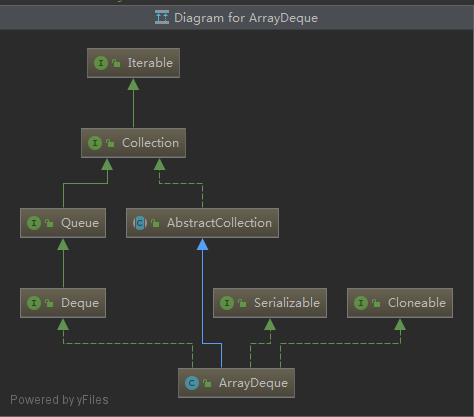
public class ArrayDeque<E> extends AbstractCollection<E>
                           implements Deque<E>, Cloneable, Serializable
/**
 * The array in which the elements of the deque are stored.
 * The capacity of the deque is the length of this array, which is
 * always a power of two. The array is never allowed to become
 * full, except transiently within an addX method where it is
 * resized (see doubleCapacity) immediately upon becoming full,
 * thus avoiding head and tail wrapping around to equal each
 * other.  We also guarantee that all array cells not holding
 * deque elements are always null.
 *
 * 存放元素的Object[]数组(底层数据结构)
 */
transient Object[] elements; // non-private to simplify nested class access
/**
 * The index of the element at the head of the deque (which is the
 * element that would be removed by remove() or pop()); or an
 * arbitrary number equal to tail if the deque is empty.
 *
 * 队首元素所在位置
 */
transient int head;
/**
 * The index at which the next element would be added to the tail
 * of the deque (via addLast(E), add(E), or push(E)).
 *
 * 队尾元素所在位置
 */
transient int tail;
/**
 * The minimum capacity that we'll use for a newly created deque.
 * Must be a power of 2.
 *
 * 容量最小值,2的次幂,默认为8
 */
private static final int MIN_INITIAL_CAPACITY = 8;
/**
 * Allocates empty array to hold the given number of elements.
 *
 * @param numElements  the number of elements to hold
 *
 * 寻找numElements的最近的二次幂值initialCapacity
 *  new一个长度为initialCapacity的新Object[]数组
 */
private void allocateElements(int numElements) {
    int initialCapacity = MIN_INITIAL_CAPACITY;
    // Find the best power of two to hold elements.
    // Tests "<=" because arrays aren't kept full.
    if (numElements >= initialCapacity) {
        initialCapacity = numElements;
        initialCapacity |= (initialCapacity >>>  1);
        initialCapacity |= (initialCapacity >>>  2);
        initialCapacity |= (initialCapacity >>>  4);
        initialCapacity |= (initialCapacity >>>  8);
        initialCapacity |= (initialCapacity >>> 16);
        initialCapacity++;

        if (initialCapacity < 0)   // Too many elements, must back off
            initialCapacity >>>= 1;// Good luck allocating 2 ^ 30 elements
    }
    elements = new Object[initialCapacity];
}
分析:这个计算方法参考下面这个链接,讲的挺好
/**
 * Constructs an empty array deque with an initial capacity
 * sufficient to hold 16 elements.
 *
 * 无参构造函数初始化数组长度为16
 */
public ArrayDeque() {
    elements = new Object[16];
}
/**
 * Constructs an empty array deque with an initial capacity
 * sufficient to hold the specified number of elements.
 *
 * @param numElements  lower bound on initial capacity of the deque
 *
 * 传入长度,构造函数
 */
public ArrayDeque(int numElements) {
    allocateElements(numElements);
}
分析:传入长度,初始为数组长度为大于等于numElements最小2次幂
/**
 * Constructs a deque containing the elements of the specified
 * collection, in the order they are returned by the collection's
 * iterator.  (The first element returned by the collection's
 * iterator becomes the first element, or <i>front</i> of the
 * deque.)
 *
 * @param c the collection whose elements are to be placed into the deque
 * @throws NullPointerException if the specified collection is null
 *
 * 传入集合,构造函数
 */
public ArrayDeque(Collection<? extends E> c) {
    allocateElements(c.size());
    addAll(c);
}
分析:初始化数组长度为大于等于集合长度的最小2次幂,调用addAll()方法
/**
 * {@inheritDoc}
 *
 * <p>This implementation iterates over the specified collection, and adds
 * each object returned by the iterator to this collection, in turn.
 *
 * <p>Note that this implementation will throw an
 * <tt>UnsupportedOperationException</tt> unless <tt>add</tt> is
 * overridden (assuming the specified collection is non-empty).
 *
 * @throws UnsupportedOperationException {@inheritDoc}
 * @throws ClassCastException            {@inheritDoc}
 * @throws NullPointerException          {@inheritDoc}
 * @throws IllegalArgumentException      {@inheritDoc}
 * @throws IllegalStateException         {@inheritDoc}
 *
 * @see #add(Object)
 */
public boolean addAll(Collection<? extends E> c) {
    boolean modified = false;
    for (E e : c)
        if (add(e))
            modified = true;
    return modified;
}
分析:遍历集合,一个个add添加
/**
 * Inserts the specified element at the end of this deque.
 *
 * @param e the element to add
 * @return {@code true} (as specified by {@link Deque#offerLast})
 * @throws NullPointerException if the specified element is null
 *
 * 添加到队尾
 */
public boolean offerLast(E e) {
    addLast(e);
    return true;
}
分析:传入元素,调用addLast()方法
/**
 * Inserts the specified element at the end of this deque.
 *
 * <p>This method is equivalent to {@link #add}.
 *
 * @param e the element to add
 * @throws NullPointerException if the specified element is null
 *
 */
public void addLast(E e) {
    //判空
    if (e == null)
        throw new NullPointerException();
    //根据下标,队尾值为e
    elements[tail] = e;
    if ( (tail = (tail + 1) & (elements.length - 1)) == head)
        doubleCapacity();
}
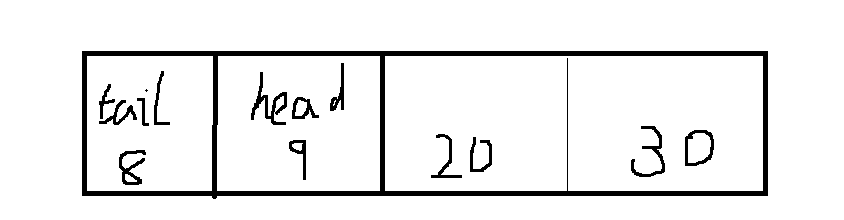
分析:这里直接在队尾里添加了元素e,因为ArrayDeque是一个循环队列,所以当队尾和队头重合说明,队列满了,需要进行扩容。
tail = (tail + 1) & (elements.length - 1)) == head
public void addFirst(E e) {
    if (e == null)
        throw new NullPointerException();
    elements[head = (head - 1) & (elements.length - 1)] = e;
    if (head == tail)
        doubleCapacity();
}
/**
 * Doubles the capacity of this deque.  Call only when full, i.e.,
 * when head and tail have wrapped around to become equal.
 */
private void doubleCapacity() {
    //断言头和尾是不是重,也就是队列是否满了
    assert head == tail;
    //头部索引p
    int p = head;
    //队列长度n
    int n = elements.length;
    //头部元素右边有多少个元素r包括头部
    int r = n - p; // number of elements to the right of p
    //队列长度扩大为2倍
    int newCapacity = n << 1;
    //如果扩大两倍后长度超过了int大小变为负数,则抛错
    if (newCapacity < 0)
        throw new IllegalStateException("Sorry, deque too big");
    //new一个新的数组长度为原来的两倍
    Object[] a = new Object[newCapacity];
    //旧数组elements 从p头部开始,  新数组a,从0开始,  长度为r。所以是拷贝原数组p右侧数据包括p
    System.arraycopy(elements, p, a, 0, r);
    //旧数组elements 从下标0开始,  新数组a,从下标r开始,  长度为p。所以是拷贝原数组p左侧数据
    System.arraycopy(elements, 0, a, r, p);
    //旧数组等于新数组a
    elements = a;
    //队头索引等于0
    head = 0;
    //队尾索引等于n,n为旧数组的长度不是最新的数组
    tail = n;
}
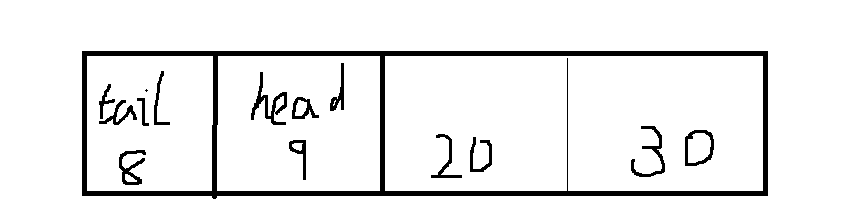
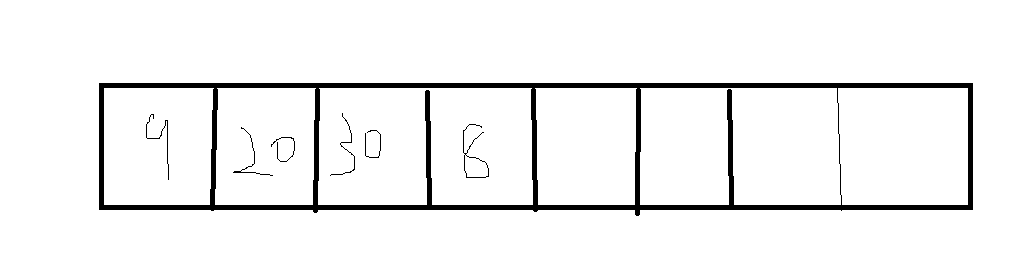
分析:这里看上面的注释已经将得很清晰了,但是我们这里需要注意一个问题
public E pollFirst() {
    //头部索引等于h
    int h = head;
    @SuppressWarnings("unchecked")
    //检查头部是否有元素
    E result = (E) elements[h];
    // Element is null if deque empty
    if (result == null)
        return null;
    //令当前位置为null
    elements[h] = null;     // Must null out slot
    //队头索引向递增方向退一位
    head = (h + 1) & (elements.length - 1);
    return result;
}

jdk1.8-ArrayDeque的更多相关文章
- 给jdk写注释系列之jdk1.6容器(11)-Queue之ArrayDeque源码解析
前面讲了Stack是一种先进后出的数据结构:栈,那么对应的Queue是一种先进先出(First In First Out)的数据结构:队列. 对比一下Stack,Queue是一种先进先出的容 ...
- 学习JDK1.8集合源码之--ArrayDeque
1. ArrayDeque简介 ArrayDeque是基于数组实现的一种双端队列,既可以当成普通的队列用(先进先出),也可以当成栈来用(后进先出),故ArrayDeque完全可以代替Stack,Arr ...
- 给jdk写注释系列之jdk1.6容器(13)-总结篇之Java集合与数据结构
是的,这篇blogs是一个总结篇,最开始的时候我提到过,对于java容器或集合的学习也可以看做是对数据结构的学习与应用.在前面我们分析了很多的java容器,也接触了好多种常用的数据结构,今天 ...
- 给jdk写注释系列之jdk1.6容器(12)-PriorityQueue源码解析
PriorityQueue是一种什么样的容器呢?看过前面的几个jdk容器分析的话,看到Queue这个单词你一定会,哦~这是一种队列.是的,PriorityQueue是一种队列,但是它又是一种什么样的队 ...
- JDK1.8源码阅读系列之三:Vector
本篇随笔主要描述的是我阅读 Vector 源码期间的对于 Vector 的一些实现上的个人理解,用于个人备忘,有不对的地方,请指出- 先来看一下 Vector 的继承图: 可以看出,Vector 的直 ...
- jdk1.8.0_45源码解读——Set接口和AbstractSet抽象类的实现
jdk1.8.0_45源码解读——Set接口和AbstractSet抽象类的实现 一. Set架构 如上图: (01) Set 是继承于Collection的接口.它是一个不允许有重复元素的集合.(0 ...
- JDK7集合框架源码阅读(七) ArrayDeque
基于版本jdk1.7.0_80 java.util.ArrayDeque 代码如下 /* * ORACLE PROPRIETARY/CONFIDENTIAL. Use is subject to li ...
- 【Java源码】集合类-ArrayDeque
一.类继承关系 ArrayDeque和LinkedList一样都实现了双端队列Deque接口,但它们内部的数据结构和使用方法却不一样.根据该类的源码注释翻译可知: ArrayDeque实现了Deque ...
- 【集合系列】- 深入浅出分析 ArrayDeque
一.摘要 在 jdk1.5 中,新增了 Queue 接口,代表一种队列集合的实现,咱们继续来聊聊 java 集合体系中的 Queue 接口. Queue 接口是由大名鼎鼎的 Doug Lea 创建,中 ...
- 学习JDK1.8集合源码之--HashMap
1. HashMap简介 HashMap是一种key-value结构存储数据的集合,是map集合的经典哈希实现. HashMap允许存储null键和null值,但null键最多只能有一个(HashSe ...
随机推荐
- libusb_submit_transfer 异步通信libusb
https://bbs.csdn.net/topics/391012708?list=lz
- 第二章 Vue快速入门--13 讲解v-model实现表单元素的数据双向绑定
<!DOCTYPE html> <html lang="en"> <head> <meta charset="utf-8&quo ...
- 解决使用vue打包时vendor文件过大或者是app.js文件很大的问题
这篇文章主要介绍了使用vue打包时vendor文件过大或者是app.js文件很大问题的解决方法,非常不错,具有一定的参考借鉴价值,需要的朋友可以参考下 第一次使用vue2.0开发,之前都是用的angu ...
- Redis主从复制配置+哨兵模式
架构设计: master:s0 slave:s1.s2 主机映射信息如下: 192.168.32.100 s0 192.168.32.101 s1 192.168.32.102 s2 1.安装Redi ...
- uoj30【CF Round #278】Tourists(圆方树+树链剖分+可删除堆)
- 学习了一波圆方树 学习了一波点分治 学习了一波可删除堆(巧用 ? STL) 传送门: Icefox_zhx 注意看代码看怎么构建圆方树的. tips:tips:tips:圆方树内存记得开两倍 CO ...
- Java当中的IO流(上)
Java当中的IO流 在Java中,字符串string可以用来操作文本数据内容,字符串缓冲区是什么呢?其实就是个容器,也是用来存储很多的数据类型的字符串,基本数据类型包装类的出现可以用来解决字符串和基 ...
- python3 使用flask连接数据库出现“ModuleNotFoundError: No module named 'MySQLdb'”
本文链接:https://blog.csdn.net/Granery/article/details/89787348 在使用python3连接MySQL的时候出现了 ‘ModuleNotFoundE ...
- 从零开始学习Gradle之三---多项目构建
随着信息化的快速发展,IT项目变得越来越复杂,通常都是由多个子系统共同协作完成.对于这种多系统.多项目的情况,很多构建工具都已经提供了不错的支持,像maven.ant.Gradle除了借鉴了an ...
- ARTS打卡计划第一周
Algorithms: https://leetcode-cn.com/problems/two-sum/ Review: https://www.infoq.cn/article/EafgGJEtq ...
- 输出变量的界值(int、float、long.....)
//整型.浮点型变量表示的关键字,并给出它们各自的界值 #include<iostream> #include<climits> //包含整型数据范围的头文件 #include ...