
Openwrt:基于MT7628/MT7688的PWM驱动
前言
MT7628/MT7688的PWM驱动相关资料较少,官方的datasheet基本也是一堆寄存器,啃了许久,终于嚼出了味道。由于PWM存在IO口复用的问题,所以要提前配置好GPIO的工作方式,不然你无论怎么掐示波器,都不会出现预计的波形。由于MT7688和MT7628是pin to pin,几乎完全兼容,除了MT7628是2T2R而MT7688是1T1R这个区别,在PWM的设置上是相同,所以MT7688也可以直接参考MT7628的编程手册。
寄存器
pwm复用关系
MT7688最多支持四路PWM,分别是pwm_ch0、pwm_ch1、pwm_ch2、pwm_ch3,从MT7688的pin map可知:
- pwm_ch0、pwm_ch1复用在PAD_MDI_TP_P1和PAD_MDI_TN_P1上,也就是网口1的传输线,再往下看,pwm_ch0、pwm_ch1还复用在txd1、rxd1上,这是串口1;
- pwm_ch2、pwm_ch3复用在PAD_MDI_TP_P2和PAD_MDI_TN_P2上,也就是网口2;
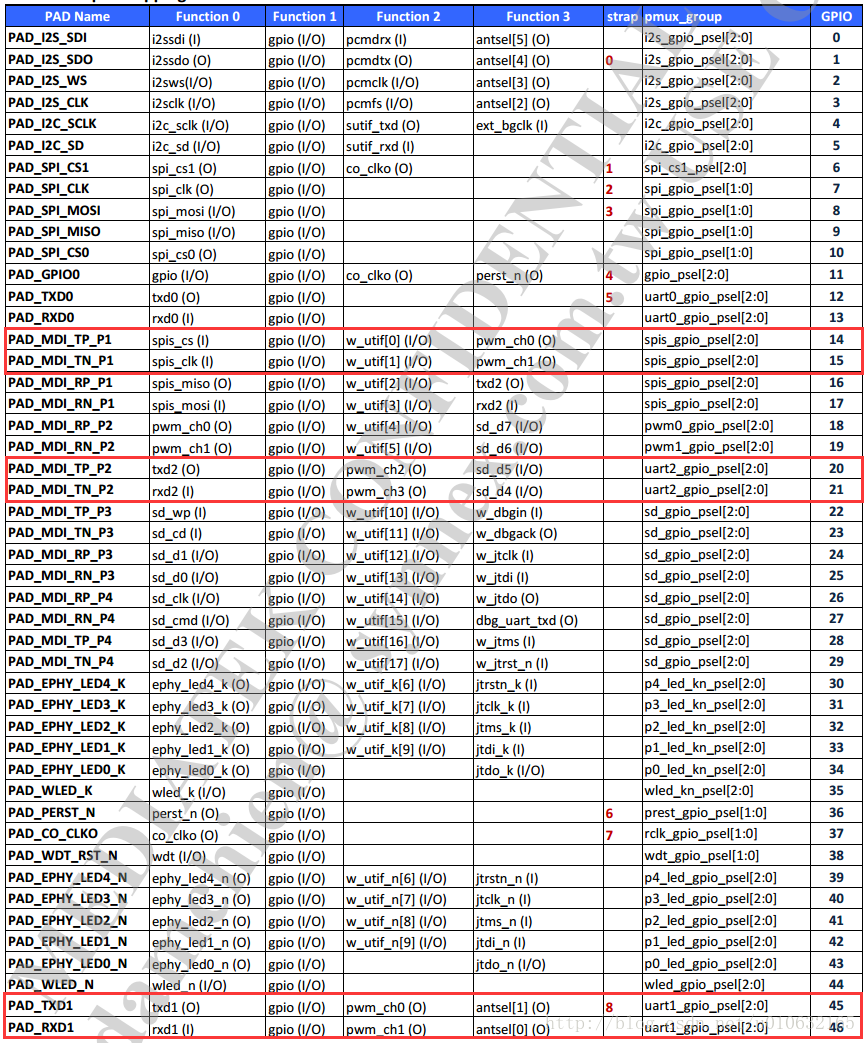
由上面如果既要使用网口1的功能,又要使用pwm_ch0、pwm_ch1的功能,那么必须复用到txd1和rxd1上才可以,因为系统默认GPIO14、15的功能是网口1,而GPIO45、46的功能是串口1,所以这里还需对GPIO的模式进行配置,同理pwm_ch2、pwm_ch3也需要进行类似的配置。
gpio mode
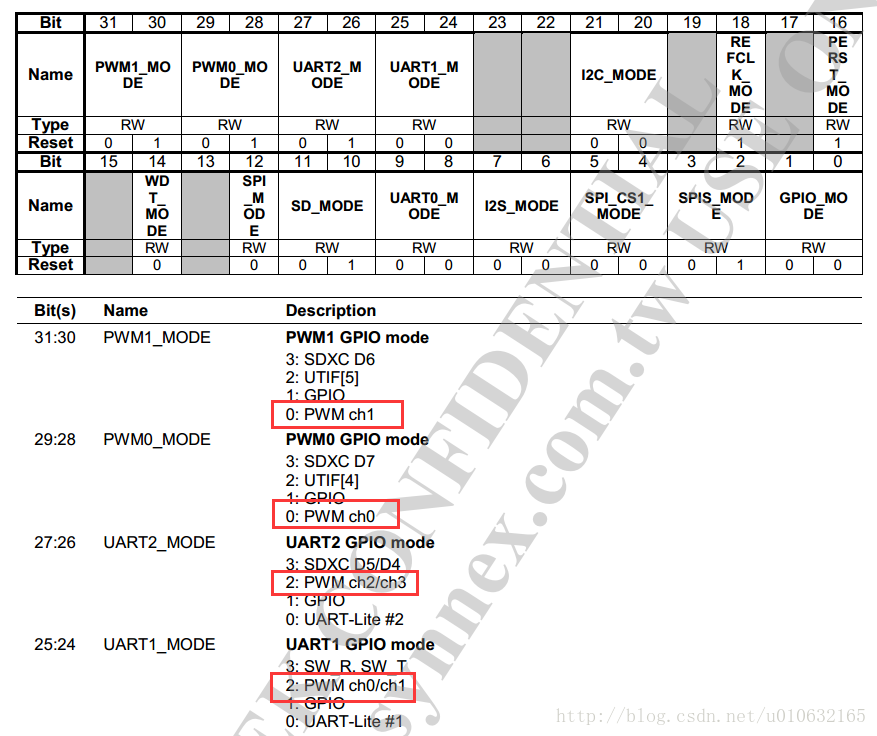
选择那几路pwm做为这几个GPIO的功能则需要配置GPIO_MODE寄存器了,由下图可知,GPIO被分为两组,分别为GPIO1与GPIO2,寄存器地址分别为10000060和10000064这在后面驱动编写对GPIO进行初始化的时候会用到。

下图是GPIO1的寄存器配置方式,在此可知,对于PWM的选择只需配置相应的Bit即可。不同的模式通过不同的值进行选择。
代码
以下驱动代码参考了小鱼儿专栏的博文,做了部分修改,修复了几处错误,经测试可以使用。
mt7688_pwm.c
#include <linux/kernel.h>

#include <linux/version.h>

#include <linux/fs.h>

#include <linux/init.h>

#include <linux/delay.h>

#include <linux/irq.h>

#include <asm/uaccess.h>

#include <asm/irq.h>

#include <asm/io.h>

#include <linux/module.h>

#include <linux/device.h>

#include <linux/cdev.h>

#include <linux/interrupt.h>

#include <linux/sched.h>

#include <linux/wait.h>

#include <linux/poll.h>

#include <linux/fcntl.h>

#include <linux/spinlock.h>

#include "mt7688_pwm.h"

MODULE_LICENSE("GPL");

#define RALINK_CLK_CFG    0xB0000030

#define RALINK_AGPIO_CFG  0xB000003C

#define RALINK_GPIOMODE   0xB0000060

#define RALINK_PWM_BASE   0xB0005000

//#define RALINK_CLK_CFG    0x10000030

//#define RALINK_AGPIO_CFG  0x1000003C

//#define RALINK_GPIOMODE   0x10000060

//#define RALINK_PWM_BASE   0x10005000

#define RALINK_PWM_ENABLE    RALINK_PWM_BASE

#define PWM_MODE_BIT      15

#define PWM_GVAL_BIT      8

#define PWM_IVAL_BIT      7

enum {

    PWM_REG_CON,

    PWM_REG_GDUR = 0x0C,

    PWM_REG_WNUM = 0x28,

    PWM_REG_DWID = 0x2C,

    PWM_REG_THRE = 0x30,

    PWM_REG_SNDNUM = 0x34,

}PWM_REG_OFF;

#define PWM_NUM  4

u32 PWM_REG[PWM_NUM] = {

    (RALINK_PWM_BASE + 0x10),    /* pwm0 base */

    (RALINK_PWM_BASE + 0x50),    /* pwm1 base */

    (RALINK_PWM_BASE + 0x90),    /* pwm2 base */

    (RALINK_PWM_BASE + 0xD0)     /* pwm3 base */

};

#define NAME  "sooall_pwm"

int pwm_major;

int pwm_minor  = 0;

int pwm_device_cnt = 1;

struct cdev pwm_cdev;

static struct class  *pwm_class;

static struct device *pwm_device;

spinlock_t pwm_lock;

static void sooall_pwm_cfg(struct pwm_cfg *cfg)

{

    u32 value;

    unsigned long  flags;

    u32 basereg;

    basereg = PWM_REG[cfg->no];

    spin_lock_irqsave(&pwm_lock, flags);

    /* 1. set the pwm control register */

    value  = le32_to_cpu(*(volatile u32 *)(basereg + PWM_REG_CON));

    /* old mode */

    value |= (1 << PWM_MODE_BIT);

    /* set the idel val and guard val */

    value &= ~((1 << PWM_IVAL_BIT) | (1 << PWM_GVAL_BIT));

    value |= ((cfg->idelval & 0x1) << PWM_IVAL_BIT);

    value |= ((cfg->guardval & 0x1) << PWM_GVAL_BIT);

    /* set the source clk */

    if (cfg->clksrc == PWM_CLK_100KHZ) {

        value &= ~(1<<3);

    } else {

        value |= (1<<3);

    }

    /* set the clk div */

    value &= ~0x7;

    value |= (0x7 & cfg->clkdiv);

    *(volatile u32 *)(basereg + PWM_REG_CON) = cpu_to_le32(value);

    /* 2. set the guard duration val */

    value  = le32_to_cpu(*(volatile u32 *)(basereg + PWM_REG_GDUR));

    value &= ~(0xffff);

    value |= (cfg->guarddur & 0xffff);

    *(volatile u32 *)(basereg + PWM_REG_GDUR) = cpu_to_le32(value);

    /* 3. set the wave num val */

    value  = le32_to_cpu(*(volatile u32 *)(basereg + PWM_REG_WNUM));

    value &= ~(0xffff);

    value |= (cfg->wavenum & 0xffff);

    *(volatile u32 *)(basereg + PWM_REG_WNUM) = cpu_to_le32(value);

    /* 4. set the data width val */

    value  = le32_to_cpu(*(volatile u32 *)(basereg + PWM_REG_DWID));

    value &= ~(0x1fff);

    value |= (cfg->datawidth & 0x1fff);

    *(volatile u32 *)(basereg + PWM_REG_DWID) = cpu_to_le32(value);

    /* 5. set the thresh  val */

    value  = le32_to_cpu(*(volatile u32 *)(basereg + PWM_REG_THRE));

    value &= ~(0x1fff);

    value |= (cfg->threshold & 0x1fff);

    *(volatile u32 *)(basereg + PWM_REG_THRE) = cpu_to_le32(value);

    spin_unlock_irqrestore(&pwm_lock, flags);

}

static void sooall_pwm_enable(int no)

{

    u32 value;

    unsigned long  flags;

    printk(KERN_INFO NAME "enable pwm%d\n", no);

    spin_lock_irqsave(&pwm_lock, flags);

    value  = le32_to_cpu(*(volatile u32 *)(RALINK_PWM_ENABLE));

    value  |= (1 << no);

    *(volatile u32 *)(RALINK_PWM_ENABLE) = cpu_to_le32(value);

    spin_unlock_irqrestore(&pwm_lock, flags);

}

static void sooall_pwm_disable(int no)

{

    u32 value;

    unsigned long  flags;

    printk(KERN_INFO NAME "disable pwm%d\n", no);

    spin_lock_irqsave(&pwm_lock, flags);

    value  = le32_to_cpu(*(volatile u32 *)(RALINK_PWM_ENABLE));

    value  &= ~(1 << no);

    *(volatile u32 *)(RALINK_PWM_ENABLE) = cpu_to_le32(value);

    spin_unlock_irqrestore(&pwm_lock, flags);

}

static void sooall_pwm_getsndnum(struct pwm_cfg *cfg)

{

    u32 value;

    unsigned long  flags;

    u32 regbase = PWM_REG[cfg->no];

    spin_lock_irqsave(&pwm_lock, flags);

    value  = le32_to_cpu(*(volatile u32 *)(regbase + PWM_REG_SNDNUM));

    cfg->wavenum = value;

    spin_unlock_irqrestore(&pwm_lock, flags);

}

#if LINUX_VERSION_CODE > KERNEL_VERSION(2,6,35)

long sooall_pwm_ioctl(struct file *file, unsigned int req,

        unsigned long arg)

#else

int sooall_pwm_ioctl(struct inode *inode, struct file *file, unsigned int req,

        unsigned long arg)

#endif

{

    switch (req) {

    case PWM_ENABLE:

        sooall_pwm_enable(((struct pwm_cfg *)arg)->no);

        break;

    case PWM_DISABLE:

        sooall_pwm_disable(((struct pwm_cfg *)arg)->no);

        break;

    case PWM_CONFIGURE:

        sooall_pwm_cfg((struct pwm_cfg *)arg);

        break;

    case PWM_GETSNDNUM:

        sooall_pwm_getsndnum((struct pwm_cfg *)arg);

        break;

    default:

        return -ENOIOCTLCMD;

    }

    return 0;

}

static int sooall_pwm_open(struct inode * inode, struct file * filp)

{

    return 0;

}

static int sooall_pwm_close(struct inode *inode, struct file *file)

{

    return 0;

}

static const struct file_operations pwm_fops = {

    .owner      = THIS_MODULE,

#if LINUX_VERSION_CODE > KERNEL_VERSION(2,6,35)

    unlocked_ioctl:sooall_pwm_ioctl,

#else

    ioctl:sooall_pwm_ioctl,

#endif

    .open       = sooall_pwm_open,

    .release    = sooall_pwm_close,

};

static int setup_chrdev(void)

{

    dev_t dev;

    int err = 0;

    if (pwm_major) {

        dev = MKDEV(pwm_major, 0);

        err = register_chrdev_region(dev, pwm_device_cnt, NAME);

    } else {

        err = alloc_chrdev_region(&dev, 0, pwm_device_cnt, NAME);

        pwm_major = MAJOR(dev);

    }

    if (err < 0) {

        printk(KERN_ERR NAME "get device number failed\n");

        return -1;

    }

    cdev_init(&pwm_cdev, &pwm_fops);

    pwm_cdev.owner = THIS_MODULE;

    pwm_cdev.ops = &pwm_fops;

    err = cdev_add(&pwm_cdev, dev, pwm_device_cnt);

    if (err < 0) {

        printk(KERN_ERR NAME "cdev_add failed\n");

        unregister_chrdev_region(dev, pwm_device_cnt);

        return -1;

    }

    return 0;

}

static void clean_chrdev(void)

{

    dev_t dev = MKDEV(pwm_major, 0);

    cdev_del(&pwm_cdev);

    unregister_chrdev_region(dev, pwm_device_cnt);

}

static void setup_gpio(void)

{

    u32 value;

    int i = 0;

    /* pwm0 pwm1 */

    /* enable the pwm clk */

    value  = le32_to_cpu(*(volatile u32 *)(RALINK_CLK_CFG));

    value  |= (1 << 31);

    *(volatile u32 *)(RALINK_CLK_CFG) = cpu_to_le32(value);

    /* set the agpio cfg of ephy_gpio_aio_en */

    //value  = le32_to_cpu(*(volatile u32 *)(RALINK_AGPIO_CFG));

    //value  |= (0xF<<17);

    //*(volatile u32 *)(RALINK_AGPIO_CFG) = cpu_to_le32(value);

    /* set the pwm  mode */

    //value  = le32_to_cpu(*(volatile u32 *)(RALINK_GPIOMODE));

    //value  &= ~(3 << 28 | 3 << 30);

    //*(volatile u32 *)(RALINK_GPIOMODE) = cpu_to_le32(value);

   value  = le32_to_cpu(*(volatile u32 *)(RALINK_GPIOMODE));

   value  |= (2 << 24);

   *(volatile u32 *)(RALINK_GPIOMODE) = cpu_to_le32(value);

    /* disable all the pwm */

    for (i = 0; i < PWM_NUM; i++) {

        sooall_pwm_disable(i);

    }

}

static int sooall_pwm_init(void)

{

    int ret = 0;

    spin_lock_init(&pwm_lock);

    ret = setup_chrdev();

    if (ret < 0)

        return -1;

    pwm_class = class_create(THIS_MODULE, NAME);

    if (NULL == pwm_class) {

        printk(KERN_ERR NAME "class_create failed\n");

        goto dev_clean;

    }

    pwm_device = device_create(pwm_class, NULL,

                    MKDEV(pwm_major, pwm_minor), NULL, "sooall_pwm");

    if (NULL == pwm_device) {

        printk(KERN_ERR NAME "device_create failed\n");

        goto class_clean;

    }

    setup_gpio();

    printk(KERN_INFO "sooall pwm init success\n");

    return 0;

class_clean:

    class_destroy(pwm_class);

dev_clean:

    clean_chrdev();

    return -1;

}

static void sooall_pwm_exit(void)

{

    device_destroy(pwm_class, MKDEV(pwm_major, pwm_minor));

    class_destroy(pwm_class);

    clean_chrdev();

    printk(KERN_INFO "sooall pwm exit\n");

}

module_init(sooall_pwm_init);

module_exit(sooall_pwm_exit);
mt7688_pwm.h
#ifndef _SOOALL_PWM_H_

#define _SOOALL_PWM_H_

/* the source of the clock */

typedef enum {

    PWM_CLK_100KHZ,

    PWM_CLK_40MHZ

}PWM_CLK_SRC;

/* clock div */

typedef enum {

    PWM_CLI_DIV0 = 0,

    PWM_CLK_DIV2,

    PWM_CLK_DIV4,

    PWM_CLK_DIV8,

    PWM_CLK_DIV16,

    PWM_CLK_DIV32,

    PWM_CLK_DIV64,

    PWM_CLK_DIV128,

}PWM_CLK_DIV;

struct pwm_cfg {

    int no;

    PWM_CLK_SRC    clksrc;

    PWM_CLK_DIV    clkdiv;

    unsigned char  idelval;

    unsigned char  guardval;

    unsigned short guarddur;

    unsigned short wavenum;

    unsigned short datawidth;

    unsigned short threshold;

};

/* ioctl */

#define PWM_ENABLE      0

#define PWM_DISABLE     1

#define PWM_CONFIGURE   2

#define PWM_GETSNDNUM   3

#endif
How to use it?
下载源码
压缩包中包含两个压缩包分别是mt7688_pwm.tar.gz、mt7688_pwm_app.tar.gz,驱动和测试程序。
并解压缩到openwrt 15.01 SDK的Package/下。进行编译即可。
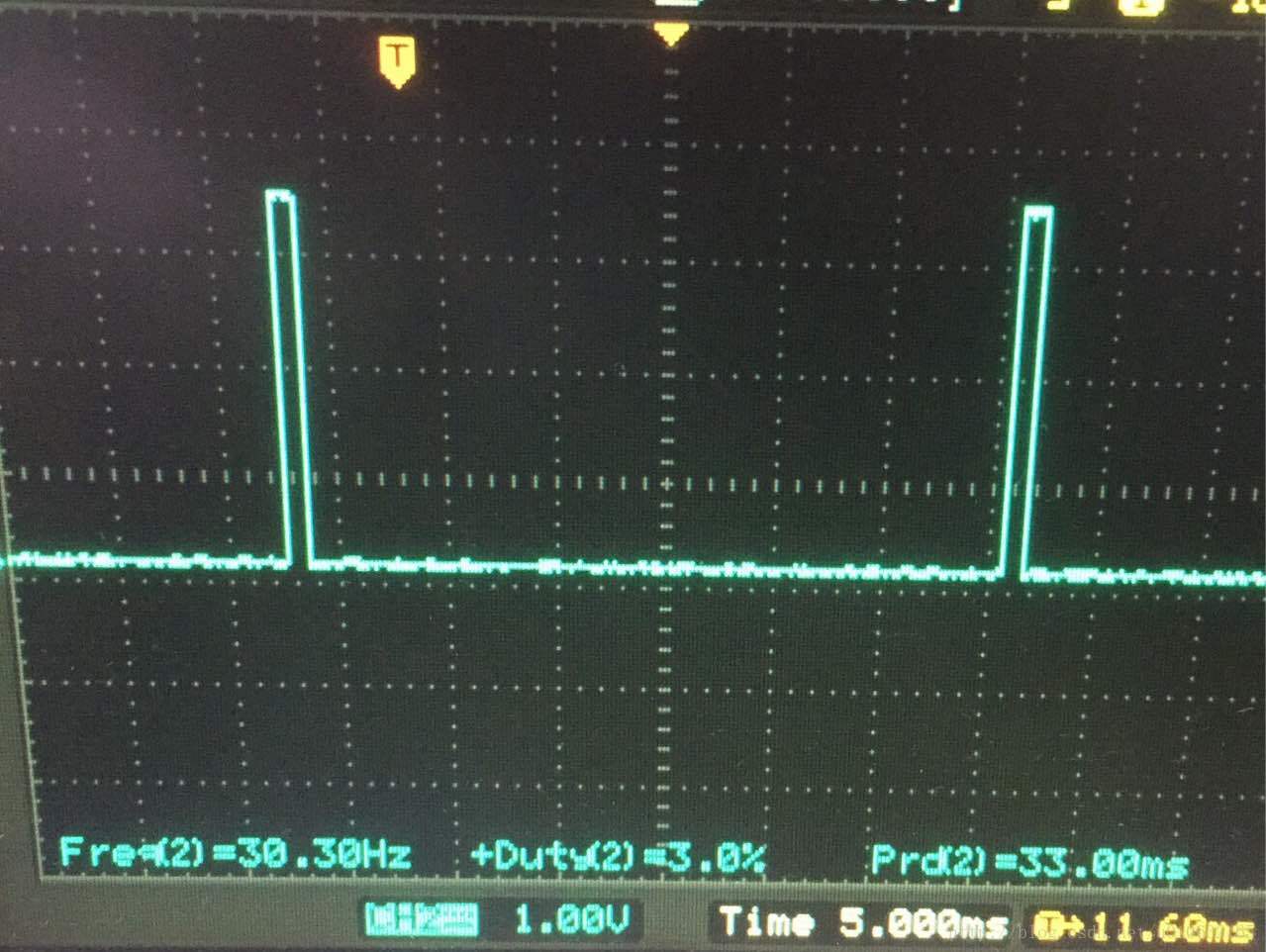
最后附一张成功的图片^_^
Openwrt:基于MT7628/MT7688的PWM驱动的更多相关文章
- 基于ARM-contexA9-蜂鸣器pwm驱动开发
上次,我们写过一个蜂鸣器叫的程序,但是那个程序仅仅只是驱动蜂鸣器,用电平1和0来驱动而已,跟驱动LED其实没什么两样.我们先来回顾一下蜂鸣器的硬件还有相关的寄存器吧: 还是和以前一样的步骤: 1.看电 ...
- Linux系统PWM驱动【转】
本文转载自:https://blog.csdn.net/BorntoX/article/details/51879786 硬件平台:IMX6 内核版本:kernel3.0.35 在linux内核中有一 ...
- 基于Mongodb的轻量级领域驱动框架(序)
混园子也有些年头了,从各个大牛那儿学了很多东西.技术这东西和中国的料理一样,其中技巧和经验,代代相传(这不是舌尖上的中国广告).转身回头一望,几年来自己也积累了一些东西,五花八门涉猎到各种方向,今日开 ...
- 基于335X的UBOOT网口驱动分析
基于335X的UBOOT网口驱动分析 一.软硬件平台资料 1. 开发板:创龙AM3359核心板,网口采用RMII形式 2. UBOOT版本:U-Boot-2016.05,采用FDT和DM. 参考链 ...
- linux驱动编写(pwm驱动)【转】
本文转载自:https://blog.csdn.net/feixiaoxing/article/details/79889240 pwm方波可以用来控制很多的设备,比如它可以被用来控制电机.简单来说, ...
- 基于STM32F4移植W5500官方驱动库ioLibrary_Driver(转)
源: 基于STM32F4移植W5500官方驱动库ioLibrary_Driver 参考: 基于STM32+W5500 的Ethernet和Internet移植 Upgrade W5500 Throug ...
- linux驱动开发—基于Device tree机制的驱动编写
前言Device Tree是一种用来描述硬件的数据结构,类似板级描述语言,起源于OpenFirmware(OF).在目前广泛使用的Linux kernel 2.6.x版本中,对于不同平台.不同硬件,往 ...
- 基于S3C2440的嵌入式Linux驱动——看门狗(watchdog)驱动解读
本文将介绍看门狗驱动的实现. 目标平台:TQ2440 CPU:s3c2440 内核版本:2.6.30 1. 看门狗概述 看门狗其实就是一个定时器,当该定时器溢出前必须对看门狗进行"喂狗“,如 ...
- 基于OMAPL138的Linux字符驱动_GPIO驱动AD9833(一)之miscdevice和ioctl
基于OMAPL138的Linux字符驱动_GPIO驱动AD9833(一)之miscdevice和ioctl 0. 导语 在嵌入式的道路上寻寻觅觅很久,进入嵌入式这个行业也有几年的时间了,从2011年后 ...
随机推荐
- F - Make It Equal CodeForces - 1065C
题目大意:有n座塔,塔高h[i],每次给定高度H对他们进行削切,要求每次削掉的所有格子数不能超过k个,输出最少削几次才能使所有塔的高度相同. 思路一:差分+贪心 对于每一个高度h,用一个数组让1~h的 ...
- 今天我们来谈谈jquery,
---恢复内容开始--- 首先从jquery的两种写法开始: 1.$(document).ready(function(){}); 首先我们的jquery是用来操作DOM节点的,所以必须等到文档加载完 ...
- Flutter Weekly Issue 52
教程 一个易迁移.兼容性高的 Flutter 富文本方案 复杂业务如何保证Flutter的高性能高流畅度? 插件 flutter_color_models A wrapper for the Dart ...
- MySQL笔记总结-DML语言
DML语言 插入 一.方式一 语法: insert into 表名(字段名,...) values(值,...); 特点: 1.要求值的类型和字段的类型要一致或兼容 2.字段的个数和顺序不一定与原始表 ...
- 44道JavaScript送命题
很久以前看过一个老外写的帖子,JavaScript Puzzlers!,直译就是JavaScript难题,里面列举了100道JavaScript选择题,大部分都是让人摸不着头脑的题目,需要仔细琢磨一番 ...
- Centos8安装Docker提示:package docker-ce-3:19.03.8-3.el7.x86_64 requires containerd.io >= 1.2.2-3, but none of the providers can be installed
Centos8安装Docker提示:package docker-ce-3:19.03.8-3.el7.x86_64 requires containerd.io >= 1.2.2-3, but ...
- TensorFlow keras vgg16net的使用
from tensorflow.python.keras.applications.vgg16 import VGG16,preprocess_input,decode_predictions fro ...
- 如何保证kafka消息不丢失
背景 这里的kafka值得是broker,broker消息丢失的边界需要对齐一下: 1 已经提交的消息 2 有限度的持久化 如果消息没提交成功,并不是broke丢失了消息: 有限度的持久化(broke ...
- python学习22之函数式编程
'''''''''1.高阶函数:将函数作为参数传递到另一个函数中,作为这个函数的参数,这样的方式叫高阶函数(1)map:两个参数,一个是函数,一个是iterator,将函数依次作用于Iterator中 ...
- (第九篇)Iptables详解
常见的网络攻击形式 1.拒绝服务攻击:DOS 2.分布式拒绝服务攻击 DDOS 3.漏洞入侵 4.口令猜测 以上内容简单了解,具体可自行百度,此处不必知晓. Linux防火墙基础 Linux防火墙体系 ...