
spring——AOP原理及源码(五)
前情回顾:
在上一篇中,通过 wrapIfNecessary 方法,我们获取到了合适的增强器(日志方法)与业务
类进行包装,最终返回了我们业务类的代理对象。

本篇我们将从业务方法的执行开始,看看增强器(日志方法)是怎么在方法执行的前后和发
生异常时被调用的。以及在文章的最后总结整个AOP的执行流程。
1、调试的起点:
给测试方法打上断点,然后一直跳到下一个断点直到执行方法,如下

接着进入方法,会被intercept方法拦截
进入断点:
 @Override

         public Object intercept(Object proxy, Method method, Object[] args, MethodProxy methodProxy) throws Throwable {

             Object oldProxy = null;

             boolean setProxyContext = false;

             Class<?> targetClass = null;

             Object target = null;

             try {

                 if (this.advised.exposeProxy) {

                     // Make invocation available if necessary.

                     oldProxy = AopContext.setCurrentProxy(proxy);

                     setProxyContext = true;

                 }

                 // May be null. Get as late as possible to minimize the time we

                 // "own" the target, in case it comes from a pool...

                 target = getTarget();

                 if (target != null) {

                     targetClass = target.getClass();

                 }

                 List<Object> chain = this.advised.getInterceptorsAndDynamicInterceptionAdvice(method, targetClass);

                 Object retVal;

                 // Check whether we only have one InvokerInterceptor: that is,

                 // no real advice, but just reflective invocation of the target.

                 if (chain.isEmpty() && Modifier.isPublic(method.getModifiers())) {

                     // We can skip creating a MethodInvocation: just invoke the target directly.

                     // Note that the final invoker must be an InvokerInterceptor, so we know

                     // it does nothing but a reflective operation on the target, and no hot

                     // swapping or fancy proxying.

                     Object[] argsToUse = AopProxyUtils.adaptArgumentsIfNecessary(method, args);

                     retVal = methodProxy.invoke(target, argsToUse);

                 }

                 else {

                     // We need to create a method invocation...

                     retVal = new CglibMethodInvocation(proxy, target, method, args, targetClass, chain, methodProxy).proceed();

                 }

                 retVal = processReturnType(proxy, target, method, retVal);

                 return retVal;

             }

             finally {

                 if (target != null) {

                     releaseTarget(target);

                 }

                 if (setProxyContext) {

                     // Restore old proxy.

                     AopContext.setCurrentProxy(oldProxy);

                 }

             }

         }
intercept
intercept 方法从上往下看:
16~18:获取目标类(注意不是代理对象)

19:通过目标类和目标方法获取拦截器链
List<Object> chain = this.advised.getInterceptorsAndDynamicInterceptionAdvice(method, targetClass);
2、重点探究获取拦截器链的过程
进入 getInterceptorsAndDynamicInterceptionAdvice

继续进入 this.advisorChainFactory.getInterceptorsAndDynamicInterceptionAdvice(this, method, targetClass)
 @Override

     public List<Object> getInterceptorsAndDynamicInterceptionAdvice(

             Advised config, Method method, Class<?> targetClass) {

         // This is somewhat tricky... We have to process introductions first,

         // but we need to preserve order in the ultimate list.

         List<Object> interceptorList = new ArrayList<Object>(config.getAdvisors().length);

         Class<?> actualClass = (targetClass != null ? targetClass : method.getDeclaringClass());

         boolean hasIntroductions = hasMatchingIntroductions(config, actualClass);

         AdvisorAdapterRegistry registry = GlobalAdvisorAdapterRegistry.getInstance();

         for (Advisor advisor : config.getAdvisors()) {

             if (advisor instanceof PointcutAdvisor) {

                 // Add it conditionally.

                 PointcutAdvisor pointcutAdvisor = (PointcutAdvisor) advisor;

                 if (config.isPreFiltered() || pointcutAdvisor.getPointcut().getClassFilter().matches(actualClass)) {

                     MethodInterceptor[] interceptors = registry.getInterceptors(advisor);

                     MethodMatcher mm = pointcutAdvisor.getPointcut().getMethodMatcher();

                     if (MethodMatchers.matches(mm, method, actualClass, hasIntroductions)) {

                         if (mm.isRuntime()) {

                             // Creating a new object instance in the getInterceptors() method

                             // isn't a problem as we normally cache created chains.

                             for (MethodInterceptor interceptor : interceptors) {

                                 interceptorList.add(new InterceptorAndDynamicMethodMatcher(interceptor, mm));

                             }

                         }

                         else {

                             interceptorList.addAll(Arrays.asList(interceptors));

                         }

                     }

                 }

             }

             else if (advisor instanceof IntroductionAdvisor) {

                 IntroductionAdvisor ia = (IntroductionAdvisor) advisor;

                 if (config.isPreFiltered() || ia.getClassFilter().matches(actualClass)) {

                     Interceptor[] interceptors = registry.getInterceptors(advisor);

                     interceptorList.addAll(Arrays.asList(interceptors));

                 }

             }

             else {

                 Interceptor[] interceptors = registry.getInterceptors(advisor);

                 interceptorList.addAll(Arrays.asList(interceptors));

             }

         }

         return interceptorList;

     }
getInterceptorsAndDynamicInterceptionAdvice
以上代码从上往下看:
5:创建拦截器链
List<Object> interceptorList = new ArrayList<Object>(config.getAdvisors().length)
12~32:
- 遍历所有增强器
- 经过一系列判断,将增强器放入interceptorList中 :
- interceptorList.addAll(Arrays.asList(interceptors))
46:将拦截器链返回
接下来将拦截器链返回,并存入缓存中

最后将拦截器链返回

这就是拦截器链获取的过程
接下来来到 intercept 方法的真正执行部分:
retVal = new CglibMethodInvocation(proxy, target, method, args, targetClass, chain, methodProxy).proceed();
通过new CglibMethodInvocation(proxy, target, method, args, targetClass, chain, methodProxy) 获取到方法拦截器链
一进来先调用父类方法:

设置好代理对象、目标类、目标方法、拦截器链等一系列属性:
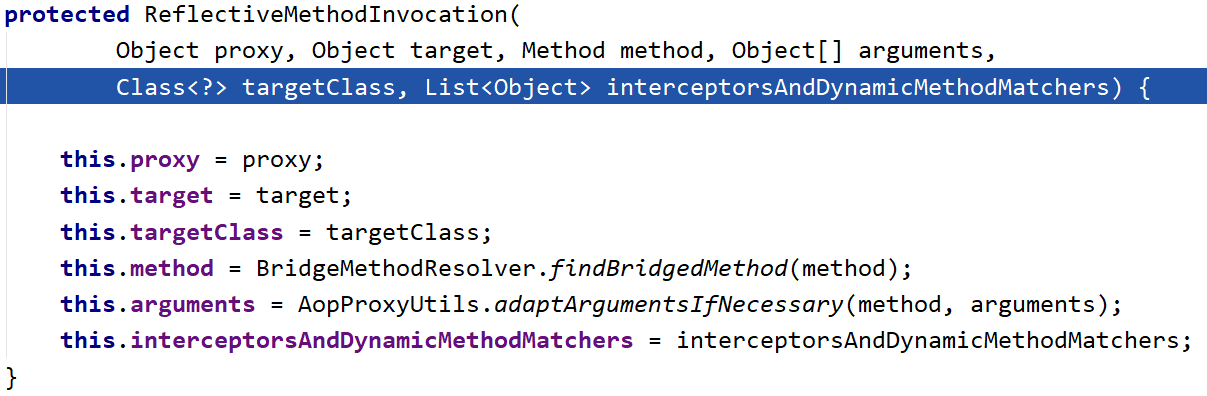
接着一路返回后调用 proceed 方法进行执行:
 @Override

     public Object proceed() throws Throwable {

         //    We start with an index of -1 and increment early.

         if (this.currentInterceptorIndex == this.interceptorsAndDynamicMethodMatchers.size() - 1) {

             return invokeJoinpoint();

         }

         Object interceptorOrInterceptionAdvice =

                 this.interceptorsAndDynamicMethodMatchers.get(++this.currentInterceptorIndex);

         if (interceptorOrInterceptionAdvice instanceof InterceptorAndDynamicMethodMatcher) {

             // Evaluate dynamic method matcher here: static part will already have

             // been evaluated and found to match.

             InterceptorAndDynamicMethodMatcher dm =

                     (InterceptorAndDynamicMethodMatcher) interceptorOrInterceptionAdvice;

             if (dm.methodMatcher.matches(this.method, this.targetClass, this.arguments)) {

                 return dm.interceptor.invoke(this);

             }

             else {

                 // Dynamic matching failed.

                 // Skip this interceptor and invoke the next in the chain.

                 return proceed();

             }

         }

         else {

             // It's an interceptor, so we just invoke it: The pointcut will have

             // been evaluated statically before this object was constructed.

             return ((MethodInterceptor) interceptorOrInterceptionAdvice).invoke(this);

         }

     }
proceed
3~6:可以看到有一个从-1开始的索引,这是用来记录当前执行次数的(这里的size为5对应我们的五个增强器)

8~9:每次从拦截器链中获取一个增强器,索引加一
10:判断这个增强器是不是 InterceptorAndDynamicMethodMatcher 类型,我们这里判断不满足,来到了else,返回调用 invoke 方法的结果

接下来我们进入这个执行过程
invoke方法调用proceed方法
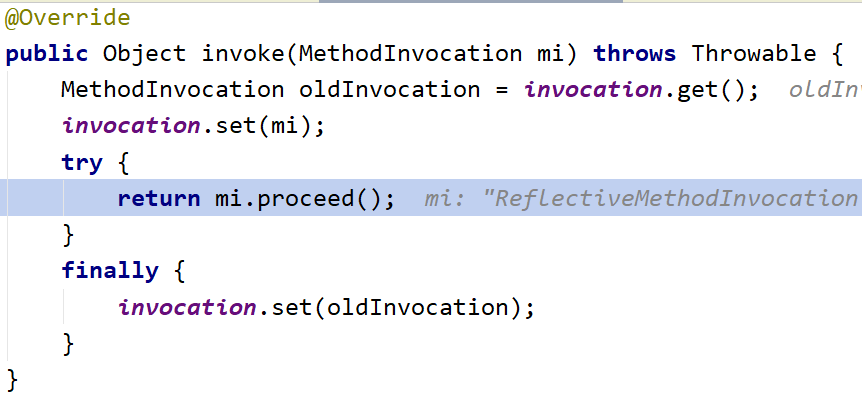
来到proceed方法继续判断索引大小

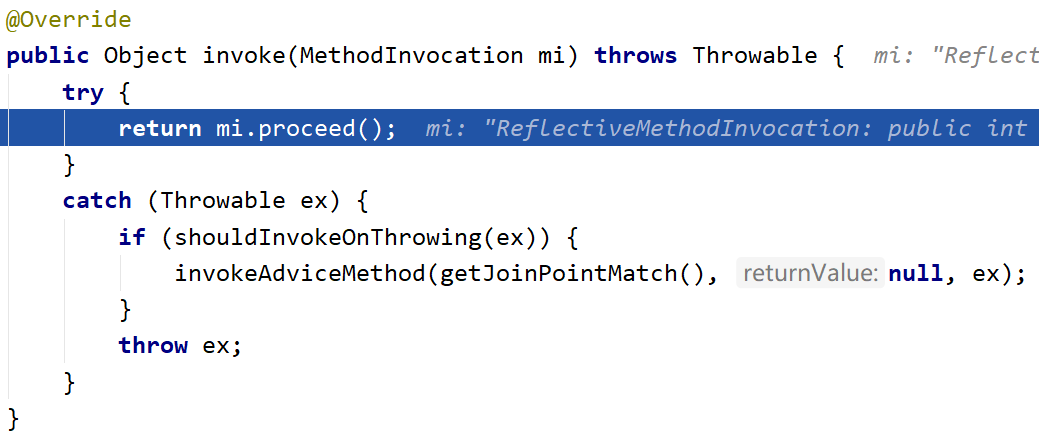
往下走又来到 invoke 方法,从下图可以看到当前是异常增强器的invoke()

进入invoke
先 return 调用 proceed 方法
可以看到下图中 catch 部分,说明如果有出现异常,会在catch部分调用增强器方法,并抛出异常
接下来又是调用AfterReturning的invoke过程

下图可以看到又调用了proceed

中间的过程也一样,这里就不演示了
最终我们的索引来到末尾
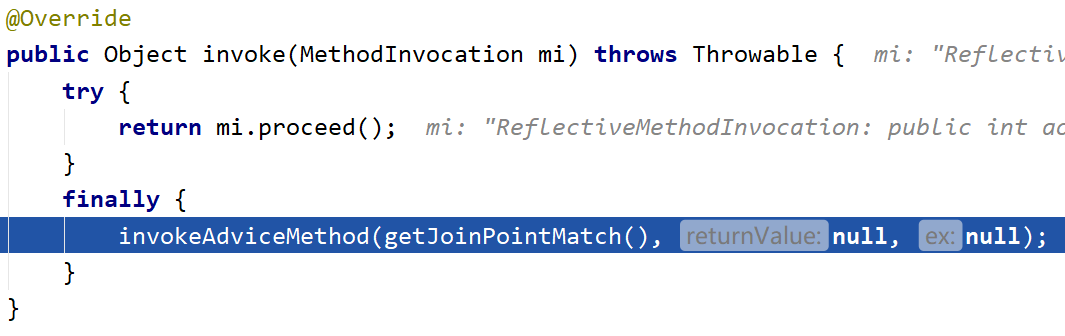
整个过程开始从内到外执行日志方法
开始调用日志方法打印:
抛出异常
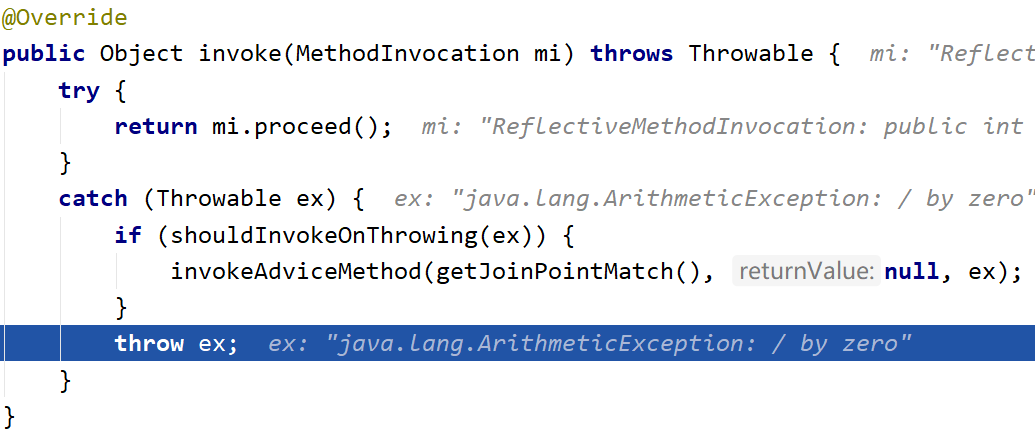
最终拦截器链调用完毕,得到结果:

以上可以看到,整个执行流程是一个递归调用的过程,对之前排好序的拦截器链,通过索引判断界限,一层一层往里调用,最终递归回来一层层执行增强器(日志方法)

3、AOP总结:
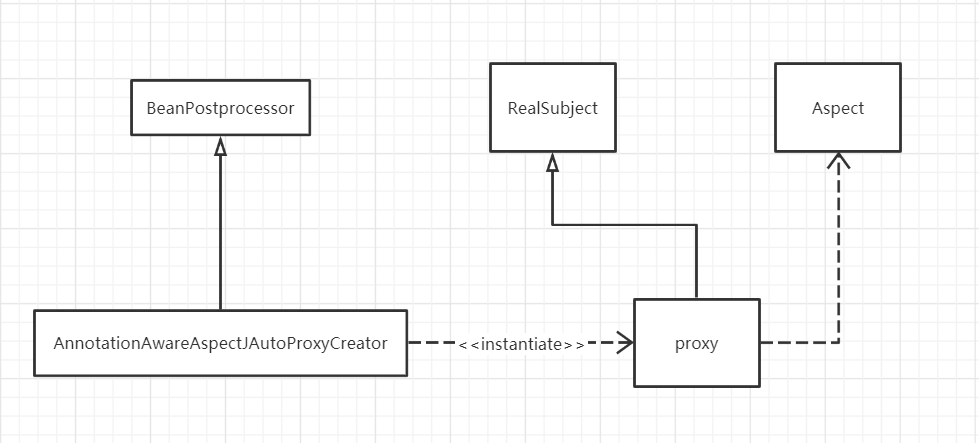
通过@EnableAspectJAutoProxy 注解,给容器中注册 AnnotationAwareAspectJAutoProxyCreator,这个组件是一个后置处理器
会在每一个bean创建之前执行它的后置处理器方法来获取对应增强器,并获取到目标代理对象
在执行切面方法时,通过代理对象和增强器等信息,获取到拦截器链
拦截器链在包装处理后进入执行流程,嵌套调用后执行增强器方法
aop uml图
以下UML图是我对AOP的理解,如果有不对之处,欢迎大家指出
spring——AOP原理及源码(五)的更多相关文章
- spring——AOP原理及源码(一)
教程共分为五篇,从AOP实例的构建及其重要组件.基本运行流程.容器创建流程.关键方法调用.原理总结归纳等几个方面一步步走进AOP的世界. 本篇主要为读者演示构建AOP实例及AOP核心组件分析. 一.项 ...
- spring——AOP原理及源码(四)
前情回顾: 上文我们一路分析了从容器创建开始直到我们的AOP注解导入的核心组件AnnotationAwareAspectJAutoProxyCreator执行postProcessBeforeInst ...
- spring——AOP原理及源码(二)
回顾: 在上一篇中,我们提到@EnableAspectJAutoProxy注解给容器中加入了一个关键组件internalAutoProxyCreator的BeanDefinition,实际类型为 An ...
- spring——AOP原理及源码(三)
在上一篇中,我们创建并在BeanFactory中注册了AnnotationAwareAspectJAutoProxyCreator组件.本篇我们将要探究,这个组件是在哪里以及何时发挥作用的. 调试的起 ...
- 【Spring】Spring IOC原理及源码解析之scope=request、session
一.容器 1. 容器 抛出一个议点:BeanFactory是IOC容器,而ApplicationContex则是Spring容器. 什么是容器?Collection和Container这两个单词都有存 ...
- Spring AOP介绍及源码分析
转自:http://www.uml.org.cn/j2ee/201301102.asp 软件开发经历了从汇编语言到高级语言和从过程化编程到面向对象编程:前者是为了提高开发效率,而后者则使用了归纳法,把 ...
- Spring中AOP原理,源码学习笔记
一.AOP(面向切面编程):通过预编译和运行期动态代理的方式在不改变代码的情况下给程序动态的添加一些功能.利用AOP可以对应用程序的各个部分进行隔离,在Spring中AOP主要用来分离业务逻辑和系统级 ...
- spring MVC 原理及源码解析
首先要知道springmvc的核心控制器dispatcherServlet(继承自httpServlet) 一般httpServlet的请求过程: 1.初始化(创建servlet实例时)时会执行ser ...
- 并发编程(十五)——定时器 ScheduledThreadPoolExecutor 实现原理与源码深度解析
在上一篇线程池的文章<并发编程(十一)—— Java 线程池 实现原理与源码深度解析(一)>中从ThreadPoolExecutor源码分析了其运行机制.限于篇幅,留下了Scheduled ...
随机推荐
- LeetCode No.97,98,99
No.97 IsInterleave 交错字符串 题目 给定三个字符串 s1, s2, s3, 验证 s3 是否是由 s1 和 s2 交错组成的. 示例 输入: s1 = "aabcc&qu ...
- ubuntu 14.04 搜狗拼音安装
打开 Software & Updates,添加软件源: sudo add-apt-repository ppa:fcitx-team/nightly 输入 sudo apt-get inst ...
- Nesterov方法的python实现
牛顿动量法,相比于上一篇Momentum,不一样的地方是应用了临时更新 这里用python对其进行简单实现,如下: # coding=utf-8 """ 基于小批量梯度下 ...
- 谁能率先挖掘出5G金矿?
现在,消费者已经习惯4G的存在,它好像另外的一个太阳,点亮了夜生活,也丰富了白天的生活:随时随地的直播.视频通话.移动支付.嘀嘀打车等等,这些都因4G网络和智能手机而快速发展,帮助消费者清理碎片时间之 ...
- 吴裕雄--天生自然python学习笔记:python文档操作自动生成菜单 Word 文件
许多学校营养午餐的菜单是由教师来轮流制作 ,这是一个 比较烦锁的工作,如 果能自动用教师最熟悉的 Word 文件来生成一个菜单文件,使教师对生成的菜单稍作 修改即可使用,那将是一个不错的主意. 案例要 ...
- OpenCV、EmguCV函数注解
- Java 线程总结(十四)
1.在异步任务进程中,一种常见的场景是,主线程提交多个异步任务,然后希望有任务完成就处理结果,并且按任务完成顺序逐个处理,对于这种场景,Java 并发包提供了一个方便的方法,使用 Completion ...
- 使用jxl操作之一: 实现对Excel简单读写操作
项目目录树 对象类UserObject UserObject.java package com.dlab.jxl; public class UserObject { private String u ...
- 3DSMAX安装未完成,某些产品无法安装的解决方法
3DSMAX提示安装未完成,某些产品无法安装该怎样解决呢?,一些朋友在win7或者win10系统下安装3DSMAX失败提示3DSMAX安装未完成,某些产品无法安装,也有时候想重新安装3DSMAX的时候 ...
- Mysql的分页查询语句的性能分析
MySql分页sql语句,如果和MSSQL的TOP语法相比,那么MySQL的LIMIT语法要显得优雅了许多.使用它来分页是再自然不过的事情了. 1.1最基本的分页方式: 在中小数据量的情况下,这样的S ...