
An Overview of Cisco IOS Versions and Naming
An Overview of Cisco IOS Versions and Naming
http://www.ciscopress.com/articles/article.asp?p=2106547
- By Sean Wilkins.
- Article is provided courtesy of Cisco Press.
- Date: Jun 28, 2013.


Article Information
Article Description
Version and naming structure used by Cisco for their IOS images is often confusing. Although the naming used for some of the newer devices is changing to a simpler structure, it will be a while before all the different versions are consolidated. This article covers these different releases and aims to give a single location where network engineers can look to figure out what the different releases mean
One thing that is often confusing to any network engineer (regardless of level) is the version and naming structure used by Cisco for their IOS images. Although the naming used for some of the newer devices is changing to a simpler structure, it will be a while before all the different versions are consolidated. This article covers these different releases and aims to give a single location where network engineers can look to figure out what the different releases mean. Although this is not an exhaustive list of every Cisco version, it does cover the most commonly used versions.
IOS Releases
One term that is often used is the IOS release type. With versions of IOS earlier than 15, a specific image could be considered one of the following four different release types:
Early Deployment (ED): These releases provide both new features and new platform support in addition to bug fixes.
Limited Deployment (LD): These releases do not include any new features or platform support but do include bug fixes. LD releases are between an ED release and a GD release.
General Deployment (GD): These releases can be used anywhere in a customer network with the same feature and functionality requirements. These tend to be stable on almost all platforms.
Maintenance Deployment (MD): These releases are used to provide additional support for bug fixes and ongoing software maintenance.
With IOS 15 and later, both the LD and GD deployments will be retired. New releases will be considered either ED or MD. The IOS train paths have also been consolidated. With earlier versions of IOS, the different ED (T trains; for instance, 12.4T) and MD (not T trains; for instance, 12.4) has different code bases. With IOS 15 and later, the code bases will be consolidated. MD releases (called M releases, or extended release) will be released and have a 44-month support window, whereas ED (T releases, or standard release) will have a 18-month support window.
IOS Versions
A number of different versions exist within each release of IOS. This article takes a look at a few of these and how what they are used for.
12
With IOS Version 12, many different sub-versions of IOS exist, including specialized support for specific platforms; the next few sections cover a couple of the most common.
IOS Version 12 has a few different ways to notate version, including those shown in Figure 1.
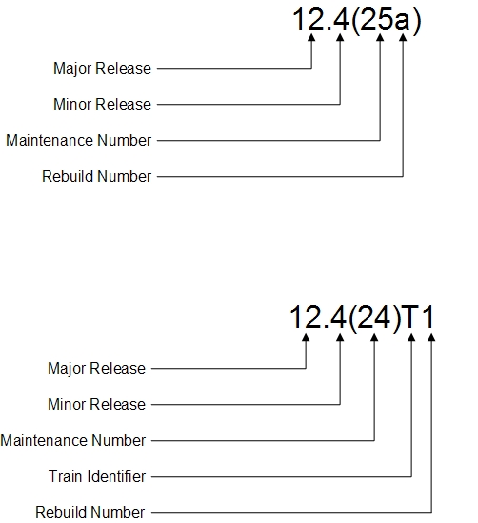
Figure 1 IOS Version 12 Version Notation
12
The 12 base versions are also referred to as the mainline release of a version. These releases tend to be the most stable and include support for most of the available platforms. Other more specialized versions of IOS are rolled into the mainline as an update when they have been sufficiently tested. (They go through the release process shown in the previous section.)
12T
The T train is used to add the newest features and platforms. After the software has been tested thoroughly, it is rolled into the mainline release.
12S, 12SB, 12SR
Many different IOS versions provide support for specific platforms. The ones shown in the section name are an incomplete list but do show some of the common examples. The 12S, 12SB, and 12SR versions tend to provide support for Cisco’s 7200, 7300, 7400, 7500, and 10000 platforms.
15
The way that different versions are referenced with IOS Version 15 is similar to that of IOS Version 12.
IOS Version 15 has a notation that is similar to IOS Version 12 and is shown in Figure 2.
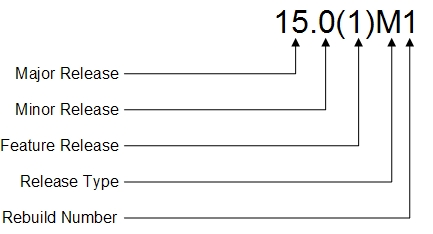
Figure 2 IOS Version 15 Version Notation
15M
As with IOS version 12, IOS Version 15M provides a mainline release and is also referred to as a maintenance release.
15T
As with IOS version 12T, version 15T is focused on new features and platforms and is supported for a shorter amount of time than the maintenance releases. After 15T releases have been tested thoroughly, they are wrapped into the next 15M release.
15X, 15S, 15SY, 15SG, 15SE
As with IOS Version 12, IOS Version 15 is going to have a number of different versions that are specific to new equipment that needs to support new features (specific to the platform). For IOS Version15, some of those currently available are Version 15X (special or early deployment), 15S (7600), 15Y (Sup-2T-10GE – Catalyst 6500), 15SG (Sup-CS-S2T – Catalyst 6500), and 15SE (2960, 3560, 3650, and 3750 platforms).
IOS Package Naming
The way that Cisco has named their IOS packages has changed over time. With IOS Version 12.3 though 15, this has remained relatively constant. Figure 3 shows the eight different packages that are available.
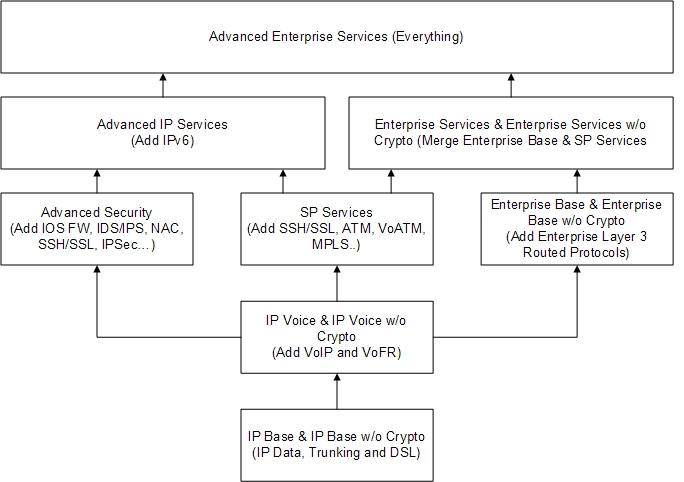
Figure 3 IOS Software Packaging (Routers and Switches)
Of course, this can get confusing. In an effort to make the software licensing process simpler and provide operational savings, the way that packages are created has changed with the new Integrated Service Routers (ISR) Generation 2. With these devices, a universal image is shipped on each one. The functionality provided by the image is dictated by the features enabled with a license key.
Figure 4 shows the four different packages that are available.
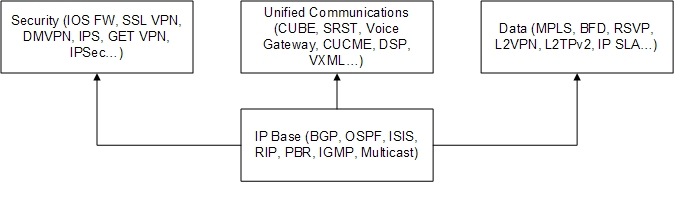
Figure 4 IOS Software Packaging (ISR G2 Routers)
Each of these are then able to be added together to obtain the features required in each situation (for example, UC + Security or Data + Security).
Summary
Well, leave it up to development to have a structure that makes sense to only a small number of people. This certainly seems to have happened with the various iterations of IOS. This article should enable current and new network engineers to break down what every image provides so that future IOS version selection becomes easier. Let’s hope that going forward the model being used for the newer ISR G2 will be used. At the very least, this will make the selection of the most appropriate IOS image feature package possible without considerable time spend with Cisco presales.
An Overview of Cisco IOS Versions and Naming的更多相关文章
- Cisco IOS images
Cisco IOS images for Dynamips - GNS3http://docs.gns3.com/1-kBrTplBltp9P3P-AigoMzlDO-ISyL1h3bYpOl5Q8m ...
- error items-9022:missing required icon file.the bundle does not contain an app icon for iPhone/iPad Touch of exactly '120x120' pixels,in.pen format for ios versions >= 7.0
error items-9022:missing required icon file.the bundle does not contain an app icon for iPhone/iPad ...
- Cisco IOS Debug Command Reference I through L
debug iapp through debug ip ftp debug iapp : to begin debugging of IAPP operations(in privileged EXE ...
- Cisco IOS Software Activation Command Reference
clear license agent : to clear license agent statistics counters or connection statistics (in privil ...
- Cisco IOS basic system management command reference
absolute : to specify an absolute time for a time-range (in time-range configuration mode) no absolu ...
- Cisco IOS Security command Guide
copy system:running-config nvram:startup-config : to save your configuration changes to the startup ...
- Cisco IOS Debug Command Reference Command E through H
debug eap through debug he-module subslot periodic debug eap : to display information about Extensib ...
- Cisco IOS debug command reference Command A through D
debug aaa accounting through debug auto-config debug aaa accounting : to display information on acco ...
- Cisco IOS Basic CLI Configuration : Switch Port Command
Cisco IOS Basic CLI Configuration : Switch Port Command 1. Basic Switch>en Switch#conf t Enter c ...
随机推荐
- BZOJ1023: [SHOI2008]cactus仙人掌图(仙人掌)
Description 如果某个无向连通图的任意一条边至多只出现在一条简单回路(simple cycle)里,我们就称这张图为仙人掌图(cactus).所谓简单回路就是指在图上不重复经过任何一个顶点的 ...
- zookeeper 配置文件说明(zoo.cfg)
clientPort # 客户端连接server的port,即对外服务port,一般设置为2181. dataDir # 存储快照文件snapshot的文件夹. 默认情况下.事 ...
- 5. Spring Boot 拦截器
转自:https://blog.csdn.net/catoop/article/details/50501696
- 第三次作业 201731082208 黄亚恒&肖莉
Github项目地址:https://github.com/HYHSTUDEY/WordCount.git 作业地址:https://www.cnblogs.com/hyhhyh090628/p/10 ...
- 【河南省多校脸萌第六场 A】巴什博弈?
[链接]http://acm.nyist.me/JudgeOnline/problem.php?cid=1013&pid=5 [题意] 在这里写题意 [题解] 0..a-1 YES a..a+ ...
- Redis源代码分析(八)--- t_hash哈希转换
在上次的zipmap分析完之后,事实上关于redis源码结构体部分的内容事实上已经所有结束了.由于以下还有几个和结构体相关的操作类,就页把他们归并到struct包下了.这类的文件有:t_hash.c, ...
- Javascript和jquery事件--鼠标滚轮事件WheelEvent
<1>js事件 滚轮事件在js中,不同浏览器还是有不同的,介于我只测试谷歌和火狐浏览器的情况,其他浏览器有待自行探索.有三种写法: target.onmousewheel = wheel; ...
- 5.容器管理【Docker每天5分钟】
原文:5.容器管理[Docker每天5分钟] Docker给PaaS世界带来的“降维打击”,其实是提供了一种非常便利的打包机制.该机制打包了应用运行所需要的整个操作系统,从而保证了本地环境和云端环境的 ...
- GO语言学习(一)Windows 平台下 Go 语言的安装和环境变量设置
1. Go 语言 SDK 安装包下载和安装 GO语言安装包下载地址:https://www.golangtc.com/download 下载 go1.9.2.windows-amd64 2. Go 语 ...
- GDB中创建要素数据集
转自 在geodatabase中创建要素集 //在数据集中创建要素 private void menuItem25_Click(object sender, System.EventArgs e) { ...