
python的super深入了解(转)
1、python的继承以及调用父类成员
python子类调用父类成员有2种方法,分别是普通方法和super方法
假设Base是基类
class Base(object):

    def __init__(self):

        print("Base init")
普通方法如下
class Leaf(Base):

    def __init__(self):

        Base.__init__(self)

        print “Leaf init”
super方法如下
class Leaf(Base):

    def __init__(self):

        super(Leaf, self).__init__()

        print “Leaf init”
在上面的简单场景下,两种方法的效果一致
>>> leaf = Leaf()

Base init

Leaf init
2、钻石继承遇到的难题
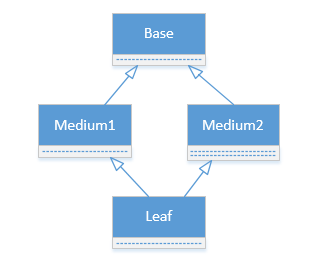
如果我们还是用普通方法调用父类成员,代码如下
class Base(object):

       def __init__(self):

              print “Base init”

class Medium1(Base):

       def __init__(self):

              Base.__init__(self)

              print “Medium1 init”

class Medium2(Base):

       def __init__(self):

              Base.__init__(self)

              print “Medium2 init”

class Leaf(Medium1, Medium2):

       def __init__(self):

              Medium1.__init__(self)

              Medium2.__init__(self)

              print “Leaf init”
当我们实例化Leaf对象时,结果如下
>>> leaf = Leaf()

Base init

Medium1 init

Base init

Medium2 init

Leaf init
可以看到Base被初始化了两次,这是由于Medium1和Medium2各自调用了Base的初始化函数导致的
3、python的解决方法
python使用的是super来解决这个问题
我们把上面的钻石继承用super重写一下,看一下输出结果
class Base(object):

       def __init__(self):

              print “Base init”

class Medium1(Base):

       def __init__(self):

              super(Medium1, self).__init__()

              print “Medium1 init”

class Medium2(Base):

       def __init__(self):

              super(Medium2, self).__init__()

              print “Medium2 init”

class Leaf(Medium1, Medium2):

       def __init__(self):

              super(Leaf, self).__init__()

              print “Leaf init”
我们生成Leaf对象:
>>> leaf = Leaf()

Base init

Medium2 init

Medium1 init

Leaf init
可以看到整个初始化过程符合我们的预期,Base只被初始化了1次。而且重要的是,相比原来的普通写法,super方法并没有写额外的代码,也没有引入额外的概念
4、super的内核:mro
要理解super的原理,就要先了解mro,mro是method resolution order的缩写,表示了类继承体系中的成员解析顺序
在python中,每个类都有一个mro的类方法,我们来看一下钻石继承中,Leaf类的mro是什么样子的
>>> Leaf.mro()

[<class '__main__.Leaf'>, <class '__main__.Medium1'>, <class '__main__.Medium2'>, <class '__main__.Base'>, <type 'object'>]
可以看到mro方法返回的是一个祖先类的列表,Leaf的每个祖先都在其中出现一次,这也是super在父类中查找成员的顺序
通过mro,python巧妙的将多继承的图结构,转变为list的顺序结构,super在继承体系中向上的查找过程,变成了在mro中向右的线性查找过程,任何类都只会被处理一次
通过这个方法,python解决了多继承中的2大难题
1、查找顺序问题,从Leaf的mro顺序可以看出,如果Leaf类通过super来访问父类成员,那么Medium1的成员会在Medium2之前被首先访问到,如果Medium1和Medium2都没有找到,最后再到Base中查找
2、钻石继承的多次初始化问题,在mro的list中,Base类只出现了一次,事实上任何类都只会在mro list中出现一次,这就确保了super向上调用的过程中,任何祖先类的方法都只会被执行一次
至于mro的生成算法,可以参考https://en.wikipedia.org/wiki/C3_linearization
5、super的具体用法
我们首先来看一下python中的super文档
>>> help(super)

Help on class super in module __builtin__:

class super(object)

 |  super(type, obj) -> bound super object; requires isinstance(obj, type)

 |  super(type) -> unbound super object

 |  super(type, type2) -> bound super object; requires issubclass(type2, type)
光从字面来看,这可以算是python中最语焉不详的帮助文档之一了。甚至里面还有一些术语误用。那super究竟应该怎么用呢,我们重点来看super中的第1和第3种用法
5.1super(type,obj)
当我们在Leaf的__init__中写这样的super时:
class Leaf(Medium1, Medium2):

    def __init__(self):

        super(Leaf, self).__init__()

        print “Leaf init”
super(Leaf,self).__init__()的意思是说:
1、获取self所属类的mro,也就是[Leaf, Medium1, Medium2, Base]
2、从mro中Leaf右边的一个类开始,依次寻找__init__函数,这是从Medium1开始寻找
3、一旦找到,就把找到的__init__函数绑定到self对象,并返回
从这个执行流程可以看到,如果我们不想调用Medium1的__init__,而想要调用Medium2的__init__,那么
super应该写成:super(Medium1, self)__init__()
5.2super(type,type2)
当我们在Leaf中写类方法的super时
class Leaf(Medium1, Medium2):

    def __new__(cls):

          obj = super(Leaf, cls).__new__(cls)

          print “Leaf new”

          return obj
super(Leaf,cls).__new__(cls)的意思是说
1、获取cls这个类的mro,这里也是
2、从mro中Leaf右边的一个类开始,一次寻找__new__函数
3、一旦找到,就返回“”非绑定”的__new__函数
由于返回的是非绑定的函数对象,因此调用时不能省略函数的第一个参数,这也是调用__new__时,需要传入参数cls的原因
同样的,如果我们想从某个mro的某个位置开始查找,只需要修改super的第一个参数就行
6、小结
至此,我们讲解了和super相关的用法及原理,小结一下我们讲过的内容有:
1、python调用父类成员共有2种方法:普通方法,super方法
2、在钻石继承中,普通方法会遇到Base类两次初始化的问题
4、用实例展示了python使用super可以解决此问题
5、讲解了super两种主要的用法及原理
6、Python3.x 和 Python2.x 的一个区别是: Python 3 可以使用直接使用 super().xxx 代替 super(Class, self).xxx :
参考https://www.cnblogs.com/testview/p/4651198.html
python的super深入了解(转)的更多相关文章
- python之super()函数
python之super()函数 python的构造器奇特, 使用魔方. 构造器内对基类对象的初始化同样也很奇特, 奇特到没有半点优雅! 在构造器中使用super(class, instance)返回 ...
- 由Python的super()函数想到的
python-super *:first-child { margin-top: 0 !important; } body>*:last-child { margin-bottom: 0 !im ...
- Python: 你不知道的 super
https://segmentfault.com/a/1190000007426467 Python: 你不知道的 super 在类的继承中,如果重定义某个方法,该方法会覆盖父类的同名方法,但有时,我 ...
- python中super的理解(转)
原文地址:https://www.zhihu.com/question/20040039 针对你的问题,答案是可以,并没有区别.但是这题下的回答我感觉都不够好. 要谈论 super,首先我们应该无视 ...
- Python面试题之Python的Super方法
我们最常见的,可以说几乎唯一能见到的使用super的形式是: class SubClass(BaseClass): def method(self): super(SubClass, self).me ...
- Python’s super() considered super!
如果你没有被Python的super()惊愕过,那么要么是你不了解它的威力,要么就是你不知道如何高效地使用它. 有许多介绍super()的文章,这一篇与其它文章的不同之处在于: 提供了实例 阐述了它的 ...
- python中super().__init__和类名.__init__的区别
super().__init__相对于类名.__init__,在单继承上用法基本无差 但在多继承上有区别,super方法能保证每个父类的方法只会执行一次,而使用类名的方法会导致方法被执行多次 多继承时 ...
- Python中super的用法【转载】
Python中super的用法[转载] 转载dxk_093812 最后发布于2019-02-17 20:12:18 阅读数 1143 收藏 展开 转载自 Python面向对象中super用法与MRO ...
- 扯下Python的super()
注: Python 2.7.x 环境下 今晚搜东西无意中看到这篇Understanding Python super() with __init__() methods. 其实这篇老早就看过了, 不过 ...
随机推荐
- ETL 的一些概念
1. What is a logical data mapping and what does it mean to the ETL team? 什么是逻辑数据映射?它对ETL项目组的作用是什么? 答 ...
- SPI bus 的收发编程
https://linux-sunxi.org/SPIdev The SPI bus (or Serial Peripheral Interface bus) is a synchronous ser ...
- 如何临时修改 macOS 应用的界面语言?
一般情况下,应用程序的界面语言会和系统语言保持一致.但有些时候,我们也会希望临时换用一种不同的界面语言.例如,一些程序的中文翻译词不达意,有必要参考英文界面来确定功能的准确含义:又如,一些网页会强制按 ...
- MySQL/MariaDB数据库的性能测试
MySQL/MariaDB数据库的性能测试 作者:尹正杰 版权声明:原创作品,谢绝转载!否则将追究法律责任. 一.数据库服务衡量指标 qps: query per second(每秒支持多少查询 ...
- JSON.stringify(),JSON.parse(),toJSON()使用方法总结
今天在看<你不知道的javascript-中>第四章‘强制类型转换’的时候,发现JSON.stringify(),JSON.parse(),toJSON()有很多细节,自己也就总结测试了一 ...
- 如何解决IntelliJ idea的maven工程提示的Cannot Resolve Symbol
IDEA无法识别一个类类,将其显示为红色,如果 compile 没有问题.鼠标放上去后显示 “Cannot resolve symbol XXX”,有两种解决方式:(1)点击菜单中的 “File” - ...
- 使用树莓派GPIO控制继电器
一.使用方法总结: VCC接+5v,GND接负,IN1接GPIO口, 二.然后使用Linux命令或者编程控制GPIO口高低电位即可,如:执行下列命令: gpio readall 列出所有针角 gp ...
- WIFI信道频率对应
802.11b/g还是802.11b/g/n 一般都支持13个信道 信道也称作通道(Channel).频段,是以无线信号(电磁波)作为传输载体的数据信号传送通道.无线网络(路由器.AP热点.电脑无线网 ...
- python Thread 函数
构造方法: Thread(group=None, target=None, name=None, args=(), kwargs={}) group: 线程组,目前还没有实现,库引用中提示必须是No ...
- 【学习笔记】Kruskal 重构树
1. 例题引入:BZOJ3551 用一道例题引入:BZOJ3551 题目大意:有 \(N\) 座山峰,每座山峰有他的高度 \(h_i\).有些山峰之间有双向道路相连,共 \(M\) 条路径,每条路径有 ...