
js数据结构与算法--双向链表的实现
双向链表也叫双链表,是链表的一种,它的每个数据节点中都有两个指针,分别指向直接后继和直接前驱。所以,双向链表中的任意一个节点开始,都可以很方便的访问它的前驱节点和后继节点。
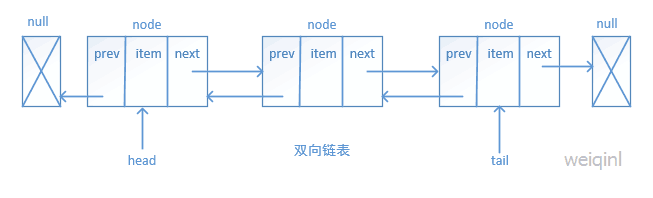
双向链表的实现
linkednode.js ,里面使用了类的继承extends,使用了super函数。
/**

 * 链表节点,链表中的项,链表中的节点

 */

export class Node {

  constructor(element, next = null) {

    this.element = element // 链表中节点的值

    this.next = next // 指向列表中下一个节点项的指针

  }

}

export class DoublyNode extends Node {

  constructor(element, next = null, prev = null) {

    super(element, next)

    this.prev = prev

  }

}
doublyLinkedList.js 双向链表类,实现了各个功能,功能说明,都在代码注释中
import {

  DoublyNode

} from './linkednode'

/**

 * 双向链表类

 */

export class DoublyLinkedList {

  constructor() {

    /**

     * 链表长度

     */

    this.length = 0

    /**

     * 头指针

     */

    this.head = null

    /**

     * 尾指针

     */

    this.tail = null

  }

  /**

   * 在链表末尾添加元素

   * @param {*} element 需要插入的元素

   */

  append(element) {

    let node = new DoublyNode(element)

    if (!this.head) {

      this.head = node

      this.tail = node

    } else {

      this.tail.next = node

      node.prev = this.tail

      this.tail = node

    }

    this.length++

      return true

  }

  /**

   * 在任意位置插入元素

   * @param {Int32Array} position 指定位子

   * @param {*} element 需要插入的元素

   */

  insert(position, element) {

    // 检查越界值

    if (position >= 0 && position <= this.length) {

      // 实例化一个双向链表的节点

      let node = new DoublyNode(element)

      // 赋初始值

      let current = this.head

      let previous

      let index = 0 // 位置索引

      if (position === 0) { // 在第一个位子添加

        if (!this.head) { // 链表无数据的时候,将head和tail都指向新元素

          this.head = node

          this.tail = node

        } else { // 链表有数据的时候, head node current

          node.next = current

          current.prev = node

          this.head = node

        }

      } else if (position === this.length) { // 添加到最后一项 current node

        current = this.tail

        current.next = node

        node.prev = current

        this.tail = node

      } else { // 在列表中间位置添加

        // 新链表的节点原型是: previous <---> node <---> current

        while (index++ < position) { // 位置索引递增到指定点之前,找出前后两个节点

          previous = current // 当前节点设置为新链表中要插入的节点的前一个元素。

          current = current.next // 当前节点之后的元素设置为新链表中要插入的节点的当前元素

        }

        node.next = current

        previous.next = node

        current.prev = node

        node.prev = previous

      }

      this.length++ // 更新列表的长度

      return true

    } else {

      return false

    }

  }

  /**

   * 在任意位置插入元素

   * 在链表头,在链表尾,在链表前半段,在链表后半段

   * @param {Int32Array} position 指定位置

   * @param {*} element 需要插入的元素

   */

  insert_up(position, element) {

    let node = new DoublyNode(element)

    let previous

    let current = this.head

    if (position > -1 && position <= this.length) {

      if (position === 0) {

        if (!this.head) {

          this.head = node

          this.tail = node

        } else {

          node.next = current

          current.prev = node

          this.head = node

        }

      } else if (position === this.length) {

        current = this.tail

        current.next = node

        node.prev = current

        this.tail = node

      } else if (position < this.length / 2) { // 目标在链表前半段

        let index = 0

        // 0 1 2 [] 3 4 5

        while (index++ < position) {

          previous = current

          current = current.next

        }

        previous.next = node

        node.next = current

        node.prev = previous

        current.prev = node

      } else { // 目标在链表的后半段

        // 0 1 2 3 4 | 5 6 [] 7 8 9

        let index = this.length

        current = this.tail

        while (index-- > position) {

          previous = current.prev

          current = current

        }

        previous.next = node

        node.next = current

        node.prev = previous

        current.prev = node

      }

      this.length++

        return true

    } else {

      // 如果超出范围,直接添加到链表末尾

      let current = this.tail

      current.next = node

      node.prev = current

      this.tail = node

      this.length++

        return true

    }

  }

  /**

   * 从任意位置移除元素,返回移除的元素

   * 从头部,从尾部,从链表的前半段,从链表的后半段

   * @param {*} position 位置索引

   */

  removeAt(position) {

    let current = this.head // 当前项

    let previous // 前一项

    let index = 0 // 索引

    // 越界检查

    if (position > -1 && position < this.length) {

      if (position === 0) { // 第一项

        this.head = current.next

        // 如果是最后一项要删除,将tail置为null,此时head也为null

        // 如果非最后一项,则将this.head.prev置为null

        if (this.length === 1) { // 只有一项的情况,更新tail

          this.tail = null

        } else {

          this.head.prev = null // 将首项的prev置空 或者 current.next.prev = null

        }

      } else if (position === this.length - 1) { // 最后一项

        current = this.tail

        previous = current.prev

        this.tail = previous

        this.tail.next = null

      } else if (position <= this.length / 2) { // 索引在链表前半段,分开计算,提升性能

        while (index++ < position) {

          previous = current

          current = current.next

        }

        // 将previous与current下一项连起来---跳过current

        previous.next = current.next

        current.next.prev = previous

      } else { // 索引在链表后半段

        index = this.length - 1

        current = this.tail

        while (index-- > position) {

          previous = current

          current = current.prev

        }

        // 将previous与current的上一项连起来--跳过current

        previous.prev = current.prev

        current.prev.next = previous

      }

      this.length--

        return current.element

    } else {

      // 超出链表安全长度,链表有数据,则删除末尾元素

      if (typeof position === 'number' && this.length > 0) {

        let current = this.tail

        this.tail = current.prev

        this.tail.next = null

        this.length--

          return current.element

      } else {

        return null

      }

    }

  }

  /**

   * 从列表中移除一项

   * 先找出元素的索引项,再根据索引移除元素

   * @param {*} element 列表中的元素

   */

  remove(element) {

    let index = this.indexOf(element)

    return this.removeAt(index)

  }

  /**

   * 返回元素在列表中的索引。如果列表中没有该元素则返回-1

   * @param {*} element 元素

   */

  indexOf(element) {

    let current = this.head

    let index = 0 // 计算位置数

    while (current) {

      if (element === current.element) {

        return index

      }

      index++

      current = current.next

    }

    return -1

  }

  /**

   * 判断是否为空链表

   * 空链表返回true,非空(链表长度大于0)返回false

   */

  isEmpty() {

    return this.size() === 0

  }

  /**

   * 返回链表包含的元素个数。与数组的length属性类似

   */

  size() {

    return this.length

  }

  /**

   * 获取链表的表头节点

   */

  getHead() {

    return this.head

  }

  /**

   * 获取链表的尾节点

   */

  getTail() {

    return this.tail

  }

  /**

   * 输出元素的值

   */

  toString() {

    let current = this.head

    let string = 'null'

    while (current) {

      string += "<--->" + current.element + (current.next ? '' : '<--->null')

      current = current.next

    }

    return string

  }

}
思考
双向链表与单项链表的比较:
双向链表可以双向遍历。从头到尾,或者从尾到头
双向链表可以访问一个特定节点的下一个或者前一个元素,而单链表只能访问下一个元素。
双向链表内存占用比单链表的多
链表还有一个双向循环链表,在需要用到的时候,考虑它们各自的不同,选择合适的链表来操作。
js数据结构与算法--双向链表的实现的更多相关文章
- JS数据结构与算法--双向链表
双向链表中链接是双向的:一个链向下一个元素,另一个链向上一个元素,如下图所示: 双向链表结构代码如下: class Node { constructor(element) { this.element ...
- JS数据结构与算法——栈
JS数据结构与算法--栈 1.栈结构概念 栈(Stack)是一种先进后出(LIFO Last in First out)的线性表,先进栈的将会比后进栈的先出栈. 栈的限制是仅允许在一端进行插入和删除运 ...
- JS数据结构与算法-概述
JS数据结构与算法概述 数据结构: 计算机存储, 组织数据的方式, 就像锅碗瓢盆 算法: 一系列解决问题的清晰指令, 就像食谱 两者关系: 程序 = 数据结构 + 算法 邂逅数据结构与算法 什么是数据 ...
- JS数据结构及算法(二) 队列
队列是遵循先进先出的一种数据结构,在尾部添加新元素,并从顶部移除元素. 1.普通队列 function Queue() { this.items = []; } Queue.prototype = { ...
- JS数据结构及算法(一) 堆栈
最近在看<学习JavaScript数据结构与算法>这本书,感觉自己又涨知识了 哈哈... 现在将自己看的做个总结,也是巩固理解. 栈:先进后出,新添加和待删除的元素都保存在栈顶.可以用数组 ...
- js数据结构与算法--单链表的实现与应用思考
链表是动态的数据结构,它的每个元素由一个存储元素本身的节点和一个指向下一个元素的引用(也称指针或链接)组成. 现实中,有一些链表的例子. 第一个就是寻宝的游戏.你有一条线索,这条线索是指向寻找下一条线 ...
- JS数据结构与算法 - 剑指offer二叉树算法题汇总
❗❗ 必看经验 在博主刷题期间,基本上是碰到一道二叉树就不会碰到一道就不会,有时候一个下午都在搞一道题,看别人解题思路就算能看懂,自己写就呵呵了.一气之下不刷了,改而先去把二叉树的基础算法给搞搞懂,然 ...
- js数据结构与算法存储结构
数据结构(程序设计=数据结构+算法) 数据结构就是关系,没错,就是数据元素相互之间存在的一种或多种特定关系的集合. 传统上,我们把数据结构分为逻辑结构和物理结构. 逻辑结构:是指数据对象中数据元素之间 ...
- JS数据结构与算法-队列结构
队列结构 一.认识队列 受限的线性结构: 我们已经学习了一种受限的线性结构:栈结构. 并且已经知道这种受限的数据结构对于解决某些特定问题,会有特别的 效果. 下面,我们再来学习另外一个受限的数据结构: ...
随机推荐
- 简单记录一次getshell到进服务器的过程
通过st2命令执行上次木马进行getshell 查看whoami,发现权限是administrator,直接net user xxx xxx123.. /add,发现拒绝访问 通过命令tasklist ...
- loj6074 子序列
题目链接 思路 首先考虑暴力\(dp\) 用\(f[i][j]\)表示前\(i\)个字符,以\(j\)这个字符结尾的本质不同的字符串个数. 然后就有如下的转移 \(if(s_i==j)\) \[f_{ ...
- va_start
#include <stdarg.h> void va_start(va_list ap, last); type va_arg(va_list ap, type); void va_en ...
- SQL Server 中字段的精度问题
在工作中遇到,一个多表联合查询的情况,查询出来的有些字段精度太高,小数点后达到8个0,现在客户要求报表只要精确到0.01 ,就是只要小数点后面只要保存两位,另外还需要四舍五入 在网上找了点资料,自己测 ...
- zabbix模板化监控
zabbix模板化监控 1. 实验简述 在zabbix监控中,有很多组的概念,具体有以下几种: 1. 主机和主机组,相同类型/应用的主机,可以归属于同一个主机组 2. item和application ...
- Java虚拟机—垃圾回收算法(整理版)
1.概述 由于垃圾收集算法的实现涉及大量的程序细节.因此本节不打算过多地讨论算法的实现,只是介绍几种算法的思想及其发展过程.主要涉及的算法有标记-清除算法.复制算法.标记-整理算法.分代收集算法. 2 ...
- 网络&协议目录
HTTP [基础] HTTP入门学习 网络基础 数据传输 网站架构演化 连接管理 缓存 [组成] URL 报文起始行 报文首部 [结构] Web服务器 代理 网关.隧道和中继 [安全] Web攻击技术 ...
- js关联数组
标准javascript 是内含支持hash关联数组,经查找资料并测试,有关标准javascript内含的hash关联数组操作备忘如下 1.Hash关联数组定义 // 定义空数组 myhash = { ...
- 关于JS数组的栈和队列操作
1.js支持重载吗? 虽然js 本身并没有函数重载,但是可以用arguments来模拟重载,函数名相同,参数不同,arguments的length属性,获取参数个数,索引属性获取参数值 2.什么是作用 ...
- KML,SHP TAB互转,GDAL
最近在接触地图数据转换的东西,从硬件kml的数据转换其他的格式,因为从没做过着东西, 先去了解kml文件格式 http://baike.baidu.com/view/400307.htm?fr=ala ...