
POJ 3498 March of the Penguins(网络最大流)
Description
Somewhere near the south pole, a number of penguins are standing on a number of ice floes. Being social animals, the penguins would like to get together, all on the same floe. The penguins do not want to get wet, so they have use their limited jump distance to get together by jumping from piece to piece. However, temperatures have been high lately, and the floes are showing cracks, and they get damaged further by the force needed to jump to another floe. Fortunately the penguins are real experts on cracking ice floes, and know exactly how many times a penguin can jump off each floe before it disintegrates and disappears. Landing on an ice floe does not damage it. You have to help the penguins find all floes where they can meet.
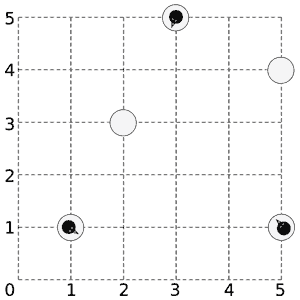
A sample layout of ice floes with 3 penguins on them.
Input
On the first line one positive number: the number of testcases, at most 100. After that per testcase:
One line with the integer N (1 ≤ N ≤ 100) and a floating-point number D (0 ≤ D ≤ 100 000 ), denoting the number of ice pieces and the maximum distance a penguin can jump.
N lines, each line containing xi, yi, ni and mi, denoting for each ice piece its X and Y coordinate, the number of penguins on it and the maximum number of times a penguin can jump off this piece before it disappears ( −10 000 ≤ xi, yi ≤ 10 000 , 0 ≤ ni ≤ 10, 1 ≤ mi ≤ 200).
Output
Per testcase:
- One line containing a space-separated list of 0-based indices of the pieces on which all penguins can meet. If no such piece exists, output a line with the single number −1.
题目大意:有n块浮冰,每块冰上有ni只企鹅,他们最多能跳距离D,现在这些企鹅想在同一块冰上集中,但是呢,冰有裂缝,每块冰只能被企鹅在上面跳走mi次(跳进来和站在上面都不影响),问企鹅们可以集中在哪些浮冰上。
思路:拆点,每个点x拆成x和x',每个x到x'连边,容量为能跳多少次。然后如果i到j的距离不大于D,那么在i'到j连一条边,容量为无穷大。源点S到每一个点x连一条边,容量为有多少只企鹅在x上。最后,枚举每一个点x,x到汇点T连一条边,容量为无穷大,判断最大流是否等于企鹅的数量。
算法正确性说明:如此建图,每只企鹅都从源点开始走到汇点,但每个冰块只能经过cap[x->x']次,保证了企鹅只能从x跳走mi次。
PS:我枚举的时候,只是把前一条边的容量搞成0(要删掉好像好麻烦的样子),再新建一条从枚举点到汇点的边,这样就不用每次都建图了。
PS2:D居然是浮点数……还好没因此WA……
BFS+ISAP(235MS):
 #include <cstdio>

 #include <cstring>

 #include <queue>

 #include <algorithm>

 #include <cmath>

 using namespace std;

 const int MAXN = ;

 const int MAXE = MAXN * MAXN * ;

 const int INF = 0x3f3f3f3f;

 struct SAP {

     int head[MAXN], dis[MAXN], gap[MAXN], pre[MAXN], cur[MAXN];

     int to[MAXE], next[MAXE], flow[MAXE], cap[MAXE];

     int st, ed, n, ecnt;

     void init() {

         memset(head, , sizeof(head));

         ecnt = ;

     }

     void add_edge(int u, int v, int f) {

         to[ecnt] = v; cap[ecnt] = f; flow[ecnt] = ; next[ecnt] = head[u]; head[u] = ecnt++;

         to[ecnt] = u; cap[ecnt] = ; flow[ecnt] = ; next[ecnt] = head[v]; head[v] = ecnt++;

         //printf("%d->%d cap=%d\n", u, v, f);

     }

     void bfs() {

         memset(dis, 0x3f, sizeof(dis));

         queue<int> que; que.push(ed);

         dis[ed] = ;

         while(!que.empty()) {

             int u = que.front(); que.pop();

             ++gap[dis[u]];

             for(int p = head[u]; p; p = next[p]) {

                 int v = to[p];

                 if(dis[v] > n && cap[p ^ ]) {

                     dis[v] = dis[u] + ;

                     que.push(v);

                 }

             }

         }

     }

     int Maxflow(int ss, int tt, int nn) {

         st = ss, ed = tt, n = nn;

         int ans = , minFlow = INF, u;

         for(int i = ; i <= n; ++i) {

             cur[i] = head[i];

             gap[i] = ;

         }

         u = pre[st] = st;

         bfs();

         while(dis[st] < n) {

             bool flag = false;

             for(int &p = cur[u]; p; p = next[p]) {

                 int v = to[p];

                 if(cap[p] > flow[p] && dis[u] == dis[v] + ) {

                     flag = true;

                     minFlow = min(minFlow, cap[p] - flow[p]);

                     pre[v] = u;

                     u = v;

                     if(u == ed) {

                         ans += minFlow;

                         while(u != st) {

                             u = pre[u];

                             flow[cur[u]] += minFlow;

                             flow[cur[u] ^ ] -= minFlow;

                         }

                         minFlow = INF;

                     }

                     break;

                 }

             }

             if(flag) continue;

             int minDis = n - ;

             for(int p = head[u]; p; p = next[p]) {

                 int v = to[p];

                 if(cap[p] > flow[p] && dis[v] < minDis) {

                     minDis = dis[v];

                     cur[u] = p;

                 }

             }

             if(--gap[dis[u]] == ) break;

             gap[dis[u] = minDis + ]++;

             u = pre[u];

         }

         return ans;

     }

 } G;

 struct Point {

     int x, y, n, m;

     void read() {

         scanf("%d%d%d%d", &x, &y, &n, &m);

     }

 };

 double dist(const Point &a, const Point &b) {

     return sqrt((a.x - b.x) * (a.x - b.x) + (a.y - b.y) * (a.y - b.y));

 }

 int n, ss, tt;

 int ans[], cnt;

 double d;

 Point p[];

 void make_graph() {

     ss =  * n + , tt = ss + ;

     G.init();

     for(int i = ; i <= n; ++i)

         if(p[i].n) G.add_edge(ss,  * i - , p[i].n);

     for(int i = ; i <= n; ++i) G.add_edge( * i - ,  * i, p[i].m);

     for(int i = ; i <= n; ++i) {

         for(int j = ; j <= n; ++j) {

             if(i == j || dist(p[i], p[j]) > d) continue;

             G.add_edge(i * , j *  - , INF);

         }

     }

 }

 int main() {

     int T;

     scanf("%d", &T);

     while(T--) {

         scanf("%d%lf", &n, &d);

         for(int i = ; i <= n; ++i) p[i].read();

         int sum = ;

         for(int i = ; i <= n; ++i) sum += p[i].n;

         make_graph();

         cnt = ;

         for(int i = ; i <= n; ++i) {

             G.add_edge(i *  - , tt, INF);

             memset(G.flow, , sizeof(G.flow));

             if(sum == G.Maxflow(ss, tt, tt)) ans[++cnt] = i - ;

             G.cap[G.ecnt - ] = ;

         }

         if(cnt == ) puts("-1");

         else {

             for(int i = ; i < cnt; ++i) printf("%d ", ans[i]);

             printf("%d\n", ans[cnt]);

         }

     }

 }
POJ 3498 March of the Penguins(网络最大流)的更多相关文章
- poj 3498 March of the Penguins(最大流+拆点)
题目大意:在南极生活着一些企鹅,这些企鹅站在一些冰块上,现在要让这些企鹅都跳到同一个冰块上.但是企鹅有最大的跳跃距离,每只企鹅从冰块上跳走时会给冰块造成损害,因此企鹅跳离每个冰块都有次数限制.找出企鹅 ...
- [POJ 3498] March of the Penguins
March of the Penguins Time Limit: 8000MS Memory Limit: 65536K Total Submissions: 4378 Accepted: ...
- poj 3498 March of the Penguins(拆点+枚举汇点 最大流)
March of the Penguins Time Limit: 8000MS Memory Limit: 65536K Total Submissions: 4873 Accepted: ...
- poj 1273 && hdu 1532 Drainage Ditches (网络最大流)
Drainage Ditches Time Limit: 1000MS Memory Limit: 10000K Total Submissions: 53640 Accepted: 2044 ...
- UVALive-3972 March of the Penguins (最大流:节点容量)
题目大意:有n个带有裂缝的冰块.已知每个冰块的坐标和已经站在上面的企鹅数目,每当一个企鹅从一个冰块a跳到另一个冰块b上的时候,冰块a上的裂缝便增大一点,还知道每个冰块上最多能被跳跃的次数.所有的企鹅都 ...
- 【POJ3498】March of the Penguins(最大流,裂点)
题意:在靠近南极的某处,一些企鹅站在许多漂浮的冰块上.由于企鹅是群居动物,所以它们想要聚集到一起,在同一个冰块上.企鹅们不想把自己的身体弄湿,所以它们在冰块之间跳跃,但是它们的跳跃距离,有一个上限. ...
- poj 3498 最大流
March of the Penguins Time Limit: 8000MS Memory Limit: 65536K Total Submissions: 4809 Accepted: ...
- POJ--1087--A Plug for UNIX【Dinic】网络最大流
链接:http://poj.org/problem? id=1087 题意:提供n种插座.每种插座仅仅有一个,有m个设备须要使用插座,告诉你设备名称以及使用的插座类型,有k种转换器.能够把某种插座类型 ...
- P3376 【模板】网络最大流
P3376 [模板]网络最大流 题目描述 如题,给出一个网络图,以及其源点和汇点,求出其网络最大流. 输入输出格式 输入格式: 第一行包含四个正整数N.M.S.T,分别表示点的个数.有向边的个数.源点 ...
随机推荐
- 通过遍历JSON键值对获取包含某字符串的键的值_电脑计算机编程入门教程自学
首发于:Aardio通过遍历JSON键值对获取包含某字符串的键的值_电脑计算机编程入门教程自学 http://jianma123.com/viewthread.aardio?threadid=429 ...
- 关于Date的冷门知识记录
最近在做项目的时候,用到了Date.toLocaleString来处理当前日期.在这之前,我都是通过get*等方式来获取数据进行拼接.无意间,发现了toLocaleString方法.遂想写一篇文章来记 ...
- 网页股票期货历史数据(API)
//[和讯数据] //大商所DCE.郑商所CZCE.上期所SHFE3.中金所CFFEX //期货1分钟线http://webftcn.hermes.hexun.com/ ... I1709&d ...
- api帮助文档的制作
在java开发中,往往需要用到别人写的类或是自己写的类被别人拿去用. 而使用类的过程中,类中的方法对使用者而言并不完全透明,这个时候帮助文档可以让我们清楚的了解这个类中的方法该如何调用. 下面简述一下 ...
- JS中数组方法的封装之slice
slice方法的功能 // 1) : 数组的截取 // 2) :slice(m,n): 从数组索引m开始,截取到索引n,但是不包含n;[前包后不包] // slice(m) : 从索引m开始,截取到末 ...
- C程序设计语言笔记-第一章
The C Programming language notes 一 基础变量类型.运算符和判断循环 char 字符型 character ...
- vue实现图片路径传送
<!DOCTYPE html><html lang="en"><head><meta charset="UTF-8"& ...
- 查看dll 的是32位还是64位
1. dumpbin 命令 ** dumpbin 路径写入环境变量 *** 使用 dumpbin /headers 文件名去查看 [X86 表示32位 x64表示64位] 2. 使用 DEPEND ...
- BZOJ3209(luogu 4317)花神的数论题题解
题目 设 sum(i) 表示 i 的二进制表示中 1 的个数.给出一个正整数 N ,花神要问你 派(Sum(i)),也就是 sum(1)—sum(N) 的乘积(n<=1e15). 分析 好吧,一 ...
- Alexander的Python机器学习 之目录分析。
无聊,顺应一下潮流,学习一下python机器学习吧. 买了一本书,首先分析一下目录吧. 1.第一章是 Python机器学习的生态系统. 1.1.数据科学或机器学习的工作流程. 然后又分成6点进行详细说 ...