
(转) Deep learning architecture diagrams
FastML
Machine learning made easy
Deep learning architecture diagrams
2016-09-30
Like a wild stream after a wet season in African savanna diverges into many smaller streams forming lakes and puddles, deep learning has diverged into a myriad of specialized architectures. Each architecture has a diagram. Here are some of them.
Neural networks are conceptually simple, and that’s their beauty. A bunch of homogenous, uniform units, arranged in layers, weighted connections between them, and that’s all. At least in theory. Practice turned out to be a bit different. Instead of feature engineering, we now have architecture engineering, as described by Stephen Merrity:
The romanticized description of deep learning usually promises that the days of hand crafted feature engineering are gone - that the models are advanced enough to work this out themselves. Like most advertising, this is simultaneously true and misleading.
Whilst deep learning has simplified feature engineering in many cases, it certainly hasn’t removed it. As feature engineering has decreased, the architectures of the machine learning models themselves have become increasingly more complex. Most of the time, these model architectures are as specific to a given task as feature engineering used to be.
To clarify, this is still an important step. Architecture engineering is more general than feature engineering and provides many new opportunities. Having said that, however, we shouldn’t be oblivious to the fact that where we are is still far from where we intended to be.
Not quite as bad as doings of architecture astronauts, but not too good either.
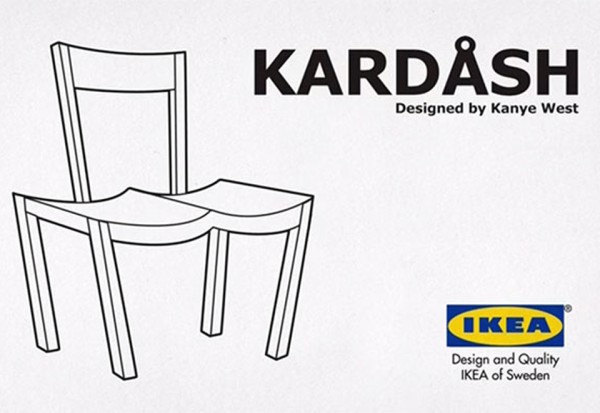
An example of architecture specific to a given task
LSTM diagrams
How to explain those architectures? Naturally, with a diagram. A diagram will make it all crystal clear.
Let’s first inspect the two most popular types of networks these days, CNN and LSTM. You’ve already seen a convnet diagram, so turning to the iconic LSTM:
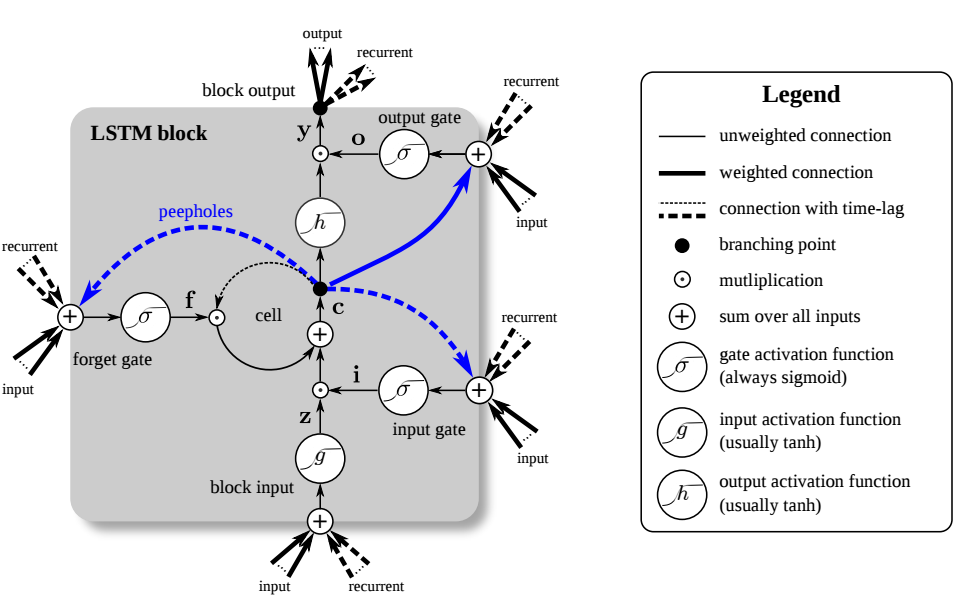
It’s easy, just take a closer look:
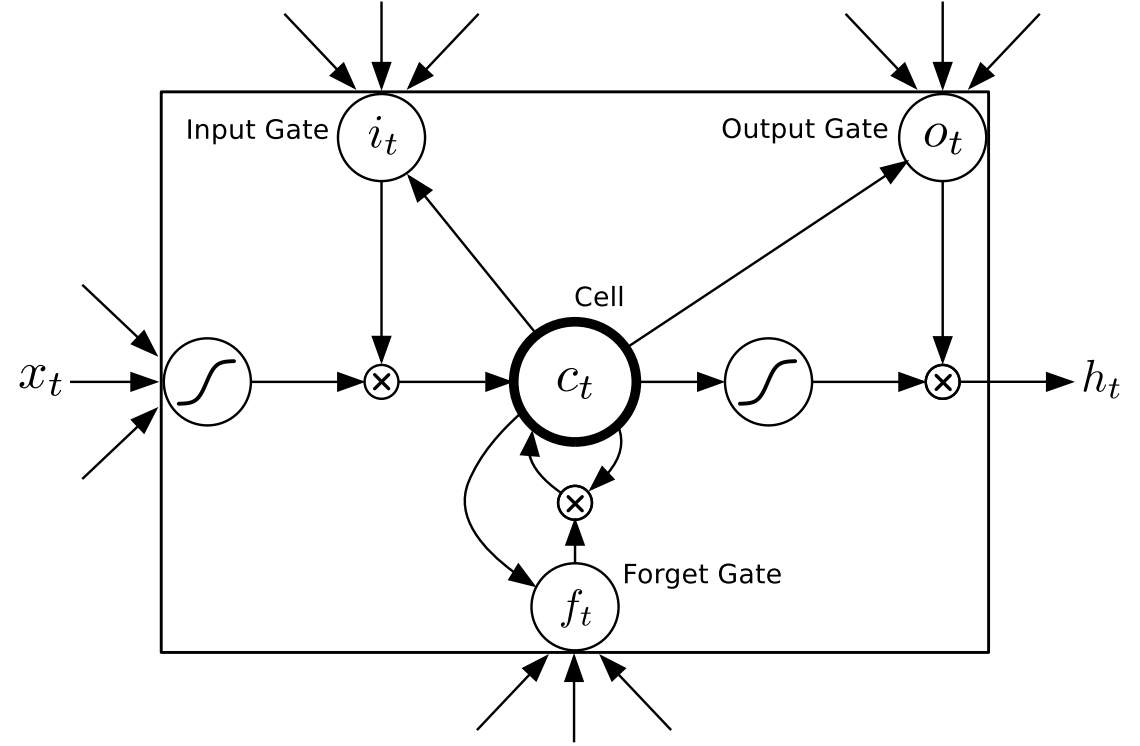
As they say, in mathematics you don’t understand things, you just get used to them.
Fortunately, there are good explanations, for example Understanding LSTM Networks and Written Memories: Understanding, Deriving and Extending the LSTM.
LSTM still too complex? Let’s try a simplified version, GRU (Gated Recurrent Unit). Trivial, really.
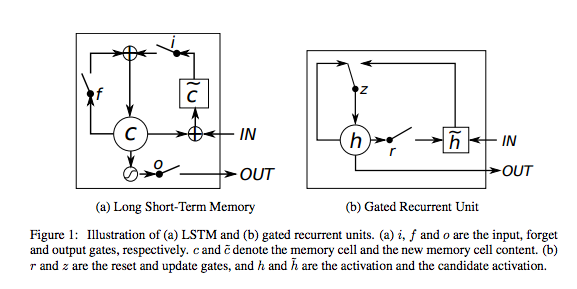
Especially this one, called minimal GRU.
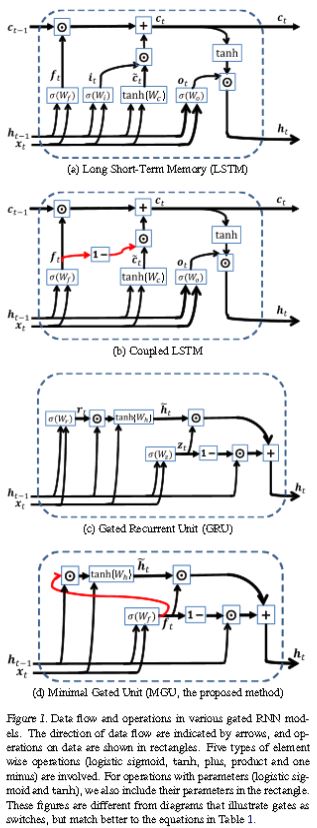
More diagrams
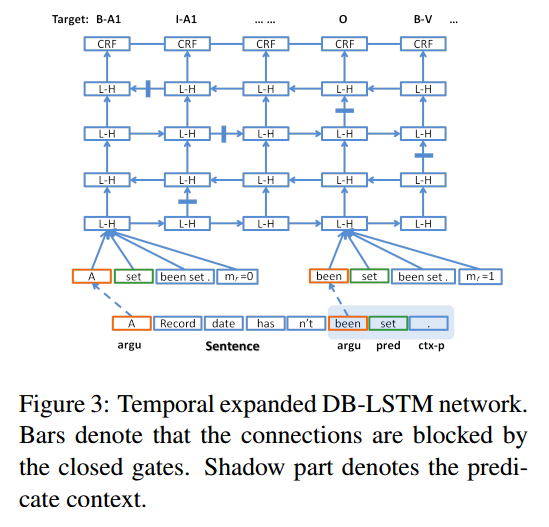
Various modifications of LSTM are now common. Here’s one, called deep bidirectional LSTM:

DB-LSTM, PDF
The rest are pretty self-explanatory, too. Let’s start with a combination of CNN and LSTM, since you have both under your belt now:
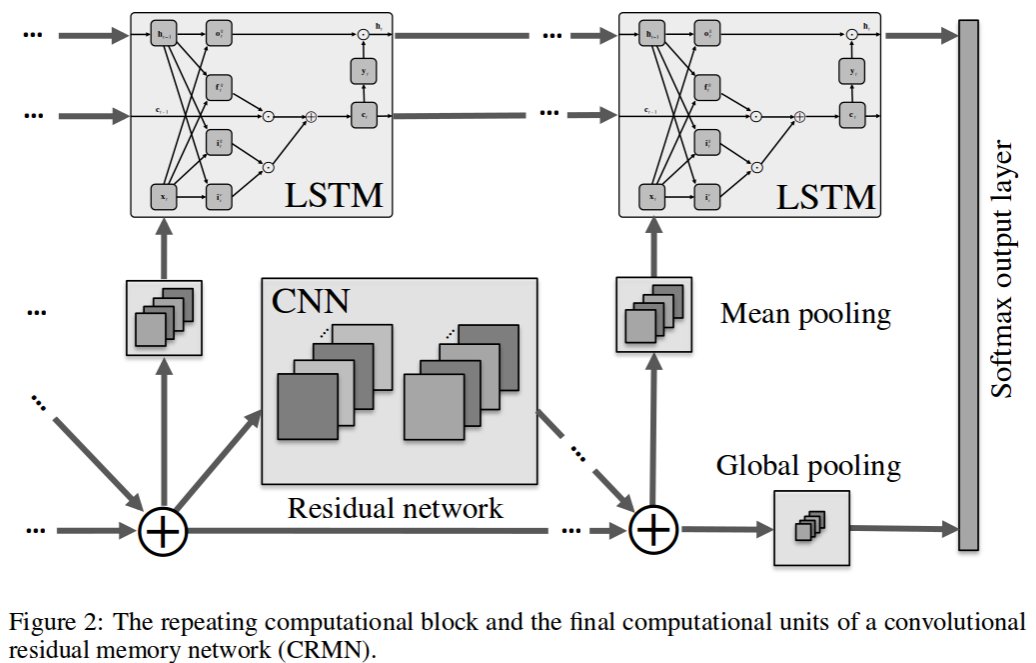
Convolutional Residual Memory Network, 1606.05262
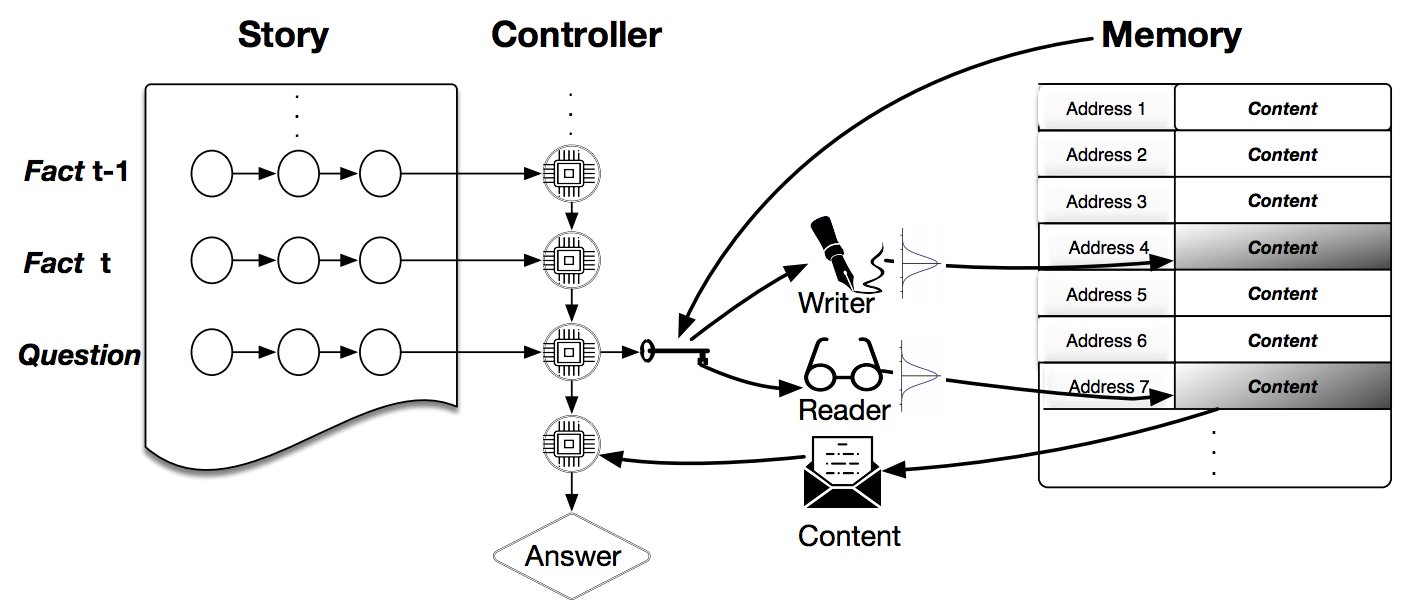
Dynamic NTM, 1607.00036

Evolvable Neural Turing Machines, PDF
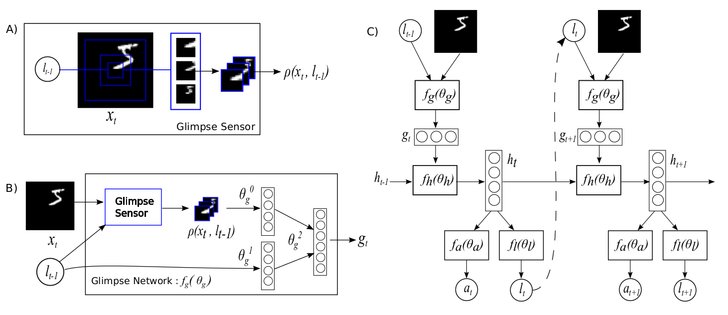
Recurrent Model Of Visual Attention, 1406.6247
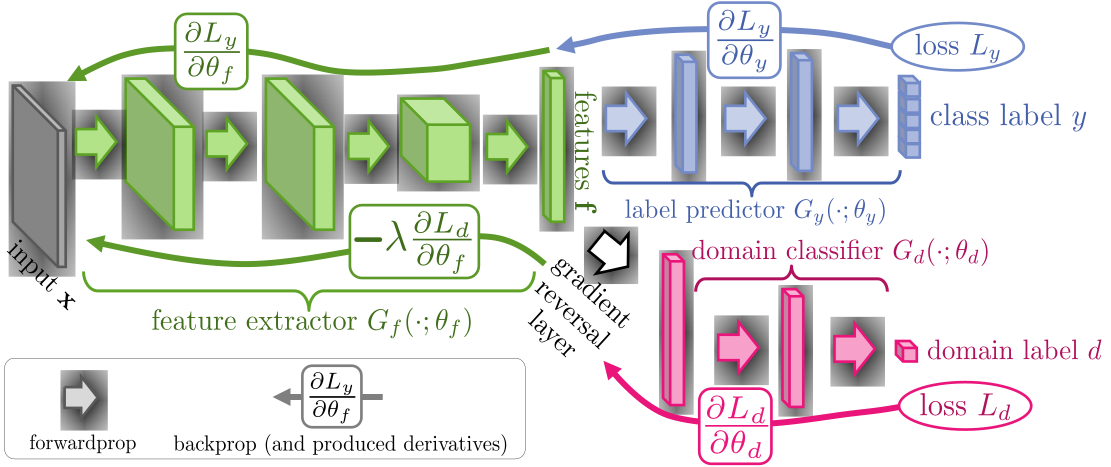
Unsupervised Domain Adaptation By Backpropagation, 1409.7495
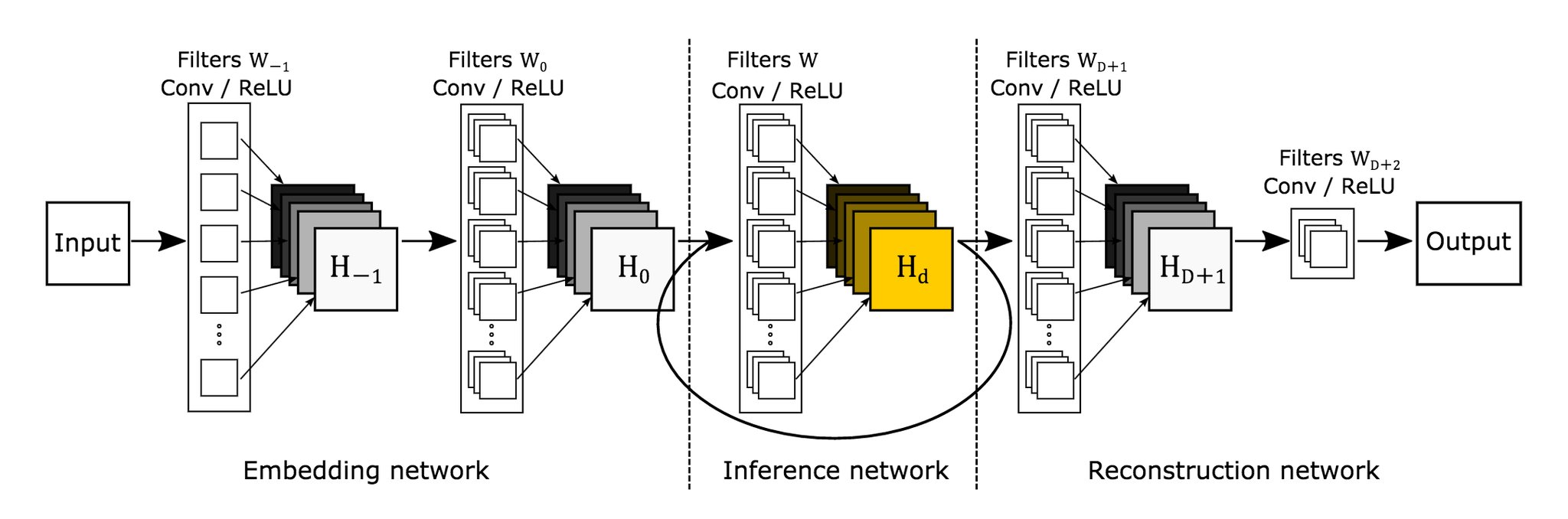
Deeply Recursive CNN For Image Super-Resolution, 1511.04491
This diagram of multilayer perceptron with synthetic gradients scores high on clarity:
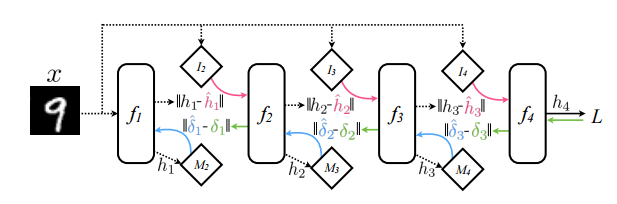
MLP with synthetic gradients, 1608.05343

Every day brings more. Here’s a fresh one, again from Google:
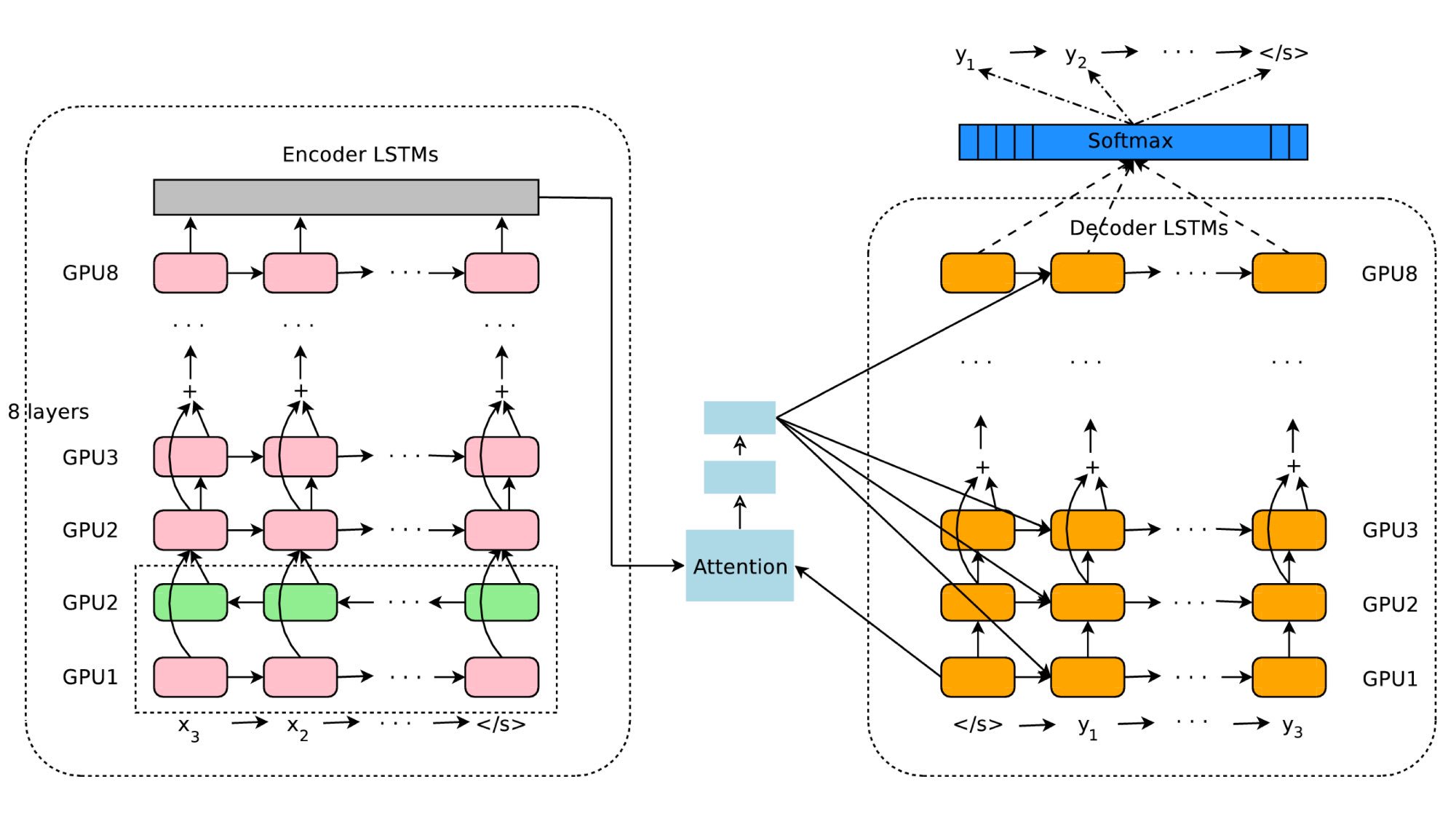
Google’s Neural Machine Translation System, 1609.08144
And Now for Something Completely Different
Drawings from the Neural Network ZOO are pleasantly simple, but, unfortunately, serve mostly as eye candy. For example:
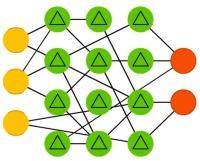


ESM, ESN and ELM
These look like not-fully-connected perceptrons, but are supposed to represent a Liquid State Machine, an Echo State Network, and an Extreme Learning Machine.
How does LSM differ from ESN? That’s easy, it has green neuron with triangles. But how does ESN differ from ELM? Both have blue neurons.
Seriously, while similar, ESN is a recursive network and ELM is not. And this kind of thing should probably be visible in an architecture diagram.

Posted by Zygmunt Z. 2016-09-30 basics, neural-networks
« Factorized convolutional neural networks, AKA separable convolutions
Comments
Recent Posts
- Deep learning architecture diagrams
- Factorized convolutional neural networks, AKA separable convolutions
- How to make those 3D data visualizations
- Adversarial validation, part two
- ^one weird trick for training char-^r^n^ns
- Adversarial validation, part one
- Coming out
Follow @fastml for notifications about new posts.
- Status updating...
Also check out @fastml_extra for things related to machine learning and data science in general.
GitHub
Most articles come with some code. We push it to Github.
Cubert
Visualize your data in interactive 3D, as described here.
Copyright © 2016 - Zygmunt Z. - Powered by Octopress
(转) Deep learning architecture diagrams的更多相关文章
- 15 cvpr An Improved Deep Learning Architecture for Person Re-Identification
http://www.umiacs.umd.edu/~ejaz/ * 也是同时学习feature和metric * 输入一对图片,输出是否是同一个人 * 包含了一个新的层: include a lay ...
- Deep Learning in a Nutshell: History and Training
Deep Learning in a Nutshell: History and Training This series of blog posts aims to provide an intui ...
- 深度学习材料:从感知机到深度网络A Deep Learning Tutorial: From Perceptrons to Deep Networks
In recent years, there’s been a resurgence in the field of Artificial Intelligence. It’s spread beyo ...
- 【Deep Learning】genCNN: A Convolutional Architecture for Word Sequence Prediction
作者:Mingxuan Wang.李航,刘群 单位:华为.中科院 时间:2015 发表于:acl 2015 文章下载:http://pan.baidu.com/s/1bnBBVuJ 主要内容: 用de ...
- Why GEMM is at the heart of deep learning
Why GEMM is at the heart of deep learning I spend most of my time worrying about how to make deep le ...
- 【深度学习Deep Learning】资料大全
最近在学深度学习相关的东西,在网上搜集到了一些不错的资料,现在汇总一下: Free Online Books by Yoshua Bengio, Ian Goodfellow and Aaron C ...
- (转) Awesome - Most Cited Deep Learning Papers
转自:https://github.com/terryum/awesome-deep-learning-papers Awesome - Most Cited Deep Learning Papers ...
- (转) Deep Learning Research Review Week 2: Reinforcement Learning
Deep Learning Research Review Week 2: Reinforcement Learning 转载自: https://adeshpande3.github.io/ad ...
- deep learning 的综述
从13年11月初开始接触DL,奈何boss忙or 各种问题,对DL理解没有CSDN大神 比如 zouxy09等 深刻,主要是自己觉得没啥进展,感觉荒废时日(丢脸啊,这么久....)开始开文,即为记录自 ...
随机推荐
- Jquery报错:Uncaught TypeError: ((m.event.special[e.origType] || (intermediate value)).handle || e.handler).apply is not a function
页面中出现了Jquery报错:Uncaught TypeError: ((m.event.special[e.origType] || (intermediate value)).handle || ...
- C语言语法之关键字
注:该内容整理自以下链接. http://www.cnblogs.com/yezhenhan/archive/2011/10/16/2214420.html 由ANSI标准定义的C语言关键字共32个: ...
- 个人对beta发布的观点
内容:五个小组的beta发布 时间:2016年11月10日 13:40-15:15 地点:传媒西楼202 发布顺序: 1.飞天小女警(选礼物) 2.金州勇士(在线考试) 3.新蜂(俄罗斯方块) 4.天 ...
- WPF:ListView 分页
布局MainWindow.xaml <ListView Name="list_Reg" ItemsSource="{Binding Source={StaticRe ...
- table表格中实现tbody部分可滚动,且thead部分固定
1.想要实现表格的thead部分固定切tbody部分可滚动,就需要将thead与tbody进行分离,具体做法是 1.设置thead,tbody都为display:block: 2.设置th与td的宽度 ...
- a标签中的点击事件
我们常用的在a标签中有点击事件:1. a href="javascript:js_method();" 这 是我们平台上常用的方法,但是这种方法在传递this等参数的时候很容易出问 ...
- 樱花漫地集于我心,蝶舞纷飞祈愿相随---总结 适者:survival of the fittest 适者:survival of the fittest
编程什么的最讨厌了,总是忘记一些乱七八糟的,看起来并没有什么乱用的,比如(::“<>{}, 还有交作业的时候总是忽略大小写<(▰˘◡˘▰)> 马马虎虎莫名其妙就错了,其实大小写 ...
- 使用Git进行代码管理的心得
使用GitHub进行代码托管的方法 我是直接下载 Github for Windows ,这个软件自带一个 Github 客户端 和一个 Git shell,其中Github是图形化界面,对初学者来说 ...
- java写hadoop全局排序
前言: 一直不会用java,都是streaming的方式用C或者python写mapper或者reducer的可执行程序.但是有些情况,如全排序等等用streaming的方式往往不好处理,于是乎用原生 ...
- 请尝试使用 Console.Read。错误原因
当出现错误: 如果应用程序没有控制台或控制台输入已通过文件进行了重定向,则无法读取键.请尝试使用 Console.Read. 一定是在非控制台应用程序中用了Console.ReadKey(); Con ...