
for_each使用方法详解[转]
for_each使用方法详解[转]
Abstract
之前在(原創) 如何使用for_each() algorithm? (C/C++) (STL)曾經討論過for_each(),不過當時功力尚淺,只談到了皮毛而已,這次看了effective STL的item 41、43後,對for_each()又有了更深入的了解,因此做了本篇心得報告。
Motivation
看到了eXile的C++中实现 foreach使用了巨集對foreach做改善,也看到了很多人對STL style的for_each()做討論,使我想對STL的for_each()再做了一次研究。
Introduction
學習過STL的container後,想要存取每一個iterator,你一定寫過以下的程式
 #include <vector>#include <iostream>using namespace std;
 int main() {
 int ia[] = {1, 2, 3};
 vector<int> ivec(ia, ia + sizeof(ia) / sizeof(int)); for(vector<int>::const_iterator iter = ivec.begin(); iter != ivec.end(); ++iter) { cout << *iter << endl;
 }
} }
}執行結果
123當時我覺得STL什麼都好,就是以下這一串又臭又長
for(vector<int>::const_iterator iter = ivec.begin(); iter != ivec.end(); ++iter) {若不常寫,一時還會寫不出來,其實若配合container,C++其實不應該這樣寫迴圈,正確的方式該使用for_each(),語法會變的相當簡單。
for_each()事實上是個function template,其實做如下[effective STL item 41]
template<typename InputIterator, typename Function>Function for_each(InputIterator beg, InputIterator end, Function f) { while(beg != end) f(*beg++);}由以上source可知,for_each()只能配合global function和function object。
以下我們將對procedure based、object oriented、generics三種paradigm與for_each()搭配做探討。
Procedure Based與for_each()搭配
1.不傳入參數
/* 2
(C) OOMusou 2007 http://oomusou.cnblogs.com3
Filename : GenericAlgo_for_each_GlobalFunction.cpp4
Compiler : Visual C++ 8.0 / BCB 6.0 / gcc 3.4.2 / ISO C++5
Description : Demo how to use for_each with global function6
Release : 05/11/2007 1.07
*/8
#include <iostream>9
#include <vector>10
#include <iostream>11
#include <algorithm>12
13
using namespace std;14
15
void printElem(int& elem) {16
cout << elem << endl;17
}18
19
int main() {20
int ia[] = {1, 2, 3};21
vector<int> ivec(ia, ia + sizeof(ia) / sizeof(int));22
23
for_each(ivec.begin(), ivec.end(), printElem);24
}執行結果
12323行
for_each(ivec.begin(), ivec.end(), printElem);只需將vector::begin(),vector::end()和global function name傳給for_each()即可,再也不用for迴圈那種複雜的語法了。
2.傳入參數
若要傳參數給global function,就不能再只傳global function name而已,必須透過ptr_fun()這個function adapter將global function轉成function object,然後再用bind2nd()將參數bind成一個function object。
/* 2
(C) OOMusou 2007 http://oomusou.cnblogs.com3
Filename : GenericAlgo_for_each_GlobalFunctionWithParameter.cpp4
Compiler : Visual C++ 8.0 / BCB 6.0 / gcc 3.4.2 / ISO C++5
Description : Demo how to use for_each with global function with Parameter6
Release : 05/11/2007 1.07
*/8
#include <iostream>9
#include <vector>10
#include <iostream>11
#include <algorithm>12
#include <functional>13
14
using namespace std;15
16
void printElem(int elem, const char* prefix) {17
cout << prefix << elem << endl;18
}19
20
int main() {21
int ia[] = {1, 2, 3};22
vector<int> ivec(ia, ia + sizeof(ia) / sizeof(int));23
24
for_each(ivec.begin(), ivec.end(), bind2nd(ptr_fun(printElem), "Element:"));25
}執行結果
Element:1Element:2Element:3Object Oriented與for_each()搭配
1.不傳入參數
使用function object
/* 2
(C) OOMusou 2007 http://oomusou.cnblogs.com3
Filename : GenericAlgo_for_each_FunctionObject.cpp4
Compiler : Visual C++ 8.0 / BCB 6.0 / gcc 3.4.2 / ISO C++5
Description : Demo how to use for_each with function object6
Release : 05/11/2007 1.07
*/8
#include <iostream>9
#include <vector>10
#include <iostream>11
#include <algorithm>12
13
using namespace std;14
15
struct printElem {16
void operator() (int elem) {17
cout << elem << endl;18
} 19
};20
21
int main() {22
int ia[] = {1, 2, 3};23
vector<int> ivec(ia, ia + sizeof(ia) / sizeof(int));24
25
for_each(ivec.begin(), ivec.end(), printElem());26
}執行結果
1232.傳入參數
若使用function object,也可以將參數傳給printElem(),透過constructor的技巧接收參數。
/* 2
(C) OOMusou 2007 http://oomusou.cnblogs.com3
Filename : GenericAlgo_for_each_FunctionObjectWithParameter.cpp4
Compiler : Visual C++ 8.0 / BCB 6.0 / gcc 3.4.2 / ISO C++5
Description : Demo how to use for_each with function object with parameter6
Release : 05/11/2007 1.07
*/8
#include <iostream>9
#include <vector>10
#include <iostream>11
#include <algorithm>12
13
using namespace std;14
15
struct printElem {16
const char* _prefix;17
18
printElem(const char* prefix) : _prefix(prefix) {}19
20
void operator() (int elem) {21
cout << _prefix << elem << endl;22
} 23
};24
25
int main() {26
int ia[] = {1, 2, 3};27
vector<int> ivec(ia, ia + sizeof(ia) / sizeof(int));28
29
for_each(ivec.begin(), ivec.end(), printElem("Element:"));30
}執行結果
Element:1Element:2Element:3function object有很多種寫法,但只要是function object都可以跟for_each()合作。
3.member_function與for_each()搭配
3.1 不傳入參數
本文的重點來了,在物件導向世界裡,最常用的就是for_each()配合member function,這該怎麼寫呢?直覺會這樣子寫
for_each(_doorVec.begin(), _doorVec.end(),&Door::open);由於global function name本身就是一個pointer,所以想藉由&Door::open傳進一個address,但這樣compile並不會過,正確解法是
for_each(_doorVec.begin(), _doorVec.end(), mem_fun_ref(&Door::open));透過mem_fun_ref()這個function adapter將member function轉成function object。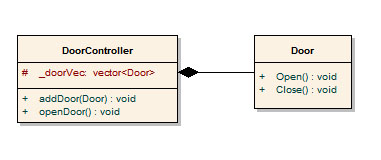
/* 2
(C) OOMusou 2007 http://oomusou.cnblogs.com3
4
Filename : GenericAlgo_for_each_MemberFunctionObject.cpp5
Compiler : Visual C++ 8.0 / BCB 6.0 / gcc 3.4.2 / ISO C++6
Description : Demo how to use for_each with member function with object7
Release : 05/11/2007 1.08
*/9
#include <vector>10
#include <iostream>11
#include <algorithm>12
#include <functional>13
14
using namespace std;15
16
class Door {17
public:18
void open() const {19
cout << "open door horizontally" << endl;20
}21
22
void close() const {23
cout << "close door horizontally" << endl;24
}25
};26
27
class DoorController {28
protected:29
vector<Door> _doorVec;30
31
public:32
void addDoor(Door aDoor) {33
_doorVec.push_back(aDoor);34
}35
36
void openDoor() const {37
for_each(_doorVec.begin(), _doorVec.end(), mem_fun_ref(&Door::open));38
}39
};40
41
int main() {42
DoorController dc;43
dc.addDoor(Door());44
dc.addDoor(Door());45
dc.openDoor();46
}執行結果
open door horizontallyopen door horizontally37行
for_each(_doorVec.begin(), _doorVec.end(), mem_fun_ref(&Door::open));值得注意的是,mem_fun_ref()用在object的member function。若要搭配多型,vector必須放pointer,也就是得使用object pointer的member function,此時得使用mem_fun()將member function轉成function object。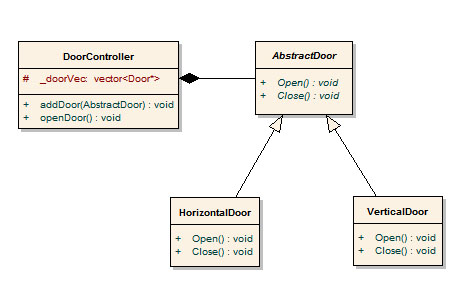
/* 2
(C) OOMusou 2007 http://oomusou.cnblogs.com3
4
Filename : GenericAlgo_for_each_MemberFunctionObjectPointer.cpp5
Compiler : Visual C++ 8.0 / BCB 6.0 / gcc 3.4.2 / ISO C++6
Description : Demo how to use for_each with member function with object pointer7
Release : 05/11/2007 1.08
*/9
#include <vector>10
#include <iostream>11
#include <algorithm>12
#include <functional>13
14
using namespace std;15
16
class AbstractDoor {17
public:18
virtual void open() const {19
cout << "open door horizontally" << endl;20
}21
22
virtual void close() const {23
cout << "close door horizontally" << endl;24
}25
};26
27
class HorizontalDoor : public AbstractDoor {28
};29
30
class VerticalDoor : public AbstractDoor {31
public:32
void open() const {33
cout << "open door vertically" << endl;34
}35
36
void close() const {37
cout << "close door vertically" << endl;38
}39
};40
41
class DoorController {42
protected:43
vector<AbstractDoor*> _doorVec;44
45
public:46
void addDoor(AbstractDoor& aDoor) {47
_doorVec.push_back(&aDoor);48
}49
50
void openDoor() const {51
for_each(_doorVec.begin(), _doorVec.end(), mem_fun(&AbstractDoor::open));52
}53
};54
55
int main() {56
DoorController dc;57
dc.addDoor(HorizontalDoor());58
dc.addDoor(VerticalDoor());59
dc.openDoor();60
}執行結果
open door horizontallyopen door vertically51行
for_each(_doorVec.begin(), _doorVec.end(), mem_fun(&AbstractDoor::open));使用了mem_fun()。
3.2傳入參數
問題又來了,若要使member function也傳入參數呢?這時得使用bind2nd將function object和參數bind在一起,變成另外一個新的function object。
/* 2
(C) OOMusou 2007 http://oomusou.cnblogs.com3
4
Filename : GenericAlgo_for_each_MemberFunctionObjectPointerWithParameter.cpp5
Compiler : Visual C++ 8.0 / BCB 6.0 / gcc 3.4.2 / ISO C++6
Description : Demo how to use for_each with member function with object pointer7
Release : 05/11/2007 1.08
*/9
#include <iostream>10
#include <vector>11
#include <algorithm>12
#include <functional>13
14
using namespace std;15
16
class AbstractDoor {17
public:18
virtual void open() const {19
cout << "open door horizontally" << endl;20
}21
22
virtual void close() const {23
cout << "close door horizontally" << endl;24
}25
26
virtual void openDoorBy(const char* name) const {27
cout << name << " ";28
open();29
}30
};31
32
class HorizontalDoor : public AbstractDoor {33
};34
35
class VerticalDoor : public AbstractDoor {36
public:37
void open() const {38
cout << "open door vertically" << endl;39
}40
41
void close() const {42
cout << "close door vertically" << endl;43
}44
};45
46
class DoorController {47
protected:48
vector<AbstractDoor*> _doorVec;49
50
public:51
void addDoor(AbstractDoor& aDoor) {52
_doorVec.push_back(&aDoor);53
}54
55
void openDoor() const {56
for_each(_doorVec.begin(), _doorVec.end(), bind2nd(mem_fun(&AbstractDoor::openDoorBy), "John"));57
}58
};59
60
int main() {61
DoorController dc;62
dc.addDoor(HorizontalDoor());63
dc.addDoor(VerticalDoor());64
dc.openDoor();65
}執行結果
John open door horizontally2
John open door vertically56行
for_each(_doorVec.begin(), _doorVec.end(), bind2nd(mem_fun(&AbstractDoor::openDoorBy), "John"));透過了bind2nd將參數結合後,成為一個新的function object。
Generics與for_each()搭配
1.Function Template
1.1不傳入參數
在泛型世界裡,那for_each()該怎麼配合function template呢?
/* 2
(C) OOMusou 2007 http://oomusou.cnblogs.com3
Filename : GenericAlgo_for_each_FunctionTemplate.cpp4
Compiler : Visual C++ 8.0 / BCB 6.0 / gcc 3.4.2 / ISO C++5
Description : Demo how to use for_each with function template6
Release : 05/11/2007 1.07
*/8
#include <iostream>9
#include <vector>10
#include <iostream>11
#include <algorithm>12
13
using namespace std;14
15
template<typename T>16
void printElem(T elem) {17
cout << elem << endl;18
}19
20
int main() {21
int ia[] = {1, 2, 3};22
vector<int> ivec(ia, ia + sizeof(ia) / sizeof(int));23
24
for_each(ivec.begin(), ivec.end(), printElem<int>);25
//for_each(ivec.begin(), ivec.end(), (void(*)(int))printElem);26
}執行結果
123若使用function template,有兩種寫法
一種是
for_each(ivec.begin(), ivec.end(), printElem<int>);由於template function需要在compile時確定型別,所以要加上<int>確定為int型別。
另外一種寫法
for_each(ivec.begin(), ivec.end(), (void(*)(int))printElem);template function並沒有確定型別,但轉成function pointer時,並須明確轉成int型別的function pointer。
1.2 傳入參數
若要如function object那樣能傳參數呢?funtion template是可以,不過有些限制,若使用nontype parameter,只能使用以下三種型別
1.int或enum
2.pointer:pointer to object,pointer to function,pointer to member。
3.reference:reference to object,reference to function。
/* 2
(C) OOMusou 2007 http://oomusou.cnblogs.com3
Filename : GenericAlgo_for_each_FunctionTemplateWithNontypeParameter.cpp4
Compiler : Visual C++ 8.0 / BCB 6.0 / gcc 3.4.2 / ISO C++5
Description : Demo how to use for_each with function template with nontype parameter6
Release : 05/11/2007 1.07
*/8
#include <iostream>9
#include <vector>10
#include <iostream>11
#include <algorithm>12
13
using namespace std;14
15
template<typename T, int i>16
void printElem(T elem) {17
cout << i << ":" << elem << endl;18
}19
20
int main() {21
int ia[] = {1, 2, 3};22
vector<int> ivec(ia, ia + sizeof(ia) / sizeof(int));23
24
for_each(ivec.begin(), ivec.end(), printElem<int, 5>);25
}執行結果
5:15:25:3所以無法如function object那樣可以傳入字串或任意型別,最少在目前ISO C++標準是做不到的。
既然討論了function template,那最具威力的class template是否也能搭配for_each()?
2.Class Template
2.1 不傳入參數
/* 2
(C) OOMusou 2007 http://oomusou.cnblogs.com3
Filename : GenericAlgo_for_each_ClassTemplate.cpp4
Compiler : Visual C++ 8.0 / BCB 6.0 / gcc 3.4.2 / ISO C++5
Description : Demo how to use for_each with class template6
Release : 05/11/2007 1.07
*/8
#include <iostream>9
#include <vector>10
#include <iostream>11
#include <algorithm>12
#include <functional>13
14
using namespace std;15
16
template<typename T>17
class printElem : public unary_function<T, void> {18
public:19
void operator() (T elem) {20
cout << elem << endl;21
}22
};23
24
int main() {25
int ia[] = {1, 2, 3};26
vector<int> ivec(ia, ia + sizeof(ia) / sizeof(int));27
28
for_each(ivec.begin(), ivec.end(), printElem<int>());29
}執行結果
12317行
class printElem : public unary_function<T, void> {因為printElem只接受for_each()所傳的參數,算是單參數而已,所以public繼承了unary_function<T,void>,因為for_each的定義
template <class InputIterator, class UnaryFunction>UnaryFunction for_each(InputIterator first, InputIterator last, UnaryFunction f);傳進去的是UnaryFunction型別,第一個type parameter T表示傳入的型別,第二個type parameter void,表示回傳的型別,最後重新定義operator()。
2.2 傳入參數
若要使class template也能傳入參數,一樣利用function object的技巧,借用constructor。
/* 2
(C) OOMusou 2007 http://oomusou.cnblogs.com3
Filename : GenericAlgo_for_each_ClassTemplateWithParameter.cpp4
Compiler : Visual C++ 8.0 / BCB 6.0 / gcc 3.4.2 / ISO C++5
Description : Demo how to use for_each with class template & parameter6
Release : 05/11/2007 1.07
*/8
#include <iostream>9
#include <vector>10
#include <iostream>11
#include <algorithm>12
#include <functional>13
14
using namespace std;15
16
template<typename T, typename U>17
class printElem : public unary_function<T, void> {18
private:19
U _prefix;20
21
public:22
printElem(U prefix) : _prefix(prefix) {}23
24
void operator() (T elem) {25
cout << _prefix << elem << endl;26
}27
};28
29
int main() {30
int ia[] = {1, 2, 3};31
vector<int> ivec(ia, ia + sizeof(ia) / sizeof(int));32
33
for_each(ivec.begin(), ivec.end(), printElem<int, const char*>("Element:"));34
}執行結果
Element:1Element:2Element:3Conclusion
STL的for_each()事實上很好用,不過由於限制很多,所以常令很多新手卻步,本文試著將所有會遇到問題的地方都提出來討論,包括procedure based、object oriented、generics三種paradigm與for_each()的搭配都涵蓋了,希望對各位有幫助。
for_each使用方法详解[转]的更多相关文章
- for_each使用方法详解
for_each使用方法详解[转] Abstract之前在(原創) 如何使用for_each() algorithm? (C/C++) (STL)曾經討論過for_each(),不過當時功力尚淺, ...
- session的使用方法详解
session的使用方法详解 Session是什么呢?简单来说就是服务器给客户端的一个编号.当一台WWW服务器运行时,可能有若干个用户浏览正在运正在这台服务器上的网站.当每个用户首次与这台WWW服务器 ...
- Kooboo CMS - Html.FrontHtml[Helper.cs] 各个方法详解
下面罗列了方法详解,每一个方法一篇文章. Kooboo CMS - @Html.FrontHtml().HtmlTitle() 详解 Kooboo CMS - Html.FrontHtml.Posit ...
- HTTP请求方法详解
HTTP请求方法详解 请求方法:指定了客户端想对指定的资源/服务器作何种操作 下面我们介绍HTTP/1.1中可用的请求方法: [GET:获取资源] GET方法用来请求已被URI识别的资源.指定 ...
- ecshop后台增加|添加商店设置选项和使用方法详解
有时候我们想在Ecshop后台做个设置.radio.checkbox 等等来控制页面的显示,看看Ecshop的设计,用到了shop_config这个商店设置功能 Ecshop后台增加|添加商店设置选项 ...
- (转)Spring JdbcTemplate 方法详解
Spring JdbcTemplate方法详解 文章来源:http://blog.csdn.net/dyllove98/article/details/7772463 JdbcTemplate主要提供 ...
- C++调用JAVA方法详解
C++调用JAVA方法详解 博客分类: 本文主要参考http://tech.ccidnet.com/art/1081/20050413/237901_1.html 上的文章. C++ ...
- windows.open()、close()方法详解
windows.open()方法详解: window.open(URL,name,features,replace)用于载入指定的URL到新的或已存在的窗口中,并返回代表新窗口的Win ...
- CURL使用方法详解
php采集神器CURL使用方法详解 作者:佚名 更新时间:2016-10-21 对于做过数据采集的人来说,cURL一定不会陌生.虽然在PHP中有file_get_contents函数可以获取远程 ...
随机推荐
- 一个相比jdk的io包更方便处理数据读写的包
apche的commons-io.jar包,里面有个类IOUtils,提供的下列方法: readLines方法能够从字节输入流或字符输入流里读取数据,按行读,返回字符串组成的list write方法能 ...
- Xcode命令行生成Bitcode静态库
近两三年一直在做静态库开发 1.在Xcode工程中创建静态库的Target,最初是手动Build出真机的.a文件,模拟器的.a文件,然后再用命令行合并 2.后来一些特殊的开发者,要求加入特殊的功能,或 ...
- C#调用杀毒软件MSE扫描指定目录或文件
有这样的需求,对外网文件传到服务器上时,对文件扫描是否含有病毒.微软自己的杀毒软件MSE实现了提供了命令行调用,方便我们集成到C#开发的程序里面. 命令如下: -file "E:\t&quo ...
- 匈牙利命名法、骆驼命名法、帕斯卡(pascal)命名法
(2008-05-24 13:37:55) 转载▼ 标签: 杂谈 分类: 编程杂文 一.匈牙利命名法: 广泛应用于象Microsoft Windows这样的环境中. Windows 编 ...
- SQL注入POC
mysql #encoding=utf-8 import httplib import time import string import sys import random import urlli ...
- jQ HTML之捕获 设置 元素添加与删除
捕获 设置修改 添加元素 删除元素
- objective-c第六章课后练习6
题6:接受从终端输入的整数,提取并用英语显示这个数的每一个数字,如932,显示nine three two (题目中注了.这个练习很难)的确有点难,自己想了很久网上也各种搜索.也算是找到参考了 cod ...
- 左 or 右
背景: 掌握的知识:C++.MFC.设计模式.STL,熟悉windows网络编程,了解COM组件但是不精. 近期辞职找工作,发现windows下的C++开发职位很少.linux和移动端开发职位多,但是 ...
- 为mongodb加用户授权并使用RockMongo进行管理
在刚安装完mongodb后是没有管理员的,如果要为mongodb设置管理员在启动时需要以用户授权的方式启动: /usr/local/webserver/mongodb/bin/mongod --dbp ...
- 如何修改VPN连接的MTU,解决频繁断线和页面打不开的问题
如何修改VPN连接的MTU,解决频繁断线和页面打不开的问题 MTU 介绍:MTU 即最大传输单元,它是指一种通信协议的某一层上面所能通过的最大数据包大小.为什么需要修改 MTU大多数设备原本支持通过 ...