
[LeetCode] N-ary Tree Postorder Traversal N叉树的后序遍历
Given an n-ary tree, return the postorder traversal of its nodes' values.
For example, given a 3-ary tree:
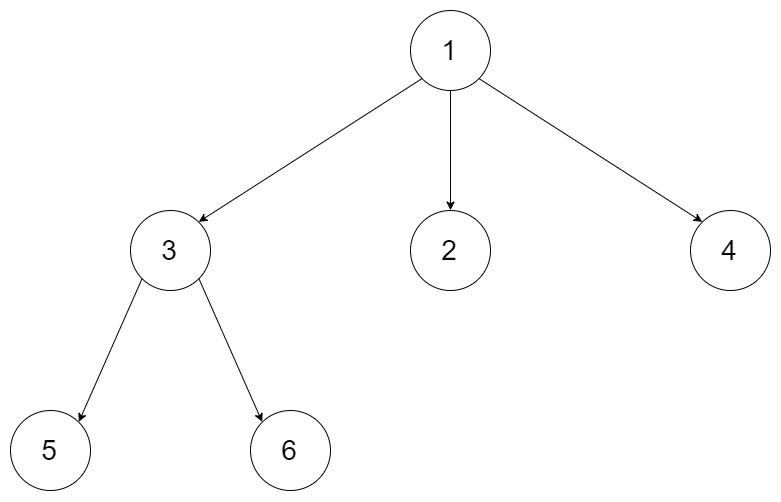
Return its postorder traversal as: [5,6,3,2,4,1].
Note:
Recursive solution is trivial, could you do it iteratively?
这道题让我们求N叉树的后序遍历,由于有了之前那道 Binary Tree Postorder Traversal 的基础,了解了二叉树的后序遍历,则N叉树的后序遍历也就没有那么难了。首先还是用递归来做,在递归函数中,判空后,遍历子结点数组,对所有的子结点调用递归函数,然后在 for 循环之外在将当前结点值加入结果 res 数组,这样才能保证是后序遍历的顺序,参见代码如下:
解法一:
class Solution {

public:

    vector<int> postorder(Node* root) {

        vector<int> res;

        helper(root, res);

        return res;

    }

    void helper(Node* node, vector<int>& res) {

        if (!node) return;

        for (Node* child : node->children) {

            helper(child, res);

        }

        res.push_back(node->val);

    }

};
我们也可以使用迭代的方法来做,这里有个小 trick,写法跟先序遍历十分的像,不同的就是每次把从 stack 中取的结点的值都加到结果 res 的最前面,还有就是遍历子结点数组的顺序是正常的顺序,而前序遍历是从子结点数组的后面往前面遍历,这点区别一定要注意,参见代码如下:
解法二:
class Solution {

public:

    vector<int> postorder(Node* root) {

        if (!root) return {};

        vector<int> res;

        stack<Node*> st{{root}};

        while (!st.empty()) {

            Node *t = st.top(); st.pop();

            res.insert(res.begin(), t->val);

            for (Node* child : t->children) {

                if (child) st.push(child);

            }

        }

        return res;

    }

};
类似题目:
Binary Tree Postorder Traversal
N-ary Tree Level Order Traversal
参考资料:
https://leetcode.com/problems/n-ary-tree-preorder-traversal/
LeetCode All in One 题目讲解汇总(持续更新中...)
[LeetCode] N-ary Tree Postorder Traversal N叉树的后序遍历的更多相关文章
- leetcode 590.N-ary Tree Postorder Traversal N叉树的后序遍历
递归方法 C++代码: /* // Definition for a Node. class Node { public: int val; vector<Node*> children; ...
- leetcode 题解:Binary Tree Preorder Traversal (二叉树的先序遍历)
题目: Given a binary tree, return the preorder traversal of its nodes' values. For example:Given binar ...
- LeetCode 145 Binary Tree Postorder Traversal(二叉树的兴许遍历)+(二叉树、迭代)
翻译 给定一个二叉树.返回其兴许遍历的节点的值. 比如: 给定二叉树为 {1. #, 2, 3} 1 \ 2 / 3 返回 [3, 2, 1] 备注:用递归是微不足道的,你能够用迭代来完毕它吗? 原文 ...
- LeetCode 590. N叉树的后序遍历(N-ary Tree Postorder Traversal)
590. N叉树的后序遍历 590. N-ary Tree Postorder Traversal 题目描述 给定一个 N 叉树,返回其节点值的后序遍历. LeetCode590. N-ary Tre ...
- LeetCode:N叉树的后序遍历【590】
LeetCode:N叉树的后序遍历[590] 题目描述 给定一个 N 叉树,返回其节点值的后序遍历. 例如,给定一个 3叉树 : 返回其后序遍历: [5,6,3,2,4,1]. 题目分析 这道题有好几 ...
- Java实现 LeetCode 590 N叉树的后序遍历(遍历树,迭代法)
590. N叉树的后序遍历 给定一个 N 叉树,返回其节点值的后序遍历. 例如,给定一个 3叉树 : 返回其后序遍历: [5,6,3,2,4,1]. 说明: 递归法很简单,你可以使用迭代法完成此题吗? ...
- C#LeetCode刷题之#590-N叉树的后序遍历(N-ary Tree Postorder Traversal)
问题 该文章的最新版本已迁移至个人博客[比特飞],单击链接 https://www.byteflying.com/archives/4092 访问. 给定一个 N 叉树,返回其节点值的后序遍历. 例如 ...
- (二叉树 递归) leetcode 145. Binary Tree Postorder Traversal
Given a binary tree, return the postorder traversal of its nodes' values. Example: Input: [1,null,2, ...
- C++版 - LeetCode 145: Binary Tree Postorder Traversal(二叉树的后序遍历,迭代法)
145. Binary Tree Postorder Traversal Total Submissions: 271797 Difficulty: Hard 提交网址: https://leetco ...
随机推荐
- 第十三节:实际开发中使用最多的监视锁Monitor、lock语法糖的扩展、混合锁的使用(ManualResetEvent、SemaphoreSlim、ReaderWriterLockSlim)
一. 监视锁(Monitor和lock) 1. Monitor类,限定线程个数的一把锁,两个核心方法: Enter:锁住某个资源. Exit:退出某一个资源. 测试案例:开启5个线程同时对一个变量进行 ...
- html - 表单form
一.表单 功能:表单用于向服务器传输数据,从而实现用户与Web服务器的交互 表单能够包含input系列标签,比如文本字段.复选框.单选框.提交按钮等等. 表单还可以包含textarea.select. ...
- CentOS/Linux开放某些端口
CentOS/Linux开放某些端口 CentOS/Linux 装载系统的时候只开启了少数端口如22,80(有些连80都没有开放)等. 结果再装完Nginx+PHP+MySQL 后不能访问网站. 当然 ...
- java获取当前运行的方法名称
// 这种方式获取的话,数组的第一个元素是当前运行方法的名称,第二个元素是调用当前方法的方法名称 StackTraceElement[] stackTrace = new Exception().ge ...
- 「luogu3258」[JLOI2014] 松鼠的新家
https://www.luogu.org/problemnew/show/P3258 (树剖裸题 树上差分 = = 差分 + lca 1. 树上差分基本思想:和差分一样,用前缀和的思想来处理解(操作 ...
- torch画散点图
import torch from torch.autograd import Variable import torch.nn.functional as F import matplotlib.p ...
- 提升Tesseract-OCR输出的质量
图片处理 修改比例(Rescaling) 二值化(Binarisation) 去除噪点(Noise Removal) 旋转/偏移校正(Rotation / Deskewing) 边界(Borders) ...
- ES6-Promise.all()使用
Promise.add 方法:将多个 promise 实例,包装成一个新的 promise 实例. const p = Promise.all([p1, p2, p3]); 接受一个数组作为参数,p1 ...
- [HAOI2015]树上操作-树链剖分
#include<bits/stdc++.h> using namespace std; const int maxn = 1e6+5; #define mid ((l+r)>> ...
- nmap简介和使用
文章链接:https://blog.csdn.net/m1585761297/article/details/80015726 参考链接:https://www.cnblogs.com/nmap/p/ ...