
04面向对象编程-02-原型继承 和 ES6的class继承
1、原型继承
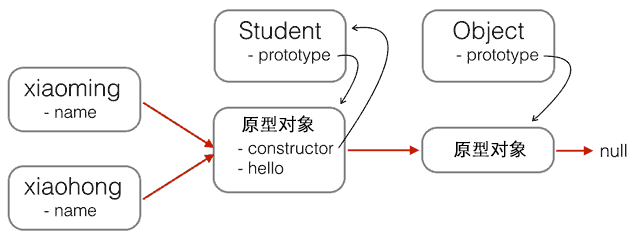
在上一篇中,我们提到,JS中原型继承的本质,实际上就是 “将构造函数的原型对象,指向由另一个构造函数创建的实例”。
function Student(props) {

    this.name = props.name || 'Unnamed';

}

Student.prototype.hello = function () {

    alert('Hello, ' + this.name + '!');

}function Student(props) {
this.name = props.name || 'Unnamed';
}
Student.prototype.hello = function () {
alert('Hello, ' + this.name + '!');
}
function PrimaryStudent(props) {

    // 调用Student构造函数,绑定this变量

    Student.call(this, props);

    this.grade = props.grade || 1;

}function PrimaryStudent(props) {
// 调用Student构造函数,绑定this变量
Student.call(this, props);
this.grade = props.grade || 1;
}
new PrimaryStudent() ----> PrimaryStudent.prototype ----> Object.prototype ----> nullnew PrimaryStudent() ----> PrimaryStudent.prototype ----> Object.prototype ----> null
new PrimaryStudent() ----> PrimaryStudent.prototype ----> Student.prototype ----> Object.prototype ----> nullnew PrimaryStudent() ----> PrimaryStudent.prototype ----> Student.prototype ----> Object.prototype ----> null
new PrimaryStudent() ----> Student.prototype ----> Object.prototype ----> nullnew PrimaryStudent() ----> Student.prototype ----> Object.prototype ----> null
var bridge = {};  //创建一个没有内容的对象

bridge.__proto__ = Student.prototype;  //让这个对象的原型对象是Student.prototype

bridge.constructor = PrimaryStudent;  //让这个对象的构造函数为PrimaryStudent

PrimaryStudent.prototype = bridge;  //让PrimaryStudent的原型对象指向bridge

这样一来,原型链就变成了:

new PrimaryStudent() ----> PrimaryStudent.prototype(bridge) ----> Student.prototype ----> Object.prototype ----> null

按照我们比喻的说法,就是:

- 让Student有个儿子bridge(bridge.__proto__ = Student.prototype;)

- 然后这个娃和PrimaryStudent结婚了(bridge.constructor = PrimaryStudent; PrimaryStudent.prototype = bridge;)

- 那么自然PrimaryStudent的子女(通过PrimaryStudent创建的对象),既会老爹bridge的技能,也会爷爷Student的技能”

//验证一下

bridge.do = function(){alert("hahaha")};

var xiaoming = new PrimaryStudent({name:'xiaoming', grade:2});

xiaoming.do(); // 弹框alert("hahaha");

//验证原型

xiaoming.__proto__ === PrimaryStudent.prototype; //true

xiaoming.__proto__.__proto__ === Student.prototype; //true

//验证继承关系

xiaoming instanceof PrimaryStudent; //true

xiaoming instanceof Student; //truevar bridge = {}; //创建一个没有内容的对象
bridge.__proto__ = Student.prototype; //让这个对象的原型对象是Student.prototype
bridge.constructor = PrimaryStudent; //让这个对象的构造函数为PrimaryStudent
PrimaryStudent.prototype = bridge; //让PrimaryStudent的原型对象指向bridge
这样一来,原型链就变成了:
new PrimaryStudent() ----> PrimaryStudent.prototype(bridge) ----> Student.prototype ----> Object.prototype ----> null
按照我们比喻的说法,就是:
- 让Student有个儿子bridge(bridge.__proto__ = Student.prototype;)
- 然后这个娃和PrimaryStudent结婚了(bridge.constructor = PrimaryStudent; PrimaryStudent.prototype = bridge;)
- 那么自然PrimaryStudent的子女(通过PrimaryStudent创建的对象),既会老爹bridge的技能,也会爷爷Student的技能”
//验证一下
bridge.do = function(){alert("hahaha")};
var xiaoming = new PrimaryStudent({name:'xiaoming', grade:2});
xiaoming.do(); // 弹框alert("hahaha");
//验证原型
xiaoming.__proto__ === PrimaryStudent.prototype; //true
xiaoming.__proto__.__proto__ === Student.prototype; //true
//验证继承关系
xiaoming instanceof PrimaryStudent; //true
xiaoming instanceof Student; //true
// PrimaryStudent构造函数:

function PrimaryStudent(props) {

    Student.call(this, props);

    this.grade = props.grade || 1;

}

// 空函数F,用于后面起桥接作用

function F() {

}

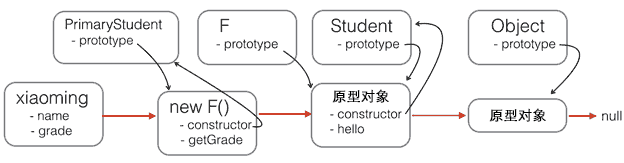
// 把F的原型指向Student.prototype,这样通过F创建的对象,其__proto__属性就是Student.prototype

F.prototype = Student.prototype;

// 把PrimaryStudent的原型指向一个新的F对象,F对象的原型正好指向Student.prototype

PrimaryStudent.prototype = new F();

// 把PrimaryStudent原型的构造函数修复为PrimaryStudent

PrimaryStudent.prototype.constructor = PrimaryStudent;

// 继续在PrimaryStudent原型(就是new F()对象)上定义方法

PrimaryStudent.prototype.getGrade = function () {

    return this.grade;

};

// 创建xiaoming

var xiaoming = new PrimaryStudent({

    name: '小明',

    grade: 2

});

xiaoming.name; // '小明'

xiaoming.grade; // 2

// 验证原型

xiaoming.__proto__ === PrimaryStudent.prototype; // true

xiaoming.__proto__.__proto__ === Student.prototype; // true

// 验证继承关系

xiaoming instanceof PrimaryStudent; // true

xiaoming instanceof Student; // true// PrimaryStudent构造函数:
function PrimaryStudent(props) {
Student.call(this, props);
this.grade = props.grade || 1;
}
// 空函数F,用于后面起桥接作用
function F() {
}
// 把F的原型指向Student.prototype,这样通过F创建的对象,其__proto__属性就是Student.prototype
F.prototype = Student.prototype;
// 把PrimaryStudent的原型指向一个新的F对象,F对象的原型正好指向Student.prototype
PrimaryStudent.prototype = new F();
// 把PrimaryStudent原型的构造函数修复为PrimaryStudent
PrimaryStudent.prototype.constructor = PrimaryStudent;
// 继续在PrimaryStudent原型(就是new F()对象)上定义方法
PrimaryStudent.prototype.getGrade = function () {
return this.grade;
};
// 创建xiaoming
var xiaoming = new PrimaryStudent({
name: '小明',
grade: 2
});
xiaoming.name; // '小明'
xiaoming.grade; // 2
// 验证原型
xiaoming.__proto__ === PrimaryStudent.prototype; // true
xiaoming.__proto__.__proto__ === Student.prototype; // true
// 验证继承关系
xiaoming instanceof PrimaryStudent; // true
xiaoming instanceof Student; // true
function inherits(Child, Parent) {

    var F = function () {};

    F.prototype = Parent.prototype;

    Child.prototype = new F();

    Child.prototype.constructor = Child;

}function inherits(Child, Parent) {
var F = function () {};
F.prototype = Parent.prototype;
Child.prototype = new F();
Child.prototype.constructor = Child;
}
function Student(props) {

    this.name = props.name || 'Unnamed';

}

Student.prototype.hello = function () {

    alert('Hello, ' + this.name + '!');

}

function PrimaryStudent(props) {

    Student.call(this, props);

    this.grade = props.grade || 1;

}

// 实现原型继承链:

inherits(PrimaryStudent, Student);

// 绑定其他方法到PrimaryStudent原型:

PrimaryStudent.prototype.getGrade = function () {

    return this.grade;

};function Student(props) {
this.name = props.name || 'Unnamed';
}
Student.prototype.hello = function () {
alert('Hello, ' + this.name + '!');
}
function PrimaryStudent(props) {
Student.call(this, props);
this.grade = props.grade || 1;
}
// 实现原型继承链:
inherits(PrimaryStudent, Student);
// 绑定其他方法到PrimaryStudent原型:
PrimaryStudent.prototype.getGrade = function () {
return this.grade;
};
- 定义新的构造函数,并在内部用call()调用希望“继承”的构造函数,并绑定this
- 借助中间函数F实现原型链继承,最好通过封装的inherits函数完成
- 继续在新的构造函数的原型上定义新方法
2、class继承(ES6)
class Student {

    // 定义构造函数

    constructor(name) {

        this.name = name;

    }

    //定义在原型上的函数,没有function关键字,相当于 Student.prototype.hello = function(){...}

    hello() {

        alert('Hello, ' + this.name + '!');

    }

}class Student {
// 定义构造函数
constructor(name) {
this.name = name;
}
//定义在原型上的函数,没有function关键字,相当于 Student.prototype.hello = function(){...}
hello() {
alert('Hello, ' + this.name + '!');
}
}
var xiaoming = new Student('小明');

xiaoming.hello();var xiaoming = new Student('小明');
xiaoming.hello();
class PrimaryStudent extends Student {

    constructor(name, grade) {

        super(name); // 记得用super调用父类的构造方法!

        this.grade = grade;

    }

    myGrade() {

        alert('I am at grade ' + this.grade);

    }

}class PrimaryStudent extends Student {
constructor(name, grade) {
super(name); // 记得用super调用父类的构造方法!
this.grade = grade;
}
myGrade() {
alert('I am at grade ' + this.grade);
}
}
04面向对象编程-02-原型继承 和 ES6的class继承的更多相关文章
- 04面向对象编程-01-创建对象 和 原型理解(prototype、__proto__)
1.JS中对象的"不同":原型概念 从Java中我们可以很好地去理解 "类" 和 "实例" 两个概念,可是在JavaScript中,这个概念 ...
- Javascript面向对象编程(三):非构造函数的继承(对象的深拷贝与浅拷贝)
Javascript面向对象编程(三):非构造函数的继承 作者: 阮一峰 日期: 2010年5月24日 这个系列的第一部分介绍了"封装",第二部分介绍了使用构造函数实现&quo ...
- 使用类进行面向对象编程 Class 实例化 和 ES5实例化 对比,继承
ES5 写法 function Book(title, pages, isbn) { this.title = title; this.pages = pages; this.isbn = isbn; ...
- es5继承和es6类和继承
es6新增关键字class,代表类,其实相当于代替了es5的构造函数 通过构造函数可以创建一个对象实例,那么通过class也可以创建一个对象实列 /* es5 创建一个person 构造函数 */ f ...
- python04 面向对象编程02
为啥要用类而不用函数呢 记住两个原则: 减少重复代码 代码会经常变更 2 会对变量或字符串的合法性检测(在实例初始化的时候能够统一初始化各个实例的变量,换做函数来说,要弄出同样的变量那么在初始化 ...
- Javascript面向对象编程(三):非构造函数的继承 by 阮一峰
今天是最后一个部分,介绍不使用构造函数实现"继承". 一.什么是"非构造函数"的继承? 比如,现在有一个对象,叫做"中国人". var Ch ...
- (转)Javascript面向对象编程(三):非构造函数的继承(作者:阮一峰)
不使用构造函数实现"继承". 一.什么是"非构造函数"的继承? 比如,现在有一个对象,叫做"中国人". var Chinese = { na ...
- Javascript面向对象编程(三):非构造函数的继承
转载自:http://www.ruanyifeng.com/blog/2010/05/object-oriented_javascript_inheritance_continued.html 一.什 ...
- JS面向对象编程(三):非构造函数的继承
一.什么是"非构造函数"的继承? 现在有一个对象,叫"中国人". var Chinese = { ...
随机推荐
- statement和preparedstatement的区别
在执行SQL命令时,我们有二种选择:可以使用PreparedStatement对象,也可以使用Statement对象.无论多少次地使用同一个SQL命令,PreparedStatement都只对它解析和 ...
- luogu3384 【模板】树链剖分
P3384 [模板]树链剖分 题目描述 如题,已知一棵包含N个结点的树(连通且无环),每个节点上包含一个数值,需要支持以下操作: 操作1: 格式: 1 x y z 表示将树从x到y结点最短路径上所有节 ...
- Oracle - 简单理解字符集
起因 今天使用SoapUI来模拟第三方的程序进行测试. 简单来说,流程是我们的程序从SoapUI里面获取数据,然后将数据插入数据库从数据库. SoapUI的脚本来自于第三方,里面包含当地的字符编码,当 ...
- R的数据图形
R支持4种图形类型: base graphics, grid graphics, lattice graphics, ggplot2. Base graphics是R的默认图形系统. 一. 基本图 ...
- jquery表单验证源码
/**数据验证完整性**/$.fn.Validform = function () { var Validatemsg = ""; var Validateflag = ...
- python基础教程(一)
之所以选择py交易有以下几点:1.python是胶水语言(跨平台),2.python无所不能(除了底层),3.python编写方便(notepad++等文本编辑器就能搞事情),4.渗透方面很多脚本都是 ...
- [2014-09-21]如何在 Asp.net Mvc 开发过程中更好的使用Enum
场景描述 在web开发过程中,有时候需要根据Enum类型生成下拉菜单: 有时候在输出枚举类型的时候,又希望输出对应的更具描述性的字符串. 喜欢直接用中文的请无视本文 不多说,直接看代码. 以下代码借鉴 ...
- Linux上Oracle自动启停方案
环境 CentOS 6 x86_64, Oracle 11g R2 方案 Oracle在$ORACLE_HOME/bin目录下提供了dbstart和dbshut两个脚本来启动和停止Oracle.d ...
- 关于makefile中变量的多次赋值以及override指令
1 基本原则如下 1.1 原则1 变量的普通赋值是有先后顺序的,后面的赋值会覆盖掉前面的赋值. 1.2 原则2 使用的时候,用的是其前面最后的赋值,就算其后面有使用了override指令的赋值也不会影 ...
- VS2015企业版和专业版永久密匙
专业版:HMGNV-WCYXV-X7G9W-YCX63-B98R2企业版:HM6NR-QXX7C-DFW2Y-8B82K-WTYJV