
PTA (Advanced Level) 1018 Public Bike Management
Public Bike Management
There is a public bike service in Hangzhou City which provides great convenience to the tourists from all over the world. One may rent a bike at any station and return it to any other stations in the city.
The Public Bike Management Center (PBMC) keeps monitoring the real-time capacity of all the stations. A station is said to be in perfectcondition if it is exactly half-full. If a station is full or empty, PBMC will collect or send bikes to adjust the condition of that station to perfect. And more, all the stations on the way will be adjusted as well.
When a problem station is reported, PBMC will always choose the shortest path to reach that station. If there are more than one shortest path, the one that requires the least number of bikes sent from PBMC will be chosen.
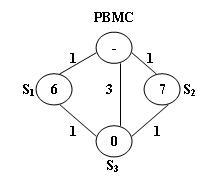
The above figure illustrates an example. The stations are represented by vertices and the roads correspond to the edges. The number on an edge is the time taken to reach one end station from another. The number written inside a vertex S is the current number of bikes stored at S. Given that the maximum capacity of each station is 10. To solve the problem at S3, we have 2 different shortest paths:
PBMC -> S1 -> S3. In this case, 4 bikes must be sent from PBMC, because we can collect 1 bike from S1 and then take 5 bikes to S3, so that both stations will be in perfect conditions.
PBMC -> S2 -> S3. This path requires the same time as path 1, but only 3 bikes sent from PBMC and hence is the one that will be chosen.
Input Specification:
Each input file contains one test case. For each case, the first line contains 4 numbers: Cmax (≤), always an even number, is the maximum capacity of each station; N (≤), the total number of stations; Sp, the index of the problem station (the stations are numbered from 1 to N, and PBMC is represented by the vertex 0); and M, the number of roads. The second line contains N non-negative numbers Ci (,) where each Ci is the current number of bikes at Si respectively. Then Mlines follow, each contains 3 numbers: Si, Sj, and Tij which describe the time Tij taken to move betwen stations Si and Sj. All the numbers in a line are separated by a space.
Output Specification:
For each test case, print your results in one line. First output the number of bikes that PBMC must send. Then after one space, output the path in the format: 0. Finally after another space, output the number of bikes that we must take back to PBMC after the condition of Sp is adjusted to perfect.
Note that if such a path is not unique, output the one that requires minimum number of bikes that we must take back to PBMC. The judge's data guarantee that such a path is unique.
Sample Input:
10 3 3 5

6 7 0

0 1 1

0 2 1

0 3 3

1 3 1

2 3 1
Sample Output:
3 0->2->3 0
解题思路:
本题题意是,杭州市有一些共享单车站,给出车站的最大容量(一定是偶数),给出车站数量与车站之间道路的信息,车站的最优状态为最大容量的一半。给定目标车站,控制中心现在要携带或从路过的其他车站取出一些自行车,使路程中路过的所有车站和目标车站都变为最优状态,多的自行车将被带回控制中心。要求计算并输出最短路径和最短路径情况下的携带数与带回数,如果有多条最短路径那么选择携带数最少的一条,如果还有是多条路径,那么选择带回数最少的一条。(到达目标车站后之间带着多余的自行车之间传送回控制中心,不在经过任何车站)。
输入信息:第一行给出4个整数,分别为 最大容量Cmax ,车站数量n, 目标车站sp,道路数量m,下一行给出n个整数代表每个车站当前自行车数量,之后跟随m行,每行3个整数,分别为,道路连接的两个车站和道路长度。
车站的范围为1 ~ n,0为控制中心。
可以先用迪杰斯特拉获得所有最短路径。之后搜索所有最短路径获得携带数(携带数相同获得最小的带回数)最小的路径,按要求输出。
利用Dijkstra建立一颗最短路径树
void Dijkstra(int st){  //传入起点,这里之间传入0控制中心即可

    dis[st] = ;    //dis储存控制中心到所有车站的最短距离

    //控制中心到自己的最短距离为0

    for(int i = ; i <= n; i++){    //获取没有访问过的车站中距离控制中心最近的车站

        int u = -, minLength = INT_MAX;

        //u记录最近的车站, minLength记录最短距离

        for(int j = ; j <= n; j++){

            //vis记录车站是否已经访问

            if(dis[j] < minLength && !vis[j]){

                u = j;

                minLength = dis[j];

            }

        }

        if(u == -) //如果u还是-1表示其他车站和控制中心不连通

            return;

        vis[u] = true;  //将最近的车站标记为已访问

        for(int j = ; j <= n; j++){    //遍历所有结点用u车站优化控制中心与其他未访问车站的距离

            if(!vis[j] && G[u][j] != INT_MAX){  //j车站未访问且与u车站之间有道路

                if(dis[j] > dis[u] + G[u][j]){  //判断是否能优化

                    dis[j] = dis[u] + G[u][j];  //如果能优化

                    pre[j].clear(); //j车站的前驱车站清空并重新记录为u

                    pre[j].push_back(u);

                }else if(dis[j] == dis[u] + G[u][j]){

                    //若不能优化但是以u为中转是j车站到控制中心的距离和dis数组中记录的 j车站到控制中心的距离相等

                    //j车站的前驱增加u

                    pre[j].push_back(u);

                }

            }

        }

    }

}
之后深搜遍历最短路径树获得携带数最少(如果仍有多条道路则获得带回数最少)的路线。
void DFS(int v){

    if(v == ){ //这里我们逆序遍历路径,从终点车站开始到控制中心0为止

        //应为最短路径树中记录控制0为叶子结点,目标车站sp为根结点

        path.push_back();

        judge();    //判断当前路径的携带数与带回树是否可以优化答案

        path.pop_back();

        return;

    }

    path.push_back(v);

    for(auto i : pre[v]){

        DFS(i);

    }

    path.pop_back();

}
由于DFS中我们时倒序遍历的最短路径,所以在判断每条路径是否可以优化答案时,要先将DFS中获取的路径反转,之后遍历这条路径获得其携带数与带回数即可。
void judge(){

    int need = , backn = ;    //need记录携带数 backn记录带回数

    int half = Cmax / ;    //half记录最优状态车站中车辆数

    reverse(path.begin(), path.end());

    bool flag = false;  //道路开始位置为控制中心0,我们不需要将控制中心的车辆数调整为最优状态

    //所以我们用flag = false表示正在访问控制中心

    for(auto i : path){

        if(!flag){  //跳过控制中心

            flag = true;

            continue;

        }

        if(spValue[i] > half){  //当前车站中的共享单车数量大于最优状态数量

            backn += spValue[i] - half; //将多出的车辆带走

        }else{

            if(backn > half - spValue[i])   //如果当前携带的车辆足以将该车站补充为最优状态

                backn -= half - spValue[i]; //当前携带数减去缺少车辆数

            else{

                need += (half - spValue[i]) - backn;

                //如果不足以补足当前车站就将所有携带车辆放入该车站,之后还是不足的车辆从控制中心携带

                backn = ;

            }

        }

    }

    if(need < minNeed){ //比较答案与当前路径的携带数

        minNeed = need;

        minBack = backn;

        ansPath = path;

    }else if(need == minNeed && backn < minBack){   //携带数一致比较带回数

        minBack = backn;

        ansPath = path;

    }

    reverse(path.begin(), path.end());  //为了继续DFS重新将路径反转

}
AC代码
 #include <bits/stdc++.h>

 using namespace std;

 const int maxn = ;

 int n, m, Cmax, sp; //n记录车站数量, m记录道路数量, Cmax记录车站最大容量(Cmax/2就是车站最优数量)

 int G[maxn][maxn];  //G储存车站之间的邻接矩阵

 int spValue[maxn], dis[maxn];   //spValue记录每个车站当前的车辆数, dis记录每个车站到控制中心的最短距离

 bool vis[maxn] = {false};   //vis用于在寻找最短路径时判断车站是否已经访问

 int minNeed, minBack;

 vector<int> path, ansPath, pre[maxn];

 void Dijkstra(int st){  //传入起点,这里之间传入0控制中心即可

     dis[st] = ;    //dis储存控制中心到所有车站的最短距离

     //控制中心到自己的最短距离为0

     for(int i = ; i <= n; i++){    //获取没有访问过的车站中距离控制中心最近的车站

         int u = -, minLength = INT_MAX;

         //u记录最近的车站, minLength记录最短距离

         for(int j = ; j <= n; j++){

             //vis记录车站是否已经访问

             if(dis[j] < minLength && !vis[j]){

                 u = j;

                 minLength = dis[j];

             }

         }

         if(u == -) //如果u还是-1表示其他车站和控制中心不连通

             return;

         vis[u] = true;  //将最近的车站标记为已访问

         for(int j = ; j <= n; j++){    //遍历所有结点用u车站优化控制中心与其他未访问车站的距离

             if(!vis[j] && G[u][j] != INT_MAX){  //j车站未访问且与u车站之间有道路

                 if(dis[j] > dis[u] + G[u][j]){  //判断是否能优化

                     dis[j] = dis[u] + G[u][j];  //如果能优化

                     pre[j].clear(); //j车站的前驱车站清空并重新记录为u

                     pre[j].push_back(u);

                 }else if(dis[j] == dis[u] + G[u][j]){

                     //若不能优化但是以u为中转是j车站到控制中心的距离和dis数组中记录的 j车站到控制中心的距离相等

                     //j车站的前驱增加u

                     pre[j].push_back(u);

                 }

             }

         }

     }

 }

 void judge(){

     int need = , backn = ;    //need记录携带数 backn记录带回数

     int half = Cmax / ;    //half记录最优状态车站中车辆数

     reverse(path.begin(), path.end());

     bool flag = false;  //道路开始位置为控制中心0,我们不需要将控制中心的车辆数调整为最优状态

     //所以我们用flag = false表示正在访问控制中心

     for(auto i : path){

         if(!flag){  //跳过控制中心

             flag = true;

             continue;

         }

         if(spValue[i] > half){  //当前车站中的共享单车数量大于最优状态数量

             backn += spValue[i] - half; //将多出的车辆带走

         }else{

             if(backn > half - spValue[i])   //如果当前携带的车辆足以将该车站补充为最优状态

                 backn -= half - spValue[i]; //当前携带数减去缺少车辆数

             else{

                 need += (half - spValue[i]) - backn;

                 //如果不足以补足当前车站就将所有携带车辆放入该车站,之后还是不足的车辆从控制中心携带

                 backn = ;

             }

         }

     }

     if(need < minNeed){ //比较答案与当前路径的携带数

         minNeed = need;

         minBack = backn;

         ansPath = path;

     }else if(need == minNeed && backn < minBack){   //携带数一致比较带回数

         minBack = backn;

         ansPath = path;

     }

     reverse(path.begin(), path.end());  //为了继续DFS重新将路径反转

 }

 void DFS(int v){

     if(v == ){ //这里我们逆序遍历路径,从终点车站开始到控制中心0为止

         //应为最短路径树中记录控制0为叶子结点,目标车站sp为根结点

         path.push_back();

         judge();    //判断当前路径的携带数与带回树是否可以优化答案

         path.pop_back();

         return;

     }

     path.push_back(v);

     for(auto i : pre[v]){

         DFS(i);

     }

     path.pop_back();

 }

 int main()

 {

     while(scanf("%d%d%d%d", &Cmax, &n, &sp, &m) != EOF){    //输入最大容量 车站数量 目标车站 道路数量

         fill(G[], G[] + maxn * maxn, INT_MAX);    //将所有车站之间设为不可达

         for(int i = ; i < maxn; i++){

             pre[i].clear(); //清空最短路径树

         }

         path.clear();   //清空用来记录每个路径的容器

         ansPath.clear();    //清空用来记录答案路径的容器

         for(int i = ; i <= n; i++){

             scanf("%d", &spValue[i]);   //输入每个车站当前的车辆数

         }

         for(int i = ; i < m; i++){ //输入路径

             int u, v;

             scanf("%d%d", &u, &v);

             scanf("%d", &G[u][v]);

             G[v][u] = G[u][v];  //双向路径

         }

         memset(vis, false, sizeof(vis));    //将所有车站设为未访问

         fill(dis, dis + maxn, INT_MAX); //所有车站到控制中心的距离为无穷大

         Dijkstra();    //迪杰斯特拉获取最短路径树

         minNeed = INT_MAX, minBack = INT_MAX;   //记录答案携带数与带回数为无穷多

         DFS(sp);    //深搜最短路径树获取答案

         printf("%d ", minNeed); //输出携带数

         bool flag = false;

         for(auto i : ansPath){  //输出路径

             if(flag)

                 printf("->");

             printf("%d", i);

             flag = true;

         }

         printf(" %d\n", minBack);   //输出带回数

     }

     return ;

 }
PTA (Advanced Level) 1018 Public Bike Management的更多相关文章
- PAT (Advanced Level) 1018. Public Bike Management (30)
先找出可能在最短路上的边,图变成了一个DAG,然后在新图上DFS求答案就可以了. #include<iostream> #include<cstring> #include&l ...
- Pat(Advanced Level)Practice--1018(Public Bike Management)
Pat1018代码 题目描写叙述: There is a public bike service in Hangzhou City which provides great convenience t ...
- PAT 1018 Public Bike Management[难]
链接:https://www.nowcoder.com/questionTerminal/4b20ed271e864f06ab77a984e71c090f来源:牛客网PAT 1018 Public ...
- PAT甲级1018. Public Bike Management
PAT甲级1018. Public Bike Management 题意: 杭州市有公共自行车服务,为世界各地的游客提供了极大的便利.人们可以在任何一个车站租一辆自行车,并将其送回城市的任何其他车站. ...
- PAT 1018 Public Bike Management(Dijkstra 最短路)
1018. Public Bike Management (30) 时间限制 400 ms 内存限制 65536 kB 代码长度限制 16000 B 判题程序 Standard 作者 CHEN, Yu ...
- PAT 甲级 1018 Public Bike Management (30 分)(dijstra+dfs,dfs记录路径,做了两天)
1018 Public Bike Management (30 分) There is a public bike service in Hangzhou City which provides ...
- PAT Advanced 1018 Public Bike Management (30) [Dijkstra算法 + DFS]
题目 There is a public bike service in Hangzhou City which provides great convenience to the tourists ...
- 1018. Public Bike Management (30)
时间限制 400 ms 内存限制 65536 kB 代码长度限制 16000 B 判题程序 Standard 作者 CHEN, Yue There is a public bike service i ...
- PAT 1018. Public Bike Management
There is a public bike service in Hangzhou City which provides great convenience to the tourists fro ...
随机推荐
- 我的Jquery参考词典
由于工作主要用到Asp.net Mvc+Jquery,最近也看了一些Jquery的书籍,在此总结以备回顾. 已读书籍:<Jquery In Action> 主要讲了些Jquery语法以及A ...
- CentOS 7 IPv6关闭
你可以用两个方法做到这个.方法 1编辑文件/etc/sysctl.conf,vi /etc/sysctl.conf添加下面的行:net.ipv6.conf.all.disable_ipv6 =1net ...
- wp8.1 调用智慧天气SmartWeatherAPI
在调用api应用的过程,我们需要用hmac加密技术,它是一种基于hash的加密算法,通过一个双方共同约定的密钥,在发送message前,对密钥进行了sha散列计算,在生成消息又对此密钥进行了二次加密, ...
- python, C++, C# 计算速度简单对比
有个简单的运算, ; ; ; i < n ; i ++) { ; j < n; j ++) { lResult += (ulong) ( i * j ); } } return lResu ...
- Unity&C# SingerMonoManager泛型单例
管理各种管理器 ///为什么需要单例 ///单例模式核心在于对于某个单例类,在系统中同时只存在唯一一个实例,并且该实例容易被外界所访问: ///避免创建过多的对象,意味着在内存中,只存在一个实例,减少 ...
- C#大数据循环
随笔 - 记录 在数据量超大的情况下使用多线程循环List,而且List不异常,一般是上锁. 不过今天发现其实内置了List的循环操作 一般情况下 用List.Foreach 数据量超大的情况下 推荐 ...
- openstack 的 lbaas 疑问
1 为什么lbaas的haproxy实现没有将其放到vrouter中,而vpnaas/fwaas都放到vrouter中呢? 放在vrouter上,可以减少vrouter到haproxy的流量路径,是怕 ...
- python中的 小数据池 is 和 ==
1. 小数据池 一种数据缓存机制,也被称为驻留机制 小数据池针对的是:整数 , 字符 , 布尔值 .其他的数据类型不存在驻留机制 在python中对 -5 到256之间的整数会被驻留在内存中, 将一定 ...
- 修改linux的文件时,如何快速找到要修改的内容
♦ 在linux系统下,找到需要修改的文件.使用cd+目录的命令进行文件所在的目录,使用ls命令查看是否有该文件. ♦ 使用vim+文件名,打开该文件 ♦ 快速在文件中找到需要修改的地方.如我们需要修 ...
- 官宣,PyTorch 1.0 稳定版本现已推出
简评:快来一起快乐地学习吧. 随着 PyTorch 生态系统和社区继续为开发人员提供有趣的新项目和教育资源,今天(12 月 7日)在 NeurIPS 会议上发布了 PyTorch 1.0 稳定版.研究 ...