
What’s New In GRANDstack?
转自:https://blog.grandstack.io/whats-new-in-grandstack-310c067fea4a
There’s been a lot of activity in the GRANDstack world recently so in this post we review some of the new features and take a look at what community members have been working on.
GRANDstack is a fullstack framework for building applications using GraphQL, React, Apollo, and Neo4j Database.
Implementing authorization in GraphQL has long been an area of interest for developers working with GraphQL. Beginning in version 2.4.0 of neo4j-graphql.js we’ve introduced features to make implementing authorization easier. Specifically, we’ve added authorization specific schema directives that work with JSON Web Tokens (JWTs) out of the box, and the ability to access context values in Cypher queries.
Schema Directives
Based on the prototype described in this post, “Authorization In GraphQL Using Custom Schema Directives”, you can now make use of the following authorization schema directives in your GraphQL type definitions with neo4j-graphql.js:
isAuthenticatedhasRolehasScope
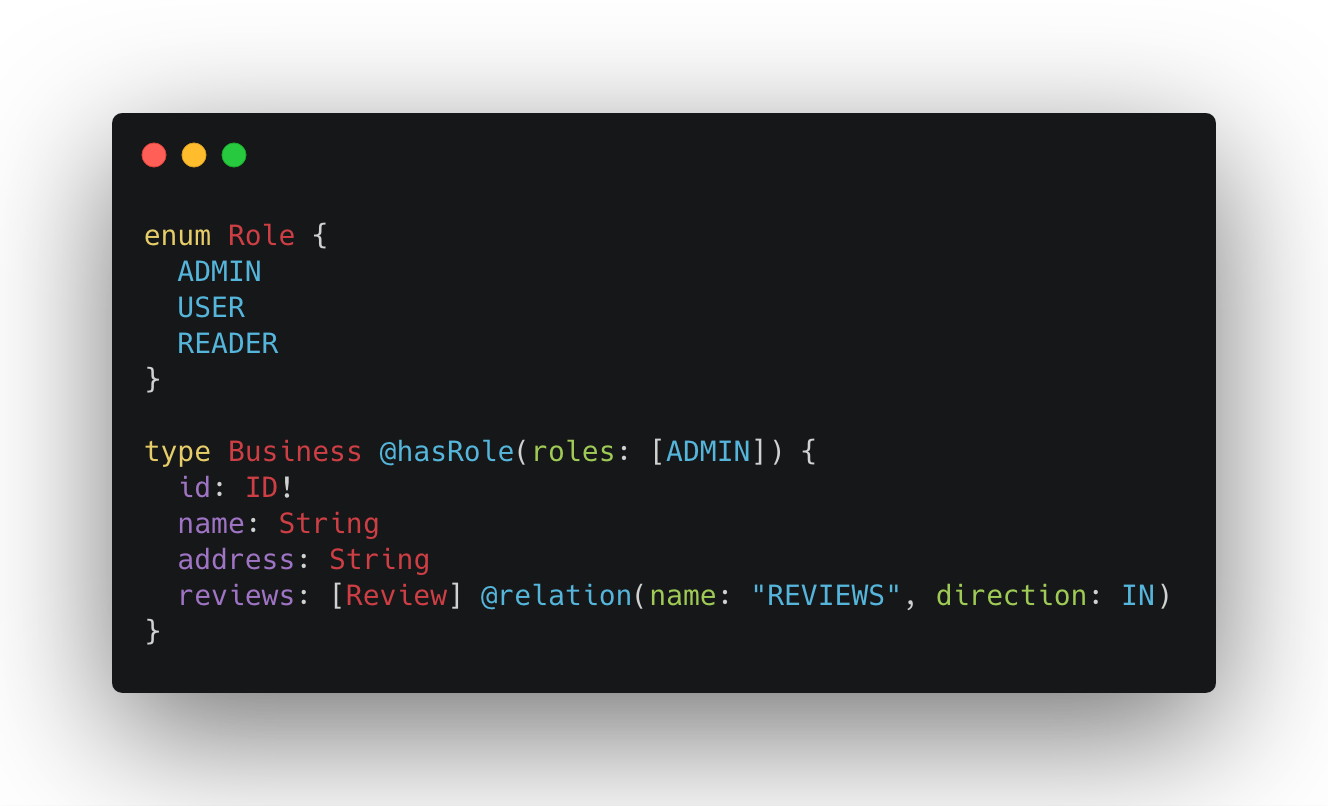
You can read more about using schema directives for securing your GraphQL API in the docs here, or see the example project and post here.
Context Values Into Cypher Query
Another authorization feature in neo4j-graphql.js is the ability to access values from the context object in a Cypher query specified in a@cypherdirective. This is useful when using authorization middleware (such as Passport) that adds user information to the request object, or to access a JWT token that contains user information to be matched against the database.
Here’s how it works: First, add a cypherParams object to the context. Here’s how that looks when using Apollo Server:
const server = new ApolloServer({
  context: ({req}) => ({
    driver,
    cypherParams: {
      currentUserId: req.user.id
    }
  })
})
Any values within cypherParamin the context object will then be available in Cypher queries making use of the@cypherschema directive as Cypher parameters. Here we look up the currently authenticated user by using the currentUserId value that we added to the context object above:
type Query {
  currentUser: User @cypher(statement: """
    MATCH (u:User {id: $cypherParams.currentUserId})
    RETURN u
  """)
}
You can read more about these authorization features in the neo4j-graphql.js documentation.
GraphQL Foundation
In March, the Linux Foundation announced the formation of the GraphQL Foundation, a neutral group set up to provide governance and vendor-neutral stewardship for GraphQL. This includes oversight of funding, operations and marketing resources for the GraphQL community. Neo4j is happy to be included in this group as a founding member.
Neo4j joined the newly formed GraphQL Foundation as a founding member in March.
As Emil says, GraphQL and GRANDstack have been a huge boost for developers using Neo4j and we want to make sure this continues:
“Neo4j is pleased to support GraphQL, due to its unique ability to enable front-end developers, API developers and data architects to all work with the same graph-based data model. Our GraphQL integration and GRANDstack have already helped thousands of developers build graph applications with Neo4j, thanks to the huge developer productivity gain of GraphQL and the graph thinking mindset it brings for both developers and API consumers. The GraphQL Foundation is an important step to cement today’s most relevant standard for building APIs and we’re honored to join as founding members to help steward GraphQL as the ecosystem continues to evolve.”
— Emil Eifrem, CEO and Co-Founder, Neo4j
Neo4j GraphQL Java
The neo4j-graphql.js library has been an important component of GRANDstack for those building node.js APIs, but what if you want to use languages other than node.js? To support Java / JVM based APIs we’ve been working on neo4j-graphql-java, a JVM library to translate GraphQL queries and mutations to Cypher for use with Neo4j.
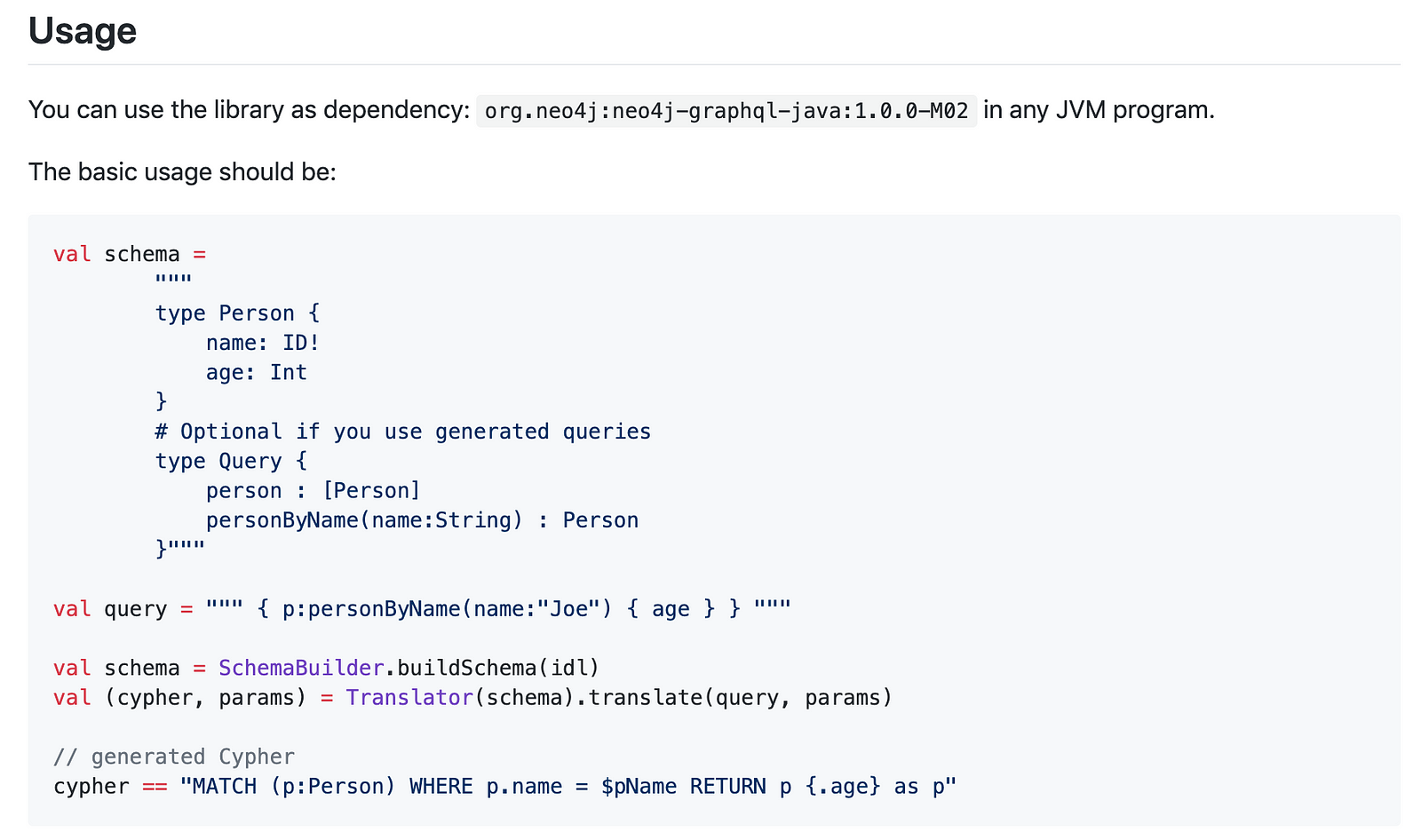
neo4j-graphql-java milestone release 2 is now available!
neo4j-graphql-java has had a second milestone release earlier this week with loads of new features such as
- handling relationships via
@relationdirective on schema fields, including support for rich relationship types @cypherdirective for fields and top-level queries and mutations- auto-generation of Query and Mutation fields from type definitions
- andmuch more!
Please give it a try, check out the project’s documentation, and open issues for any feedback.
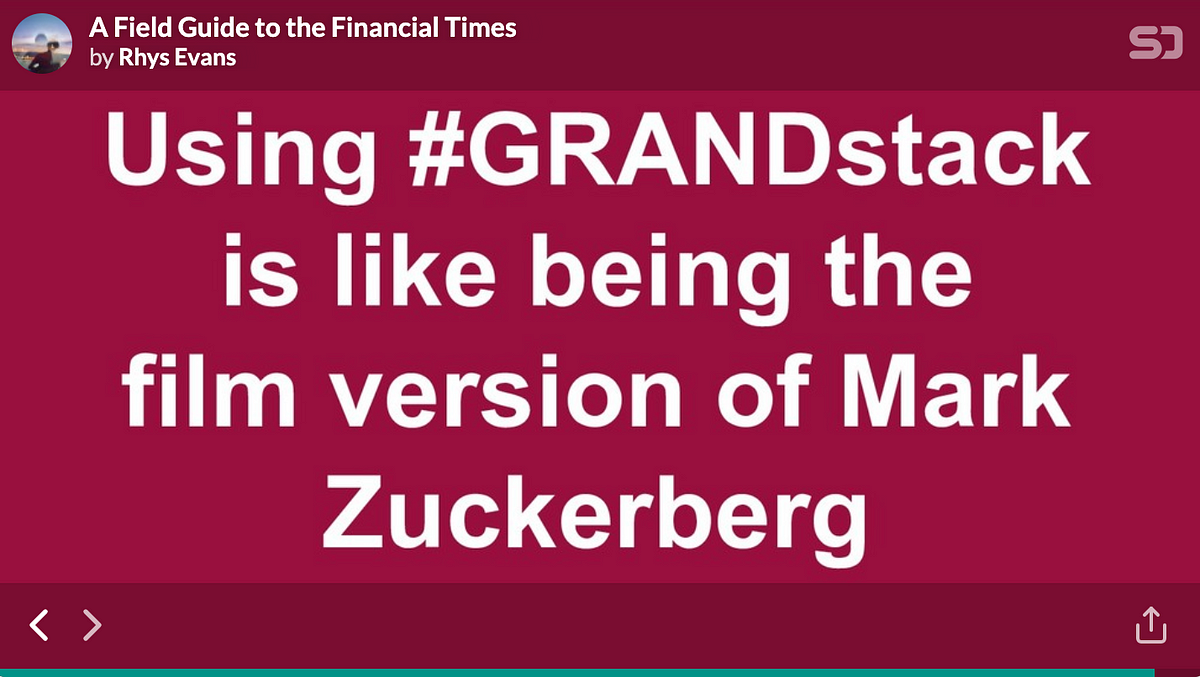
A slide from Rhys Evans’s talk “A Field Guide To The Financial Times”
From The Community
The GRANDstack community has been working on some great projects, here’s just a few that we’d like to share with you.
- Gavin Williams from Quandercame on the Neo4j Online Meetup and shared how to build a GraphQL API with Neo4j. You can find the video here.
- Rhys Evans from The Financial Times presented “A Field Guide To The Financial Times” where he shared how the FT is using GRANDstack. You can find the slides here.
- Matt Ross from Comcast created a video course on Egghead “Build a Neo4j & GraphQL API” where he shows how to use neo4j-graphql.js to generate a GraphQL API backed by Neo4j using only GraphQL type definitions.
- Erik Rahm, Senior Software Engineer at CyberGRX, released grand-stack-seed, a GRANDstack seed project with built in local auth, Facebook OAuth, and sample GraphQL types, queries, and mutations.
Share Your GRANDstack story
Do you have a neat GRANDstack project you’ve been working on? Please consider sharing your story by submitting a talk to GraphQL Summit in San Francisco or ping me to be an author on theGRANDstack blog.
What’s New In GRANDstack?的更多相关文章
- grandstack graphql 开发模型
当前grandstack 支持两类开发方式 js (使用Neo4j-graphql-js) 插件模型 js 模型 参考https://github.com/rongfengliang/grand-st ...
- grandstack graphql 工具基本试用
grandstack 是一个方便graphql 应用开发的工具 使用docker-compose 运行 环境准备 官方的starter 比较好,已经是使用docker-compose 创建好了所有 ...
- grandstack 基于graphql&&react&& apollo&& neo4j 的全栈开发工具
grandstack是一个基于graphql&&react&& apollo&& neo4j 的全栈开发工具. 有篇关于graphql 的5个常见问题的 ...
随机推荐
- C# Array 基本数据类型数组的基类 传参问题
using System; using System.Collections.Generic; using System.Linq; using System.Text; namespace Cons ...
- Git,Github和Gitlab简介和使用方法
什么是Git Git是一个版本控制系统(Version Control System,VCS). 版本控制是一种记录一个或若干文件内容变化,以便将来查阅特定版本修订情况的系统. 多年前,我在法国做第一 ...
- 使用excel估计GARCH模型参数——以GARCH(1,1)为例
本文的知识点:使用excel求解GARCH模型的系数,以GARCH模型为例,主要采用的是极大似然估计法MLE. 同时给出了R语言的输出结果作为对照验证. 参考了:http://investex ...
- opencv的resize和matlab的imresize函数的计算
在用c++代码复现matlab代码时,遇到两者resize函数的结果不相同的问题. opencv: resize(image1, reTmp, Size(, ), , , cv::INTER_LINE ...
- [LeetCode]题15:3Sum
第一次解: res = [] nums.sort() if len(nums)<3:return [] for i in range(len(nums)-2): left = i+1 right ...
- html网页如何使用哪种浏览器内核渲染的选择
众所周知,国内的浏览器基本都是双内核的(ie(Trident)+webkit):而且基本默认时都是用webkit内核.尽管IE浏览器体验差,但是有时也会需要用IE内核来渲染的(比如银行网站). 如果要 ...
- UPX脱壳全程分析(转)
[文章标题]: UPX脱壳全程分析 [保护方式]: 本地验证 [使用工具]: OllyDBG [作者声明]: 只是感兴趣,没有其他目的.失误之处敬请诸位大侠赐教! ------------------ ...
- wrk 使用记录及踩过的坑
wrk是什么?https://github.com/wg/wrk wrk 是一个非常小巧高效的开源性能测试工具,支持lua脚本来创建复杂的测试场景.wrk 的一个很好的特性就是能用很少的线程压出很大的 ...
- [poj P2976] Dropping tests
[poj P2976] Dropping tests Time Limit: 1000MS Memory Limit: 65536K Description In a certain course, ...
- 使用ssm(spring+springMVC+mybatis)创建一个简单的查询实例(一)
梳理下使用spring+springMVC+mybatis 整合后的一个简单实例:输入用户的 ID,之后显示用户的信息(此次由于篇幅问题,会分几次进行说明,此次是工程的创建,逆向生成文件以及这个简单查 ...