
java线程基础巩固---构造Thread对象你也许不知道的几件事
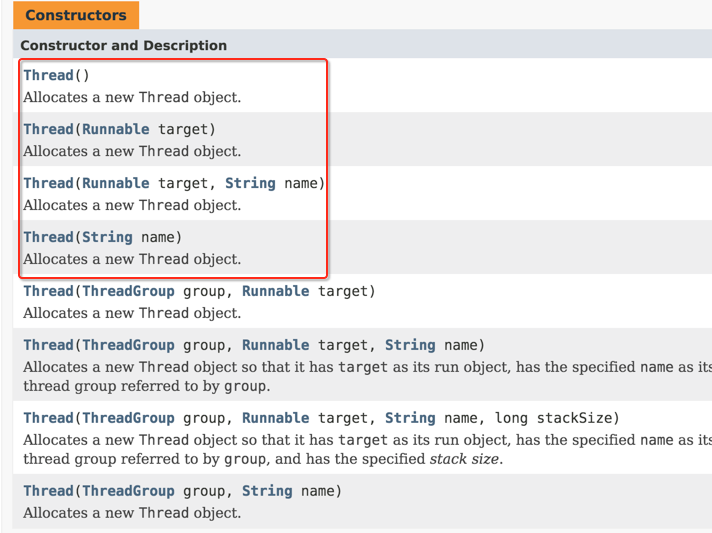
关于Thread的构造在JDK文档中如下:
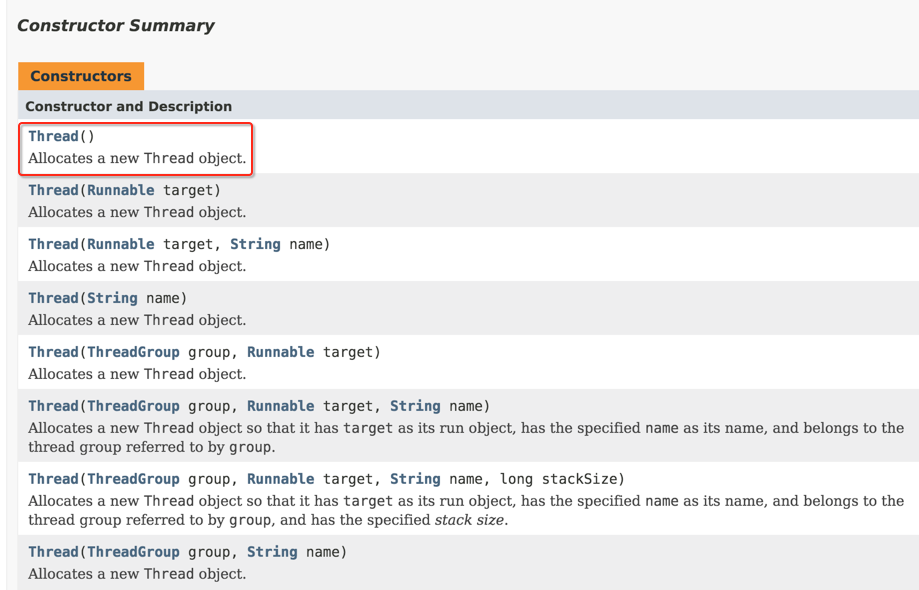
之后会把上面所有的构造都会学习到,这次主要是去研究一下图上标红的默认构造,当然大家肯定对于它都有些不屑,这有啥可学的,不new一个然后start线程不就启动了,属于线程最最基础的东东,然后它的背后并非我们都知道,所以下面开始学习。
Thread常规知识:
先来看一下默认构造的源码:
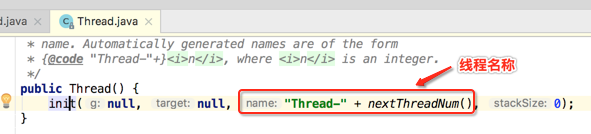
先了解一下默认线程名的起名规则,看下nextThreadNum():
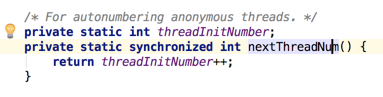
原来是有一个静态计数的变量,那也就是说默认new出来的线程是以"Thread-0、Thead-1"这样的规则来命名的,用代码来验证下:
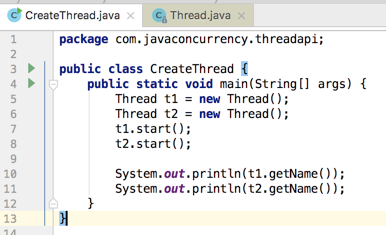
编译运行:

果真如预期,但是目前线程中并未做任何事情,而我们知道可以给线程构造中传一个Runnable接口:
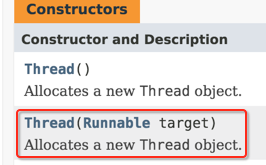
那在默认构造Thread的时候有没有一个空的Runnable去执行呢?看源码【贴出关键代码】:
    public Thread() {

        init(null, null, "Thread-" + nextThreadNum(), 0);

    }

    private void init(ThreadGroup g, Runnable target, String name,

                      long stackSize) {

        init(g, target, name, stackSize, null);

    }
从代码中可以看到并未自动创建一个Runnable,而是直接传的null,那最终在init()中是如何搞的呢?
private void init(ThreadGroup g, Runnable target, String name,

                      long stackSize, AccessControlContext acc) {

        if (name == null) {

            throw new NullPointerException("name cannot be null");

        }

        this.name = name.toCharArray();

        Thread parent = currentThread();

        SecurityManager security = System.getSecurityManager();

        if (g == null) {

            /* Determine if it's an applet or not */

            /* If there is a security manager, ask the security manager

               what to do. */

            if (security != null) {

                g = security.getThreadGroup();

            }

            /* If the security doesn't have a strong opinion of the matter

               use the parent thread group. */

            if (g == null) {

                g = parent.getThreadGroup();

            }

        }

        /* checkAccess regardless of whether or not threadgroup is

           explicitly passed in. */

        g.checkAccess();

        /*

         * Do we have the required permissions?

         */

        if (security != null) {

            if (isCCLOverridden(getClass())) {

                security.checkPermission(SUBCLASS_IMPLEMENTATION_PERMISSION);

            }

        }

        g.addUnstarted();

        this.group = g;

        this.daemon = parent.isDaemon();

        this.priority = parent.getPriority();

        if (security == null || isCCLOverridden(parent.getClass()))

            this.contextClassLoader = parent.getContextClassLoader();

        else

            this.contextClassLoader = parent.contextClassLoader;

        this.inheritedAccessControlContext =

                acc != null ? acc : AccessController.getContext();

        this.target = target;

        setPriority(priority);

        if (parent.inheritableThreadLocals != null)

            this.inheritableThreadLocals =

                ThreadLocal.createInheritedMap(parent.inheritableThreadLocals);

        /* Stash the specified stack size in case the VM cares */

        this.stackSize = stackSize;

        /* Set thread ID */

        tid = nextThreadID();

    }
只看核心代码,可以看到将Thread的成员变量target赋值为null了,
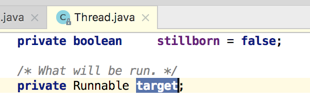
那此时我们执行创建的线程会调用start()方法,那接着看下它:
public synchronized void start() {

        /**

         * This method is not invoked for the main method thread or "system"

         * group threads created/set up by the VM. Any new functionality added

         * to this method in the future may have to also be added to the VM.

         *

         * A zero status value corresponds to state "NEW".

         */

        if (threadStatus != 0)

            throw new IllegalThreadStateException();

        /* Notify the group that this thread is about to be started

         * so that it can be added to the group's list of threads

         * and the group's unstarted count can be decremented. */

        group.add(this);

        boolean started = false;

        try {

            start0();

            started = true;

        } finally {

            try {

                if (!started) {

                    group.threadStartFailed(this);

                }

            } catch (Throwable ignore) {

                /* do nothing. If start0 threw a Throwable then

                  it will be passed up the call stack */

            }

        }

    }

    private native void start0();
最终转到C层去执行线程的启动了,而底层的代码暂且不深纠了,这里要知道C层会去调用Thread的run()方法,所以转到run方法去看一眼:
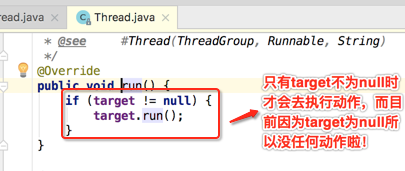
但是!!!可以重写它的run方法来执行我们的动作,如下:
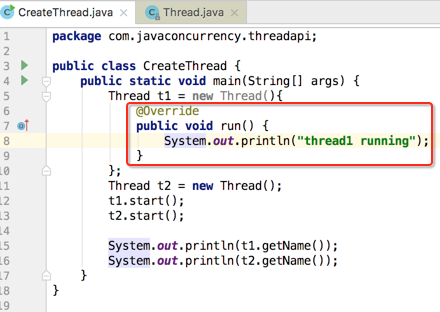
编译运行:
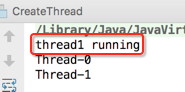
那接着修改代码:

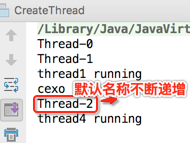
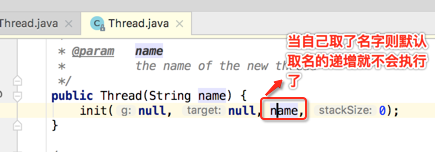
接着在创建runnable的时候也手动给它取个名字,如下:
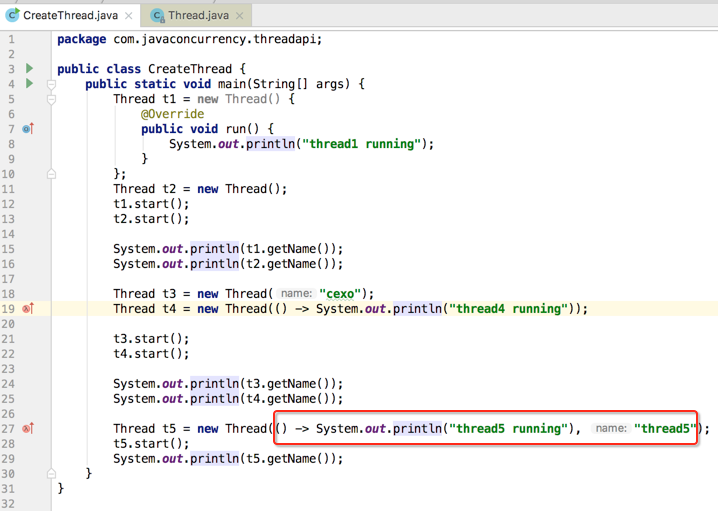

这样关于Thread的构造就学习了四种了,当然也是最经常使用的,比较简单:
ThreadGroup的概念及守护线程初探:
关于这个内容可能就不是太清楚啦,可以看一下剩下线程构造函数中:

全是跟ThreadGroup相关,貌似实际工作中完全木有接触过它,所以说首先得了解它,从哪了解呢,直接从源码:
public Thread() {

   init(null, null, "Thread-" + nextThreadNum(), 0);

}

private void init(ThreadGroup g, Runnable target, String name,

                      long stackSize, AccessControlContext acc) {

        if (name == null) {

            throw new NullPointerException("name cannot be null");

        }

        this.name = name.toCharArray();

        Thread parent = currentThread();

        SecurityManager security = System.getSecurityManager();

        if (g == null) {

            /* Determine if it's an applet or not */

            /* If there is a security manager, ask the security manager

               what to do. */

            if (security != null) {

                g = security.getThreadGroup();

            }

            /* If the security doesn't have a strong opinion of the matter

               use the parent thread group. */

            if (g == null) {

                g = parent.getThreadGroup();

            }

        }

        /* checkAccess regardless of whether or not threadgroup is

           explicitly passed in. */

        g.checkAccess();

        /*

         * Do we have the required permissions?

         */

        if (security != null) {

            if (isCCLOverridden(getClass())) {

                security.checkPermission(SUBCLASS_IMPLEMENTATION_PERMISSION);

            }

        }

        g.addUnstarted();

        this.group = g;

        this.daemon = parent.isDaemon();

        this.priority = parent.getPriority();

        if (security == null || isCCLOverridden(parent.getClass()))

            this.contextClassLoader = parent.getContextClassLoader();

        else

            this.contextClassLoader = parent.contextClassLoader;

        this.inheritedAccessControlContext =

                acc != null ? acc : AccessController.getContext();

        this.target = target;

        setPriority(priority);

        if (parent.inheritableThreadLocals != null)

            this.inheritableThreadLocals =

                ThreadLocal.createInheritedMap(parent.inheritableThreadLocals);

        /* Stash the specified stack size in case the VM cares */

        this.stackSize = stackSize;

        /* Set thread ID */

        tid = nextThreadID();

    }
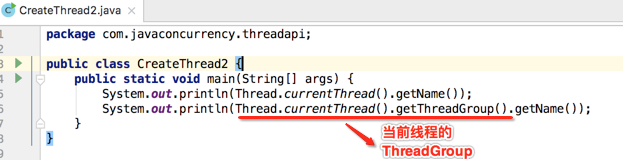
从源码中可以看到,默认无参的构造函数并未指定ThreadGroup,当在执行init()方法时发现没有ThreadGroup,则会获得父线程的ThreadGroup,而父线程可以通过currentThread()方法获取,而我们在之前【http://www.cnblogs.com/webor2006/p/7682063.html】有介绍过,对于创建一个线程实际是有两个线程,其中有一个就是main线程,也就是用来启动我们自己创建的线程的,那是不是我们线程的parent就是main呢?下面来做实验论证:

那如果此时新建一个线程,然后再看一下它的ThreadGroup,如下:
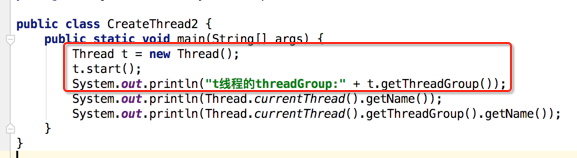

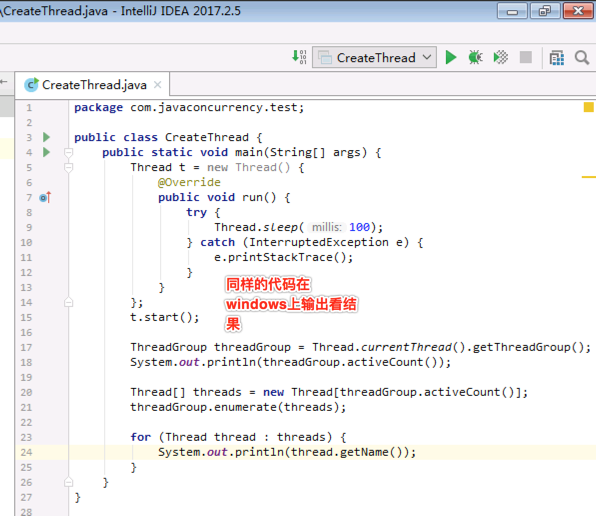
那说明创建线程时未指定ThreadGroup,那会以父线程的ThreadGroup作为该线程的ThreadGroup,刚好跟源码逻辑吻和,那是不是说子线程将和父线程在同一个ThreadGroup中?也就是说目前ThreadGroup中应该包含了2个线程,那我们打印看一下:

编译运行:
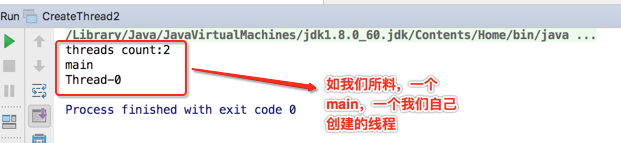
这是在MAC上的表现,但是!!!如果在windows平台其输出并非如我们所预期的,下面在windows下运行看一下结果:
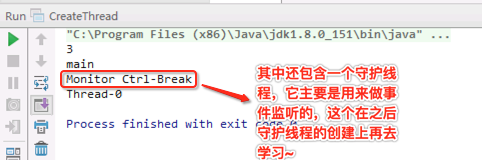
总结:
- 创建线程对象Thread,默认有一个线程名,以Thread-开头,从0开始计数:Thread-0、Thread-1、Thread-2等。
- 如果在构造Thread()的时候没有传递Runnable或者没有复写Thread的run方法,该Thread将不会调用任何东西;如果传递了Runnable接口的实例,或者复写的Thread的run方法,则会执行该方法的逻辑单元(逻辑代码)。
- 如果构造线程对象时未传入ThreadGroup,Thread会默认获取父线程的TreadGroup作为该线程的ThreadGroup,此时子线程将和父线程在同一个ThreadGroup中。
java线程基础巩固---构造Thread对象你也许不知道的几件事的更多相关文章
- 4.构造Thread对象你也许不知道的几件事
1.Thread类对象只有在调用了start()方法之后,JVM虚拟机才会给我们创建一个真正的线程!否则就不能说是创建了线程!也就是说new Thread()之后,此时实际上在计算机底层,操作系统实际 ...
- (转)关于 Java 对象序列化您不知道的 5 件事
关于 Java 对象序列化您不知道的 5 件事 转自:http://developer.51cto.com/art/201506/479979.htm 数年前,当和一个软件团队一起用 Java 语言编 ...
- 关于 Java 对象序列化您不知道的 5 件事
数年前,当和一个软件团队一起用 Java 语言编写一个应用程序时,我体会到比一般程序员多知道一点关于 Java 对象序列化的知识所带来的好处. 关于本系列 您觉得自己懂 Java 编程?事实上,大多数 ...
- 关于 java.util.concurrent 您不知道的 5 件事--转
第 1 部分 http://www.ibm.com/developerworks/cn/java/j-5things4.html Concurrent Collections 是 Java™ 5 的巨 ...
- 关于 Java Collections API 您不知道的 5 件事,第 1 部分
定制和扩展 Java Collections Java™ Collections API 远不止是数组的替代品,虽然一开始这样用也不错.Ted Neward 提供了关于用 Collections 做更 ...
- 关于 Java Collections API 您不知道的 5 件事--转
第 1 部分 http://www.ibm.com/developerworks/cn/java/j-5things2.html 对于很多 Java 开发人员来说,Java Collections A ...
- 关于 Java 性能监控您不知道的 5 件事,第 1 部分
责怪糟糕的代码(或不良代码对象)并不能帮助您发现瓶颈,提高 Java? 应用程序速度,猜测也不能帮您解决.Ted Neward 引导您关注 Java 性能监控工具,从5 个技巧开始,使用Java 5 ...
- java线程基础巩固---分析Thread的join方法详细介绍,结合一个典型案例
关于Thread中的join方法貌似在实际多线程编程当中没怎么用过,在当初学j2se的时候倒时去学习过它的用法,不过现在早已经忘得差不多啦,所以对它再复习复习下. 首先先观察下JDK对它的介绍: 其实 ...
- 关于Java Collections API您不知道的5件事,第2部分
注意可变对象 java.util 中的 Collections 类旨在通过取代数组提高 Java 性能.如您在 第 1 部分 中了解到的,它们也是多变的,能够以各种方 式定制和扩展,帮助实现优质.简洁 ...
随机推荐
- 使用echo $? 查看命令成功执行的原理
转载于:http://blog.csdn.net/cmzsteven/article/details/49049387 在进行源代码编译,或者执行命令无法确认所执行的命令是否成功执行的情况下,我们都会 ...
- Minimum Number of Arrows to Burst Balloons
There are a number of spherical balloons spread in two-dimensional space. For each balloon, provided ...
- PAT A1001 A+B Format (20 分)
AC代码 #include <cstdio> #include <algorithm> using namespace std; const int maxn = 11; in ...
- drf序列化及反序列化
假如把drf看做一个汉堡包,我们之前讲的模块属于汉堡包前面的盖盖(请求模块.渲染模块)和底底(异常模块.解析模块.响应模块),但是真正中间的夹心没有讲,那么今天我就和大家来看一下汉堡包的夹心(序列化及 ...
- linux + qt 环境搭建
下载地址 install qt huqian@huqian-Lenovo-IdeaPad-Y400:~/XRF$ ls qt-opensource-linux-x64-.run SourceFile ...
- http请求之of_ordering_http_post
//Public function of_ordering_http_post (string as_vipsj,string as_url) returns string //string as_v ...
- Hinton等人新研究:如何更好地测量神经网络表示相似性
Hinton等人新研究:如何更好地测量神经网络表示相似性 2019年05月22日 08:39:15 喜欢打酱油的老鸟 阅读数 177更多 分类专栏: 人工智能 https://www.toutia ...
- tomcat日志报Invalid message received with signature的解决办法
这位大神说的是正解,大家可以参考一下这个链接:https://blog.csdn.net/bugdongwenlong/article/details/84261424
- python 列表反转
反转: 将原列表反转,返回None: li = [1, 2, 3]li.reverse()print(li)# [3, 2, 1]1234不改变原列表,返回反转后的新列表: li = [1, 2, 3 ...
- php-fpm三种运行模式
php-fpm配置 配置文件:php-fpm.conf 开启慢日志功能的: slowlog = /usr/local/var/log/php-fpm.log.slowrequest_slowlog_t ...