
Android布局管理详解(1)—— LinearLayout 线性布局
Android的布局方式共有6种,分别是LinearLayout(线性布局)、TableLayout(表格布局)、FrameLayout(帧布局)、RelativeLayout(相对布局)、GridLayout(网格布局)以及AbsoluteLayout(绝对布局)。
本次主要介绍 LinearLayout 线性布局,其余布局留待以后介绍。
线性布局由 LinearLayout 类来代表, LinearLayout 可以控制各组件横向或纵向排列。
LinearLayout 常用属性介绍
1. android:orientation
设置布局管理器内组件的排列方式,可设置为 horizon (水平排列)、vertical (垂直排列)。
 <?xml version="1.0" encoding="utf-8"?>

 <LinearLayout xmlns:android="http://schemas.android.com/apk/res/android"

     android:orientation="horizontal"

     android:layout_width="match_parent"

     android:layout_height="match_parent">

     <Button

         android:id="@+id/btn1"

         android:layout_width="wrap_content"

         android:layout_height="wrap_content"

         android:text="@string/btn1"/>

     <Button

         android:id="@+id/btn2"

         android:layout_width="wrap_content"

         android:layout_height="wrap_content"

         android:text="@string/btn2"/>

     <Button

         android:id="@+id/btn3"

         android:layout_width="wrap_content"

         android:layout_height="wrap_content"

         android:text="@string/btn3"/>

 </LinearLayout>
上述代码设置了三个按钮(Button),第 3 行代码设置其排列方式为 horizon 水平排列,效果图如图 1:
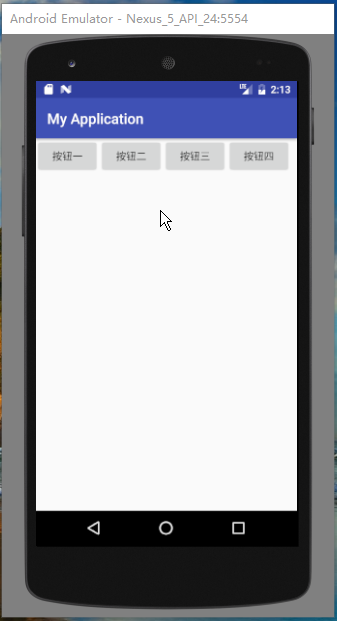
图 1 : 图 2 : 图 3 :
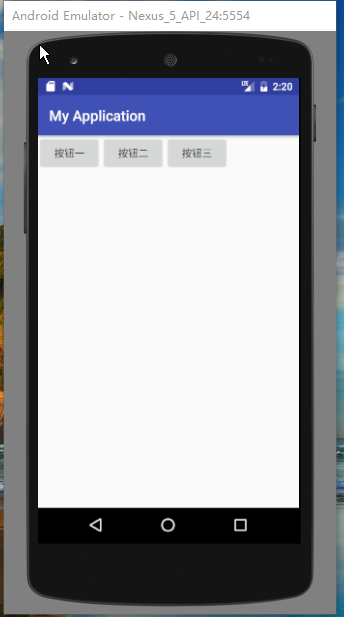
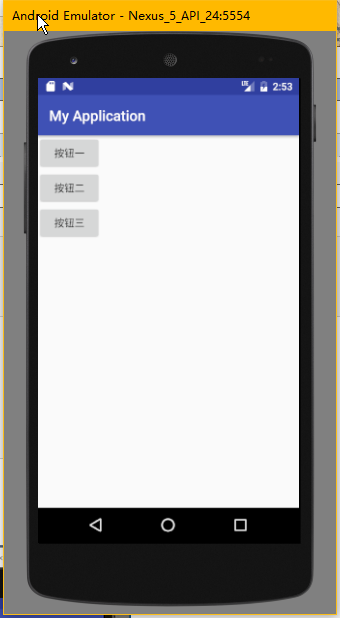
将上述代码的第 3 行中 orientation 的值由 horizon 改为 vertical (如下代码),则按钮的排列方式变为垂直排列 ,如图 2
 <?xml version="1.0" encoding="utf-8"?>

 <LinearLayout xmlns:android="http://schemas.android.com/apk/res/android"

     android:orientation="vertical"

     android:layout_width="match_parent"

     android:layout_height="match_parent">

     <Button

         android:id="@+id/btn1"

         android:layout_width="wrap_content"

         android:layout_height="wrap_content"

         android:text="@string/btn1"/>

     <Button

         android:id="@+id/btn2"

         android:layout_width="wrap_content"

         android:layout_height="wrap_content"

         android:text="@string/btn2"/>

     <Button

         android:id="@+id/btn3"

         android:layout_width="wrap_content"

         android:layout_height="wrap_content"

         android:text="@string/btn3"/>

 </LinearLayout>
注意: Android 的线性布局不会换行,当组件一个挨着一个的排列到头之后,剩下的组件将不会被显示出来
例:
 <?xml version="1.0" encoding="utf-8"?>

 <LinearLayout xmlns:android="http://schemas.android.com/apk/res/android"

     android:orientation="horizontal"

     android:layout_width="match_parent"

     android:layout_height="match_parent">

     <Button

         android:id="@+id/btn1"

         android:layout_width="wrap_content"

         android:layout_height="wrap_content"

         android:text="@string/btn1"/>

     <Button

         android:id="@+id/btn2"

         android:layout_width="wrap_content"

         android:layout_height="wrap_content"

         android:text="@string/btn2"/>

     <Button

         android:id="@+id/btn3"

         android:layout_width="wrap_content"

         android:layout_height="wrap_content"

         android:text="@string/btn3"/>

     <Button

         android:id="@+id/btn4"

         android:layout_width="wrap_content"

         android:layout_height="wrap_content"

         android:text="@string/btn4"/>

     <Button

         android:id="@+id/btn5"

         android:layout_width="wrap_content"

         android:layout_height="wrap_content"

         android:text="@string/btn5"/>

 </LinearLayout>
上述代码定义了 5 个按钮,使其水平排列,但其效果如上图 3 所示,只显示了四个按钮,第 5 个按钮没有被显示出来。
2. android:gravity
设置布局管理器内组件的对齐方式,该属性值可设为 top(顶部对齐) 、bottom(底部对齐) 、left(左对齐) 、right(右对齐) 、center_vertical(垂直方向居中) 、 fill_vertical(垂直方向填充) 、 center_horizontal(水平方向居中) 、 fill_horizontal(水平方向填充) 、center(垂直与水平方向都居中) 、 fill (填充)、 clip_vertical(垂直方向裁剪) 、 clip_horizontal(水平方向裁剪) 。
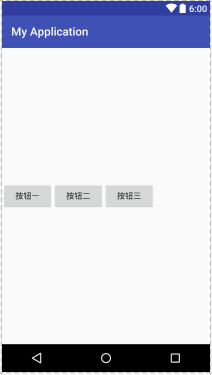
可同时指定多种对其方式的组合,中间用“|”连接,如下方代码设置对齐方式为 left|center_vertical 表示出现在屏幕左边且垂直居中,效果图如图 4 。
 <?xml version="1.0" encoding="utf-8"?>

 <LinearLayout xmlns:android="http://schemas.android.com/apk/res/android"

     android:orientation="horizontal"

     android:layout_width="match_parent"

     android:layout_height="match_parent"

     android:gravity="left|center_vertical">

     <Button

         android:id="@+id/btn1"

         android:layout_width="wrap_content"

         android:layout_height="wrap_content"

         android:text="@string/btn1"/>

     <Button

         android:id="@+id/btn2"

         android:layout_width="wrap_content"

         android:layout_height="wrap_content"

         android:text="@string/btn2"/>

     <Button

         android:id="@+id/btn3"

         android:layout_width="wrap_content"

         android:layout_height="wrap_content"

         android:text="@string/btn3"/>

 </LinearLayout>
图 4 :
除以上两个常用属性外,LinearLayout 的属性还有以下几个:
android:baselineAligned 该属性设为 false ,将会阻止该布局管理器与它的子元素的基线对其。
android:divider 设置垂直布局时两个按钮直接的分隔条。
android:measureWithLargestChild 该属性设为 true 时,所有带权重的子元素都会具有最大子元素的最小尺寸。
最后介绍一下 LinearLayout 子元素支持的常用属性:
android:layout_gravity 指定该子元素在 LinearLayout 中的对其方式
android:layout_weight 指定该子元素在 LinearLayout 中所占的权重
以上就是关于 android 布局中 LinearLayout 的介绍,如有疏漏或错误,欢迎指正。
本文为博主原创文章,转载请在明显位置注明出处:
原文地址 http://www.cnblogs.com/zzulihao
Android布局管理详解(1)—— LinearLayout 线性布局的更多相关文章
- 弹性布局学习-详解flex-wrap(五)
目录 弹性布局学习-介绍(一) 弹性布局学习-详解 flex-direction[决定主轴的方向](二) 弹性布局学习-详解 justify-content(三) 弹性布局学习-详解 align-i ...
- 弹性布局学习-详解 align-items(四)
目录 弹性布局学习-介绍(一) 弹性布局学习-详解 flex-direction[决定主轴的方向](二) 弹性布局学习-详解 justify-content(三) 弹性布局学习-详解 align-i ...
- Android 布局学习之——Layout(布局)详解二(常见布局和布局参数)
[Android布局学习系列] 1.Android 布局学习之——Layout(布局)详解一 2.Android 布局学习之——Layout(布局)详解二(常见布局和布局参数) 3.And ...
- Android零基础入门第25节:最简单最常用的LinearLayout线性布局
原文:Android零基础入门第25节:最简单最常用的LinearLayout线性布局 良好的布局设计对于UI界面至关重要,在前面也简单介绍过,目前Android中的布局主要有6种,创建的布局文件默认 ...
- Android开发之详解五大布局
http://bbs.chinaunix.net/thread-3654213-1-1.html 为了适应各式各样的界面风格,Android系统提供了5种布局,这5种布局分别是: LinearLayo ...
- android 59 LinearLayout 线性布局
##常见的布局* LinearLayout 线性布局线性布局往左右拉是拉不动的,> 线性布局的朝向 vertical|horizontal> 线性布局的权重 weight 和 0dip一起 ...
- Android精通:View与ViewGroup,LinearLayout线性布局,RelativeLayout相对布局,ListView列表组件
UI的描述 对于Android应用程序中,所有用户界面元素都是由View和ViewGroup对象构建的.View是绘制在屏幕上能与用户进行交互的一个对象.而对于ViewGroup来说,则是一个用于存放 ...
- Android layout 布局 属性详解
第一类:属性值 true或者 false android:layout_centerHrizontal 水平居中 android:layout_centerVertical ...
- 2.2.1 LinearLayout(线性布局)
本节引言 本节开始讲Android中的布局,Android中有六大布局,分别是: LinearLayout(线性布局), RelativeLayout(相对布局), TableLayout(表格布局) ...
随机推荐
- [ Android 五种数据存储方式之三 ] —— SQLite存储数据
SQLite是轻量级嵌入式数据库引擎,它支持 SQL 语言,并且只利用很少的内存就有很好的性能.此外它还是开源的,任何人都可以使用它.许多开源项目((Mozilla, PHP, Python)都使用了 ...
- eclipse 开始运行提示 Java was started but returned exit code=13
Eclipse 是一个开放源代码的.基于Java的可扩展开发平台.就其本身而言,它只是一个框架和一组服务,用于通过插件组件构建开发环境. 当我们安装使用时,会出现eclipse启动不了,出现" ...
- 在MyEclipse 2014中给Spket增加ExtJS提示
参考:http://wenku.baidu.com/link?url=BT2U6Z-HktQJQYpz3Jp88pJSp4lU-lXkvCqpdeaa9a-BVdOgMGK1vj486-32YC4Gq ...
- 【Zookeeper】源码分析之Watcher机制(三)之Zookeeper
一.前言 前面已经分析了Watcher机制中的大多数类,本篇对于ZKWatchManager的外部类Zookeeper进行分析. 二.Zookeeper源码分析 2.1 类的内部类 Zookeeper ...
- 冒泡排序 - vb.net
Imports System.ThreadingModule Module1 Sub Main() Dim int_array(9) As Integer Dim r ...
- 怎么应用vertical-align,才能生效?
vertical-align 的使用 以前总是想要一些元素垂直居中对齐,经常用line-height,可是对于图片来说,line-height的表现并不理想(非常不理想)可看我的文章:line-he ...
- 如何使用矩阵乘法加速动态规划——以[SDOI2009]HH去散步为例
对这个题目的最初理解 开始看到这个题,觉得很水,直接写了一个最简单地动态规划,就是定义 f[i][j]为到了i节点路径长度为j的路径总数, 转移的话使用Floyd算法的思想去转移,借助这个题目也理解了 ...
- Redis系列三(redis配置文件分析)
在第一篇文章中有提到过redis.conf这个文件,这个文件就是redis-server的具体配置了.要使用好redis,一定要搞清楚redis的配置文件,这样才能最大的发挥redis的性能. # B ...
- modprobe和insmod的区别
linux设备驱动有两种加载方式insmod和modprobe,下面谈谈它们用法上的区别1.insmod一次只能加载特定的一个设备驱动,且需要驱动的具体地址.写法为: insmod dr ...
- 【java设计模式】之 抽象工厂(Abstract Factory)模式
1. 女娲的失误 上一节学习了工厂模式,女娲运用了该模式成功创建了三个人种,可是问题来了,她发现没有性别--这失误也忒大了点吧--竟然没有性别,那岂不是--无奈,只好抹掉重来了,于是所有人都被消灭掉了 ...