
J.U.C并发框架源码阅读(十六)FutureTask
基于版本jdk1.7.0_80
java.util.concurrent.FutureTask
代码如下
/*

 * ORACLE PROPRIETARY/CONFIDENTIAL. Use is subject to license terms.

 *

 *

 *

 *

 *

 *

 *

 *

 *

 *

 *

 *

 *

 *

 *

 *

 *

 *

 *

 *

 */

/*

 *

 *

 *

 *

 *

 * Written by Doug Lea with assistance from members of JCP JSR-166

 * Expert Group and released to the public domain, as explained at

 * http://creativecommons.org/publicdomain/zero/1.0/

 */

package java.util.concurrent;

import java.util.concurrent.locks.LockSupport;

/**

 * A cancellable asynchronous computation.  This class provides a base

 * implementation of {@link Future}, with methods to start and cancel

 * a computation, query to see if the computation is complete, and

 * retrieve the result of the computation.  The result can only be

 * retrieved when the computation has completed; the {@code get}

 * methods will block if the computation has not yet completed.  Once

 * the computation has completed, the computation cannot be restarted

 * or cancelled (unless the computation is invoked using

 * {@link #runAndReset}).

 *

 * <p>A {@code FutureTask} can be used to wrap a {@link Callable} or

 * {@link Runnable} object.  Because {@code FutureTask} implements

 * {@code Runnable}, a {@code FutureTask} can be submitted to an

 * {@link Executor} for execution.

 *

 * <p>In addition to serving as a standalone class, this class provides

 * {@code protected} functionality that may be useful when creating

 * customized task classes.

 *

 * @since 1.5

 * @author Doug Lea

 * @param <V> The result type returned by this FutureTask's {@code get} methods

 */

public class FutureTask<V> implements RunnableFuture<V> {

    /*

     * Revision notes: This differs from previous versions of this

     * class that relied on AbstractQueuedSynchronizer, mainly to

     * avoid surprising users about retaining interrupt status during

     * cancellation races. Sync control in the current design relies

     * on a "state" field updated via CAS to track completion, along

     * with a simple Treiber stack to hold waiting threads.

     *

     * Style note: As usual, we bypass overhead of using

     * AtomicXFieldUpdaters and instead directly use Unsafe intrinsics.

     */

    /**

     * The run state of this task, initially NEW.  The run state

     * transitions to a terminal state only in methods set,

     * setException, and cancel.  During completion, state may take on

     * transient values of COMPLETING (while outcome is being set) or

     * INTERRUPTING (only while interrupting the runner to satisfy a

     * cancel(true)). Transitions from these intermediate to final

     * states use cheaper ordered/lazy writes because values are unique

     * and cannot be further modified.

     *

     * Possible state transitions:

     * NEW -> COMPLETING -> NORMAL

     * NEW -> COMPLETING -> EXCEPTIONAL

     * NEW -> CANCELLED

     * NEW -> INTERRUPTING -> INTERRUPTED

     */

    private volatile int state;

    private static final int NEW          = 0;

    private static final int COMPLETING   = 1;

    private static final int NORMAL       = 2;

    private static final int EXCEPTIONAL  = 3;

    private static final int CANCELLED    = 4;

    private static final int INTERRUPTING = 5;

    private static final int INTERRUPTED  = 6;

    /** The underlying callable; nulled out after running */

    private Callable<V> callable;

    /** The result to return or exception to throw from get() */

    private Object outcome; // non-volatile, protected by state reads/writes

    /** The thread running the callable; CASed during run() */

    private volatile Thread runner;

    /** Treiber stack of waiting threads */

    private volatile WaitNode waiters;

    /**

     * Returns result or throws exception for completed task.

     *

     * @param s completed state value

     */

    @SuppressWarnings("unchecked")

    private V report(int s) throws ExecutionException {

        Object x = outcome;

        if (s == NORMAL)

            return (V)x;

        if (s >= CANCELLED)

            throw new CancellationException();

        throw new ExecutionException((Throwable)x);

    }

    /**

     * Creates a {@code FutureTask} that will, upon running, execute the

     * given {@code Callable}.

     *

     * @param  callable the callable task

     * @throws NullPointerException if the callable is null

     */

    public FutureTask(Callable<V> callable) {

        if (callable == null)

            throw new NullPointerException();

        this.callable = callable;

        this.state = NEW;       // ensure visibility of callable

    }

    /**

     * Creates a {@code FutureTask} that will, upon running, execute the

     * given {@code Runnable}, and arrange that {@code get} will return the

     * given result on successful completion.

     *

     * @param runnable the runnable task

     * @param result the result to return on successful completion. If

     * you don't need a particular result, consider using

     * constructions of the form:

     * {@code Future<?> f = new FutureTask<Void>(runnable, null)}

     * @throws NullPointerException if the runnable is null

     */

    public FutureTask(Runnable runnable, V result) {

        this.callable = Executors.callable(runnable, result);

        this.state = NEW;       // ensure visibility of callable

    }

    public boolean isCancelled() {

        return state >= CANCELLED;

    }

    public boolean isDone() {

        return state != NEW;

    }

    public boolean cancel(boolean mayInterruptIfRunning) {

        if (state != NEW)

            return false;

        if (mayInterruptIfRunning) {

            if (!UNSAFE.compareAndSwapInt(this, stateOffset, NEW, INTERRUPTING))

                return false;

            Thread t = runner;

            if (t != null)

                t.interrupt();

            UNSAFE.putOrderedInt(this, stateOffset, INTERRUPTED); // final state

        }

        else if (!UNSAFE.compareAndSwapInt(this, stateOffset, NEW, CANCELLED))

            return false;

        finishCompletion();

        return true;

    }

    /**

     * @throws CancellationException {@inheritDoc}

     */

    public V get() throws InterruptedException, ExecutionException {

        int s = state;

        if (s <= COMPLETING)

            s = awaitDone(false, 0L);

        return report(s);

    }

    /**

     * @throws CancellationException {@inheritDoc}

     */

    public V get(long timeout, TimeUnit unit)

        throws InterruptedException, ExecutionException, TimeoutException {

        if (unit == null)

            throw new NullPointerException();

        int s = state;

        if (s <= COMPLETING &&

            (s = awaitDone(true, unit.toNanos(timeout))) <= COMPLETING)

            throw new TimeoutException();

        return report(s);

    }

    /**

     * Protected method invoked when this task transitions to state

     * {@code isDone} (whether normally or via cancellation). The

     * default implementation does nothing.  Subclasses may override

     * this method to invoke completion callbacks or perform

     * bookkeeping. Note that you can query status inside the

     * implementation of this method to determine whether this task

     * has been cancelled.

     */

    protected void done() { }

    /**

     * Sets the result of this future to the given value unless

     * this future has already been set or has been cancelled.

     *

     * <p>This method is invoked internally by the {@link #run} method

     * upon successful completion of the computation.

     *

     * @param v the value

     */

    protected void set(V v) {

        if (UNSAFE.compareAndSwapInt(this, stateOffset, NEW, COMPLETING)) {

            outcome = v;

            UNSAFE.putOrderedInt(this, stateOffset, NORMAL); // final state

            finishCompletion();

        }

    }

    /**

     * Causes this future to report an {@link ExecutionException}

     * with the given throwable as its cause, unless this future has

     * already been set or has been cancelled.

     *

     * <p>This method is invoked internally by the {@link #run} method

     * upon failure of the computation.

     *

     * @param t the cause of failure

     */

    protected void setException(Throwable t) {

        if (UNSAFE.compareAndSwapInt(this, stateOffset, NEW, COMPLETING)) {

            outcome = t;

            UNSAFE.putOrderedInt(this, stateOffset, EXCEPTIONAL); // final state

            finishCompletion();

        }

    }

    public void run() {

        if (state != NEW ||

            !UNSAFE.compareAndSwapObject(this, runnerOffset,

                                         null, Thread.currentThread()))

            return;

        try {

            Callable<V> c = callable;

            if (c != null && state == NEW) {

                V result;

                boolean ran;

                try {

                    result = c.call();

                    ran = true;

                } catch (Throwable ex) {

                    result = null;

                    ran = false;

                    setException(ex);

                }

                if (ran)

                    set(result);

            }

        } finally {

            // runner must be non-null until state is settled to

            // prevent concurrent calls to run()

            runner = null;

            // state must be re-read after nulling runner to prevent

            // leaked interrupts

            int s = state;

            if (s >= INTERRUPTING)

                handlePossibleCancellationInterrupt(s);

        }

    }

    /**

     * Executes the computation without setting its result, and then

     * resets this future to initial state, failing to do so if the

     * computation encounters an exception or is cancelled.  This is

     * designed for use with tasks that intrinsically execute more

     * than once.

     *

     * @return true if successfully run and reset

     */

    protected boolean runAndReset() {

        if (state != NEW ||

            !UNSAFE.compareAndSwapObject(this, runnerOffset,

                                         null, Thread.currentThread()))

            return false;

        boolean ran = false;

        int s = state;

        try {

            Callable<V> c = callable;

            if (c != null && s == NEW) {

                try {

                    c.call(); // don't set result

                    ran = true;

                } catch (Throwable ex) {

                    setException(ex);

                }

            }

        } finally {

            // runner must be non-null until state is settled to

            // prevent concurrent calls to run()

            runner = null;

            // state must be re-read after nulling runner to prevent

            // leaked interrupts

            s = state;

            if (s >= INTERRUPTING)

                handlePossibleCancellationInterrupt(s);

        }

        return ran && s == NEW;

    }

    /**

     * Ensures that any interrupt from a possible cancel(true) is only

     * delivered to a task while in run or runAndReset.

     */

    private void handlePossibleCancellationInterrupt(int s) {

        // It is possible for our interrupter to stall before getting a

        // chance to interrupt us.  Let's spin-wait patiently.

        if (s == INTERRUPTING)

            while (state == INTERRUPTING)

                Thread.yield(); // wait out pending interrupt

        // assert state == INTERRUPTED;

        // We want to clear any interrupt we may have received from

        // cancel(true).  However, it is permissible to use interrupts

        // as an independent mechanism for a task to communicate with

        // its caller, and there is no way to clear only the

        // cancellation interrupt.

        //

        // Thread.interrupted();

    }

    /**

     * Simple linked list nodes to record waiting threads in a Treiber

     * stack.  See other classes such as Phaser and SynchronousQueue

     * for more detailed explanation.

     */

    static final class WaitNode {

        volatile Thread thread;

        volatile WaitNode next;

        WaitNode() { thread = Thread.currentThread(); }

    }

    /**

     * Removes and signals all waiting threads, invokes done(), and

     * nulls out callable.

     */

    private void finishCompletion() {

        // assert state > COMPLETING;

        for (WaitNode q; (q = waiters) != null;) {

            if (UNSAFE.compareAndSwapObject(this, waitersOffset, q, null)) {

                for (;;) {

                    Thread t = q.thread;

                    if (t != null) {

                        q.thread = null;

                        LockSupport.unpark(t);

                    }

                    WaitNode next = q.next;

                    if (next == null)

                        break;

                    q.next = null; // unlink to help gc

                    q = next;

                }

                break;

            }

        }

        done();

        callable = null;        // to reduce footprint

    }

    /**

     * Awaits completion or aborts on interrupt or timeout.

     *

     * @param timed true if use timed waits

     * @param nanos time to wait, if timed

     * @return state upon completion

     */

    private int awaitDone(boolean timed, long nanos)

        throws InterruptedException {

        final long deadline = timed ? System.nanoTime() + nanos : 0L;

        WaitNode q = null;

        boolean queued = false;

        for (;;) {

            if (Thread.interrupted()) {

                removeWaiter(q);

                throw new InterruptedException();

            }

            int s = state;

            if (s > COMPLETING) {

                if (q != null)

                    q.thread = null;

                return s;

            }

            else if (s == COMPLETING) // cannot time out yet

                Thread.yield();

            else if (q == null)

                q = new WaitNode();

            else if (!queued)

                queued = UNSAFE.compareAndSwapObject(this, waitersOffset,

                                                     q.next = waiters, q);

            else if (timed) {

                nanos = deadline - System.nanoTime();

                if (nanos <= 0L) {

                    removeWaiter(q);

                    return state;

                }

                LockSupport.parkNanos(this, nanos);

            }

            else

                LockSupport.park(this);

        }

    }

    /**

     * Tries to unlink a timed-out or interrupted wait node to avoid

     * accumulating garbage.  Internal nodes are simply unspliced

     * without CAS since it is harmless if they are traversed anyway

     * by releasers.  To avoid effects of unsplicing from already

     * removed nodes, the list is retraversed in case of an apparent

     * race.  This is slow when there are a lot of nodes, but we don't

     * expect lists to be long enough to outweigh higher-overhead

     * schemes.

     */

    private void removeWaiter(WaitNode node) {

        if (node != null) {

            node.thread = null;

            retry:

            for (;;) {          // restart on removeWaiter race

                for (WaitNode pred = null, q = waiters, s; q != null; q = s) {

                    s = q.next;

                    if (q.thread != null)

                        pred = q;

                    else if (pred != null) {

                        pred.next = s;

                        if (pred.thread == null) // check for race

                            continue retry;

                    }

                    else if (!UNSAFE.compareAndSwapObject(this, waitersOffset,

                                                          q, s))

                        continue retry;

                }

                break;

            }

        }

    }

    // Unsafe mechanics

    private static final sun.misc.Unsafe UNSAFE;

    private static final long stateOffset;

    private static final long runnerOffset;

    private static final long waitersOffset;

    static {

        try {

            UNSAFE = sun.misc.Unsafe.getUnsafe();

            Class<?> k = FutureTask.class;

            stateOffset = UNSAFE.objectFieldOffset

                (k.getDeclaredField("state"));

            runnerOffset = UNSAFE.objectFieldOffset

                (k.getDeclaredField("runner"));

            waitersOffset = UNSAFE.objectFieldOffset

                (k.getDeclaredField("waiters"));

        } catch (Exception e) {

            throw new Error(e);

        }

    }

}
0. FutureTask简介
可取消的异步计算,可以用于包装Runnable或者Callable对象,可以查询计算完成状态,如果计算未完成则阻塞查询线程至完成为止,可以只是取消未完成的计算,也可以向运行中的计算发送中断信号。
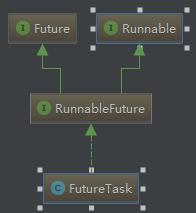
1. FutureTask接口分析
2. FutureTask的state变量
FutureTask内部维护了一个volatile类型的int变量state,用于存储FutureTask的状态,其可能的取值如下
private static final int NEW          = 0;//新建,实际上计算任务可能正在执行
private static final int COMPLETING   = 1;//执行中,实际上计算任务已经执行完毕(可能正常,也可能是发生异常)
private static final int NORMAL       = 2;//正常结束
private static final int EXCEPTIONAL  = 3;//异常结束
private static final int CANCELLED    = 4;//已取消
private static final int INTERRUPTING = 5;//中断中
private static final int INTERRUPTED  = 6;//已中断
可能的状态转移流程为
* Possible state transitions:
* NEW -> COMPLETING -> NORMAL
* NEW -> COMPLETING -> EXCEPTIONAL
* NEW -> CANCELLED
* NEW -> INTERRUPTING -> INTERRUPTED
3. FutureTask的构造方法
    /**

     * Creates a {@code FutureTask} that will, upon running, execute the

     * given {@code Runnable}, and arrange that {@code get} will return the

     * given result on successful completion.

     *

     * @param runnable the runnable task

     * @param result the result to return on successful completion. If

     * you don't need a particular result, consider using

     * constructions of the form:

     * {@code Future<?> f = new FutureTask<Void>(runnable, null)}

     * @throws NullPointerException if the runnable is null

     */

    public FutureTask(Runnable runnable, V result) {

        this.callable = Executors.callable(runnable, result);

        this.state = NEW;       // ensure visibility of callable

    }
初始化时,将state设置为NEW
4. FutureTask.run方法
    public void run() {

        if (state != NEW ||//当前状态必须为NEW,工作线程必须为null,然后将工作线程用cas操作设置为当前线程

            !UNSAFE.compareAndSwapObject(this, runnerOffset,

                                         null, Thread.currentThread()))

            return;

        try {

            Callable<V> c = callable;

            if (c != null && state == NEW) {//这个时候已经可以保证FutureTask是由当前线程独占了,只要判断当前线程没有已经执行过这个FutureTask即可

                V result;

                boolean ran;

                try {

                    result = c.call();//当前线程执行计算任务

                    ran = true;//成功跑完,标记一下

                } catch (Throwable ex) {//计算过程中抛出异常

                    result = null;

                    ran = false;//标记任务未完成

                    setException(ex);//标记任务异常

                }

                if (ran)

                    set(result);//标记任务正常完成

            }

        } finally {

            // runner must be non-null until state is settled to

            // prevent concurrent calls to run()

            runner = null;//先设置state,再设置runner为null,防止并发调用call出问题

            // state must be re-read after nulling runner to prevent

            // leaked interrupts

            int s = state;

            if (s >= INTERRUPTING)//处理可能的中断

                handlePossibleCancellationInterrupt(s);

        }

    }

    /**

     * Sets the result of this future to the given value unless

     * this future has already been set or has been cancelled.

     *

     * <p>This method is invoked internally by the {@link #run} method

     * upon successful completion of the computation.

     *

     * @param v the value

     */

    protected void set(V v) {//设置FutureTask为正常结束

        if (UNSAFE.compareAndSwapInt(this, stateOffset, NEW, COMPLETING)) {

            outcome = v;

            UNSAFE.putOrderedInt(this, stateOffset, NORMAL); // final state

            finishCompletion();

        }

    }

    /**

     * Causes this future to report an {@link ExecutionException}

     * with the given throwable as its cause, unless this future has

     * already been set or has been cancelled.

     *

     * <p>This method is invoked internally by the {@link #run} method

     * upon failure of the computation.

     *

     * @param t the cause of failure

     */

    protected void setException(Throwable t) {//设置FutureTask为异常结束

        if (UNSAFE.compareAndSwapInt(this, stateOffset, NEW, COMPLETING)) {

            outcome = t;

            UNSAFE.putOrderedInt(this, stateOffset, EXCEPTIONAL); // final state

            finishCompletion();

        }

    }
5. FutureTask.runAndReset方法
    /**

     * Executes the computation without setting its result, and then

     * resets this future to initial state, failing to do so if the

     * computation encounters an exception or is cancelled.  This is

     * designed for use with tasks that intrinsically execute more

     * than once.

     *

     * @return true if successfully run and reset

     */

    protected boolean runAndReset() {

        if (state != NEW ||

            !UNSAFE.compareAndSwapObject(this, runnerOffset,

                                         null, Thread.currentThread()))

            return false;

        boolean ran = false;

        int s = state;

        try {

            Callable<V> c = callable;

            if (c != null && s == NEW) {

                try {

                    c.call(); // don't set result//不设置结果

                    ran = true;//如果任务计算过程中抛出异常或者被中断,ran变量为false

                } catch (Throwable ex) {

                    setException(ex);

                }

            }

        } finally {

            // runner must be non-null until state is settled to

            // prevent concurrent calls to run()

            runner = null;

            // state must be re-read after nulling runner to prevent

            // leaked interrupts

            s = state;

            if (s >= INTERRUPTING)

                handlePossibleCancellationInterrupt(s);

        }

        return ran && s == NEW;//如果任务是正常结束,重置FutureTask状态

    }
与FutureTask.run有所不同,首先如果计算任务执行成功,FutureTask的状态会被重置,其次是runAndReset方法不会设置计算任务的结果。
runAndReset方法主要用于定时任务的场景,比方说上一篇介绍的ScheduledThreadPoolExecutor中,ScheduledFutureTask.run方法中,对于周期执行的任务,就是调用的runAndReset方法。
5. FutureTask.cancel方法
    public boolean cancel(boolean mayInterruptIfRunning) {

        if (state != NEW)

            return false;

        if (mayInterruptIfRunning) {

            if (!UNSAFE.compareAndSwapInt(this, stateOffset, NEW, INTERRUPTING))//设置FutureTask的状态为INTERRUPTING

                return false;

            Thread t = runner;

            if (t != null)

                t.interrupt();//发送中断信号

            UNSAFE.putOrderedInt(this, stateOffset, INTERRUPTED); // final state//设置FutureTask的状态为INTERRUPTED

        }

        else if (!UNSAFE.compareAndSwapInt(this, stateOffset, NEW, CANCELLED))//设置FutureTask的状态为CANCELLED

            return false;

        finishCompletion();

        return true;

    }
逻辑很简单,只cancel状态为NEW的FutureTask
6. FutureTask.get方法
    /**

     * @throws CancellationException {@inheritDoc}

     */

    public V get() throws InterruptedException, ExecutionException {

        int s = state;

        if (s <= COMPLETING)//任务未完成,排队等待结果

            s = awaitDone(false, 0L);

        return report(s);

    }

    /**

     * Awaits completion or aborts on interrupt or timeout.

     *

     * @param timed true if use timed waits

     * @param nanos time to wait, if timed

     * @return state upon completion

     */

    private int awaitDone(boolean timed, long nanos)

        throws InterruptedException {

        final long deadline = timed ? System.nanoTime() + nanos : 0L;//计算等待结果线程的唤醒时间

        WaitNode q = null;

        boolean queued = false;

        for (;;) {//死循环中等待结果

            if (Thread.interrupted()) {//等待线程被中断

                removeWaiter(q);//从等待队列中移除

                throw new InterruptedException();

            }

            int s = state;

            if (s > COMPLETING) {//计算任务结束

                if (q != null)//函数返回

                    q.thread = null;

                return s;

            }

            else if (s == COMPLETING) // cannot time out yet

                Thread.yield();//计算任务尚未结束,退让,减少开销

            else if (q == null)

                q = new WaitNode();//创建新的等待节点

            else if (!queued)//如果当前等待节点还未入栈

                queued = UNSAFE.compareAndSwapObject(this, waitersOffset,

                                                     q.next = waiters, q);//用CAS操作将当前等待节点入栈

            else if (timed) {

                nanos = deadline - System.nanoTime();

                if (nanos <= 0L) {

                    removeWaiter(q);

                    return state;

                }

                LockSupport.parkNanos(this, nanos);//入栈成功,等待

            }

            else

                LockSupport.park(this);//入栈成功,等待

        }

    }
这里用到了Treiber stack算法,让调用get方法的线程排队等待
7. FutureTask.finishCompletion方法
    /**

     * Removes and signals all waiting threads, invokes done(), and

     * nulls out callable.

     */

    private void finishCompletion() {

        // assert state > COMPLETING;

        for (WaitNode q; (q = waiters) != null;) {

            if (UNSAFE.compareAndSwapObject(this, waitersOffset, q, null)) {

                for (;;) {

                    Thread t = q.thread;

                    if (t != null) {

                        q.thread = null;

                        LockSupport.unpark(t);//唤醒等待线程

                    }

                    WaitNode next = q.next;//查找下一个等待线程

                    if (next == null)

                        break;

                    q.next = null; // unlink to help gc

                    q = next;

                }

                break;

            }

        }

        done();

        callable = null;        // to reduce footprint

    }
FutureTask的任务如果执行结束,就会调用finishCompletion方法,这个方法会唤醒所有因为调用get方法而等待的线程,于是这些线程可以拿着FutureTask的执行结果离开了。
J.U.C并发框架源码阅读(十六)FutureTask的更多相关文章
- J.U.C并发框架源码阅读(六)ConditionObject
基于版本jdk1.7.0_80 java.util.concurrent.locks.AbstractQueuedSynchronizer.ConditionObject 代码如下 /** * Con ...
- J.U.C并发框架源码阅读(二)AbstractQueuedSynchronizer
基于版本jdk1.7.0_80 java.util.concurrent.locks.AbstractQueuedSynchronizer 代码如下 /* * ORACLE PROPRIETARY/C ...
- J.U.C并发框架源码阅读(五)Semaphore
基于版本jdk1.7.0_80 java.util.concurrent.Semaphore 代码如下 /* * ORACLE PROPRIETARY/CONFIDENTIAL. Use is sub ...
- J.U.C并发框架源码阅读(八)ArrayBlockingQueue
基于版本jdk1.7.0_80 java.util.concurrent.ArrayBlockingQueue 代码如下 /* * ORACLE PROPRIETARY/CONFIDENTIAL. U ...
- J.U.C并发框架源码阅读(十三)ThreadPoolExecutor
基于版本jdk1.7.0_80 java.util.concurrent.ThreadPoolExecutor 代码如下 /* * ORACLE PROPRIETARY/CONFIDENTIAL. U ...
- J.U.C并发框架源码阅读(十五)CopyOnWriteArrayList
基于版本jdk1.7.0_80 java.util.concurrent.CopyOnWriteArrayList 代码如下 /* * Copyright (c) 2003, 2011, Oracle ...
- J.U.C并发框架源码阅读(三)ReentrantLock
基于版本jdk1.7.0_80 java.util.concurrent.locks.ReentrantLock 代码如下 /* * ORACLE PROPRIETARY/CONFIDENTIAL. ...
- J.U.C并发框架源码阅读(十二)ConcurrentHashMap
基于版本jdk1.7.0_80 java.util.concurrent.ConcurrentHashMap 代码如下 /* * ORACLE PROPRIETARY/CONFIDENTIAL. Us ...
- J.U.C并发框架源码阅读(一)AtomicInteger
基于版本jdk1.7.0_80 java.util.concurrent.atomic.AtomicInteger 代码如下 /* * ORACLE PROPRIETARY/CONFIDENTIAL. ...
- J.U.C并发框架源码阅读(七)CyclicBarrier
基于版本jdk1.7.0_80 java.util.concurrent.CyclicBarrier 代码如下 /* * ORACLE PROPRIETARY/CONFIDENTIAL. Use is ...
随机推荐
- 设置MySQL允许外网访问 费元星 feiyuanxing.com 站长
1.修改配置文件sudo vim /etc/mysql/my.cnf把bind-address参数的值改成你的内/外网IP或0.0.0.0,或者直接注释掉这行. 2.登录数据库mysql -u roo ...
- myeclipse用maven搭建web项目后tomcat启动报找不到jar包解决办法
因为maven项目jar包放在Maven Dependencies内,用tomcat启动web项目,会找WEB-INF下的lib目录,需要部署Maven Dependencies 选中项目-prope ...
- 剑指Offer - 九度1361 - 翻转单词顺序
剑指Offer - 九度1361 - 翻转单词顺序2013-11-23 02:45 题目描述: JOBDU最近来了一个新员工Fish,每天早晨总是会拿着一本英文杂志,写些句子在本子上.同事Cat对Fi ...
- 【Substring with Concatenation of All Words】cpp
题目: You are given a string, s, and a list of words, words, that are all of the same length. Find all ...
- django-settings里mysql连接配置
DATABASES = { 'default': { 'ENGINE': 'django.db.backends.mysql', 'NAME': 'dailyfresh', 'HOST': 'loca ...
- HDU 4288 Coder ( 离散化 + 离线 + 线段树 )
这题跟ZOJ 3606的解题思路很相似. 题意:有3中操作:1.向集合中增加一个数x(1≤x≤1e9):2.从集合中删去一个数x(保证这个数存在):3.查询集合中所有位置满足i%5==3的数a[i]的 ...
- kibana的查询语法
kibana的查询语法是 字段Fields:关键词
- 实用JS系列——BOM常用对象
背景: 最近在着手项目的时候,意识到自己JS的欠缺.虽然看了不少JavaScript的视频,但真正项目中并不是经常遇到大且难的例子.所以JavaScript的基础还需要再打扎实,也就有了这一系列博客 ...
- 【bzoj3638】Cf172 k-Maximum Subsequence Sum 模拟费用流+线段树区间合并
题目描述 给一列数,要求支持操作: 1.修改某个数的值 2.读入l,r,k,询问在[l,r]内选不相交的不超过k个子段,最大的和是多少. 输入 The first line contains inte ...
- java GUI Graphics2D 绘图
Graphics类提供基本绘图方法,Graphics2D类提供更强大的绘图能力.本节讲解Graphics类,下节讲解Graphics2D. Graphics类提供基本的几何图形绘制方法,主要有:画线段 ...