
Top 10 Universities for Artificial Intelligence
1. Massachusetts Institute of Technology, Cambridge, MA
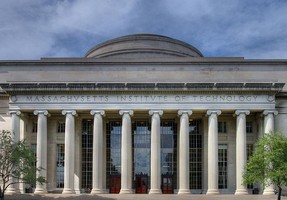
Massachusetts Institute of Technology is a private institution that was founded in 1861. It has a total undergraduate enrollment of 4,299, its setting is urban, and the campus size is 168 acres. It utilizes a 4-1-4-based academic calendar. Massachusetts Institute of Technology’s ranking in the 2012 edition of Best
Colleges is National Universities, 5. Its tuition and fees are $40,732 (2011-12).
MIT is located in Cambridge, Mass., across the Charles River from downtown Boston. Only freshmen students are required to live on campus, but about 70 percent of students choose to remain on campus during their four years. MIT offers housing in one of the coolest dorms in the country, commonly called “The Sponge,” designed by architect Steven Holl. The MIT Engineers boast more than 30 NCAA Division III Teams, and their mascot is a beaver, which MIT chose because of its “remarkable engineering and mechanical skill and its habits of industry.” Each class designs a unique ring called the “Brass Rat” that is revealed during sophomore year, a tradition that dates back to 1929.
MIT focuses on scientific and technological research and is divided into five schools and one college. Among its graduate schools are the highly ranked School of Engineering and Sloan School of Management, in addition to strong programs in economics, psychology, biology, chemistry, earth sciences, physics, and mathematics. Research expenditures at MIT for 2009 exceeded $700 million, with funding coming from government agencies such as the Department of Health and Human Services and Department of Defense. The “Independent Activities Program,” a four-week term between fall and spring semesters in January, offers special courses, lectures, competitions, and projects. Distinguished alumni include Apollo 11 astronaut Buzz Aldrin, former U.N. Secretary
General Kofi Annan, and Federal Reserve Bank Chairman Ben Bernanke.
2. Carnegie Mellon University, Pittsburgh, PA
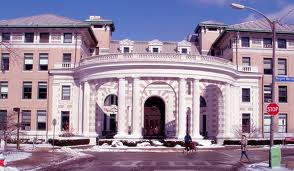
Carnegie Mellon University (also known as Carnegie Mellon or simply CMU) is a private research university in Pittsburgh, Pennsylvania.
The university began as the Carnegie Technical Schools, founded by Andrew Carnegie in 1900. In 1912, the school became Carnegie Institute of Technology and began granting four-year degrees. In 1967, the Carnegie Institute of Technology merged with the Mellon Institute of Industrial Research to form Carnegie Mellon University. The University’s 140-acre (0.57 km2) main campus is 3 miles (4.8 km) from Downtown Pittsburgh and abuts the Carnegie Museums of Pittsburgh, Schenley Park, and the campus of the University of Pittsburgh in the city’s Oakland and Squirrel Hill neighborhoods, partially extending into Shadyside.
Carnegie Mellon has seven colleges and independent schools: the Carnegie Institute of Technology (engineering), College of Fine Arts, Dietrich College of Humanities and Social Sciences, Mellon College of Science, Tepper School of Business, School of Computer Science, and H. John Heinz III College.
Carnegie Mellon students come from all 50 U.S. states and 93 countries. It consistently ranks among the top 25 universities in the United States and was named one of the “New Ivies” by Newsweek in 2006.
3. Stanford University, Stanford, CA
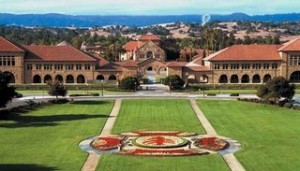
The Leland Stanford Junior University, commonly referred to as Stanford University or Stanford, is a private research university on an 8,180-acre (3,310 ha) campus located near Palo Alto, California. It is situated in the northwestern Santa Clara Valley on the San Francisco Peninsula, approximately 20 miles (32 km) northwest of San Jose and 37 miles (60 km) southeast of San Francisco.
Leland Stanford, a Californian railroad tycoon and politician, founded the university in 1891 in honor of his son, Leland Stanford, Jr., who died of typhoid two months before his 16th birthday. The university was established as a coeducational and nondenominational institution, but struggled financially after the senior Stanford’s 1893 death and after much of the campus was damaged by the 1906 San Francisco earthquake. Following World War II, Provost Frederick Terman supported faculty and graduates’ entrepreneurialism to build self-sufficient local industry in what would become known as Silicon Valley. By 1970, Stanford was home to a linear accelerator, was one of the original four ARPANET nodes, and had transformed itself into a major research university in computer science, mathematics, natural sciences, and social sciences. More than 50 Stanford faculty, staff, and alumni have won the Nobel Prize and Stanford has the largest
number of Turing award winners for a single institution. Stanford faculty and alumni have founded many prominent technology companies including Cisco Systems, Google, Hewlett-Packard, LinkedIn, Netscape Communications, Rambus, Silicon Graphics, Sun Microsystems, Varian Associates, and Yahoo!.
The university is organized into seven schools including academic schools of Humanities and Sciences and Earth Sciences as well as professional schools of Business, Education, Engineering, Law, and Medicine. Stanford has a student body of approximately 6,900 undergraduate and 8,400 graduate students.
Stanford is a founding member of the Association of American Universities and in 2010 managed US$1.15 billion in research funding and $13.8 billion in endowment support, with $21.4 billion in consolidated net assets.
Stanford competes in 34 varsity sports and is one of two private universities in the Division I FBS Pacific-12 Conference. Stanford’s athletic program has won the NACDA Directors’ Cup every year since 1995. In the 2008 Summer Olympics in Beijing, Stanford athletes won 25 medals, including 8 gold medals, more than any other university in the United States
4. University of California–Berkeley, Berkeley, CA
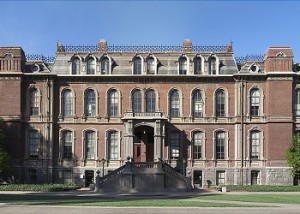
The University of California, Berkeley (also referred to as UC Berkeley, Cal Berkeley, Berkeley, or simply Cal), is a teaching and research university established in 1868 and located in Berkeley, California, USA. Berkeley is the most consistently well ranked university in the world overall as shown by a meta-analysis of subject/departmental data over the last sixteen years from the United States National Research Council, the US News & World Report, and Times Higher Education. Berkeley has the highest number of distinguished graduate programs ranked in the top 10 in their fields by the United States National Research Council. Among other honors, University faculty, alumni, and researchers have won 66 Nobel Prizes, 9 Wolf Prizes, 7 Fields Medals, 15 Turing Awards, 45MacArthur Fellowships, 20 Academy Awards, and 11 Pulitzer Prizes. To date, UC Berkeley and its researchers are associated with 6 chemical elements of the periodic table (Californium, Seaborgium, Berkelium, Einsteinium, Fermium, Lawrencium) and Berkeley Lab has discovered 16 chemical elements in total – more than any other university in the world.
UC Berkeley is the flagship institution of the University of California.[7][8][9][10] The university occupies 6,651 acres (26.92 km2) with the central campus resting on approximately 200 acres (0.81 km2) in the San Francisco Bay Area. Berkeley offers approximately 300 undergraduate and graduate degree programs in a wide range of disciplines. The oldest of the ten major campuses affiliated with the University of California (UC), Berkeley was the result of an 1868 merger of the private College of California and the public Agricultural, Mining, and Mechanical Arts College in Oakland. Since its founding, Berkeley has been charged with providing both “classical” and “practical” education for the state’s people.
5. University of Texas–Austin, Austin, TX
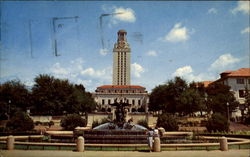
University of Texas–Austin is a public institution that was founded in 1883. It has a total undergraduate enrollment of 38,420, its setting is urban, and the campus size is 431 acres. It utilizes a semester-based academic calendar. University of Texas–Austin’s ranking in the 2012 edition of Best Colleges is National Universities, 45. Its in-state tuition and fees are $9,794 (2011-12); out-of-state tuition and fees are $32,506 (2011-12).
Everything is bigger in Texas, as the saying goes, and it holds true at the University of Texas—Austin, one of the largest schools in the nation. The school has one of the biggest Greek systems in the country, two of the largest student publications, and more than 900 clubs and organizations for students. The UT–Austin sports teams are notorious competitors in the Division I Big 12 Conference, supported by mascot Bevo the Longhorn. The UT Tower, a lofty campus structure, is lit in the school’s burnt orange color after notable sports achievements and glows a ‘#1’ when a team wins a national championship.
Freshmen do not have to live on campus, and may choose to live in downtown Austin, situated about a quarter mile away. The vibrant city is known for its music, food, outdoor activities, and nightlife, and students can travel for free on the capitol Metro buses with proof of ID.
UT is divided into 12 schools and colleges, the largest of which is the College of Liberal Arts. UT’s graduate programs include the highly ranked McCombs School of Business, College of Education, Cockrell School of Engineering, College of Fine Arts, School of Nursing, College of Pharmacy, and School of Social Work, in addition to the well-regarded School of Architecture. UT offers more than 650 study abroad programs, with the most popular destinations being Spain, Italy, the United Kingdom, France, and China. Notable alumni include former pitcher Roger Clemens, actor Matthew McConaughey of films The Wedding Planner and How to Lose a Guy in 10 Days, and former first lady Laura Bush.
6. University of Washington, Seattle, WA
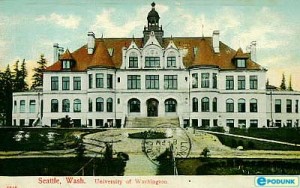
University of Washington is a public institution that was founded in 1861. It has a total undergraduate enrollment of 29,302, its setting is urban, and the campus size is 703 acres. It utilizes a quarter-based academic calendar. University of Washington’s ranking in the 2012 edition of Best Colleges is National Universities, 42. Its in-state tuition and fees are $10,574 (2011-12); out-of-state tuition and fees are $28,058 (2011-12).
Located in the heart of downtown Seattle, the University of Washington is a cutting-edge research university with a long-standing history as the first institution in the West. Students can join one of the school’s 500-plus student organizations, including 16 sororities and 27 fraternities, or can start a brand new club with at least four other students. University of Washington is known as a commuter school, and freshmen are not required to live on campus. Housing is not guaranteed for any student. For those that do reside in the residence halls, the university stresses “living green” through energy conservation and recycling. On the sports fields, the school’s varsity athletes are competitive in the NCAA Division I Pacific-10 Conference. The football team, in particular, is a traditional league stand-out. The teams are represented by two mascots: one, a costumed student known as Harry the Husky Dawg, and the other, Dubs, a live Alaskan husky.
The university gym is free for students seeking a workout.
The University of Washington receives a hefty amount of federal funding each year to further its mission as a public research institution. True to its roots in research, the school hosts an Undergraduate Research Symposium every year for students to present their work to the community. The school has a highly ranked School of Medicine, College of Engineering, and Michael G. Foster School of Business. Nearly three fourths of University of Washington graduates remain in the state. Notable alumni include Thomas Foley, former U.S. Speaker of the House; Chris DeWolfe, co-creator of MySpace; and Irv Robbins, co-founder and namesake of the Baskin-Robbins ice cream chain.
7. Georgia Institute of Technology, Atlanta, GA
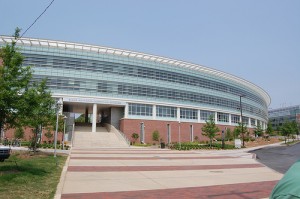
United States. It is a part of the University System of Georgia and has satellite campuses in Savannah, Georgia; Metz, France; Athlone, Ireland; Shanghai, China; and Singapore.
The educational institution was founded in 1885 as the Georgia School of Technology as part of Reconstruction plans to build an industrial economy in the post-Civil War Southern United States. Initially, it offered only a degree in mechanical engineering. By 1901, its curriculum had expanded to include electrical, civil, and chemical engineering. In 1948, the school changed its name to reflect its evolution from a trade school to a larger and more capable technical institute and research university.
Today, Georgia Tech is organized into six colleges and contains about 31 departments/units, with a strong emphasis on science and technology. It is well recognized for its degree programs in engineering, computing, management, the sciences, architecture, and liberal arts. Tech is consistently ranked as one of the top 10 public universities in the nation and is a member of the prestigious Association of American Universities.
8. University of Illinois–Urbana-Champaign, Urbana, IL
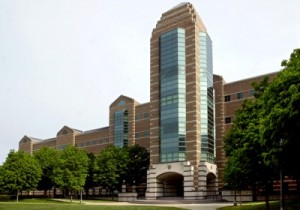
University of Illinois–Urbana-Champaign is a public institution that was founded in 1867. It has a total undergraduate enrollment of 31,540, its setting is urban, and the campus size is 1,468 acres. It utilizes a semester-based academic calendar. University of Illinois–Urbana-Champaign’s ranking in the 2012 edition of Best Colleges is National Universities, 45. Its in-state tuition and fees are $13,558 (2011-12); out-of-state tuition and fees are $27,700 (2011-12).
The University of Illinois is located in the twin cities of Urbana and Champaign in east-central Illinois, only a few hours from Chicago, Indianapolis, and St. Louis.
The school’s Fighting Illini participate in more than 20 NCAA Division I varsity sports and are part of the Big Ten Conference. The university boasts the largest Greek system in the world, and almost a quarter of the student body is involved. It’s not hard to find something to do on campus with more than 1,000 student organizations, ranging from the climbing club to the Chinese mahjong club. All freshmen are required to live on campus.
University of Illinois—Urbana-Champaign comprises 17 schools and colleges. Its Graduate School of Library and Information Science, College of Engineering, and Department of Psychology are among the best in the country. The school’s College of Business, College of Education, and College of Law are also highly ranked The school is classified as a university with very high research activity by the Carnegie Foundation for the Advancement of Teaching. The University of Illinois was the first school to provide disability access to all university services, curricula, and facilities. Notable alumni include Pulitzer Prize-winning film critic Roger Ebert, and John Bardeen, a two-time winner of the Nobel Prize in Physics.
9. University of Massachusetts–Amherst, Amherst, MA
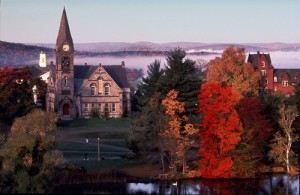
University of Massachusetts–Amherst is a public institution that was founded in 1863. It has a total undergraduate enrollment of 21,373, its setting is suburban, and the campus size is 1,463 acres. It utilizes a semester-based academic calendar. University of Massachusetts–Amherst’s ranking in the 2012 edition of Best Colleges is National Universities, 94. Its in-state tuition and fees are $12,612 (2011-12); out-of-state tuition and fees are $25,400 (2011-12).
The University of Massachusetts—Amherst is the central location for the state school system. The university is large, but through the Five College Interchange, students can take courses at smaller liberal arts colleges nearby: Smith College, Mount Holyoke College, Amherst College, and Hampshire College. Students have close to 90 majors to choose from, including an option to design a major, known as BDIC: the Bachelor’s Degree with Individual Concentration. Adult students can complete a degree through a combination of online and on-campus coursework via the UMass Amherst University Without Walls (UWW).
10. University of Pennsylvania, Philadelphia, PA
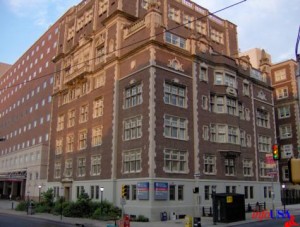
The University of Pennsylvania (commonly referred to as Penn or UPenn) is a private research university located in Philadelphia, Pennsylvania, United States and is one of the eight members of the Ivy League. Penn is the fourth-oldest institution of higher education in the United States, and is considered the first university in the United States, with both undergraduate and graduate studies. It is also one of the Colonial Colleges. Incorporated as The Trustees of the University of Pennsylvania, Penn is one of 14 founding members of the Association of American Universities.
Benjamin Franklin, Penn’s founder, advocated an educational program that focused as much on practical education for commerce and public service as on the classics and theology. Penn was one of the first academic institutions to follow a multidisciplinary model pioneered by several European universities, concentrating multiple “faculties” (e.g., theology, classics, medicine) into one institution. It was also home to many other educational innovations. The first school of medicine in North America (University of Pennsylvania School of Medicine, 1765), the first collegiate business school (Wharton, 1881) and the first student union (Houston Hall, 1896), were all born at Penn.
Penn offers a broad range of academic departments, an extensive research enterprise and a number of community outreach and public service programs. It is particularly well known for its medical school, dental school, school of business, law school, communications school, nursing school, veterinary school, its social sciences and humanities programs, as well as its biomedical teaching and research capabilities. Its undergraduate programs are also among the most selective in the country (12.26% acceptance rate). One of Penn’s most well known academic qualities is its emphasis on interdisciplinary education, which it promotes through numerous joint degrees, research centers and professorships, a unified campus, and the ability for students to take classes from any of Penn’s schools (the “One University Policy”).
Top 10 Universities for Artificial Intelligence的更多相关文章
- ARTIFICIAL INTELLIGENCE FOR GAMES (Ian Millington / John Funge 著)
相关网站:http://www.ai4g.com PART I AI AND GAMESCHAPTER1 INTRODUCTIONCHAPTER2 GAME AIPART II TECHNIQUESC ...
- UVa 537 Artificial Intelligence?
题目大意:输入一个字符串,根据物理公式P=U*I,已知其中两个量,求第三个量,结果保留两位小数. Artificial Intelligence? Physics teachers in hig ...
- EECS 649 Introduction to Artificial Intelligence
EECS 649 Introduction to Artificial IntelligenceExamElectronic Blackboard Submission Due: April 24, ...
- AI AND THE BOTTOM LINE: 15 EXAMPLES OF ARTIFICIAL INTELLIGENCE IN FINANCE
https://builtin.com/artificial-intelligence/ai-finance-banking-applications-companies f there's one ...
- 谷歌2019 学术指标发榜:CVPR首次进入Top 10,何恺明论文引用最高!
[导读]今天,谷歌发布了2019最新版学术指标,对收录的会议和期刊的影响力进行排名.AI类的多个顶会进入榜单Top 100,CVPR更是进入前10,而何恺明的"深度残差网络"单篇引 ...
- Favorites of top 10 rules for success
Dec. 31, 2015 Stayed up to last minute of 2015, 12:00am, watching a few of videos about top 10 rules ...
- Artificial intelligence(AI)
ORM: https://github.com/sunkaixuan/SqlSugar 微软DEMO: https://github.com/Microsoft/BotBuilder 注册KEY:ht ...
- Top 10 Methods for Java Arrays
作者:X Wang 出处:http://www.programcreek.com/2013/09/top-10-methods-for-java-arrays/ 转载文章,转载请注明作者和出处 The ...
- (转) Artificial intelligence, revealed
Artificial intelligence, revealed Yann LeCunJoaquin Quiñonero Candela It's 8:00 am on a Tuesday morn ...
随机推荐
- [fn]焦点图JQ插件版
自己写的焦点图片的插件,使用方法简单说明一下 index.html页面具体结构如下 <!DOCTYPE html PUBLIC "-//W3C//DTD XHTML 1.0 Trans ...
- Linq ExecuteQuery,ExecuteCommand
//连接语句 public readonly string sqlconn = ConfigurationManager.ConnectionStrings["Transaction_9_3 ...
- Oracle11G R2用exp无法导出空表解决方法
在11G R2中有个新特性,当表无数据时,不分配segment,以节省空间Oracle当然在执行export导出时,空表则无法导出,但是还是有解决办法的: 解决方法: 一.insert一行,再roll ...
- Mozilla Firefox 24.0 Beta 5 发布
Mozilla今天将Firefox 24.0 Beta 5版本放到了FTP的release目录,新版开始全面支持OS X 10.7全新的滚动条样式,禁止网站插件运行的功能出现在任务栏左侧,调整了界面U ...
- Java面试题(1)
1.编写一个程序,将d:\java 目录下的所有.java 文件复制到d:\jad 目录下,并将原来文件的扩展名从.java 改为.jad. import java.io.File; import j ...
- [MFC] MFC编译程序,缺少MFC动态链接库的解决
问题:VS2010 c++编写的程序在别人的机子运行不了,缺少mfc100u.dll xxx100d.dll等的解决方法 解决方法: 1.将这些dll打包,和应用程序一起发布; 2.采用MFC静态 ...
- 深入理解JavaScript 事件
本文总结自<JavaScript高级程序设计>以及自己平时的经验,针对较新浏览器以及 DOM3 级事件标准(2016年8月),对少部分内容作了更正,增加了各种例子及解析. 如无特殊说明,本 ...
- Java程序员的日常 —— static的用法讲解实践
之前文章说过Java中static的作用,有朋友想看个例子.于是便抽空写了个小栗子 代码 package xing.test.thinking.chap5; class A{ public A() { ...
- 使用TabBarController(代码实现)
step01:使用Xcode创建一个项目 step02:填写项目必要信息 step03:检查文件结构树是否正确 step04:创建一些类,这些类将会在后面用到!(选择Swift File) step0 ...
- Atitit .html5刮刮卡的gui实现总结
Atitit .html5刮刮卡的gui实现总结 #----两个案例canvas或者wScratchPad-1.4.4 1 #----1.添加panel ,这个十mask div.....posti ...