
Spring(DI,AOP) 理解(一)
感觉自己的spring理解的不好.所以重新开始学习.
这篇文章主要是来理解DI(依赖注入),Aop(切面)
一.DI(依赖注入,这里没有涉及到注释.只是用xml文件和Bean的方法来注册pojo,)
依赖注入就是将创建bean对象的权利交给spring框架(控制反转) 然后用Applicationcontext.getBean() 来获取对象.
容器:spring容器创建对象,管理对象,并负责管理对象的生命周期. 容器有两种 BeanFactiory ..ApplicationContext ..多的就不解释了,BeanFactiory 比较low,这里使用ApplicaitonContext
ApplicaitonContext:
1 FileSystemXmlApplicationContext:以基于文件系统的XML配置文件创建ApplicationContext实例。
2 ClassPathXmlApplicationContext:以类加载路径下的XML配置文件创建的ApplicationContext实例
3 XmlWebApplicationContext:从web应用下的一个或者多个xml配置文件加载创建ApplicationContext实例
4 AnnotationConfigApplicationContext 从一个或者多个基于java的配置类中加载Spring ApplicaitonContext实例
5 AnnotationConfigWebApplicationContext 基于一个或者多个java的配置类来创建spring web 的应用上下文
二. Aop :面向切面编程.(将复用性很强的模块抽离出来,然后通过配置,将抽离出来的模块(比如日志模块),覆盖到其他需要日志模块的服务上)
一个项目假设有讲师服务,学生服务,计费服务.......还有日志模块,安全模块,事务模块
讲师服务,学生服务,计费服务 每一个服务都需要与日志模块,安全模块,事务模块 进行耦合.....如果这个样子,,每一个服务里面的代码不能够专注于解决本服务的问题.需要调用日志模块,安全模块,事务模块的代码.
这样,代码的复用性会很低,耦合性很高.
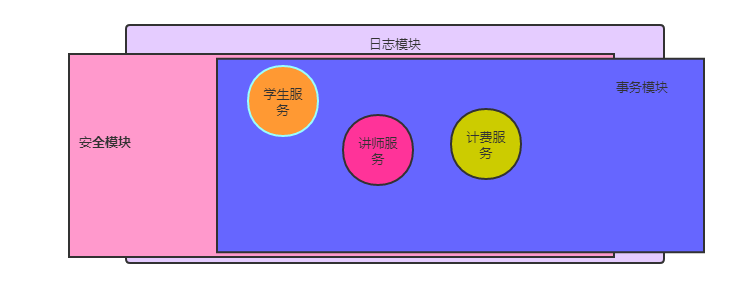
创建一个Person类...里面有一个doSomething方法
package com.start.demo;

/**

 * 男孩,女孩,工程师,程序员....

 */

public class Person {

    private String name;

    private int age;

    private Play play;

    public Person(Play p) {

        this.play = p;

    }

    public String getName() {

        return name;

    }

    public void setName(String name) {

        this.name = name;

    }

    public int getAge() {

        return age;

    }

    public void setAge(int age) {

        this.age = age;

    }

    void doSomething() {

        System.out.println(" we can  play " + play.getType() +"together");

    }

}
创建一个Play类 type 表示可以做的事情
package com.start.demo;

/**

 * 各种活动,,玩游戏,读书,看电视.....

 */

public class Play {

    private String type="computer game";

    public String getType() {

        return type;

    }

    public void setType(String type) {

        this.type = type;

    }

}
测试Aop的一个类
package com.start.demo;

/**

 * 这个类是用来测试Aop.在切点之前,之后,分别调用对应的方法

 */

public class Asker {

    private String name;

     void doSomethingBefore(){

        System.out.println("what can we do ");

    }

    void  doSomethingAfter(){

        System.out.println("that's fine");

    }

}
装配bean的xml
<?xml version="1.0" encoding="UTF-8"?>

<beans xmlns="http://www.springframework.org/schema/beans"

       xmlns:xsi="http://www.w3.org/2001/XMLSchema-instance"

       xmlns:aop="http://www.springframework.org/schema/aop"

       xsi:schemaLocation="http://www.springframework.org/schema/beans http://www.springframework.org/schema/beans/spring-beans.xsd

        http://www.springframework.org/schema/aop http://www.springframework.org/schema/aop/spring-aop.xsd">

     <!--装配bean-->

    <bean id="person" class="com.start.demo.Person">

        <constructor-arg ref="play"/>

    </bean>

    <bean id="play" class="com.start.demo.Play"/>

    <bean id="asker" class="com.start.demo.Asker"/>

    <aop:config>

        <aop:aspect ref="asker">

            <!-- pointcut 的id 不能与 配置切点bean的id一样了,会报错.-->

            <aop:pointcut id="personPointcut"

                          expression="execution(* *.doSomething())"/><!--execution(* * .doSomething(..)) 要是有参数,需要在方法体里面加 ..-->

            <aop:before pointcut-ref="personPointcut" method="doSomethingBefore"/>

            <aop:after pointcut-ref="personPointcut" method="doSomethingAfter"/>

        </aop:aspect>

    </aop:config>

</beans>
用javaBean来装配对象
package com.start.confBean;

import com.start.demo.Person;

import com.start.demo.Play;

import org.springframework.context.annotation.Bean;

import org.springframework.context.annotation.Configuration;

@Configuration

public class PersonConf {

    @Bean

    public Person person() {

        return new Person(play());

    }

    @Bean

    public Play play() {

        return new Play();

    }

}
测试Main类
package com.start.demo;

import com.start.confBean.PersonConf;

import org.springframework.context.annotation.AnnotationConfigApplicationContext;

import org.springframework.context.support.ClassPathXmlApplicationContext;

public class TestMain {

    public static void main(String[] args) {

        ClassPathXmlApplicationContext appcontext = new ClassPathXmlApplicationContext("beans.xml");    //从beans.xml 文件获取ApplicaitonContext

//        AnnotationConfigApplicationContext annotationApplicationContext = new AnnotationConfigApplicationContext(PersonConf.class);//PersonConf.java 文件获取ApplicaitonContext

//        Person person1 = annotationApplicationContext.getBean(Person.class);  //获取bean ,直接指定Bean 为Person

//        Person person = (Person) appcontext.getBean("person");//获取bean   person 为配置文件里面的 id

        Person pers = (Person) appcontext.getBean("person");

        pers.doSomething();

    }

}
这些代码虽然很简单,却让我认识清楚了DI和Aop的作用
Spring(DI,AOP) 理解(一)的更多相关文章
- spring ioc aop 理解
OC,依赖倒置的意思,所谓依赖,从程序的角度看,就是比如A要调用B的方法,那么A就依赖于B,反正A要用到B,则A依赖于B.所谓倒置,你必须理解如果不倒置,会怎么着,因为A必须要有B,才可以调用B,如果 ...
- Spring的Aop理解
主要作用:解决代码复用,避免重复性编写代码. 比较典型的场景:日志打印,权限验证,事务处理 参考网址为:http://moon-walker.iteye.com/blog/2381532 spring ...
- 9.秋招复习简单整理之Spring面试AOP和IOC的理解
1.Spring的AOP理解: OOP面向对象,允许开发者定义纵向的关系,但不适用于定义横向的关系,导致了大量代码的重复,而不利于各个模块的重用. AOP,一般称为面向切面,作为面向对象的一种补充,用 ...
- 对于Spring中AOP,DI,IoC概念的理解
IOC IoC(inversion of Control),控制反转.就好像敏捷开发和SCRUM一样,不是什么技术,而是一种方法论,一种工程化的思想.使用IoC的思想意味着你将设计好的对象交给容器控制 ...
- Spring理解IOC,DI,AOP作用,概念,理解。
IOC控制反转:创建实例对象的控制权从代码转换到Spring容器.实际就是在xml中配置.配置对象 实例化对象时,进行强转为自定义类型.默认返回类型是Object强类型. ApplicationCon ...
- 黑马-Spring(IOC&DI) AOP
IOC(控制翻转) 概念 把对象的创建.初始化.销毁等工作交给spring容器来做 案例 环境 步骤 1. 写一个HelloWorld类 2. 写一个配置文件 把hello类放到spring容 ...
- spring+IOC+DI+AOP优点分析(一)
Spring是什么: Spring是一个轻量级的DI和AOP容器框架. 说它轻量级有一大部分原因是相对与EJB的(虽然本人从没有接触过EJB的应用),重要的是,Spring是非侵入式的,基于sprin ...
- Spring系列(二):Spring IoC/DI的理解
这几天重新学习了一下Spring,在网上找了相关的ppt来看,当看到Spring IoC这一章节的时候,先大致浏览了一下内容,有将近50页的内容,内心窃喜~QAQ~,看完这些内容能够对IoC有更深层次 ...
- Spring的AOP简单理解
最近在研究spring的AOP,翻译出来的意思是面向切面. 总结如下: 所谓AOP就是将分散在各个方法处的公共代码提取到一处, 并通过类似拦截器的机制实现代码的动态整合.可以简单地想象成, 在某个方法 ...
随机推荐
- NLP(二十七)开放领域的三元组抽取的一次尝试
当我写下这篇文章的时候,我的内心是激动的,这是因为,自从去年6月份写了文章利用关系抽取构建知识图谱的一次尝试 后,我就一直在试图寻找一种在开放领域能够进行三元组抽取的办法,也有很多读者问过我这方面 ...
- Redis详解(一)
redis简介 redis是一个key-value存储系统.和Memcached类似,它支持存储的value类型相对更多 包括string(字符串).list(链表).set(集合).zset(sor ...
- Python入门到放弃
前传:计算机基础 01-计算机基础1 02-计算机基础2 第一章:Python入门 01-python入门之解释器环境安装 02-python入门之变量和基本数据类型 03-python内存管理之垃圾 ...
- Apache Shiro反序列化漏洞复现
Apache Shiro反序列化漏洞复现 0x01 搭建环境 获取docker镜像 Docker pull medicean/vulapps:s_shiro_1 重启docker system res ...
- 最详细的SSM(Spring+Spring MVC+MyBatis)项目搭建
速览 使用Spring+Spring MVC+MyBatis搭建项目 开发工具IDEA(Ecplise步骤类似,代码完全一样) 项目类型Maven工程 数据库MySQL8.0 数据库连接池:Druid ...
- vue项目创建与使用
目录 复习 Vue项目环境搭建 Vue项目创建 pycharm配置并启动vue项目 vue项目目录结构分析 vue组件(.vue文件) 全局脚本文件main.js(项目入口) 改写 vue项目启动生命 ...
- Asp.Net Core系列 电子书(摘自:Yaopengfei(姚鹏飞))
链接:https://pan.baidu.com/s/1uSmlArXinvNPKoLvck1hFg 提取码:34ce
- 欢乐C++ —— 2. 深复制与浅复制
1. 简述 通俗点讲,深复制与浅复制一般对指针而言, 深复制复制指针所指向的内容, 浅复制复制指针的值. 2. 举例 栗子: 当我们有现在有指针A指向一块数据,和指针B. 深复制- ...
- 单元测试实践思考(junit5+jmockit+testcontainer)
目录 背景 方案设计 单元测试指导思想 单层隔离 内部穿透 技术实现 依赖管理 基础架构 封装Junit5&Jmockit 单元测试配置 TestContainer封装 官方方案 实际方案 完 ...
- html-css:浮动_清除浮动
1.浮动 清除浮动之前我们首先需要了解为什么要清除浮动 1. 假设我们有一个父盒子,不设置高度,其高度有内部子盒子的大小自动撑开,这样是完全可行的,因为有时候我们并不想直接固定死父盒子的大小,而是根据 ...