
C语言强化——链表(1)
目录
- 链表的增删(不带头结点)
- 链表相关面试题
- 合并两个有序链表
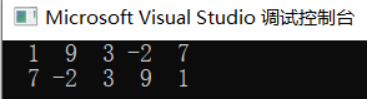
- 单链表原地逆置
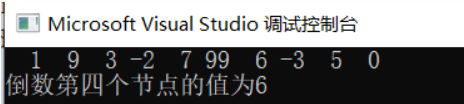
- 找出链表的倒数第四个节点
- 找出链表的中间节点
- 判断单链表是否有环
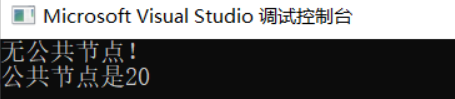
- 求链表交点
- 删除有序单链表中重复的元素
- 链表按奇数、偶数值拆分
链表的增删(不带头结点)
func.h
#include<stdio.h>

#include<string.h>

typedef struct node {

	int val;

	struct node * next;

}Node, *pNode;

void listTailInsert(pNode*, pNode*, int);

void listHeadInsert(pNode*, pNode*, int);

void listSortInsert(pNode*, pNode*, int);

void listDeleteNode(pNode*, pNode*, int);

void listPrint(pNode head);
func.c
#include "func.h"

void listTailInsert(pNode *head, pNode *tail, int val)

{

	pNode newNode = (pNode)calloc(1, sizeof(Node));

	newNode->val = val;

	if (NULL == *tail) {  //链表为空

		*head = newNode;

		*tail = newNode;

	}

	else {

		(*tail)->next = newNode;

		*tail = newNode;

	}

}

void listHeadInsert(pNode *head, pNode *tail, int val)

{

	pNode newNode = (pNode)calloc(1, sizeof(Node));

	newNode->val = val;

	if (NULL == *head) {

		*head = newNode;

		*tail = newNode;

	}

	else {

		newNode->next = *head;

		*head = newNode;

	}

}

void listSortInsert(pNode *head, pNode *tail, int val)

{

	pNode newNode = (pNode)calloc(1, sizeof(Node));

	newNode->val = val;

	pNode pCur, pPre;

	pCur = pPre = *head;

	if (NULL == *head) {

		*head = newNode;

		*tail = newNode;

	}

	else if (pCur->val > val) {  //头插

		newNode->next = *head;

		*head = newNode;

	}

	else {

		while (pCur) {   //中间插入

			if (val < pCur->val) {

				pPre->next = newNode;

				newNode->next = pCur;

				break;

			}

			pPre = pCur;

			pCur = pCur->next;

		}

		if (NULL == pCur) {  //尾部插入

			pPre->next = newNode;

			*tail = newNode;

		}

	}

}

void listDeleteNode(pNode *head, pNode *tail, int val)

{

	pNode pPre, pCur;

	pPre = pCur = *head;

	if (pCur == NULL) {

		printf("list is empty!\n");

		//printf("Delete failed , doesn't find the node!\n");

		return;

	}

	else if (pCur->val == val) {  //删除的是头部

		*head = pCur->next;

	}

	else {

		while (pCur) {

			if (pCur->val == val) {

				pPre->next = pCur->next;

				break;

			}

			pPre = pCur;

			pCur = pCur->next;

		}

		if (pCur == *tail) {

			*tail = pPre;

		}

		if (NULL == pCur) {

			printf("Don't find the node!\n");

		}

	}

}

void listPrint(pNode head)

{

	while (head) {

		printf("%3d", head->val);

		head = head->next;

	}

	printf("\n");

}
main.c
#include "func.h"

int main() {

	printf("please input the key of node:\n");

	pNode head = NULL, tail = NULL;

	int val;

	while (scanf("%d", &val) != EOF) {

		//listTailInsert(&head, &tail, val);

		//listHeadInsert(&head, &tail, val);

		listSortInsert(&head, &tail, val);

	}

	while (printf("please input delete num:\n"), scanf("%d", &val) != EOF){

		listDeleteNode(&head, &tail, val);

		listPrint(head);

	}

	listPrint(head);

	return 0;

}
链表相关面试题
- 合并两个有序链表
#include<stdio.h>

#include<string.h>

typedef struct node {

	int val;

	struct node *next;

}Node, *pNode;

void listTailInsert(pNode *head, pNode *tail, int val)

{

	pNode newNode = (pNode)calloc(1,sizeof(Node));

	newNode->val = val;

	if (NULL == *tail) {  //链表为空

		*head = newNode;

		*tail = newNode;

	}

	else {

		(*tail)->next = newNode;

		*tail = newNode;

	}

}

pNode head = NULL, tail = NULL;

void Union(pNode head1, pNode tail1, pNode head2, pNode tail2, int len1, int len2) {

	int i = 0;

	while (head1 && head2) {

		if (head1->val >= head2->val) {

			listTailInsert(&head, &tail, head2->val);

			head2 = head2->next;

		}

		else {

			listTailInsert(&head, &tail, head1->val);

			head1 = head1->next;

		}

	}

	while (head1) {

		listTailInsert(&head, &tail, head1->val);

		head1 = head1->next;

	}

	while (head2) {

		listTailInsert(&head, &tail, head2->val);

		head2 = head2->next;

	}

}

void listPrint(pNode head)

{

	while (head) {

		printf("%3d", head->val);

		head = head->next;

	}

	printf("\n");

}

int main() {

	int a[5] = { 1,2,7,9,13 };

	int b[8] = { 3,4,6,8,9,11,15,19 };

	pNode head1, head2, tail1, tail2;

	head1 = head2 = tail1 = tail2 = NULL;

	for (int i = 0;i < 5;++i) {

		listTailInsert(&head1, &tail1, a[i]);

	}

	for (int i = 0;i < 8;++i) {

		listTailInsert(&head2, &tail2, b[i]);

	}

	printf("两个有序链表:\n");

	listPrint(head1);

	listPrint(head2);

	printf("合并后:\n");

	Union(head1, tail1, head2, tail2, 5, 8);

	listPrint(head);

	return 0;

}
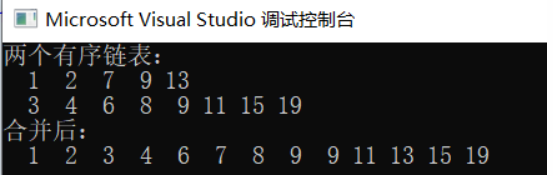
- 单链表原地逆置
(三指针法:用三个指针分别指向前三个节点,记为A、B、C,第一步让B的next指向A,A的next置为NULL,接着用循环,每次让B的next指向A,并且让三个指针同时往后移一个为止,直到c为NULL为止。)
#include<stdio.h>

typedef struct node {

	int val;

	struct node *next;

}Node, *pNode;

void listTailInsert(pNode *head, pNode *tail, int val)

{

	pNode newNode = (pNode)calloc(1, sizeof(Node));

	newNode->val = val;

	if (NULL == *tail) {  //链表为空

		*head = newNode;

		*tail = newNode;

	}

	else {

		(*tail)->next = newNode;

		*tail = newNode;

	}

}

void listPrint(pNode head)

{

	while (head) {

		printf("%3d", head->val);

		head = head->next;

	}

	printf("\n");

}

pNode* reverse(pNode *head) {

	pNode a = *head, b = (*head)->next, c = b->next;

	b->next = a;

	a->next = NULL;

	while (c) {

		a = b;

		b = c;

		c = c->next;

		b->next = a;

	}

	return b;

}

int main() {

	int a[5] = { 1,9,3,-2,7 };

	pNode head, tail;

	head = tail = NULL;

	for (int i = 0;i < 5;i++) {

		listTailInsert(&head, &tail, a[i]);

	}

	listPrint(head);

	pNode t = reverse(&head);

	listPrint(t);

	return 0;

}
- 找出链表的倒数第四个节点
(双指针法,让第一个结点先移动4次,第二个结点再出发)
#include<stdio.h>

typedef struct node {

	int val;

	struct node *next;

}Node, *pNode;

void listTailInsert(pNode *head, pNode *tail, int val)

{

	pNode newNode = (pNode)calloc(1, sizeof(Node));

	newNode->val = val;

	if (NULL == *tail) {  //链表为空

		*head = newNode;

		*tail = newNode;

	}

	else {

		(*tail)->next = newNode;

		*tail = newNode;

	}

}

void listPrint(pNode head)

{

	while (head) {

		printf("%3d", head->val);

		head = head->next;

	}

	printf("\n");

}

int main() {

	int a[10] = { 1,9,3,-2,7,99,6,-3,5,0 };

	pNode head, tail, last;

	head = tail = NULL;

	for (int i = 0;i < 10;i++) {

		listTailInsert(&head, &tail, a[i]);

	}

	listPrint(head);

	last = head;

	for (int i = 0;i < 4;i++) {

		head = head->next;

	}

	while (head) {

		head = head->next;

		last = last->next;

	}

	printf("倒数第四个节点的值为%d\n", last->val);

	return 0;

}
- 找出链表的中间节点
(双指针法:第一个指针每次移动2步,第二个指针每次移动1步)
#include<stdio.h>

#include<string.h>

typedef struct node {

	int val;

	struct node *next;

}Node, *pNode;

void listTailInsert(pNode *head, pNode *tail, int val)

{

	pNode newNode = (pNode)calloc(1, sizeof(Node));

	newNode->val = val;

	if (NULL == *tail) {  //链表为空

		*head = newNode;

		*tail = newNode;

	}

	else {

		(*tail)->next = newNode;

		*tail = newNode;

	}

}

void listPrint(pNode head)

{

	while (head) {

		printf("%3d", head->val);

		head = head->next;

	}

	printf("\n");

}

void findMidNode(pNode head) {

	pNode t1, t2;

	t1 = t2 = head;

	while (t2) {

		t2 = t2->next;

		t2 = t2->next;

		t1 = t1->next;

	}

	printf("中间节点为%d\n", t1->val);

}

int main() {

	int a[11] = { 1,9,3,-2,7,99,6,-3,5,0,-8 };

	pNode head, tail, last;

	head = tail = NULL;

	for (int i = 0;i < 10;i++) {

		listTailInsert(&head, &tail, a[i]);

	}

	listPrint(head);

	findMidNode(head);

	return 0;

}

- 判断单链表是否有环
(双指针法,快指针每次移动2步,慢指针每次移动1步,若有环快指针必定会在一圈内与慢指针相遇)
#include<stdio.h>

#include<string.h>

typedef struct node {

	int val;

	struct node *next;

}Node, *pNode;

void listTailInsert(pNode *head, pNode *tail, int val)

{

	pNode newNode = (pNode)calloc(1, sizeof(Node));

	newNode->val = val;

	if (NULL == *tail) {  //链表为空

		*head = newNode;

		*tail = newNode;

	}

	else {

		(*tail)->next = newNode;

		*tail = newNode;

	}

}

void listPrint(pNode head)

{

	while (head) {

		printf("%3d", head->val);

		head = head->next;

	}

	printf("\n");

}

int judge(pNode head) {

	pNode slow, fast;

	slow = fast = head;

	while (fast) {

		slow = slow->next;

		fast = fast->next;

		fast = fast->next;

		if (slow == fast) {

			printf("有环!\n");

			return 0;

		}

	}

	printf("无环!\n");

	return 1;

}

int main() {

	int a[11] = { 1,9,3,-2,7,99,6,-3,5,0,-8 };

	int b[11] = { 1,9,3,-2,7,99,6,-3,5,0,-8 };

	pNode head, tail;

	head = tail = NULL;

	for (int i = 0;i < 10;i++) {

		listTailInsert(&head, &tail, a[i]);

	}

	if (judge(head)) { //无环,输出链表

		listPrint(head);

	}

	printf("------------------\n");

	pNode head2, tail2;

	head2 = tail2 = NULL;

	for (int i = 0;i < 10;i++) {

		listTailInsert(&head2, &tail2, b[i]);

	}

	tail2->next = head2; //构造环

	if (judge(head2)) {  //有环不输出

		listPrint(head2);

	}

	return 0;

}

- 求两个链表的相交结点
(维护两个指针,先让长的链表的头指针往后移,直至和短链表的长度相同,再同时将两个链表的指针比较并后移)
#include<stdio.h>

#include<string.h>

typedef struct node {

	int val;

	struct node *next;

}Node, *pNode;

void listTailInsert(pNode *head, pNode *tail, int val)

{

	pNode newNode = (pNode)calloc(1, sizeof(Node));

	newNode->val = val;

	if (NULL == *tail) {  //链表为空

		*head = newNode;

		*tail = newNode;

	}

	else {

		(*tail)->next = newNode;

		*tail = newNode;

	}

}

void listPrint(pNode head)

{

	while (head) {

		printf("%3d", head->val);

		head = head->next;

	}

	printf("\n");

}

void findcommon(pNode head1, pNode head2, int len1, int len2) {

	if (len1 > len2) {

		while (len1 - len2) {

			head1 = head1->next;

			--len1;

		}

	}

	else {

		while (len2 - len1) {

			head2 = head2->next;

			--len2;

;		}

	}

	while (head1&&head2) {

		if (head1 == head2) {

			printf("公共节点是%d\n", head1->val);

			return;

		}

		head1 = head1->next;

		head2 = head2->next;

	}

	printf("无公共节点!\n");

	return;

}

int main() {

	int a[5] = { 1,2,7,9,13 };

	int b[10] = { 3,4,6,8,9,11,15,19,9,2 };

	int c[5] = { 20,21,22,23,24 };

	pNode head1, head2, tail1, tail2;

	head1 = head2 = tail1 = tail2 = NULL;

	for (int i = 0;i < 5;++i) {

		listTailInsert(&head1, &tail1, a[i]);

	}

	for (int i = 0;i < 10;++i) {

		listTailInsert(&head2, &tail2, b[i]);

	}

	findcommon(head1, head2, 5, 10);

	pNode head3, tail3;

	head3 = tail3 = NULL;

	for (int i = 0;i < 5;++i) {

		listTailInsert(&head3, &tail3, c[i]);

	}

	tail1->next = head3;

	tail2->next = head3;

	findcommon(head1, head2, 10, 15);

	return 0;

}
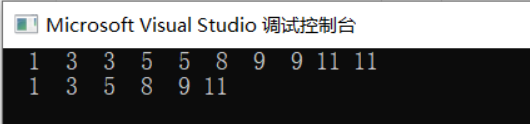
- 删除有序单链表中的重复元素
(双指针)
#include<stdio.h>

#include<string.h>

typedef struct node {

	int val;

	struct node *next;

}Node, *pNode;

void listTailInsert(pNode *head, pNode *tail, int val)

{

	pNode newNode = (pNode)calloc(1, sizeof(Node));

	newNode->val = val;

	if (NULL == *tail) {

		*head = newNode;

		*tail = newNode;

	}

	else {

		(*tail)->next = newNode;

		*tail = newNode;

	}

}

void listPrint(pNode head)

{

	while (head) {

		printf("%3d", head->val);

		head = head->next;

	}

	printf("\n");

}

void DeleteCommon(pNode *head) {

	pNode pCur, pPre, pFree;

	pPre = *head;

	pCur = (*head)->next;

	while (pCur) {

		if (pCur->val == pPre->val) {

			pFree = pCur;

			pPre->next = pCur->next;

			pCur = pCur->next;

			free(pFree);

		}

		else {

			pPre = pCur;

			pCur = pCur->next;

		}

	}

}

int main() {

	int a[10] = { 1,3,3,5,5,8,9,9,11,11 };

	pNode head, tail;

	head = tail = NULL;

	for (int i = 0;i < 10;i++) {

		listTailInsert(&head, &tail, a[i]);

	}

	listPrint(head);

	DeleteCommon(&head);

	listPrint(head);

	return 0;

}
- 链表按奇数、偶数值拆分
#include<stdio.h>

typedef struct node

{

	int val;

	struct node *next;

}Node, *pNode;

void InsertTail(pNode *head, pNode *tail, int val) {

	pNode newNode = (char*)calloc(1, sizeof(Node));

	newNode->val = val;

	if (NULL == *tail) {

		*head = newNode;

		*tail = newNode;

	}

	else {

		(*tail)->next = newNode;

		*tail = newNode;

	}

}

void partition(pNode head, pNode *head1, pNode *tail1, pNode *head2, pNode *tail2) {

	while (head) {

		int t = head->val;

		if (t % 2 == 1) {

			InsertTail(head1, tail1, t);

		}

		else {

			InsertTail(head2, tail2, t);

		}

		head = head->next;

	}

}

void listPrint(pNode head) {

	while (head) {

		printf("%-3d", head->val);

		head = head->next;

	}

	printf("\n");

}

int main() {

	int a[9] = { 1,2,3,4,5,6,7,8,9 };

	pNode head, tail, head1, tail1, head2, tail2;

	head = tail = head1 = tail1 = head2 = tail2 = NULL;

	for (int i = 0;i < 9;++i) {

		InsertTail(&head, &tail, a[i]);

	}

	listPrint(head);

	partition(head, &head1, &tail1, &head2, &tail2);

	listPrint(head1);

	listPrint(head2);

	return 0;

}

C语言强化——链表(1)的更多相关文章
- C语言强化——链表(2)
目录 链表的应用: 栈 循环队列 C语言实现动态数组 数组实现定长元素个数层次建树 队列实现不定元素个数层次建树 (*) 栈 栈(链表应用) "stack.h" #include ...
- C语言之链表
这两天在复习C语言的知识,为了给下个阶段学习OC做准备,以下的代码的编译运行环境是Xcode5.0版本,写篇博文把昨天复习的C语言有关链表的知识给大家分享一下,以下是小菜自己总结的内容,代码也是按照自 ...
- C语言习题 链表建立,插入,删除,输出
Problem B: C语言习题 链表建立,插入,删除,输出 Time Limit: 1 Sec Memory Limit: 128 MB Submit: 222 Solved: 92 [Subm ...
- YTU 2430: C语言习题 链表建立,插入,删除,输出
2430: C语言习题 链表建立,插入,删除,输出 时间限制: 1 Sec 内存限制: 128 MB 提交: 576 解决: 280 题目描述 编写一个函数creatlink,用来建立一个动态链表 ...
- 关于c语言单项链表尾添加
犹豫了几天,看了很多大牛写的关于c语言链表,感触很多,终于下定决心,把自己对于链表的理解随之附上,可用与否,自行裁夺.由于作者水平有限也是第一次写,不足之处,竭诚希望得到各位大神的批评指正.制作不易, ...
- C语言之链表list
#include <stdio.h> #include <stdlib.h> #include <stdbool.h> #include <string.h& ...
- C语言:链表实现的一个实例
问题:写一个程序输入你一年看过的所有电影以及每部电影的各种信息(简化问题:每部电影只要求输入片名和评价) 链表实现: #include<stdio.h> #include<stdli ...
- C语言单链表实现19个功能完全详解
谢谢Lee.Kevin分享了这篇文章 最近在复习数据结构,想把数据结构里面涉及的都自己实现一下,完全是用C语言实现的. 自己编写的不是很好,大家可以参考,有错误希望帮忙指正,现在正处于编写阶段,一共将 ...
- (转)c语言_链表实例讲解(两个经典例子)
建立一个学生成绩的线性链表,对其实现插入,删除,输出,最后销毁. #include <stdio.h>#include <stdlib.h> struct grade { ...
随机推荐
- [Educational Codeforces Round 55 (Rated for Div. 2)][C. Multi-Subject Competition]
https://codeforc.es/contest/1082/problem/C 题目大意:有m个类型,n个人,每个人有一个所属类型k和一个能力v,要求所选的类型的人个数相等并且使v总和最大(n, ...
- <jsp:include>动作元素,附:最易出错的一点
先定义一个date.jsp,再定义一个main.jsp.用<jsp:include plage = "相对url地址" flush = "true"> ...
- 【vue】vue使用Element组件时v-for循环里的表单项验证方法
转载至:https://www.jb51.net/article/142750.htm标题描述看起来有些复杂,有vue,Element,又有表单验证,还有v-for循环?是不是有点乱?不过我相信开发中 ...
- CH4912 Meteors
题意 4912 Meteors 0x49「数据结构进阶」练习 描述 Byteotian Interstellar Union有N个成员国.现在它发现了一颗新的星球,这颗星球的轨道被分为M份(第M份和第 ...
- hibernate(一)
hibernate介绍 jdbc缺点 1代码结构防繁琐,面向纯sql语句的编程,对于查询而言只要查询数据库的一张表,不需有如下编码 2有connection缓存,没有数据缓存 3.事务自动开启,有 ...
- Python 不可变对象练习
Python 不可变对象练习 str 是不可变对象,就是对这个对象进行操作不会改变这个对象的数据. 如下: >>> a = 'abc' >>> a.replace( ...
- 一个小工具 TcpTextListener
项目地址 : https://github.com/kelin-xycs/TcpTextListener 这是一个 可以 监听 Tcp (Http) 传输数据 的 小工具 . 不是 抓包 .不要 ...
- monkey如何获取app包名
别人学习网址:http://www.51testing.com/html/58/15092658-2984032.html 使用aapt aapt是sdk自带的一个工具,在sdk\builds- ...
- HTMLParser 笔记
# 关于html.parse.HTMLParser的使用 from html.parser import HTMLParser class MyHtmlParser(HTMLParser): # 使用 ...
- hadoop行业技术创新解决方案
如今有很多公司都在努力挖掘他们拥有的大量数据,包括结构化.非结构化.半结构化以及二进制数据等,来探索对数据的深入利用. 大多数公司估计他们只分析了已有数据的12%,剩余88%还没有被充分利用.大量的数 ...