
lucene_01_入门程序
索引和搜索流程图:
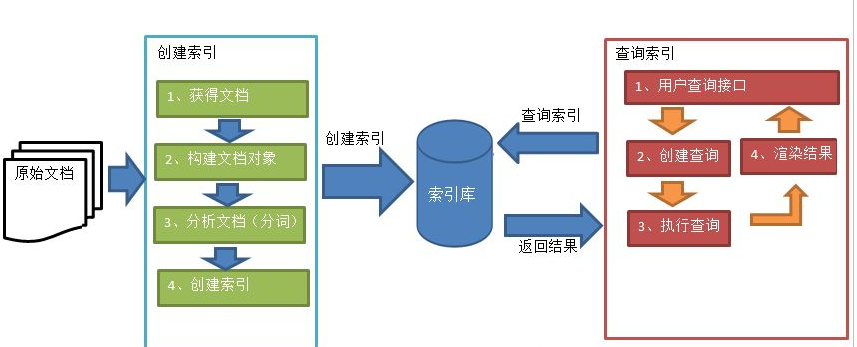
1、绿色表示索引过程,对要搜索的原始内容进行索引构建一个索引库,索引过程包括:
确定原始内容即要搜索的内容->采集文档->创建文档->分析文档->素引文档
2、红色表示搜索过程,从索弓库中搜索内容,
搜索过程包括:
用户通过搜索界面->创建查询子执行搜索,从索引库搜索->渲染搜索结果
索引和搜索操作的对象为:索引库。
索引库中包含的部分:索引、原始文档。
原始文档:要索引和搜索的内容。原始内容包括互联网上的网页、数据库中的数据、磁盘上的文件等。
创建文档对象
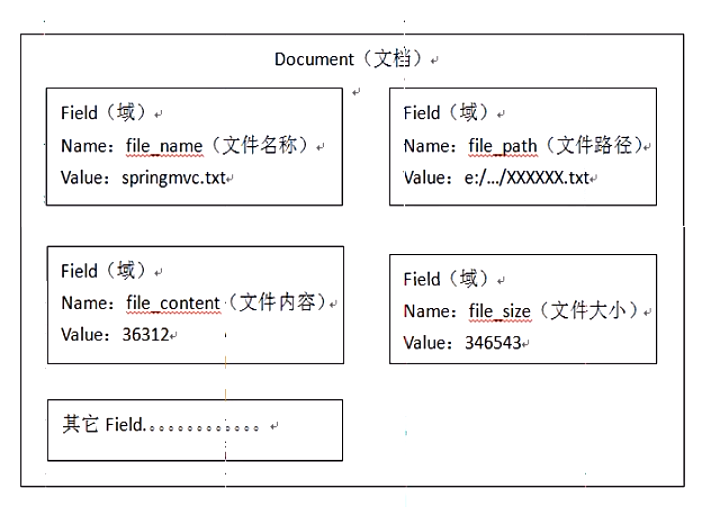
获取原始内容的目的是为了索引,在索引前需要将原始內容创建成文档(Document),
文档中包括一个一个的域(Field),域中存储内容。
这里我们可以将磁盘上的-一个文件当成一个document,Document 中包括-一些Field
(file_mame文件名称、file_path文件路径、file_size 文件大小、file_content文件内容),如下图:
注意:
每个文档可以有多个Field,
不同的文档可以有不同的Field, —— 对于数据库办不到,每一行看作是一个document(文档),每一列看作是一个Filed.数据库的每一行的字段是固定的。
同一个 文档可以有相同的Field (域名和域值都相同)。—— 数据库中也不能有重复的字段
每个文档都有一个唯一的编号,就是文档id。—— 不同数据库的 id,该id不是域(对应于数据库的字段),无法进行操作,由系统维护。
域:是可以被我们操作的。
分析文档
分析的过程是经过对原始文档提取单词、将字母转为小写、去除标点符号、去除停用词等过
程生成最终的语汇单元, 可以将语汇单元理解为一个一个的单词。
原文档内容:
Lucene is a Java full-text search engine.Lucene is not a completer
application,but rather a code library and API that can easily be used
to add search capabilities to applications.
分析后得到的语汇单元。
lucene、java、full、search、engine。。。
每个单词叫做一个Term,不同的域中拆分出来的相同的单词是不同的term。
含两部分一部分是文档的域名,另一部分是单词的内容。。
例如: 文件名中包含apache和文件内容中包含的apache是不同的term.
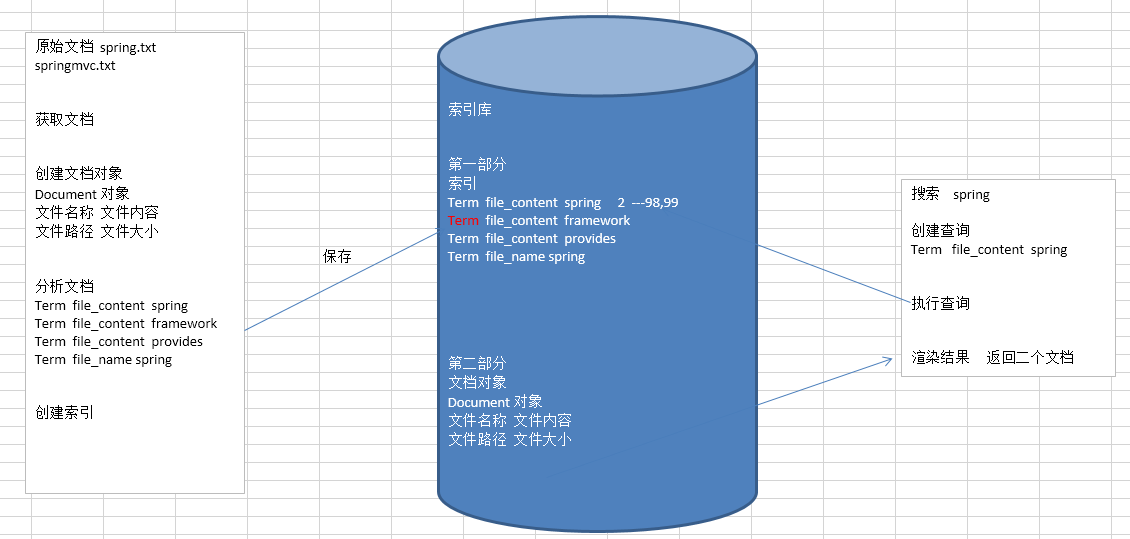
注意: 创建索引是对语汇单元索引,通过词语找文档,这种索引的结构叫倒排索引结构。
传统方法是根据文件找到该文件的内容,在文件内容中匹配搜索关键字,这种方法是顺
序扫描方法,数据量大、搜索慢。
倒排索引结构是通过内容找文档,如下图:
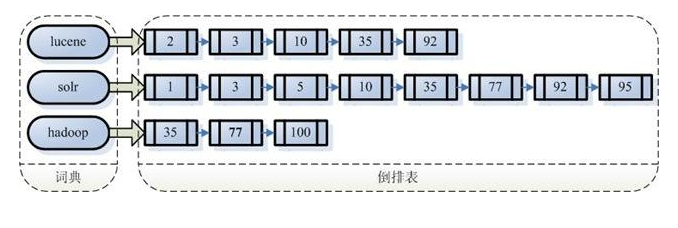
倒排索引结构也叫反向索引结构,包括索引和文档两个部分,索引即词汇表,它的规模较小,而文档集合较大。
入门代码实现
<project xmlns="http://maven.apache.org/POM/4.0.0" xmlns:xsi="http://www.w3.org/2001/XMLSchema-instance"

  xsi:schemaLocation="http://maven.apache.org/POM/4.0.0 http://maven.apache.org/xsd/maven-4.0.0.xsd">

  <modelVersion>4.0.0</modelVersion>

  <groupId>com.chen</groupId>

  <artifactId>lucene</artifactId>

  <version>1.0-SNAPSHOT</version>

  <packaging>jar</packaging>

  <name>lucene</name>

  <url>http://maven.apache.org</url>

  <properties>

    <project.build.sourceEncoding>UTF-8</project.build.sourceEncoding>

  </properties>

  <dependencies>

    <dependency>

      <groupId>junit</groupId>

      <artifactId>junit</artifactId>

      <version>3.8.1</version>

      <scope>test</scope>

    </dependency>

    <!-- https://mvnrepository.com/artifact/org.apache.lucene/lucene-core -->

    <dependency>

      <groupId>org.apache.lucene</groupId>

      <artifactId>lucene-core</artifactId>

      <version>7.2.1</version>

    </dependency>

    <!-- https://mvnrepository.com/artifact/org.apache.lucene/lucene-queryparser -->

    <dependency>

      <groupId>org.apache.lucene</groupId>

      <artifactId>lucene-queryparser</artifactId>

      <version>7.2.1</version>

    </dependency>

    <!-- https://mvnrepository.com/artifact/org.apache.lucene/lucene-analyzers-common -->

    <dependency>

      <groupId>org.apache.lucene</groupId>

      <artifactId>lucene-analyzers-common</artifactId>

      <version>7.2.1</version>

    </dependency>

    <!-- https://mvnrepository.com/artifact/commons-io/commons-io -->

    <dependency>

      <groupId>commons-io</groupId>

      <artifactId>commons-io</artifactId>

      <version>2.6</version>

    </dependency>

    <dependency>

      <groupId>junit</groupId>

      <artifactId>junit</artifactId>

      <version>RELEASE</version>

    </dependency>

  </dependencies>

  <build>

    <plugins>

      <plugin>

        <groupId>org.apache.maven.plugins</groupId>

        <artifactId>maven-compiler-plugin</artifactId>

        <version>3.6.0</version>

        <configuration>

          <source>1.8</source>

          <target>1.8</target>

        </configuration>

      </plugin>

    </plugins>

  </build>

</project>
创建索引
Field类
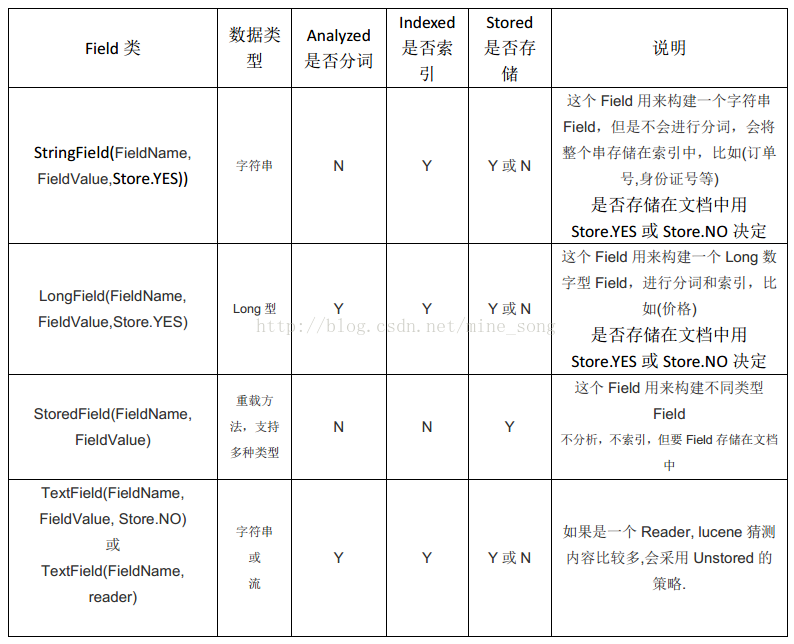
注在该版本中已经抛弃了LongField方法
  @Test

    public void createIndex() throws Exception{

//        第一步; 创建一个java工程,并导入jar包。

//        第二步: 创建一个indexwriter对象。

//        1) 指定索引库的存放位置Directory对象

        Directory directory = FSDirectory.open(Paths.get("F:\\lucene\\indexDatabase"));

//        2) 指定一个分听器,对文档内容进行分析。

        IndexWriterConfig config = new IndexWriterConfig(new StandardAnalyzer());

        IndexWriter indexWriter = new IndexWriter(directory,config);

//        第四步: 创建field对象,将field添加到document对象中。

        File filedir = new File("F:\\lucene\\document");

        if(filedir.exists() && filedir.isDirectory()){

            File[] files = filedir.listFiles();

            for (File file:files) {

//        第三步,创|建document对象。

                Document document = new Document();

                //获取文件的名称

                String fileName = file.getName();

                //创建textfield,保存文件名(key,value,是否存储)

                TextField fileNameField = new TextField("fileName",fileName, Field.Store.YES);

                //文件大小

                long fileSize = FileUtils.sizeOf(file);

//                new NumericDocValuesField("fileSize",fileSize);

                SortedNumericDocValuesField fileSizeField = new SortedNumericDocValuesField("fileSize", fileSize);

                //文件路径

                String filePath = file.getPath();

                StoredField filePathField = new StoredField("filePath", filePath);

                //文件内容

                String fileContent = FileUtils.readFileToString(file,"gbk");

                TextField fileContentField = new TextField("fileContent", fileContent, Field.Store.YES);

                document.add(fileNameField);

                document.add(fileSizeField);

                document.add(filePathField);

                document.add(fileContentField);

//        第五步: 使用indexwriter对象将document对象写入索引库,此过程进行索引创建。并将索引和document对象写) 索引库。

                indexWriter.addDocument(document);

            }

        }

//        第六步: 关闭IndexWriter对象。

        indexWriter.close();

    }
查询索引
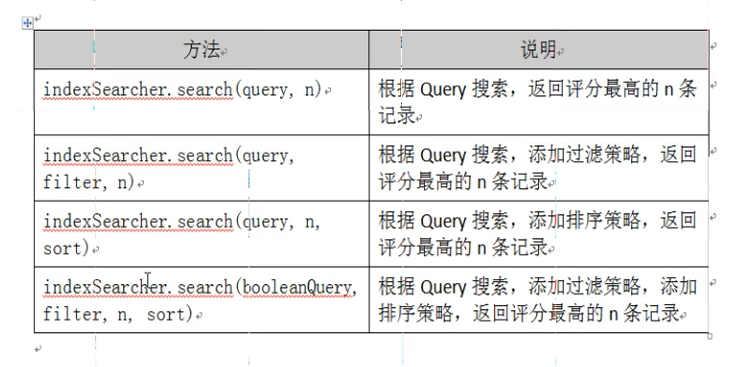
根据查询语法在倒排索引词典表中分别找出对应搜索词的索引,从而找到索引所链接的文档链表。
比如搜索语法为“fileName:lucee 表示搜索出fileName 域中包含Lucene 的文档。
搜索过程就是在索引上查找域为fileName,并且关键字为Llucene 的term,并根据term 找到文档id 列表。
@Test

    public void testSearcher() throws IOException {

//        第一步: 创建一个Directory 对象,也就是索引库存放的位置。

        Directory directory = FSDirectory.open(Paths.get("F:\\lucene\\indexDatabase"));

//        第二步: 创建一个indexReader 对象,需要指定Directory 对象。

        IndexReader indexReader = DirectoryReader.open(directory);

//        第三步: 创建一个indexsearcher 对象,需要指定InclexReader 对象。

        IndexSearcher indexSearcher = new IndexSearcher(indexReader);

//        第四步: 创建一个TermQuery对象,指定查询的域和查询的关键词。

//        Term term = new Term("fileName", "java");

        Term term = new Term("fileContent", "store");

        Query query = new TermQuery(term);

//        第五步: 执行查询。

        TopDocs topDocs = indexSearcher.search(query, 13);

//        第六步: 返回查询结果。遍历查询结果并输出。

        ScoreDoc[] scoreDocs = topDocs.scoreDocs;

        for (ScoreDoc doc : scoreDocs) {

            int docIndex = doc.doc;

            Document document = indexSearcher.doc(docIndex);

            String fileName = document.get("fileName");

            System.out.println(fileName);

            String fileSize = document.get("fileSize");

            System.out.println(fileSize);

            String filePath = document.get("filePath");

            System.out.println(filePath);

            String fileContent = document.get("fileContent");

            System.out.println(fileContent);

            System.out.println("==========================");

        }

//        第七步: 关闭IndexReader 对象。

        indexReader.close();

    }
lucene_01_入门程序的更多相关文章
- mybatis入门_mybatis基本原理以及入门程序
一.传统jdbc存在的问题 1.创建数据库的连接存在大量的硬编码, 2.执行statement时存在硬编码. 3.频繁的开启和关闭数据库连接,会严重影响数据库的性能,浪费数据库的资源. 4.存在大量的 ...
- 1.struts2原理和入门程序
Struts2是一个MVC的Web应用框架,是在Struts1和WebWork发展起来的,以WebWork为核心,采取拦截器机制来处理用户请求. 原理图: 分析步骤: 1.用户发送一个请求 2.请求的 ...
- springMVC2 1入门程序
1入门程序 .1需求 实现商品列表查询 .2需要的jar包 使用spring3.2.0(带springwebmvc模块) .1前端控制器 在web.xml中配置: <?xml version=& ...
- struts2入门程序
struts2入门程序 1.示例 搭建编程环境就先不说了,这里假设已经搭建好了编程环境,并且下好了strut2的jar包,接下来程序. 1.1 新建web项目 点击File->New->D ...
- Spring+SpringMVC+MyBatis深入学习及搭建(十二)——SpringMVC入门程序(一)
转载请注明出处:http://www.cnblogs.com/Joanna-Yan/p/6999743.html 前面讲到:Spring+SpringMVC+MyBatis深入学习及搭建(十一)——S ...
- springmvc(一) springmvc框架原理分析和简单入门程序
springmvc这个框架真的非常简单,感觉比struts2还更简单,好好沉淀下来学习~ --WH 一.什么是springmvc? 我们知道三层架构的思想,并且如果你知道ssh的话,就会更加透彻的理解 ...
- python web入门程序
python2.x web入门程序 #!/usr/bin/python # -*- coding: UTF-8 -*- # 只在python2.x 有效 import os #Python的标准库中的 ...
- Maven01——简介、安装配置、入门程序、项目构建和依赖管理
1 Maven的简介 1.1 什么是maven 是apache下的一个开源项目,是纯java开发,并且只是用来管理java项目的 Svn eclipse maven量级 1.2 Maven好处 同 ...
- ssm整合快速入门程序(一)
整合基础说明 spring 是一个开放源代码的设计层面框架,他解决的是业务逻辑层和其他各层的松耦合问题,因此它将面向接口的编程思想贯穿整个系统应用.Spring是于2003 年兴起的一个轻量级的Jav ...
随机推荐
- Hadoop Web项目--Mahout0.10 MR算法集锦
1. 涉及技术及下载 项目开发使用到的软件有:Myeclipse2014,JDK1.8.Hadoop2.6,MySQL5.6.EasyUI1.3.6,jQuery2.0,Spring4.1.3,Hib ...
- 查看scn headroom变化趋势的几种方法
查看scn headroom变化趋势的几种方法 scn headroom问题,本文不做解释. 本文为自己的总结,脚本来自于oracle sr技术project师. 转载请注明出处http://blog ...
- bzoj3033 太鼓达人——欧拉图搜索
题目:https://www.lydsy.com/JudgeOnline/problem.php?id=3033 考虑那 (1<<k) 个数,要形成答案,必然是相邻两个数间有 k-1 个重 ...
- Alignment(dp)
http://poj.org/problem?id=1836 求两遍最长上升子序列,顺序求一遍,逆序求一遍. #include <stdio.h> #include <string. ...
- Python 43 视图 、sql注入问题 、事务 、存储过程
一:视图 1 视图是什么? 本质是一张虚拟的表,他的数据来自select语句 创建视图 create view test_view select *from t1; 2 有什么用? 原表安全 案例: ...
- Hadoop一主一从部署(2)
Hadoop部署一主一从(2) 1.关闭防火墙和Linux守护进程 执行命令: iptables -F setenforce 0 2.对Hadoop集群进行初始化,在namenode(主机)上执行命令 ...
- python的搜索路径与包(package)
python的搜索路径其实是一个列表,它是指导入模块时,python会自动去找搜索这个列表当中的路径,如果路径中存在要导入的模块文件则导入成功,否则导入失败: >>> import ...
- LeetCode Weekly Contest 28
1. 551. Student Attendance Record I 2. 552. Student Attendance Record II hihocode原题,https://hihocode ...
- Leetcode0024--Swap Nodes in Pairs 链表配对交换
[转载请注明]http://www.cnblogs.com/igoslly/p/8707274.html 来看一下题目: Given a linked list, swap every two adj ...
- JavaOO小结二,及MySQL小结
流按照传输内容分有几种?各自的父类是什么? 流按照传输内容有 字节流.字符流.对象流.但其本质都是字节流.字符流和对象流是在字节流基础上作了一层封装,以便更好对字符和对象进行操作. 字节流的父类:In ...