
spring(二) AOP注入
AOP概念
l AOP采取横向抽取机制,取代了传统纵向继承体系重复性代码
l 经典应用:事务管理、性能监视、安全检查、缓存 、日志等
l Spring AOP使用纯Java实现,不需要专门的编译过程和类加载器,在运行期通过代理方式向目标类织入增强代码
l AspectJ是一个基于Java语言的AOP框架,Spring2.0开始,Spring AOP引入对Aspect的支持,AspectJ扩展了Java语言,提供了一个专门的编译器,在编译时提供横向代码的织入
Aop的实现原理
l aop底层将采用代理机制进行实现。
专业术语
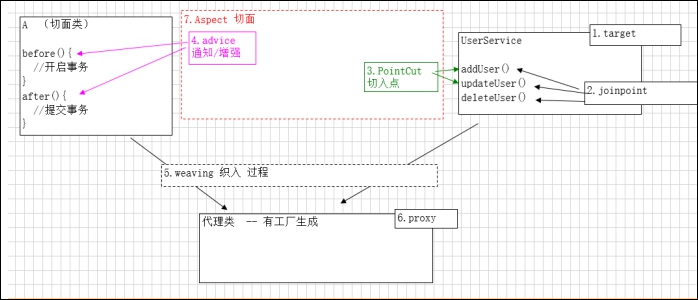
1.target:目标类,需要被代理的类。例如:UserService
2.Joinpoint(连接点):所谓连接点是指那些可能被拦截到的方法。例如:所有的方法
3.PointCut 切入点:已经被增强的连接点。例如:addUser()
4.advice 通知/增强,增强代码。例如:after、before
5. Weaving(织入):是指把增强advice应用到目标对象target来创建新的代理对象proxy的过程.
6.proxy 代理类
7. Aspect(切面): 是切入点pointcut和通知advice的结合
一个线是一个特殊的面。
一个切入点和一个通知,组成成一个特殊的面。
1.execution() 用于描述方法 【掌握】
语法:execution(修饰符 返回值 包.类.方法名(参数) throws异常)
修饰符,一般省略
public 公共方法
* 任意
返回值,不能省略
void 返回没有值
String 返回值字符串
* 任意
包,[省略]
com.itheima.crm 固定包
com.itheima.crm.*.service crm包下面子包任意 (例如:com.itheima.crm.staff.service)
com.itheima.crm.. crm包下面的所有子包(含自己)
com.itheima.crm.*.service.. crm包下面任意子包,固定目录service,service目录任意包
类,[省略]
UserServiceImpl 指定类
*Impl 以Impl结尾
User* 以User开头
* 任意
方法名,不能省略
addUser 固定方法
add* 以add开头
*Do 以Do结尾
* 任意
(参数)
() 无参
(int) 一个整型
(int ,int) 两个
(..) 参数任意
throws ,可省略,一般不写。
2.within:匹配包或子包中的方法(了解)
within(com.itheima.aop..*)
3.this:匹配实现接口的代理对象中的方法(了解)
this(com.itheima.aop.user.UserDAO)
4.target:匹配实现接口的目标对象中的方法(了解)
target(com.itheima.aop.user.UserDAO)
5.args:匹配参数格式符合标准的方法(了解)
args(int,int)
6.bean(id) 对指定的bean所有的方法(了解)
bean('userServiceId')
=======================================================================================
实例 :AOP基于xml配置开发
UserAOP.xml
 <?xml version="1.0" encoding="UTF-8"?>

 <beans xmlns="http://www.springframework.org/schema/beans"

     xmlns:xsi="http://www.w3.org/2001/XMLSchema-instance"

     xmlns:aop="http://www.springframework.org/schema/aop" xsi:schemaLocation="

         http://www.springframework.org/schema/beans

         http://www.springframework.org/schema/beans/spring-beans.xsd

         http://www.springframework.org/schema/aop

         http://www.springframework.org/schema/aop/spring-aop.xsd">

     <bean id="aspectUser" class="com.spring_aop1.AspectUser"></bean>

     <bean id="user" class="com.spring_aop1.User"></bean>

     <aop:config>

         <!-- expression="execution(返回值  包名.类名.方法名(参数类型))   id="任意":切入点名  -->

         <aop:pointcut expression="execution(* com.spring_aop1.*.*(..))" id="myPointcut"/>

         <aop:aspect ref="aspectUser">

             <aop:before method="password" pointcut-ref="myPointcut"/>

             <aop:after-returning method="after" pointcut-ref="myPointcut" returning="obj"/>

         <!-- <aop:around method="around" pointcut-ref="myPointcut" /> -->

             <aop:around method="aroundR" pointcut-ref="myPointcut" />

             <aop:after-throwing method="throwable" pointcut-ref="myPointcut" throwing="e"/>

         </aop:aspect>

     </aop:config>

 </beans>
User.java
 package com.spring_aop1;

 public class User {

     private String str;

     public String getStr() {

         return str;

     }

     public void setStr(String str) {

         this.str = str;

     }

     public void insert(){

         System.out.println("insert====ok");

     }

     public void delete(){

         System.out.println("delete====ok");

     }

     public void update(){

         System.out.println("update====ok");

     }

     public void selete(){

         System.out.println("insert====ok");

     }

 }
AspectUser.java
 package com.spring_aop1;

 import org.aspectj.lang.JoinPoint;

 import org.aspectj.lang.ProceedingJoinPoint;

 public class AspectUser {

     /**

      *  定义一个前置通知

      * */

     public void password(){

         System.out.println("前置通知:密码验证=====成功");

     }

     /**

      *  定义一个后置通知(可得方法返回值)

      *  @param jp  execution(void com.spring_aop.User.save())

      *  @param obj

      * */

     public void after(JoinPoint jp,Object obj){

         String name = jp.getSignature().getName();

         System.out.println("后置通知:after获取一个返回值类型====切入点");

         System.out.println("after返回值信息为:"+name);

     }

     /**

      *  定义一个环绕通知

      *  @param pjp  execution(void com.spring_aop.User.save())

      * */

     public void around(ProceedingJoinPoint pjp) throws Throwable{

         System.out.println("环绕通知:around执行环绕通知前执行");

         pjp.proceed();

         System.out.println("环绕通知:around执行环绕通知后执行");

     }

     /**

      *  定义一个环绕通知(可得方法返回值)

      * @throws Throwable

      * */

     public Object aroundR(ProceedingJoinPoint pjp) throws Throwable{

         System.out.println("环绕通知:around执行环绕通知前执行");

         Object obj = pjp.proceed();

         System.out.println("环绕通知:around执行环绕通知后执行");

         String s = pjp.getSignature().getName();

         System.out.println("around返回值的类型:"+obj+"  around返回方法名:"+s);

         return obj;

     }

     /**

      *  定义一个异常通知(可得方法返回值)

      * @throws Throwable

      * */

     public void throwable(JoinPoint jp,Throwable e){

         System.out.println("到我这里来,说明 你发生了异常======");

     }

 }
Test.java
 package com.spring_aop1;

 import org.springframework.context.ApplicationContext;

 import org.springframework.context.support.ClassPathXmlApplicationContext;

 public class UserTest {

     public static void main(String[] args) {

         String str = "com/spring_aop1/UserAop.xml";

         ApplicationContext context = new ClassPathXmlApplicationContext(str);

         User user = (User)context.getBean("user");

         user.insert();

     }

 }
实例 :AOP基于注解开发
UserAOP.xml
 <?xml version="1.0" encoding="UTF-8"?>

 <beans xmlns="http://www.springframework.org/schema/beans"

     xmlns:xsi="http://www.w3.org/2001/XMLSchema-instance"

     xmlns:aop="http://www.springframework.org/schema/aop"

     xmlns:context="http://www.springframework.org/schema/context" xsi:schemaLocation="

         http://www.springframework.org/schema/beans

         http://www.springframework.org/schema/beans/spring-beans.xsd

         http://www.springframework.org/schema/aop

         http://www.springframework.org/schema/aop/spring-aop.xsd

         http://www.springframework.org/schema/context

         http://www.springframework.org/schema/context/spring-context.xsd">

     <!-- 自动扫描 配置  扫描所有注解 :使用注解注入 -->

     <context:component-scan base-package="com.spring_aop2"></context:component-scan>

     <!-- 添加AOP的注解扫描 -->

     <aop:aspectj-autoproxy></aop:aspectj-autoproxy>

 </beans>
User.java
 package com.spring_aop2;

 import org.springframework.stereotype.Component;

 @Component(value="user")

 public class User {

     private String str;

     public String getStr() {

         return str;

     }

     public void setStr(String str) {

         this.str = str;

     }

     public void insert(){

         System.out.println("insert====ok");

     }

     public void delete(){

         System.out.println("delete====ok");

     }

     public void update(){

         System.out.println("update====ok");

         int i = 1/0;

     }

     public void selete(){

         System.out.println("insert====ok");

     }

 }
AspectUser.java
 package com.spring_aop2;

 import org.aspectj.lang.JoinPoint;

 import org.aspectj.lang.ProceedingJoinPoint;

 import org.aspectj.lang.annotation.After;

 import org.aspectj.lang.annotation.AfterReturning;

 import org.aspectj.lang.annotation.AfterThrowing;

 import org.aspectj.lang.annotation.Around;

 import org.aspectj.lang.annotation.Aspect;

 import org.aspectj.lang.annotation.Before;

 import org.aspectj.lang.annotation.Pointcut;

 import org.springframework.stereotype.Component;

 @Component("aspectUser") //组件

 @Aspect  //声明这是一个切面类

 public class AspectUser {

     /**

      *    <aop:pointcut

      *        expression="execution(* com.spring_aop2.*.*(..))"

      *    id="myPointcut" />

      * */

     @Pointcut("execution(* com.spring_aop2.*.*(..))")

     private void myPoint(){}

     /**

      *  定义一个前置通知

      * */

     @Before("execution(* com.spring_aop2.*.*(..))") //指向切入点的Id(私有方法的方法名)

     public void password(){

         System.out.println("前置通知:密码验证=====成功");

     }

     /**

      *  定义一个后置通知(可得方法返回值)

      *  @param jp  execution(void com.spring_aop.User.save())

      *  @param obj

      * */

     @AfterReturning(value="myPoint()",returning="obj")

     public void after(JoinPoint jp,Object obj){

         String name = jp.getSignature().getName();

         System.out.println("后置通知:获取一个返回值类型====切入点");

         System.out.println("after返回值信息为:"+name);

     }

     /**

      *  定义一个环绕通知

      *  @param pjp  execution(void com.spring_aop.User.save())

      * */

     @Around("execution(* com.spring_aop.*.*(..))")

     public void around(ProceedingJoinPoint pjp) throws Throwable{

         System.out.println("环绕通知:around执行环绕通知前执行");

         pjp.proceed();

         System.out.println("环绕通知:around执行环绕通知后执行");

     }

     /**

      *  定义一个环绕通知(可得方法返回值)

      * @throws Throwable

      * */

     public Object aroundR(ProceedingJoinPoint pjp) throws Throwable{

         System.out.println("环绕通知:around执行环绕通知前执行");

         Object obj = pjp.proceed();

         System.out.println("环绕通知:around执行环绕通知后执行");

         String s = pjp.getSignature().getName();

         System.out.println("around返回值的类型:"+obj+"  around返回方法名:"+s);

         return obj;

     }

     /**

      *  定义一个异常通知(可得方法返回值)

      * @throws Throwable

      * */

     @AfterThrowing(value="myPoint()",throwing="e")

     public void throwable(JoinPoint jp,Throwable e){

         System.out.println("到我这里来,说明 你发生了异常======");

     }

 }
Test.java
 package com.spring_aop2;

 import org.springframework.context.ApplicationContext;

 import org.springframework.context.support.ClassPathXmlApplicationContext;

 public class UserTest {

     public static void main(String[] args) {

         String str = "com/spring_aop2/UserAop.xml";

         ApplicationContext context = new ClassPathXmlApplicationContext(str);

         User user = (User)context.getBean("user");

         user.insert();

         //user.update();

     }

 }
spring(二) AOP注入的更多相关文章
- spring(二) AOP之AspectJ框架的使用
前面讲解了spring的特性之一,IOC(控制反转),因为有了IOC,所以我们都不需要自己new对象了,想要什么,spring就给什么.而今天要学习spring的第二个重点,AOP.一篇讲解不完,所以 ...
- Spring之AOP二
在Spring之AOP一中使用动态代理将日志打印功能注入到目标对象中,其实这就是AOP实现的原理,不过上面只是Java的实现方式.AOP不管什么语言它的几个主要概念还是有必要了解一下的. 一.AOP概 ...
- Spring(二)--IoC&AOP
IOC 一.IOC概述: 一般指控制反转(inversion of Control),把创建对象的权利交给框架,Ioc容器控制对象,是框架的重要特征,并非是面向对象编程的专用术语.它包括依赖注入(DI ...
- spring源码分析(二)Aop
创建日期:2016.08.19 修改日期:2016.08.20-2016.08.21 交流QQ:992591601 参考资料:<spring源码深度解析>.<spring技术内幕&g ...
- Spring学习笔记(二)Spring基础AOP、IOC
Spring AOP 1. 代理模式 1.1. 静态代理 程序中经常需要为某些动作或事件作下记录,以便在事后检测或作为排错的依据,先看一个简单的例子: import java.util.logging ...
- 框架应用:Spring framework (二) - AOP技术
基础概念 线程中的方法栈 java程序虚拟机启动时会载入程序码,虚拟机会为每一条正在运行的线程生成一个方法调用栈,线程以方法运行为执行单位. AOP概念以及目标 AOP是面向切面编程,其实就是在不修改 ...
- spring学习(二) ———— AOP之AspectJ框架的使用
前面讲解了spring的特性之一,IOC(控制反转),因为有了IOC,所以我们都不需要自己new对象了,想要什么,spring就给什么.而今天要学习spring的第二个重点,AOP.一篇讲解不完,所以 ...
- SpringBoot系列: 理解 Spring 的依赖注入(二)
==============================Spring 容器中 Bean 的名称==============================声明 bean 有两个方式, 一个是 @B ...
- Spring中AOP主要用来做什么。Spring注入bean的方式。什么是IOC,什么是依赖注入
Spring中主要用到的设计模式有工厂模式和代理模式. IOC:Inversion of Control控制反转,也叫依赖注入,通过 sessionfactory 去注入实例:IOC就是一个生产和管理 ...
- 09 Spring框架 AOP (二) 高级用法
上一篇文章我们主要讲了一点关于AOP编程,它的动态考虑程序的运行过程,和Spring中AOP的应用,前置通知,后置通知,环绕通知和异常通知,这些都是Spring中AOP最简单的用法,也是最常用的东西, ...
随机推荐
- PIL 中的 Image 模块
转载:http://www.cnblogs.com/way_testlife/archive/2011/04/20/2022997.html PIL 中的 Image 模块 本文是节选自 PIL ...
- linux中shell编辑小技巧
一.循环1到100 ..};do echo $i done 二.获取100以内的随机值 ] 三.截取字符串 demo= :} #截取3位字符echo ${demo:1} #截取1到最后的字符 希望大家 ...
- 大数据(量上GB的)查看命令
大数据查看指令 cmd中(tab键可补全) type 文件名:全部查看 more 文件名:Enter键,按一下查看一页
- Python开发WebService:REST,web.py,eurasia,Django
Python开发WebService:REST,web.py,eurasia,Django 博客分类: Python PythonRESTWebWebServiceDjango 对于今天的WebSe ...
- java基础语法2-运算符与流程控制
关键字-标识符-常量和变量-运算符-流程控制-方法-数组 5 运算符 算术运算符Arithmetic Operators 赋值运算符Assignment Operators 比较运算符Compare ...
- python的xlrd、xlwt模块、openpyxl /pymsql使用
xlrd模块: https://www.cnblogs.com/machangwei-8/p/10736528.html#_label0 xlwt模块 https://www.cnblogs.com/ ...
- MYSQL<四>
-- ########## 01.ER关系 ########## -- ER关系(逻辑描述) -- A:E---Entity简写,实体,具有相同属性(特征)的对象归为同一实体 -- Attribute ...
- Springboot(2.0.0.RELEASE)+spark(2.1.0)框架整合到jar包成功发布(原创)!!!
一.前言 首先说明一下,这个框架的整合可能对大神来说十分容易,但是对我来说十分不易,踩了不少坑.虽然整合的时间不长,但是值得来纪念下!!!我个人开发工具比较喜欢IDEA,创建的springboot的j ...
- MySQL5.7数据转移至SQL Server详解
本文链接:https://blog.csdn.net/qq_37308779/article/details/80679358一.安装MySQL ODBC驱动为MySQL安装Connector/ODB ...
- 导出csv文件(使用a标签)
https://blog.csdn.net/oscar999/article/details/16342699 productsCSV(e) { const { download } = this ...