
dubbo源码分析三:consumer注册及生成代理对象
本章我们将分析一下consumer向注册中心注册,并获取服务端相应的信息,根据这些信息生产代理对象的过程和源码。
1.类图
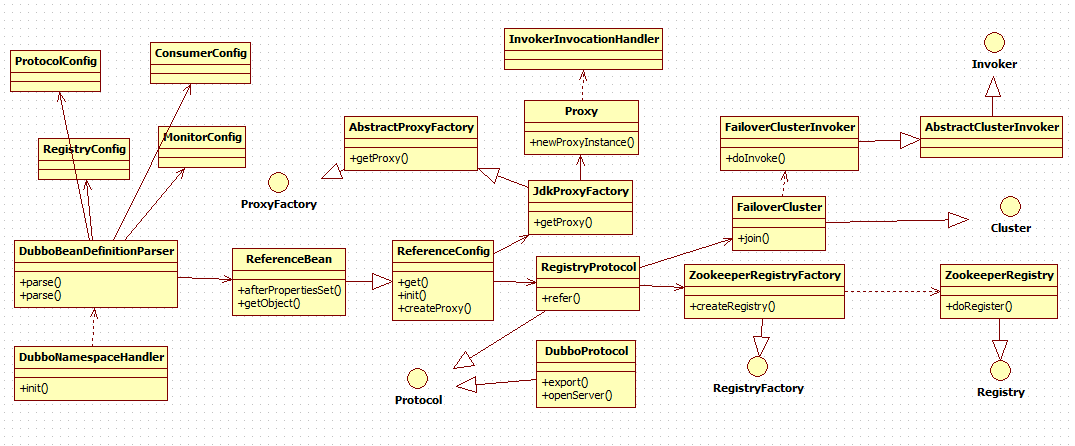
上图展示了部分消费者注册及生成代理对象过程中需要使用到的类和接口,其中:
spring适配涉及到的类:DubboNamespaceHandler、DubboBeanDefinitionParser、ReferenceBean;
配置信息存储:ReferenceConfig、RegistryConfig、MonitorConfig、ProtocolConfig、ConsumerConfig等;
应用协议:Protocol、DubboProtocol、HessianProtocol、ThriftProtocol、RmiProtocol、AbstractProxyProtocol、AbstractProtocol等;
注册相关:RegistryProtocol、RegistryFactory、Registry、ZookeeperRegistryFactory、ZookeeperRegistry等
代理和集群相关:Proxy、JdcProxyFactory、AbstractProxyFactory、InvokerInvocationHandler、Cluster、FailoverCluster、FailoverClusterInvoker、AbstractClusterInvoker、Invoker等;
2.时序图
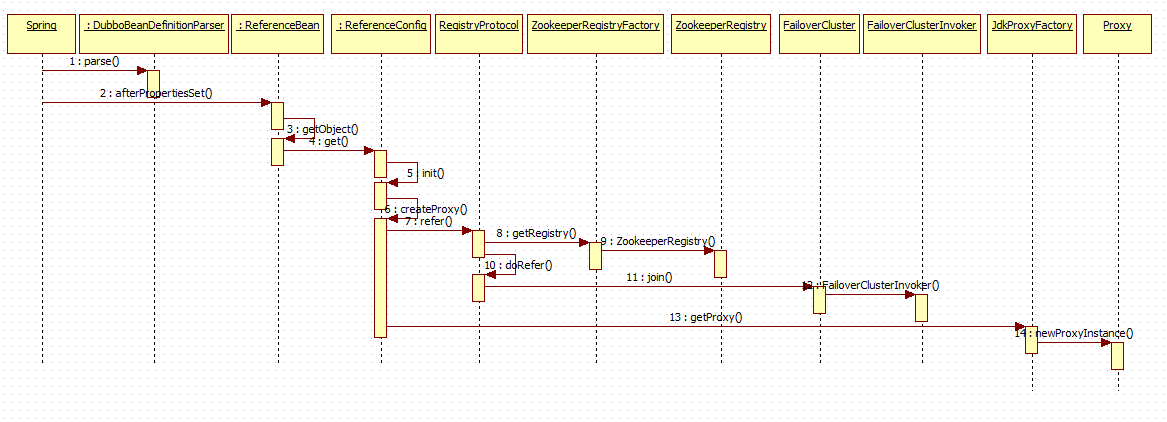
我们通过时序图来分析一下在consumer注册及生产代理对象的过程中,上面的类是如何串联在一起的:
a.spring容器通过DubboBeanDefinitionParser类的对象来解析xml文件中的标签,生成ReferenceConfig等配置对象;
b.ReferenceConfig的init()等方法被调用;
c.通过spi机制确定Protocol接口的实现对象为RegistryProtocol的对象,调用它的refer()方法;
d.通过spi机制确定RegistryFactory接口的实现对象为ZookeeperRegistryFactory,调用它的getRegistry()方法,生产ZookeeperRegistry对象;
e.调用RegistryProtocol对象的doRefer()方法后,并调用FailoverCluster的join()方法,生成FailoverClusterInvoker的对象;
f.调用JdkProxyFactory的getProxy()方法,生成consumer使用接口的代理对象。
3.核心代码
a.ReferenceConfig
    private void init() {

	    if (initialized) {//判断是否初始化完毕

	        return;

	    }

	    initialized = true;

    	if (interfaceName == null || interfaceName.length() == 0) {

    	    throw new IllegalStateException("<dubbo:reference interface=\"\" /> interface not allow null!");

    	}

    	// 获取消费者全局配置

    	checkDefault();//检查

        appendProperties(this);

        if (getGeneric() == null && getConsumer() != null) {

            setGeneric(getConsumer().getGeneric());

        }

        if (ProtocolUtils.isGeneric(getGeneric())) {

            interfaceClass = GenericService.class;

        } else {

            try {

				interfaceClass = Class.forName(interfaceName, true, Thread.currentThread()

				        .getContextClassLoader());

			} catch (ClassNotFoundException e) {

				throw new IllegalStateException(e.getMessage(), e);

			}

            checkInterfaceAndMethods(interfaceClass, methods);

        }

        String resolve = System.getProperty(interfaceName);

        String resolveFile = null;

        if (resolve == null || resolve.length() == 0) {

	        resolveFile = System.getProperty("dubbo.resolve.file");

	        if (resolveFile == null || resolveFile.length() == 0) {

	        	File userResolveFile = new File(new File(System.getProperty("user.home")), "dubbo-resolve.properties");

	        	if (userResolveFile.exists()) {

	        		resolveFile = userResolveFile.getAbsolutePath();

	        	}

	        }

	        if (resolveFile != null && resolveFile.length() > 0) {

	        	Properties properties = new Properties();

	        	FileInputStream fis = null;

	        	try {

	        	    fis = new FileInputStream(new File(resolveFile));

					properties.load(fis);

				} catch (IOException e) {

					throw new IllegalStateException("Unload " + resolveFile + ", cause: " + e.getMessage(), e);

				} finally {

				    try {

                        if(null != fis) fis.close();

                    } catch (IOException e) {

                        logger.warn(e.getMessage(), e);

                    }

				}

	        	resolve = properties.getProperty(interfaceName);

	        }

        }

        if (resolve != null && resolve.length() > 0) {

        	url = resolve;

        	if (logger.isWarnEnabled()) {

        		if (resolveFile != null && resolveFile.length() > 0) {

        			logger.warn("Using default dubbo resolve file " + resolveFile + " replace " + interfaceName + "" + resolve + " to p2p invoke remote service.");

        		} else {

        			logger.warn("Using -D" + interfaceName + "=" + resolve + " to p2p invoke remote service.");

        		}

    		}

        }

        if (consumer != null) {

            if (application == null) {

                application = consumer.getApplication();

            }

            if (module == null) {

                module = consumer.getModule();

            }

            if (registries == null) {

                registries = consumer.getRegistries();//获取注册信息

            }

            if (monitor == null) {

                monitor = consumer.getMonitor();//获取监控信息

            }

        }

        if (module != null) {

            if (registries == null) {

                registries = module.getRegistries();

            }

            if (monitor == null) {

                monitor = module.getMonitor();

            }

        }

        if (application != null) {

            if (registries == null) {

                registries = application.getRegistries();

            }

            if (monitor == null) {

                monitor = application.getMonitor();

            }

        }

        checkApplication();

        checkStubAndMock(interfaceClass);

        Map<String, String> map = new HashMap<String, String>();

        Map<Object, Object> attributes = new HashMap<Object, Object>();

        map.put(Constants.SIDE_KEY, Constants.CONSUMER_SIDE);

        map.put(Constants.DUBBO_VERSION_KEY, Version.getVersion());

        map.put(Constants.TIMESTAMP_KEY, String.valueOf(System.currentTimeMillis()));

        if (ConfigUtils.getPid() > 0) {

            map.put(Constants.PID_KEY, String.valueOf(ConfigUtils.getPid()));

        }

        if (! isGeneric()) {

            String revision = Version.getVersion(interfaceClass, version);

            if (revision != null && revision.length() > 0) {

                map.put("revision", revision);

            }

            String[] methods = Wrapper.getWrapper(interfaceClass).getMethodNames();

            if(methods.length == 0) {

                logger.warn("NO method found in service interface " + interfaceClass.getName());

                map.put("methods", Constants.ANY_VALUE);

            }

            else {

                map.put("methods", StringUtils.join(new HashSet<String>(Arrays.asList(methods)), ","));

            }

        }

        map.put(Constants.INTERFACE_KEY, interfaceName);

        appendParameters(map, application);

        appendParameters(map, module);

        appendParameters(map, consumer, Constants.DEFAULT_KEY);

        appendParameters(map, this);

        String prifix = StringUtils.getServiceKey(map);

        if (methods != null && methods.size() > 0) {

            for (MethodConfig method : methods) {

                appendParameters(map, method, method.getName());

                String retryKey = method.getName() + ".retry";

                if (map.containsKey(retryKey)) {

                    String retryValue = map.remove(retryKey);

                    if ("false".equals(retryValue)) {

                        map.put(method.getName() + ".retries", "0");

                    }

                }

                appendAttributes(attributes, method, prifix + "." + method.getName());

                checkAndConvertImplicitConfig(method, map, attributes);

            }

        }

        //attributes通过系统context进行存储.

        StaticContext.getSystemContext().putAll(attributes);

        ref = createProxy(map);//获取代理对象

    }

	private T createProxy(Map<String, String> map) {

		URL tmpUrl = new URL("temp", "localhost", 0, map);

		final boolean isJvmRefer;

        if (isInjvm() == null) {

            if (url != null && url.length() > 0) { //指定URL的情况下,不做本地引用

                isJvmRefer = false;

            } else if (InjvmProtocol.getInjvmProtocol().isInjvmRefer(tmpUrl)) {

                //默认情况下如果本地有服务暴露,则引用本地服务.

                isJvmRefer = true;

            } else {

                isJvmRefer = false;

            }

        } else {

            isJvmRefer = isInjvm().booleanValue();

        }

		if (isJvmRefer) {

			URL url = new URL(Constants.LOCAL_PROTOCOL, NetUtils.LOCALHOST, 0, interfaceClass.getName()).addParameters(map);

			invoker = refprotocol.refer(interfaceClass, url);//获取invoker对象

            if (logger.isInfoEnabled()) {

                logger.info("Using injvm service " + interfaceClass.getName());

            }

		} else {

            if (url != null && url.length() > 0) { // 用户指定URL,指定的URL可能是对点对直连地址,也可能是注册中心URL

                String[] us = Constants.SEMICOLON_SPLIT_PATTERN.split(url);

                if (us != null && us.length > 0) {

                    for (String u : us) {

                        URL url = URL.valueOf(u);

                        if (url.getPath() == null || url.getPath().length() == 0) {

                            url = url.setPath(interfaceName);

                        }

                        if (Constants.REGISTRY_PROTOCOL.equals(url.getProtocol())) {

                            urls.add(url.addParameterAndEncoded(Constants.REFER_KEY, StringUtils.toQueryString(map)));

                        } else {

                            urls.add(ClusterUtils.mergeUrl(url, map));

                        }

                    }

                }

            } else { // 通过注册中心配置拼装URL

            	List<URL> us = loadRegistries(false);

            	if (us != null && us.size() > 0) {

                	for (URL u : us) {

                	    URL monitorUrl = loadMonitor(u);

                        if (monitorUrl != null) {

                            map.put(Constants.MONITOR_KEY, URL.encode(monitorUrl.toFullString()));

                        }

                	    urls.add(u.addParameterAndEncoded(Constants.REFER_KEY, StringUtils.toQueryString(map)));

                    }

            	}

            	if (urls == null || urls.size() == 0) {

                    throw new IllegalStateException("No such any registry to reference " + interfaceName  + " on the consumer " + NetUtils.getLocalHost() + " use dubbo version " + Version.getVersion() + ", please config <dubbo:registry address=\"...\" /> to your spring config.");

                }

            }

            for(URL invo : urls){

                System.out.println("invoker's url : "+invo.toFullString());

            }

            if (urls.size() == 1) {

                invoker = refprotocol.refer(interfaceClass, urls.get(0));//获取invoker对象

            } else {

                List<Invoker<?>> invokers = new ArrayList<Invoker<?>>();

                URL registryURL = null;

                for (URL url : urls) {

                    invokers.add(refprotocol.refer(interfaceClass, url));

                    if (Constants.REGISTRY_PROTOCOL.equals(url.getProtocol())) {

                        registryURL = url; // 用了最后一个registry url

                    }

                }

                if (registryURL != null) { // 有 注册中心协议的URL

                    // 对有注册中心的Cluster 只用 AvailableCluster

                    URL u = registryURL.addParameter(Constants.CLUSTER_KEY, AvailableCluster.NAME);

                    invoker = cluster.join(new StaticDirectory(u, invokers));

                }  else { // 不是 注册中心的URL

                    invoker = cluster.join(new StaticDirectory(invokers));

                }

            }

        }

		System.out.println("real invoker's url :"+invoker.getUrl().toFullString());

        Boolean c = check;

        if (c == null && consumer != null) {

            c = consumer.isCheck();

        }

        if (c == null) {

            c = true; // default true

        }

        if (c && ! invoker.isAvailable()) {

            throw new IllegalStateException("Failed to check the status of the service " + interfaceName + ". No provider available for the service " + (group == null ? "" : group + "/") + interfaceName + (version == null ? "" : ":" + version) + " from the url " + invoker.getUrl() + " to the consumer " + NetUtils.getLocalHost() + " use dubbo version " + Version.getVersion());

        }

        if (logger.isInfoEnabled()) {

            logger.info("Refer dubbo service " + interfaceClass.getName() + " from url " + invoker.getUrl());

        }

        // 创建服务代理

        return (T) proxyFactory.getProxy(invoker);

    }
dubbo源码分析三:consumer注册及生成代理对象的更多相关文章
- Dubbo源码剖析三之服务注册过程分析
Dubbo源码剖析二之注册中心 - 池塘里洗澡的鸭子 - 博客园 (cnblogs.com)中对注册中心进行了简单的介绍,对Dubbo整合Zookeeper链接源码进行了详细分析.本文接着对服务注册过 ...
- dubbo源码分析2-reference bean发起服务方法调用
dubbo源码分析1-reference bean创建 dubbo源码分析2-reference bean发起服务方法调用 dubbo源码分析3-service bean的创建与发布 dubbo源码分 ...
- dubbo源码分析一:整体分析
本文作为dubbo源码分析的第一章,先从总体上来分析一下dubbo的代码架构.功能及优缺点,注意,本文只分析说明开源版本提供的代码及功能. 1.dubbo的代码架构: spring适配层:常规的sp ...
- Dubbo 源码分析 - 服务调用过程
注: 本系列文章已捐赠给 Dubbo 社区,你也可以在 Dubbo 官方文档中阅读本系列文章. 1. 简介 在前面的文章中,我们分析了 Dubbo SPI.服务导出与引入.以及集群容错方面的代码.经过 ...
- Dubbo 源码分析 - 集群容错之 Cluster
1.简介 为了避免单点故障,现在的应用至少会部署在两台服务器上.对于一些负载比较高的服务,会部署更多台服务器.这样,同一环境下的服务提供者数量会大于1.对于服务消费者来说,同一环境下出现了多个服务提供 ...
- Dubbo 源码分析 - 集群容错之 Router
1. 简介 上一篇文章分析了集群容错的第一部分 -- 服务目录 Directory.服务目录在刷新 Invoker 列表的过程中,会通过 Router 进行服务路由.上一篇文章关于服务路由相关逻辑没有 ...
- Dubbo 源码分析 - 服务导出
1.服务导出过程 本篇文章,我们来研究一下 Dubbo 导出服务的过程.Dubbo 服务导出过程始于 Spring 容器发布刷新事件,Dubbo 在接收到事件后,会立即执行服务导出逻辑.整个逻辑大致可 ...
- Dubbo源码分析
Dubbo源码分析1 Dubbo源码分析2 dubbo源码阅读:rpc请求处理流程(1) 架构设计:系统间通信(17)——服务治理与Dubbo 中篇(分析) 13. Dubbo原理解析-注册中心之Zo ...
- dubbo源码分析6-telnet方式的管理实现
dubbo源码分析1-reference bean创建 dubbo源码分析2-reference bean发起服务方法调用 dubbo源码分析3-service bean的创建与发布 dubbo源码分 ...
随机推荐
- HTML meta标签总结与属性使用介绍
之前学习前端中,对meta标签的了解仅仅只是这一句. <meta charset="UTF-8"> 但是打开任意的网站,其head标签内都有一列的meta标签.比如我博 ...
- (转载)css垂直水平居中的整理
方法一 .demo1 { width:180px; height:180px; line-height:180px; *font-size:160px; border:1px solid #ddd; ...
- 面试后 follow up letter 分享
分享一下最近面试外企的follow up letter. Dear Mr. Xu, Thank you again for the time you and Mr. Guo spent wit ...
- visual studio中验证控件的使用
1.RequiredFieldValidator:验证一个必填字段,如果这个字段没填,那么,将不能提交信息. RequiredFieldValidator控件中,主要设置三个属性: (1)ErrorM ...
- TabControl控件中TabPage的显示和隐藏
TabPage里面含有方法Hide和Show,但没有任何作用,实际隐藏和显示需要使用如下2个方法 方法一:此方法比较简单 TabPageServo.Parent = Nothing //隐藏 Ta ...
- PHP框架_ThinkPHP数据库
目录 1.ThinkPHP数据库配置 2.ThinkPHP数据库实例化模型 3.ThinkPHP数据库CURD操作 4.ThinkPHP数据库连贯操作 1.ThinkPHP数据库配置 App/Conf ...
- rel=nofollow 是什么意思
nofollow是什么意思? nofollow是html标签的一个属性值,Google推荐使用nofollow,告诉机器(爬虫)无需追踪目标页,是指禁止蜘蛛爬行和传递权重,但是如果你是通过sitema ...
- php基础知识【函数】(7)url和ob函数
一.URl函数 1.urlencode -- 编码 URL 字符串 2.urldecode -- 解码已编码的 URL 字符串 3.rawurlencode -- 按照 RFC 1738 对 URL ...
- redis-消息订阅
使用办法: 订阅端: Subscribe 频道名称 发布端: publish 频道名称发布内容 客户端例子: redis > subscribe news Reading messages... ...
- Python 基础 文件操作
字符串与字节之间的转换 # utf-8 一个汉字 占三个字节 # gbk 一个汉字 占两个字节 # 字符串转换成字节 print(bytes('汉字', encoding='utf-8'))print ...