
java自定义注解实现前后台参数校验
2016.07.26
首先介绍些基本概念:
Annotations(also known as metadata)provide a formalized way to add information to your code so that you can easily use that data at some later point.
Annotations are partly motivated by a general trend toward combining metadata with source-code files,instead of keeping it in external documents. They are also a response to feature pressure from other languages like C#.
Annotations are one of the fundamental language changes introduced in Java SE5. They provide information that you need to fully describe your program, but that cannot be expressed in Java.Thus,annotations allow you to store extra information about your program in a format that is tested and verified by the compiler.Annotations can be used to generate descriptor files or even new class definitions and help ease the burden of writing "boilerplate" code.Using annotations,you can keep this metadata in the Java source code,and have the advantage of cleaner looking code,compile-time type checking and the annotation API to help build processing tools for your annotations.
---《Thinking in java》
1.java用@interface xx{}定义一个注解。
2.There are currently only three standard annotations(described earlier)(@Override @Deprecated @SuppressWarnings)and four meta-annotations defined in the Java language(@Target @Retention @Documented @Inherited):
@Retention(RetentionPolicy.SOURCE) // 注解仅存在于源码中,在class字节码文件中不包含
@Retention(RetentionPolicy.CLASS) // 默认的保留策略,注解会在class字节码文件中存在,但运行时无法获得
@Retention(RetentionPolicy.RUNTIME) // 注解会在class字节码文件中存在,在运行时可以通过反射获取到
(RUNTIME的值得注意下,因为意味着可以反射来获取)
@Target(ElementType.TYPE) // 接口、类、枚举、注解
@Target(ElementType.FIELD) // 字段、枚举的常量
@Target(ElementType.METHOD) // 方法
@Target(ElementType.PARAMETER) // 方法参数
@Target(ElementType.CONSTRUCTOR) // 构造函数
@Target(ElementType.LOCAL_VARIABLE) // 局部变量
@Target(ElementType.ANNOTATION_TYPE) // 注解
@Target(ElementType.PACKAGE) // 包
有一种做法就是在定义注解时加上@Taget(xx)和@Retention(RetentionPolicy.RUNTIME) ,但没有在注解中写方法,只是在运行时通过反射机制来获取注解,然后自己写相应逻辑(所谓注解解析器)
大概是类似的写法:
import java.lang.annotation.Documented;

import java.lang.annotation.ElementType;

import java.lang.annotation.Inherited;

import java.lang.annotation.Retention;

import java.lang.annotation.RetentionPolicy;

import java.lang.annotation.Target;

@Documented

@Inherited

@Target({ ElementType.FIELD, ElementType.METHOD })

@Retention(RetentionPolicy.RUNTIME)

public @interface Validate

{

    public int min() default 1;

    public int max() default 10;

    public boolean isNotNull() default true;

}
之后运行时,用反射获取注解,具体不谈。
之前在网上查找这方面技术文章找到的都是这种,给当时的我带来很大困惑。觉得不是我想要的。
关于Java 注解,在《java编程思想》一书里第十章有详细的介绍(包括@Retention(RetentionPolicy.RUNTIME)的方式,的注解处理器的例子),具体不多谈。
其实是可以通过@Constraint来限定自定义注解的方法。
@Constraint(validatedBy = xxxx.class)
下面是我做的 java自定义注解实现前后台参数校验 的代码示例:
package sonn.sonnannotation;

import java.lang.annotation.Documented;

import java.lang.annotation.ElementType;

import java.lang.annotation.Retention;

import java.lang.annotation.RetentionPolicy;

import java.lang.annotation.Target;

import javax.validation.Constraint;

import javax.validation.ConstraintValidator;

import javax.validation.ConstraintValidatorContext;

import javax.validation.Payload;

import sonn.util.StringUtill;

/**

* @ClassName: IsValidString

* @Description: 自定义注解实现前后台参数校验,判断是否包含非法字符

* @author 无名

* @date 2016-7-25 下午8:22:58

* @version 1.0

 */

@Target({ElementType.FIELD, ElementType.METHOD})

@Retention(RetentionPolicy.RUNTIME)

@Constraint(validatedBy = IsValidString.ValidStringChecker.class)

@Documented

public @interface IsValidString

{

    String message() default "The string is invalid.";

    Class<?>[] groups() default {};

    Class<? extends Payload>[] payload() default{};

    class ValidStringChecker implements ConstraintValidator<IsValidString,String>

    {

        @Override

        public void initialize(IsValidString arg0)

        {

        }

        @Override

        public boolean isValid(String strValue, ConstraintValidatorContext context)

        {

            if(StringUtill.isStringEmpty(strValue))

            {

                return true;

            }

            if(strValue.contains("<"))

            {

                return false;

            }

            return true;

        }

    }

}
上述代码,通过@Constraint(validatedBy = IsValidString.ValidStringChecker.class)限定了注解的方法逻辑---该注解类的名为ValidStringChecker的内部类。
而该内部类实现了ConstraintValidator<IsValidString,String>接口
官方文档是这样描述的:
Interface ConstraintValidator<A extends Annotation,T>
public interface ConstraintValidator<A extends Annotation,T>
Defines the logic to validate a given constraintAfor a given object typeT.Implementations must comply to the following restriction:
Tmust resolve to a non parameterized type- or generic parameters of
Tmust be unbounded wildcard types
The annotation
SupportedValidationTargetcan be put on aConstraintValidatorimplementation to mark it as supporting cross-parameter constraints. Check outSupportedValidationTargetandConstraintfor more information.
实现的isValid方法便是,该接口的校验方法。
试验一下效果,在要校验的实体类字段加上注解:

写文章页面,文章标题内加入'<'然后提交:
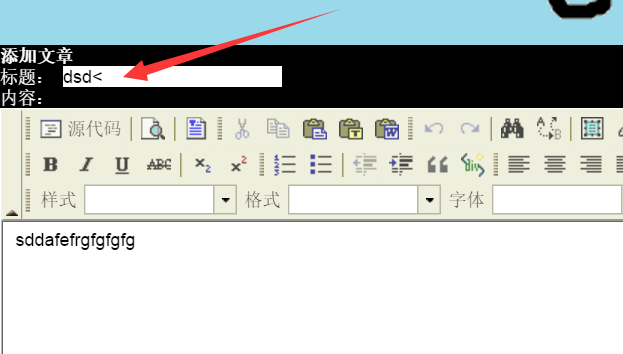
提交失败,报500错误,说明注解生效:

但这样还有问题,我的blog网站不能直接打印出报错信息。还是要搞一个error页面出来。
这个简单,web.xml下加入error页面路径,然后做一个页面即可:
<error-page>
<error-code>500</error-code>
<location>/error.jsp</location>
</error-page>
参考文章:
http://www.cnblogs.com/liangweiping/p/3837332.html
java自定义注解实现前后台参数校验的更多相关文章
- Java自定义注解源码+原理解释(使用Java自定义注解校验bean传入参数合法性)
Java自定义注解源码+原理解释(使用Java自定义注解校验bean传入参数合法性) 前言:由于前段时间忙于写接口,在接口中需要做很多的参数校验,本着简洁.高效的原则,便写了这个小工具供自己使用(内容 ...
- java自定义注解类
一.前言 今天阅读帆哥代码的时候,看到了之前没有见过的新东西, 比如java自定义注解类,如何获取注解,如何反射内部类,this$0是什么意思? 于是乎,学习并整理了一下. 二.代码示例 import ...
- java自定义注解注解方法、类、属性等等【转】
http://anole1982.iteye.com/blog/1450421 http://www.open-open.com/doc/view/51fe76de67214563b20b385320 ...
- java自定义注解知识实例及SSH框架下,拦截器中无法获得java注解属性值的问题
一.java自定义注解相关知识 注解这东西是java语言本身就带有的功能特点,于struts,hibernate,spring这三个框架无关.使用得当特别方便.基于注解的xml文件配置方式也受到人们的 ...
- Java自定义注解和运行时靠反射获取注解
转载:http://blog.csdn.net/bao19901210/article/details/17201173/ java自定义注解 Java注解是附加在代码中的一些元信息,用于一些工具在编 ...
- Java自定义注解的实现
Java自定义注解的实现,总共三步(eg.@RandomlyThrowsException): 1.首先编写一个自定义注解@RandomlyThrowsException package com.gi ...
- JAVA自定义注解 ------ Annotation
日常开发工作中,合理的使用注解,可以简化代码编写以及使代码结构更加简单,下面记录下,JAVA自定义注解的开发过程. 定义注解声明类. 编写注解处理器(主要起作用部分). 使用注解. 相关知识点介绍, ...
- SpringBoot Validation参数校验 详解自定义注解规则和分组校验
前言 Hibernate Validator 是 Bean Validation 的参考实现 .Hibernate Validator 提供了 JSR 303 规范中所有内置 constraint 的 ...
- Java 自定义注解 校验指定字段对应数据库内容重复
一.前言 在项目中,某些情景下我们需要验证编码是否重复,账号是否重复,身份证号是否重复等... 而像验证这类代码如下: 那么有没有办法可以解决这类似的重复代码量呢? 我们可以通过自定义注解校验的方式去 ...
随机推荐
- 探 寻 宝 藏--- DP
题目描述 传说HMH大沙漠中有一个M*N迷宫,里面藏有许多宝物.某天,Dr.Kong找到了迷宫的地图,他发现迷宫内处处有宝物,最珍贵的宝物就藏在右下角,迷宫的进出口在左上角.当然,迷宫中的通路不是平坦 ...
- sql server 远程连接不上解决思路
1.数据库是否允许远程连接: 1.1.0登陆SQL Server 2008(windows身份认证),登陆后右击,选择“属性”.左侧选择“安全性”,选中右侧的“SQL Server 和 Windows ...
- redis sentinel基本命令与参数
1.redis基本命令1)获取sentinel的状态(1)info查看sentinel的状态(2)sentinel masters 获取sentinel中监控的所有master的节点(3)sentin ...
- mysql下载安装
1.下载 下载地址:http://dev.mysql.com/downloads/mysql/ 根据电脑配置来选,我选了 windows(x86,64-bit),ZIP Archive这个,点击Dow ...
- ngixn编译安装时,pcre的处理
nginx编译时pcre会提示找不到libpcre.so.1 ./configure --hlep --without-pcre disable PCRE library usage 不使用pcr ...
- shell 条件判断语句整理
常用系统变量 1) $0 当前程式的名称 2) $n 当前程式的第n个参数,n=1,2,…9 3) $* 当前程式的任何参数(不包括程式本身) 4) ...
- React Native填坑之旅--布局篇
代码在这里: https://github.com/future-challenger/petshop/tree/master/client/petshop/src/controller 回头看看RN ...
- [LeetCode] 423 Reconstruct Original Digits from English
Given a non-empty string containing an out-of-order English representation of digits 0-9, output the ...
- Poj.Grids 2951 浮点数求高精度幂
2951:浮点数求高精度幂 总时间限制: 1000ms 内存限制: 65536kB 描述 有一个实数 R ( 0.0 < R < 99.999 ) ,要求写程序精确计算 R 的 n 次方. ...
- Firebird数据库系统的开发团队
下载Firebird3的发布文档,上面列出了开发团队,仔细看了看,原来俄罗斯人是主导(内核开发),法国人.智利人.巴西人.日本人.荷兰人.捷克人都有.共17人,3人全职. able 13.1. Fir ...