
springMVC学习总结(三)数据绑定
springMVC学习总结(三)数据绑定
一、springMVC的数据绑定,常用绑定类型有:
1、servlet三大域对象:
- HttpServletRequest
- HttpServletResponse
- HttpSession
2、Model的方式
类型:
Model
 @Controller

 public class Demo01Controller {

     @RequestMapping(value = "test.action")

     public String test(Model md){

         md.addAttribute("name","xujie");

         return "test";

     }

 }
ModelMap
 @Controller

 public class Demo01Controller {

     @RequestMapping(value = "test.action")

     public String test(ModelMap mp){

         mp.addAttribute("name","xujie");

         return "test";  //字符串是返回页面的页面名

     }

 }
ModelAndView
 @Controller

 public class Demo01Controller {

     @RequestMapping(value = "test.action")

     public ModelAndView test(ModelAndView mv){

         mv.addObject("name","xujie");

         mv.setViewName("test");

         return mv;

     }

 }
前台页面jsp编码
  	<%@ page language="java" contentType="text/html; charset=UTF-8" pageEncoding="UTF-8"%>

  	<%@page isELIgnored="false" %>

  	<!DOCTYPE html PUBLIC "-//W3C//DTD HTML 4.01 Transitional//EN"

  	"http://www.w3.org/TR/html4/loose.dtd">

  	<html>

  	<head>

  	    <meta http-equiv="Content-Type" content="text/html; charset=UTF-8">

  	    <title>Hello World</title>

  	</head>

  	<body>

  	1、姓名:${requestScope.name }<br/>

  	</body>

  	</html>
总结:
- Model和ModelMap类型的model,都要在参数列表中声明。
- ModelAndView可以不用在参数列表中声明,但是最后的跳转页面一定要通过
ModelAndView.setViewName()的方式跳转,否则页面可以成功跳转,但是取不到后台设置的值。
3、绑定简单数据类型
用法:

示例一:
  //在处理器形参位置声明简单数据类型,处理器直接获取

  @Controller

  public class Demo01Controller {

      @RequestMapping(value = "test.action")

      public String test(String name){

          System.out.println("获取到前台的值是:"+name);

          return "test";

      }

  }
支持的简单绑定类型:
- 整型(int、Integer)
- 字符串(String)
- 单精度(Float、float)
- 双精度(Double、double)
- 布尔型(true、false)
@RequestParam用法:
- @RequestParam 有三个常用属性值:
value:绑定参数的变量名
defaultValue:如果没有传这个值,默认取值
required:该变量是否必须要有
示例:@Controller
public class Demo01Controller {
@RequestMapping(value = "test.action")
public String test(@RequestParam(value = "name",defaultValue = "xujie",required = false) String name){
System.out.println("name="+name);
return "test";
}
}
- @RequestParam 有三个常用属性值:
4、绑定pojo(简单的java对象)类型
Student类:(pojo)
	public class Student {

	    private String name;

	    private int age;

	    get/set...

	}
Controller类:
	@Controller

	public class Demo01Controller {

	    @RequestMapping(value = "test.action",method = RequestMethod.POST)

	    public String test(Student stu){

	        System.out.println("学生姓名:"+stu.getName());

	        System.out.println("学生年龄:"+stu.getAge());

	        return "test";

	    }

	}

+ *这里我是用的postman做的请求测试,所以此处不列举前台是如何发送请求的了,只要是post请求,并且参数名分别为name和age就可以获取到;*
5、绑定包装对象(对象里面有对象)
Courses类(pojo):
package com.springMVC.pojo;

public class Courses {

    private String coursesName;

    private String teacher;

    get/set...

}
Courses类(pojo):
package com.springMVC.pojo;

public class Student {

    private String name;

    private int age;

    private Courses courses;

   get/set...

}
Controller类:
@Controller

public class Demo01Controller {

    @RequestMapping(value = "test.action",method = RequestMethod.POST)

    public String test(Student stu){

        System.out.println("学生姓名:"+stu.getName());

        System.out.println("学生年龄:"+stu.getAge());

        System.out.println("课程名称"+stu.getCourses().getCoursesName());

        System.out.println("课程老师"+stu.getCourses().getTeacher());

        return "test";

    }

}
6、绑定数组(以字符串数组为例)
直接绑定数组类型参数
Controller类:
@Controller

public class Demo01Controller {

    @RequestMapping(value = "test.action",method = RequestMethod.POST)

    public String test(String[] strs){

        for (String str:strs ) {

            System.out.println(str);

        }

        return "test";

    }

}
接口测试:

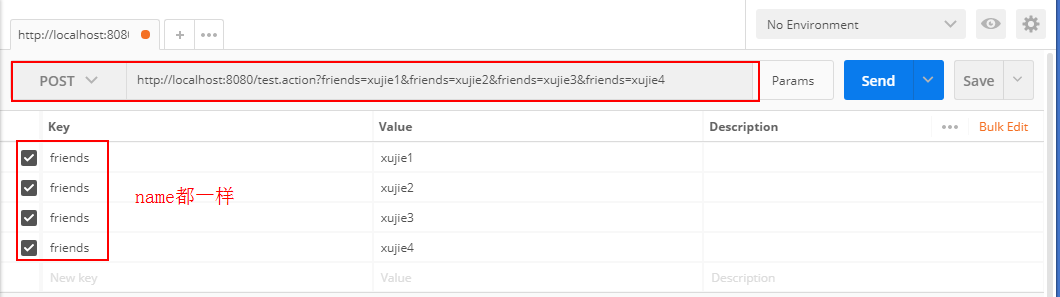
通过pojo属性的方式绑定数组
pojo类:
package com.springMVC.pojo;

public class Student {

    private String name;

    private int age;

    private Courses courses;

    private String[] friends;

    get/set...

}
Controller类:
@Controller

public class Demo01Controller {

    @RequestMapping(value = "test.action",method = RequestMethod.POST)

    public String test(Student stu){

        String[] friends = stu.getFriends();

        for (String str:friends ) {

            System.out.println(str);

        }

        return "test";

    }

}
接口测试
7、绑定List
接收页面数据
接收页面数据的时候,list必须声明为某一个pojo的属性才可以接收到
pojo类:
package com.springMVC.pojo;

import java.util.List;

public class Student {

    private String name;

    private int age;

    private Courses courses;

    private List<String> friends;   //pojo的list

    get/set...

}
Controller类:
@Controller

public class Demo01Controller {

    @RequestMapping(value = "test.action",method = RequestMethod.POST)

    public String test(Student student){

        List<String> friends = student.getFriends();

        for (String str : friends) {

            System.out.println(str);

        }

        return "test";

    }

}
接口测试:

向页面传递数据
Controller类:
此处以ModelMap的方式向页面传递数据
@Controller

public class Demo01Controller {

    @RequestMapping(value = "test.action",method = RequestMethod.GET)

    public String test(ModelMap modelMap){

        //ModelMap modelMap = new ModelMap();

        Student student = new Student();

        ArrayList<String> list = new ArrayList<String>();

        list.add("xujie1");

        list.add("xujie2");

        list.add("xujie3");

        list.add("xujie4");

        student.setFriends(list);

        student.setName("yuanxiliu");

        modelMap.addAttribute("student",student);

        return "test";

    }

}
jsp页面:
<%@ page language="java" contentType="text/html; charset=UTF-8" pageEncoding="UTF-8"%>

<%@page isELIgnored="false" %>

<%@taglib prefix="c" uri="http://java.sun.com/jsp/jstl/core" %>

<!DOCTYPE html PUBLIC "-//W3C//DTD HTML 4.01 Transitional//EN"

"http://www.w3.org/TR/html4/loose.dtd">

<html>

<head>

    <meta http-equiv="Content-Type" content="text/html; charset=UTF-8">

    <title>Hello World</title>

</head>

<body>

    <c:forEach items="${student.friends}" var="friend" varStatus="state" >

        ${friend}<%--循环输出List--%>

    </c:forEach>

</body>

</html>
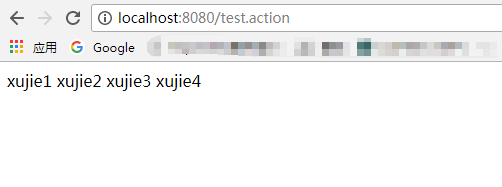
页面结果:
8、绑定Map
跟list类似,同样必须定义成某个pojo的属性才可以绑定数据:
pojo类:
package com.springMVC.pojo;

import java.util.HashMap;

import java.util.List;

public class Student {

    private String name;

    private int age;

    private Courses courses;

    private HashMap<String,String> parents;

    get/set...

}
Controller类:
@Controller

public class Demo01Controller {

    @RequestMapping(value = "test.action",method = RequestMethod.POST)

    public String test(Student student){

        String father = student.getParents().get("father");

        String mother = student.getParents().get("mother");

        System.out.println("父亲是:"+father);

        System.out.println("母亲是:"+mother);

        return "test";

    }

}
接口测试:

springMVC学习总结(三)数据绑定的更多相关文章
- SpringMVC:学习笔记(5)——数据绑定及表单标签
SpringMVC——数据绑定及表单标签 理解数据绑定 为什么要使用数据绑定 基于HTTP特性,所有的用户输入的请求参数类型都是String,比如下面表单: 按照我们以往所学,如果要获取请求的所有参数 ...
- SpringMVC学习笔记之---数据绑定
SpringMVC数据绑定 一.基础配置 (1)pom.xml <dependencies> <dependency> <groupId>junit</gro ...
- SpringMVC学习笔记(三)
一.SpringMVC使用注解完成 1.首先,导入SpringMVC需要的jar包. 2.添加Web.xml配置文件中关于SpringMVC的配置 <!--configure the setti ...
- SpringMVC 学习笔记(三)数据的校验
34. 尚硅谷_佟刚_SpringMVC_数据绑定流程分析.avi 例如:在jsp中输入一个String字符串类型,需要转换成Date类型的流程如下 convertservice对传入的数据进行转换 ...
- SpringMVC学习总结(三)——Controller接口详解(2)
4.5.ServletForwardingController 将接收到的请求转发到一个命名的servlet,具体示例如下: package cn.javass.chapter4.web.servle ...
- springmvc学习(三)
第一点---------使用 @RequestMapping 映射请求• Ant 风格资源地址支持 3 种匹配符:?:匹配文件名中的一个字符 *:匹配文件名中的任意字符 **:** 匹配多层路径 @R ...
- SpringMVC学习手册(三)------EL和JSTL(上)
1.含义 EL: Expression Language , 表达式语言 JSTL: Java Server Pages Standard Tag Library, JSP标准标签库 ...
- SpringMVC学习(三)———— springmvc的数据校验的实现
一.什么是数据校验? 这个比较好理解,就是用来验证客户输入的数据是否合法,比如客户登录时,用户名不能为空,或者不能超出指定长度等要求,这就叫做数据校验. 数据校验分为客户端校验和服务端校验 客户端校验 ...
- SpringMVC学习记录三——8 springmvc和mybatis整合
8 springmvc和mybatis整合 8.1 需求 使用springmvc和mybatis完成商品列表查询. 8.2 整合思路 springmvc+mybaits的 ...
- springmvc学习日志三
一.文件的上传 1.首先在lib中添加相应的jar包 2.建立jsp页面,表单必须是post提交,编码必须是multipart/form-data,文件上传文本框必须起名 <body> & ...
随机推荐
- org.springframework.web.filter.DelegatingFilterProxy的作用
一.类结构 DelegatingFilterProxy类继承GenericFilterBean,间接实现了Filter,故而该类属于一个过滤器.那么就会有实现Filter中init.doFilter. ...
- [转载] su和sudo
转载自http://www.cnblogs.com/haichuan3000/articles/2123633.html Mandriva 说也奇怪,用root登录的用户比一般用户还难用,当初用FC6 ...
- Python之matplotlib模块安装
numpy 1.下载安装 源代码 http://sourceforge.net/projects/numpy/files/NumPy/ 安装 python2.7 setup.py install 2. ...
- mybatis逆向工程之生成文件解释
一.mapper接口中的方法解析 mapper接口中的函数及方法 方法 功能说明 int countByExample(UserExample example) thorws SQLException ...
- 【手记】让Fiddler抓取入站请求,或者叫用Fiddler做反向代理
注意:本文不涉及HTTPS的场景 最近在弄公众号开发,除了主动去调公众号接口,还存在公众号后台要反过来调你的情形,攻受转换一线间.对于回调的情况,想要知道对方是怎样来请求的很有必要.此前经常用Fidd ...
- asp.net core 2.0集成signalr
在博客园也很多年了,一直未曾分享过什么东西,也没有写过博客,但自己也是汲取着博客园的知识成长的: 这两天想着不能这么无私,最近.NET CORE貌似挺流行的,闲来无事也自己搞了个asp.net cor ...
- 编译虚拟机jvm——openjdk的编译
java只所以被推广,实际上很大原因是因为本身是跨平台的,很大作用是因为虚拟机的关系. 一般情况下开发人员不需要关注虚拟机内部实现就可以日常开发了,但是有时候涉及到性能的时候就需要了解虚拟机的实现机制 ...
- 【MAVEN】maven系列--pom.xml标签详解
pom文件作为MAVEN中重要的配置文件,对于它的配置是相当重要.文件中包含了开发者需遵循的规则.缺陷管理系统.组织.licenses.项目信息.项目依赖性等.下面将重点介绍一下该文件的基本组成与功能 ...
- Python 数据库备份脚本
#!/usr/bin/python########################################################### Created date: 2017/12/7 ...
- apache通过AD验证
## apache通过AD验证 #yum install httpd mod_authz_ldap#安装apahce的ldap模块yum install mod_authz_ldap -y #配置ap ...