
python的__future__模块
一、概述
Python的每个新版本都会增加一些新的功能,或者对原来的功能作一些改动。有些改动是不兼容旧版本的,也就是在当前版本运行正常的代码,到下一个版本运行就可能不正常了。
从Python 2.7到Python 3.x就有不兼容的一些改动,比如2.x里的字符串用'xxx'表示str,Unicode字符串用u'xxx'表示unicode,而在3.x中,所有字符串都被视为unicode。
因此,写u'xxx'和'xxx'是完全一致的,而在2.x中以'xxx'表示的str就必须写成b'xxx',以此表示“二进制字符串”。
直接把代码升级到3.x是比较冒进的,因为有大量的改动需要测试。相反,可以在2.7版本中先在一部分代码中测试一些3.x的特性,如果没有问题,再移植到3.x不迟。
Python提供了__future__模块,把下一个新版本的特性导入到当前版本,于是我们就可以在当前版本中测试一些新版本的特性。
二、源代码
个人Python环境,__future__路径:C:\ProgramData\Anaconda3\Lib\__future__.py
"""Record of phased-in incompatible language changes.

Each line is of the form:

    FeatureName = "_Feature(" OptionalRelease "," MandatoryRelease ","

                              CompilerFlag ")"

where, normally, OptionalRelease < MandatoryRelease, and both are 5-tuples

of the same form as sys.version_info:

    (PY_MAJOR_VERSION, # the 2 in 2.1.0a3; an int

     PY_MINOR_VERSION, # the 1; an int

     PY_MICRO_VERSION, # the 0; an int

     PY_RELEASE_LEVEL, # "alpha", "beta", "candidate" or "final"; string

     PY_RELEASE_SERIAL # the 3; an int

    )

OptionalRelease records the first release in which

    from __future__ import FeatureName

was accepted.

In the case of MandatoryReleases that have not yet occurred,

MandatoryRelease predicts the release in which the feature will become part

of the language.

Else MandatoryRelease records when the feature became part of the language;

in releases at or after that, modules no longer need

    from __future__ import FeatureName

to use the feature in question, but may continue to use such imports.

MandatoryRelease may also be None, meaning that a planned feature got

dropped.

Instances of class _Feature have two corresponding methods,

.getOptionalRelease() and .getMandatoryRelease().

CompilerFlag is the (bitfield) flag that should be passed in the fourth

argument to the builtin function compile() to enable the feature in

dynamically compiled code.  This flag is stored in the .compiler_flag

attribute on _Future instances.  These values must match the appropriate

#defines of CO_xxx flags in Include/compile.h.

No feature line is ever to be deleted from this file.

"""

all_feature_names = [

    "nested_scopes",

    "generators",

    "division",

    "absolute_import",

    "with_statement",

    "print_function",

    "unicode_literals",

    "barry_as_FLUFL",

    "generator_stop",

    "annotations",

]

__all__ = ["all_feature_names"] + all_feature_names

# The CO_xxx symbols are defined here under the same names defined in

# code.h and used by compile.h, so that an editor search will find them here.

# However, they're not exported in __all__, because they don't really belong to

# this module.

CO_NESTED            = 0x0010   # nested_scopes

CO_GENERATOR_ALLOWED = 0        # generators (obsolete, was 0x1000)

CO_FUTURE_DIVISION   = 0x2000   # division

CO_FUTURE_ABSOLUTE_IMPORT = 0x4000 # perform absolute imports by default

CO_FUTURE_WITH_STATEMENT  = 0x8000   # with statement

CO_FUTURE_PRINT_FUNCTION  = 0x10000   # print function

CO_FUTURE_UNICODE_LITERALS = 0x20000 # unicode string literals

CO_FUTURE_BARRY_AS_BDFL = 0x40000

CO_FUTURE_GENERATOR_STOP  = 0x80000 # StopIteration becomes RuntimeError in generators

CO_FUTURE_ANNOTATIONS     = 0x100000  # annotations become strings at runtime

class _Feature:

    def __init__(self, optionalRelease, mandatoryRelease, compiler_flag):

        self.optional = optionalRelease

        self.mandatory = mandatoryRelease

        self.compiler_flag = compiler_flag

    def getOptionalRelease(self):

        """Return first release in which this feature was recognized.

        This is a 5-tuple, of the same form as sys.version_info.

        """

        return self.optional

    def getMandatoryRelease(self):

        """Return release in which this feature will become mandatory.

        This is a 5-tuple, of the same form as sys.version_info, or, if

        the feature was dropped, is None.

        """

        return self.mandatory

    def __repr__(self):

        return "_Feature" + repr((self.optional,

                                  self.mandatory,

                                  self.compiler_flag))

nested_scopes = _Feature((2, 1, 0, "beta",  1),

                         (2, 2, 0, "alpha", 0),

                         CO_NESTED)

generators = _Feature((2, 2, 0, "alpha", 1),

                      (2, 3, 0, "final", 0),

                      CO_GENERATOR_ALLOWED)

division = _Feature((2, 2, 0, "alpha", 2),

                    (3, 0, 0, "alpha", 0),

                    CO_FUTURE_DIVISION)

absolute_import = _Feature((2, 5, 0, "alpha", 1),

                           (3, 0, 0, "alpha", 0),

                           CO_FUTURE_ABSOLUTE_IMPORT)

with_statement = _Feature((2, 5, 0, "alpha", 1),

                          (2, 6, 0, "alpha", 0),

                          CO_FUTURE_WITH_STATEMENT)

print_function = _Feature((2, 6, 0, "alpha", 2),

                          (3, 0, 0, "alpha", 0),

                          CO_FUTURE_PRINT_FUNCTION)

unicode_literals = _Feature((2, 6, 0, "alpha", 2),

                            (3, 0, 0, "alpha", 0),

                            CO_FUTURE_UNICODE_LITERALS)

barry_as_FLUFL = _Feature((3, 1, 0, "alpha", 2),

                          (3, 9, 0, "alpha", 0),

                          CO_FUTURE_BARRY_AS_BDFL)

generator_stop = _Feature((3, 5, 0, "beta", 1),

                          (3, 7, 0, "alpha", 0),

                          CO_FUTURE_GENERATOR_STOP)

annotations = _Feature((3, 7, 0, "beta", 1),

                       (4, 0, 0, "alpha", 0),

                       CO_FUTURE_ANNOTATIONS)
三、使用说明
1.division
- Python2
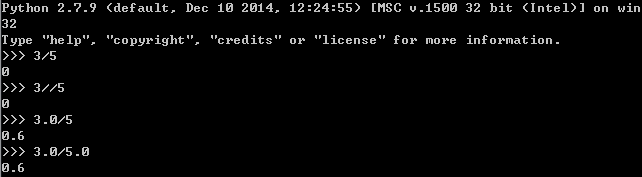
整数相除的结果为取整去余;浮点数相除为精确除法。
- Python3
默认为精确除法;如果需要取整时使用//,也称之为地板除。
2.print
- Python2中print为打印关键字
- Python3中print为打印函数名
3.unicode_literals
- Python2,字符串默认为str类型;添加前缀u后变为Unicode类型
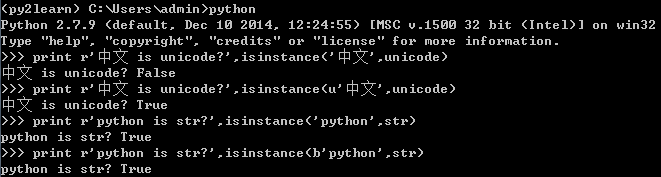
- Python3,字符串默认为Unicode类型;如果需要str类型,添加前缀b

4.absolute_import
首先需要了解相对导入、绝对导入的概念
相对导入:在不指明 package 名的情况下导入自己这个 package 的模块,比如一个 package 下有 a.py 和 b.py 两个文件,在 a.py 里 from . import b 即是相对导入 b.py
绝对导入:指明顶层 package 名,比如 import a,Python 会在 sys.path里寻找所有名为 a 的顶层模块
- Python2,支持绝对导入,
- Python3,支持相对导入、绝对导入
python的__future__模块的更多相关文章
- 【python】__future__模块
转自:http://www.jb51.net/article/65030.htm Python的每个新版本都会增加一些新的功能,或者对原来的功能作一些改动.有些改动是不兼容旧版本的,也就是在当前版本运 ...
- python模块之__future__模块
Python的每个新版本都会增加一些新的功能,或者对原来的功能作一些改动.有些改动是不兼容旧版本的,也就是在当前版本运行正常的代码,到下一个版本运行就可能不正常了.为了在低版本中可以使用高版本的新特性 ...
- python 使用__future__
Python的每个新版本都会增加一些新的功能,或者对原来的功能作一些改动.有些改动是不兼容旧版本的,也就是在当前版本运行正常的代码,到下一个版本运行就可能不正常了. 从Python 2.7到Pytho ...
- python使用__future__
Python的新版本会引入新的功能,但是,实际上这些功能在上一个老版本中就已经存在了.要“试用”某一新的特性,就可以通过导入__future__模块的某些功能来实现. 例如,Python 2.7的整数 ...
- Python进阶之模块与包
模块 .note-content {font-family: "Helvetica Neue",Arial,"Hiragino Sans GB","S ...
- Python进阶之模块
在计算机程序的开发过程中,随着程序代码越写越多,在一个文件里代码就会越来越长,越来越不容易维护. 为了编写可维护的代码,我们把很多函数分组,分别放到不同的文件里,这样,每个文件包含的代码就相对较少,很 ...
- __future__模块
Python提供了__future__模块,把下一个新版本的特性导入到当前版本,于是我们就可以在当前版本中使用一些新版本的特性,比如除法: 在Python 2.x中,对于除法有两种情况,如果是整数相除 ...
- 关于python 的 __future__
经常看到__future__: from __future__ import absolute_importfrom __future__ import print_functionfrom __fu ...
- python之platform模块
python之platform模块 ^_^第三个模块从天而降喽!! 函数列表 platform.system() 获取操作系统类型,windows.linux等 platform.platform() ...
随机推荐
- Cocos2d-x3.0网络通信学习(一)
配置:win7+Cocos2d-x.3.0+VS2012 摘要:建立基本的http通信并得到返回信息. 一.添加项目与编译库 1.添加头文件 在需要用到Http网络相关类的文件中加入头文件 #incl ...
- datatable的dom配置
l - Length changing 改变每页显示多少条数据的控件 f - Filtering input 即时搜索框控件 t - The Table 表格本身 i - Information 表格 ...
- Leaving Google for a couple of devices-Kasper Lund
原文链接https://medium.com/@kasper.lund/building-for-billions-bcb48814d864 一年多以前,我辞去了我在Google的出色工作,离开了一群 ...
- java之关键字static
static简单概述 static 关键字的基本使用,它可以用来修饰的成员变量和成员方法,一旦用了static关键字修饰,那么这样的内容不再属于对象而是属于类,凡是本类的对象都共享使用同一份.我们可以 ...
- C语言中,关于相除的问题
若定义的类型是 整数型:int a,b ;则a/b的值为整数的,不会带着小数点的..... 若定义的数据类型是 浮点型的 :double a,b; 则这种情况下,得到的结果与数学结果无异
- 【RTOS】基于V7开发板的最新版uCOS-III V3.07.03程序模板,含MDK和IAR,支持uC/Probe,与之前版本变化较大
模板下载: 链接:https://pan.baidu.com/s/1_4z_Lg51jMT87RrRM6Qs3g 提取码:2gns 对MDK的AC6也做了支持:https://www.cnblog ...
- SPARQL入门(二)使用Java操作ARQ
在文章SPARQL入门(一)SPARQL简介与简单使用中,我们了解了RDF.SPARQL以及基于Java编写的SPARQL处理器ARQ.在本文中,笔者将会如何使用Java来操作ARQ. 注意到 ...
- sql server报【将截断字符串或二进制数据】错误
会出现这个错误的原因是因为表设置的列长度小于要插入的数据的长度. 可以从下列的6个方面去排查: 1.表设置的列名长度太短. 2.插入的数据太长. 3.有默认值. 4.有触发器. 5 从char数据类型 ...
- MVC过滤器:自定义操作过滤器
一.操作过滤器 1.定义 操作过滤器用于实现IActionFilter接口以及包装操作方法执行.IActionFilter接口声明两个方法:OnActionExecuting和OnActionExec ...
- 基于SSM的crm管理系统
学完crm后的第一个项目实践,前端样式与标签库都是现成的. 开发环境 eclipse,mysql,jdk1.7 项目架构 整合思路 Dao层: 1.SqlMapConfig.xml,添加别名,但是需要 ...