
SpringBoot实现限流注解
SpringBoot实现限流注解
在高并发系统中,保护系统的三种方式分别为:缓存,降级和限流。
限流的目的是通过对并发访问请求进行限速或者一个时间窗口内的的请求数量进行限速来保护系统,一旦达到限制速率则可以拒绝服务、排队或等待
1、限流类型枚举类
/**

 * 限流类型

 * @author ss_419

 */

public enum LimitType {

    /**

     * 默认的限流策略,针对某一个接口进行限流

     */

    DEFAULT,

    /**

     * 针对某一个IP进行限流

     */

    IP

}
2、自定义限流注解
/**

 * @author ss_419

 */

@Retention(RetentionPolicy.RUNTIME)

@Target(ElementType.METHOD)

public @interface RateLimiter {

    /**

     * 限流的 key,主要是指前缀

     * @return

     */

    String key() default "rate_limit:";

    /**

     * 在时间窗内的限流次数

     * @return

     */

    int count() default 100;

    /**

     * 限流类型

     * @return

     */

    LimitType limitType() default LimitType.DEFAULT;

    /**

     * 限流时间窗

     * @return

     */

    int time() default 60;

}
3、限流lua脚本
1、由于我们使用 Redis 进行限流,我们需要引入 Redis 的 maven 依赖,同时需要引入 aop 的依赖
<!-- aop依赖 -->

<dependency>

    <groupId>org.springframework.boot</groupId>

    <artifactId>spring-boot-starter-aop</artifactId>

</dependency>

<!-- redis依赖 -->

<dependency>

    <groupId>org.springframework.boot</groupId>

    <artifactId>spring-boot-starter-data-redis</artifactId>

</dependency>
2、配置redis以及lua脚本
@Configuration

public class RedisConfig {

    @Bean

    RedisTemplate<Object,Object> redisTemplate(RedisConnectionFactory factory) {

        RedisTemplate<Object, Object> template = new RedisTemplate<>();

        template.setConnectionFactory(factory);

        Jackson2JsonRedisSerializer jackson2JsonRedisSerializer = new Jackson2JsonRedisSerializer(Object.class);

        template.setKeySerializer(jackson2JsonRedisSerializer);

        template.setValueSerializer(jackson2JsonRedisSerializer);

        template.setHashKeySerializer(jackson2JsonRedisSerializer);

        template.setHashValueSerializer(jackson2JsonRedisSerializer);

        return template;

    }

    /**

     * 读取lua脚本

     * @return

     */

    @Bean

    DefaultRedisScript<Long> limitScript() {

        DefaultRedisScript<Long> script = new DefaultRedisScript<>();

        script.setResultType(Long.class);

        script.setScriptSource(new ResourceScriptSource(new ClassPathResource("lua/limit.lua")));

        return script;

    }

}
通过 Lua 脚本,根据 Redis 中缓存的键值判断限流时间(也是 key 的过期时间)内,访问次数是否超出了限流次数,没超出则访问次数 +1,返回 true,超出了则返回 false。
limit.lua:
local key = KEYS[1]

local time = tonumber(ARGV[1])

local count = tonumber(ARGV[2])

local current = redis.call('get', key)

if current and tonumber(current) > count then

    return tonumber(current)

end

current = redis.call('incr', key)

if tonumber(current) == 1 then

    redis.call('expire', key, time)

end

return tonumber(current)
4、限流切面处理类
1、使用我们刚刚的 Lua 脚本判断是否超出了限流次数,超出了限流次数后返回一个自定义异常,然后在全局异常中去捕捉异常,返回 JSON 数据。
2、根据注解参数,判断限流类型,拼接缓存 key 值
package org.pp.ratelimiter.aspectj;

import org.aspectj.lang.JoinPoint;

import org.aspectj.lang.annotation.Aspect;

import org.aspectj.lang.annotation.Before;

import org.aspectj.lang.reflect.MethodSignature;

import org.pp.ratelimiter.annotation.RateLimiter;

import org.pp.ratelimiter.enums.LimitType;

import org.pp.ratelimiter.exception.RateLimitException;

import org.pp.ratelimiter.utils.IpUtils;

import org.slf4j.Logger;

import org.slf4j.LoggerFactory;

import org.springframework.beans.factory.annotation.Autowired;

import org.springframework.data.redis.core.RedisTemplate;

import org.springframework.data.redis.core.script.RedisScript;

import org.springframework.stereotype.Component;

import org.springframework.web.context.request.RequestContextHolder;

import org.springframework.web.context.request.ServletRequestAttributes;

import java.lang.reflect.Method;

import java.util.Collections;

@Aspect

@Component

public class RateLimiterAspect {

    private static final Logger logger = LoggerFactory.getLogger(RateLimiterAspect.class);

    @Autowired

    RedisTemplate<Object, Object> redisTemplate;

    @Autowired

    RedisScript<Long> redisScript;

    @Before("@annotation(rateLimiter)")

    public void before(JoinPoint jp, RateLimiter rateLimiter) throws RateLimitException {

        int time = rateLimiter.time();

        int count = rateLimiter.count();

        String combineKey = getCombineKey(rateLimiter, jp);

        try {

            Long number = redisTemplate.execute(redisScript, Collections.singletonList(combineKey), time, count);

            if (number == null || number.intValue() > count) {

                //超过限流阈值

                logger.info("当前接口以达到最大限流次数");

                throw new RateLimitException("访问过于频繁,请稍后访问");

            }

            logger.info("一个时间窗内请求次数:{},当前请求次数:{},缓存的 key 为 {}", count, number, combineKey);

        } catch (Exception e) {

            throw e;

        }

    }

    /**

     * 这个 key 其实就是接口调用次数缓存在 redis 的 key

     * rate_limit:11.11.11.11-org.javaboy.ratelimit.controller.HelloController-hello

     * rate_limit:org.javaboy.ratelimit.controller.HelloController-hello

     * @param rateLimiter

     * @param jp

     * @return

     */

    private String getCombineKey(RateLimiter rateLimiter, JoinPoint jp) {

        StringBuffer key = new StringBuffer(rateLimiter.key());

        if (rateLimiter.limitType() == LimitType.IP) {

            key.append(IpUtils.getIpAddr(((ServletRequestAttributes) RequestContextHolder.getRequestAttributes()).getRequest()))

                    .append("-");

        }

        MethodSignature signature = (MethodSignature) jp.getSignature();

        Method method = signature.getMethod();

        key.append(method.getDeclaringClass().getName())

                .append("-")

                .append(method.getName());

        return key.toString();

    }

}
5、使用与测试
@RestController

public class HelloController {

    /**

     * 限流 10 秒之内,这个接口可以访问3次

     * @return

     */

    @GetMapping("/hello")

    @RateLimiter(time = 10,count = 3)

    public Map<String, Object> hello() {

        Map<String, Object> map = new HashMap<>();

        map.put("status", 200);

        map.put("message", "Hello RateLimiter");

        return map;

    }

}
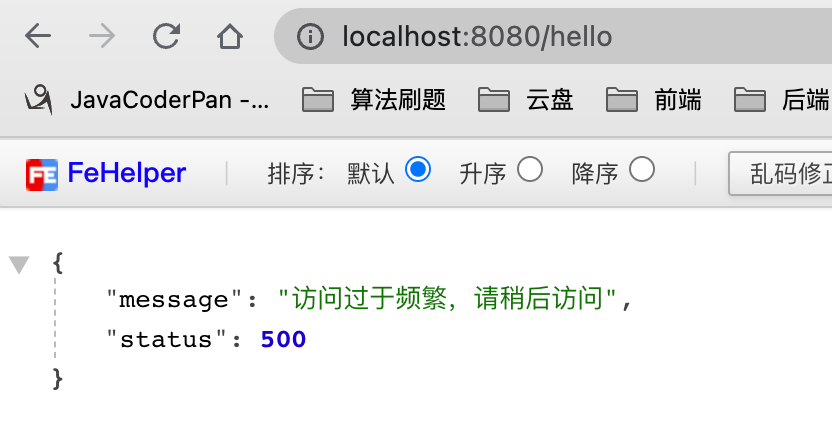
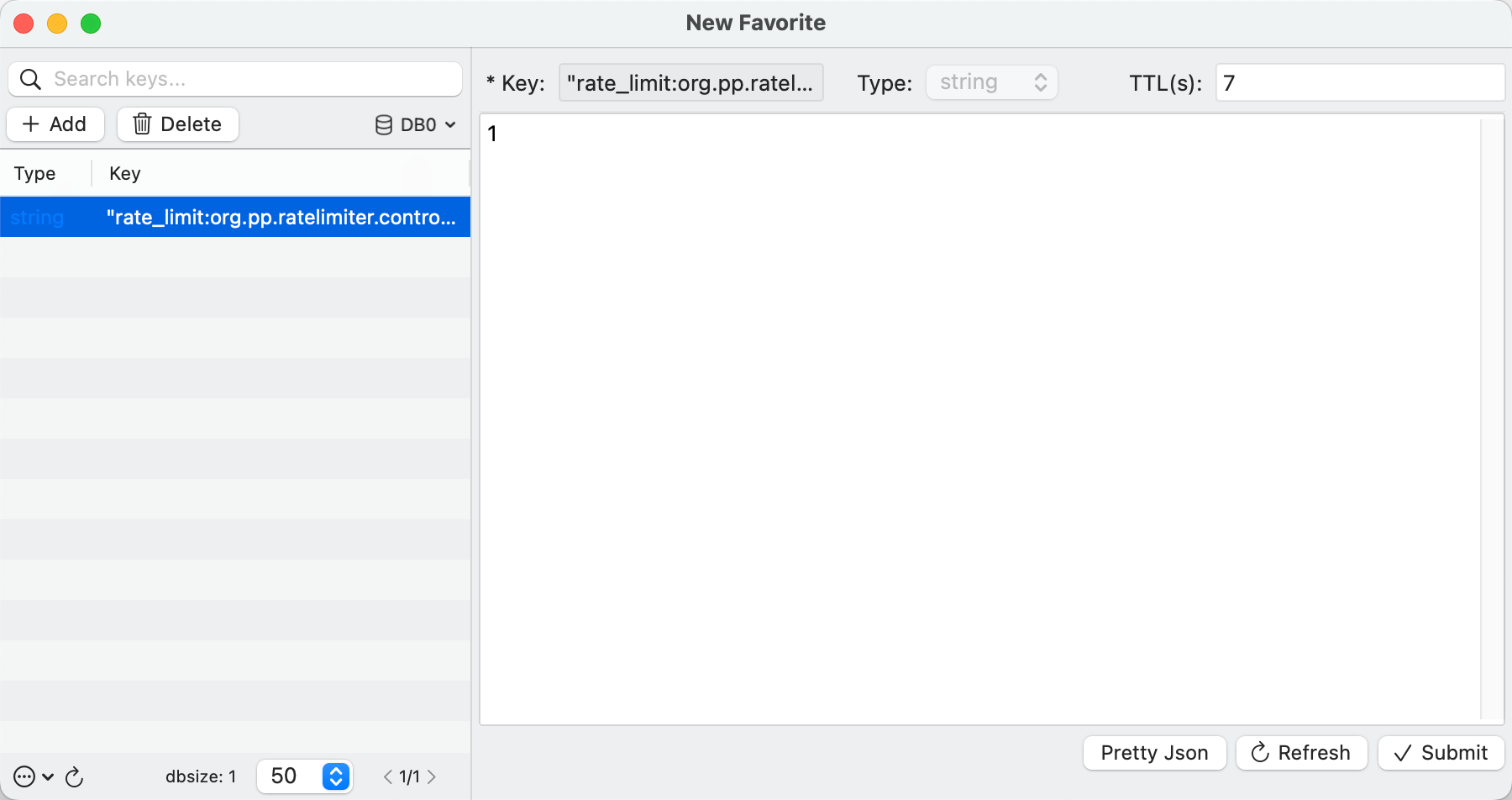
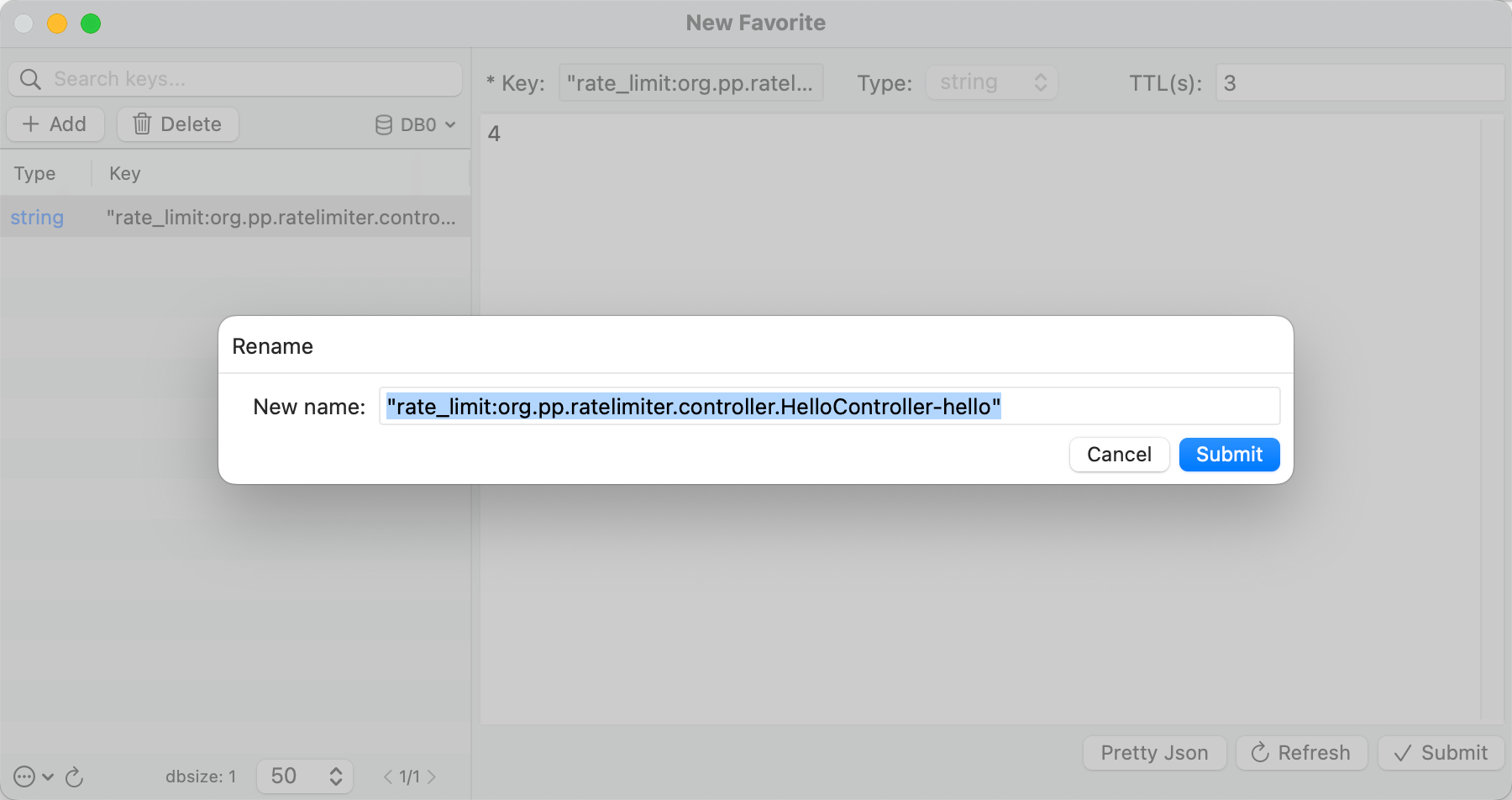
十秒之内访问次数超过3次就会报异常
redis中的数据,每一次访问都加1
当访问次数超过3,则进行限流操作
SpringBoot实现限流注解的更多相关文章
- Springboot分布式限流实践
高并发访问时,缓存.限流.降级往往是系统的利剑,在互联网蓬勃发展的时期,经常会面临因用户暴涨导致的请求不可用的情况,甚至引发连锁反映导致整个系统崩溃.这个时候常见的解决方案之一就是限流了,当请求达到一 ...
- SpringBoot使用自定义注解+AOP+Redis实现接口限流
为什么要限流 系统在设计的时候,我们会有一个系统的预估容量,长时间超过系统能承受的TPS/QPS阈值,系统有可能会被压垮,最终导致整个服务不可用.为了避免这种情况,我们就需要对接口请求进行限流. 所以 ...
- 基于令牌桶算法实现的SpringBoot分布式无锁限流插件
本文档不会是最新的,最新的请看Github! 1.简介 基于令牌桶算法和漏桶算法实现的纳秒级分布式无锁限流插件,完美嵌入SpringBoot.SpringCloud应用,支持接口限流.方法限流.系统限 ...
- 分布式限流组件-基于Redis的注解支持的Ratelimiter
原文:https://juejin.im/entry/5bd491c85188255ac2629bef?utm_source=coffeephp.com 在分布式领域,我们难免会遇到并发量突增,对后端 ...
- springboot + aop + Lua分布式限流的最佳实践
整理了一些Java方面的架构.面试资料(微服务.集群.分布式.中间件等),有需要的小伙伴可以关注公众号[程序员内点事],无套路自行领取 一.什么是限流?为什么要限流? 不知道大家有没有做过帝都的地铁, ...
- SpringBoot 如何进行限流?老鸟们都这么玩的!
大家好,我是飘渺.SpringBoot老鸟系列的文章已经写了四篇,每篇的阅读反响都还不错,那今天继续给大家带来老鸟系列的第五篇,来聊聊在SpringBoot项目中如何对接口进行限流,有哪些常见的限流算 ...
- SpringBoot进阶教程(六十七)RateLimiter限流
在上一篇文章nginx限流配置中,我们介绍了如何使用nginx限流,这篇文章介绍另外一种限流方式---RateLimiter. v限流背景 在早期的计算机领域,限流技术(time limiting)被 ...
- Redisson多策略注解限流
限流:使用Redisson的RRateLimiter进行限流 多策略:map+函数式接口优化if判断 自定义注解 /** * aop限流注解 */ @Target({ElementType.METHO ...
- Sentinel整合Dubbo限流实战(分布式限流)
之前我们了解了 Sentinel 集成 SpringBoot实现限流,也探讨了Sentinel的限流基本原理,那么接下去我们来学习一下Sentinel整合Dubbo及 Nacos 实现动态数据源的限流 ...
- Redis实现的分布式锁和分布式限流
随着现在分布式越来越普遍,分布式锁也十分常用,我的上一篇文章解释了使用zookeeper实现分布式锁(传送门),本次咱们说一下如何用Redis实现分布式锁和分布限流. Redis有个事务锁,就是如下的 ...
随机推荐
- [转]NLog学习笔记
配置文件 NLog所有的配置信息都可以写到一个单独的xml文件中,也可以在程序代码中进行配置. 配置文件位置 启动的时候,NLog会试图查找配置文件完成自动配置,查找的文件依次如下(找到配置信息则结束 ...
- MES系统怎么实现车间管理中的生产计划和排产计划
生产计划和排产计划都是制造企业中非常重要的概念,它们的目的是为了确保企业能够按时交付高质量的产品,同时还要保持生产效率和成本效益. 一.生产计划 生产计划是指制造企业为了满足客户需求而制定的计划,它包 ...
- Elasticsearch对接MinIO存储Snapshot快照
服务器配置 MinIO集群节点(4节点) IP 节点1 miniotest1.ip.tp-link.com 172.29.145.80 生产环境需要增加一个Nginx负载均衡前端用于ELK对接,此处直 ...
- C# 多线程 progressbar 界面不卡顿简单用法
多线程进度条的简单使用,界面不卡顿.如下图: 简单源码如下: using System; using System.Collections.Generic; using System.Componen ...
- 实现两个 JSON 对象的对比
问题描述 在 Java 中,对于两个对象的对比,如果没有重写 equals 方法,那么将会默认使用 Object 默认的 equals 方法来比较两个对象.这种比较方式是通过比较两个对象的内存地址是否 ...
- Java NIO 简介
NIO 简介 自 JDK 1.4 以来,引入了一个被称为 NIO(New IO) 的 IO 操作,是标准 IO 一个替代品.Java 的 NIO 提供了一种与传统意义上的 IO 不同的编程模型.有 ...
- 调用含有header的WebService时,跳过证书验证
最近在做Webservice的接口调用,header的用户名和密码都是正确的,地址也是对的,但一直提示:基础连接已关闭,未能与SSL/TLS安全通道建立信任关系. 解决方案: 请求之前加上下面得代码即 ...
- node版本管理工具推荐
hello,今天给大家分享几款 node 版本管理的工具. 背景 在开发前端项目的时候,特别是新到公司接手一个多年维护的老项目时,如果 node 版本不正确,有的插件可能无法正确安装,比如我之前提到的 ...
- 在线编辑Word——插入表格
Word中可插入表格并进行相关格式化操作用于美化表格设计.本文,将通过使用Spire.Cloud Word在线编辑器展示如何来插入格式化的表格到Word.详细步骤见以下内容: 1. 进入在线编辑Wor ...
- C++篇:第十四章_编程_知识点大全
C++篇为本人学C++时所做笔记(特别是疑难杂点),全是硬货,虽然看着枯燥但会让你收益颇丰,可用作学习C++的一大利器 十四.编程 (一)概念 系统函数及其库是 C++语言所必须的,预处理命令不是 C ...