
mybatis缓存源码解析
为什么使用缓存
- 减少和数据库交互次数,提高执行效率
mybatis的缓存
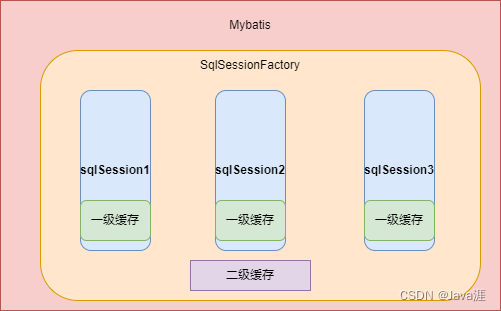
mybatis一级缓存,也就是局部的sqlSession级别的缓存,默认是开启的- 每一个
session会话都会有各自的缓存,这缓存是局部的,也就是所谓的一级缓存 mybatis二级缓存,是sqlSessionFactory级别的缓存,不同的sqlSession可以获取到同样SQL的缓存结果,在mybatis3中也是默认开启的,但是需要配置指定的接口或方法进行缓存
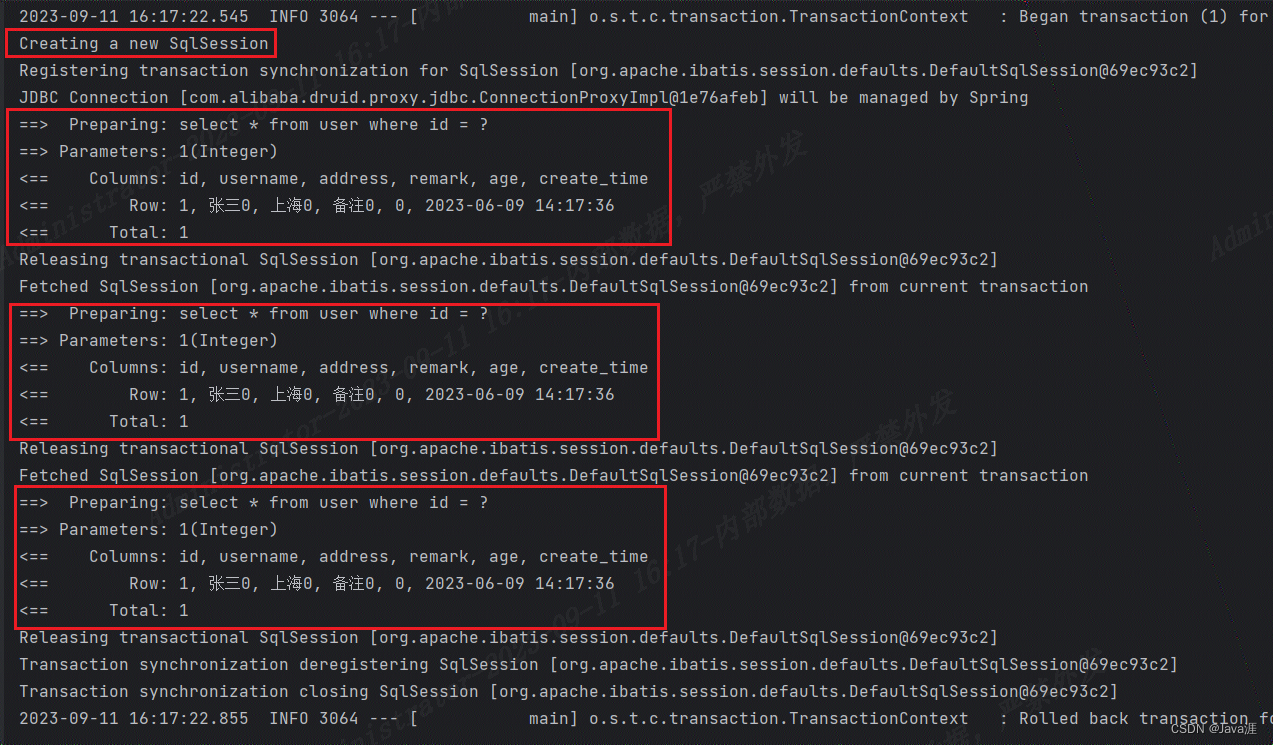
关闭一级缓存
xml配置:
<settings>

    <!-- localCacheScope是本地缓存(一级缓存)的作用域,只有两种取值:SESSION和STATEMENT,取STATEMENT意味着关闭一级缓存-->

    <setting name="localCacheScope" value="STATEMENT"/>

</settings>
yml配置:
mybatis-plus:

  configuration:

    local-cache-scope: STATEMENT
@Test

@Transactional

public void test_cache_one() {

    userService.getUserCacheOne(1);

    userService.getUserCacheOne(1);

    userService.getUserCacheOne(1);

}
开启一级缓存(默认就是session)
xml配置:
<settings>

    <!-- localCacheScope是本地缓存(一级缓存)的作用域,只有两种取值:SESSION和STATEMENT,取STATEMENT意味着关闭一级缓存-->

    <setting name="localCacheScope" value="session"/>

</settings>
yml配置:
mybatis-plus:

  configuration:

    local-cache-scope: session
@Test

@Transactional

public void test_cache_one() {

    userService.getUserCacheOne(1);

    userService.getUserCacheOne(1);

    userService.getUserCacheOne(1);

}
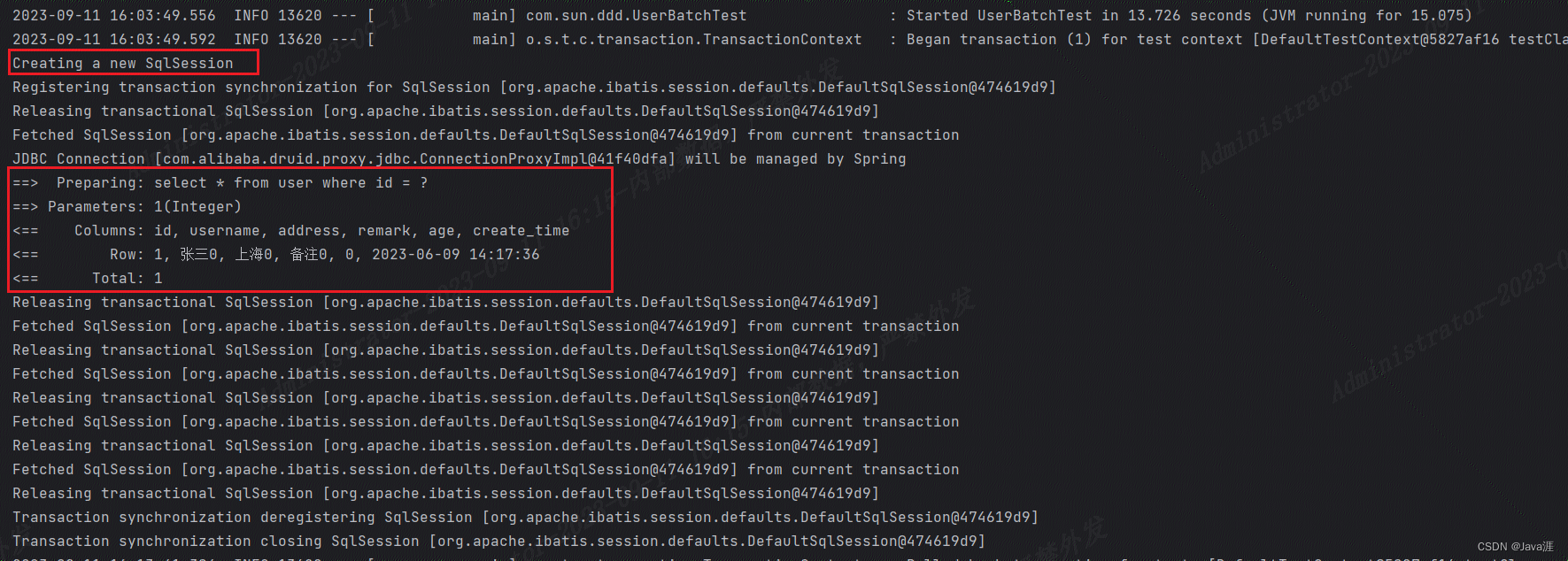
- 从以上截图中可明显看到,默认开启一级缓存,
myabits只跟数据库交互了一次
源码分析均在myabtis整合spring中
1. 创建SqlSessionTemplate对象
com.baomidou.mybatisplus.autoconfigure.MybatisPlusAutoConfiguration
	@Bean

    @ConditionalOnMissingBean

    public SqlSessionTemplate sqlSessionTemplate(SqlSessionFactory sqlSessionFactory) {

        ExecutorType executorType = this.properties.getExecutorType();

        if (executorType != null) {

            return new SqlSessionTemplate(sqlSessionFactory, executorType);

        } else {

            // 创建sqlSession

            return new SqlSessionTemplate(sqlSessionFactory);

        }

    }
new SqlSessionTemplate(sqlSessionFactory)创建sqlSession代理对象- 默认使用
protected ExecutorType defaultExecutorType = ExecutorType.SIMPLE;
2. 创建sqlSessionProxy代理对象
public SqlSessionTemplate(SqlSessionFactory sqlSessionFactory, ExecutorType executorType,

      PersistenceExceptionTranslator exceptionTranslator) {

    notNull(sqlSessionFactory, "Property 'sqlSessionFactory' is required");

    notNull(executorType, "Property 'executorType' is required");

    this.sqlSessionFactory = sqlSessionFactory;

    this.executorType = executorType;

    this.exceptionTranslator = exceptionTranslator;

    this.sqlSessionProxy = (SqlSession)

        // 创建sqlsession的动态代理,代理对象是SqlSessionInterceptor方法

        newProxyInstance(SqlSessionFactory.class.getClassLoader(),

        new Class[] { SqlSession.class }, new SqlSessionInterceptor());

  }
private class SqlSessionInterceptor implements InvocationHandler {

    @Override

    public Object invoke(Object proxy, Method method, Object[] args) throws Throwable {

        // getSqlSession是个关键方法,决定是重新拿个新sqlSession还是复用

      SqlSession sqlSession = getSqlSession(SqlSessionTemplate.this.sqlSessionFactory,

          SqlSessionTemplate.this.executorType, SqlSessionTemplate.this.exceptionTranslator);

        ...
getSqlSession()方法是个关键方法,决定是创建一个新的sqlSession还是复用旧的sqlSession
3. 创建或复用sqlSession对象
 public static SqlSession getSqlSession(SqlSessionFactory sessionFactory, ExecutorType executorType,

      PersistenceExceptionTranslator exceptionTranslator) {

    notNull(sessionFactory, NO_SQL_SESSION_FACTORY_SPECIFIED);

    notNull(executorType, NO_EXECUTOR_TYPE_SPECIFIED);

    SqlSessionHolder holder = (SqlSessionHolder) TransactionSynchronizationManager.getResource(sessionFactory);

	// 判断是否在事务中,如果在事务中,就共同同一个session

    SqlSession session = sessionHolder(executorType, holder);

    if (session != null) {

      return session;

    }

    LOGGER.debug(() -> "Creating a new SqlSession");

     // 如果不是同一个事务中,则创建一个新的sqlsession,打印的日志很明显

    session = sessionFactory.openSession(executorType);

    registerSessionHolder(sessionFactory, executorType, exceptionTranslator, session);

    return session;

  }
- 如果在同一个事务中,则使用旧的
sqlSession对象 - 如果不在同一个事务中,则重新通过
session = sessionFactory.openSession(executorType);创建新的sqlSession对象 - 如果不在同一个事务下,那么每次查询都会创建一个新的
sqlSession,那就看不到一级缓存的效果了,所以想要看效果,需要开启事务,保证几次查询用的是同一个sqlSession LOGGER.debug(() -> "Creating a new SqlSession");创建新的sqlSession对象这个日志很明显
4. 创建sqlSession()对象
session = sessionFactory.openSession(executorType);
private SqlSession openSessionFromDataSource(ExecutorType execType, TransactionIsolationLevel level, boolean autoCommit) {

    Transaction tx = null;

    try {

        // 配置数据库环境

      final Environment environment = configuration.getEnvironment();

        // 配置事务管理器

      final TransactionFactory transactionFactory = getTransactionFactoryFromEnvironment(environment);

      tx = transactionFactory.newTransaction(environment.getDataSource(), level, autoCommit);

        // 选择执行器,默认使用的是simple

      final Executor executor = configuration.newExecutor(tx, execType);

        // 返回使用DefaultSqlSession实现类

      return new DefaultSqlSession(configuration, executor, autoCommit);

    } catch (Exception e) {

      closeTransaction(tx); // may have fetched a connection so lets call close()

      throw ExceptionFactory.wrapException("Error opening session.  Cause: " + e, e);

    } finally {

      ErrorContext.instance().reset();

    }

  }
  public Executor newExecutor(Transaction transaction, ExecutorType executorType) {

    executorType = executorType == null ? defaultExecutorType : executorType;

    executorType = executorType == null ? ExecutorType.SIMPLE : executorType;

    Executor executor;

    if (ExecutorType.BATCH == executorType) {

      executor = new BatchExecutor(this, transaction);

    } else if (ExecutorType.REUSE == executorType) {

      executor = new ReuseExecutor(this, transaction);

    } else {

        // 默认使用的就是executorType = ExecutorType.SIMPLE

      executor = new SimpleExecutor(this, transaction);

    }

    if (cacheEnabled) {

      executor = new CachingExecutor(executor);

    }

    executor = (Executor) interceptorChain.pluginAll(executor);

    return executor;

  }
这里的
cacheEnabled就是二级缓存的开关,myabtis3默认是开启的protected boolean cacheEnabled = true;从
newExecutor()方法中不难看出,executor使用SimpleExecutor处理器,然后放入到CachingExecutor,二级缓存被称为SqlSessionFactory级别的缓存,它是可以缓存不同sqlSession会话中相同的sql语句创建
sqlSession对象就此结束,myabtis的初始化也就到这里,接下来就是使用mapper层接口代理对象了
5. 创建MapperFactoryBean对象
MapperFactoryBean是一个Bean对象,继承了FactoryBean,在spring中通过getObject()获取对应接口方法的代理对象
public class MapperFactoryBean<T> extends SqlSessionDaoSupport implements FactoryBean<T> {

  @Override

  public T getObject() throws Exception {

      // 这个的getSession方法返回的就是上面产生的那个sqlSession

    return getSqlSession().getMapper(this.mapperInterface);

  }

    ...

}
  public <T> T getMapper(Class<T> type, SqlSession sqlSession) {

    final MapperProxyFactory<T> mapperProxyFactory = (MapperProxyFactory<T>) knownMappers.get(type);

    if (mapperProxyFactory == null) {

      throw new BindingException("Type " + type + " is not known to the MapperRegistry.");

    }

    try {

        // 创建mapperProxyFactory动态代理,这里的产生的代理对象主要是用来执行sql的

      return mapperProxyFactory.newInstance(sqlSession);

    } catch (Exception e) {

      throw new BindingException("Error getting mapper instance. Cause: " + e, e);

    }

  }
- 生成代理对象,代理对象为
MapperProxy
protected T newInstance(MapperProxy<T> mapperProxy) {

    // 生成代理对象,代理对象为MapperProxy

    return (T) Proxy.newProxyInstance(mapperInterface.getClassLoader(), new Class[] { mapperInterface }, mapperProxy);

  }

  public T newInstance(SqlSession sqlSession) {

    final MapperProxy<T> mapperProxy = new MapperProxy<>(sqlSession, mapperInterface, methodCache);

    return newInstance(mapperProxy);

  }
6. 执行代理方法
  @Override

  public Object invoke(Object proxy, Method method, Object[] args) throws Throwable {

    try {

      if (Object.class.equals(method.getDeclaringClass())) {

        return method.invoke(this, args);

      } else {

          // 执行代理方法

        return cachedInvoker(method).invoke(proxy, method, args, sqlSession);

      }

    } catch (Throwable t) {

      throw ExceptionUtil.unwrapThrowable(t);

    }

  }
  private static class PlainMethodInvoker implements MapperMethodInvoker {

    private final MapperMethod mapperMethod;

    public PlainMethodInvoker(MapperMethod mapperMethod) {

      super();

      this.mapperMethod = mapperMethod;

    }

    @Override

    public Object invoke(Object proxy, Method method, Object[] args, SqlSession sqlSession) throws Throwable {

        // 这里就是执行sql地方了

      return mapperMethod.execute(sqlSession, args);

    }

  }
然后随便找个select语句一直往下,找到sqlSession提供的select方法
private <E> List<E> selectList(String statement, Object parameter, RowBounds rowBounds, ResultHandler handler) {

    try {

      MappedStatement ms = configuration.getMappedStatement(statement);

      return executor.query(ms, wrapCollection(parameter), rowBounds, handler);

    } catch (Exception e) {

      throw ExceptionFactory.wrapException("Error querying database.  Cause: " + e, e);

    } finally {

      ErrorContext.instance().reset();

    }

  }
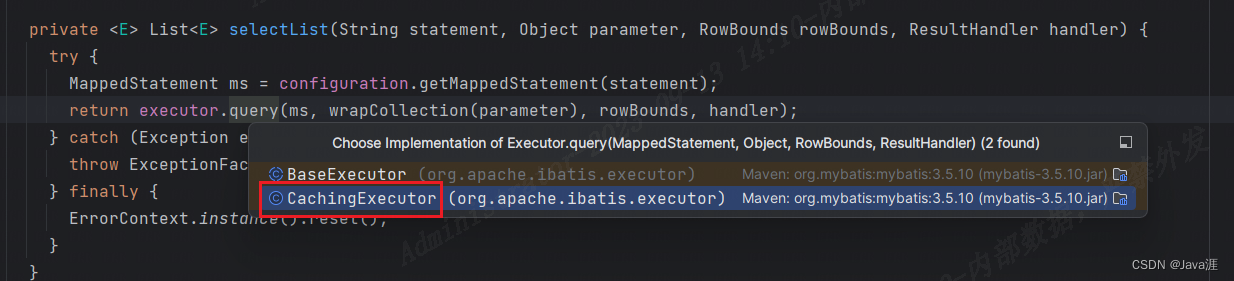
- 由于在创建
openSessiond地方,创建Executor对象的时候,由于二级缓存是默认开启的,所以这里的executor.query()是先会走到CachingExecutor中的
7. 二级缓存判断
@Override

  public <E> List<E> query(MappedStatement ms, Object parameterObject, RowBounds rowBounds, ResultHandler resultHandler, CacheKey key, BoundSql boundSql)

      throws SQLException {

      // 判断这个sqlStatement是否开启了二级缓存

    Cache cache = ms.getCache();

    if (cache != null) {

      flushCacheIfRequired(ms);

      if (ms.isUseCache() && resultHandler == null) {

        ensureNoOutParams(ms, boundSql);

        @SuppressWarnings("unchecked")

        List<E> list = (List<E>) tcm.getObject(cache, key);

        if (list == null) {

          list = delegate.query(ms, parameterObject, rowBounds, resultHandler, key, boundSql);

          tcm.putObject(cache, key, list); // issue #578 and #116

        }

        return list;

      }

    }

      // 如果发现没有使用到二级缓存,则才会使用simple处理器去执行sql

    return delegate.query(ms, parameterObject, rowBounds, resultHandler, key, boundSql);

  }
- 判断这个
sql是否开启了二级缓存,这个缓存是可以在不同的sqlSession共享数据的,按照这个顺序应该是先走的二级缓存,然后再走到一级缓存,二级缓存的优先级更高 - 如果有二级缓存,则使用缓存数据,缓存的
key跟一级缓存的key一致 - 如果没有二级缓存,则会使用默认的
simpleExecutor处理器去执行sql语句
@Override

  public <E> List<E> query(MappedStatement ms, Object parameter, RowBounds rowBounds, ResultHandler resultHandler) throws SQLException {

    BoundSql boundSql = ms.getBoundSql(parameter);

      // 找个key就是一级缓存的key

    CacheKey key = createCacheKey(ms, parameter, rowBounds, boundSql);

    return query(ms, parameter, rowBounds, resultHandler, key, boundSql);

  }
MyBatis 的一级缓存的key是由以下三个部分组成的:
- 执行的
SQL语句(包括语句的类型、命名空间以及具体的SQL语句内容)。 SQL语句中的参数(参数的值)。- 数据库连接的标识(
Connection Id)。
key的生成策略:id + offset + limit + sql + param value + environment id,这些值都相同,生成的key就相同。
这三个部分共同构成了一级缓存的 key,用于唯一标识一个查询操作。只有当这三个部分完全匹配时,才会从缓存中获取相应的结果。如果其中任何一个部分不匹配,就会重新执行 SQL 查询,并将结果存入缓存。
8. 一级缓存
@Override

  public <E> List<E> query(MappedStatement ms, Object parameter, RowBounds rowBounds, ResultHandler resultHandler, CacheKey key, BoundSql boundSql) throws SQLException {

    ErrorContext.instance().resource(ms.getResource()).activity("executing a query").object(ms.getId());

    if (closed) {

      throw new ExecutorException("Executor was closed.");

    }

      // ms.isFlushCacheRequired() 如果不是select语句,则会清空缓存

    if (queryStack == 0 && ms.isFlushCacheRequired()) {

        // 清空一级缓存

      clearLocalCache();

    }

    List<E> list;

    try {

      queryStack++;

        // 根据key去查询缓存

      list = resultHandler == null ? (List<E>) localCache.getObject(key) : null;

      if (list != null) {

          // 用于缓存存储过程输出参数的缓存对象

        handleLocallyCachedOutputParameters(ms, key, parameter, boundSql);

      } else {

          // 如果不存在缓存,则去数据库查询

        list = queryFromDatabase(ms, parameter, rowBounds, resultHandler, key, boundSql);

      }

    } finally {

      queryStack--;

    }

    if (queryStack == 0) {

      for (DeferredLoad deferredLoad : deferredLoads) {

        deferredLoad.load();

      }

      deferredLoads.clear();

        // 这里就是配置是否启动一级缓存的地方

      if (configuration.getLocalCacheScope() == LocalCacheScope.STATEMENT) {

          // 清空一级缓存

        clearLocalCache();

      }

    }

    return list;

  }
ms.isFlushCacheRequired()判断是否为select语句,如果不是则会清理一级缓存的内容clearLocalCache();清空一级缓存localCache.getObject(key)根据组装的key去查询缓存是否存在queryFromDatabase()如果缓存不存在,则去查询数据configuration.getLocalCacheScope() == LocalCacheScope.STATEMENT这里也是配置一级缓存的开关,默认是LocalCacheScope.SESSION开启的,如果设置成LocalCacheScope.STATEMENT则会关闭一级缓存
 private <E> List<E> queryFromDatabase(MappedStatement ms, Object parameter, RowBounds rowBounds, ResultHandler resultHandler, CacheKey key, BoundSql boundSql) throws SQLException {

    List<E> list;

     // 添加一级缓存,添加占位符,标记该查询一级在执行中,避免在并发环境下多个线程执行相同的查询语句,导致数据库重复查询

    localCache.putObject(key, EXECUTION_PLACEHOLDER);

    try {

        // 与数据库交互,组装sql参数

      list = doQuery(ms, parameter, rowBounds, resultHandler, boundSql);

    } finally {

        // 删除缓存

      localCache.removeObject(key);

    }

      // 添加一级缓存,list就是返回的数据

    localCache.putObject(key, list);

    if (ms.getStatementType() == StatementType.CALLABLE) {

        // 用于缓存存储过程输出参数的缓存对象

      localOutputParameterCache.putObject(key, parameter);

    }

    return list;

  }
mybatis缓存源码解析的更多相关文章
- mybatis缓存源码分析之浅谈缓存设计
本文是关于mybatis缓存模块设计的读后感,关于缓存的思考,关于mybatis的缓存源码详细分析在另一篇文章:https://www.cnblogs.com/gmt-hao/p/12448896.h ...
- MyBatis详细源码解析(上篇)
前言 我会一步一步带你剖析MyBatis这个经典的半ORM框架的源码! 我是使用Spring Boot + MyBatis的方式进行测试,但并未进行整合,还是使用最原始的方式. 项目结构 导入依赖: ...
- [原创]Laravel 的缓存源码解析
目录 前言 使用 源码 Cache Facade CacheManager Repository Store 前言 Laravel 支持多种缓存系统, 并提供了统一的api接口. (Laravel 5 ...
- MyBatis 3源码解析(一)
一.SqlSessionFactory 对象初始化 //加载全局配置文件 String resource = "mybatis-config.xml"; InputStream i ...
- Mybatis SqlSessionTemplate 源码解析
As you may already know, to use MyBatis with Spring you need at least an SqlSessionFactory and at le ...
- MyBatis 3源码解析(四)
四.MyBatis 查询实现 Employee empById = mapper.getEmpById(1); 首先会调用MapperProxy的invoke方法 @Override public O ...
- Mybatis SqlNode源码解析
1.ForEachSqlNode mybatis的foreach标签可以将列表.数组中的元素拼接起来,中间可以指定分隔符separator <select id="getByUserI ...
- MyBatis 3源码解析(二)
二.获取SqlSession对象 1.首先调用DefaultSqlSessionFactory 的 openSession 方法,代码如下: @Override public SqlSession o ...
- MyBatis 3源码解析(三)
三.getMapper获取接口的代理对象 1.先调用DefaultSqlSession的getMapper方法.代码如下: @Override public <T> T getMapper ...
- myBatis源码解析-二级缓存的实现方式
1. 前言 前面近一个月去写自己的mybatis框架了,对mybatis源码分析止步不前,此文继续前面的文章.开始分析mybatis一,二级缓存的实现.附上自己的项目github地址:https:// ...
随机推荐
- SqlSugar分组查询
一.分组查询和使用 1.1 语法 只有在聚合对象需要筛选的时候才会用到Having,一般分组查询用不到可以去掉 var list = db.Queryable<Student>() ...
- 20.8 OpenSSL 套接字SSL传输文件
有了上面的基础那么传输文件的实现就变得简单了,在传输时通常我们需要打开文件,并每次读入1024个字节的数据包,通过SSL加密传输即可,此处的文件传输功能在原生套接字章节中也进行过详细讲解,此处我们还是 ...
- Visual Studio部署C++矩阵库Armadillo的方法
本文介绍在Visual Studio软件中配置C++环境下线性代数运算库Armadillo的方法. 首先,我们需要在Armadillo库官网下载其源代码,直接点击下图所示红色框内部分即可. ...
- 重写JSON.stringify与JSON.parse使其支持解析function类型
const JSONStringify = (option) => { return JSON.stringify(option, (key, val) => { // 处理函数丢失问题 ...
- P9933 [NFLSPC #6] 9.pop_book(); 题解
题目链接: P9933 [NFLSPC #6] 9.pop_book(); 先考虑一个最基本的式子: \(x=v \times t\),很显然的一点是,除了 Alek岁,每个人的运动路程函数写出来都是 ...
- 【题解】T378828 位运算
位运算 题目背景 题目由 daiyulong20120222 创作(me) 并由 QBW1117完善以及数据 . 题目描述 给定两个数\(x,y\) ,在给定一个位运算符号 \(c\). 请你列出 \ ...
- 《ASP.NET Core 微服务实战》-- 读书笔记(第6章)
第 6 章 事件溯源与 CQRS 在本章,我们来了解一下随着云平台一同出现的设计模式 我们先探讨事件溯源和命令查询职责分离(CQRS)背后的动机与哲学 事件溯源简介 事实由事件溯源而来 我们大脑就是一 ...
- Flink CDC写入数据到kafka几种格式
Flink CDC写入kafka几种常见的数据格式,其中包括upsert-kafka写入后正常的json格式,debezium-json格式以及changelog-json格式. upsert-kaf ...
- kafka-Kafka3.4版本创建topic出现zookeeper is not a recognized option
问题描述:在linux云服务器上搭建了一套kafka3.0集群,然后按照以前的创建topic指令: ./kafka-topics.sh --zookeeper hadoop01:2181,hadoop ...
- Power BI 15 DAY
业务(表结构)数据分析 1.业务理解 准确 全面 2.数据收集 了解需要用到的数据有哪些 5W2H 结构化数据 SQL.通过查询获取数据库资源 多源表结构数据 企业数据库数据 文本文件数据 Excel ...