
ArrayList源码解读笔记
简介:
ArrayList是我们开发中非常常用的数据存储容器之一,其底层是数组实现的,我们可以在集合中存储任意类型的数据,ArrayList是线程不安全的,非常适合用于对元素进行查找,效率非常高。
线程安全性:
对ArrayList的操作一般分为两个步骤,改变位置(size)和操作元素(e)。所以这个过程在多线程的环境下是不能保证具有原子性的,因此ArrayList在多线程的环境下是线程不安全的。
源码分析:
1.属性分析:
    /**

     * Default initial capacity.

     */

    private static final int DEFAULT_CAPACITY = 10;

    /**

     * Shared empty array instance used for empty instances.

     */

    private static final Object[] EMPTY_ELEMENTDATA = {};

    /**

     * The array buffer into which the elements of the ArrayList are stored.

     * The capacity of the ArrayList is the length of this array buffer. Any

     * empty ArrayList with elementData == EMPTY_ELEMENTDATA will be expanded to

     * DEFAULT_CAPACITY when the first element is added.

     */

    private transient Object[] elementData;

    /**

     * The size of the ArrayList (the number of elements it contains).

     *

     * @serial

     */

    private int size;
扩展:什么是序列化
序列化是指:将对象转换成以字节序列的形式来表示,以便用于持久化和传输。
实现方法:实现Serializable接口。
然后用的时候拿出来进行反序列化即可又变成Java对象。
transient关键字解析
Java中transient关键字的作用,简单地说,就是让某些被修饰的成员属性变量不被序列化。
有了transient关键字声明,则这个变量不会参与序列化操作,即使所在类实现了Serializable接口,反序列化后该变量为空值。
那么问题来了:ArrayList中数组声明:transient Object[] elementData;,事实上我们使用ArrayList在网络传输用的很正常,并没有出现空值。
原来:ArrayList在序列化的时候会调用writeObject()方法,将size和element写入ObjectOutputStream;反序列化时调用readObject(),从ObjectInputStream获取size和element,再恢复到elementData。
那为什么不直接用elementData来序列化,而采用上述的方式来实现序列化呢?
原因在于elementData是一个缓存数组,它通常会预留一些容量,等容量不足时再扩充容量,那么有些空间可能就没有实际存储元素,采用上诉的方式来实现序列化时,就可以保证只序列化实际存储的那些元素,而不是整个数组,从而节省空间和时间。
2.构造方法分析
根据initialCapacity 初始化一个空数组,如果值为0,则初始化一个空数组:
    /**

     * Constructs an empty list with the specified initial capacity.

     *

     * @param  initialCapacity  the initial capacity of the list

     * @throws IllegalArgumentException if the specified initial capacity

     *         is negative

     */

    public ArrayList(int initialCapacity) {

        super();

        if (initialCapacity < 0)

            throw new IllegalArgumentException("Illegal Capacity: "+

                                               initialCapacity);

        this.elementData = new Object[initialCapacity];

    }
不带参数初始化,默认容量为10:
    /**

     * Constructs an empty list with an initial capacity of ten.

     */

    public ArrayList() {

        super();

        this.elementData = EMPTY_ELEMENTDATA;

    }
通过集合做参数的形式初始化:如果集合为空,则初始化为空数组:
    /**

     * Constructs a list containing the elements of the specified

     * collection, in the order they are returned by the collection's

     * iterator.

     *

     * @param c the collection whose elements are to be placed into this list

     * @throws NullPointerException if the specified collection is null

     */

    public ArrayList(Collection<? extends E> c) {

        elementData = c.toArray();

        size = elementData.length;

        // c.toArray might (incorrectly) not return Object[] (see 6260652)

        if (elementData.getClass() != Object[].class)

            elementData = Arrays.copyOf(elementData, size, Object[].class);

    }
3.主干方法
trimToSize() 用来最小化实例存储,将容器大小调整为当前元素所占用的容量大小。
    /**

     * Trims the capacity of this <tt>ArrayList</tt> instance to be the

     * list's current size.  An application can use this operation to minimize

     * the storage of an <tt>ArrayList</tt> instance.

     */

    public void trimToSize() {

        modCount++;

        if (size < elementData.length) {

            elementData = Arrays.copyOf(elementData, size);

        }

    }
clone()方法:用来克隆出一个新数组。
    /**

     * Returns a shallow copy of this <tt>ArrayList</tt> instance.  (The

     * elements themselves are not copied.)

     *

     * @return a clone of this <tt>ArrayList</tt> instance

     */

    public Object clone() {

        try {

            @SuppressWarnings("unchecked")

                ArrayList<E> v = (ArrayList<E>) super.clone();

            v.elementData = Arrays.copyOf(elementData, size);

            v.modCount = 0;

            return v;

        } catch (CloneNotSupportedException e) {

            // this shouldn't happen, since we are Cloneable

            throw new InternalError();

        }

    }
通过调用Object的clone()方法来得到一个新的ArrayList对象,然后将elementData复制给该对象并返回。
add(E e)方法:在数组末尾添加元素
    /**

     * Appends the specified element to the end of this list.

     *

     * @param e element to be appended to this list

     * @return <tt>true</tt> (as specified by {@link Collection#add})

     */

    public boolean add(E e) {

        ensureCapacityInternal(size + 1);  // Increments modCount!!

        elementData[size++] = e;

        return true;

    }
看到它首先调用了ensureCapacityInternal()方法.注意参数是size+1,这是个面试考点
    private void ensureCapacityInternal(int minCapacity) {

        if (elementData == EMPTY_ELEMENTDATA) {

            minCapacity = Math.max(DEFAULT_CAPACITY, minCapacity);

        }

        ensureExplicitCapacity(minCapacity);

    }
这个方法里又嵌套调用了两个方法:计算容量+确保容量
计算容量:如果elementData是空,则返回默认容量10和size+1的最大值,否则返回size+1
计算完容量后,进行确保容量可用:(modCount不用理它,它用来计算修改次数)
如果size+1 > elementData.length证明数组已经放满,则增加容量,调用grow()。
    private void ensureExplicitCapacity(int minCapacity) {

        modCount++;

        // overflow-conscious code

        if (minCapacity - elementData.length > 0)

            grow(minCapacity);

    }
增加容量:默认1.5倍扩容。
获取当前数组长度=>oldCapacity
oldCapacity>>1 表示将oldCapacity右移一位(位运算),相当于除2。再加上1,相当于新容量扩容1.5倍。
如果newCapacity>1=1,1<2所以如果不处理该情况,扩容将不能正确完成。
如果新容量比最大值还要大,则将新容量赋值为VM要求最大值。
将elementData拷贝到一个新的容量中。
    /**

     * Increases the capacity to ensure that it can hold at least the

     * number of elements specified by the minimum capacity argument.

     *

     * @param minCapacity the desired minimum capacity

     */

    private void grow(int minCapacity) {

        // overflow-conscious code

        int oldCapacity = elementData.length;

        int newCapacity = oldCapacity + (oldCapacity >> 1);

        if (newCapacity - minCapacity < 0)

            newCapacity = minCapacity;

        if (newCapacity - MAX_ARRAY_SIZE > 0)

            newCapacity = hugeCapacity(minCapacity);

        // minCapacity is usually close to size, so this is a win:

        elementData = Arrays.copyOf(elementData, newCapacity);

    }
size+1的问题
好了,那到这里可以说一下为什么要size+1。
size+1代表的含义是:
如果集合添加元素成功后,集合中的实际元素个数。
为了确保扩容不会出现错误。
假如不加一处理,如果默认size是0,则0+0>>1还是0。
如果size是1,则1+1>>1还是1。有人问:不是默认容量大小是10吗?事实上,jdk1.8版本以后,ArrayList的扩容放在add()方法中。之前放在构造方法中。我用的是1.8版本,所以默认ArrayList arrayList = new ArrayList();后,size应该是0.所以,size+1对扩容来讲很必要.
add(int index, E element)方法
    /**

     * Inserts the specified element at the specified position in this

     * list. Shifts the element currently at that position (if any) and

     * any subsequent elements to the right (adds one to their indices).

     *

     * @param index index at which the specified element is to be inserted

     * @param element element to be inserted

     * @throws IndexOutOfBoundsException {@inheritDoc}

     */

    public void add(int index, E element) {

        rangeCheckForAdd(index);

        ensureCapacityInternal(size + 1);  // Increments modCount!!

        System.arraycopy(elementData, index, elementData, index + 1,

                         size - index);

        elementData[index] = element;

        size++;

    }
rangeCheckForAdd()是越界异常检测方法。
    /**

     * A version of rangeCheck used by add and addAll.

     */

    private void rangeCheckForAdd(int index) {

        if (index > size || index < 0)

            throw new IndexOutOfBoundsException(outOfBoundsMsg(index));

    }
ensureCapacityInternal()之前有讲,着重说一下System.arrayCopy方法:
    public static native void arraycopy(Object src,  int  srcPos,

                                        Object dest, int destPos,

                                        int length);
代码解释:
Object src : 原数组
int srcPos : 从元数据的起始位置开始
Object dest : 目标数组
int destPos : 目标数组的开始起始位置
int length : 要copy的数组的长度
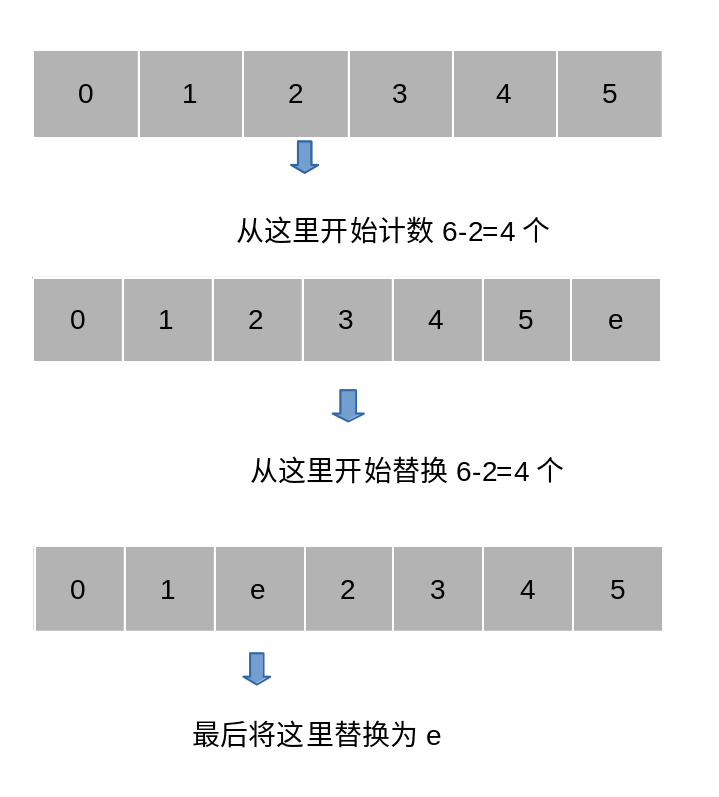
示例:size为6,我们调用add(2,element)方法,则会从index=2+1=3的位置开始,将数组元素替换为从index起始位置为index=2,长度为6-2=4的数据。
set(int index,E element)方法:逻辑很简单,覆盖旧值并返回。
        public E set(int index, E e) {

            rangeCheck(index);

            checkForComodification();

            E oldValue = ArrayList.this.elementData(offset + index);

            ArrayList.this.elementData[offset + index] = e;

            return oldValue;

        }
indexOf(Object o)方法:根据Object对象获取数组中的索引值。
    public int indexOf(Object o) {

        if (o == null) {

            for (int i = 0; i < size; i++)

                if (elementData[i]==null)

                    return i;

        } else {

            for (int i = 0; i < size; i++)

                if (o.equals(elementData[i]))

                    return i;

        }

        return -1;

    }
如果o为空,则返回数组中第一个为空的索引;不为空也类似。
注意:通过源码可以看到,该方法是允许传空值进来的。
get(int index)方法:返回指定下标处的元素的值。
    public E get(int index) {

        rangeCheck(index);

        return elementData(index);

    }
rangeCheck(index)会检测index值是否合法,如果合法则返回索引对应的值。
remove(int index)方法:删除指定下标的元素。
    public E remove(int index) {

        rangeCheck(index);

        modCount++;

        E oldValue = elementData(index);

        int numMoved = size - index - 1;

        if (numMoved > 0)

            System.arraycopy(elementData, index+1, elementData, index,

                             numMoved);

        elementData[--size] = null; // clear to let GC do its work

        return oldValue;

    }
这里又碰到了System.arraycopy()方法,详情请查阅上文。
大概思路:将该元素后面的元素前移,最后一个元素置空。
ArrayList优缺点
优点:
因为其底层是数组,所以修改和查询效率高。
可自动扩容(1.5倍)。
缺点:
插入和删除效率不高。
线程不安全。
手写简易ArrayList:
package basic;

public class MyArrayList {

    // 非私有,以简化嵌套类访问

    // transient 在已经实现序列化的类中,不允许某变量序列化

    transient Object[] elementData;

    // 默认容量

    private static final int DEFAULT_CAPACITY = 10;

    // 用于空实例的 空数组实例

    private static final Object[] EMPTY_ELEMENTDATA = {};

    private static final Object[] DEFAULTCAPACITY_EMPTY_ELEMENTDATA = {};

    // 实际ArrayList集合大小

    private int size;

    /**

     * 构造方法

     */

    public MyArrayList(int initialCapacity) {

        if (initialCapacity > 0) {

            this.elementData = new Object[initialCapacity];

        } else if (initialCapacity == 0) {

            this.elementData = EMPTY_ELEMENTDATA;

        } else {

            throw new IllegalArgumentException("Illegal Capacity: " + initialCapacity);

        }

    }

    public MyArrayList() {

        this(DEFAULT_CAPACITY);

    }

    public void add(Object o) {

        // 1. 判断数据容量是否大于 elementData

        ensureExplicitCapacity(size + 1);

        // 2. 使用下标进行赋值

        elementData[size++] = o;

    }

    private void ensureExplicitCapacity(int minCapacity) {

        if (size == elementData.length) {

            // 需要扩容,扩容1.5倍(ArrayList默认扩容1.5倍)

            // 注意:如果oldCapacity值为1

            int oldCapacity = elementData.length;

            int newCapacity = oldCapacity + (oldCapacity >> 1);

            // 如果新容量 < 最小容量, 则将最小容量赋值给新容量

            // 如果 oldCapacity=1, 则 minCapacity=1+1=2 newCapacity=1+(1>>1)=1

            if (newCapacity - minCapacity < 0) {

                newCapacity = minCapacity;

            }

            // 创建新数组

            Object[] objects = new Object[newCapacity];

            // 将数据复制给新数组

            System.arraycopy(elementData, 0, objects, 0, elementData.length);

            // 修改引用

            elementData = objects;

        }

    }

    public Object get(int index) {

        rangeCheck(index);

        return elementData[index];

    }

    private void rangeCheck(int index) {

        if (index >= size)

            throw new IndexOutOfBoundsException("下标越界");

    }

    /**

     * 通过下标删除

     * @param index

     * @return

     */

    public Object remove(int index) {

        rangeCheck(index);

         //modCount++;

        // 先查出元素

        Object oldValue = elementData[index];

        // 找出置换结束位置

        int numMoved = size - index - 1;

        if (numMoved > 0)

            // 从 index+1 开始 将值覆盖为 index-numMoved 的值

            System.arraycopy(elementData, index + 1, elementData, index, numMoved);

        elementData[--size] = null; // clear to let GC do its work

        return oldValue;

    }

    public boolean remove(Object o) {

        for (int index = 0; index < size; index++) {

            if (o.equals(elementData[index])) {

                remove(index);

                return true;

            }

        }

        return false;

    }

}
modCount的作用
ArrayList源码解读笔记的更多相关文章
- ArrayList 源码解读
ArrayList 源码解读 基于JDk 1.7.0_80 public class ArrayList<E> extends AbstractList<E> impl ...
- ArrayList源码分析笔记
ArrayList源码分析笔记 先贴出ArrayList一些属性 public class ArrayList<E> extends AbstractList<E> imple ...
- js便签笔记(10) - 分享:json2.js源码解读笔记
1. 如何理解“json” 首先应该意识到,json是一种数据转换格式,既然是个“格式”,就是个抽象的东西.它不是js对象,也不是字符串,它只是一种格式,一种规定而已. 这个格式规定了如何将js对象转 ...
- js便签笔记(10) - 分享:json.js源码解读笔记
1. 如何理解“json” 首先应该意识到,json是一种数据转换格式,既然是个“格式”,就是个抽象的东西.它不是js对象,也不是字符串,它只是一种格式,一种规定而已. 这个格式规定了如何将js对象转 ...
- JDK12下的ArrayList源码解读 与 Vector的对比
ArrayList源码阅读. //测试代码实现如下 private static void arrayList() { ArrayList<String> list = new Array ...
- ArrayList源码解读(jdk1.8)
概要 上一章,我们学习了Collection的架构.这一章开始,我们对Collection的具体实现类进行讲解:首先,讲解List,而List中ArrayList又最为常用.因此,本章我们讲解Arra ...
- 深入理解JAVA集合系列四:ArrayList源码解读
在开始本章内容之前,这里先简单介绍下List的相关内容. List的简单介绍 有序的collection,用户可以对列表中每个元素的插入位置进行精确的控制.用户可以根据元素的整数索引(在列表中的位置) ...
- Java集合ArrayList源码解读
最近在回顾数据结构,想到JDK这样好的代码资源不利用有点可惜,这是第一篇,花了心思.篇幅有点长,希望想看的朋友认真看下去,提出宝贵的意见. :) 内部原理 ArrayList 的3个字段 priva ...
- java集合之ArrayList源码解读
源自:jdk1.8.0_121 ArrayList继承自AbstractList,实现了List.RandomAccess.Cloneable.Serializable. ArrayList内部是通过 ...
随机推荐
- 牛客练习赛42(A,B)
A:链接:https://ac.nowcoder.com/acm/contest/393/A 时间限制:C/C++ 1秒,其他语言2秒 空间限制:C/C++ 262144K,其他语言524288K 6 ...
- Tomcat9.0.13 Bug引发的java.io.IOException:(打开的文件过多 Too many open files)导致服务假死
问题背景: 笔者所在的项目组最近把生产环境Tomcat迁移到Linux,算是顺利运行了一段时间,最近一个低概率密度的(too many open files)问题导致服务假死并停止响应客户端客户端请求 ...
- findViewById(R.id.btn_first) 给写成 R.layout.
窗体内放了个按钮, findViewById(R.id.btn_first) 给写成 R.layout. 在java 里边引用结果就是找不到那个id 找了半天找不到原因, 奔着网上常见R找不到的问题, ...
- centos 7安装java开发环境
https://jingyan.baidu.com/article/29697b91660672ab20de3c15.html 自带版本是有问题的~
- 20172306 2018-2019 《Java程序设计与数据结构》第一周学习总结
20172306 2018-2019 <Java程序设计与数据结构(下)>第一周学习总结 教材学习内容总结 第一章 概述 (程序=数据结构+算法 软件=程序+软件工程) 1.1 软件质量 ...
- HTML中调用JavaScript的几种情况和规范写法
JavaScript执行在html中,引用有几种方式? 我知道的方法有3种: 第一种:外部引用远程JavaScript文件.如<script type="text/javascript ...
- jquery中siblings方法配合什么方法一起使用
siblings() 获得匹配集合中每个元素的同胞,通过选择器进行筛选是可选的.接下来通过本文给大家介绍jQuery siblings()用法实例详解,需要的朋友参考下吧 siblings() 获得匹 ...
- httphandler httpmodule一些个人理解
asp.net 对于http请求需要走一个管道就行一层一层的过滤:比如身份验证,根据请求的资源不同分发给具体哪个dll来处理 这些管道中就是httpmodule.所以我们自己写的httpmodule实 ...
- docker相关操作
docker 安装参照官网一步一步来,特别简单,主要是下载比较慢: docker 需要 管理员权限: docker 相关命令: 容器生命周期管理 — docker [run|start|stop|re ...
- HPS基本概念及其设计
DE1-SOC开发版上的FPGA在一个基于ARM的用户定制系统(SOC)中集成了分立处理器(HPS).FPGA和数字信号处理(DSP)功能.HPS是基于ARM cortex-A9双核处理器,具有丰富的 ...