
Restlet 学习笔记
摘要:网络上对 restlet 的评判褒贬不一,有的说框架封装的很好,很有弹性,有的说 rest 架构风格本身是一种简单的风格,restlet 过设计以使编程过于复杂,其实我倒不觉得 restlet 有什么复杂,相反很简洁明了,不论他的类结构还是整个体系结构,个人很喜欢,昨天晚上匆匆看看他的文档和实例,很不错!文章例子代码!
正文:
1. Rest简介(摘抄自网络,讲的很到位)
Restlet是一个Java下的轻量级REST框架。通过拥抱REST(REST是一种Web架构风格)它模糊了Web站点和Web服务之间的界限,从而帮助开发人员构建Web应用。每一个主要的REST概念(REST concept)都有一个对应的Java类。你的REST化的Web设计和你的代码之间的映射是非常简单直接的。为什么有必要创建另一种框架?难道Servlet API还不够好用吗?Servlet AIP在1998年发布,从那个时候起它的核心设计一直没有很大的变化。它是Java EE的众多API中最成功的一个,但是它的几个设计缺陷和一些限制损害了它。举个例子,URI模式和它的处理者(handler)之间的映射是受限制的,而且其配置都集中在一个配置文件中。还有,它把socket流的控制直接交给了应用系统开发人员,Servlet容器阻碍了我们充分使用NIO特性对IO操作进行优化。另一个主要问题就是Servlet API鼓励应用开发者在应用或者用户会话级别直接将session状态保存于内存中,尽管这看上去不错,但它造成了Servlet容器扩展性和高可用性的主要问题。为了克服这些问题,就必须实现复杂的负载均衡、session复制、持久化机制。这导致了可扩展性必然成为灾难。
如何看待别的框架中对REST的支持(例如Axis2,或者CXF/XFire)?
这些支持非常有效,但是作用非常有限。我的主要观点是设计这些项目是为了符合WS-*/SOAP Stack,它们与REST世界并不非常契合。在REST世界里,定义了一个全新的范例:面向资源的设计,而非通过远程方法调用这样的范例。例如Axis2仅仅支持GET和POST两种HTTP方法,它需要远程方法的传递需要一个URI参数。这在REST中式不允许的,这种做法也不能被称之为REST化。XFire1.2不支持REST,但是它发布了一个项目用于将POJO映射到REST化的Web服务。这有点类似最近发布的JSR-311,此JSR试图基于一套annotation和助手类标准化这种映射。
REST与HTTP协议
REST软件架构是由Roy Thomas Fielding博士在2000年首次提出的。他为我们描绘了开发基于互联网的网络软件的蓝图。REST软件架构是一个抽象的概念,是一种为了实现这一互联网的超媒体分布式系统的行动指南。利用任何的技术都可以实现这种理念。而实现这一软件架构最著名的就是HTTP协议。通常我们把REST也写作为REST/HTTP,在实际中往往把REST理解为基于HTTP的REST软件架构,或者更进一步把REST和HTTP看作为等同的概念。今天,HTTP是互联网上应用最广泛的计算机协议。HTTP不是一个简单的运载数据的协议,而是一个具有丰富内涵的网络软件的协议。它不仅仅能够对于互联网资源进行唯一定位,而且还能告诉我们对于该资源进行怎样运作。这也是REST软件架构当中最重要的两个理念。而REST软件架构理念是真正理解HTTP协议而形成的。有了REST软件架构理念出现,才使得软件业避免了对HTTP协议的片面理解。只有正确的理论指导,才能避免在软件开发的实际工作过程中少走弯路。
REST与URI(资源定位)
REST软件架构之所以是一个超媒体系统,是因为它可以把网络上所有资源进行唯一的定位,不管你的文件是图片、文件Word还是视频文件,也不管你的文件是txt文件格式、xml文件格式还是其它文本文件格式。它利用支持HTTP的TCP/IP协议来确定互联网上的资源。
REST与CRUD原则
REST软件架构遵循了CRUD原则,该原则告诉我们对于资源(包括网络资源)只需要四种行为:创建(Create)、获取(Read)、更新(Update)和销毁(DELETE)就可以完成对其操作和处理了。其实世界万物都是遵循这一规律:生、变、见、灭。所以计算机世界也不例外。这个原则是源自于我们对于数据库表的数据操作:insert(生)、select(见)、update(变)和delete(灭),所以有时候CRUD也写作为RUDI,其中的I就是insert。这四个操作是一种原子操作,即一种无法再分的操作,通过它们可以构造复杂的操作过程,正如数学上四则运算是数字的最基本的运算一样。
REST与网络服务
尽管在Java语言世界中网络服务目前是以SOAP技术为主,但是REST将是是网络服务的另一选择,并且是真正意义上的网络服务。基于REST思想的网络服务不久的将来也会成为是网络服务的主流技术。REST不仅仅把HTTP作为自己的数据运输协议,而且也作为直接进行数据处理的工具。而当前的网络服务技术都需要使用其它手段来完成数据处理工作,它们完全独立于HTTP协议来进行的,这样增加了大量的复杂软件架构设计工作。REST的思想充分利用了现有的HTTP技术的网络能力。在德国电视台上曾经出现过一个这样的五十万欧元智力题:如何实现网络服务才能充分利用现有的HTTP协议?该问题给出了四个答案:去问微软;WSDL2.0/SOAP1.2;WS-Transfer;根本没有。这个问题告诉我们HTTP并不是一个简单的数据传来传去的协议,而是一个聪明的会表现自己的协议,这也许是REST = Representational State Transfer的真正含义。实际上目前很多大公司已经采用了REST技术作为网络服务,如Google、Amazon等。在Java语言中重要的两个以SOAP技术开始的网络服务框架XFire和Axis也把REST作为自己的另一种选择。它们的新的项目分别是Apache CXF和Axis2。Java语言也制定关于REST网络服务规范:JAX-RS: Java API for RESTful Web Services (JSR 311)。相信还会出现更多与REST相关的激动人心的信息。
REST与AJAX技术
尽管AJAX技术的出现才不到两年时间,但是AJAX技术遵循了REST的一些重要原则。AJAX技术充分利用了HTTP来获取网络资源并且实现了HTTP没有的对于异步数据进行传输的功能。AJAX技术还使得软件更好地实现分布性功能,在一个企业内只要一个人下载了AJAX引擎,其它企业内部的人员,就可以共享该资源了。AJAX技术遵守REST准则的应用程序中简单和可伸缩的架构,凡是采用AJAX技术的页面简洁而又丰富,一个页面表现了丰富多彩的形态。AJAX技术还使用了一种不同于XML格式的JSON文件格式,这个意义在哪里呢?在REST软件架构下我们不能对于XML文件进行序列化处理,这样程序员必须要使用自己的XML绑定框架。而以序列化的JavaScript对象为基础的JSON已经获得了广泛认可,它被认为能以远比XML更好的方式来序列化和传输简单数据结构,而且它更简洁。这对REST是一个极大贡献和补充。当前的网络应用软件还违背了REST的"无状态服务器"约束。REST服务器只知道自己的状态。REST不关心客户端的状态,客户端的状态自己来管理,这是AJAX技术的应用之地。通过AJAX技术,可以发挥有状态网络客户机的优势。而REST的服务器关心的是从所有网络客户端发送到服务器操作的顺序。这样使得互联网这样一个巨大的网络得到有序的管理。
REST与Rails框架
Ruby on Rails框架(简称Rails或者Rails框架)是一个基于Ruby语言的越来越流行的网络应用软件开发框架。它提供了关于REST最好的支持,也是当今应用REST最成功的一个软件开发框架。Rails框架(从版本1.2.x起)成为了第一个引入REST作为核心思想的主流网络软件开发框架。在Rails框架的充分利用了REST软件架构之后,人们更加坚信REST的重要性和必要性。Rails利用REST软件架构思想对网络服务也提供了一流的支持。从最直观的角度看待REST,它是网络服务最理想的手段,但是Rails框架把REST带到了网络应用软件开发框架。这是一次飞跃,让REST的思想从网络服务的应用提升到了网络应用软件开发。利用REST思想的simply_restful插件已经成为了Rails框架的核心内容。
REST安全性
我们把现有基于SOAP的网络服务和基于REST/HTTP网络服务作个比喻,前者是一种传统的寄信方式,而后者是现代网络的电子邮件方式。要是是寄信和电子邮件都有病毒存在的话,传统的寄信被送到对方就很危险,而电子邮件是开发的,电子邮件供应商比如Google为我们检查了电子邮件是否有病毒。这里并不是说明SOAP网络服务消息包含义病毒,而是说明HTTP是无法处理SOAP信息包究竟好不好,需要额外的软件工具解决这一问题,包括防火墙也用不上和管不了。
REST/HTTP网络服务的信息包可以被防火墙理解和控制。你可以按照操作和链接进行过滤信息包,如你可以规定从外部来的只能读取(GET操作)自己服务器的资源。这样对于系统管理员而言使得软件管理更为简单。REST的安全性还可以利用传输安全协议SSL/TLS、基本和摘要式认证(Basic und Digest Authentication)。除了这些REST自身的安全性功能外,还可以利用像基于信息的Web Services Security(JSR 155)作为REST不错的补充。
2. Restlet 类结构
Uniform 是一个 Abstract 类,定义了和 HTTPMethod 对应的方法如 get,post,delete,put 等等。子类 Restlet 应该是这个框架的核心类了,restlet 有些像 servlet API,可以得到 application和 context 两个对象,其子类分别为链接器,应用,路由器,查找器,组件和过滤器。在看他的表述类结构
3. 脱离 web server 的 restlet
其实说脱离,只是 restlet 自己做了端口监听和 http 协议解析和封装的功能,restlet 设计是以资源设计为中心的,有些像 struts,webwork之 MVC 风格但又不同,他完全符合 rest 体系架构风格,可以很好的和现有的领域模型结合,一个简单的分层结构如图 资源层是对需要显示的领域模型做了显示封装,对表示层提供资源,而对领域层中需要持久化的模型借助 orm 映射器持久化。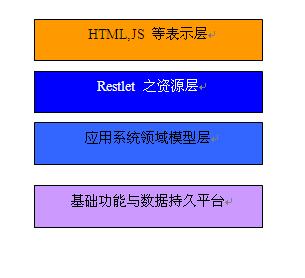 个人觉得 restlet 的应用核心在于服务,像 Axis2和XFire 等都有支持 rest 风格,restlet结合 json 应该是个比较好的实践。
且看下面简单的代码(代码为官方文档里的例子):
对 Resource 封装一下 BaseResource 以方便应用程序使用:
 package org.blogjava.restlet;
2
3
import java.util.Map;4
5
import org.restlet.Context; 6
import org.restlet.data.Request; 7
import org.restlet.data.Response; 8
import org.restlet.resource.Resource; 9
import org.restlet.Application;10
11

 /** *//**
 12
 * Base resource class that supports common behaviours or attributes shared by
 13
* all resources. 14
* 15
 */
*/ 16
public abstract class BaseResource extends Resource  {
{17
18

 public BaseResource(Context context, Request request, Response response) {
 19
super(context, request, response); 20
 }
}21
22
/** *//** 23
* Returns the map of items managed by this application. 24
* 25
* @return the map of items managed by this application. 26
*/ 27
protected Map<String, Item> getItems() { 28
return ((FirstResourceApplication) getContext().getAttributes().get( 29
Application.KEY)).getItems(); 30
} 31
}32
33
实现 Application 类,定义路由(URI ->Resource 的映射)
package org.blogjava.restlet;2
3
import java.util.Map; 4
import java.util.concurrent.ConcurrentHashMap;5
6
import org.restlet.Application; 7
import org.restlet.Context; 8
import org.restlet.Restlet; 9
import org.restlet.Router;10
11
public class FirstResourceApplication extends Application {12
13
/** *//** The list of items is persisted in memory. */ 14
private final Map<String, Item> items;15
16
public FirstResourceApplication(Context parentContext) { 17
super(parentContext); 18
// We make sure that this attribute will support concurrent access. 19
items = new ConcurrentHashMap<String, Item>(); 20
}21
22
/** *//** 23
* Creates a root Restlet that will receive all incoming calls. 24
*/ 25
@Override 26
public synchronized Restlet createRoot() { 27
// Create a router Restlet that defines routes. 28
Router router = new Router(getContext());29
30
// Defines a route for the resource "list of items" 31
router.attach("/items", ItemsResource.class); 32
// Defines a route for the resource "item" 33
router.attach("/items/{itemName}", ItemResource.class);34
35
return router; 36
}37
38
/** *//** 39
* Returns the list of registered items. 40
* 41
* @return the list of registered items. 42
*/ 43
public Map<String, Item> getItems() { 44
return items; 45
} 46
} 47
资源类实现:
public class ItemResource extends BaseResource {2
3
/** *//** The underlying Item object. */ 4
Item item;5
6
/** *//** The sequence of characters that identifies the resource. */ 7
String itemName;8
9
public ItemResource(Context context, Request request, Response response) { 10
super(context, request, response);11
12
// Get the "itemName" attribute value taken from the URI template 13
// /items/{itemName}. 14
this.itemName = (String) getRequest().getAttributes().get("itemName");15
16
// Get the item directly from the "persistence layer". 17
this.item = getItems().get(itemName);18
19
if (this.item != null) { 20
// Define the supported variant. 21
getVariants().add(new Variant(MediaType.TEXT_XML)); 22
} 23
}24
25
/** *//** 26
* This resource supports DELETE requests. 27
*/ 28
@Override 29
public boolean allowDelete() { 30
return true; 31
}32
33
/** *//** 34
* This resource supports PUT requests. 35
*/ 36
@Override 37
public boolean allowPut() { 38
return true; 39
}40
41
/** *//** 42
* Handle DELETE requests. 43
*/ 44
@Override 45
public void delete() { 46
if (item != null) { 47
// Remove the item from the list. 48
getItems().remove(item.getName()); 49
}50
51
// Tells the client that the request has been successfully fulfilled. 52
getResponse().setStatus(Status.SUCCESS_NO_CONTENT); 53
}54
55
@Override 56
public Representation getRepresentation(Variant variant) {57
58
if (MediaType.TEXT_XML.equals(variant.getMediaType())) { 59
// Generate the XML representation of this resource. 60
try { 61
// Generate a DOM document representing the item. 62
DomRepresentation representation = new DomRepresentation( 63
MediaType.TEXT_XML); 64
Document d = representation.getDocument();65
66
Element eltItem = d.createElement("item"); 67
d.appendChild(eltItem); 68
Element eltName = d.createElement("name"); 69
eltName.appendChild(d.createTextNode(item.getName())); 70
eltItem.appendChild(eltName);71
72
Element eltDescription = d.createElement("description"); 73
eltDescription.appendChild(d.createTextNode(item 74
.getDescription())); 75
eltItem.appendChild(eltDescription);76
77
d.normalizeDocument();78
79
// Returns the XML representation of this document. 80
return representation; 81
} catch (IOException e) { 82
e.printStackTrace(); 83
} 84
}85
86
return null; 87
}88
89
/** *//** 90
* Handle PUT requests. 91
*/ 92
@Override 93
public void put(Representation entity) { 94
// Tells if the item is to be created of not. 95
boolean creation = (item == null);96
97
// The PUT request updates or creates the resource. 98
if (item == null) { 99
item = new Item(itemName); 100
}101
102
// Update the description. 103
Form form = new Form(entity); 104
item.setDescription(form.getFirstValue("description"));105
106
// Update the item in the list. 107
getItems().put(item.getName(), item);108
109
if (creation) { 110
getResponse().setStatus(Status.SUCCESS_CREATED); 111
} else { 112
getResponse().setStatus(Status.SUCCESS_OK); 113
} 114
}115
116
} 117
118
客户端和服务器类,服务器类代替 web server 做监听和 Http 协议处理。
package org.blogjava.restlet;2
3
import java.io.IOException;4
5
import org.restlet.Client; 6
import org.restlet.data.Form; 7
import org.restlet.data.Protocol; 8
import org.restlet.data.Reference; 9
import org.restlet.data.Response; 10
import org.restlet.resource.Representation;11
12
public class FirstResourceClientMain {13
14
public static void main(String[] args) throws IOException { 15
// Define our Restlet HTTP client. 16
Client client = new Client(Protocol.HTTP);17
18
// The URI of the resource "list of items". 19
Reference itemsUri = new Reference( 20
"http://localhost:8182/firstResource/items");21
22
// Create a new item 23
Item item = new Item("item1", "this is an item."); 24
Reference itemUri = createItem(item, client, itemsUri); 25
if (itemUri != null) { 26
// Prints the representation of the newly created resource. 27
get(client, itemUri); 28
}29
30
// Prints the list of registered items. 31
get(client, itemsUri);32
33
// Update the item 34
item.setDescription("This is an other description"); 35
updateItem(item, client, itemUri);36
37
// Prints the list of registered items. 38
get(client, itemsUri);39
40
// delete the item 41
deleteItem(client, itemUri);42
43
// Print the list of registered items. 44
get(client, itemsUri); 45
}46
47
/** *//** 48
* Try to create a new item. 49
* 50
* @param item 51
* the new item. 52
* @param client 53
* the Restlet HTTP client. 54
* @param itemsUri 55
* where to POST the data. 56
* @return the Reference of the new resource if the creation succeeds, null 57
* otherwise. 58
*/ 59
public static Reference createItem(Item item, Client client, 60
Reference itemsUri) { 61
// Gathering informations into a Web form. 62
Form form = new Form(); 63
form.add("name", item.getName()); 64
form.add("description", item.getDescription()); 65
Representation rep = form.getWebRepresentation();66
67
// Launch the request 68
Response response = client.post(itemsUri, rep); 69
if (response.getStatus().isSuccess()) { 70
if (response.isEntityAvailable()) { 71
try { 72
// Always consume the response's entity, if available. 73
response.getEntity().write(System.out); 74
} catch (IOException e) { 75
e.printStackTrace(); 76
} 77
}78
79
return response.getEntity().getIdentifier(); 80
}81
82
return null; 83
}84
85
/** *//** 86
* Prints the resource's representation. 87
* 88
* @param client 89
* client Restlet. 90
* @param reference 91
* the resource's URI 92
* @throws IOException 93
*/ 94
public static void get(Client client, Reference reference) 95
throws IOException { 96
Response response = client.get(reference); 97
if (response.getStatus().isSuccess()) { 98
if (response.isEntityAvailable()) { 99
response.getEntity().write(System.out); 100
} 101
} 102
}103
104
/** *//** 105
* Try to update an item. 106
* 107
* @param item 108
* the item. 109
* @param client 110
* the Restlet HTTP client. 111
* @param itemUri 112
* the resource's URI. 113
*/ 114
public static boolean updateItem(Item item, Client client, Reference itemUri) { 115
// Gathering informations into a Web form. 116
Form form = new Form(); 117
form.add("name", item.getName()); 118
form.add("description", item.getDescription()); 119
Representation rep = form.getWebRepresentation();120
121
// Launch the request 122
Response response = client.put(itemUri, rep); 123
if (response.isEntityAvailable()) { 124
try { 125
// Always consume the response's entity, if available. 126
response.getEntity().write(System.out); 127
} catch (IOException e) { 128
e.printStackTrace(); 129
} 130
} 131
return response.getStatus().isSuccess(); 132
}133
134
/** *//** 135
* Try to delete an item. 136
* 137
* @param client 138
* the Restlet HTTP client. 139
* @param itemUri 140
* the resource's URI. 141
*/ 142
public static boolean deleteItem(Client client, Reference itemUri) { 143
// Launch the request 144
Response response = client.delete(itemUri); 145
if (response.isEntityAvailable()) { 146
try { 147
// Always consume the response's entity, if available. 148
response.getEntity().write(System.out); 149
} catch (IOException e) { 150
e.printStackTrace(); 151
} 152
}153
154
return response.getStatus().isSuccess(); 155
}156
157
} 158
package org.blogjava.restlet; 159
import org.restlet.Component; 160
import org.restlet.data.Protocol;161
162
public class FirstResourceServerMain {163
164
public static void main(String[] args) throws Exception { 165
// Create a new Component. 166
Component component = new Component();167
168
// Add a new HTTP server listening on port 8182. 169
component.getServers().add(Protocol.HTTP, 8182);170
171
// Attach the sample application. 172
component.getDefaultHost().attach("/firstResource", 173
new FirstResourceApplication(component.getContext()));174
175
// Start the component. 176
component.start(); 177
}178
179
} 180
181
4.和现有 servlet 容器结合的例子
配置 web.xml
<context-param> 2
<param-name>org.restlet.application</param-name> 3
<param-value> 4
org.blogjava.helloworld.FirstStepsApplication 5
</param-value> 6
</context-param> 7
<!-- Restlet adapter --> 8
<servlet> 9
<servlet-name>RestletServlet</servlet-name> 10
<servlet-class> 11
com.noelios.restlet.ext.servlet.ServerServlet 12
</servlet-class> 13
</servlet> 14
<!-- Catch all requests --> 15
<servlet-mapping> 16
<servlet-name>RestletServlet</servlet-name> 17
<url-pattern>/*</url-pattern> 18
</servlet-mapping>19
20
实现 Application 和 Resource 资源类
2
public class FirstStepsApplication extends Application {3
4
public FirstStepsApplication(Context parentContext) { 5
super(parentContext); 6
}7
8
/** *//** 9
* Creates a root Restlet that will receive all incoming calls. 10
*/ 11
@Override 12
public synchronized Restlet createRoot() { 13
// Create a router Restlet that routes each call to a 14
// new instance of HelloWorldResource. 15
Router router = new Router(getContext());16
17
// Defines only one route 18
router.attachDefault(HelloWorldResource.class);19
20
return router; 21
} 22
} 23
24
25
package org.blogjava.helloworld;26
27
import org.restlet.Context; 28
import org.restlet.data.MediaType; 29
import org.restlet.data.Request; 30
import org.restlet.data.Response; 31
import org.restlet.resource.Representation; 32
import org.restlet.resource.Resource; 33
import org.restlet.resource.StringRepresentation; 34
import org.restlet.resource.Variant;35
36
/** *//** 37
* Resource which has only one representation. 38
* 39
*/ 40
public class HelloWorldResource extends Resource {41
42
public HelloWorldResource(Context context, Request request, 43
Response response) { 44
super(context, request, response);45
46
// This representation has only one type of representation. 47
getVariants().add(new Variant(MediaType.TEXT_PLAIN)); 48
}49
50
/** *//** 51
* Returns a full representation for a given variant. 52
*/ 53
@Override 54
public Representation getRepresentation(Variant variant) { 55
Representation representation = new StringRepresentation( 56
"hello, world,just a simple example!", MediaType.TEXT_PLAIN); 57
return representation; 58
} 59
}60
61
参考资料
http://www.restlet.org/documentation/1.0/tutorial(官方手册)
Restlet 学习笔记的更多相关文章
- Maven学习笔记-03-Eclipse下maven项目在Tomcat7和Jetty6中部署调试
现在最新的Eclipse Luna Release 已经内置了Maven插件,这让我们的工作简洁了不少,只要把项目直接导入就可以,不用考虑插件什么的问题,但是导入之后的项目既可以部署在Tomcat也可 ...
- Maven学习笔记-04-Eclipse下maven项目在Tomcat7和Jetty6中部署调试
现在最新的Eclipse Luna Release 已经内置了Maven插件,这让我们的工作简洁了不少,只要把项目直接导入就可以,不用考虑插件什么的问题,但是导入之后的项目既可以部署在Tomcat也可 ...
- js学习笔记:webpack基础入门(一)
之前听说过webpack,今天想正式的接触一下,先跟着webpack的官方用户指南走: 在这里有: 如何安装webpack 如何使用webpack 如何使用loader 如何使用webpack的开发者 ...
- PHP-自定义模板-学习笔记
1. 开始 这几天,看了李炎恢老师的<PHP第二季度视频>中的“章节7:创建TPL自定义模板”,做一个学习笔记,通过绘制架构图.UML类图和思维导图,来对加深理解. 2. 整体架构图 ...
- PHP-会员登录与注册例子解析-学习笔记
1.开始 最近开始学习李炎恢老师的<PHP第二季度视频>中的“章节5:使用OOP注册会员”,做一个学习笔记,通过绘制基本页面流程和UML类图,来对加深理解. 2.基本页面流程 3.通过UM ...
- 2014年暑假c#学习笔记目录
2014年暑假c#学习笔记 一.C#编程基础 1. c#编程基础之枚举 2. c#编程基础之函数可变参数 3. c#编程基础之字符串基础 4. c#编程基础之字符串函数 5.c#编程基础之ref.ou ...
- JAVA GUI编程学习笔记目录
2014年暑假JAVA GUI编程学习笔记目录 1.JAVA之GUI编程概述 2.JAVA之GUI编程布局 3.JAVA之GUI编程Frame窗口 4.JAVA之GUI编程事件监听机制 5.JAVA之 ...
- seaJs学习笔记2 – seaJs组建库的使用
原文地址:seaJs学习笔记2 – seaJs组建库的使用 我觉得学习新东西并不是会使用它就够了的,会使用仅仅代表你看懂了,理解了,二不代表你深入了,彻悟了它的精髓. 所以不断的学习将是源源不断. 最 ...
- CSS学习笔记
CSS学习笔记 2016年12月15日整理 CSS基础 Chapter1 在console输入escape("宋体") ENTER 就会出现unicode编码 显示"%u ...
随机推荐
- Bootstrapbutton组
button组同意多个button被堆叠在同一行上.当你想要把button对齐在一起时,这就显得很实用. 基本button组 给div加上class .btn-group <!DOCTYPE h ...
- wcf rest系列文章
http://www.cnblogs.com/artech/archive/2012/02/15/wcf-rest.html 需要注意的是,发布的服务,可以在web behavior中指定显示help ...
- BZOJ 2553 AC自动机+矩阵快速幂 (神题)
思路: 我们先对所有读进来的T建一个AC自动机 因为走到一个禁忌串就需要回到根 所以呢 搞出来所有的结束点 或一下 fail指针指向的那个点 然后我们就想转移 a[i][j]表示从i节点转移到j节点的 ...
- RedHat Linux 下安装、测试摄像头
RedHat Linux 下安装.测试摄像头(全文见附件) 随着视频电话的迅速发展我相信大家一定有过在Windows 下安装摄像头的经历,然而大多数 都不支持Linux .我现以罗技摄像头为例 ...
- POSTGRESQL NO TABLE
POSTGRESQL EXTENDING SQL GRIGGER PROCEDURAL
- C#一些延时函数
sleep延时方法: System.Threading.Thread.Sleep(); //毫秒 在C#窗口程序中,如果在主线程里调用Sleep,在Sleep完成之前, 界面呈现出假死状态,不能响应任 ...
- Linux下CD/DVD刻录软件
1.Brasero是一款CD/DVD刻录软件,Gnome桌面环境默认自带,支持单次写入数据DVD和任何类型的CD,并且能够将光盘镜像写入到硬盘,其图形化的操作界面使用户能够轻松而快速的在Linux下烧 ...
- PHP 相关配置
1. php-fpm的pool 编辑"php-fpm"配置文件"php-fpm.con" vim /usr/local/php/etc/php-fpm.conf ...
- CCF模拟题 字符串匹配
字符串匹配 时间限制: 1.0s 内存限制: 256.0MB 问题描述 给出一个字符串和多行文字,在这些文字中找到字符串出现的那些行.你的程序还需支持大小写敏感选项:当选项打开时,表示同一个字母的大写 ...
- WebCollector爬取百度搜索引擎样例
使用WebCollector来爬取百度搜索引擎依照关键字搜索的结果页面,解析规则可能会随百度搜索的改版而失效. 代码例如以下: package com.wjd.baidukey.crawler; im ...