
JAVA并发-CountDownLatch
源码:
内部类Sync
private static final class Sync extends AbstractQueuedSynchronizer {

        private static final long serialVersionUID = 4982264981922014374L;

        //调用AQS类的setState设置状态位

        Sync(int count) {

            setState(count);

        }

        int getCount() {

            return getState();

        }

        protected int tryAcquireShared(int acquires) {

            return (getState() == 0) ? 1 : -1;

        }

        protected boolean tryReleaseShared(int releases) {

            // Decrement count; signal when transition to zero

            for (;;) {

                int c = getState();

                if (c == 0)

                    return false;

                int nextc = c-1;

                if (compareAndSetState(c, nextc))

                    return nextc == 0;

            }

        }

    }
CountDownLatch初始化
    public CountDownLatch(int count) {

        if (count < 0) throw new IllegalArgumentException("count < 0");

        this.sync = new Sync(count);

    }
可以设置AQS中的state为count
阻塞分析
await
 public void await() throws InterruptedException {

        sync.acquireSharedInterruptibly(1);

    }
acquireSharedInterruptibly
   public final void acquireSharedInterruptibly(int arg)

            throws InterruptedException {

        if (Thread.interrupted())

            throw new InterruptedException();

        if (tryAcquireShared(arg) < 0)

            doAcquireSharedInterruptibly(arg);

    }
具体如下:
1、检测中断标志位
2、调用tryAcquireShared方法来检查AQS标志位state是否等于0,如果state等于0,则说明不需要等待,立即返回,否则进行3
3、调用doAcquireSharedInterruptibly方法进入AQS同步队列进行等待,并不断的自旋检测是否需要唤醒
doAcquireSharedInterruptibly
  private void doAcquireSharedInterruptibly(int arg)

        throws InterruptedException {

        final Node node = addWaiter(Node.SHARED);//加入队列尾部

        boolean failed = true;//是否成功标志

        try {

            for (;;) {

                final Node p = node.predecessor();//前驱

                //如果到head的下一个,因为head是拿到资源的线程,此时node被唤醒,很可能是head用完资源来唤醒自己的

                if (p == head) {

                    int r = tryAcquireShared(arg);

                    if (r >= 0) { //如果大于零,则说明需要唤醒

                        setHeadAndPropagate(node, r);//将head指向自己,还有剩余资源可以再唤醒之后的线程

                        p.next = null; // help GC

                        failed = false;

                        return;

                    }

                }

                //判断状态,寻找安全点,进入waiting状态,等着被unpark()或interrupt()

                if (shouldParkAfterFailedAcquire(p, node) &&

                    parkAndCheckInterrupt())

                    throw new InterruptedException();

            }

        } finally {

            if (failed)

                cancelAcquire(node);

        }

    }
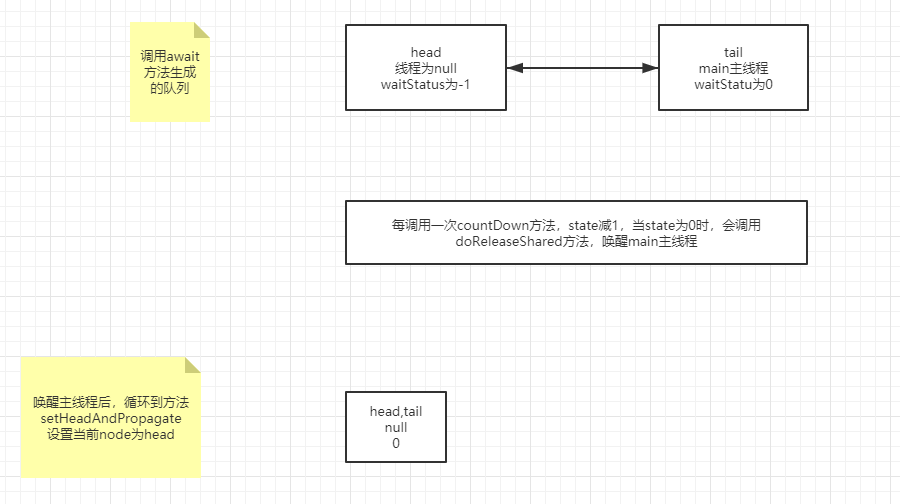
addWaiter(Node.SHARED),这里将会新增两个node
第一轮循环创建一个new Node(),空节点,线程也为空
第二轮将Node.SHARED加入到队列中,prev指向head
在最后一次release之前,tryAcquireShared会为-1
shouldParkAfterFailedAcquire(Node, Node)
1、源码:

    /**

     * Checks and updates status for a node that failed to acquire.

     * Returns true if thread should block. This is the main signal

     * control in all acquire loops.  Requires that pred == node.prev.

     *

     * @param pred node's predecessor holding status

     * @param node the node

     * @return {@code true} if thread should block

     */

    private static boolean shouldParkAfterFailedAcquire(Node pred, Node node) {

        int ws = pred.waitStatus; // 获取前驱结点的状态值

        if (ws == Node.SIGNAL) // 若前驱结点的状态为SIGNAL状态的话,那么该结点就不要想事了,直接返回true准备休息

            /*

             * This node has already set status asking a release

             * to signal it, so it can safely park.

             */

            return true;

        if (ws > 0) {

            /*

             * Predecessor was cancelled. Skip over predecessors and

             * indicate retry.

             */

            // 若前驱结点的状态为CANCELLED状态的话,那么就一直向前遍历,直到找到一个不为CANCELLED状态的结点

            do {

                node.prev = pred = pred.prev;

            } while (pred.waitStatus > 0);

            pred.next = node;

        } else {

            /*

             * waitStatus must be 0 or PROPAGATE.  Indicate that we

             * need a signal, but don't park yet.  Caller will need to

             * retry to make sure it cannot acquire before parking.

             */

             // 剩下的结点状态,则设置其为SIGNAL状态,然后返回false标志等外层循环再次判断

            compareAndSetWaitStatus(pred, ws, Node.SIGNAL);

        }

        return false;

    }

2、shouldParkAfterFailedAcquire主要是检测前驱结点状态,前驱结点为SIGNAL的话,则新结点可以安安心心休息了;

   如果前驱结点大于零,说明前驱结点处于CANCELLED状态,那么则以入参pred前驱为起点,一直往前找,直到找到最近一个正常等待状态的结点;

   如果前驱结点小于零,那么就将前驱结点设置为SIGNAL状态,然后返回false依赖acquireQueued的自旋再次判断是否需要进行休息;
第一次进入,ws为0
compareAndSetWaitStatus将pred的waitStatus设置为Node.SIGNAL
第二次进入就直接return true
parkAndCheckInterrupt()
1、源码:

    /**

     * Convenience method to park and then check if interrupted

     *

     * @return {@code true} if interrupted

     */

    private final boolean parkAndCheckInterrupt() {

        LockSupport.park(this); // 阻塞等待

        return Thread.interrupted(); // 被唤醒后查看是否有被中断过否?

    }

2、parkAndCheckInterrupt首先调用park让线程进入等待状态,然后当park阻塞被唤醒后,再次检测是否曾经被中断过;

   而被唤醒有两种情况,一个是利用unpark唤醒,一个是利用interrupt唤醒;
main线程会进入上述代码,阻塞main线程。
释放分析
countDown
    public void countDown() {

        sync.releaseShared(1);

    }

    public final boolean releaseShared(int arg) {

        if (tryReleaseShared(arg)) {

            doReleaseShared();

            return true;

        }

        return false;

    }
Sync内部类中的tryReleaseShared
 protected boolean tryReleaseShared(int releases) {

            // Decrement count; signal when transition to zero

            for (;;) {

                int c = getState();

                if (c == 0)

                    return false;

                int nextc = c-1;

                if (compareAndSetState(c, nextc))

                    return nextc == 0;

            }

        }
可见只有最后一次release的时候才会进入到doReleaseShared
doReleaseShared
    private void doReleaseShared() {

        for (;;) {

            Node h = head;

            if (h != null && h != tail) {

                int ws = h.waitStatus;

                if (ws == Node.SIGNAL) {

                    if (!compareAndSetWaitStatus(h, Node.SIGNAL, 0))

                        continue;            // loop to recheck cases

                    unparkSuccessor(h);

                }

                else if (ws == 0 &&

                         !compareAndSetWaitStatus(h, 0, Node.PROPAGATE))

                    continue;                // loop on failed CAS

            }

            if (h == head)                   // loop if head changed

                break;

        }

    }
进入上述代码时,head的waitStatus在上述shouldParkAfterFailedAcquire中设置为了Node.SIGNAL
所以这里会调用unparkSuccessor(h)
unparkSuccessor
 private void unparkSuccessor(Node node) {

        /*

         * If status is negative (i.e., possibly needing signal) try

         * to clear in anticipation of signalling.  It is OK if this

         * fails or if status is changed by waiting thread.

         */

        int ws = node.waitStatus;

        if (ws < 0)

            compareAndSetWaitStatus(node, ws, 0);

        /*

         * Thread to unpark is held in successor, which is normally

         * just the next node.  But if cancelled or apparently null,

         * traverse backwards from tail to find the actual

         * non-cancelled successor.

         */

        Node s = node.next;

        if (s == null || s.waitStatus > 0) {

            s = null;

            for (Node t = tail; t != null && t != node; t = t.prev)

                if (t.waitStatus <= 0)

                    s = t;

        }

        if (s != null)

            LockSupport.unpark(s.thread);

    }
这里s=node.next,node为head,s的线程为main线程,这里释放main线程。
流程
参考:
【JUC】JDK1.8源码分析之CountDownLatch(五)
JAVA并发-CountDownLatch的更多相关文章
- java 并发——CountDownLatch
java 并发--CountDownLatch 简介 public class CountDownLatch { private final Sync sync; private static fin ...
- java并发--CountDownLatch、CyclicBarrier和Semaphore
在java 1.5中,提供了一些非常有用的辅助类来帮助我们进行并发编程,比如CountDownLatch,CyclicBarrier和Semaphore,今天我们就来学习一下这三个辅助类的用法. 以下 ...
- Java并发--CountDownLatch CyclicBarrier ReentrantLock
CountDownLatch CountDownLatch是一个同步工具类,它允许一个或多个线程一直等待,直到其他线程的操作执行完后再执行.CountDownLatch使用一个数字count初始化,使 ...
- 【Java并发编程实战】-----“J.U.C”:CountDownlatch
上篇博文([Java并发编程实战]-----"J.U.C":CyclicBarrier)LZ介绍了CyclicBarrier.CyclicBarrier所描述的是"允许一 ...
- Java并发编程:CountDownLatch、CyclicBarrier和Semaphore
Java并发编程:CountDownLatch.CyclicBarrier和Semaphore 在java 1.5中,提供了一些非常有用的辅助类来帮助我们进行并发编程,比如CountDownLatch ...
- Java 并发专题 :闭锁 CountDownLatch 之一家人一起吃个饭
最近一直整并发这块东西,顺便写点Java并发的例子,给大家做个分享,也强化下自己记忆. 每天起早贪黑的上班,父母每天也要上班,话说今天定了个饭店,一家人一起吃个饭,通知大家下班去饭店集合.假设:3个人 ...
- Java并发工具类 - CountDownLatch
Java并发工具类 - CountDownLatch 1.简介 CountDownLatch是Java1.5之后引入的Java并发工具类,放在java.util.concurrent包下面 http: ...
- Java并发编程的4个同步辅助类(CountDownLatch、CyclicBarrier、Semaphore、Phaser)
我在<JDK1.5引入的concurrent包>中,曾经介绍过CountDownLatch.CyclicBarrier两个类,还给出了CountDownLatch的演示案例.这里再系统总结 ...
- 【Java并发核心三】CountDownLatch、CyclicBarrier及Phaser
个人感觉,看书学习还是需要“不求甚解”,因为一旦太过于计较小的得失,就容易钻牛角尖,学习进度也慢.我们完全可以先学一个大概,等到真正用到的时候再把那些细节丰富起来,就更有针对性. 所以,针对java并 ...
随机推荐
- Semantic 3D
Semantic 3D 这个数据级别的训练集有一个小BUG,是这个neugasse_station1_xyz_intensity_rgb.7z, 解压之后的名字是station1_xyz_intens ...
- Eclipse中如何安装Git插件
现在的Eclipse一般都自带Git插件. 检查Eclipse是否有Git插件: 方法一:Help—>About Eclipse,出现下面的图标,说明Eclipse中已有Git插件,就不用安装了 ...
- 用 FFLIB 实现 Apex 企业设计模式
Apex 企业设计模式将应用分为服务层.模型层.选择逻辑层.工作单元几个部分.FFLIB 是一个开源的 Apex 框架,可以帮助开发者快速建立相关的功能. FFLIB 的安装 FFLIB 可以直接部署 ...
- 【洛谷4045】[JSOI2009] 密码(状压+AC自动机上DP)
点此看题面 大致题意: 给你\(n\)个字符串,问你有多少个长度为\(L\)的字符串,使得这些字符串都是它的子串.若个数不大于\(42\),按字典序输出所有方案. 状压 显然,由于\(n\)很小,我们 ...
- Kavex GameDev-Resources
https://github.com/Kavex/GameDev-Resources 各种资源
- 01 学习数据分析的python库
网页爬取 1.requests 2.BeautifulSoup 3.Scrapy 科学计算与数据分析 1.scipy 2.numpy 3.pandas 机器学习和深度学习 1.Scikit-learn ...
- H5开发 连接蓝牙打印机 打印标签(斑马ZR628)
1.连接蓝牙打印机(先用手机自带蓝牙进行配对),然后绑定出已配对的蓝牙设备(用来选择/切换打印机之用),代码如下 已配对蓝牙设备,中显示的就是已连接的,点击一下即可 代码: <!DOCTYPE ...
- 物联网架构成长之路(32)-SpringBoot集成MQTT客户端
一.前言 这里虽然是说MQTT客户端.其实对于服务器来说,这里的一个具有超级权限的MQTT客户端,就可以做很多事情.比如手机APP或者网页或者第三方服务需要发送数据到设备,但是这些又不是设备,又不能让 ...
- npm和yarn的区别,我们该如何选择?
首先,这两个都属于js包管理工具,都可以安装包或者模块yarn 是由facebook.google等联合开发推出的区别: npm 下载包的话 比如npm install它是按照包的排序,也就是队列挨个 ...
- 3、Ext.NET 1.7 官方示例笔记-表单
表单[Form],就是向客户收集资料的窗口,用户在表单填写好各种信息,然后提交到服务器,服务器接收并保存到数据库里. 表单的字段类型很多,我们从最简单的开始吧. 1.1 .先开始组合框吧(ComboB ...