
使用Spring IoC进行Bean装配
Spring概述
Spring的设计严格遵从的OCP(开闭原则),保证对修改的关闭,也就是外部无法改变spring内部的运行流程;提供灵活的扩展接口,也就是可以通过extends,implements重写方法从而改变类的加载行为。下图内容为Spring框架里提供的各种功能模块。
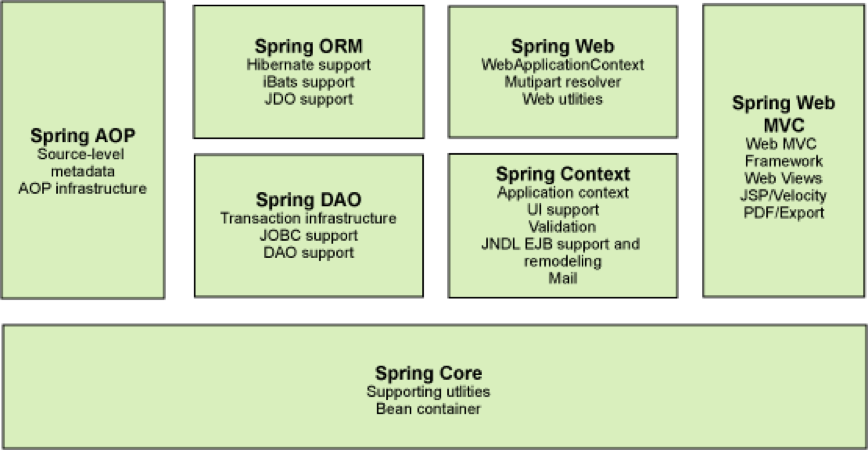
#1 Spring IoC
目的是解决对象之间的耦合依赖关系,使用IOC容器来管理这些依赖关系,并降低框架对业务代码的侵入性(non-invasively);常用容器接口为ApplicationContext,常用容器实现为ClassPathXmlApplicationContext(相对路径,默认路径为WEB-INF/classes)和FileSystemXmlApplicationContext(绝对路径搜索,默认路径为工程根目录)。
IoC容器有两个主要的容器系列,一个是实现BeanFactory接口的简单容器系列,一个是实现ApplicationContext接口的集成了企业服务的上下文容器系列,而BeanDefinition就是这些容器管理的对象以及依赖关系的抽象。
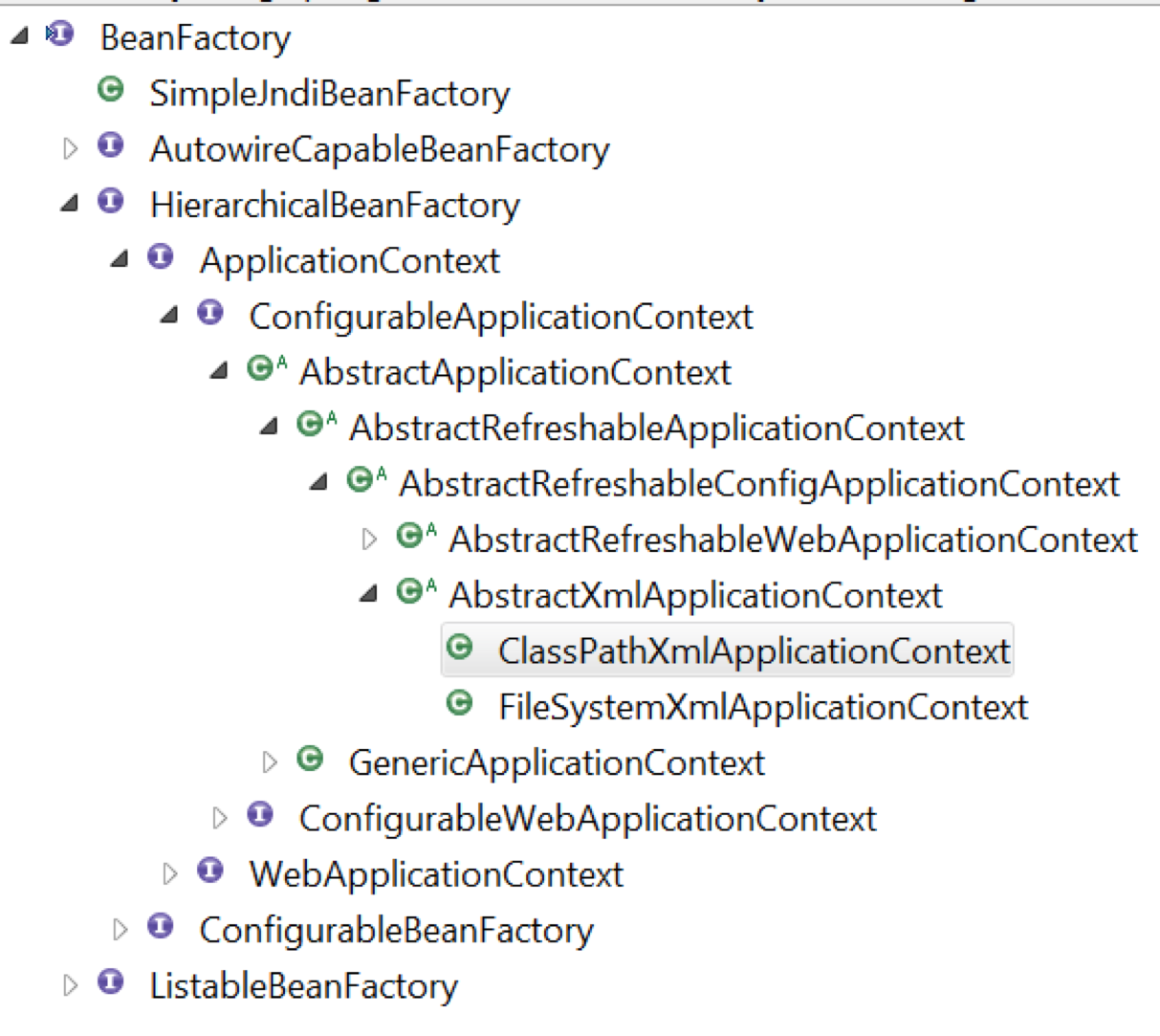
以FileSystemXmlApplicationContext容器为例介绍Spring IoC容器的初始化过程,包括
-1 ResourceLoader定位xml文件并生成ClassPathResource
-2 BeanDefinitionReader解析bean依赖并生成BeanDefinition
-3 BeanDefinitionRegistry向IoC容器注册BeanDefinition
#2 Spring AOP
目的是解决业务功能之间的耦合依赖关系,以声明的形式将公用功能织入到业务功能中去;Spring集成了AspectJ作为一种特定实现。
#3 Spring MVC
目的是解决Web端功能之间的耦合依赖关系,以DispatcherServlet为核心实现对Web请求的拦截、分发、处理、ModelAndView数据的返回以及页面生成。
#4 Spring ORM
目的是简化数据持久层的操作,不仅提供JdbcTemplate作为直接操作JDBC的通用模板,并提供与ORM框架的集成接口(如Hibernate)。
#5 Spring Transaction
目的是简化数据持久层的事务操作,典型的AOP封装,事务操作由集成的ORM框架(如Hibernate)实现。
使用spring IoC加载bean和注入dependency bean
-1 BeanFactory是IOC容器装配bean的核心接口,定义了各种getBean()的方式和Bean类型的判断,采用的是延迟加载;
-2 ApplicationContext在BeanFactory的基础上增加了MessageSource国际化,EventListener时间监听,ResourceLoader资源加载等新接口;
-3 ClassPathXmlApplicationContext用于加载本地class路径上的xml配置文件,
ApplicationContext会在容器启动的时候就加载bean,一般通过ContextLoaderListener进行配置。
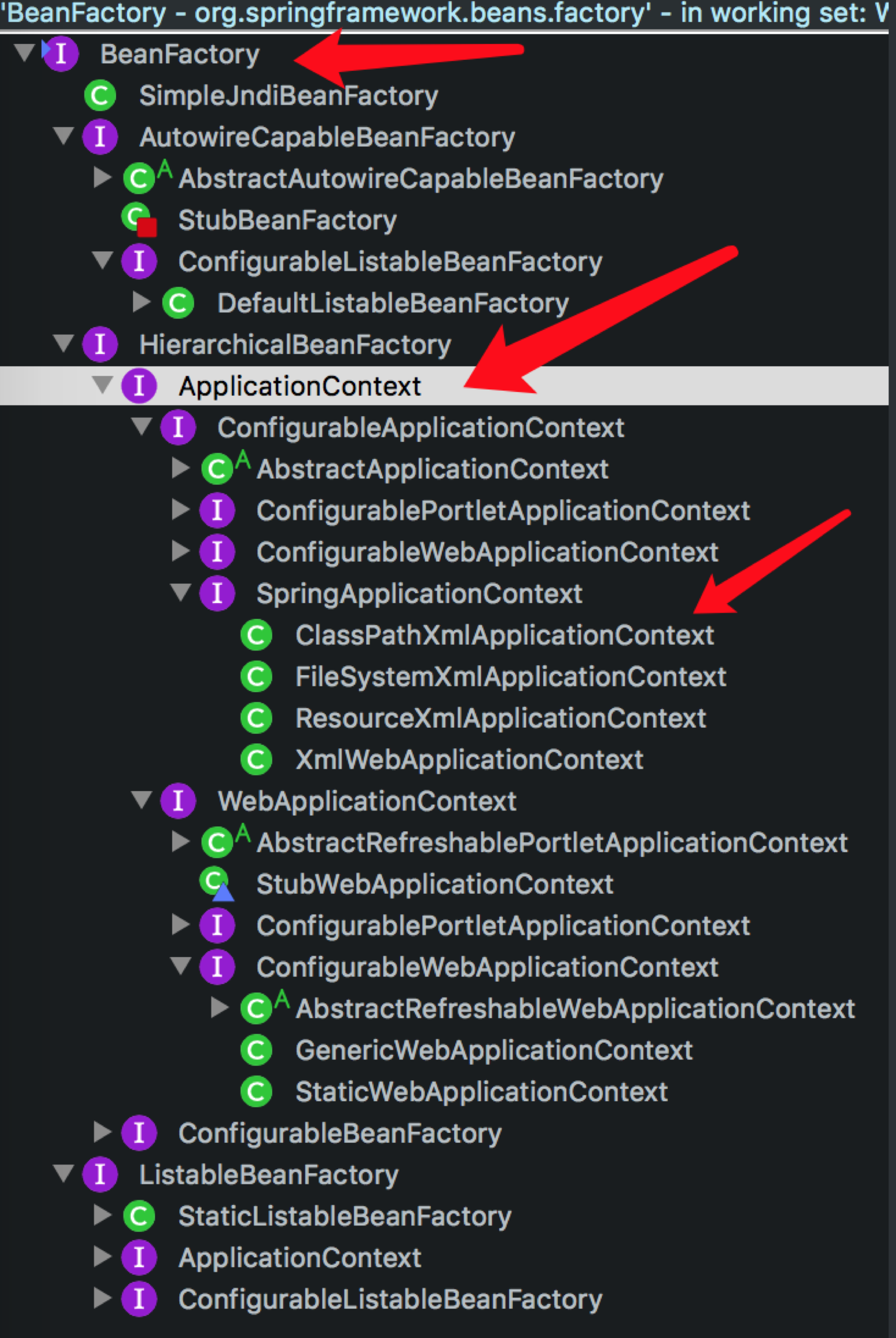
-1 <context:annotation-config/>:Spring容器对于类的装配一般是使用xml进行,但如果使用比如@Autowired等标签的话就需要添加本标签,表示可在已经通过xml注册了的java bean中使用annotation进行配置;通过配置<context:annotation-config/>标签spring自动在容器中装配了四个PostProcessor,用于处理java类上加注的标签:
AutowiredAnnotationBeanPostProcessor:@Autowired
CommonAnnotationBeanPostProcessor:@Resource,@PostConstruct,@PreDestroy
PersistenceAnnotationBeanPostProcessor:@PersistenceContext
RequiredAnnotationBeanPostProcessor:@Required
-2 <context:component-scan/>:不仅具有<context:annotation-config/>的功能,还可以指定需要IOC容器进行扫描的包目录,自动注册标注了@Component等类标识的java类,也就是说不再需要xml配置注册功能;
-3 <context: property-placeholder/>:如果需要在bean装配阶段使用配置文件的key/value,可以通过本标签添加;然后使用"${setting.service.url}"就可以访问service.properties文件内的配置;
-4 <util:properties id="serviceProperties" location="classpath:service.properties"/>:将配置文件实例化成java.utils.Properties实例,并注入成为bean的属性,而在java bean中使用;
-5 @value(“${setting.service.url}”):获取service.properties文件的key/value,并注入java bean中对应的属性;
 <?xml version="1.0" encoding="UTF-8"?>

 <beans xmlns="http://www.springframework.org/schema/beans"

   xmlns:xsi="http://www.w3.org/2001/XMLSchema-instance"

   xmlns:util="http://www.springframework.org/schema/util"

   xmlns:jaxws="http://cxf.apache.org/jaxws"

   xmlns:http="http://cxf.apache.org/transports/http/configuration"

   xmlns:context="http://www.springframework.org/schema/context"

   xsi:schemaLocation="">

   <context:annotation-config />

   <context:component-scan base-package="com.active.leo.helloworld" />

   <context:property-placeholder location="classpath:service.properties" />

   <import resource="webmvc-config.xml" />

 </beans>
使用spring IoC进行Bean装配
通过注解开启Bean的自动检测:
-1 在配置文件中开启bean自动检测的功能,需要指定扫描的Java包路径;component-scan已经包含开启annotation-config功能。
-2 如果注解后添加string则显示指定bean名字,否则bean名字为首字母小写的类型名,如@Component(“specificName”);同时可通过添加@Scope(“prototype”)来指定bean的生成范围;
-3 Bean的不同类型的注解:
@Component:对应通用Bean
@Controller:对应控制层Bean,如Spring MVC Controller
@Service:对应业务层Bean,如Struts Action
@Repository:对应持久层Bean,如DAO
@RestController:@Controller和@ResponseBody的复合形式,返回json格式的string
@RequestBody:表示controller某个参数可以接受json的string,并自动进行解析到java object model上,front-end side需要使用JSON.stringify(jsonObject)处理json对象;
使用注解装配对象,Annotation Injection先于XML Injection被解析执行,但是后者会覆盖前者相同的设置,比如如果<property/>或者<constructor-arg/>也针对同一属性进行装配,则@Autowired装配的内容被覆盖;自动装配不能指定简单类型,如String;并且容易造成匹配歧义从而抛出异常;
Spring提供的@Autowired:
-1 直接修饰类变量,无需setter方法;
-2优先byType;
-3如果没有找到bean或者byType匹配得到的bean有多个,则抛出异常;
-4如果byType匹配得到的bean有多个,可以使用@Qualifier(“[id]”)限定Bean ID;
-5如果没有找到bean,抛出异常;可以使用@Autowired(required=false)要求不进行装配,但不推荐;
<bean id="instrument1" class="com.active.leo.helloworld.InstrumentImpl" />

<bean id="instrument2" class="com.active.leo.helloworld.InstrumentImpl2" />

@Autowired

@Qualifier("instrument2")

private Instrument instrument;
@Autowired应用于属性或者属性的setter方法,表示相关的property必须有且仅有一个匹配项;@Autowired是基于类型匹配的,所以如果一个bean是collection或者map则不能用@Autowired而需要使用@Resource。
JSR-330提供的@Inject
-1 JCP为统一依赖注入规范而推出的一种模型;
-2与@Autowired基本相同,除了没有required属性,因此必须进行装配,否则异常;
-3可以修饰类属性,类方法和类构造器;
-4如果byType匹配得到的bean有多个,可以使用@Named(“[id]”)限定Bean ID;
JSR-250提供的@Resource
-1 @Resource优先按 byName自动注入,而@Autowired优先按byType自动注入;
-2 @Resource有两个重要的属性,分别是name和type,name索引bean的名字,而type索引bean的类型
@Resource(name="myMovieFinder", type=” MyMovieFinder”)
-3 @Resource装配顺序:
(1) 同时指定name和type,则从context找唯一匹配的bean装配,找不到则异常;
(2) 仅指定name,则从context中找名称(id)匹配的bean装配,找不到则异常;
(3) 仅指定type,则从context中找type匹配的bean装配,找不到或者找到多个都异常;
(4) 同时没有指定name和type,则首先自动按照byName方式进行装配;如果没有匹配,则回退为一个原始类型(UserDao)通过反射机制使用byName自动注入策略,如果匹配则自动装配,否则异常;
指定Bean的作用范围和生命周期:<bean ………. Scope=”…….” />
#1 Singleton:缺省值,一个Spring IoC容器中至多仅生成一个instance,被依赖者共享;非线程安全,普通类变量会在多个thread之间共享,可以使用ThreadLocal进行线程隔离;
#2 Prototype:每次调用都会生成一个新的instance,不同依赖者使用不同的实例;线程安全,每次request thread都会生成一个新的instance;
#3 Request:WebApplicationContext中一次HTTP请求中至多仅生成一个instance
#4 Session:WebApplicationContext中一个HTTP Session中至多仅生成一个instance
#5 Global Session:WebApplicationContext中一个Global HTTP Session中至多仅生成一个instance
#6 Application:WebApplicationContext中一个ServletContext中至多仅生成一个instance
-1 <aop:scoped-proxy/>:用于解决将一个shorter-lived scoped bean注入到一个longer-lived scoped bean时,shorter-lived scoped bean提前失效的场景;由于singleton类仅有一次注入bean的机会(init或者get used),因此解决思路是在一开始就在longer-lived scoped bean(singleton)中注入一个proxy class作为代理类,如果shorter-lived scoped bean(session)已经失效,代理类会使用当前session scope的shorter-lived bean。
-2 属性depends-on:配置文件属性depends-on或者标注@Depends-on用于解决bean之间的依赖加载顺序;
 <bean id="userPreferences" class="com.foo.UserPreferences" scope="session">

   <aop:scoped-proxy/>

 </bean>

 <!-- a singleton-scoped bean injected with a proxy to the above bean -->

 <bean id="userService" class="com.foo.SimpleUserService" depends-on="nameService">

   <property name="userPreferences" ref="userPreferences"/>

 </bean>
定制Bean的初始化和销毁动作
执行顺序为@PostConstruct -> InitializingBean -> init-method。
方法一:使用标注@PostConstruct和@PreDestroy;在bean的java类文件中添加。
这两个标注由CommonAnnotationBeanPostProcessor进行处理,@PostConstruct标注的方法在bean constructor和Dependency Injection执行完成之后执行。
 @PostConstruct

 public void  init(){

     System.out.println("init  method”);

 }

 @PreDestroy

 public void  dostory(){

     System.out.println("destory method");

 }
方法二:使用接口InitializingBean和DisposableBean ,由于需要实现接口,代码侵入性稍微强,因此不推荐使用;
 public class PersonService  implements InitializingBean,DisposableBean {

     @Override

     public void destroy() throws Exception {

         // TODO Auto-generated method stub

         System.out.println("init  method");

     }

     @Override

     public void afterPropertiesSet() throws Exception {

         // TODO Auto-generated method stub

         System.out.println("init  method");

     }

 }
方法三:使用xml配置属性init-method和destroy-method,或者在<beans/>中添加批量设置的属性default-init-method或者default-destroy-method;
 <bean id="initAndDestroySeqBean"

     class="com.chj.spring.InitAndDestroySeqBean"

     init-method="initMethod"

     destroy-method="destroyMethod"/>
如果POJO需要获取容器的某些消息,可以实现下述接口;但是一旦实现这些接口之后就与Spring框架强耦合;
 public interface ApplicationContextAware {

 void setApplicationContext(ApplicationContext applicationContext)

      throws BeansException;

 }

 public interface BeanNameAware {

     void setBeanName(string name) throws BeansException;

 }
Bean继承
当需要创建同一个class或者同一个parent class的多个不同状态的instance时,使用parent属性可以有效减少配置文件中需要填写的属性值;
 <bean id="inheritedTestBean" abstract="true"

         class="org.springframework.beans.TestBean">

     <property name="name" value="parent"/>

     <property name="age" value="1"/>

 </bean>

 <bean id="inheritsWithDifferentClass"

         class="org.springframework.beans.DerivedTestBean"

         parent="inheritedTestBean" init-method="initialize">

     <property name="name" value="override"/>

     <!-- the age property value of 1 will be inherited from parent -->

 </bean>
#1 inheritsTestBean中的abstract=true表示当前bean不能实例化;如果一个singleton bean不打算进行实例化,则需要加上abstract=true属性。
#2 inheritsWithDifferentClass中的class属性不需要extends自parent class,但必须与parent class bean定义的属性匹配;并且可省略,表示使用parent指定bean的class属性;
使用Spring IoC进行Bean装配的更多相关文章
- Spring IOC 一——容器装配Bean的简单使用
下文:SpringIOC 二-- 容器 和 Bean的深入理解 写在前面 这篇文章去年写的,缘起于去年某段时间被领导临时"抓壮丁"般的叫过去做java开发,然后在网上找了一个 Sp ...
- Spring IOC 之Bean作用域
当你创建一个bean定义的时候,你创建了一份通过那种bean定义的bean的创建类的真正实力的处方.bean的定义是一个处方 的想法是很重要的的.因为这意味着,对于一个类你可以创建很多对象实例从一个单 ...
- Spring IOC之Bean 概述
1.Bean概述 一个Spring IOC容器管理一个或者多个bean.这些bean是根据你提供给容器的配置数据信息创建的,例如XML形式的的定义. 在容器内部,这些bean的定义表示为BeanDef ...
- Spring系列(二) Bean装配
创建应用对象之间协作关系的行为称为装配(wiring), 这也是DI的本质. Spring中装配Bean的方式 Spring提供了三种装配Bean的方式. 隐式的Bean发现机制和自动装配 Java ...
- Spring IOC的Bean对象
---恢复内容开始--- 在Spring IOC模块中Bean是非常重要的.在这里我想给大家讲讲关于Bean对象实例化的三种注入方式: 首先,我先讲一下关于Bean对象属性值的两种注入方式:set注入 ...
- spring深入学习(二)-----bean的生命周期、IOC容器bean装配
bean的生命周期 1.实例化Bean对于BeanFactory容器,当客户向容器请求一个尚未初始化的bean时,或初始化bean的时候需要注入另一个尚未初始化的依赖时,容器就会调用createBea ...
- Spring系列(三) Bean装配的高级技术
profile 不同于maven的profile, spring的profile不需要重新打包, 同一个版本的包文件可以部署在不同环境的服务器上, 只需要激活对应的profile就可以切换到对应的环境 ...
- Spring——IOC与Bean容器
[IOC] (1)IOC:控制反转,控制权的转移,应用程序本身不负责依赖对象的创建和维护,而是由外部容器负责创建和维护.也就是说由IOC容器在运行期间,动态地将某种依赖关系注入到对象之中 (2)DI: ...
- Spring IOC 之Bean定义的继承
一个Bean的定义可以包含大量的配置信息,包括构造器参数.属性值以及容器规范信息,比如初始化方法.静态工厂方法名字等等.一子bean的定义可以从父bean的定义中继承配置数据信息.子bean定义可以覆 ...
随机推荐
- Navicat Premium连接服务器数据库
解决Navicat 连接服务器失败的问题 由于服务器的安全问题,有些东西默认是关闭的.就像远程连接服务器的数据库一样,如果默认是每个IP都能访问,安全性就会大大降低,甚至没有安全性可言.但是由于项目需 ...
- PTA 模拟,【放着一定要写哈哈哈哈哈】(据说用string哟)
实现一种简单原始的文件相似度计算,即以两文件的公共词汇占总词汇的比例来定义相似度.为简化问题,这里不考虑中文(因为分词太难了),只考虑长度不小于3.且不超过10的英文单词,长度超过10的只考虑前10个 ...
- bzoj 3277: 串 & bzoj 3473: 字符串【后缀自动机||后缀数组】
建一个广义后缀自动机(每加完一个串都返回root),在parent树上dpsum记录合法长度,打着时间戳往上跳,最后每个串在自动机上跑一变统计答案即可. 后缀数组理解起来可能方便一点,但是难写,就只说 ...
- [热拔插] 轻量级Winform插件式框架
写在前面的话 对于大神,Winform这种“古董玩具”,实在没太多“技术性”可言了,然而『好用才是王道』,本文不以技术为卖点,纯属经验之谈,欢迎交流拍砖 朴素版UI 开发初衷 由于本人所在公司不定时需 ...
- MapperException: 无法获取实体类xxxxx对应的表名! 三种解决方法,总有一款适合你。
先把自动重启关一下 devtools: restart: #热部署生效 enabled: false 把devtools给删除了,说是这个jar包导致 ApplyApplication里面的@Mapp ...
- js同过url下载文件,调用另存为弹框
实战中,项目将文件上传到项目的根目录下,并进行保存,随后根据此文件的路径进行下载到本地磁盘 实战中,项目将文件上传到项目的根目录下,并进行保存,随后根据此文件的路径进行下载到本地磁盘 实战中,项目将文 ...
- MVC 感触
这几天接触了下 ef+ MVC+WEBAPI +bootstrop VIEW--->Controller -->WebAPI ---Model (Linq) 记住 VIEW里的 csh ...
- c++关键字explicit
关键字explicit,可以阻止不应该允许的经过转换构造函数进行的隐式转换的发生.声明为explicit的构造函数不能在隐式转换中使用. C++中, 一个参数的构造函数(或者除了第一个参数外其余参数都 ...
- __slots__ 和 @property
动态非常灵活, 创建一个class后, 给实例绑定一个属性: >>> class Bird: ... pass ... >>> s = Bird() >> ...
- 线段树(单点更新)/树状数组 HDOJ 1166 敌兵布阵
题目传送门 /* 线段树基本功能:区间值的和,修改某个值 */ #include <cstdio> #include <cstring> #define lson l, m, ...