
MINA系列学习-IoBuffer
在阅读IoBuffer源码之前,我们先看Mina对IoBuffer的描述:A byte buffer used by MINA applications. This is a replacement for ByteBuffer. 这是一个对ByteBuffer的replacement,同样是用作缓冲区,做内容的切换和承载的容器,为什么要用重新封装ByteBuffer,MINA是这么给出解释的Two Reasons:
l It doesn't provide useful getters and putters
l It is difficult to write variable-length data due to its fixed capacity
用过ByteBuffer的人可能经常会遇到BufferOverflowException这样的异常,原因是buffer在初始化allocate之后就不能再自动的改变大小了,如果项目很规整,约定的很好,那可能不太会出意外,怕就怕项目一大,好多东西就乱套了。所以在阅读IoBuffer源码的时候,我们会着重看它和ByteBuffer之间的差异。另外一点,就是IoBuffer作为一个应用框架的工具,必然会提供比原生Buffer更便捷的方法,比如IoBuffer中可以直接put和get String,可以直接将内容转成十六进制等等。
用法很简单,我倒是想从如何将一个已有的类进行封装和扩展的角度来看IoBuffer的源码。在看MINA的源码之前,我们有必要稍稍回顾一下ByteBuffer的构成:
ByteBuffer继承了Buffer类,这个继承关系约定了Buffer系列中特定的操作形式(有点儿像指针),limit/position/mark/capacity,以及在遍历中使用的hasRemaining。然后通过两个静态方法来构建出ByteBuffer:
使用Heap空间,堆空间的构造采用申请byte数组:
public static ByteBuffer allocate(int capacity) {

	if (capacity < 0)

	    throw new IllegalArgumentException();

	return new HeapByteBuffer(capacity, capacity);

    }
使用direct memory,这块内存的开辟就比较麻烦了,好多都是采用了Bit和native的方法:
public static ByteBuffer allocateDirect(int capacity) {

        return new DirectByteBuffer(capacity);

    }
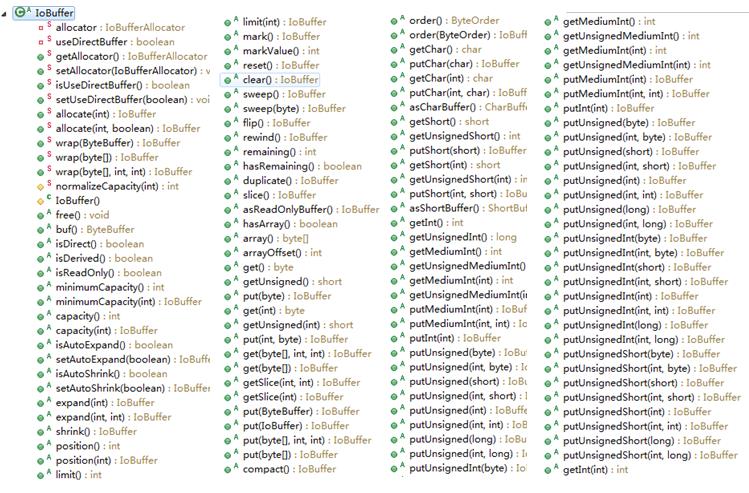
除了构造之外,剩下的主要是对数据的操作方法,wrap、get和put,下面的图没有截全,还有好多方法:
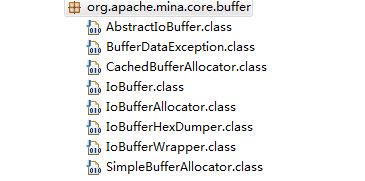
IoBuffer及其相关的类均在org.apache.mina.core.buffer下,IoBuffer定义了buffer使用的规则,AbseractIoBuffer提供了具体的实现:
IoBuffer没有继承任何类,只是实现了comparable接口,我们注意到IoBuffer类修饰符用的是abstract,跟ByteBuffer也是用abstract修饰,至于为什么要用abstract,我觉得也容易理解,毕竟这是一个要对外直接使用的类,同时需要对实现进行规则和扩展:
public abstract class IoBuffer implements Comparable<IoBuffer>在IoBuffer的一系列代码阅读中,你可以看到抽象类之间的继承,内部类的使用情况等等,后面,我会通过一个删减版的例子来盘点这中间的关系,所以大片的源码就不贴了。
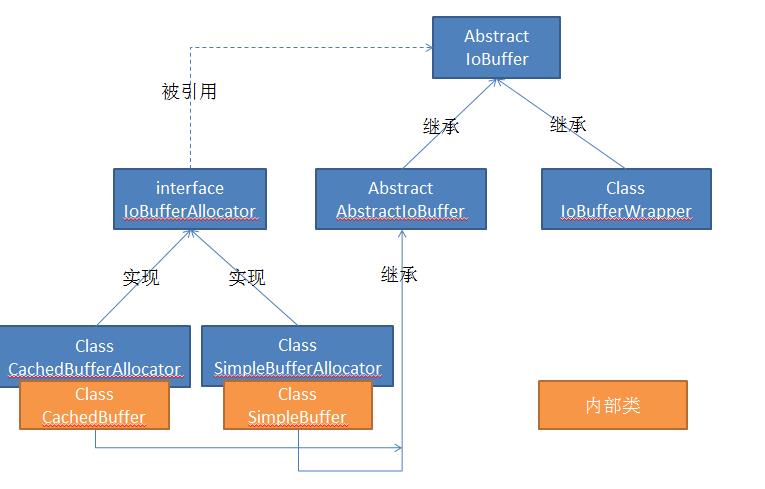
UML工具不会用,关键是怕用错了,还是用PPT画了。囧一个,大家有好那种可以一键生成的工具推荐一下,我之前用的是JUDE和Visio。上图画出了IoBuffer中几个重要类之间的关系,两个内部类均继承了AbstractIoBuffer,AbstractIoBuffer和IoBufferWrapper均实现了IoBuffer中的具体操作部分。IoBufferAllocator接口主要定义了为缓冲区开辟空间的方法,所以IoBuffer中需要引用来自IoBufferAllocator的对象。
在IoBuffer中,我们熟知的allocate和wrap方法被声明成了static,通过引用IoBufferAllocator接口中的对象来实现,而其他诸如get、put等操作的方法都定义为abstract了,让其子类得以实现。IoBuffer中我们还值得关注的主要见我之前写过的一篇文章《IoBuffer和ByteBuffer》。
下面是这些中产生buffer的接口IoBufferAllocator和其实现类:
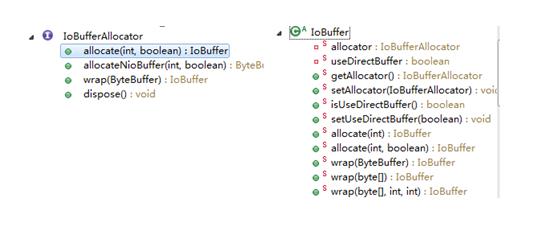
接口很简单,就定义了几个在IoBuffer中已经被static修饰的方法。有两个类都实现了IoBufferAllocator,但是在IoBuffer中使用的是SimpleBufferAllocator:
/** The allocator used to create new buffers */

    private static IoBufferAllocator allocator = new SimpleBufferAllocator();

    /** A flag indicating which type of buffer we are using : heap or direct */

    private static boolean useDirectBuffer = false;
所以我们主要关注SimpleBufferAllocator:
public IoBuffer allocate(int capacity, boolean direct) {

        return wrap(allocateNioBuffer(capacity, direct));

    }

    public ByteBuffer allocateNioBuffer(int capacity, boolean direct) {

        ByteBuffer nioBuffer;

        if (direct) {

            nioBuffer = ByteBuffer.allocateDirect(capacity);

        } else {

            nioBuffer = ByteBuffer.allocate(capacity);

        }

        return nioBuffer;

    }

    public IoBuffer wrap(ByteBuffer nioBuffer) {

        return new SimpleBuffer(nioBuffer);

    }

    public void dispose() {

        // Do nothing

    }
这是接口中定义的几个方法,这里调用内部类SimpleBuffer来生成相应的buffer,又由于SimpleBuffer继承了AbstractIoBuffer,所以真正实现的代码在AbstractIoBuffer中(这里有点儿绕,大家结合上面的图和源码一起读)。而且注意构造方法的protected关键字的使用:
private ByteBuffer buf;

        protected SimpleBuffer(ByteBuffer buf) {

            super(SimpleBufferAllocator.this, buf.capacity());

            this.buf = buf;

            buf.order(ByteOrder.BIG_ENDIAN);

        }

        protected SimpleBuffer(SimpleBuffer parent, ByteBuffer buf) {

            super(parent);

            this.buf = buf;

        }
看到了吧,底层还是用的NIO中的ByteBuffer。至于怎么实现AutoExpand这样的方法,我觉得不是源码的重点,这些都是算法上的事情,如果你不关注算法,可以稍稍看看即可,而且好多都是native的实现,也看不到。而我这边主要关注的还是他们之间的结构。
上图左边的路走通了,我们来走右边的路,右边主要看AbstractIoBuffer,他是IoBuffer的具体实现,但是它也是一个抽象类,也要被其他类继承,用于扩展。AbstractIoBuffer中,大多类都是final的。而且这里面主要的实现都是在处理limit/position/mark/capacity这之间的关系。而CachedBufferAllocator主要用于实现IoBuffer中自动扩展AutoExpand和收缩: that caches the buffers which are likely to be reused during auto-expansion of the buffers.
----------------------------------------------------------
最后,我们将上面的叙述用一个删减版的代码来模拟一下,这样有助于理解代码的结构,以后遇到类似的情况就可以类似的处理,我更希望,能在分析完所有源码之后,就能呈现一个类似的框架出来,不过这个真的只是想想,毕竟没那么多时间,如果你有时间,可以试着去阉割一下mina。
首先是IoBuffer:
package org.apache.mina.core.rewrite.buffer;

/**

 * IoBuffer

 *

 * @author ChenHui

 *

 */

public abstract class IoBuffer {

	private static IoBufferAllocator allocator=new SimpleBufferAllocator();

	private static boolean direct;

	protected IoBuffer() {

		// do nothing

	}

	public static IoBuffer allocate(int capacity) {

		return allocator.allocate(capacity, direct);

	}

	public static IoBuffer wrap(byte[] byteArray, int offset, int length){

		//TODO

		return null;

	}

	public abstract IoBuffer get();

	public abstract IoBuffer put(byte b);

	public abstract boolean other();

}
然后是他的继承:
package org.apache.mina.core.rewrite.buffer;

import java.nio.ByteBuffer;

/**

 *

 * @author ChenHui

 *

 */

public abstract class AbstractIoBuffer extends IoBuffer{

	protected AbstractIoBuffer(ByteBuffer buffer){

		//TODO

	}

	@Override

	public IoBuffer get() {

		// TODO Auto-generated method stub

		return null;

	}

	@Override

	public IoBuffer put(byte b) {

		// TODO Auto-generated method stub

		return null;

	}

}
allocator:
package org.apache.mina.core.rewrite.buffer;

import java.nio.ByteBuffer;

/**

 *

 * @author ChenHui

 *

 */

public interface IoBufferAllocator {

	IoBuffer allocate(int capacity, boolean direct);

	IoBuffer wrap(ByteBuffer nioBuffer);

	ByteBuffer allocateNioBuffer(int capacity, boolean direct);

	void dispose();

}
allocator的实现:
package org.apache.mina.core.rewrite.buffer;

import java.nio.ByteBuffer;

/**

 *

 * @author ChenHui

 *

 */

public class SimpleBufferAllocator implements IoBufferAllocator{

	@Override

	public IoBuffer allocate(int capacity, boolean direct) {

		return wrap(allocateNioBuffer(capacity, direct));

	}

	@Override

	public IoBuffer wrap(ByteBuffer nioBuffer) {

		  return new SimpleBuffer(nioBuffer);

	}

	@Override

	public ByteBuffer allocateNioBuffer(int capacity, boolean direct) {

	       ByteBuffer nioBuffer;

	        if (direct) {

	            nioBuffer = ByteBuffer.allocateDirect(capacity);

	        } else {

	            nioBuffer = ByteBuffer.allocate(capacity);

	        }

	        return nioBuffer;

	}

	@Override

	public void dispose() {

		// TODO Auto-generated method stub

	}

	private class SimpleBuffer extends AbstractIoBuffer{

		@SuppressWarnings("unused")

		ByteBuffer buffer;

		protected SimpleBuffer(ByteBuffer buffer){

			super(buffer);

			this.buffer=buffer;

		}

		@Override

		public boolean other() {

			// TODO Auto-generated method stub

			return false;

		}

		/**这里重写是为了打印方便*/

		@Override

		public String toString() {

			System.out.println(buffer);

			return super.toString();

		}

	}

}
最后是测试类和测试结果:
package org.apache.mina.core.rewrite.buffer;

public class Test {

	public static void main(String[] args) {

		IoBuffer buffer=IoBuffer.allocate(1024);

		System.out.println(buffer);

	}

}
控制台输出:
java.nio.HeapByteBuffer[pos=0 lim=1024 cap=1024]

org.apache.mina.core.rewrite.buffer.SimpleBufferAllocator$SimpleBuffer@1da12fc0
-------------------------------------------------------------------
文章引自---https://my.oschina.net/ielts0909/blog/90584
MINA系列学习-IoBuffer的更多相关文章
- Mina的IoBuffer改造成Netty的ByteBuff
背景:部标GPS通讯底层全部改造成基于Netty服务器实现的,现将Mina的依赖移除,修改过程中有用到缓冲区的读写.现做了如下修改: 原有基于Mina的IoBuffer对字节读写封装代码如下: pac ...
- MINA系列学习-mina整体介绍
今天的这一节,将从整体上对mina的源代码进行把握,网上已经有好多关于mina源码的阅读笔记,但好多都是列举了一下每个接口或者类的方法.我倒是想从mina源码的结构和功能上对这个框架进行剖析.源码的阅 ...
- MINA系列学习-IoAccpetor
其实在mina的源码中,IoService可以总结成五部分service责任.Processor线程处理.handler处理器.接收器和连接器,分别对应着IoService.IoProcessor.I ...
- 【MINA】缓存区ByteBuffer和IOBuffer你要了解的常用知识
mina中IOBuffer是Nio中ByteBuffer的衍生类,主要是解决Bytebuffer的两个不足 1.没有提供足够灵活的get/putXXX方法 2.它容量固定,难以写入可变长度的数据 特点 ...
- Mina源码阅读笔记(二)- IoBuffer的封装
在阅读IoBuffer源码之前,我们先看Mina对IoBuffer的描述:A byte buffer used by MINA applications. This is a replacement ...
- Mina、Netty、Twisted一起学(四):定制自己的协议
在前面的博文中,介绍一些消息分割的方案,以及MINA.Netty.Twisted针对这些方案提供的相关API.例如MINA的TextLineCodecFactory.PrefixedStringCod ...
- mina2
远程通信 Mina2 学习笔记 作者:李少华 邮箱:xiaosanshaoli@126.com QQ:305409913 2010-12-23 初稿 引言... 1 一. Mina ...
- mina IoBuffer
mina IoBuffer 常用方法 Limit(int) 如果position>limit, position = limit,如果mark>limit, 重置mark Mark() ...
- mina IoBuffer 常用方法
Limit(int) 如果position>limit, position = limit,如果mark>limit, 重置mark Mark() 取当前的position的快照标记mar ...
随机推荐
- 好用的一个从SharePoint导出小工具
1. 输入 Site Url(Site Collection), 然后点"load"按钮 2.选择Web后,点选需导出的文档库,然后点"Next"按钮 ...
- C#学习网站记录
C# 编程指南--Microfsoft官方C#编程指南 https://msdn.microsoft.com/zh-cn/library/67ef8sbd(v=vs.100).aspx
- 用adox 取 access 自增列
百度很久 最后在 (.NET2.0下用ADOX动态创建ACCESS数据库(C#)) http://blog.csdn.net/black4371/article/details/4423739 找到了 ...
- “不是有效WIN32程序”
写了个控制台,放到服务器上面运行,运行失败,出现"不是有效win32程序" 不知道原因. 猜测: 1.程序只支持64位的处理器,修改了项目的属性,发现支持any cpu.排除 2. ...
- 解析JSON字符串
import java.util.ArrayList; import java.util.List; import org.json.JSONArray; import org.json.JSONOb ...
- 第六百一十天how can I 坚持
今天又去了趟ccrs,终于把环境打起来了,下午就去中关村了,回来的时候还忘了带电脑电源,明天还得去fh,也是醉了.. 好困啊.得睡觉了,项目感觉也不是多难,不过代码还得好好熟悉熟悉.加油吧.
- 第六百零七八天 how can I 坚持
昨天去跟着谈了个项目,涨了些见识吧,关注下客户关注的,多考虑些,昨天谈完就下班,陪着sy去了趟西单换电池,苹果的售后也真是挺垃圾的. 今天本来是要搭搭环境的,结果代码没搞来,明天去客户那边搞代码,感觉 ...
- [JS]递归对象或数组
function recursive(obj) { var output = ''; if (typeof obj === 'object') { for (var key in obj) { var ...
- select 一直返回0
select设置超时时间后一直返回零,是因为每次select后监听的fd_set都被重置,解决方法就是每次重新设置
- Python: 字典的基本操作
字典是Python里唯一的映射类型.字典是可变的.无序的.大小可变的键值映射,有时候也称为散列表或关联数组. 例子在下面: dic = {"apple":2, "oran ...