
sharepoint 创建个人网站
One of the SharePoint 2013 puzzle pieces which got some major improvements are My Sites, User Profiles and news feeds. This article describes step-by-step process of setting up the my site infrastructure in the SharePoint Farm.
Prerequisite for setting up My Sites is having user profiles import or sync up and running. You can read more on user profiles sync in my previous article.
When this has been configured, we can start configuring my sites:
The first step us to go create (according to the best practices) own web application for hosting my sites. Go to the central administration, Application management, “Manage web applications”
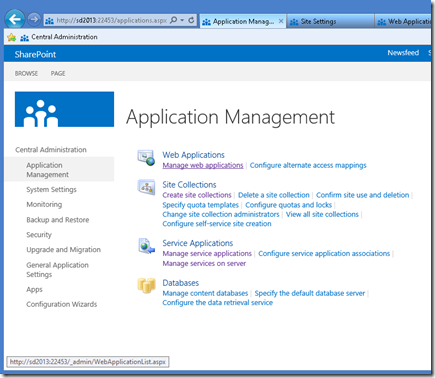
And create a dedicated web application (sd2013:101 in my example here)
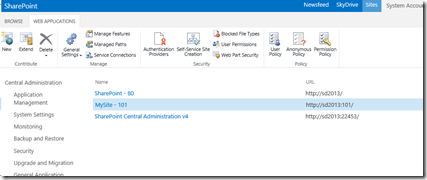
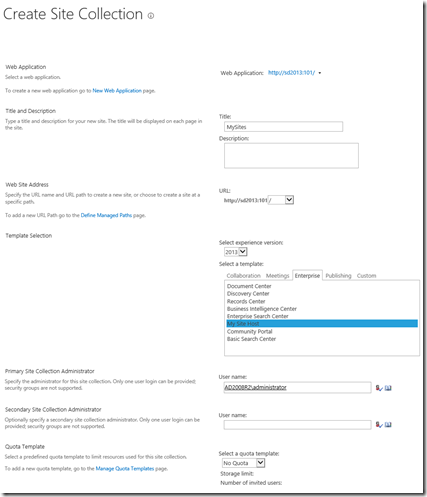
Now, the next step would be to create a site collection in the root of the newly created web application. You can of course create it inside some other managed path other than root, but since we have dedicated Web Application, root seems like an obvious choice.
Site Collection must have “2013” experience and use “My Site Host” template.
After Site Collection has been created, click on the “Managed Paths” in the web application that you created to host My Sites.
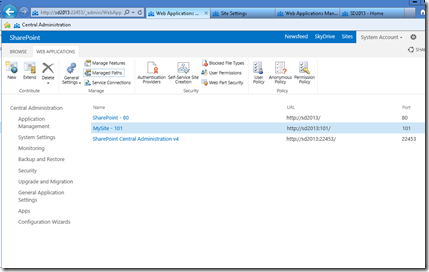
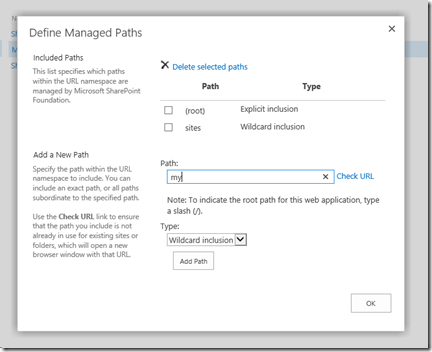
Add a new managed path with wildcard inclusion. I prefer to use “my” as the My Site managed path, but you can of course pick up anything else.
The next thing is to check service connections for the Web Application which will host my sites. Click on the “Service Connections” button to…
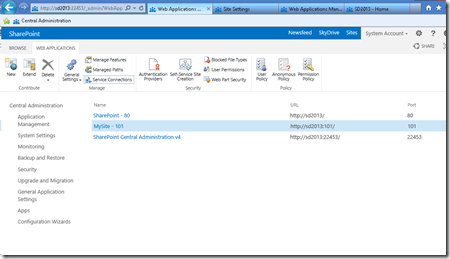
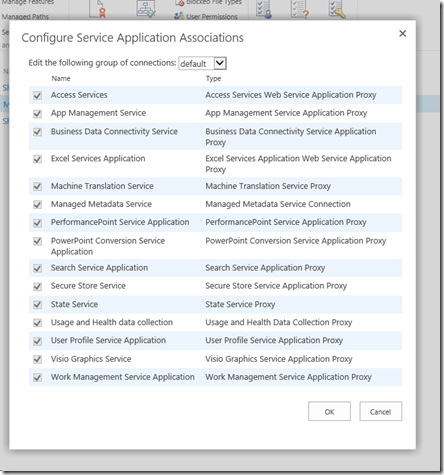
..see if right service applications are set up.
If you choose “Custom” (instead of the “Default”) in the Edit the following group of connections drop down, select any service applications to which you want to connect the web application. The most important ones re User Profile service application, the managed metadata service application, and the Search service application.
In my case, I’ll just proceed with “default”
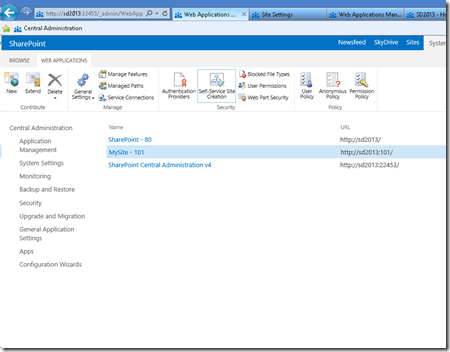
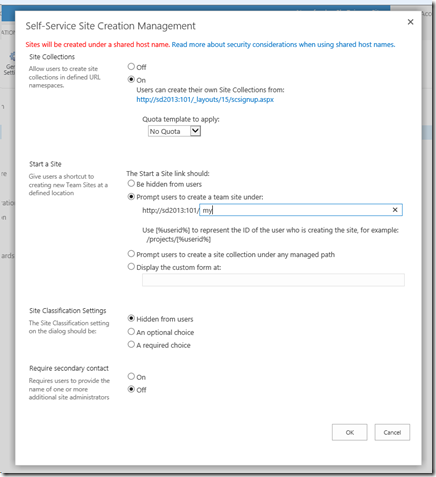
Now it’s time to set up the self service site creation. Go back to the Web application management, chose the application that you created to host My Sites, and click on the “Self Service Site Creation” button.
Click “On” in the “Site Collections” radio box, and enter your managed path in the “Start a Site” field (with “Prompt users to create a team site under” chosen)
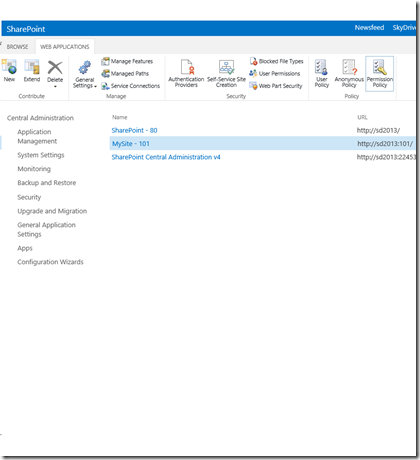
Now, the next step is to grant users permission to create new site collections (for my sites). Click on the “Permission Policy” button in the Web Application management, with the web application which hosts the my sites selected.
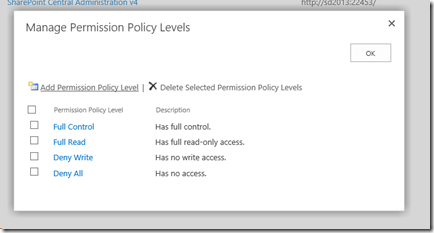
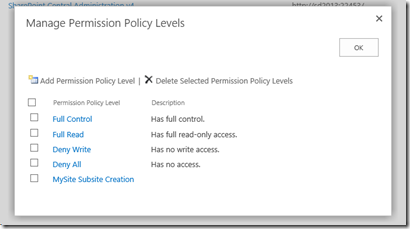
In the”Manage Permission Policy Levels”, click on the “Add Permission Policy Level”
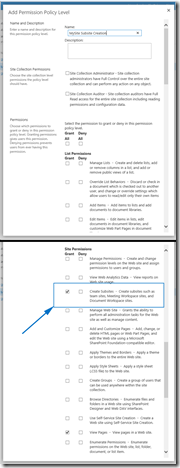
Call it however you want (“MySite Subsite Creation” in my case), and grant the “Create Subsites” permission.
Now, the new permission policy level should appear among other policy levels…
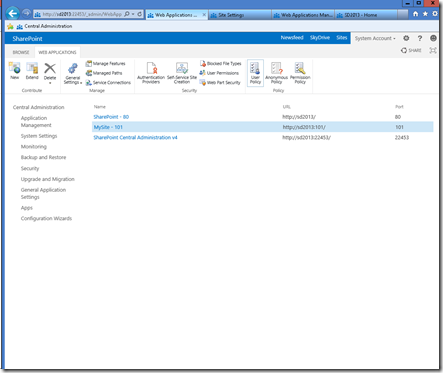
And we need to grant that policy level to the users. Click on the “Users Policy” button in the Web Application management, with the web application that you created to host My Sites selected…
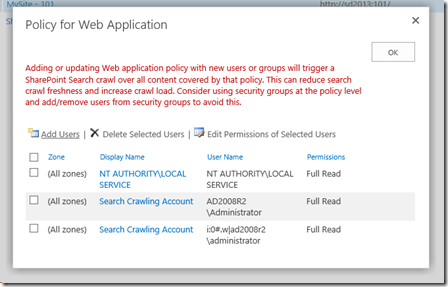
Click on the “Add users” link…
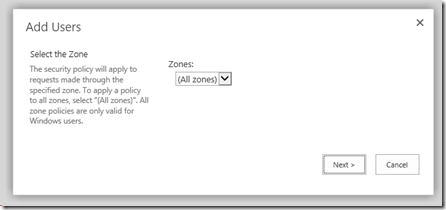
From all zones…
And select the users which you want to have rights to create my sites. On my case, it will be “Everyone”.
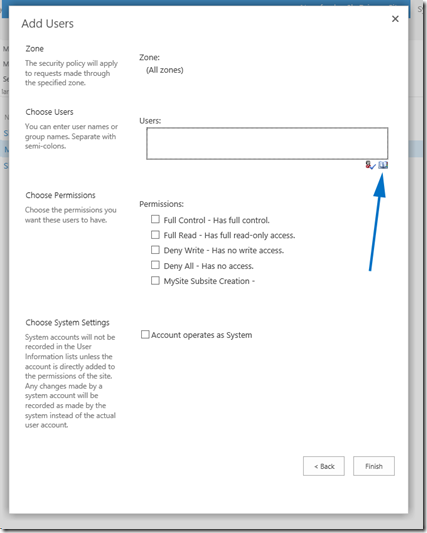
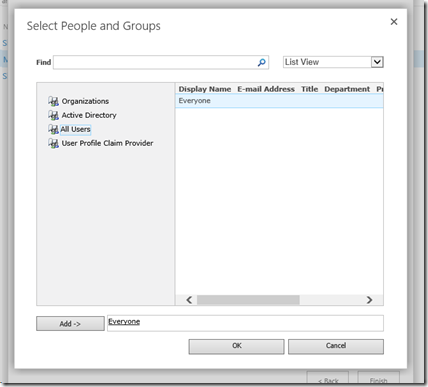
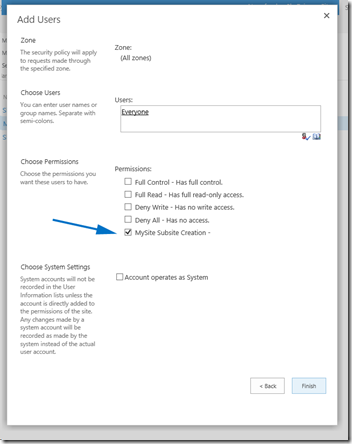
Select your newly created policy level…
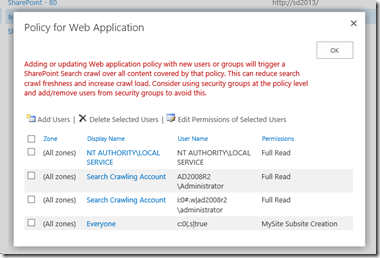
And now you should see “Everyone” with the new policy selected.
OK, everything has been set up and prepared so far. Now, finally, let’s set up the my sites. Go to the Central Administration –> Application Management, and select “Manage service applications”.
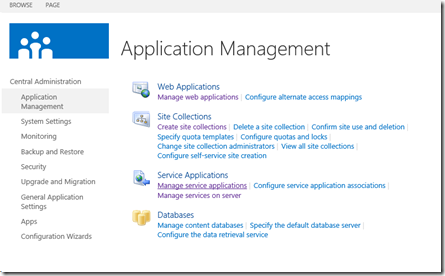
Then select the “User Profile Service Application”

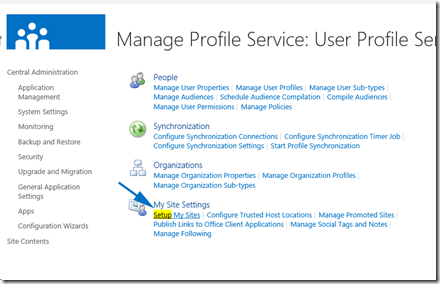
In the “User Profile Service Application”, click on “Setup My Sites”
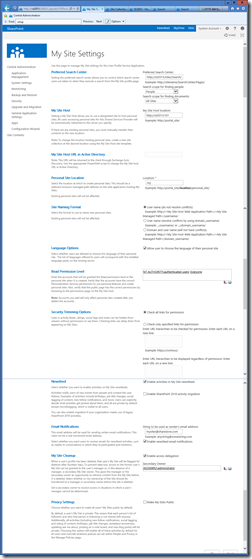
This is where you need to set up the search center, my host location (in my case – root site collection of the Web Application that serves as the host) and personal site location (managed path within the host web application – “my” in my case). Take a look at the screenshot for all the other fields (which I have used in my case):
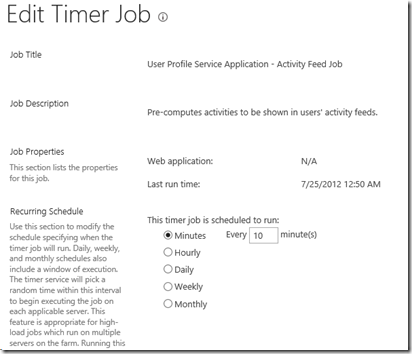
The only remaining thing would be to set up the timer job for activity feed. Go to the Central Administration –> Monitoring –>Timer Job –> Review job definitions
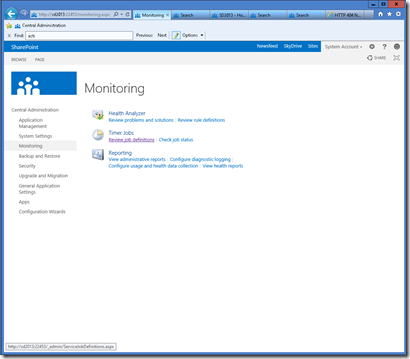
Find the “User Profile Service Application – Activity Feed Job”, and set up the activity feed sync timer according to your needs.

And, that’s it.
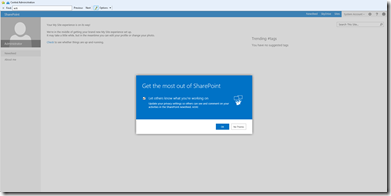
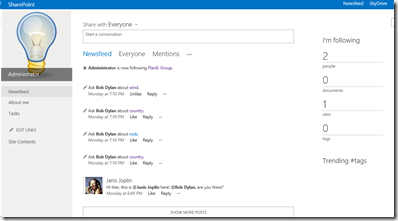
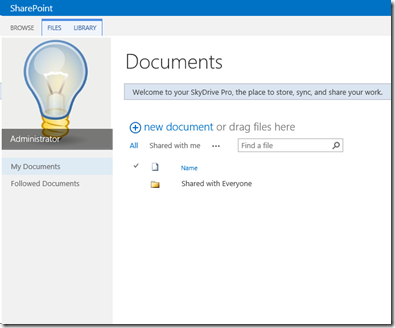
Go to the my site now, and you will be notified of my site creation for your self. Take care of your profile, follow people. Upload you private documents, share documents, follow documents – enjoy being social! 
sharepoint 创建个人网站的更多相关文章
- SharePoint Online 创建门户网站系列之准备篇
前 言 门户是SharePoint自推出以来,就非常适合的一种站点类型,在Server版本中,发布站点的应用非常广泛.这里,我们以一个个简单的例子,然后以一个固定的项目Demo,为大家演示如何一步步在 ...
- 使用SharePoint创建和定义自己的网站页面
使用SharePoint创建和定义自己的网站页面 1. 打开SharePoint Designer 2010. 2. 点击网站页面导航. 3. 在功能区点击Web部件页面,新建Employee.axp ...
- SharePoint 创建网站地图树视图及格式枚举截图
SharePoint 创建网站地图树视图及格式枚举截图 SharePoint首页隐藏掉左側导航以后,假设要以树视图呈现站点地图也非常easy. 仅仅须要复制v4.mas ...
- SharePoint入门——创建一个网站
1.首先安装SP相关环境,可以百度到具体操作步骤: (以下步骤基于本人环境:本人用的Win10自带的Hyper-V虚拟机.Windows Server2012R2.SQL2014以及SharePoin ...
- SharePoint 2013 新建网站集图解
前言:接触SharePoint的人可能是越来越多,但是很多人一接触就很迷茫,在技术群里问如何新建网站集,这样一篇图解,帮助新手学习在搭建好SharePoint环境之后,如何创建一个网站集,做一个基本的 ...
- SharePoint 2013 跨网站集发布功能简介
在SharePoint Server 2013网站实施中,我们经常会遇到跨网站集获取数据,而2013的这一跨网站集发布功能,正好满足我们这样的需求. 使用SharePoint 2013中的跨网站发布, ...
- SharePoint 2013 新建网站集图解(绝对菜鸟篇)
前言:接触SharePoint的人可能是越来越多,但是很多人一接触就很迷茫,在技术群里问如何新建网站集,这样一篇图解,帮助新手学习在搭建好SharePoint环境之后,如何创建一个网站集,做一个基本的 ...
- SharePoint 创建 Lookup 类型的Site Column解决跨站问题
在某些情况下,我们需要去引用其他List中的数据,比如在网站集(Site Collection)上有个List叫Country,在其子网站(WebSite)有个List叫Employee,如果要在子S ...
- SharePoint创建内容类型
SharePoint创建内容类型 内容类型的用途是多种多样的.创建内容类型也非常简单. 1. 点击网站操作--网站设置. 2. 点击网站内容类型,点击创建. 3. 命名Beginning_ShareP ...
随机推荐
- ASCII中关于大小写字母间隔为32的思考
一直没有搞清楚为什么在ASCII中要把大小写字母的间隔设置为32,今天才发现这样设置的精妙之处:方便了程序对大小写字母进行转换.请看: ================= 十进制 32 ...
- 201521123100 《Java程序设计》第11周学习总结
1. 本周学习总结 1.1 以你喜欢的方式(思维导图或其他)归纳总结多线程相关内容. 2. 书面作业 本次PTA作业题集多线程 1.互斥访问与同步访问 完成题集4-4(互斥访问)与4-5(同步访问) ...
- [Android FrameWork 6.0源码学习] View的重绘过程之Draw
View绘制的三部曲,测量,布局,绘画现在我们分析绘画部分测量和布局 在前两篇文章中已经分析过了.不了解的可以去我的博客里找一下 下面进入正题,开始分析调用以及函数原理 private void pe ...
- 初试 Vue.js
1.为什么我会想要来弄弄vue这个前端框架呢? 答:前段时间被小程序刷屏了,然后就去弄了一下小程序,嗯挺简单的:头脑一发热后就想到vue2也发布一段时间了,何不也来尝尝vue2.0的味道,最后发现它们 ...
- Selenium_WebDriver_元素方法
版权声明:本文为博主原创文章,转载请注明出处. 前面已经学习了定位元素,定位只是第一步,定位之后需要对这个元素进行操作,如在百度搜索首页的输入框进行输入文本,对"百度一下"按钮进行 ...
- 常见注入手法第二讲,APC注入
常见注入手法第二讲,APC注入 转载注明出处 首先,我们要了解下什么是APC APC 是一个简称,具体名字叫做异步过程调用,我们看下MSDN中的解释,异步过程调用,属于是同步对象中的函数,所以去同步对 ...
- gephi安装后无法打开
具体解决的方法是找到gephi.conf文件(在“gephi安装目录\etc”中)文件,添加下面的一行,指定jdkhome的路径. jdkhome="C:\Program Files (x8 ...
- BZOJ2748_音量调节_KEY
[HAOI2012]音量调节 Time Limit: 3 Sec Memory Limit: 128 MB Description 一个吉他手准备参加一场演出.他不喜欢在演出时始终使用同一个音量,所以 ...
- Linux学习——shell编程之运算符
shell编程之运算符 一:shell中常见算术运算符号和优先级 二:算术运算符 Shell 变量:是弱类型!不能进行加减乘除!比较麻烦! 例子 :shell变量弱类型 a=11 b=22 echo ...
- 第4章 同步控制 Synchronization ----互斥器(Mutexes)
Win32 的 Mutex 用途和 critical section 非常类似,但是它牺牲速度以增加弹性.或许你已经猜到了,mutex 是 MUTual EXclusion 的缩写.一个时间内只能够有 ...