
MyBatis从入门到放弃七:二级缓存原理分析
前言
说起mybatis的一级缓存和二级缓存我特意问了几个身边的朋友他们平时会不会用,结果没有一个人平时业务场景中用。 好吧,那我暂且用来学习源码吧。一级缓存我个人认为也确实有些鸡肋,mybatis默认开启一级缓存,支持在同一个会话(sqlsession)同一个statement执行两次,则第二次会默认会使用第一次创建的缓存对象。
二级缓存前一篇粗略介绍了下,默认使用内存对象【PerpetualCache】内部维护一个HashMap对象来存储。那么先来看几张图片【图片来自一位朋友,文章最后参考连接我会挂出作者博客】
MyBatis缓存设计及二级缓存工作模式
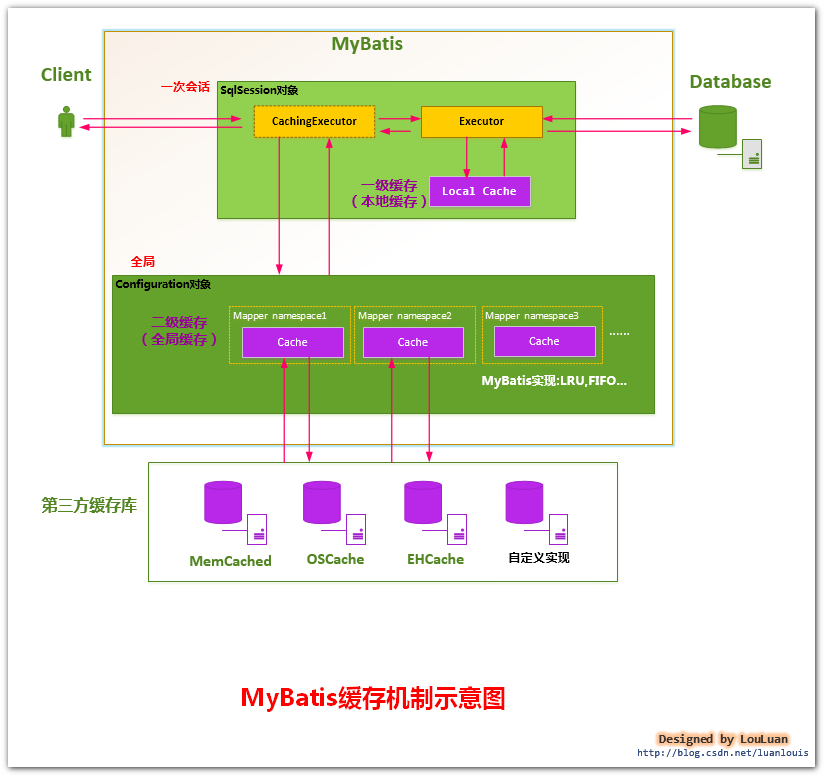
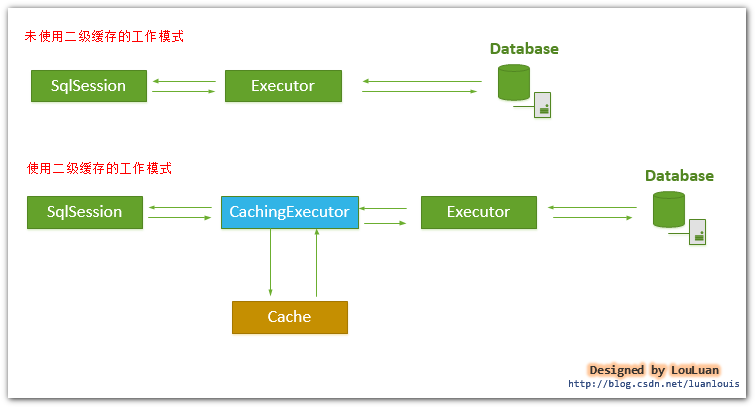
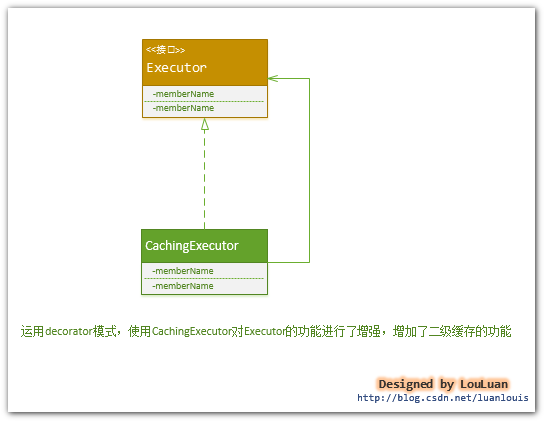
从上面三张图中我们得出结论,一级缓存是sqlsession级别、二级缓存是Mapper级别。mybatis定义了【Cache】接口,支持自定义缓存,同时还支持集成第三方缓存库,现在为了更细粒度的控制缓存,更多的集成【ehcache】、【redis】。
那么mybatis的二级缓存主要是在Executor对象上来做文章,当mybatis发现你在mybatis.xml配置文件中设置了cacheEnabled=true时,mybatis在创建sqlsession时创建Executor对象,同时会对Executor加上装饰者【CacheExecutor】。CacheExecutor对于查询请求,会判断application级别的二级缓存是否有缓存结果,如果有查询结果则直接返回,如果没有再交给查询器Executor实现类,也就是【SimpleExecutor】来执行查询。再就是缓存结果,返回给用户。
贴出SmpleExecutor源码:
/**

 *    Copyright 2009-2016 the original author or authors.

 *

 *    Licensed under the Apache License, Version 2.0 (the "License");

 *    you may not use this file except in compliance with the License.

 *    You may obtain a copy of the License at

 *

 *       http://www.apache.org/licenses/LICENSE-2.0

 *

 *    Unless required by applicable law or agreed to in writing, software

 *    distributed under the License is distributed on an "AS IS" BASIS,

 *    WITHOUT WARRANTIES OR CONDITIONS OF ANY KIND, either express or implied.

 *    See the License for the specific language governing permissions and

 *    limitations under the License.

 */

package org.apache.ibatis.executor;

import org.apache.ibatis.cursor.Cursor;

import org.apache.ibatis.executor.statement.StatementHandler;

import org.apache.ibatis.logging.Log;

import org.apache.ibatis.mapping.BoundSql;

import org.apache.ibatis.mapping.MappedStatement;

import org.apache.ibatis.session.Configuration;

import org.apache.ibatis.session.ResultHandler;

import org.apache.ibatis.session.RowBounds;

import org.apache.ibatis.transaction.Transaction;

import java.sql.Connection;

import java.sql.SQLException;

import java.sql.Statement;

import java.util.Collections;

import java.util.List;

/**

 * @author Clinton Begin

 */

public class SimpleExecutor extends BaseExecutor {

  public SimpleExecutor(Configuration configuration, Transaction transaction) {

    super(configuration, transaction);

  }

  @Override

  public int doUpdate(MappedStatement ms, Object parameter) throws SQLException {

    Statement stmt = null;

    try {

      Configuration configuration = ms.getConfiguration();

      StatementHandler handler = configuration.newStatementHandler(this, ms, parameter, RowBounds.DEFAULT, null, null);

      stmt = prepareStatement(handler, ms.getStatementLog());

      return handler.update(stmt);

    } finally {

      closeStatement(stmt);

    }

  }

  @Override

  public <E> List<E> doQuery(MappedStatement ms, Object parameter, RowBounds rowBounds, ResultHandler resultHandler, BoundSql boundSql) throws SQLException {

    Statement stmt = null;

    try {

      Configuration configuration = ms.getConfiguration();

      StatementHandler handler = configuration.newStatementHandler(wrapper, ms, parameter, rowBounds, resultHandler, boundSql);

      stmt = prepareStatement(handler, ms.getStatementLog());

      return handler.<E>query(stmt, resultHandler);

    } finally {

      closeStatement(stmt);

    }

  }

  @Override

  protected <E> Cursor<E> doQueryCursor(MappedStatement ms, Object parameter, RowBounds rowBounds, BoundSql boundSql) throws SQLException {

    Configuration configuration = ms.getConfiguration();

    StatementHandler handler = configuration.newStatementHandler(wrapper, ms, parameter, rowBounds, null, boundSql);

    Statement stmt = prepareStatement(handler, ms.getStatementLog());

    return handler.<E>queryCursor(stmt);

  }

  @Override

  public List<BatchResult> doFlushStatements(boolean isRollback) throws SQLException {

    return Collections.emptyList();

  }

  private Statement prepareStatement(StatementHandler handler, Log statementLog) throws SQLException {

    Statement stmt;

    Connection connection = getConnection(statementLog);

    stmt = handler.prepare(connection, transaction.getTimeout());

    handler.parameterize(stmt);

    return stmt;

  }

}
那么,缓存起来的数据怎么过期呢,这也是我这篇文章重点关心的。一般流量不大的站点,数据由后台维护,使用二级缓存足够了。先来看全局配置文件,配置只关心一点:cacheEnabled=true。
<?xml version="1.0" encoding="UTF-8"?>

<!DOCTYPE configuration PUBLIC "-//mybatis.org//DTD Config 3.0//EN"

        "http://mybatis.org/dtd/mybatis-3-config.dtd">

<configuration>

    <settings>

        <!--开启二级缓存-->

        <setting name="cacheEnabled" value="true"/>

    </settings>

    <typeAliases>

        <typeAlias alias="User" type="com.autohome.model.User" />

    </typeAliases>

    <mappers>

        <mapper resource="mapper/UserMapper.xml" />

    </mappers>

</configuration>
Mapper.xml
这里配置Cache对象。这里的eviction参数提到几个算法策略:
LRU:(Least Recently Used),最近最少使用算法,即如果缓存中容量已经满了,会将缓存中最近做少被使用的缓存记录清除掉,然后添加新的记录;
FIFO:(First in first out),先进先出算法,如果缓存中的容量已经满了,那么会将最先进入缓存中的数据清除掉;
Scheduled:指定时间间隔清空算法,该算法会以指定的某一个时间间隔将Cache缓存中的数据清空;
<?xml version="1.0" encoding="UTF-8"?>

<!DOCTYPE mapper PUBLIC "-//mybatis.org//DTD Mapper 3.0//EN"

        "http://mybatis.org/dtd/mybatis-3-mapper.dtd">

<!--命名空间和接口保持一致-->

<mapper namespace="com.autohome.dao.UserMapper">

    <!--

    eviction LRU

    flushInterval缓存时间,以毫秒为单位

    size缓存大小

    readOnly如果为false的话,缓存对象必须是可序列化的-->

    <cache eviction="LRU"

           type="org.apache.ibatis.cache.impl.PerpetualCache"

           flushInterval="120000"

           size="1024"

           readOnly="true"/>

    <select id="listAllUser" resultType="User">

        select * from t_userinfo

    </select>

</mapper>
配图看demo
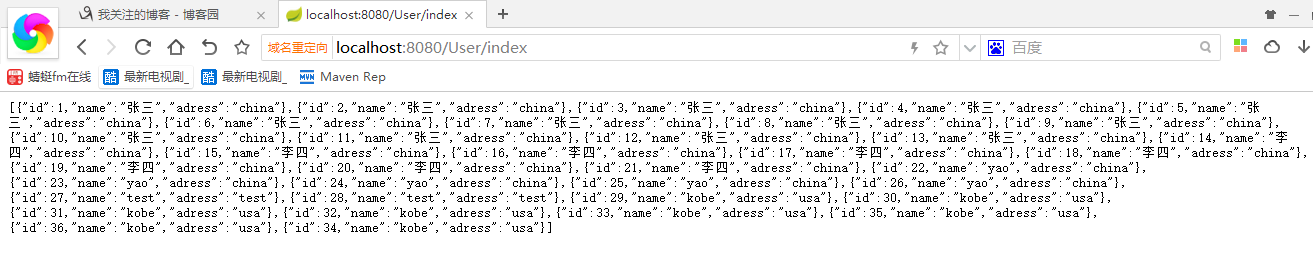
第一次查询是36条数据,我配置缓存是2分钟。然后再insert一条,你再刷新页面数据不变。等两分钟。。。。

总结
OK,所谓的存在即合理吧,适合不适合取决于你的业务场景。mybatis也提供了接口以便扩展。小流量、数据量小使用mybatis二级缓存足以。
参考
http://blog.csdn.net/luanlouis/article/details/41408341
MyBatis从入门到放弃七:二级缓存原理分析的更多相关文章
- MyBatis:二级缓存原理分析
MyBatis从入门到放弃七:二级缓存原理分析 前言 说起mybatis的一级缓存和二级缓存我特意问了几个身边的朋友他们平时会不会用,结果没有一个人平时业务场景中用. 好吧,那我暂且用来学习源码吧.一 ...
- MyBatis基础入门《十六》缓存
MyBatis基础入门<十六>缓存 >> 一级缓存 >> 二级缓存 >> MyBatis的全局cache配置 >> 在Mapper XML文 ...
- Mybatis 一级缓存和二级缓存原理区别 (图文详解)
Java面试经常问到Mybatis一级缓存和二级缓存,今天就给大家重点详解Mybatis一级缓存和二级缓存原理与区别@mikechen Mybatis缓存 缓存就是内存中的数据,常常来自对数据库查询结 ...
- 【Web技术】276- WebView缓存原理分析和应用
前言 混合式开发,在产品体验以及页面加载速度的体验上已经非比以往的.今日早读文章由@unclechen分享. 正文从这开始- 一.背景 现在的App开发,或多或少都会用到Hybrid模式,到了WebV ...
- MyBatis从入门到放弃六:延迟加载、一级缓存、二级缓存
前言 使用ORM框架我们更多的是使用其查询功能,那么查询海量数据则又离不开性能,那么这篇中我们就看下mybatis高级应用之延迟加载.一级缓存.二级缓存.使用时需要注意延迟加载必须使用resultMa ...
- Mybatis源码分析之Cache二级缓存原理 (五)
一:Cache类的介绍 讲解缓存之前我们需要先了解一下Cache接口以及实现MyBatis定义了一个org.apache.ibatis.cache.Cache接口作为其Cache提供者的SPI(Ser ...
- MyBatis功能点一应用:二级缓存整合redis
Mybatis提供了默认的cache实现PerpetualCache,那为什么还要整合第三方的框架redis?因为Mybatis提供的cache实现为单机版,无法实现分布式存储(即本机存储的数据,其他 ...
- MyBatis从入门到精通(七):MyBatis动态Sql之choose,where,set标签的用法
最近在读刘增辉老师所著的<MyBatis从入门到精通>一书,很有收获,于是将自己学习的过程以博客形式输出,如有错误,欢迎指正,如帮助到你,不胜荣幸! 本篇博客主要讲解如何使用choose, ...
- Hibernate二级缓存原理
缓存:缓存是什么,解决什么问题? 位于速度相差较大的两种硬件/软件之间的,用于协调两者数据传输速度差异的结构,均可称之为缓存Cache.缓存目的:让数据更接近于应用程序,协调速度不匹配,使访问速度更快 ...
随机推荐
- 学习笔记TF027:卷积神经网络
卷积神经网络(Convolutional Neural Network,CNN),可以解决图像识别.时间序列信息问题.深度学习之前,借助SIFT.HoG等算法提取特征,集合SVM等机器学习算法识别图像 ...
- eclipse上传新项目到GitHub
1.登录gibhub,创建一个仓库 2.提交本地仓库 右键本地项目 选择git,然后点击next 如图: 再右键项目,commit项目,这是提交到本地git 3.接下来提交到github 输入gith ...
- SetConsoleTextAttribute 函数--设置控制台文本属性
SetConsoleTextAttribute函数 来源:https://msdn.microsoft.com/en-us/library/windows/desktop/ms686047(v=vs. ...
- python3之微信文章爬虫
前提: python3.4 windows 作用:通过搜狗的微信搜索接口http://weixin.sogou.com/来搜索相关微信文章,并将标题及相关链接导入Excel表格中 说明:需xlsxwr ...
- 【HTML】table元素
1.最简单的table <table> <tr> <th></th> </tr> <tr> <td></td& ...
- angular JS中使用jquery datatable添加checkbox点击事件
'use strict'; app.controller('DataTableCtrl', function ($scope, $compile) { $scope.selected = []; $s ...
- 微信小程序框架探究和解析
何为框架 你对微信小程序的技术框架了解多少? 对wepy 框架进行一系列的深入了解 微信小程序框架解析和探究 小程序组件化框架WePY 在性能调优上做出的探究 开发者培训班上海专场PPT分享:小程序框 ...
- ETL作业调度软件TASKCTL4.1单机部署
单机部署,实际上就是将EM节点和一个Server节点安装到同一个地方.EM节点是TASKCTL服务端的最顶层,主要负责客户端与服务端之间的通信.Server节点是TASKCTL的调度服务控制层,也有A ...
- Linux修改网卡名称、主机名
Linux修改网卡名称.主机名 环境:VirtualBox 5.0.14 + RHEL 6.5 需求:个人实验搭建一套Standby RAC时,为了节约时间,直接复制之前安装RAC的主机模板. 但复制 ...
- 框架 之 -------Spring
目录一.Spring工作原理 二.为什么要用Spring三.请你谈谈SSH整合四.介绍一下Spring的事务管理五.什么是依赖注入,依赖注入的作用是什么? 六.什么是AOP,AOP的作用是什么? 七. ...