
【转】在SpringMVC Controller中注入Request成员域
原文链接:https://www.cnblogs.com/abcwt112/p/7777258.html
原文作者:abcwt112
主题
在工作中遇到1个问题....我们定义了一个Controller基类,所有Springmvc自定义的controller都继承它....在它内部定义一个@Autowired HttpServletRequest request;可不可以? 能不能从这个对象里取requestParamters和attributes? 多线程之间会不会影响?
思考
初次思考,我想这应该是不行的.为什么呢?
注入bean是在spring容器启动的时候...request的实现类是在tomcat里(我使用的servlet容器是tomcat)....我又没在spring的容器里配置这个bean.注入应该是失败的...
退一步说,就算是成功了....那注入的也就是1个对象而已.每次servlet接受到请求都会重新生成1个request...这明显和之前启动的那个对象不同吧....怎么想都不可能成功...
如果确实是这样的....那就没有这篇文章了....后来实践了一下..发现这个注入是可以的.使用起来取数据也没任何问题....
其实我那个时候debug看了一下,基本就知道为什么可以取到数据了..但是我并不知道原理和Spring(Springmvc)的处理流程...所以现在研究了一下并记录下来...
原理
首先给大家看一下在方法中注入request作为参数和在成员域中注入request的 注入的request对象之间的区别....
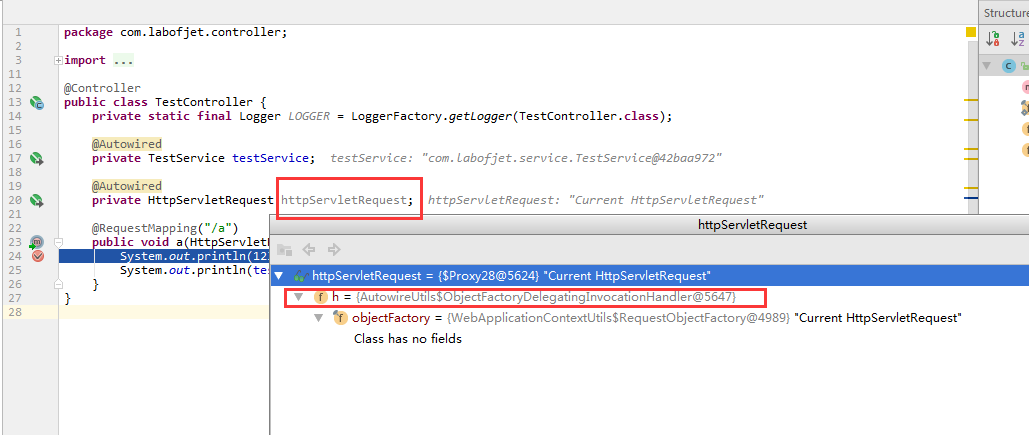
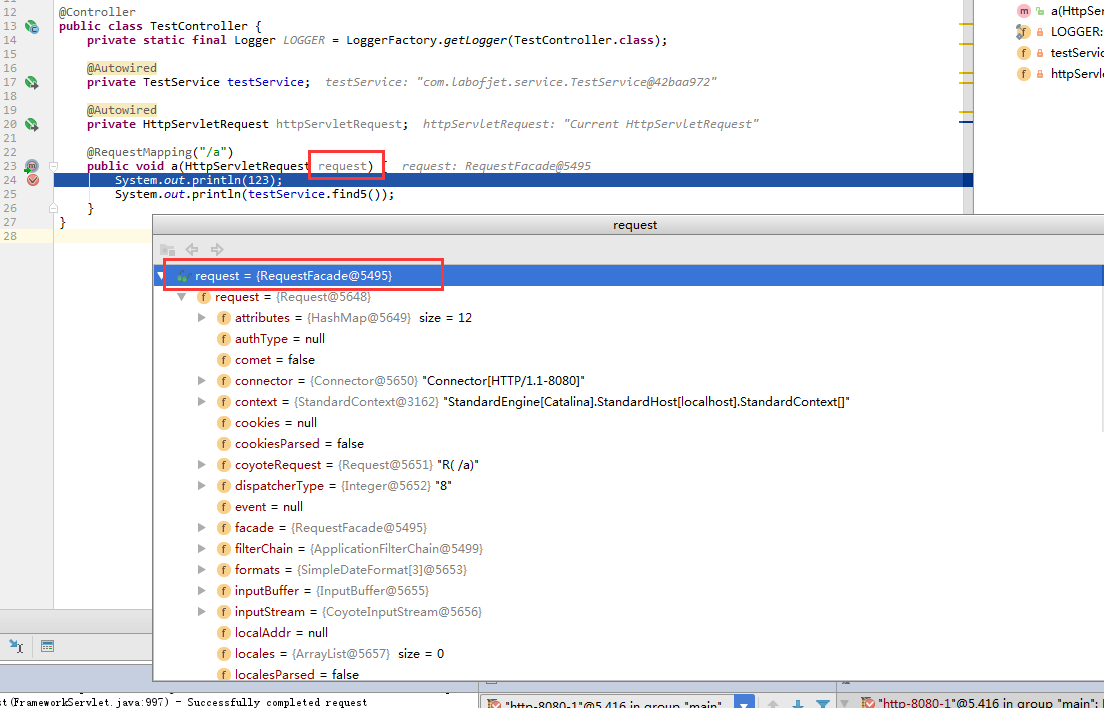
成员域注入的时候注入的是1个代理对象.是 AutowireUtils.ObjectFactoryDelegatingInvocationHandler的实例.
方法注入的就是一般tomcat原生的requestFacade对象.
所以这是不同的...
/**

     * Reflective InvocationHandler for lazy access to the current target object.

     */

    @SuppressWarnings("serial")

    private static class ObjectFactoryDelegatingInvocationHandler implements InvocationHandler, Serializable {

        private final ObjectFactory<?> objectFactory;

        public ObjectFactoryDelegatingInvocationHandler(ObjectFactory<?> objectFactory) {

            this.objectFactory = objectFactory;

        }

        @Override

        public Object invoke(Object proxy, Method method, Object[] args) throws Throwable {

            String methodName = method.getName();

            if (methodName.equals("equals")) {

                // Only consider equal when proxies are identical.

                return (proxy == args[0]);

            }

            else if (methodName.equals("hashCode")) {

                // Use hashCode of proxy.

                return System.identityHashCode(proxy);

            }

            else if (methodName.equals("toString")) {

                return this.objectFactory.toString();

            }

            try {

                return method.invoke(this.objectFactory.getObject(), args);

            }

            catch (InvocationTargetException ex) {

                throw ex.getTargetException();

            }

        }

    }
当代理对象(就是成员域request)的大部分方法被调用的时候,ObjectFactoryDelegatingInvocationHandler会使用objectFactory获取对象(原生request),再调用对象上的方法.
然后我们来看下XmlWebApplicationContext初始化到请求到进入controller里几个对注入request成员域有影响的步骤.
refresh方法和postProcessBeanFactory方法
ApplicationContext的抽象实现类AbstractApplicationContext(基本是所有ac的父类)里定义了ac的refresh方法(包含了使用BeanFactory注入bean)的流程..
@Override

    public void refresh() throws BeansException, IllegalStateException {

        synchronized (this.startupShutdownMonitor) {

            // Prepare this context for refreshing.

            // 记录开始wac开始初始化的时间,设置激活标记,servlet的相关param设置到env(之前做过1次),校验env中必须的props

            prepareRefresh();

            // Tell the subclass to refresh the internal bean factory.

            // 将旧的BF里的bean删掉,新建1个BF,设置部分属性,加载XML配置文件

            ConfigurableListableBeanFactory beanFactory = obtainFreshBeanFactory();

            // Prepare the bean factory for use in this context.

            // 1.设置BF解析bean配置需要用到的一些对象比如env. 2.注册一些BeanPostProcessor比如ApplicationContextAwareProcessor去设置Aware需要的对象

            // 3.忽略一些特定class注入的对象,设置一些特定class注入的对象为指定值

            // 4.将一些env中的properties map当做bean注册到BF中

            prepareBeanFactory(beanFactory);

            try {

                // Allows post-processing of the bean factory in context subclasses.

                // 1.设置一个BeanPostProcess为ServletContextAware的实现类注入servlet相关对象

                // 2.在BF中增加requetsScope等Scope

                // 3.把servletContext,Config,ServletInitParams,ServletAttribute当做Bean注册到BF中

                postProcessBeanFactory(beanFactory);

                // Invoke factory processors registered as beans in the context.

                // 初始化并调用BeanFactoryPostProcessor

                invokeBeanFactoryPostProcessors(beanFactory);

                // Register bean processors that intercept bean creation.

                // 注册BeanPostProcessors并注册到BF中去

                registerBeanPostProcessors(beanFactory);

                // Initialize message source for this context.

                initMessageSource();

                // Initialize event multicaster for this context.

                initApplicationEventMulticaster();

                // Initialize other special beans in specific context subclasses.

                onRefresh();

                // Check for listener beans and register them.

                registerListeners();

                // Instantiate all remaining (non-lazy-init) singletons.

                finishBeanFactoryInitialization(beanFactory);

                // Last step: publish corresponding event.

                finishRefresh();

            } catch (BeansException ex) {

                logger.warn("Exception encountered during context initialization - cancelling refresh attempt", ex);

                // Destroy already created singletons to avoid dangling resources.

                destroyBeans();

                // Reset 'active' flag.

                cancelRefresh(ex);

                // Propagate exception to caller.

                throw ex;

            }

        }

    }
其中有1个模板方法
postProcessBeanFactory(beanFactory);
这个方法允许AbstractApplicationContext的子类覆盖它并实现对BF的定制(这个时候bean的defination路径已经指定了,但是bean还没加载).
AbstractRefreshableWebApplicationContext覆盖了这个方法
/**

     * Register request/session scopes, a {@link ServletContextAwareProcessor}, etc.

     * 1.设置一个BeanPostProcess为ServletContextAware的实现类注入servlet相关对象

     * 2.在BF中增加requetsScope等Scope

     * 3.把servletContext,Config,ServletInitParams,ServletAttribute当做Bean注册到BF中

     *

     */

    @Override

    protected void postProcessBeanFactory(ConfigurableListableBeanFactory beanFactory) {

        // 设置一个BeanPostProcess为ServletContextAware的实现类注入servlet相关对象

        beanFactory.addBeanPostProcessor(new ServletContextAwareProcessor(this.servletContext, this.servletConfig));

        beanFactory.ignoreDependencyInterface(ServletContextAware.class);

        beanFactory.ignoreDependencyInterface(ServletConfigAware.class);

        // 在BF中增加requetsScope等Scope

        WebApplicationContextUtils.registerWebApplicationScopes(beanFactory, this.servletContext);

        // 把servletContext,Config,ServletInitParams,ServletAttribute当做Bean注册到BF中

        WebApplicationContextUtils.registerEnvironmentBeans(beanFactory, this.servletContext, this.servletConfig);

    }
其中有一步
WebApplicationContextUtils.registerWebApplicationScopes(beanFactory, this.servletContext);
这里设置了一些特殊的bean的scope,比如request,session,globalSession,application.(当然这个不是我这篇文章的主题.)
同时设置了一些特殊的autowired bean
beanFactory.registerResolvableDependency(ServletRequest.class, new RequestObjectFactory());
beanFactory.registerResolvableDependency(ServletResponse.class, new ResponseObjectFactory());
beanFactory.registerResolvableDependency(HttpSession.class, new SessionObjectFactory());
beanFactory.registerResolvableDependency(WebRequest.class, new WebRequestObjectFactory());
ServletRequest的实现类(比如HttpServletRequest)被指定使用RequestObjectFactory注入.
RequestObjectFactory
RequestObjectFactory就是1个ObjectFactory就是前面ObjectFactoryDelegatingInvocationHandler里的ObjectFactory.所以在成员域request对象上调用方法其实就是通过RequestObjectFactory获取对象再调用方法.
    /**

     * Factory that exposes the current request object on demand.

     */

    @SuppressWarnings("serial")

    private static class RequestObjectFactory implements ObjectFactory<ServletRequest>, Serializable {

        @Override

        public ServletRequest getObject() {

            return currentRequestAttributes().getRequest();

        }

        @Override

        public String toString() {

            return "Current HttpServletRequest";

        }

    }
    /**

     * Return the current RequestAttributes instance as ServletRequestAttributes.

     * @see RequestContextHolder#currentRequestAttributes()

     */

    private static ServletRequestAttributes currentRequestAttributes() {

        RequestAttributes requestAttr = RequestContextHolder.currentRequestAttributes();

        if (!(requestAttr instanceof ServletRequestAttributes)) {

            throw new IllegalStateException("Current request is not a servlet request");

        }

        return (ServletRequestAttributes) requestAttr;

    }
RequestObjectFactory的getObject方法很简单,就是调用静态方法
RequestContextHolder.currentRequestAttributes().getRequest()
RequestContextHolder
    public static RequestAttributes currentRequestAttributes() throws IllegalStateException {

        RequestAttributes attributes = getRequestAttributes();

        if (attributes == null) {

            if (jsfPresent) {

                attributes = FacesRequestAttributesFactory.getFacesRequestAttributes();

            }

            if (attributes == null) {

                throw new IllegalStateException("No thread-bound request found: " +

                        "Are you referring to request attributes outside of an actual web request, " +

                        "or processing a request outside of the originally receiving thread? " +

                        "If you are actually operating within a web request and still receive this message, " +

                        "your code is probably running outside of DispatcherServlet/DispatcherPortlet: " +

                        "In this case, use RequestContextListener or RequestContextFilter to expose the current request.");

            }

        }

        return attributes;

    }
    /**

     * Return the RequestAttributes currently bound to the thread.

     * @return the RequestAttributes currently bound to the thread,

     * or {@code null} if none bound

     */

    public static RequestAttributes getRequestAttributes() {

        RequestAttributes attributes = requestAttributesHolder.get();

        if (attributes == null) {

            attributes = inheritableRequestAttributesHolder.get();

        }

        return attributes;

    }
    private static final ThreadLocal<RequestAttributes> requestAttributesHolder =

            new NamedThreadLocal<RequestAttributes>("Request attributes");

    private static final ThreadLocal<RequestAttributes> inheritableRequestAttributesHolder =

            new NamedInheritableThreadLocal<RequestAttributes>("Request context");
上面是一些关键方法
所以最终其实request是从threadlocal中取...
FrameworkServlet
那么request是什么时候设置到threadlocal中去的呢?
是在Springmvc的dispatcherServlet的父类FrameworkServlet里操作的.
    @Override

    protected final void doGet(HttpServletRequest request, HttpServletResponse response)

            throws ServletException, IOException {

        processRequest(request, response);

    }

    @Override

    protected final void doPost(HttpServletRequest request, HttpServletResponse response)

            throws ServletException, IOException {

        processRequest(request, response);

    }
不管你是doGet还是doPost还是doXXX方法都是委托processRequest方法去做的.
    protected final void processRequest(HttpServletRequest request, HttpServletResponse response)

            throws ServletException, IOException {

        long startTime = System.currentTimeMillis();

        Throwable failureCause = null;

        LocaleContext previousLocaleContext = LocaleContextHolder.getLocaleContext();

        LocaleContext localeContext = buildLocaleContext(request);

        RequestAttributes previousAttributes = RequestContextHolder.getRequestAttributes();

        ServletRequestAttributes requestAttributes = buildRequestAttributes(request, response, previousAttributes);

        WebAsyncManager asyncManager = WebAsyncUtils.getAsyncManager(request);

        asyncManager.registerCallableInterceptor(FrameworkServlet.class.getName(), new RequestBindingInterceptor());

        initContextHolders(request, localeContext, requestAttributes);

        try {

            doService(request, response);

        }

        catch (ServletException ex) {

            failureCause = ex;

            throw ex;

        }

        catch (IOException ex) {

            failureCause = ex;

            throw ex;

        }

        catch (Throwable ex) {

            failureCause = ex;

            throw new NestedServletException("Request processing failed", ex);

        }

        finally {

            resetContextHolders(request, previousLocaleContext, previousAttributes);

            if (requestAttributes != null) {

                requestAttributes.requestCompleted();

            }

            if (logger.isDebugEnabled()) {

                if (failureCause != null) {

                    this.logger.debug("Could not complete request", failureCause);

                }

                else {

                    if (asyncManager.isConcurrentHandlingStarted()) {

                        logger.debug("Leaving response open for concurrent processing");

                    }

                    else {

                        this.logger.debug("Successfully completed request");

                    }

                }

            }

            publishRequestHandledEvent(request, response, startTime, failureCause);

        }

    }
其中调用了
initContextHolders(request, localeContext, requestAttributes);
    private void initContextHolders(

            HttpServletRequest request, LocaleContext localeContext, RequestAttributes requestAttributes) {

        if (localeContext != null) {

            LocaleContextHolder.setLocaleContext(localeContext, this.threadContextInheritable);

        }

        if (requestAttributes != null) {

            RequestContextHolder.setRequestAttributes(requestAttributes, this.threadContextInheritable);

        }

        if (logger.isTraceEnabled()) {

            logger.trace("Bound request context to thread: " + request);

        }

    }
就是在这里设置到RequestContextHolder的threadlocal中去的...
小结
1.在controller中注入的request是jdk动态代理对象,ObjectFactoryDelegatingInvocationHandler的实例.当我们调用成员域request的方法的时候其实是调用了objectFactory的getObject()对象的相关方法.这里的objectFactory是RequestObjectFactory.
2.RequestObjectFactory的getObject其实是从RequestContextHolder的threadlocal中去取值的.
3.请求刚进入springmvc的dispatcherServlet的时候会把request相关对象设置到RequestContextHolder的threadlocal中去.
对于原文的补充
原文没有详细描述成员域request注入的具体过程,补充如下:
ApplicationContext的初始化调用过程如下:
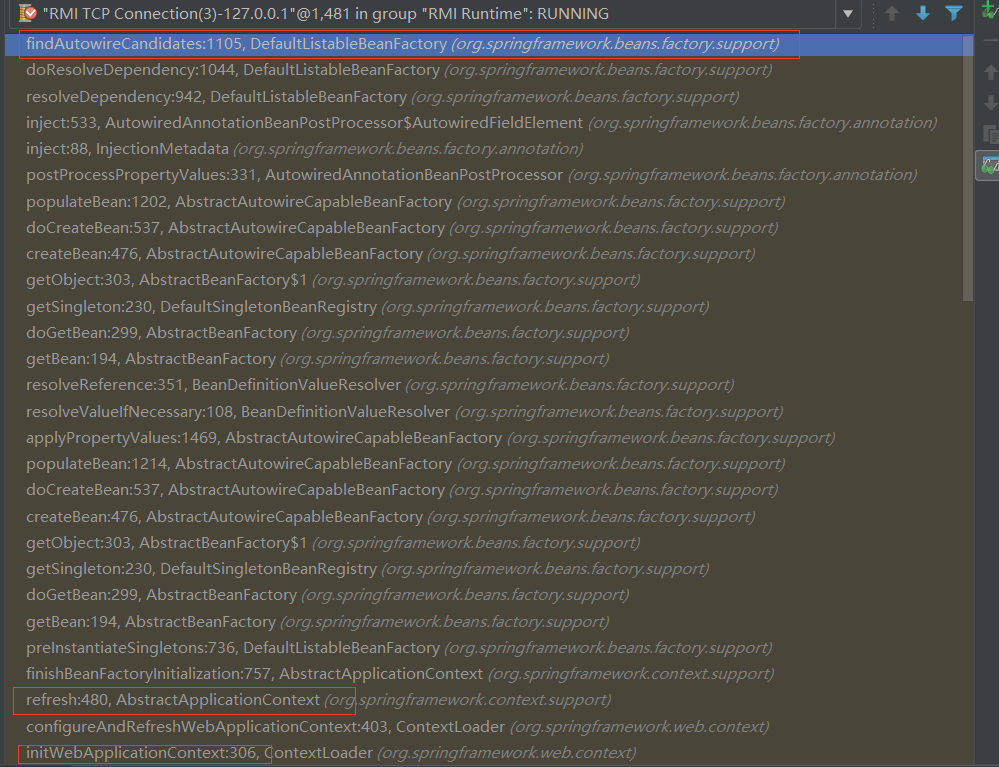
在refresh方法被调用后,会调用org.springframework.beans.factory.support.DefaultListableBeanFactory#findAutowireCandidates
    protected Map<String, Object> findAutowireCandidates(

            String beanName, Class<?> requiredType, DependencyDescriptor descriptor) {

        String[] candidateNames = BeanFactoryUtils.beanNamesForTypeIncludingAncestors(

                this, requiredType, true, descriptor.isEager());

        Map<String, Object> result = new LinkedHashMap<String, Object>(candidateNames.length);

        for (Class<?> autowiringType : this.resolvableDependencies.keySet()) {

            if (autowiringType.isAssignableFrom(requiredType)) {

                Object autowiringValue = this.resolvableDependencies.get(autowiringType);

                autowiringValue = AutowireUtils.resolveAutowiringValue(autowiringValue, requiredType);

                if (requiredType.isInstance(autowiringValue)) {

                    result.put(ObjectUtils.identityToString(autowiringValue), autowiringValue);

                    break;

                }

            }

        }

        for (String candidateName : candidateNames) {

            if (!isSelfReference(beanName, candidateName) && isAutowireCandidate(candidateName, descriptor)) {

                result.put(candidateName, getBean(candidateName));

            }

        }

        if (result.isEmpty()) {

            DependencyDescriptor fallbackDescriptor = descriptor.forFallbackMatch();

            for (String candidateName : candidateNames) {

                if (!candidateName.equals(beanName) && isAutowireCandidate(candidateName, fallbackDescriptor)) {

                    result.put(candidateName, getBean(candidateName));

                }

            }

        }

        return result;

    }
该方法内部会调用:
org.springframework.beans.factory.support.AutowireUtils#resolveAutowiringValue
    public static Object resolveAutowiringValue(Object autowiringValue, Class<?> requiredType) {

        if (autowiringValue instanceof ObjectFactory && !requiredType.isInstance(autowiringValue)) {

            ObjectFactory<?> factory = (ObjectFactory<?>) autowiringValue;

            if (autowiringValue instanceof Serializable && requiredType.isInterface()) {

                autowiringValue = Proxy.newProxyInstance(requiredType.getClassLoader(),

                        new Class<?>[] {requiredType}, new ObjectFactoryDelegatingInvocationHandler(factory));

            }

            else {

                return factory.getObject();

            }

        }

        return autowiringValue;

    }
可以看到,如果需要注入的对象是接口类型的话,则为其创建代理对象。
【转】在SpringMVC Controller中注入Request成员域的更多相关文章
- SpringMVC Controller中注入Request成员域和在方法中定义中HttpServletRequest有啥区别
先说结论,在Controller中注入Request是线程安全的. 以下是解释: 我们先来看看这两者有什么不同 在controller注入成员变量request 可以看到注入的是一个代理对象 写在方法 ...
- 在SpringMVC Controller中注入Request成员域
主题 在工作中遇到1个问题....我们定义了一个Controller基类,所有Springmvc自定义的controller都继承它....在它内部定义一个@Autowired HttpServlet ...
- spring mvc controller中获取request head内容
spring mvc controller中获取request head内容: @RequestMapping("/{mlid}/{ptn}/{name}") public Str ...
- SpringMVC在Controller层中注入request的坑
记一次为了节省代码没有在方法体中声明HttpServletRequest,而用autowire直接注入所钻的坑 结论 给心急的人. 直接在Controller的成员变量上使用@Autowire声明Ht ...
- Spring @Autowired注解在非Controller中注入为null
问题描述 今天在写一个工具类,里面用了@Autowired注入了StringRedisTemplate以及RedisTemplate时,在template.opsForValue().set(key, ...
- 在springMVC的controller中获取request,response对象的一个方法
ServletRequestAttributes attributes = (ServletRequestAttributes) RequestContextHolder.getRequestAttr ...
- 在Spring MVC Controller中注入HttpServletRequest对象会不会造成线程安全的问题
做法: 1.比如我们在Controller的方法中,通常是直接将HttpServletRequest做为参数,而为了方便节省代码,通常会定义为全局变量,然后使用@Autowire注入. 说明: 1.观 ...
- SpringMVC controller中业务方法的参数、返回值
业务方法的参数 业务方法的参数类型.参数个数是任意的,根据需要使用. 常见的参数类型: HttpServletRequest.HttpServletResponse.HttpSession 获取 ...
- Spring boot @Autowired注解在非Controller中注入为null
参考链接:https://blog.csdn.net/qq_35056292/article/details/78430777
随机推荐
- Tornado框架实现异步爬虫
from urllib.parse import urljoin from bs4 import BeautifulSoup from tornado import gen, httpclient, ...
- CentOS7服务器配置网络
Centos7最小化安装 [root@localhost ~]# vim /etc/sysconfig/network-scripts/ifcfg-enp5s0f0编辑如下:TYPE=Ethernet ...
- 使用FindAncestor查找方式绑定且不需要使用datacontext
原文:使用FindAncestor查找方式绑定且不需要使用datacontext <UserControl x:Class="QuJiao.AnimationVideoPlayer&q ...
- HTML基础语法
目录 HTML基础语法 1.全局架构标签 2.标题 3.段落 4.文本 5.属性 6.链接 7.图片 8.列表 9.表格 10.区块 11.布局 12.表单 13.框架 14.头部 HTML基础语法 ...
- .NetCore利用BlockingCollection实现简易消息队列
前言 消息队列现今的应用场景越来越大,常用的有RabbmitMQ和KafKa. 我们用BlockingCollection来实现简单的消息队列. 实现消息队列 用Vs2017创建一个控制台应用程序.创 ...
- JavaScript快速入门-ECMAScript本地对象(Number)
Number 对象是原始数值的包装对象. 创建一个Number对象:var myNum=new Number(value); 注意: 1.参数 value 是要创建的 Number 对象的数值,或是要 ...
- Visual studio 2017中 Javascript对于Xrm对象模型没有智能提示的解决办法
Visual studio 2017中 Javascript对于Xrm对象模型没有智能提示的解决办法 先上个图.语法提示支持到 Microsoft Dynamics xRM API 8.2 也就是cr ...
- 《深入浅出NodeJS》mindmap
接触NodeJS有快两年了,但因为和我的工作内容关系不大,所以一直没有系统的学习.最近终于有空能系统地了解学习一下这门技术,于是买了一本朴灵老师的<深入浅出NodeJS>仔细研读.这本书内 ...
- 前端项目模块化的实践2:使用 Webpack 打包基础设施代码
以下是关于前端项目模块化的实践,包含以下内容: 搭建 NPM 私有仓库管理源码及依赖: 使用 Webpack 打包基础设施代码: 使用 TypeScript 编写可靠类库 使用 TypeScript ...
- Python对Selenium调用浏览器进行封装包括启用无头浏览器,及对应的浏览器配置文件
""" 获取浏览器 打开本地浏览器 打开远程浏览器 关闭浏览器 打开网址 最大化 最小化 标题 url 刷新 Python对Selenium封装浏览器调用 ------b ...