
Spring Boot之执行器端点(Actuator Endpoint)实现剖析
spring boot 中有关endpoint的实现,细心的朋友可以发现,在org.springframework.boot.actuate.endpoint.mvc 包下也有一系列的xxxEndpoint,这又是为什么呢?
原因是: 我们很多情况下,都是访问接口的方式获取应用的监控,之前的分析是其实现的底层,要想实现通过接口访问,还需要对其进行包装一番,org.springframework.boot.actuate.endpoint.mvc 包下的实现就是干的这种事,下面,先看下springboot的actuator包的mvc下定义的类:
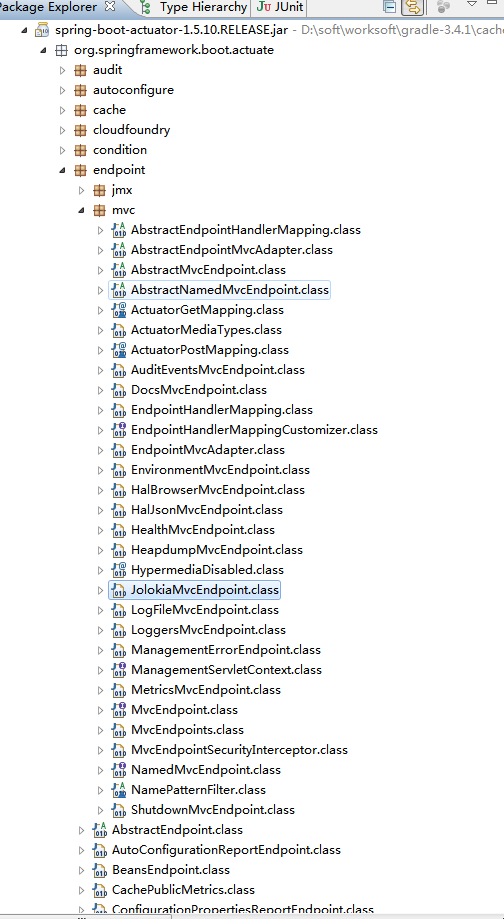
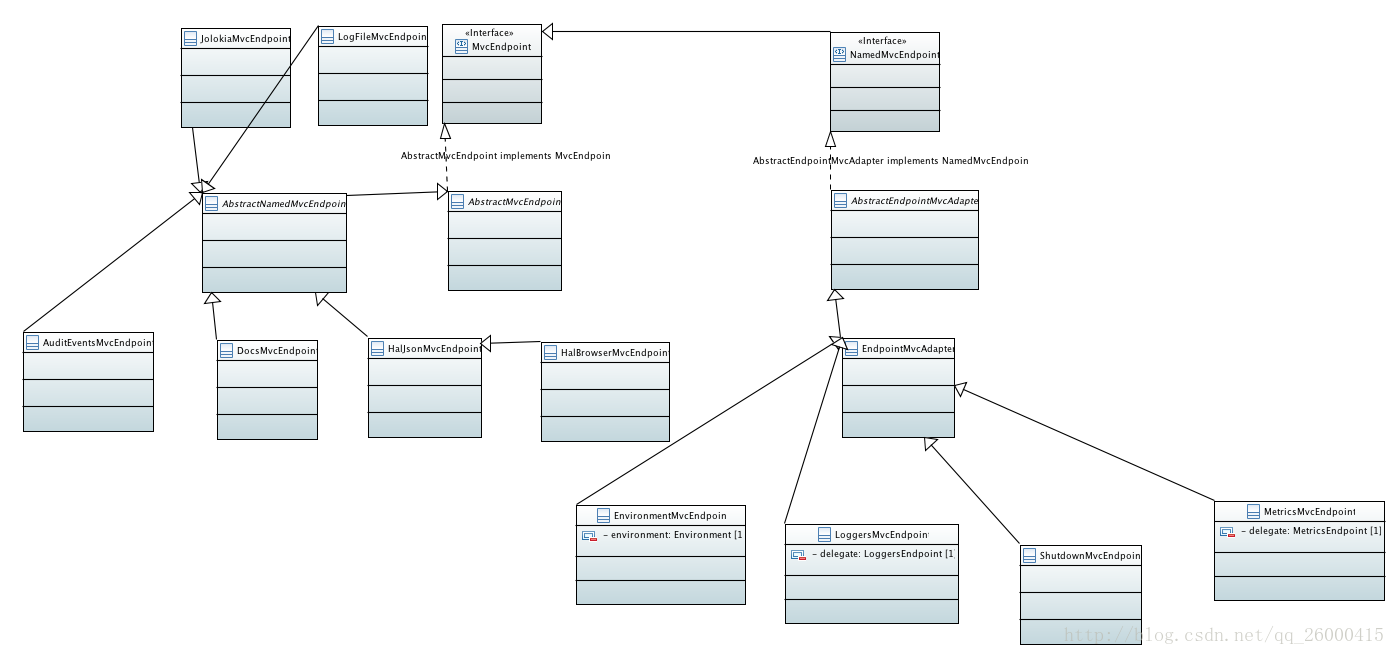
整体实现思路是将端点(Endpoint)适配委托给MVC层策略端点(MvcEndpoint),再通过端点MVC适配器(EndpointMvcAdapter)将端点暴露为HTTP请求方式的MVC端点,最后分别使用端点自动配置(EndpointAutoConfiguration)和MVC方式暴露端点的配置(EndpointWebMvcManagementContextConfiguration)来注入端点组件和端点处理程序映射组件、MVC端点注册表组件、MVC端点组件。
其中,端点处理程序映射(EndpointHandlerMapping)通过Spring MVC方式来暴露MVC端点。最后,本文以“shutdown端点示例”收尾。
现在就按照整体实现思路来剖析HTTP端点的实现原理。
一、类图
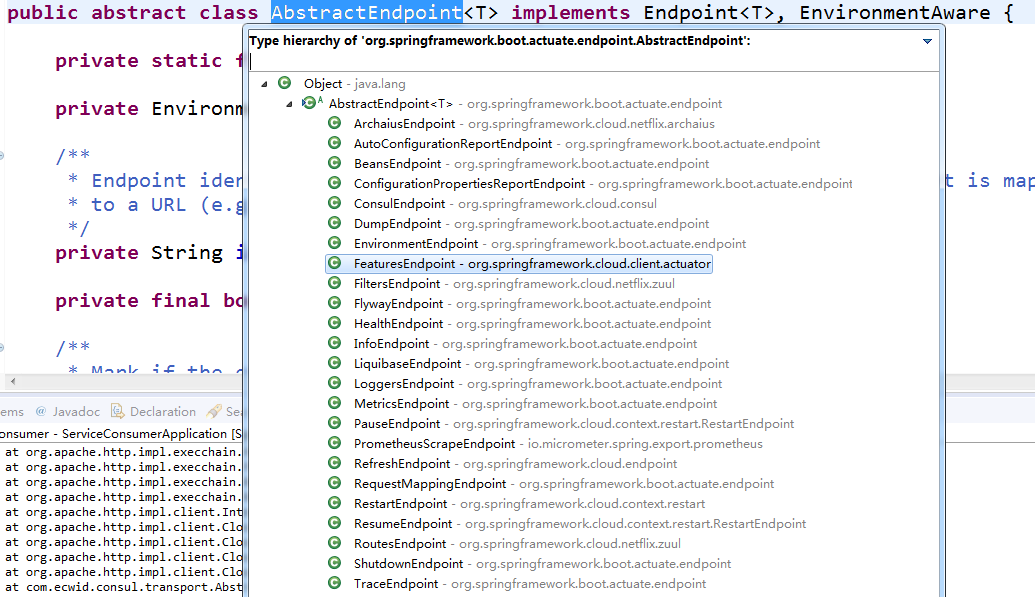
首先找到AbstractEndpoint,
1、端点接口(Endpoint<T>)
/**

* An endpoint that can be used to expose useful information to operations. Usually

* exposed via Spring MVC but could also be exposed using some other technique. Consider

* extending {@link AbstractEndpoint} if you are developing your own endpoint.

* <p>一个端点可以用于暴露操作的实用信息。

*

* @param <T> the endpoint data type (端点数据类型)

* @see AbstractEndpoint

*/

// 核心接口 端点接口

public interface Endpoint<T> {

/**

* 端点的逻辑标识(字母、数字和下划线('_'))

*/

String getId();

/**

* 端点是否启用

*/

boolean isEnabled();

/**

* 端点是否输出敏感数据(安全提示)

*/

boolean isSensitive();

// 核心接口 调用端点,并返回调用结果

T invoke();

}
其抽象实现基类 AbstractEndpoint<T>
/**

* Abstract base for {@link Endpoint} implementations.

*

* @param <T> the endpoint data type (端点数据类型)

*/

// 核心类 端点实现的抽象基类

public abstract class AbstractEndpoint<T> implements Endpoint<T>, EnvironmentAware {

private Environment environment;

/**

* Endpoint identifier. With HTTP monitoring the identifier of the endpoint is mapped

* to a URL (e.g. 'foo' is mapped to '/foo').

* 端点标识符

*/

private String id;

/**

* Mark if the endpoint exposes sensitive information.

*/

private Boolean sensitive;

/**

* 是否启动端点

*/

private Boolean enabled;

public AbstractEndpoint(String id, boolean sensitive, boolean enabled) {

setId(id);

this.sensitiveDefault = sensitive;

this.enabled = enabled;

}

@Override

public void setEnvironment(Environment environment) {

this.environment = environment;

}

public void setId(String id) {

  Assert.notNull(id, "Id must not be null");

   Assert.isTrue(ID_PATTERN.matcher(id).matches(),

   "Id must only contains letters, numbers and '_'");

   this.id = id;

}

@Override

public boolean isEnabled() {

return EndpointProperties.isEnabled(this.environment, this.enabled);

}

}
2、MVC层策略端点(MvcEndpoint)
/**

* 实现类允许使用@RequestMapping和完整的Spring MVC机制,

* 但不能在类型级别使用@Controller或@RequestMapping,因为这将导致路径的双重映射,

* 一次通过常规MVC处理程序映射,一次通过{@link EndpointHandlerMapping}。

*

* @author Dave Syer

* @see NamedMvcEndpoint

*/

// 核心接口 在端点之上的MVC层策略

public interface MvcEndpoint {

/**

* 禁用端点的响应实体

*/

ResponseEntity<Map<String, String>> DISABLED_RESPONSE = new ResponseEntity<>(

Collections.singletonMap("message", "This endpoint is disabled"),

HttpStatus.NOT_FOUND);

// 核心方法 返回端点的MVC路径

String getPath();

/**

* 返回端点是否暴露敏感信息。

*/

boolean isSensitive();

// 核心方法 返回端点暴露的类型/null

@SuppressWarnings("rawtypes")

Class<? extends Endpoint> getEndpointType();

}
2.1、包括逻辑名称的MVC端点(NamedMvcEndpoint)
/**

* 名称提供了引用端点的一致方式。

*

* @author Madhura Bhave

* @since 1.5.0

*/

// 包括逻辑名称的MVC端点

public interface NamedMvcEndpoint extends MvcEndpoint {

/**

* 返回端点的逻辑名称。

*/

String getName();

}
3、端点MVC适配器(EndpointMvcAdapter)
/**

* 暴露端点({@link Endpoint})为MVC端点({@link MvcEndpoint})的适配器。

*/

// 端点MVC适配器

public class EndpointMvcAdapter extends AbstractEndpointMvcAdapter<Endpoint<?>> {

/**

* Create a new {@link EndpointMvcAdapter}.

* @param delegate the underlying {@link Endpoint} to adapt. (用于适配的底层端点)

*/

public EndpointMvcAdapter(Endpoint<?> delegate) {

super(delegate); // 委托代理

}

// 核心实现 以HTTP GET方式调用

@Override

@ActuatorGetMapping

@ResponseBody

public Object invoke() {

return super.invoke(); // 向上调用,链式模式

}

}
其抽象实现基类 AbstractEndpointMvcAdapter<E extends Endpoint<?>>
/**

* MVC端点({@link MvcEndpoint})实现的抽象基类。

*

* @param <E> The delegate endpoint (代理的端点)

* @author Dave Syer

* @since 1.3.0

*/

public abstract class AbstractEndpointMvcAdapter<E extends Endpoint<?>>

implements NamedMvcEndpoint {

/**

* 被代理的底层端点(端点子类)

*/

private final E delegate;

/**

* 端点URL路径

*/

private String path;

public AbstractEndpointMvcAdapter(E delegate) {

Assert.notNull(delegate, "Delegate must not be null");

this.delegate = delegate;

}

// 核心实现 调用底层端点,并返回调用结果

protected Object invoke() {

if (!this.delegate.isEnabled()) { // 端点被禁用

// Shouldn't happen - shouldn't be registered when delegate's disabled

return getDisabledResponse();

}

return this.delegate.invoke(); // 调用端点

}

public E getDelegate() {

return this.delegate;

}

@Override

public String getName() {

return this.delegate.getId(); // name = id

}

@Override

public String getPath() {

return (this.path != null ? this.path : "/" + this.delegate.getId()); // "/id"

}

public void setPath(String path) {

while (path.endsWith("/")) {

path = path.substring(0, path.length() - 1);

}

if (!path.startsWith("/")) {

path = "/" + path;

}

this.path = path;

}

@Override

@SuppressWarnings("rawtypes")

public Class<? extends Endpoint> getEndpointType() {

return this.delegate.getClass();

}

}
4、端点组件自动配置
基于Spring Boot的自动配置机制(Auto-configuration),其自动配置文件位于spring-boot-actuator资源目录下的META-INF/spring.factories文件:
# 启用自动配置

org.springframework.boot.autoconfigure.EnableAutoConfiguration=\

...

org.springframework.boot.actuate.autoconfigure.EndpointAutoConfiguration,\

...

# 管理上下文配置

org.springframework.boot.actuate.autoconfigure.ManagementContextConfiguration=\

org.springframework.boot.actuate.autoconfigure.EndpointWebMvcManagementContextConfiguration,\

...
4.1、公共管理的端点自动配置(EndpointAutoConfiguration)
/**

 * {@link EnableAutoConfiguration Auto-configuration} for common management

 * {@link Endpoint}s.

 */

// 核心类 公共管理的端点自动配置

@Configuration // 组件配置

@AutoConfigureAfter({ FlywayAutoConfiguration.class, LiquibaseAutoConfiguration.class })

@EnableConfigurationProperties(EndpointProperties.class) // 启用配置属性(端点属性)

public class EndpointAutoConfiguration {

    @Bean

    @ConditionalOnMissingBean

    public EnvironmentEndpoint environmentEndpoint() {

        return new EnvironmentEndpoint();

    }

    @Bean

    @ConditionalOnMissingBean

    public HealthEndpoint healthEndpoint() {

        return new HealthEndpoint(

                this.healthAggregator == null ? new OrderedHealthAggregator()

                        : this.healthAggregator,

                this.healthIndicators == null

                        ? Collections.<String, HealthIndicator>emptyMap()

                        : this.healthIndicators);

    }

    @Bean

    @ConditionalOnMissingBean

    public TraceEndpoint traceEndpoint() {

        return new TraceEndpoint(this.traceRepository == null

                ? new InMemoryTraceRepository() : this.traceRepository);

    }

    @Bean

    @ConditionalOnBean(ConditionEvaluationReport.class)

    @ConditionalOnMissingBean(search = SearchStrategy.CURRENT)

    public AutoConfigurationReportEndpoint autoConfigurationReportEndpoint() {

        return new AutoConfigurationReportEndpoint();

    }

    @Bean

    @ConditionalOnMissingBean

    public ShutdownEndpoint shutdownEndpoint() {

        return new ShutdownEndpoint();

    }

}
4.2、全局的端点属性(EndpointProperties)
/**

 * Global endpoint properties.

 * <p>全局的端点属性。

 *

 * @since 1.3.0

 */

@ConfigurationProperties(prefix = "endpoints") // 端点属性配置前缀

public class EndpointProperties {

    private static final String ENDPOINTS_ENABLED_PROPERTY = "endpoints.enabled";

    private static final String ENDPOINTS_SENSITIVE_PROPERTY = "endpoints.sensitive";

    /**

     * Enable endpoints.

         * 启用端点

     */

    private Boolean enabled = true;

    /**

     * Default endpoint sensitive setting.

     */

    private Boolean sensitive;

    public static boolean isEnabled(Environment environment, Boolean enabled) {

        if (enabled != null) {

            return enabled;

        }

        if (environment != null

                && environment.containsProperty(ENDPOINTS_ENABLED_PROPERTY)) {

            return environment.getProperty(ENDPOINTS_ENABLED_PROPERTY, Boolean.class);

        }

        return true;

    }

}
4.3、外部化配置的注解(ConfigurationProperties)
/**

 * 如果要绑定和验证一些外部属性(例如来自.properties文件),请将其添加到@Configuration类中的类定义或@Bean方法。

 * <p>

 * Note that contrary to {@code @Value}, SpEL expressions are not evaluated since property

 * values are externalized.

 *

 * @author Dave Syer

 * @see ConfigurationPropertiesBindingPostProcessor

 * @see EnableConfigurationProperties

 */

// 外部化配置的注解

@Target({ ElementType.TYPE, ElementType.METHOD })

@Retention(RetentionPolicy.RUNTIME)

@Documented

public @interface ConfigurationProperties {

        // 属性的名称前缀

    @AliasFor("value")

    String prefix() default "";

}
5、MVC方式暴露端点的配置(EndpointWebMvcManagementContextConfiguration)
/**

 * Configuration to expose {@link Endpoint} instances over Spring MVC.

 *

 * @author Dave Syer

 * @since 1.3.0

 */

// 核心类 通过MVC方式来暴露端点的配置

@ManagementContextConfiguration

@EnableConfigurationProperties({ HealthMvcEndpointProperties.class,

        EndpointCorsProperties.class })

public class EndpointWebMvcManagementContextConfiguration {

    private final HealthMvcEndpointProperties healthMvcEndpointProperties;

        /**

         * 管理服务器的属性

         */

    private final ManagementServerProperties managementServerProperties;

    private final EndpointCorsProperties corsProperties;

        /**

         * 端点处理程序的映射定制程序

         */

    private final List<EndpointHandlerMappingCustomizer> mappingCustomizers;

        // 核心方法 注入端点处理程序映射组件

    @Bean

    @ConditionalOnMissingBean // 组件未注入

    public EndpointHandlerMapping endpointHandlerMapping() {

                // 注册的MVC端点集合

        Set<MvcEndpoint> endpoints = mvcEndpoints().getEndpoints();

        CorsConfiguration corsConfiguration = getCorsConfiguration(this.corsProperties);

                // 端点处理程序映射

        EndpointHandlerMapping mapping = new EndpointHandlerMapping(endpoints,

                corsConfiguration);

                // 管理端点的上下文路径前缀

        mapping.setPrefix(this.managementServerProperties.getContextPath());

                // MVC端点安全处理程序拦截器

        MvcEndpointSecurityInterceptor securityInterceptor = new MvcEndpointSecurityInterceptor(

                this.managementServerProperties.getSecurity().isEnabled(),

                this.managementServerProperties.getSecurity().getRoles());

        mapping.setSecurityInterceptor(securityInterceptor);

        for (EndpointHandlerMappingCustomizer customizer : this.mappingCustomizers) {

            customizer.customize(mapping);

        }

        return mapping;

    }

        // 核心方法 注入MVC端点注册表组件

    @Bean

    @ConditionalOnMissingBean // 组件未注入

    public MvcEndpoints mvcEndpoints() {

        return new MvcEndpoints();

    }

    @Bean

    @ConditionalOnBean(EnvironmentEndpoint.class)

    @ConditionalOnEnabledEndpoint("env")

    public EnvironmentMvcEndpoint environmentMvcEndpoint(EnvironmentEndpoint delegate) {

        return new EnvironmentMvcEndpoint(delegate);

    }

    @Bean

    @ConditionalOnBean(HealthEndpoint.class)

    @ConditionalOnEnabledEndpoint("health")

    public HealthMvcEndpoint healthMvcEndpoint(HealthEndpoint delegate) {

        HealthMvcEndpoint healthMvcEndpoint = new HealthMvcEndpoint(delegate,

                this.managementServerProperties.getSecurity().isEnabled());

        if (this.healthMvcEndpointProperties.getMapping() != null) {

            healthMvcEndpoint

                    .addStatusMapping(this.healthMvcEndpointProperties.getMapping());

        }

        return healthMvcEndpoint;

    }

        // 注入关闭应用程序的MVC端点组件

    @Bean

    @ConditionalOnBean(ShutdownEndpoint.class) // 组件已实例化

    @ConditionalOnEnabledEndpoint(value = "shutdown", enabledByDefault = false) // 端点已启用

    public ShutdownMvcEndpoint shutdownMvcEndpoint(ShutdownEndpoint delegate) {

        return new ShutdownMvcEndpoint(delegate);

    }

}
5.1、MVC端点注册表(MvcEndpoints)
/**

 * 所有MVC端点组件的注册表,以及一组用于包装尚未公开的MVC端点的现有端点实例的通用工厂。

 */

// 核心类 MVC端点注册表

public class MvcEndpoints implements ApplicationContextAware, InitializingBean {

        /**

         * 应用上下文

         */

    private ApplicationContext applicationContext;

        /**

         * MVC端点集合

         */

    private final Set<MvcEndpoint> endpoints = new HashSet<>();

        /**

         * MVC端点类型集合

         */

    private Set<Class<?>> customTypes;

    @Override

    public void setApplicationContext(ApplicationContext applicationContext)

            throws BeansException {

        this.applicationContext = applicationContext;

    }

    @Override

    public void afterPropertiesSet() throws Exception {

                // 现有的MVC端点列表

        Collection<MvcEndpoint> existing = BeanFactoryUtils

                .beansOfTypeIncludingAncestors(this.applicationContext, MvcEndpoint.class) // MVC端点

                .values();

        this.endpoints.addAll(existing);

        this.customTypes = findEndpointClasses(existing);

                // 现有的代理端点列表

        @SuppressWarnings("rawtypes")

        Collection<Endpoint> delegates = BeanFactoryUtils

                .beansOfTypeIncludingAncestors(this.applicationContext, Endpoint.class) // 端点

                .values();

        for (Endpoint<?> endpoint : delegates) {

            if (isGenericEndpoint(endpoint.getClass()) && endpoint.isEnabled()) {

                EndpointMvcAdapter adapter = new EndpointMvcAdapter(endpoint); // 端点MVC适配器

                                // 端点路径

                String path = determinePath(endpoint,

                        this.applicationContext.getEnvironment());

                if (path != null) {

                    adapter.setPath(path);

                }

                this.endpoints.add(adapter);

            }

        }

    }

    private Set<Class<?>> findEndpointClasses(Collection<MvcEndpoint> existing) {

        Set<Class<?>> types = new HashSet<>();

        for (MvcEndpoint endpoint : existing) {

            Class<?> type = endpoint.getEndpointType(); // 端点类型

            if (type != null) {

                types.add(type);

            }

        }

        return types;

    }

        // 核心方法 返回注册的MVC端点集合

    public Set<MvcEndpoint> getEndpoints() {

        return this.endpoints;

    }

    /**

     * 返回指定类型的MVC端点集合。

     */

    @SuppressWarnings("unchecked")

    public <E extends MvcEndpoint> Set<E> getEndpoints(Class<E> type) {

        Set<E> result = new HashSet<>(this.endpoints.size());

        for (MvcEndpoint candidate : this.endpoints) {

            if (type.isInstance(candidate)) {

                result.add((E) candidate);

            }

        }

        return Collections.unmodifiableSet(result); // 不可修改的集合

    }

        // 通用的端点

    private boolean isGenericEndpoint(Class<?> type) {

        return !this.customTypes.contains(type)

                && !MvcEndpoint.class.isAssignableFrom(type);

    }

    private String determinePath(Endpoint<?> endpoint, Environment environment) {

                // 配置属性

        ConfigurationProperties configurationProperties = AnnotationUtils

                .findAnnotation(endpoint.getClass(), ConfigurationProperties.class);

        if (configurationProperties != null) {

            return environment.getProperty(configurationProperties.prefix() + ".path");

        }

        return null;

    }

}
5.2、端点处理程序映射(EndpointHandlerMapping)
/**

 * @RequestMapping的语义应该与普通的@Controller相同,

 * 但是端点不应该被注释为@Controller,否则它们将被正常的MVC机制映射。

 * <p>

 * <p>映射的目标之一是支持作为HTTP端点工作的端点,

 * 但是当没有HTTP服务器(类路径上没有Spring MVC)时,仍然可以提供有用的服务接口。

 * 注意:具有方法签名的任何端点将在非Servlet环境下中断。

 */

// 核心类 通过端点的逻辑标识将端点映射到URL的处理程序映射

public class EndpointHandlerMapping extends AbstractEndpointHandlerMapping<MvcEndpoint> {

    /**

     * Create a new {@link EndpointHandlerMapping} instance. All {@link Endpoint}s will be

     * detected from the {@link ApplicationContext}. The endpoints will accepts CORS

     * requests based on the given {@code corsConfiguration}.

     * @param endpoints the endpoints (MVC端点列表)

     * @param corsConfiguration the CORS configuration for the endpoints

     * @since 1.3.0

     */

    public EndpointHandlerMapping(Collection<? extends MvcEndpoint> endpoints,

            CorsConfiguration corsConfiguration) {

        super(endpoints, corsConfiguration);

    }

}
其抽象实现基类 AbstractEndpointHandlerMapping<E extends MvcEndpoint>
/**

 * @RequestMapping的语义应该与普通的@Controller相同,

 * 但是端点不应该被注释为@Controller,否则它们将被正常的MVC机制映射。

 * <p>映射的目标之一是支持作为HTTP端点工作的端点,

 * 但是当没有HTTP服务器(类路径上没有Spring MVC)时,仍然可以提供有用的服务接口。

 * 注意:具有方法签名的任何端点将在非Servlet环境下中断。

 *

 * @param <E> The endpoint type (端点类型)

 */

// 核心类 通过端点的逻辑标识将端点映射到URL的处理程序映射的抽象基类

public abstract class AbstractEndpointHandlerMapping<E extends MvcEndpoint>

        extends RequestMappingHandlerMapping {

    /**

     * MVC端点集合

     */

    private final Set<E> endpoints;

        /**

         * 安全处理程序拦截器

         */

    private HandlerInterceptor securityInterceptor;

        /**

         * CORS配置

         */

    private final CorsConfiguration corsConfiguration;

        /**

         * 端点的映射路径前缀

         */

    private String prefix = "";

    private boolean disabled = false;

    /**

     * Create a new {@link AbstractEndpointHandlerMapping} instance. All {@link Endpoint}s

     * will be detected from the {@link ApplicationContext}. The endpoints will accepts

     * CORS requests based on the given {@code corsConfiguration}.

         * <p>将从应用上下文检测到所有端点。

     * @param endpoints the endpoints

     * @param corsConfiguration the CORS configuration for the endpoints

     * @since 1.3.0

     */

    public AbstractEndpointHandlerMapping(Collection<? extends E> endpoints,

            CorsConfiguration corsConfiguration) {

        this.endpoints = new HashSet<>(endpoints);

        postProcessEndpoints(this.endpoints);

        this.corsConfiguration = corsConfiguration;

        // By default the static resource handler mapping is LOWEST_PRECEDENCE - 1

        // and the RequestMappingHandlerMapping is 0 (we ideally want to be before both)

        // 默认情况下,静态资源处理程序映射的顺序是 LOWEST_PRECEDENCE - 1

        setOrder(-100);

        setUseSuffixPatternMatch(false);

    }

    /**

     * Post process the endpoint setting before they are used. Subclasses can add or

     * modify the endpoints as necessary.

         * <p>在使用之前,后处理端点设置。

     * @param endpoints the endpoints to post process

     */

    protected void postProcessEndpoints(Set<E> endpoints) {

    }

    @Override

    public void afterPropertiesSet() {

        super.afterPropertiesSet();

        if (!this.disabled) { // 端点处理程序被禁用

            for (MvcEndpoint endpoint : this.endpoints) {

                detectHandlerMethods(endpoint);

            }

        }

    }

        // 核心实现 注册端点处理程序方法及其唯一映射

    @Override

    @Deprecated

    protected void registerHandlerMethod(Object handler, Method method,

            RequestMappingInfo mapping) {

        if (mapping == null) {

            return;

        }

        String[] patterns = getPatterns(handler, mapping);

        if (!ObjectUtils.isEmpty(patterns)) {

            super.registerHandlerMethod(handler, method,

                    withNewPatterns(mapping, patterns));

        }

    }

    private String[] getPatterns(Object handler, RequestMappingInfo mapping) {

        if (handler instanceof String) { // 组件名称

            handler = getApplicationContext().getBean((String) handler);

        }

        Assert.state(handler instanceof MvcEndpoint, "Only MvcEndpoints are supported");

        String path = getPath((MvcEndpoint) handler); // MVC端点路径

        return (path == null ? null : getEndpointPatterns(path, mapping));

    }

    protected String getPath(MvcEndpoint endpoint) {

        return endpoint.getPath();

    }

        // 核心实现 返回端点的路径列表

      private String[] getEndpointPatterns(String path, RequestMappingInfo mapping) {

                // 路径模式前缀

        String patternPrefix = StringUtils.hasText(this.prefix) ? this.prefix + path

                : path;

                // 默认的路径集合

        Set<String> defaultPatterns = mapping.getPatternsCondition().getPatterns();

        if (defaultPatterns.isEmpty()) {

                        // 端点路径

            return new String[] { patternPrefix, patternPrefix + ".json" };

        }

        List<String> patterns = new ArrayList<>(defaultPatterns);

        for (int i = 0; i < patterns.size(); i++) {

            patterns.set(i, patternPrefix + patterns.get(i)); // 端点请求路径

        }

        return patterns.toArray(new String[patterns.size()]);

    }

        // 新的端点路径

    private RequestMappingInfo withNewPatterns(RequestMappingInfo mapping,

            String[] patternStrings) {

                // 模式请求条件

        PatternsRequestCondition patterns = new PatternsRequestCondition(patternStrings,

                null, null, useSuffixPatternMatch(), useTrailingSlashMatch(), null);

        return new RequestMappingInfo(patterns, mapping.getMethodsCondition(),

                mapping.getParamsCondition(), mapping.getHeadersCondition(),

                mapping.getConsumesCondition(), mapping.getProducesCondition(),

                mapping.getCustomCondition());

    }

        // 核心实现 获取处理程序执行链

    @Override

    protected HandlerExecutionChain getHandlerExecutionChain(Object handler,

            HttpServletRequest request) {

        HandlerExecutionChain chain = super.getHandlerExecutionChain(handler, request);

        if (this.securityInterceptor == null || CorsUtils.isCorsRequest(request)) {

            return chain;

        }

        return addSecurityInterceptor(chain);

    }

    private HandlerExecutionChain addSecurityInterceptor(HandlerExecutionChain chain) {

                // 处理程序拦截器

        List<HandlerInterceptor> interceptors = new ArrayList<>();

        if (chain.getInterceptors() != null) {

            interceptors.addAll(Arrays.asList(chain.getInterceptors()));

        }

                // 添加安全处理程序拦截器

            interceptors.add(this.securityInterceptor);

        return new HandlerExecutionChain(chain.getHandler(),

                interceptors.toArray(new HandlerInterceptor[interceptors.size()]));

    }

        // 获取端点的路径

    public String getPath(String endpoint) {

        return this.prefix + endpoint;

    }

        // 返回MVC端点集合

    public Set<E> getEndpoints() {

        return Collections.unmodifiableSet(this.endpoints); // 不可修改的集合

    }

}
5.3、组件存在条件(OnBeanCondition)
5.3.1、未注入组件条件(ConditionalOnMissingBean)
/**

 * 仅当指定的组件类型或名称尚未包含在{@link BeanFactory}中时才匹配的条件。

 */

@Target({ ElementType.TYPE, ElementType.METHOD })

@Retention(RetentionPolicy.RUNTIME)

@Documented

@Conditional(OnBeanCondition.class)

public @interface ConditionalOnMissingBean {

    /**

     * The class type of bean that should be checked. The condition matches when each

     * class specified is missing in the {@link ApplicationContext}.

     * @return the class types of beans to check

     */

        // 组件的类型

    Class<?>[] value() default {};

    String[] type() default {};

    /**

     * The class type of beans that should be ignored when identifying matching beans.

     * @return the class types of beans to ignore

     * @since 1.2.5

     */

    Class<?>[] ignored() default {};

    String[] ignoredType() default {};

        // 装饰组件的注解类型

    Class<? extends Annotation>[] annotation() default {};

        // 组件的名称列表

    String[] name() default {};

        // 应用上下文层次结构的搜索策略

    SearchStrategy search() default SearchStrategy.ALL;

}
5.3.2、组件条件(ConditionalOnBean)
/**

 * 仅当指定的组件类型或名称已经包含在{@link BeanFactory}中时才匹配的条件

 */

@Target({ ElementType.TYPE, ElementType.METHOD })

@Retention(RetentionPolicy.RUNTIME)

@Documented

@Conditional(OnBeanCondition.class)

public @interface ConditionalOnBean {

    /**

     * The class type of bean that should be checked. The condition matches when all of

     * the classes specified are contained in the {@link ApplicationContext}.

     * @return the class types of beans to check

     */

        // 组件的类型

    Class<?>[] value() default {};

    String[] type() default {};

        // 装饰组件的注解类型

    Class<? extends Annotation>[] annotation() default {};

        // 组件的名称列表

    String[] name() default {};

        // 应用上下文层次结构的搜索策略

    SearchStrategy search() default SearchStrategy.ALL;

}
5.3.3、启用端点条件(ConditionalOnEnabledEndpoint)
/**

 * 检查端点是否启用的条件。

 * 如果endpoints.<name>.enabled属性的值是true,则匹配。

 *

 * @since 1.2.4

 */

// 启用端点上的条件

@Retention(RetentionPolicy.RUNTIME)

@Target({ ElementType.METHOD, ElementType.TYPE })

@Documented

@Conditional(OnEnabledEndpointCondition.class)

public @interface ConditionalOnEnabledEndpoint {

        // 端点的名称

    String value();

    /**

     * Returns whether or not the endpoint is enabled by default.

     */

    boolean enabledByDefault() default true;

}
6、shutdown端点示例
6.1、关闭应用程序的端点(ShutdownEndpoint)
/**

 * {@link Endpoint} to shutdown the {@link ApplicationContext}.

 * <p>用于优雅地关闭应用上下文({@link ApplicationContext})的端点。

 * 允许应用以优雅的方式关闭

 *

 * @author Dave Syer

 * @author Christian Dupuis

 * @author Andy Wilkinson

 */

@ConfigurationProperties(prefix = "endpoints.shutdown") // 属性前缀配置

public class ShutdownEndpoint extends AbstractEndpoint<Map<String, Object>>

        implements ApplicationContextAware { // 应用上下文感知

        /** 无关闭上下文信息 */

    private static final Map<String, Object> NO_CONTEXT_MESSAGE = Collections

            .unmodifiableMap(Collections.<String, Object>singletonMap("message",

                    "No context to shutdown."));

        /** 关闭信息 */

    private static final Map<String, Object> SHUTDOWN_MESSAGE = Collections

            .unmodifiableMap(Collections.<String, Object>singletonMap("message",

                    "Shutting down, bye..."));

        /**

         * 可配置的应用上下文

         */

    private ConfigurableApplicationContext context;

    /**

     * Create a new {@link ShutdownEndpoint} instance.

     */

    public ShutdownEndpoint() {

        super("shutdown", true, false);

    }

        // 核心实现 新启线程来关闭应用上下文,并释放所有资源和锁

    @Override

    public Map<String, Object> invoke() {

        if (this.context == null) {

            return NO_CONTEXT_MESSAGE;

        }

        try {

            return SHUTDOWN_MESSAGE;

        }

        finally {

            Thread thread = new Thread(() -> {

                            try {

                                Thread.sleep(500L); // 使当前正在执行的线程休眠(500ms)

                            }

                            catch (InterruptedException ex) {

                                Thread.currentThread().interrupt(); // 如果出现中断异常,则中断当前线程

                            }

                            ShutdownEndpoint.this.context.close(); // 关闭应用上下文,并释放所有资源和锁

                        });

            thread.setContextClassLoader(getClass().getClassLoader()); // 本类的类加载器

            thread.start();

        }

    }

        // 核心实现 设置可配置的应用上下文

    @Override

    public void setApplicationContext(ApplicationContext context) throws BeansException {

        if (context instanceof ConfigurableApplicationContext) {

            this.context = (ConfigurableApplicationContext) context;

        }

    }

}
6.2、关闭应用程序的MVC端点(ShutdownMvcEndpoint)
/**

 * 暴露关闭应用上下文端点({@link ShutdownEndpoint})为MVC端点({@link MvcEndpoint})的适配器。

 */

// 关闭应用程序的MVC端点

@ConfigurationProperties(prefix = "endpoints.shutdown") // 属性前缀配置

public class ShutdownMvcEndpoint extends EndpointMvcAdapter {

    public ShutdownMvcEndpoint(ShutdownEndpoint delegate) {

        super(delegate); // 委托代理

    }

        // 核心实现 以HTTP POST方式调用

    @PostMapping(produces = { ActuatorMediaTypes.APPLICATION_ACTUATOR_V1_JSON_VALUE,

            MediaType.APPLICATION_JSON_VALUE })

    @ResponseBody

    @Override

    public Object invoke() {

        if (!getDelegate().isEnabled()) { // 端点被禁用

            return getDisabledResponse();

        }

        return super.invoke(); // 向上调用,链式模式

    }

}
至此,HTTP端点实现原理就全部分析完成。
Spring Boot之执行器端点(Actuator Endpoint)实现剖析的更多相关文章
- spring boot 2.x 系列 —— actuator 服务监控与管理
文章目录 一.概念综述 1.1 端点 1.2 启用端点 1.3 暴露端点 1.4 健康检查信息 二.项目说明 1.1 项目结构说明 1.2 主要依赖 1.3 项目配置 1.4 查看监控状态 三.自定义 ...
- spring boot 四大组件之Actuator
执行器(Actuator)的定义 执行器是一个制造业术语,指的是用于移动或控制东西的一个机械装置,一个很小的改变就能让执行器产生大量的运动.An actuator is a manufacturing ...
- 关于spring boot启动监控端点的方法(spring-boot-starter-actuator)
前言: 在spring boot的旧版本中,监控端点(如/env)是默认开启的,所以只要项目正常启动,就能通过url获取信息.可是在2.0版本以后,由于安全性考虑,除了/health和/info的端点 ...
- Spring Boot Actuator [监控与管理]
1. 如何添加 2. actuator 的原生端点(API) 2.1 应用类配置 2.1.1 http://localhost:8080/actuator/conditions 2.1.2 http: ...
- Spring Boot Actuator 使用
转载于:https://www.jianshu.com/p/af9738634a21 Spring Boot 的 Actuator 提供了很多生产级的特性,比如监控和度量Spring Boot 应用程 ...
- Spring Boot 揭秘与实战(九) 应用监控篇 - 自定义监控端点
文章目录 1. 继承 AbstractEndpoint 抽象类 2. 创建端点配置类 3. 运行 4. 源代码 Spring Boot 提供的端点不能满足我们的业务需求时,我们可以自定义一个端点. 本 ...
- 20191127 Spring Boot官方文档学习(5)
5.Spring Boot Actuator:可投入生产的功能 Spring Boot包含许多其他功能,可帮助您在将应用程序投入生产时监控和管理您的应用程序.您可以选择使用HTTP端点或JMX管理和监 ...
- Spring Boot admin 2.0 详解
一.什么是Spring Boot Admin ? Spring Boot Admin是一个开源社区项目,用于管理和监控SpringBoot应用程序. 应用程序作为Spring Boot Admin C ...
- Spring Boot Admin 2.1.0 全攻略
转载请标明出处: https://www.fangzhipeng.com 本文出自方志朋的博客 Spring Boot Admin简介 Spring Boot Admin是一个开源社区项目,用于管理和 ...
随机推荐
- Android测试(一)——Apk文件结构以及Android组件介绍
APK文件结构: assests目录:一般存放的是不会被编译处理的文件,一般是资源性质的文件或者配置文件: libs目录:程序依赖的native库,包含针对特定处理器软件层的编译代码: res目录:存 ...
- 详细解析HTML基础结构
<!DOCTYPE html> <html> <head> <meta charset="UTF-8"> <title> ...
- HTML中引用外部JS文件失效原因
今天在练习中碰到“引用外部的一个js文件但是却失效”的情况,实在不懂,百度后才知是引用的位置不对,错误的代码如下: <head> <meta charset="UTF-8& ...
- element-ui <el-input> +<el-tree>使用
<template> <!-- 需求:通过点击<el-input> 将<el-tree>树型结构打开,选中<el-tree>某个值显示在<e ...
- String.valueOf() ,其他类型转为字符型
1. 由 基本数据型态转换成 String String 类别中已经提供了将基本数据型态转换成 String 的 static 方法 也就是 String.valueOf() 这个参数多载的方法 有下 ...
- idea2017.3最新破解方法
IntelliJ IDEA2017.3 激活 转载至:http://blog.csdn.net/zx110503/article/details/78734428 最新的IDEA激活方式 使用网上传 ...
- Selenium2+python自动化-查看selenium API
前面都是点点滴滴的介绍selenium的一些api使用方法,那么selenium的api到底有多少呢?本篇就叫大家如何去查看selenium api,不求人,无需伸手找人要,在自己电脑就有. pydo ...
- 外网如何访问web项目holer实现篇
外网访问WEB 内网主机上安装了WEB服务器,只能在局域网内访问,怎样从公网也能访问本地WEB应用? 本文将介绍使用holer实现的具体步骤. 1. 准备工作 1.1 安装Java 1.7及以上版本 ...
- JSP 页面显示sql中数据。el
存储数据库字段. package Bean; /** * Created by Administrator on 2017/5/24. */ public class info { private S ...
- cocos2dx粒子系统的简单使用
cocos2dx自带的几种封装好的粒子系统,下面做个简单使用演示. ParticleFire 火焰粒子系统 ParticleFireworks 烟花粒子系统 ParticleSun 太阳粒子系统 Pa ...