
Java Heap
堆
堆是一种基于树的数据结构,是一种完全二叉树,堆中的所有的节点都按照特定的顺序排列。
在堆数据结构中,如果任意父节点的值都大于其子节点,则会产生一个大顶堆;反之,如果任意父节点的值都小于其子节点,则会产生一个小顶堆 。
上述这种父节点与子节点之间的关系被称为堆属性 。
二叉堆
由于二叉堆是一棵完全二叉树,它可以很容易的被表示为一个数组。在数组中,array[0] 代表根节点,且父节点与子节点的索引关系为:Left Child = 2 * Parent + 1 , Right Child = 2 * Parent + 2。
下图是一个大顶堆的树形结构表示:
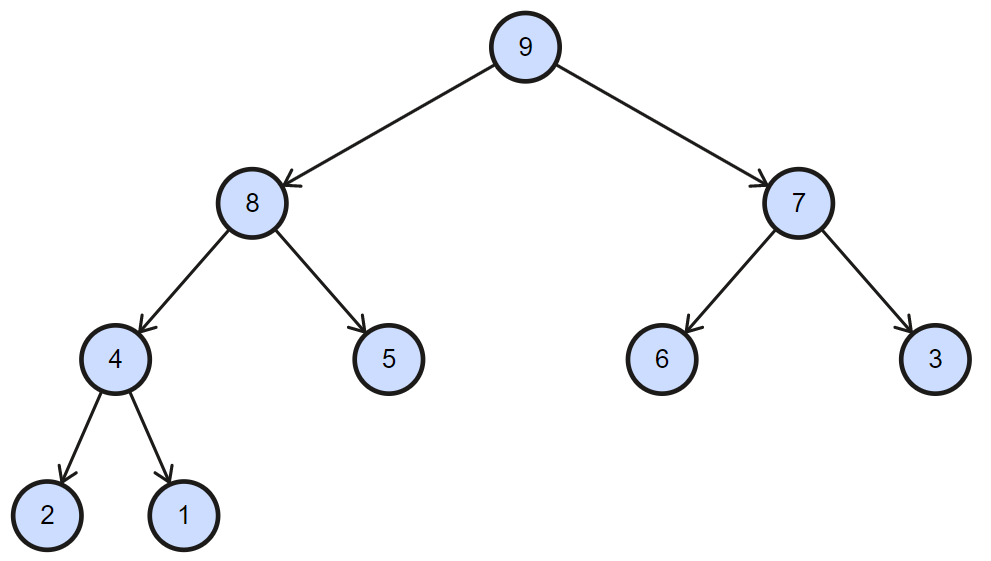
其数组表示如下:
[9, 8, 7, 4, 5, 6, 3, 2, 1]
小顶堆
插入元素
该过程包括两个步骤:
- 将元素插入到堆尾
- 执行 上浮 操作使其满足堆属性,该过程时间复杂度为 \(O(log N)\)
siftup操作逻辑: 对于小顶堆,若当前节点的元素小于其父节点,则交换这俩个节点的值,然后递归父节点,保证满足堆属性。
@SuppressWarnings("unchecked")

private void siftUp(int k, E x) {

  Comparable<? super E> key = (Comparable<? super E>) x;

  while (k > 0) {

    int parent = (k - 1) >>> 1;

    Object e = minHeap[parent];

    if (key.compareTo((E) e) >= 0) {

      break;

    }

    minHeap[k] = e;

    k = parent;

  }

  minHeap[k] = key;

}
删除元素
该过程包括3个步骤:
- 找到待删除元素的索引位置
- 将堆中最后一个元素移动到待删除元素的索引位置
- 对该索引位置元素执行 上浮 或 下沉 操作,该过程时间复杂度为 \(O(log N)\)
siftDown操作逻辑: 对于小顶堆,如果当前节点的值大于其左子节点或右子节点的值,则交换当前节点与子节点中的较小值,然后递归子树保证满足堆属性。
// 将最后一个元素移动到被删除位置

E moved = (E) minHeap[s];

minHeap[s] = null;

// 下沉

siftDown(i, moved);

if (minHeap[i] == moved) {

  /**

   * minHeap[i] == moved

   * 表示没有下沉, 说明当前节点与子节点满足堆属性

   * 执行上浮, 使得当前节点与父节点满足堆属性

   */

  siftUp(i, moved);

  if (minHeap[i] != moved) {

    return moved;

  }

}

private void siftDown(int k, E x) {

  Comparable<? super E> key = (Comparable<? super E>) x;

  int half = heapSize >>> 1;   // 非叶子节点

  while (k < half) {

    int child = (k << 1) + 1;

    int right = (k << 1) + 2;

    Object c = minHeap[child];

    if (right < heapSize && ((Comparable<? super E>) c).compareTo((E) minHeap[right]) > 0) {

      c = minHeap[child = right];

    }

    if (key.compareTo((E) c) <= 0) {

      break;

    }

    minHeap[k] = c;

    k = child;

  }

  minHeap[k] = key;

}
Java 实现
下述代码为小顶堆的实现,大顶堆的实现也是一样的,区别就是上浮 和 下沉 操作的交换逻辑与小顶堆相反。
package DataStructure;

import java.io.Serializable;

import java.util.NoSuchElementException;

public class MinHeap<E> implements Serializable{

  private static final int DEFAULT_INITIAL_CAPACITY = 11;

  transient Object[] minHeap;

  private int heapSize = 0;   // 当前堆中的元素个数

  private int maxSize;    // 堆中最大元素个数

  public MinHeap() {

    this(DEFAULT_INITIAL_CAPACITY);

  }

  public MinHeap(int initialCapacity) {

    if (initialCapacity < 1) {

      throw new IllegalArgumentException();

    }

    this.maxSize = initialCapacity;

    this.minHeap = new Object[initialCapacity];

  }

  public MinHeap(Collection<? extends E> c) {

    initElementsFromCollection(c);

    heapify();

  }

  public int size() {

    return heapSize;

  }

  public void clear() {

    for (int i = 0; i < heapSize; i++) {

      minHeap[i] = null;

    }

    heapSize = 0;

  }

  @SuppressWarnings("unchecked")

  public E peek() {

    return (heapSize == 0) ? null : (E) minHeap[0];

  }

  /**

   * 插入元素到堆尾

   * @param e

   */

  public boolean add(E e) {

    if (e == null) {

      throw new NullPointerException();

    }

    int i = heapSize;

    if (i >= maxSize) {

      throw new NoSuchElementException("Heap is full!");

    }

    if (i == 0) {

      minHeap[0] = e;

    }

    else {

      siftUp(i, e);

    }

    return true;

  }

  /**

   * 删除指定元素

   * @param o

   * @return

   */

  public boolean remove(Object o) {

    int i = indexOf(o);

    if (i == - 1) {

      return false;

    }

    else {

      removeAt(i);

      return true;

    }

  }

  /**

   * 弹出堆顶元素

   * @return

   */

  @SuppressWarnings("unchecked")

  public E poll() {

    if (heapSize == 0) {

      return null;

    }

    int s = --heapSize;

    E result = (E) minHeap[0];

    E x = (E) minHeap[s];

    minHeap[s] = null;

    if (s != 0) {

      siftDown(0, x);

    }

    return result;

  }

  private int indexOf(Object o) {

    if (o != null) {

      for (int i = 0; i < heapSize; i++) {

        if (o.equals(minHeap[i])) {

          return i;

        }

      }

    }

    return -1;

  }

  @SuppressWarnings("unchecked")

  private E removeAt(int i) {

    int s = --heapSize;

    if (s == i) {

      minHeap[i] = null;   // 移除最后一个元素

    }

    else {

      // 将最后一个元素移动到被删除位置

      E moved = (E) minHeap[s];

      minHeap[s] = null;

      // 下沉

      siftDown(i, moved);

      if (minHeap[i] == moved) {

        // 没有下沉, 说明当前节点与子节点满足堆属性

        // 执行上浮, 使得当前节点与父节点满足堆属性

        siftUp(i, moved);

        if (minHeap[i] != moved) {

          return moved;

        }

      }

    }

    return null;

  }

  @SuppressWarnings("unchecked")

  private void siftUp(int k, E x) {

    Comparable<? super E> key = (Comparable<? super E>) x;

    while (k > 0) {

      int parent = (k - 1) >>> 1;

      Object e = minHeap[parent];

      if (key.compareTo((E) e) >= 0) {

        break;

      }

      minHeap[k] = e;

      k = parent;

    }

    minHeap[k] = key;

  }

  @SuppressWarnings("unchecked")

  private void siftDown(int k, E x) {

    Comparable<? super E> key = (Comparable<? super E>) x;

    int half = heapSize >>> 1;   // 非叶子节点

    while (k < half) {

      int child = (k << 1) + 1;

      int right = (k << 1) + 2;

      Object c = minHeap[child];

      if (right < heapSize && ((Comparable<? super E>) c).compareTo((E) minHeap[right]) > 0) {

        c = minHeap[child = right];

      }

      if (key.compareTo((E) c) <= 0) {

        break;

      }

      minHeap[k] = c;

      k = child;

    }

    minHeap[k] = key;

  }

  private void initElementsFromCollection(Collection<? extends E> c) {

    Object[] a = c.toArray();

    if (a.getClass() != Object[].class) {

      a = Arrays.copyOf(a, a.length, Object[].class);

    }

    int len = a.length;

    for (int i = 0; i < len; i++) {

      if (a[i] == null) {

        throw new NullPointerException();

      }

    }

    this.minHeap = a;

    this.heapSize = a.length;

  }

  /**

   * 根据 minHeap 数组建立小顶堆

   */

  @SuppressWarnings("unchecked")

  private void heapify() {

    // 对所有非叶子节点执行下沉操作

    for (int i = (heapSize >>> 1) - 1; i >= 0; i--) {

      siftDown(i, (E) minHeap[i]);

    }

  }

}
优先级队列
PriorityQueue 是堆的一个实现,其默认为小顶堆,可以传入一个比较器使其实现为大顶堆。
public static void main(String[] args) {

  // 默认创建小顶堆

  PriorityQueue<Integer> minQueue = new PriorityQueue<>();

  // 传入比较器, 创建大顶堆

  PriorityQueue<Integer> maxQueue = new PriorityQueue<>((o1, o2) -> {return o2 - o1;});

  for (int i = 0; i < 10; i++) {

    minQueue.add(i);

    maxQueue.add(i);

  }

  Iterator<Integer> it1 = minQueue.iterator();

  Iterator<Integer> it2 = maxQueue.iterator();

  while (it1.hasNext()) {

    System.out.print(it1.next() + " ");

  }

  System.out.println();

  while (it2.hasNext()) {

    System.out.print(it2.next() + " ");

  }

  System.out.println();

}
输出结果为:
[0, 1, 2, 3, 4, 5, 6, 7, 8, 9]
[9, 8, 5, 6, 7, 1, 4, 0, 3, 2]
堆排序
堆排序算法步骤如下 (升序排列):
- 对待排序数组建立小顶堆
- 依次弹出堆顶元素即堆中最小值
该算法时间复杂度为:\(O(NlogN)\)
public static void main(String[] args) {

  int[] nums = {2, 3, 1, 6, 4, 7, 5, 8, 9};

  List<Integer> list = Arrays.stream(nums).boxed().collect(Collectors.toList());

  MinHeap<Integer> minHeap = new MinHeap<>(list);

  int[] res = new int[nums.length];

  int index = 0;

  while(minHeap.size() != 0) {

    res[index++] = minHeap.poll();

  }

  for (int i = 0; i < res.length; i++) {

    System.out.print(res[i] + " ");

  }

  System.out.println();

}
输出结果为:[1, 2, 3, 4, 5, 6, 7, 8, 9]
Java Heap的更多相关文章
- java head space/ java.lang.OutOfMemoryError: Java heap space内存溢出
上一篇JMX/JConsole调试本地还可以在centos6.5 服务器上进行监控有个问题端口只开放22那么设置的9998端口 你怎么都连不上怎么监控?(如果大神知道还望指点,个人见解) 线上项目出现 ...
- Java 堆内存与栈内存异同(Java Heap Memory vs Stack Memory Difference)
--reference Java Heap Memory vs Stack Memory Difference 在数据结构中,堆和栈可以说是两种最基础的数据结构,而Java中的栈内存空间和堆内存空间有 ...
- Tomcat报java.lang.OutOfMemoryError: Java heap space错误停止运行如何解决
最近开发的一个商业项目,部署完成后,经常出现Tomcat挂掉的现象,报的异常是:java.lang.OutOfMemoryError: Java heap space,上网google了一下,了解了一 ...
- MyCAT报java.lang.OutOfMemoryError: Java heap space
早上同事反映,mycat又假死了,估计还是内存溢出,查看了一下错误日志. INFO | jvm | // :: | java.lang.OutOfMemoryError: Java heap spac ...
- Spark java.lang.outofmemoryerror gc overhead limit exceeded 与 spark OOM:java heap space 解决方法
引用自:http://cache.baiducontent.com/c?m=9f65cb4a8c8507ed4fece7631046893b4c4380146d96864968d4e414c42246 ...
- Tomcat 启动项目报错 java.lang.OutOfMemoryError: Java heap space
近日使用myeclipse 部署web项目,启动tomcat时报错: SEVERE: Error waiting for multi-thread deployment of directories ...
- 应用jacob组件造成的内存溢出解决方案(java.lang.OutOfMemoryError: Java heap space)
http://www.educity.cn/wenda/351088.html 使用jacob组件造成的内存溢出解决方案(java.lang.OutOfMemoryError: Java heap s ...
- java.lang.OutOfMemoryError: Java heap space
java.lang.OutOfMemoryError: Java heap space 原因:内存溢出,内存一直申请一直占用,无法回收 解决方法:定时重启下服务,
- java.lang.OutOfMemoryError: Java heap space解决方法
引起java.lang.OutOfMemoryError: Java heap space异常,可能是由JAVA的堆栈设置太小的原因 根据网上的答案大致有以下两种解决方法: 1.在D:/apache- ...
- 【转】java.lang.OutOfMemoryError: Java heap space的解决
原文地址:http://blog.sina.com.cn/s/blog_4b12778b0100v0bb.html Myeclipse下java.lang.OutOfMemoryError: Java ...
随机推荐
- C#下解析、生成JAVA的RSA密钥、公钥
1.从 https://www.nuget.org/packages/BouncyCastle/下载对应的nupkg包,放到本地一个文件夹中 2.打开VS2010,工具->NuGet程序包管理器 ...
- python中的异常类
- C# NAudio 检测声音
using NAudio.Wave;using System;using System.Collections.Generic; namespace WinFromBaidu{ class NAudi ...
- SpringBoot - Lombok使用详解3(@NoArgsConstructor、@AllArgsConstructor、@RequiredArgsConstructor)
五.Lombok 注解详解(3) 5,@NoArgsConstructor 注解在类上,为类提供一个无参的构造方法. 注意: 当类中有 final 字段没有被初始化时,编译器会报错,此时可用 @NoA ...
- Java swing图形界面计算器
效果图如下所示 : import java.awt.Color; import java.awt.Container; import java.awt.Font; import java.awt.Gr ...
- Ensemble learning A survey 论文阅读
Ensemble learning A survey是2018年发表的一篇关于集成学习的综述性论文 发展 在Surowiecki的书中The Wisdom of Crowds,当符合以下标准时,大众的 ...
- mongoBD增删改查
查询方法一: db.ResDevices.find({"RegInfo.DeviceID": "d064b09ed28b2e988e4dc83adfb4c1"} ...
- python中创建列表、元组、字符串、字典
>>> a = ["aaa","bbb","ccc"] ## 列表,中括号,逗号 >>> type(a) ...
- tuxedo How To Disable Server Side Trace Which IS Enabled BY Client?
影响版本: Oracle Tuxedo - Version 8.1 to 11.1.1.2.0Information in this document applies to any platform. ...
- Go_day08
Go的Io流 获取文件信息 //获取文件 fileinfo, err := os.Stat("./aa.txt")//相对绝对路径都可以 if err != nil { fmt.P ...