
Hibernate入门之注解@Column详解
前言
上一节我们讲解了Hibernate的主键生成策略,本节我们继续来讲讲Hibernate中针对列的映射即@Column注解,文中若有错误之处,还望指正。
@Column注解详解
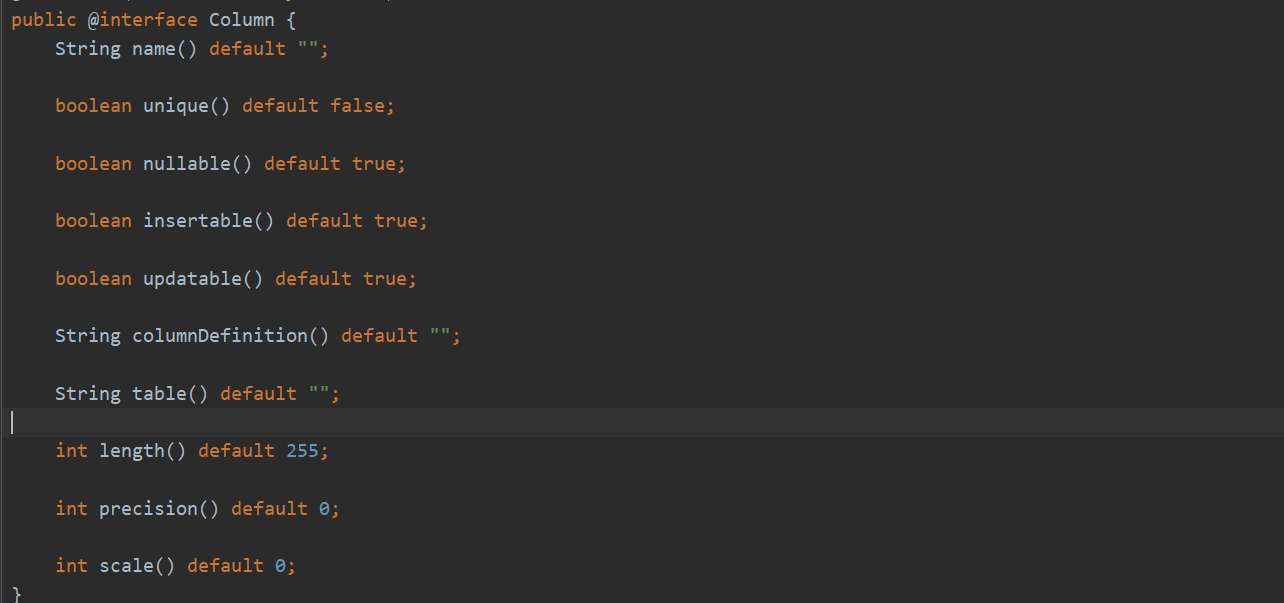
我们看到如上针对列注解上所对应的属性设置,主要有列名、唯一约束(默认为非)、可空(默认为空)、可插入(默认为true)、可更新(默认为true)、列定义(默认空字符串)、所属表名(默认为空字符串)、长度(默认为255)、小数位数(默认为0)等,这里我们重点讲解insertable、updatable、columnDefinition、precision属性。
属性insertable和updatable
首先我们给出如下两个POJO对象,一个是国家、另外一个则是城市邮编,一个国家下有多个城市即对应多个邮编,而一个城市邮编则只属于特定国家,所以国家和城市邮编是一对多的关系,后续讲解关系映射时会进一步详细讲解,如下:@Entity
@Entity

public class Country {

    public Country() {

    }

    //国家编码

    @Id

    @Column(length = 20)

    private String iso_code;

    //国家名称

    @Column

    private String name;

    public void setIso_code(String iso_code) {

        this.iso_code = iso_code;

    }

    public String getIso_code() {

        return iso_code;

    }

    public String getName() {

        return name;

    }

    public void setName(String name) {

        this.name = name;

    }

    @OneToMany(mappedBy = "country", cascade = CascadeType.ALL)

    private List<Zip> zips;

    public List<Zip> getZips() {

        return zips;

    }

    public void setZips(List<Zip> zips) {

        this.zips = zips;

    }

}
在上述国家对象中,我们以iso_code作为主键且值由我们显式指定,在如下城市邮编对象中,我们显式指定外键列名为country_code,同时呢,我们也以定义一个属性为country_code作为主键,如下:
@Entity

public class Zip {

    //所属国家编码

    @Id
    @Column(length = 20)

    private String country_code;

    @ManyToOne

    @JoinColumn(name = "country_code")

    private Country country;

    //城市名称

    @Column

    private String city_name;

    //城市邮编

    @Column

    private String code;

    public void setCountry_code(String country_code) {

        this.country_code = country_code;

    }

    public String getCountry_code() {

        return country_code;

    }

    public void setCity_name(String city_name) {

        this.city_name = city_name;

    }

    public String getCity_name() {

        return city_name;

    }

    public void setCode(String code) {

        this.code = code;

    }

    public String getCode() {

        return code;

    }

}
接下来我们打开会话去保存country,如下:
Country country = new Country();

country.setName("中国");

country.setIso_code("CHI");

Zip zip = new Zip();

zip.setCity_name("深圳");

zip.setCode("518000");

zip.setCountry_code(country.getIso_code());

country.setZips(Arrays.asList(zip));

session.save(country);

此时将抛出如上异常错误,因为我们显式指定外键列名为country_code,同时主键列名也为country_code,此时将映射为同一列,也就是说country_code属于共享主键,但是针对指定的主键列country_code,我们可以显式设定值,此时将引起外键列也为country_code即与country中的iso_code值不一致的问题,所以为了修正这种情况,Hibernate要求我们必须使用其中之一来进行插入、更新,而另外一个则将只读,所以我们需要将外键列设置为不允许插入和更新,如下:


看到网上一些文章对于上述insertable和updatable的设置将其解释为:可能我们会通过上述城市邮编对象(zip)来反向创建国家对象(country),因为zip并不负责创建和更新country,反之,我们只能通过country来创建和更新zip,其实没有很大的说服力,这个说法我个人认为是错误的,我个人认为:insertable和updatable与相关实体的插入和更新无关,此二者属性背后真正的意图是防止列在当前实体的插入和更新,也就是说在实体中多次映射字段时(比如上述共享主键),这两个属性将很有用,可以进一步进行修正,常见的场景为:使用组合键、使用共享主键、使用级联主键。
属性columnDefinition
我们知道对于字符串默认为长度为255且可空,下面我们将country对象中的name属性显示设置其长度为120且不可空,如下:
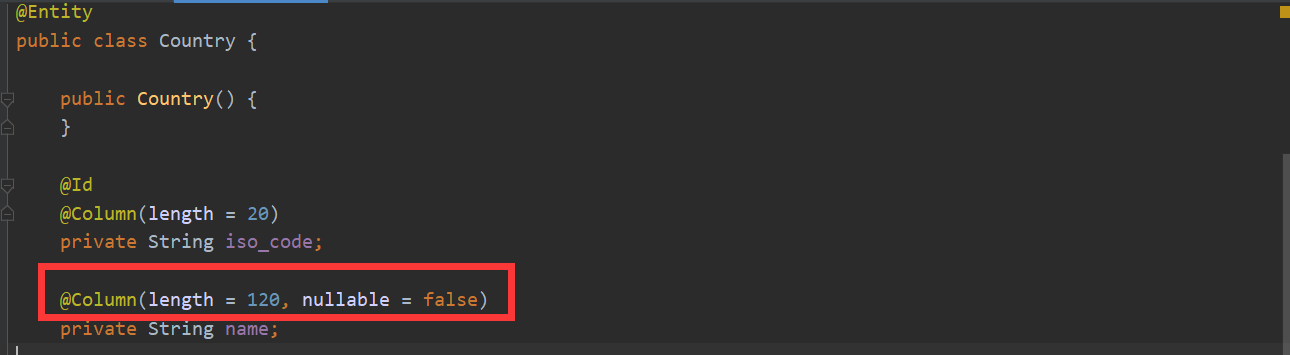

如下,我们通过属性columnDefinition来进一步设置其长度为100且不可空,此时映射到表中的列到底是可空还是不可空,长度到底是100还是120呢?
@Column(columnDefinition = "varchar(100) not null", length = 120)

private String name;

我们可以看到此时将以属性columnDefinition定义的为准,也就是length将会被覆盖,那是不是说明通过columnDefinition设置后都将会被覆盖,事实真的如此吗?
@Column(columnDefinition = "varchar(100) null", nullable = false, length = 120)

private String name;
create table Country (iso_code varchar(20) not null, name varchar(100) null not null, primary key (iso_code))

我们可以看到此时通过columnDefinition属性上设置可空,但是通过nullable设置为不可空,最终映射到表中的列却是不可空,这说明此时columnDefinition中的null被冗余。我们可以看到我们设置长度、可空、精度、唯一约束有两种方式,其一可以通过对应属性比如length、nullable、precision、unique设置,其二可以通过columnDefinition设置,那么为何Hibernate要同时提供这两种方式呢?它的目的是什么呢?我认为提供这两种方式说明了其灵活性,若是简单的设置(比如只设置长度)则直接使用length即可,若需全部设置,则通过columnDefinition设置来的方便。数据库DDL由:(name + columnDefinition)构成,它是物理的,即columnDefinition是生成列的DDL时使用的SQL片段,对于长度、精度、唯一约束使用columnDefinition将会被覆盖,而对于null可能被覆盖或冗余。
总结
本节我们详细讲解了列注解@Column上的属性insertable和updatable以及columnDefinition的详细使用,下一节我们讲解枚举注解,感谢您的阅读,我们下节见。
Hibernate入门之注解@Column详解的更多相关文章
- Hibernate配置文件和映射文件详解
Hibernate是一个彻底的ORM(Object Relational Mapping,对象关系映射)开源框架. 我们先看一下官方文档所给出的,Hibernate 体系结构的高层视图: 其中PO=P ...
- 转:springmvc常用注解标签详解
Spring5:@Autowired注解.@Resource注解和@Service注解 - IT·达人 - 博客园--这篇顺序渐进,讲得超级好--此人博客很不错http://www.cnblogs.c ...
- Java 注解用法详解——@SuppressWarnings
转自: https://www.cnblogs.com/fsjohnhuang/p/4040785.html Java魔法堂:注解用法详解——@SuppressWarnings 一.前言 编码时我 ...
- Spring 入门 web.xml配置详解
Spring 入门 web.xml配置详解 https://www.cnblogs.com/cczz_11/p/4363314.html https://blog.csdn.net/hellolove ...
- @SuppressWarnings注解用法详解
@SuppressWarnings注解用法详解 今天来谈谈@SuppressWarnings注解的作用. J2SE 提供的最后一个批注是 @SuppressWarnings.该批注的作用是给编译器一条 ...
- 爬虫入门之urllib库详解(二)
爬虫入门之urllib库详解(二) 1 urllib模块 urllib模块是一个运用于URL的包 urllib.request用于访问和读取URLS urllib.error包括了所有urllib.r ...
- 分享知识-快乐自己:Hibernate 中Criteria Query查询详解
1):Hibernate 中Criteria Query查询详解 当查询数据时,人们往往需要设置查询条件.在SQL或HQL语句中,查询条件常常放在where子句中. 此外,Hibernate还支持Cr ...
- Spring 注解@Value详解
一.spring(基础10) 注解@Value详解[1] 一 配置方式 @value需要参数,这里参数可以是两种形式: [html] view plain copy @Value("#{co ...
- 《挑战30天C++入门极限》入门教程:实例详解C++友元
入门教程:实例详解C++友元 在说明什么是友元之前,我们先说明一下为什么需要友元与友元的缺点: 通常对于普通函数来说,要访问类的保护成员是不可能的,如果想这么做那么必须把类的成员都生命成为pu ...
随机推荐
- 二十六、linux邮件服务器
1.安装: yum install -y sendmail 因为是最小安装,需要包没有安装 yum install -y mailx 2.日志:/var/log/maillog 3.启动:/etc ...
- 二十四、SSH介绍
1.ssh介绍: SSH先对联机数据包通过加密技术进行加密处理,加密后在进行数据传输,确保了传递的数据安全.(运维的一大重视点就是要对安全敏感) 在当前的生产环境运维工作中,绝大多数企业都是SSH协议 ...
- 二十三、NFS企业级优化
nfs内核优化:(对于本地文件系统也是有效的) [root@nfsserve ~]# cat /proc/sys/net/core/rmem_default(该文件指定了接收套接字缓冲区大小的缺省值) ...
- BCrypt BCryptPasswordEncoder
package org.linlinjava.litemall.core.util.bcrypt; // Copyright (c) 2006 Damien Miller <djm@mindro ...
- PAT甲级——1036 Boys vs Girls
1036 Boys vs Girls This time you are asked to tell the difference between the lowest grade of all th ...
- php的header方法
http://www.cnblogs.com/fengzheng126/archive/2012/04/21/2461475.html
- Xpath 入门教程
准备xml 文档 <?xml version="1.0" encoding="UTF-8"?> <bookstore> <book ...
- [LC] 389. Find the Difference
Given two strings s and t which consist of only lowercase letters. String t is generated by random s ...
- win10安装3DMAX失败,怎么强力卸载删除注册表并重新安装
一些搞设计的朋友在win10系统下安装3DMAX失败或提示已安装,也有时候想重新安装3DMAX的时候会出现本电脑windows系统已安装3DMAX,你要是不留意直接安装3DMAX,只会安装3DMAX的 ...
- 浅谈Java转义符\\|
看一段程序 String t = "a||b||c||d"; String[] temp = t.split("\\|\\|"); System.out.pri ...