
mybatis源码配置文件解析之四:解析plugins标签
在前边的博客在分析了mybatis解析typeAliases标签,《mybatis源码配置文件解析之三:解析typeAliases标签》。下面来看解析plugins标签的过程。
一、概述
在mybatis的核心配置文件(mybatis-config.xml)文件中,有关plugins的配置如下,
<!-- 拦截器 -->

    <plugins>

        <plugin interceptor="cn.com.mybatis.plugins.MyInterceptor" />

    </plugins>
在mybatis的plugins叫做插件,其实也可以理解为拦截器。在plugins标签中配置plugin子标签,plugin子标签可以配置多个,多个子标签是有顺序的。除了上面的配置方式在每个plugin下还可以配置property子标签,
<!-- 拦截器 -->

    <plugins>

        <plugin interceptor="cn.com.mybatis.plugins.MyInterceptor" />

        <plugin interceptor="cn.com.mybatis.plugins.MyInterceptor2">

        <property name="name" value="mybatis"/>

        <property name="age" value="10"/>

        </plugin>

    </plugins>
上面的配置在第二个拦截器中新增了两个属性name和age,这两个属性会被解析为Properties对象。
在上面可以看到一个重要的配置是plugin标签中的interceptor属性,该属性配置的是一个拦截器类,对应该类有什么要求那,一个普通的类就可以吗,答案是就是一个普通的类,但必须满足下面的几个条件,才可以被mybatis作为插件使用,
- 实现mybatis中的Interceptor接口,并重写其中的三个方法;
- 在类上声明@Intercepts注解,该注解标明该拦截器拦截的方法,一个例子如下,
@Intercepts({@Signature(type=Executor.class,method="query",args= {MappedStatement.class, Object.class, RowBounds.class, ResultHandler.class})})
拦截的是实现了Executor接口的query方法,后面的args配置的该方法的入参。在mybatis中默认拦截以下接口的方法,
Executor (update, query, flushStatements, commit, rollback, getTransaction, close, isClosed)

ParameterHandler (getParameterObject, setParameters)

ResultSetHandler (handleResultSets, handleOutputParameters)

StatementHandler (prepare, parameterize, batch, update, query)
Executor(执行器)、ParameterHandler(参数处理器)、ResultSetHandler(结果集处理器)、StatementHandler(SQL语法构建器)在mybatis中是四个顶级接口,贯穿了mybatis执行sql的全过程,从这里可以看出mybatis的拦截器的强大。
下面看下我的拦截器MyInterceptor的源码,
package cn.com.mybatis.plugins;

import java.util.Properties;

import org.apache.ibatis.executor.Executor;

import org.apache.ibatis.mapping.MappedStatement;

import org.apache.ibatis.plugin.Interceptor;

import org.apache.ibatis.plugin.Intercepts;

import org.apache.ibatis.plugin.Invocation;

import org.apache.ibatis.plugin.Plugin;

import org.apache.ibatis.plugin.Signature;

import org.apache.ibatis.session.ResultHandler;

import org.apache.ibatis.session.RowBounds;

@Intercepts({@Signature(type=Executor.class,method="query",args= {MappedStatement.class, Object.class, RowBounds.class, ResultHandler.class})})

public class MyInterceptor implements Interceptor{

    /**

     * incation 封装了拦截的类,方法,方法参数

     */

    @Override

    public Object intercept(Invocation invocation) throws Throwable {

        // TODO Auto-generated method stub

        //执行被拦截的类中的方法

        Object o=invocation.proceed();

        return o;

    }

    /**

     * 返回一个JDK代理对象

     */

    @Override

    public Object plugin(Object target) {

        // TODO Auto-generated method stub

        return Plugin.wrap(target, this);

    }

/**

 * 允许在配置文件中配置一些属性即

 * <plugin interceptor="">

 * <property name ="" value =""/>

 * </plugin>

 */

    @Override

    public void setProperties(Properties properties) {

        // TODO Auto-generated method stub

    }

}
二、详述
上面,了解了plugis标签的基本配置及使用,下面看mybatis是如何解析的。
在XMLConfigBuilder类中的parseConfiguration方法
private void parseConfiguration(XNode root) {

    try {

      //issue #117 read properties first

      //解析properties标签

      propertiesElement(root.evalNode("properties"));

      //解析settings标签,1、把<setting>标签解析为Properties对象

      Properties settings = settingsAsProperties(root.evalNode("settings"));

      /*2、对<settings>标签中的<setting>标签中的内容进行解析,这里解析的是<setting name="vfsImpl" value=",">

      * VFS是mybatis中用来表示虚拟文件系统的一个抽象类,用来查找指定路径下的资源。上面的key为vfsImpl的value可以是VFS的具体实现,必须

      * 是权限类名,多个使用逗号隔开,如果存在则设置到configuration中的vfsImpl属性中,如果存在多个,则设置到configuration中的仅是最后一个

      * */

      loadCustomVfs(settings);

      //解析别名标签,例<typeAlias alias="user" type="cn.com.bean.User"/>

      typeAliasesElement(root.evalNode("typeAliases"));

      //解析插件标签

      pluginElement(root.evalNode("plugins"));

      //解析objectFactory标签,此标签的作用是mybatis每次创建结果对象的新实例时都会使用ObjectFactory,如果不设置

      //则默认使用DefaultObjectFactory来创建,设置之后使用设置的

      objectFactoryElement(root.evalNode("objectFactory"));

      //解析objectWrapperFactory标签

      objectWrapperFactoryElement(root.evalNode("objectWrapperFactory"));

      //解析reflectorFactory标签

      reflectorFactoryElement(root.evalNode("reflectorFactory"));

      settingsElement(settings);

      // read it after objectFactory and objectWrapperFactory issue #631

      //解析environments标签

      environmentsElement(root.evalNode("environments"));

      databaseIdProviderElement(root.evalNode("databaseIdProvider"));

      typeHandlerElement(root.evalNode("typeHandlers"));

      //解析<mappers>标签

      mapperElement(root.evalNode("mappers"));

    } catch (Exception e) {

      throw new BuilderException("Error parsing SQL Mapper Configuration. Cause: " + e, e);

    }

  }
从上面的代码中,我们找到下面这行解析plugins标签的代码,
 //解析插件标签

 pluginElement(root.evalNode("plugins"));
上面折行代码即在解析配置文件中的plugis标签,其定义如下
/**

 * 解析<plugin>标签

 * @param parent

 * @throws Exception

 */

  private void pluginElement(XNode parent) throws Exception {

    if (parent != null) {

      for (XNode child : parent.getChildren()) {
        //1、获得interceptor属性

        String interceptor = child.getStringAttribute("interceptor");
        //2、把plugin标签下的property标签的内容解析为Properties对象

        Properties properties = child.getChildrenAsProperties();

        //3、使用配置的interceptor生成一个实例,配置的interceptor需要实现interceptor接口

        Interceptor interceptorInstance = (Interceptor) resolveClass(interceptor).newInstance();

        //4、执行interceptor的setProperties方法,把配置的properties标签中的值设置到setProperties中

        interceptorInstance.setProperties(properties);
         //5、添加interceptor

        configuration.addInterceptor(interceptorInstance);

      }

    }

  }
1、解析标签
从上面的代码中可以看到在循环plugin标签,取得interceptor配置的类的全限类名,然后获得plugin标签下的property标签的内容,调用getChildrenAsProperties方法,
public Properties getChildrenAsProperties() {

    Properties properties = new Properties();

    for (XNode child : getChildren()) {

      String name = child.getStringAttribute("name");

      String value = child.getStringAttribute("value");

      if (name != null && value != null) {

        properties.setProperty(name, value);

      }

    }

    return properties;

  }
解析完property标签后,下面会生成interceptor实例。
2、生成interceptor实例
上面解析完plugin标签的内容后会生成interceptor实例,且调用其setProperty方法,
//使用配置的interceptor生成一个实例,配置的interceptor需要实现interceptor接口

        Interceptor interceptorInstance = (Interceptor) resolveClass(interceptor).newInstance();

        //执行interceptor的setProperties方法,把配置的properties标签中的值设置到setProperties中

        interceptorInstance.setProperties(properties);
从上面的代码可以看到把配置的interceptor全限类名解析为一个Class对象,然后调用其默认的构造方法获得一个实例,然后调用了其setProperties方法,即把在标签中配置的property属性值注入到interceptor实例中,在我的例子中即调用下面的方法,
/**

 * 允许在配置文件中配置一些属性即

 * <plugin interceptor="">

 * <property name ="" value =""/>

 * </plugin>

 */

    @Override

    public void setProperties(Properties properties) {

        // TODO Auto-generated method stub

        this.properties=properties;

    }
这样就可以把标签中的内容转化到interceptor实例中的属性。
3、添加到configuration中
经过上面的两个步骤的分析,拦截器已经从配置文件中的配置转化为了一个实例,下面就是要放入核心配置类configuration中,
configuration.addInterceptor(interceptorInstance);
看addInterceptor方法,该方法是configuration类中的方法,
public void addInterceptor(Interceptor interceptor) {

    interceptorChain.addInterceptor(interceptor);

  }
调用了interceptorChain的addInterceptor方法,interceptorChain使用下面的方式进行初始化,
//拦截器链

  protected final InterceptorChain interceptorChain = new InterceptorChain();
其addInterceptor方法如下,
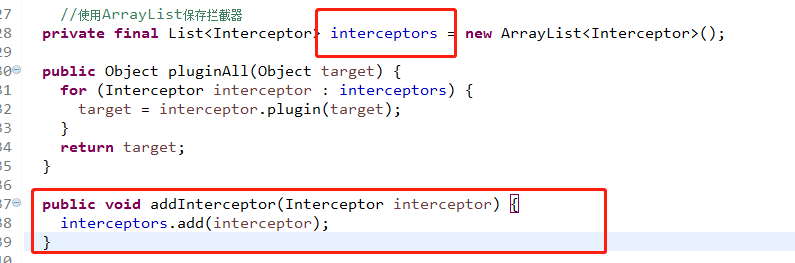
可以看到最终放到了interceptors中,这是一个ArrayList。
最终完成了解析plugins标签并把拦截器实例放到configuration中的过程。
三、总结
本文分析了mybatis中plugins标签的解析过程,该标签的解析过程相对简单,重点是拦截器背后的原理,是如何起到拦截作用,待下次分析。
有不正之处,欢迎指正,感谢!
mybatis源码配置文件解析之四:解析plugins标签的更多相关文章
- mybatis源码配置文件解析之五:解析mappers标签
在上篇博客中分析了plugins标签,<mybatis源码配置文件解析之四:解析plugins标签>,了解了其使用方式及背后的原理.现在来分析<mappers>标签. 一.概述 ...
- mybatis源码配置文件解析之二:解析settings标签
在前边的博客中分析了mybatis解析properties标签,<mybatis源码配置文件解析之一:解析properties标签>.下面来看解析settings标签的过程. 一.概述 在 ...
- mybatis源码配置文件解析之三:解析typeAliases标签
在前边的博客在分析了mybatis解析settings标签,<mybatis源码配置文件解析之二:解析settings标签>.下面来看解析typeAliases标签的过程. 一.概述 在m ...
- mybatis源码配置文件解析之五:解析mappers标签(解析XML映射文件)
在上篇文章中分析了mybatis解析<mappers>标签,<mybatis源码配置文件解析之五:解析mappers标签>重点分析了如何解析<mappers>标签中 ...
- MyBatis 源码分析 - 映射文件解析过程
1.简介 在上一篇文章中,我详细分析了 MyBatis 配置文件的解析过程.由于上一篇文章的篇幅比较大,加之映射文件解析过程也比较复杂的原因.所以我将映射文件解析过程的分析内容从上一篇文章中抽取出来, ...
- Spring mybatis源码篇章-MybatisDAO文件解析(一)
前言:通过阅读源码对实现机制进行了解有利于陶冶情操,承接前文Spring mybatis源码篇章-SqlSessionFactory 加载指定的mybatis主文件 Mybatis模板文件,其中的属性 ...
- Spring mybatis源码篇章-MybatisDAO文件解析(二)
前言:通过阅读源码对实现机制进行了解有利于陶冶情操,承接前文Spring mybatis源码篇章-MybatisDAO文件解析(一) 默认加载mybatis主文件方式 XMLConfigBuilder ...
- mybatis源码配置文件解析之一:解析properties标签
mybatis作为日常开发的常用ORM框架,在开发中起着很重要的作用,了解其源码对日常的开发有很大的帮助.源码版本为:3-3.4.x,可执行到github进行下载. 从这篇文章开始逐一分析mybati ...
- mybatis源码配置文件解析之五:解析mappers标签流程图
前面几篇博客分析了mybatis解析mappers标签的过程,主要分为解析package和mapper子标签.补充一张解析的总体过程流程图,画的不好,多多谅解,感谢.
随机推荐
- SpringCloud Eureka Client和Server侧配置及Eureka高可用配置
一.Eureka注册中心和客户端配置Demo. 1.Server端 a.使用Idea创建Spring项目,如下所示: b.相关配置 application.yaml配置文件如下: # eureka本身 ...
- TCP / IP 精彩回顾-必看
TCP/IP 协议出现的原因是互联网世界各个主机作为一个个独立的个体,如何制定统一的规则让他们互相通信是达成万物互联的纽带.基于此,设定了 TCP/IP 协议来规范网络访问行为.TCP/IP 并不是一 ...
- 解锁网络编程之NIO的前世今生
个人博客网:https://wushaopei.github.io/ (你想要这里多有) NIO 内容概览: NIO 网络编程模型 NIO 网络编程详解 NIO 网络编程实战 NIO 网络编程缺 ...
- Java实现 LeetCode 640 求解方程(计算器的加减法计算)
640. 求解方程 求解一个给定的方程,将x以字符串"x=#value"的形式返回.该方程仅包含'+',' - '操作,变量 x 和其对应系数. 如果方程没有解,请返回" ...
- Java实现 LeetCode 133 克隆图
133. 克隆图 给你无向 连通 图中一个节点的引用,请你返回该图的 深拷贝(克隆). 图中的每个节点都包含它的值 val(int) 和其邻居的列表(list[Node]). class Node { ...
- Java实现 LeetCode 97 交错字符串
97. 交错字符串 给定三个字符串 s1, s2, s3, 验证 s3 是否是由 s1 和 s2 交错组成的. 示例 1: 输入: s1 = "aabcc", s2 = " ...
- Linux目录处理命令mkdir详解
mkdir(英文原意:make directories),基本作用是创建新的目录,命令的路径及权限: 可以看到,这个命令的路径是/usr/bin/mkdir,所以它的执行权限是所有用户 mkdir 创 ...
- tensorflow2.0学习笔记第二章第四节
2.4损失函数损失函数(loss):预测值(y)与已知答案(y_)的差距 nn优化目标:loss最小->-mse -自定义 -ce(cross entropy)均方误差mse:MSE(y_,y) ...
- wget下载网盘等需要cookie的文件的方法
在浏览器(Chrome.Firefox等)上安装插件cookies 然后进入该网页,导出cookies.txt 使用命令下载: wget -c --load-cookies=cookies.txt & ...
- JS 姓氏,区域,消息组成的随机内容定时随机展示
var surname_g = "\u8D75\u94B1\u5B59\u674E\u5468\u5434\u90D1\u738B\u51AF\u9648\u891A\u536B\u848B ...