
详解Python Graphql
前言
很高兴现在接手的项目让我接触到了Python Graphql,百度上对其介绍相对较少也不够全面,几乎没有完整的中文文档,所以这边也借此机会学习一下Graphql。
什么是Graphql呢?
Graphql是一个API查询语言,其数据由服务器上的一个Scheme提供,其查询返回的数据依赖请求的时候用户需要的精确数据。列如用户只需要一个name字段,服务器也只返回name的值。
参考
英文学习文档:https://graphene-python.org/
更多example关注:https://github.com/graphql-python/graphene/tree/master/examples
Hello Word 入门
先看下面一个例子,查询语句为{ hello(name:"gaojiayi") } 定义了要查询的入口,以及传入的参数。
from graphene import ObjectType, String, Schema

class Query(ObjectType):

    """定义一个字符串属性域hello 且有一个字符串参数为name,设置name的默认"""

    hello = String(name = String(default_value="gaojy",required=True))

    # resolve_hello定义了上面hello的实现,并返回查询结果

    # 一般resolve需要加上固定前缀resolve_

    @staticmethod

    def resolve_hello(root,info,name):

        return f"hello word -- {name}"

schema = Schema(query=Query)

if __name__ == '__main__':

    query_string = '''{ hello(name:"gaojiayi") }'''

    result = schema.execute(query_string)

    print(result.data['hello'])
Graphql中的Types
Scheme
下面定义了一个Scheme,其中MyRootQuery,MyRootMutation,MyRootSubscription都是继承了graphene .objectType,但是不同之处在于query定义了查询数据的入口,而mutation用来数据改变或者数据恢复,而subscription是用来实时呈现数据的变化给client。type是用来指定返回数据的精确类型,列如返回的数据是一个interface,但是有多个类型继承了该interface,这时候需要指定一个具体的实现来返回给client。
my_schema = Schema(

    query=MyRootQuery,

    mutation=MyRootMutation,

    subscription=MyRootSubscription,
   type=[SomeExtraObjectType,]
 )
另外查询字符串默认为驼峰命名,列如
from graphene import ObjectType, String, Schema

class Query(ObjectType):

    other_name = String(name='_other_Name')

    @staticmethod

    def resolve_other_name(root, info):

        return "test CamelCase"

schema = Schema(query=Query)

if __name__ == '__main__':

    # 查询数默认使用otherName,此处用了别名。

    result = schema.execute('''{_other_Name}''')

    print(result.data['_other_Name'])
如果关闭默认驼峰命名方式,则可以在定义scheme的时候加上auto_camelcase=False
my_schema = Schema(

    auto_camelcase=False

)
scalars
scalars type可以理解为用来定义Field,它可以传入以下几种可选参数,例如
other_name = String(name='_other_Name',required=True,description="",deprecation_reason="",defalut_value=Any)
常见的基本saclars type有如下几个:
graphene.String

graphene.Int

graphene.Float

graphene.Boolean

graphene.ID

graphene.types.datetime.Date

graphene.types.datetime.DateTime

graphene.types.datetime.Time

graphene.types.json.JSONString
saclars type的挂载在objectType,interface,Mutation中的field域中。
class Person(graphene.ObjectType):

    name = graphene.String()

# Is equivalent to:

class Person(graphene.ObjectType):

    name = graphene.Field(graphene.String)
Lists and Non-Null
Non-Null
import graphene

class Character(graphene.ObjectType):

    name = graphene.String(required=True)

#等价于 即返回的数据如果name=null,则会报错

class Character(graphene.ObjectType):

    name = graphene.String(required=True)
Lists
import graphene

class Character(graphene.ObjectType):

    # appears_in表示为一个非null元素的列表

    appears_in = graphene.List(graphene.NonNull(graphene.String))
ObjectType
objectType是在scheme中用来定义Fields之间联系以及数据流转的python类,每一个obejctType属性表示一个Field,每个Field定义一个resolve方法用来获取数据,如果没有定义,则使用一个默认的resolver。
接下来看一个例子。
from graphene import ObjectType, String, Schema

class Query(ObjectType):

    @staticmethod

    def resolve_hello(parent,info,name):

        return f"hello word -- {name}"
上面的resolve_hello有三个参数,分别是parent,info,name
1 parent通常用来获取objectType内的其他field的值,而在根query中默认为None,看下面的事例,当OjectType的Field为saclar type,则parent不会再向下传递。
class Person(ObjectType):

    full_name = String()

    def resolve_full_name(parent, info):

        return f"{parent.first_name} {parent.last_name}"

class Query(ObjectType):

    me = Field(Person)

    def resolve_me(parent, info):

        # returns an object that represents a Person

        # 这里的parent为None

        return get_human(name="Luke Skywalker")
当然,根查询的parent也可以初始化值,就是在execute的时候添加root变量
    @staticmethod

    def resolve_hello(parent, info, name):

        # 打印结果 man ,parent默认为root的值

        print(parent['sex'])

        return f"hello word -- {name}"

schema = Schema(query=Query, mutation=MyMutations)

if __name__ == '__main__':

    query_string = '''{ hello(name:"gaojiayi") }'''

    # 指定root的值

    result = schema.execute(query_string, root={'sex': 'man'})

    print(result.data['hello'])
当查询语句存在多个的时候,可指定执行那一条语句
schema = Schema(Query)

query_string = '''

    query getUserWithFirstName {

        user {

            id

            firstName

            lastName

        }

    }

    query getUserWithFullName {

        user {

            id

            fullName

        }

    }

'''

result = schema.execute(

    query_string,

    # 指定执行第二条语句

    operation_name='getUserWithFullName'

)
2 info表示请求的上下文,可以在查询语中添加context,列如
class Query(ObjectType):

     hello = String(name=String(default_value="gaojy", required=True))

     @staticmethod

     def resolve_hello(root, info, name):

        # 通过info可获取上下文内容

        print(info.context.get('company'))

        return f"hello word -- {name}"

schema = Schema(query=Query, mutation=MyMutations)

if __name__ == '__main__':

    query_string = '''{ hello(name:"gaojiayi") }'''

    # 1 execute中添加context

    result = schema.execute(query_string, context={'company': 'baidu'})

    print(result.data['hello'])
3 name表示请求时带的参数,可以参考hello word事例,如有多个参数可形参**kwargs
from graphene import ObjectType, String

class Query(ObjectType):

    hello = String(required=True, name=String())

    def resolve_hello(parent, info, **kwargs):

        # name 为None 则name = World

        name = kwargs.get('name', 'World')

        return f'Hello, {name}!'
4 默认resolver:列如一个objectType的field都没有指定队友的resolve,那么对象默认会序列化一个字典。
PersonValueObject = namedtuple('Person', 'first_name', 'last_name')

class Person(ObjectType):

    first_name = String()

    last_name = String()

class Query(ObjectType):

    me = Field(Person)

    my_best_friend = Field(Person)

    def resolve_me(parent, info):

        # always pass an object for `me` field

        # {"firstName": "Luke", "lastName": "Skywalker"}

        return PersonValueObject(first_name='Luke', last_name='Skywalker')
5 meta 类:用于objectType的配置
Enum
class Episode(graphene.Enum):

    NEWHOPE = 4

    EMPIRE = 5

    JEDI = 6

    @property

    def description(self):

        if self == Episode.NEWHOPE:

            return 'New Hope Episode'

        return 'Other episode'

class Query(ObjectType):

         desc1 = String(

        v=Argument(Episode, default_value=Episode.NEWHOPE.value),

        description='default value in schema is `4`, which is not valid. Also, awkward to write.')

 @staticmethod

    def resolve_desc1(parent, info,v):

        return f'argument: {v!r}'

# 使用下面的方式可以将python类型的enum转化成saclars类型

graphene.Enum.from_enum(

    AlreadyExistingPyEnum,

    description=lambda v: return 'foo' if v == AlreadyExistingPyEnum.Foo else 'bar')
Interfaces
顾名思义,接口,其他的obectType可以继承接口,示例如下
import graphene

class Character(graphene.Interface):

    id = graphene.ID(required=True)

    name = graphene.String(required=True)

    friends = graphene.List(lambda: Character)

#继承Character

class Human(graphene.ObjectType):

    class Meta:

        interfaces = (Character, )

    starships = graphene.List(Starship)

    home_planet = graphene.String()

#继承Character

class Droid(graphene.ObjectType):

    class Meta:

        interfaces = (Character, )

    primary_function = graphene.String()

class Query(graphene.ObjectType):

    # 返回的类型是Character

    hero = graphene.Field(

        Character,

        required=True,

        episode=graphene.Int(required=True)

    )

    def resolve_hero(root, info, episode):

        # Luke is the hero of Episode V

        if episode == 5:

            return get_human(name='Luke Skywalker')

        return get_droid(name='R2-D2')

#对于返回数据具体类型,可以在type属性中列举

schema = graphene.Schema(query=Query, types=[Human, Droid])
另外scheme中如果没有指定type,会报错
"Abstract type Character must resolve to an Object type at runtime for field Query.hero ..."
可以在interface中重写resolve_type方法
class Character(graphene.Interface):

    id = graphene.ID(required=True)

    name = graphene.String(required=True)

    #返回数据的时候,可以转换成具体的数据类型

    @classmethod

    def resolve_type(cls, instance, info):

        if instance.type == 'DROID':

            return Droid

        return Human
Union
该scalars type用来组合多个ObjectType,列如
import graphene

class Human(graphene.ObjectType):

    name = graphene.String()

    born_in = graphene.String()

class Droid(graphene.ObjectType):

    name = graphene.String()

    primary_function = graphene.String()

class Starship(graphene.ObjectType):

    name = graphene.String()

    length = graphene.Int()

# SearchResult组合了Human Droid Starship所有的Fields

class SearchResult(graphene.Union):

    class Meta:

        types = (Human, Droid, Starship)
Mutations
如果说query是一个http get请求,那么Mutations可以看做是一个http post put请求。
def Mutate作为一个特殊的resover,当被调用的时候意在改变Mutation内的数据。
看下面一个操作示例
#具体的操作类

class CreatePerson(graphene.Mutation):

    # 请求提交的参数,同样需要传递到mutate中

    class Arguments:

        name = graphene.String()

    ok = graphene.Boolean()

    person = graphene.Field(Person)

    def mutate(root, info, name):

        person = Person(name=name)

        ok = True

        #可执行具体的业务逻辑 包括写表 发消息等等

        return CreatePerson(person=person, ok=ok)

# Mutation

class MyMutations(graphene.ObjectType):

    create_person = CreatePerson.Field()

#指定mutation  MyMutations

schema = Schema(query=Query,mutation=MyMutations)
执行结果如下:
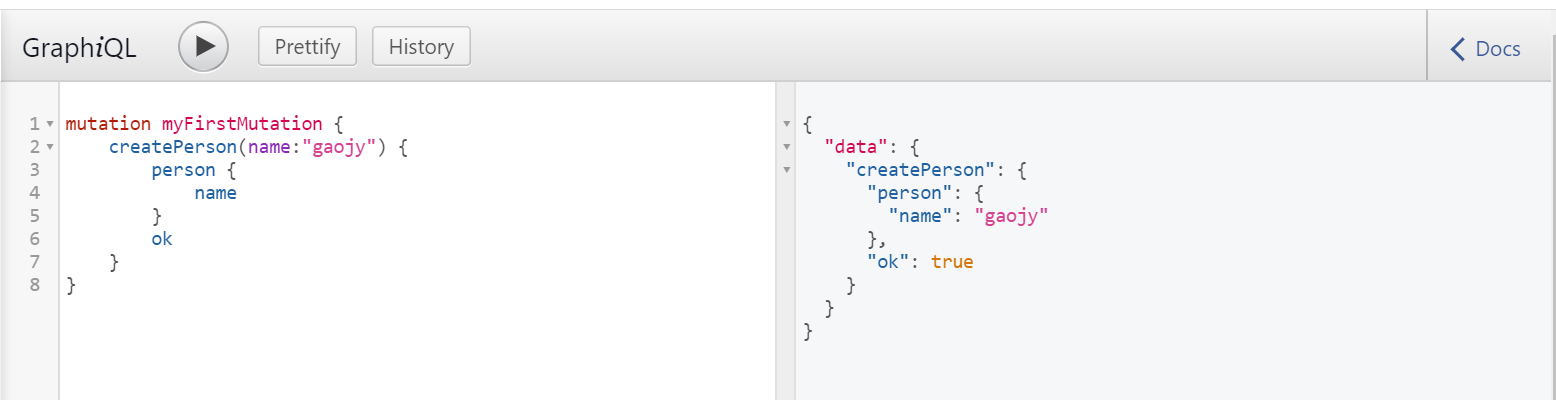
Mutation下可申明InputFields 和InputObjectTypes类型的出入参,其中InputFields可以定义复合型入参,Output可指定复合型出参。
例1:InputFields
class DataInput(graphene.InputObjectType):

    user_name = String()

    basic_age = Int()

class Person(graphene.ObjectType):

    name = graphene.String()

    age = graphene.Int()

# 具体的操作类

class CreatePerson(graphene.Mutation):

    # 请求提交的参数,同样需要传递到mutate中

    class Arguments:

        data = DataInput(required=True)

    ok = graphene.Boolean()

    person = graphene.Field(Person)

    def mutate(root, info, data):

        person = Person(name=data.user_name, age=data.basic_age * 10)

        ok = True

        return CreatePerson(person=person, ok=ok)
执行结果:
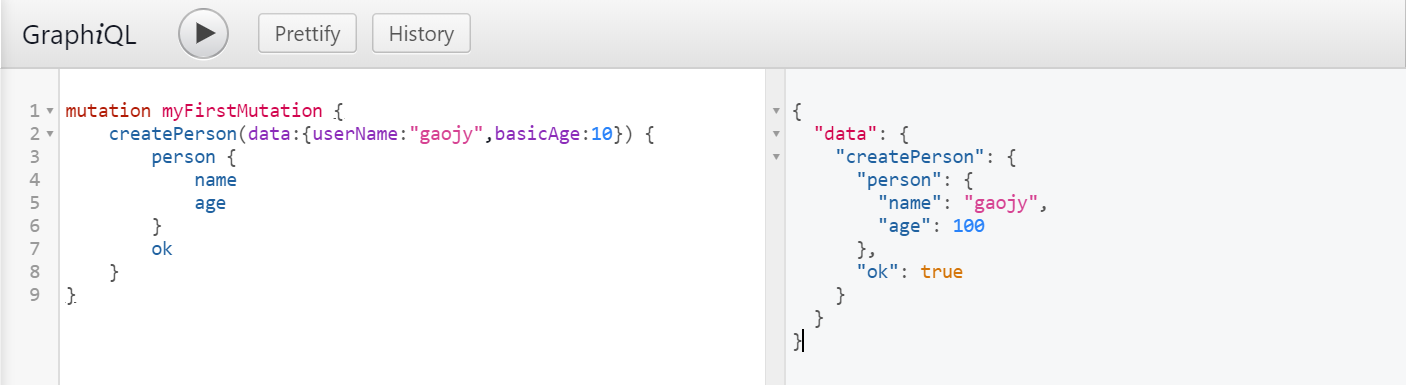
例2:InputObjectTypes
class DataInput(graphene.InputObjectType):

    user_name = String()

    basic_age = Int()

class Person(graphene.ObjectType):

    name = graphene.String()

    age = graphene.Int()

# 具体的操作类

class CreatePerson(graphene.Mutation):

    # 请求提交的参数,同样需要传递到mutate中

    class Arguments:

        data = DataInput(required=True)

    # 定义一个Output 且指定class ,在mutate方法中返回实例

    Output = Person

    def mutate(root, info, data):

        person = Person(name=data.user_name, age=data.basic_age * 10)

        return person
运行结果:
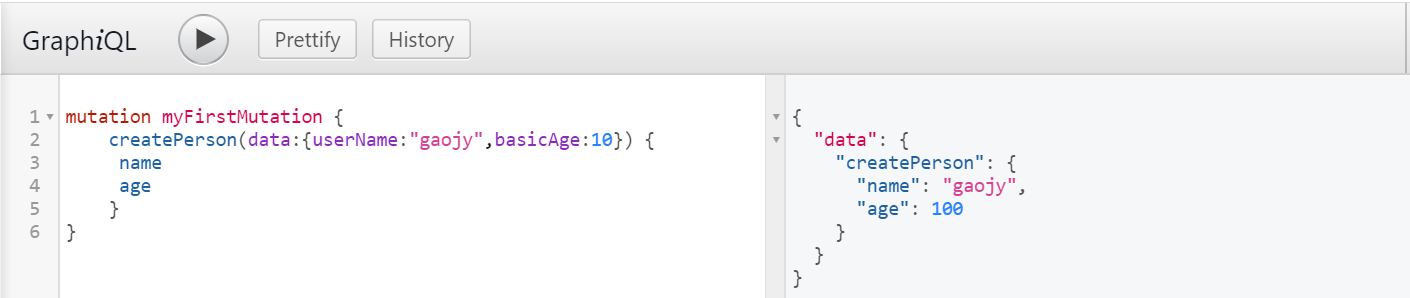
relay
relay类似于react js中的redux,VUE中的vuex,可以缓存server端数据,加快查询并提供更新机制。example可参考前言中的example。
小结
技术本身就是为业务服务,读者会问Graphql究竟可以使用在哪些业务场景呢?
官方有这么一句话ask exactly what you want.如果一个前端的接口只需要返回部分数据,而另一个前端接口也只需要返回部分数据,这两份数据有可能有交集,也可能没有。传统的做法可能需要开发两个接口或者一个接口内不断的if else来根据前端的具体场景去过滤某些数据。使用Graphql能够根据client指定需要哪些参数,后端scheme返回哪些参数,而后端只需要一个API可以查询到数据全集,Graphql可以自动完成数据解析,封装,过滤操作。
详解Python Graphql的更多相关文章
- 举例详解Python中的split()函数的使用方法
这篇文章主要介绍了举例详解Python中的split()函数的使用方法,split()函数的使用是Python学习当中的基础知识,通常用于将字符串切片并转换为列表,需要的朋友可以参考下 函数:sp ...
- 详解Python中re.sub--转载
[背景] Python中的正则表达式方面的功能,很强大. 其中就包括re.sub,实现正则的替换. 功能很强大,所以导致用法稍微有点复杂. 所以当遇到稍微复杂的用法时候,就容易犯错. 所以此处,总结一 ...
- 详解Python模块导入方法
python常被昵称为胶水语言,它能很轻松的把用其他语言制作的各种模块(尤其是C/C++)轻松联结在一起.python包含子目录中的模块方法比较简单,关键是能够在sys.path里面找到通向模块文件的 ...
- 详解python函数的参数
详解python函数的参数 一.参数的定义 1.函数的参数在哪里定义 在python中定义函数的时候,函数名后面的括号里就是用来定义参数的,如果有多个参数的话,那么参数之间直接用逗号, 隔开 案列: ...
- 详解Python函数参数定义及传参(必备参数、关键字参数、默认可省略参数、可变不定长参数、*args、**kwargs)
详解Python函数参数定义及传参(必备参数.关键字参数.默认可省略参数.可变不定长参数.*args.**kwargs) Python函数参数传参的种类 Python中函数参数定义及调用函数时传参 ...
- 详解Python 切片语法
Python的切片是特别常用的功能,主要用于对列表的元素取值.这篇文章主要介绍了详解Python 切片语法,需要的朋友可以参考下 Python的切片是特别常用的功能,主要用于对列表的元素取值.使用切片 ...
- 详解Python编程中基本的数学计算使用
详解Python编程中基本的数学计算使用 在Python中,对数的规定比较简单,基本在小学数学水平即可理解. 那么,做为零基础学习这,也就从计算小学数学题目开始吧.因为从这里开始,数学的基础知识列位肯 ...
- 详解Python中内置的NotImplemented类型的用法
它是什么? ? 1 2 >>> type(NotImplemented) <type 'NotImplementedType'> NotImplemented 是Pyth ...
- 详解python的装饰器decorator
装饰器本质上是一个python函数,它可以让其它函数在不需要任何代码改动的情况下增加额外的功能. 装饰器的返回值也是一个函数对象.它经常用于有切面需求的场景,比如:插入日志,性能测试,事务处理,缓存, ...
随机推荐
- The option-critic architecture
Abstract 时间抽象是强化学习中扩大学习和规划的关键.虽然计划与时间扩展的行动是众所周知的,但从数据中自主地创建这样的抽象仍然具有挑战性.我们在option框架内解决这个问题[Sutton,Pr ...
- 金字塔卷积:Pyramidal Convolution
论文地址:https://arxiv.org/pdf/2006.11538.pdf github:https://github.com/iduta/pyconv 作者认为,当前CNN主要存在两个不足: ...
- HRNet + Object Contextual Representation
文章内容来自CCF-CV走进高校报告会中MSRA王井东老师的报告"Learning high-resolution and object-contextual representations ...
- Learning in the Frequency Domain 解读
论文:Learning in the Frequency Domain, CVPR 2020 代码:https://github.com/calmevtime/DCTNet 实际的图像尺寸比较大,无法 ...
- 华东师范大学p163页,用闭区间套定理证明数列的可惜收敛准则,被网友解决了。
- 使用faker生成测试数据
需要先安装faker模块,pip install faker 导入模块中的Faker类:from faker import Faker 实例化faker = Faker() print('姓名相关') ...
- ✨Shell脚本实现Base64 加密解密
加密算法 # !/bin/bash # 全局变量 str="" base64_encode_string(){ # 源数据 source_string=$1 echo " ...
- HTML5+CSS3前端入门教程---从0开始通过一个商城实例手把手教你学习PC端和移动端页面开发第5章CSS盒子模型
本教程案例在线演示 有路网PC端 有路网移动端 教程配套源码资源 教程配套源码资源 div div 可定义文档中的分区(division). div 标签可以把网页分割为独立的.不同的部分. 可以看成 ...
- Python字符串内建函数_下
Python字符串内建函数: 1.join(str) : 使用调用的字符串对 str 进行分割,返回值为字符串类型 # join(str) : # 使用调用的字符串对 str 进行分割. strs = ...
- map 函数基本写法
map(需要对对象使用的函数,要操作的对象) 函数可以是自定义的,也可以是内置函数的,或者 lambda 匿名函数 操作的对象多为 可迭代对象可以是函数名的列表集合 2020-05-04