
仿9GAG制作过程(五)
有话要说:
在做完了数据展示功能之后,就想着完善整个APP。发现现在后台非常的混乱,有好多点都不具备,比方说:图片应该有略缩图和原图,段子、评论、点赞应该联动起来,段子应该有创建时间等。
于是就重新设计了数据库,重新爬取了数据,重新设计了后台接口。
这次主要讲这次重构的主要内容。
数据库设计:
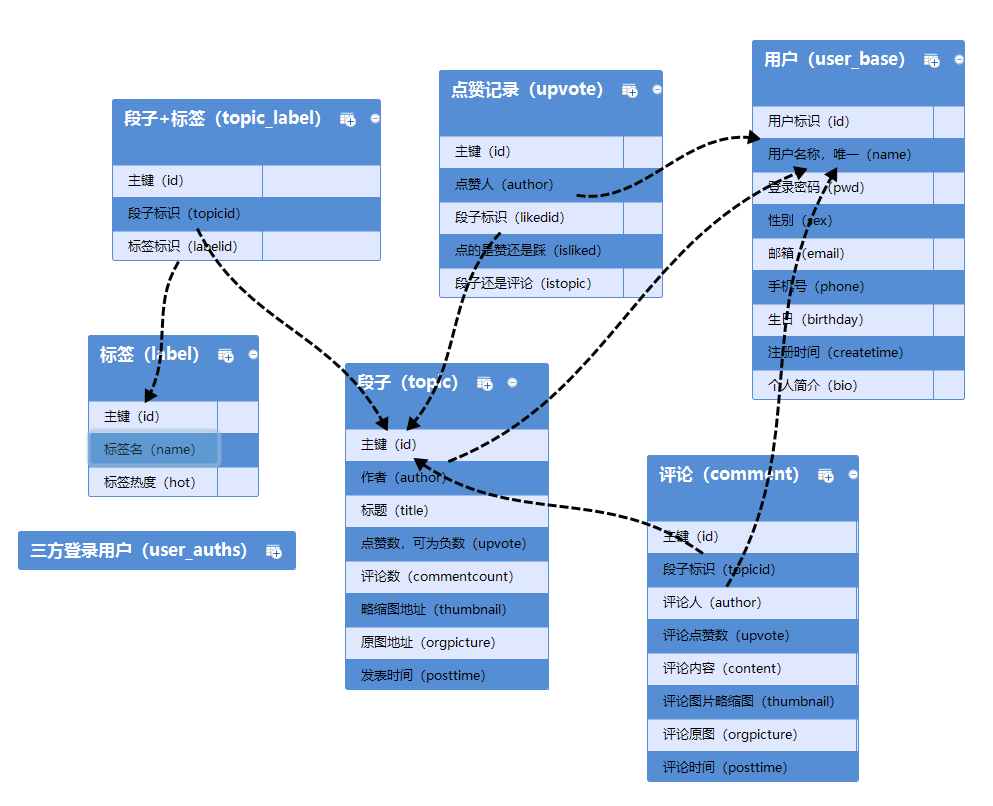
一共设计了六张表,分别为
- 段子表,主要存放每一个段子的图片等信息
- 评论表,主要存放评论信息,评论可以上传图片
- 用户表
- 标签表,每条段子发表之前会自定义标签,该表存放的就是这些标签
- 点赞记录表,因为用户点赞与段子之间是多对多的关系,因此要加一张表用来存放点赞记录
- 段子标签关联表,因为段子和标签是多对多的,因此需要多一张表存放关联关系
接口设计:
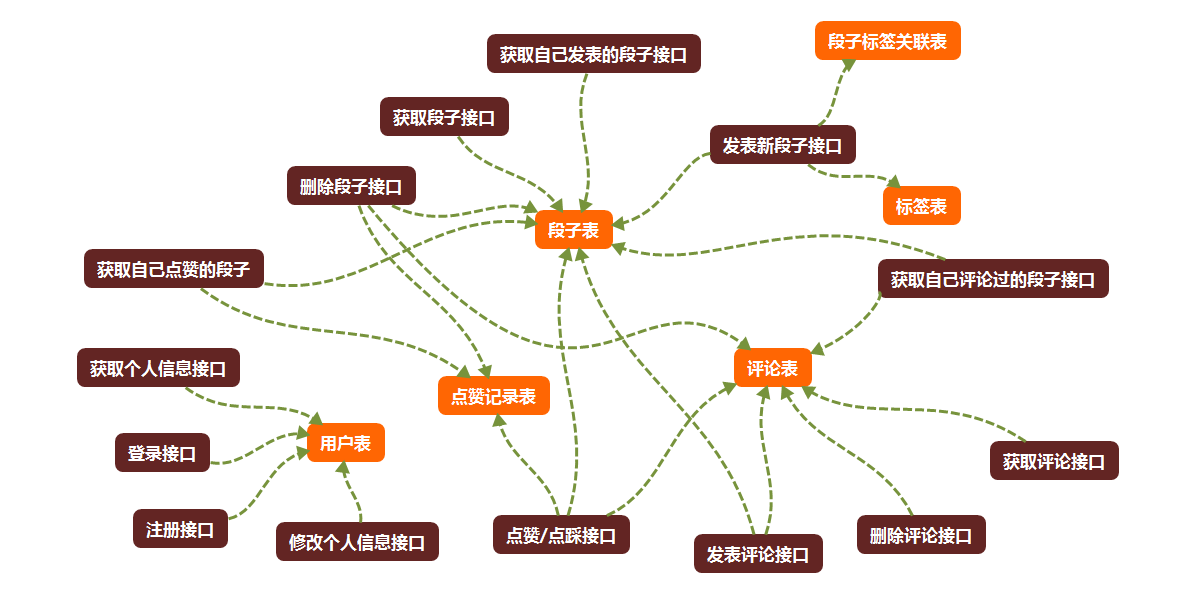
橙色的为表,咖啡色为接口。
目前设计了十四个接口,上图写明了各接口和相关的表之间的关系。
后台结构:
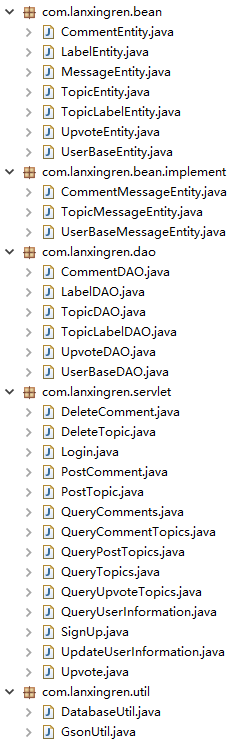
bean包下为基本实体类;
implement包下为消息实体类的子类;
dao包为涉及到数据库的具体实现类;
servlet为接口类;
util为过程中用到的工具类。
具体例子:
下面以查询段子接口为例,介绍具体的结构。
bean类:
消息实体类:
 public class MessageEntity {

     // 返回信息描述

     private String reason;

     // 返回码

     private int errorCode;

     public String getReason() {

         return reason;

     }

     public void setReason(String reason) {

         this.reason = reason;

     }

     public int getErrorCode() {

         return errorCode;

     }

     public void setErrorCode(int errorCode) {

         this.errorCode = errorCode;

     }

 }
段子消息实体类:
 public class TopicMessageEntity extends MessageEntity {

     // 获取段子的结果

     private List<TopicEntity> result;

     public List<TopicEntity> getResult() {

         return result;

     }

     public void setResult(List<TopicEntity> result) {

         this.result = result;

     }

 }
段子实体类:
 public class TopicEntity {

     // 段子标识

     private int id;

     // 段子作者

     private String author = "";

     // 段子标题

     private String title = "";

     // 段子点赞数

     private int upvote;

     // 段子评论数

     private int commentCount;

     // 段子略缩图地址

     private String thumbNail = "";

     // 段子原图地址

     private String orgPicture = "";

     // 段子发表时间

     private String postTime = "";

     // 点的是赞还是踩,0代表没点,1代表赞,-1代表踩

     private int like = 0;

     public int getId() {

         return id;

     }

     public void setId(int id) {

         this.id = id;

     }

     public String getAuthor() {

         return author;

     }

     public void setAuthor(String author) {

         this.author = author;

     }

     public String getTitle() {

         return title;

     }

     public void setTitle(String title) {

         this.title = title;

     }

     public int getUpvote() {

         return upvote;

     }

     public void setUpvote(int upvote) {

         this.upvote = upvote;

     }

     public int getCommentCount() {

         return commentCount;

     }

     public void setCommentCount(int commentCount) {

         this.commentCount = commentCount;

     }

     public String getThumbNail() {

         return thumbNail;

     }

     public void setThumbNail(String thumbNail) {

         this.thumbNail = thumbNail;

     }

     public String getOrgPicture() {

         return orgPicture;

     }

     public void setOrgPicture(String orgPicture) {

         this.orgPicture = orgPicture;

     }

     public String getPostTime() {

         return postTime;

     }

     public void setPostTime(String postTime) {

         this.postTime = postTime;

     }

     public int getLike() {

         return like;

     }

     public void setLike(int like) {

         this.like = like;

     }

 }
这里和数据库表略有不同,主要是like字段。
like字段代表的是当前获取数据的人对该段子是否点了赞。
dao层:
查询段子方法:
 public List<TopicEntity> query(int topicId, int count, boolean after) {

         List<TopicEntity> topicList = new ArrayList<TopicEntity>();

         if (topicId <= 0) {

             topicId = 0;

         }

         if (count <= 0) {

             count = 10;

         }

         if (after) {

             queryAfter(topicId, count, topicList);

         } else {

             queryBefore(topicId, count, topicList);

         }

         return topicList;

     }
 private void queryAfter(int topicId, int count, List<TopicEntity> topicList) {

         String queryAfter = "SELECT * FROM 9gag_topics WHERE id > ? LIMIT ?";

         Connection conn = DatabaseUtil.getConnection();

         PreparedStatement pstmt = null;

         ResultSet rs = null;

         try {

             pstmt = conn.prepareStatement(queryAfter);

             pstmt.setInt(1, topicId);

             pstmt.setInt(2, count);

             rs = pstmt.executeQuery();

             while (rs.next()) {

                 TopicEntity topicEntity = new TopicEntity();

                 topicEntity.setId(rs.getInt("id"));

                 topicEntity.setAuthor(rs.getString("author"));

                 topicEntity.setTitle(rs.getString("title"));

                 topicEntity.setUpvote(rs.getInt("upvote"));

                 topicEntity.setCommentCount(rs.getInt("commentcount"));

                 topicEntity.setThumbNail(rs.getString("thumbnail"));

                 topicEntity.setOrgPicture(rs.getString("orgpicture"));

                 topicEntity.setPostTime(rs.getString("posttime"));

                 topicList.add(topicEntity);

             }

         } catch (SQLException e) {

             e.printStackTrace();

         } finally {

             DatabaseUtil.close(conn, pstmt, rs);

         }

     }
 private void queryBefore(int topicId, int count, List<TopicEntity> topicList) {

         String queryBefore = "SELECT * FROM 9gag_topics WHERE id < ? ORDER BY id DESC LIMIT ?";

         Connection conn = DatabaseUtil.getConnection();

         PreparedStatement pstmt = null;

         ResultSet rs = null;

         try {

             pstmt = conn.prepareStatement(queryBefore);

             pstmt.setInt(1, topicId);

             pstmt.setInt(2, count);

             rs = pstmt.executeQuery();

             while (rs.next()) {

                 TopicEntity topicEntity = new TopicEntity();

                 topicEntity.setId(rs.getInt("id"));

                 topicEntity.setAuthor(rs.getString("author"));

                 topicEntity.setTitle(rs.getString("title"));

                 topicEntity.setUpvote(rs.getInt("upvote"));

                 topicEntity.setCommentCount(rs.getInt("commentcount"));

                 topicEntity.setThumbNail(rs.getString("thumbnail"));

                 topicEntity.setOrgPicture(rs.getString("orgpicture"));

                 topicEntity.setPostTime(rs.getString("posttime"));

                 topicList.add(topicEntity);

             }

         } catch (SQLException e) {

             e.printStackTrace();

         } finally {

             DatabaseUtil.close(conn, pstmt, rs);

         }

         // 获取完数据之后逆序,因为查找的时候是逆序

         Collections.reverse(topicList);

     }
这三个方法实现了查询指定段子前(或者后)count条记录。
servlet层:
 protected void doPost(HttpServletRequest request, HttpServletResponse response)

             throws ServletException, IOException {

         response.setContentType("text/json; charset=utf-8");

         PrintWriter out = response.getWriter();

         TopicMessageEntity message = new TopicMessageEntity();

         TopicDAO topicDao = new TopicDAO();

         UpvoteDAO upvoteDao = new UpvoteDAO();

         Gson gson = GsonUtil.getGson();

         request.setCharacterEncoding("utf-8");

         response.setCharacterEncoding("utf-8");

         int topicId = Integer.parseInt(request.getParameter("topicId"));

         int count = Integer.parseInt(request.getParameter("count"));

         boolean after = Boolean.parseBoolean(request.getParameter("after"));

         String author = request.getParameter("author");

         if (count <= 0) {

             message.setErrorCode(-1);

             message.setReason("count值不能为负数!");

             out.print(gson.toJson(message));

             return;

         }

         try {

             List<TopicEntity> topics = topicDao.query(topicId, count, after);

             // 判断作者是否点过赞

             if (author != null) {

                 List<UpvoteEntity> upvoteList = upvoteDao.findUpvoteByAuthor(author, true);

                 if (upvoteList != null) {

                     for (TopicEntity topic : topics) {

                         for (UpvoteEntity upvote : upvoteList) {

                             if (upvote.getLikedId() == topic.getId()) {

                                 int like = upvote.isLiked() ? 1 : -1;

                                 topic.setLike(like);

                             }

                         }

                     }

                 }

             }

             Collections.reverse(topics);

             message.setErrorCode(0);

             message.setReason("success");

             message.setResult(topics);

         } catch (Exception e) {

             message.setErrorCode(-1);

             message.setReason(e.getMessage());

         } finally {

             out.print(gson.toJson(message));

         }

     }
主要逻辑:查找到需要的段子→遍历段子→如果段子被点过赞或者踩,就把段子相应字段更改为赞或者踩→由于查出来的数据时顺序的,要改为逆序展示。
反思:
这次主要重构了后台的设计逻辑,其实还有好多不完备的地方。
通过这次重构,明白了一个要点。要做一件事情首先要规划好,首先是设计,把一切的流程,框架设计好之后按部就班的做。这样做出来的东西才会比较好。
否则在过程中会很混乱,严重影响效率。
预告:
下一章准备讲述点赞的逻辑,因为点赞的逻辑比较复杂。
大家如果有什么疑问或者建议可以通过评论或者邮件的方式联系我,欢迎大家的评论~
仿9GAG制作过程(五)的更多相关文章
- 仿9GAG制作过程(一)
有话要说: 准备开始学习Android应用程序的一个完整的设计过程.准备做一个仿9GAG的APP,前端界面设计+后台数据爬虫+后台接口设计,整个流程体验一遍.今天准备先把前端界面的框架给完成了. 成果 ...
- 仿9GAG制作过程(四)
有话要说: 这次主要讲述主页面下拉刷新和上拉加载功能的实现. 主要是使用了SwipeRefreshLayout的布局方式,并在此基础上通过RecyclerView的特性增加了上拉加载的功能. 成果: ...
- 仿9GAG制作过程(三)
有话要说: 这次准备讲述后台服务器的搭建以及前台访问到数据的过程. 成果: 准备: 安装了eclipse 安装了Tomcat7 安装了数据库管理工具:Navicat 搭建服务器: 用eclipse直接 ...
- 仿9GAG制作过程(二)
有话要说: 这次准备讲述用python爬虫以及将爬来的数据存到MySQL数据库的过程,爬的是煎蛋网的无聊图. 成果: 准备: 下载了python3.7并配置好了环境变量 下载了PyCharm作为开发p ...
- BabyLinux制作过程详解
转:http://www.360doc.com/content/05/0915/14/1429_12641.shtml BabyLinux制作过程详解 作者:GuCuiwen email:win2li ...
- [PCB制作] 1、记录一个简单的电路板的制作过程——四线二项步进电机驱动模块(L6219)
前言 现在,很多人手上都有一两个电子设备,但是却很少有人清楚其中比较关键的部分(PCB电路板)是如何制作出来的.我虽然懂点硬件,但是之前设计的简单系统都是自己在万能板上用导线自己焊接的(如下图左),复 ...
- rpt水晶报表制作过程
原文:rpt水晶报表制作过程 最近公司安排一个以前的项目,里面需要用到水晶报表,由于原来做这个项目的同事离职,所在公司的同事报表做成了rdlc类型的,而这类报表在加载的时候很难动态的从数据库加载数据, ...
- Android实训案例(九)——答题系统的思绪,自己设计一个题库的体验,一个思路清晰的答题软件制作过程
Android实训案例(九)--答题系统的思绪,自己设计一个题库的体验,一个思路清晰的答题软件制作过程 项目也是偷师的,决心研究一下数据库.所以写的还是很详细的,各位看官,耐着性子看完,实现结果不重要 ...
- [转帖]超能课堂 CPU制作过程
http://www.expreview.com/50814.html 一般来说,我们对IC芯片的了解仅限于它概念,但是对于已经应用到各式各样的数码产品中IC芯片是怎么来的?大家可能只知道制作IC芯片 ...
随机推荐
- 微信小程序wx.request请求用POST后台得不到传递数据
微信小程序的wx.request请求,method设为POST并向后台传递数据,但从后台返回的信息来看后台并没有获得传递的数据 wx.request({ url: 'url' ...
- [Swift]LeetCode645. 错误的集合 | Set Mismatch
The set S originally contains numbers from 1 to n. But unfortunately, due to the data error, one of ...
- 调用链Cat介绍
1. 调用链Cat 1.1. 调用链演进 1.2. 开源产品比较 1.3. 监控场景 1.4. cat的增值作用 1.5. cat典型报表 1.5.1. 应用报错大盘 1.5.2. 业务大盘 1.5. ...
- js的预解析
在ES6之前,变量使用var声明,会存在变量的预解析(函数也有预解析).ES6引了let和const,但是现阶段ES6并没有完全普及,而且很多比较老的代码都还是按照ES5的标准甚至是ES3的标准来书写 ...
- C# 当中 LINQ 的常规用法(Lambda 方式)
仅以本篇博文记录 LINQ 相关操作的基本知识,原型参考自 MSDN 相关知识,中间加以自己的理解与 DEMO. 1. IEnuemrable<T>.Select() Select 方法比 ...
- Python内置函数(59)——sorted
英文文档: sorted(iterable[, key][, reverse]) Return a new sorted list from the items in iterable. Has tw ...
- C++11 实现生产者消费者模式
代码都类似,看懂一个,基本都能理解了. 共有代码: #include <cstdlib>#include <condition_variable>#include <io ...
- Elasticsearch 分词器
无论是内置的分析器(analyzer),还是自定义的分析器(analyzer),都由三种构件块组成的:character filters , tokenizers , token filters. 内 ...
- .net core 2.0 Code First Fluent API配置
A.net core 2.0新特性支持通过IEntityTypeConfiguration<>添加Code First配置到一个封装类. 新建目标框架为.NET Core类库 新建完了以后 ...
- 带着新人学springboot的应用06(springboot+RabbitMQ 中)
上一节说了这么多废话,看也看烦了,现在我们就来用鼠标点点点,来简单玩一下这个RabbitMQ. 注意:这一节还是不用敲什么代码,因为上一节我们设置了那个可视化工具,我们先用用可视化工具熟悉一下流程. ...