
安卓开发学习笔记(七):仿写腾讯QQ登录注册界面
这段代码的关键主要是在我们的相对布局以及线性布局上面,我们首先在总体布局里设置为线性布局,然后再在里面设置为相对布局,这是一个十分常见的XML布局模式。
废话不多说,直接上代码:
一.activity.xml
<?xml version="1.0" encoding="utf-8"?>

<LinearLayout xmlns:android="http://schemas.android.com/apk/res/android"

    android:layout_width="match_parent"

    android:layout_height="match_parent"

    android:orientation="vertical"

    android:background="@drawable/bg2"

    >

    <!--头部内容-->

    <RelativeLayout

        android:layout_width="match_parent"

        android:layout_height="160dp"

        android:padding="16dp"

        android:layout_margin="0dp"

        >

    </RelativeLayout>

    <!--输入框-->

    <RelativeLayout

        android:layout_width="match_parent"

        android:layout_height="wrap_content"

        android:padding="16dp"

        android:layout_margin="0dp"

        >

        <EditText

            android:id="@+id/account"

            android:layout_width="match_parent"

            android:layout_height="wrap_content"

            android:layout_marginBottom="16dp"

            android:hint="QQ号/密码/邮箱"/>

        />

        <EditText

            android:layout_below="@id/account"

            android:id="@+id/password"

            android:layout_width="match_parent"

            android:layout_height="wrap_content"

            android:password="true"

            android:hint="密码"/>

        />

    </RelativeLayout>

    <RelativeLayout

        android:layout_width="match_parent"

        android:layout_height="33dp"

        android:padding="0dp"

        android:layout_margin="0dp"

        >

        <CheckBox

            android:id="@+id/remember_pass"

            android:layout_width="wrap_content"

            android:layout_height="wrap_content"

            android:text="记住密码"/>

    </RelativeLayout>

    <!--密码功能-->

    <RelativeLayout

        android:layout_width="match_parent"

        android:layout_height="wrap_content"

        android:layout_margin="16dp">

        <Button

            android:id="@+id/login"

            android:layout_width="match_parent"

            android:layout_height="wrap_content"

            android:text="登录"

            android:textColor="#fff"

            android:background="#008cc9"/>

        <Button

            android:id="@+id/forget_pwd"

            android:layout_below="@id/login"

            android:layout_width="wrap_content"

            android:layout_height="wrap_content"

            android:background="@null"

            android:textColor="#2999ce"

            android:gravity="start"

            android:layout_marginTop="16dp"

            android:textSize="16dp"

            android:text="忘记密码?"/>

        <Button

            android:id="@+id/register"

            android:layout_below="@id/login"

            android:layout_width="wrap_content"

            android:layout_height="wrap_content"

            android:background="@null"

            android:textColor="#2999ce"

            android:gravity="end"

            android:text="新用户注册"

            android:layout_marginTop="16dp"

            android:textSize="16dp"

            android:layout_alignParentRight="true"/>

    </RelativeLayout>

<RelativeLayout

    android:layout_width="match_parent"

    android:layout_height="80dp"

    android:padding="16dp"

    android:layout_margin="0dp">

 <TextView

     android:layout_width="wrap_content"

     android:layout_height="wrap_content" />

</RelativeLayout>

</LinearLayout>
二.main.java
package com.example.lenovo.fqq;

import android.content.Intent;

import android.support.v7.app.ActionBar;

import android.support.v7.app.AppCompatActivity;

import android.os.Bundle;

import android.view.View;

import android.widget.Button;

public class Main3Activity extends AppCompatActivity {

    @Override

    protected void onCreate(Bundle savedInstanceState) {

        super.onCreate(savedInstanceState);

        setContentView(R.layout.activity_main3);

        Button button=(Button) findViewById(R.id.login);

        button.setOnClickListener(new View.OnClickListener() {

            @Override

            public void onClick(View v) {

                Intent intent=new Intent(Main3Activity.this,Main2Activity.class);

                startActivity(intent);

            }

        });

        ActionBar a=getSupportActionBar();

        if(a!=null)

        {

            a.hide();

        }

    }

}
其中的代码:
 ActionBar a=getSupportActionBar();

        if(a!=null)

        {

            a.hide();

        }

    }

}
主要是为了能够将我们的标题栏隐藏,不然的话就会显示出标题栏,达不到我们仿写的效果了。
Button button=(Button) findViewById(R.id.login);

        button.setOnClickListener(new View.OnClickListener() {

            @Override

            public void onClick(View v) {

                Intent intent=new Intent(Main3Activity.this,Main2Activity.class);

                startActivity(intent);

            }

        });
上面这一段代码主要是用到了活动的跳转,不然登录是登录不进去的!这里因为我们直接使用了java当中活动的跳转。点击登录就会立刻跳转到下一个界面进行登录,当然
TextView简介:
TextView,是View的直接子类。它是一个文本显示控件,提供了基本的显示文本的功能,并且是大部分UI控件的父类,因为大部分UI控件都需要展示信息。
如果仅仅是展示文本,那么TextView的作用就太小了,所以它还预定义了一些类似于HTML的标签,通过这些标签可以使TextView控件显示不同的颜色、大小、字体、图片、链接。这些HTML标签都需要android.text.Html类的支持,但是并不包括所有的HTML标签。
常用的可以再TextView中设定的标签有:
- <font>:设置颜色和字体。
- <big>:设置字体大号
- <small>:设置字体小号
- <i>\<b>:斜体\粗体
- <a>:连接网址
- <img>:图片
使用这些标签可以用Html.fromHtml方法将这些标签的字符串转换成CharSequence接口,然后在TextView.setText()中进行设置。如果需要响应设置的HTML标签进行响应,需要设置TextView.setMovementMethod(LinkMovementMethod.getInstance())。
CharSequence为接口类型,大家可能对其有点陌生,但是它的子类肯定会让大家有熟悉的感觉,String、StringBuffer、StringBuilder、SpannableString、SpannableStringBuilder都是其子类,它包括了字符串的所有类,因为面向对象的多态性,在这里把他理解成字符串类的抽象即可。
除了使用HTML标签的方式设定显示文本中的URL地址、邮箱地址、电话等产生超链接出发相应的服务,可以使用android:autoLink属性来设置,以下是android:autoLink属性的介绍:
- None:默认的,不匹配任何连接。
- web:网址。
- email:邮箱。
- phone:电话号码。
- map:匹配映射网址。
- all:匹配所有连接。
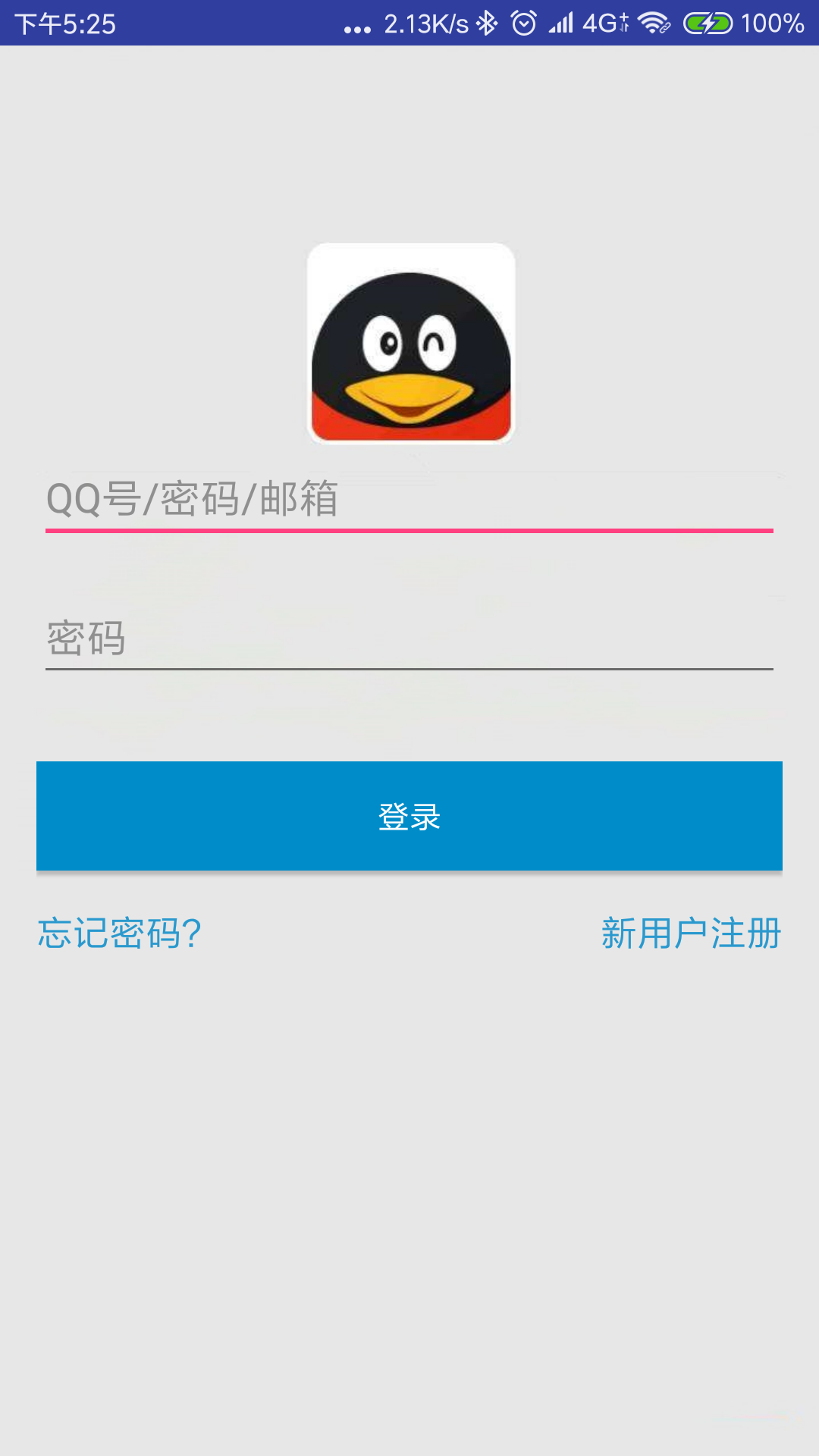
最终搞定,实现具体效果如下:
安卓开发学习笔记(七):仿写腾讯QQ登录注册界面的更多相关文章
- 安卓开发学习笔记(三):Android Stuidio无法引用Intent来创建对象,出现cannot resolve xxx
笔者在进行安卓开发时,发现自己的代码语法完全没有问题.尤其是创建intent对象的时候,语法完全是正确的,但是Android Stuidio却显示报错,Intent类显示为红色,如图所示: 代码如下所 ...
- 安卓开发学习笔记(五):史上最简单且华丽地实现Android Stutio当中Webview控件https/http协议的方法
一.我们先在XML当中自定义一个webview(Second_layout.xml) 代码如下: <?xml version="1.0" encoding="utf ...
- 安卓开发学习笔记(四):Android Stuidio无法实现隐式Intent是为什么?
一.首先检查我们的代码: FirstActivity.java(主活动程序当中的代码):Button3监听器后面的代码就是我们隐式Intent的业务逻辑所在了,大家可以往下面看看,大概在代码的第57行 ...
- 安卓开发学习笔记(二):如何用Android Stuidio在res资源下创建xml视图文件
笔者在看了相关的教程之后发现教程当中的资源已经过时了.当我们在创建了一个新的空白的工程之后,会发现其文件夹下面的分文件夹目录和官方的教程文件结构完全不同,因此会引起很多误解.笔者使用的是最新版的And ...
- 安卓开发学习笔记(一):如何用Android Stuidio导出apk文件?
一,首先,我们在菜单栏上找到这一栏: 然后点击build,再点击generate apk,然后出现以下界面: 由于之前我们并没有进行apk文件的生成,因此需要这个apk key做一个验证,以防您的ap ...
- Bootstrap学习笔记(9)--模态框(登录/注册弹框)
说明: 1. 上来一个ul先把登录和注册两个链接扔进去,ul的类nav,navbar-nav是导航条,navbar-right让他固定在右侧.每个li的里面,data-toggle="mod ...
- 步步为营 SharePoint 开发学习笔记系列总结
转:http://www.cnblogs.com/springyangwc/archive/2011/08/03/2126763.html 概要 为时20多天的sharepoint开发学习笔记系列终于 ...
- 《MFC游戏开发》笔记七 游戏特效的实现(一):背景滚动
本系列文章由七十一雾央编写,转载请注明出处. http://blog.csdn.net/u011371356/article/details/9344721 作者:七十一雾央 新浪微博:http:// ...
- python3.4学习笔记(七) 学习网站博客推荐
python3.4学习笔记(七) 学习网站博客推荐 深入 Python 3http://sebug.net/paper/books/dive-into-python3/<深入 Python 3& ...
随机推荐
- 搭建jenkins实现自动化部署
搭建jenkins实现自动化部署 一.安装jenkins 1.添加yum repos,然后安装 sudo wget -O /etc/yum.repos.d/jenkins.repo https://p ...
- 01-Linux操作系统+指令
一.Linux操作系统 操作系统定义:操作系统直接运行在计算机上的系统软件, 它是与硬件打交道和控制软件运行的计算机程序. 虚拟机:就是模拟一个真实的计算机,好比一个虚拟的电 ...
- spring 报错
一. java.lang.ClassNotFoundException: org.springframework.web.filter.CharacterEncodingFilter 解决方案: 1. ...
- IDEA下运行 mybatis报错 Parameter 'arg0' not found. Available parameters are [autoRecharge, id, param1, param2]
电脑换系统之后重新安装一了 一下idea 项目运行时出现了以下错误, [autoRecharge, id, param1, param2] 或 [arg0, id, arg1, param2] 参考地 ...
- displaytag如何实现获取到每行的id字段的值。
1.displaytag如何实现获取到每行的id字段的值. 使用封装好的框架,有时候,对于一个知识点不熟悉,可能会浪费你大把的时间,我使用displaytag主要是使用它的分页技术,但是客户提出的需求 ...
- 关键字static
原文出处:http://cmsblogs.com/ 『chenssy』 一. static代表着什么 在Java中并不存在全局变量的概念,但是我们可以通过static来实现一个“伪全局”的概念,在Ja ...
- Snagit for mac(截图软件)中文版,截个图就是这么容易!
Snagit for mac是唯一具有内置高级图像编辑和屏幕录制功能的屏幕捕捉软件.它可以轻松抓取图像.文本和影音等多种内容形式,内置强大编辑器,捕捉.编辑一步到位.现为您带来Snagit for m ...
- Codeforces 1155F Delivery Oligopoly dp(看题解)
看别人写的才学会的... 我们考虑刚开始的一个点, 然后我们枚举接上去的一条一条链, dp[mask]表示当前已经加进去点的状态是mask所需的最少边数. 反正就是很麻烦的一道题, 让我自己写我是写不 ...
- [enum]enum的用法
ENUM概况 enum枚举类型是C/C++中的一种数据类型,与struct和class一样是用户自定义的类型,其特点在于enum类型的变量取值是有限的,是可以一一列举出来的. ENUM定义 C++ e ...
- Wish-递推DP记数
链接:https://nanti.jisuanke.com/t/35618 题意: 如果一个数大于等于 1010 且任意连续两位都是质数,那么就称之为 Wish 数.当然,第一个 Wish 数是 11 ...