
restful framework之频率组件
一、频率简介
为了控制用户对某个url请求的频率,比如,一分钟以内,只能访问三次
二、自定义频率类、自定义频率规则
自定义的逻辑
#(1)取出访问者ip

# (2)判断当前ip不在访问字典里,添加进去,并且直接返回True,表示第一次访问,在字典里,继续往下走

# (3)循环判断当前ip的列表,有值,并且当前时间减去列表的最后一个时间大于60s,把这种数据pop掉,这样列表中只有60s以内的访问时间,

# (4)判断,当列表小于3,说明一分钟以内访问不足三次,把当前时间插入到列表第一个位置,返回True,顺利通过

# (5)当大于等于3,说明一分钟内访问超过三次,返回False验证失败
代码实现:
class MyThrottles():

    VISIT_RECORD = {}

    def __init__(self):

        self.history=None

    def allow_request(self,request, view):

        #(1)取出访问者ip

        # print(request.META)

        ip=request.META.get('REMOTE_ADDR')

        import time

        ctime=time.time()

        # (2)判断当前ip不在访问字典里,添加进去,并且直接返回True,表示第一次访问

        if ip not in self.VISIT_RECORD:

            self.VISIT_RECORD[ip]=[ctime,]

            return True

        self.history=self.VISIT_RECORD.get(ip)

        # (3)循环判断当前ip的列表,有值,并且当前时间减去列表的最后一个时间大于60s,把这种数据pop掉,这样列表中只有60s以内的访问时间,

        while self.history and ctime-self.history[-1]>60:

            self.history.pop()

        # (4)判断,当列表小于3,说明一分钟以内访问不足三次,把当前时间插入到列表第一个位置,返回True,顺利通过

        # (5)当大于等于3,说明一分钟内访问超过三次,返回False验证失败

        if len(self.history)<3:

            self.history.insert(0,ctime)

            return True

        else:

            return False

    def wait(self):

        import time

        ctime=time.time()

        return 60-(ctime-self.history[-1])
三、内置频率类及局部使用
写一个类,继承自SimpleRateThrottle,(根据ip限制)问:要根据用户现在怎么写
from rest_framework.throttling import SimpleRateThrottle

class VisitThrottle(SimpleRateThrottle):

    scope = 'luffy'

    def get_cache_key(self, request, view):

        return self.get_ident(request)
在setting里配置:(一分钟访问三次)
REST_FRAMEWORK = {

    'DEFAULT_THROTTLE_RATES':{

        'luffy':'3/m'

    }

}
在视图类里使用
throttle_classes = [MyThrottles,]
错误信息的中文提示:
class Course(APIView):

    authentication_classes = [TokenAuth, ]

    permission_classes = [UserPermission, ]

    throttle_classes = [MyThrottles,]

    def get(self, request):

        return HttpResponse('get')

    def post(self, request):

        return HttpResponse('post')

    def throttled(self, request, wait):

        from rest_framework.exceptions import Throttled

        class MyThrottled(Throttled):

            default_detail = '傻逼啊'

            extra_detail_singular = '还有 {wait} second.'

            extra_detail_plural = '出了 {wait} seconds.'

        raise MyThrottled(wait)
内置频率限制类:
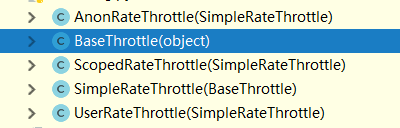
BaseThrottle是所有类的基类:方法:def get_ident(self, request)获取标识,其实就是获取ip,自定义的需要继承它
AnonRateThrottle:未登录用户ip限制,需要配合auth模块用
SimpleRateThrottle:重写此方法,可以实现频率现在,不需要咱们手写上面自定义的逻辑
UserRateThrottle:登录用户频率限制,这个得配合auth模块来用
ScopedRateThrottle:应用在局部视图上的(忽略)
四、内置全局类及全局使用
REST_FRAMEWORK = {

    'DEFAULT_THROTTLE_CLASSES':['app01.utils.VisitThrottle',],

    'DEFAULT_THROTTLE_RATES':{

        'luffy':'3/m'

    }

}
五、源码分析
def check_throttles(self, request):

        for throttle in self.get_throttles():

            if not throttle.allow_request(request, self):

                self.throttled(request, throttle.wait())

    def throttled(self, request, wait):

        #抛异常,可以自定义异常,实现错误信息的中文显示

        raise exceptions.Throttled(wait)
SimpleRateThrottle源码分析
class SimpleRateThrottle(BaseThrottle):

    # 咱自己写的放在了全局变量,他的在django的缓存中

    cache = default_cache

    # 获取当前时间,跟咱写的一样

    timer = time.time

    # 做了一个字符串格式化,

    cache_format = 'throttle_%(scope)s_%(ident)s'

    scope = None

    # 从配置文件中取DEFAULT_THROTTLE_RATES,所以咱配置文件中应该配置,否则报错

    THROTTLE_RATES = api_settings.DEFAULT_THROTTLE_RATES

    def __init__(self):

        if not getattr(self, 'rate', None):

            # 从配置文件中找出scope配置的名字对应的值,比如咱写的‘3/m’,他取出来

            self.rate = self.get_rate()

        #     解析'3/m',解析成 3      m

        self.num_requests, self.duration = self.parse_rate(self.rate)

    # 这个方法需要重写

    def get_cache_key(self, request, view):

        """

        Should return a unique cache-key which can be used for throttling.

        Must be overridden.

        May return `None` if the request should not be throttled.

        """

        raise NotImplementedError('.get_cache_key() must be overridden')

    def get_rate(self):

        if not getattr(self, 'scope', None):

            msg = ("You must set either `.scope` or `.rate` for '%s' throttle" %

                   self.__class__.__name__)

            raise ImproperlyConfigured(msg)

        try:

            # 获取在setting里配置的字典中的之,self.scope是 咱写的luffy

            return self.THROTTLE_RATES[self.scope]

        except KeyError:

            msg = "No default throttle rate set for '%s' scope" % self.scope

            raise ImproperlyConfigured(msg)

    # 解析 3/m这种传参

    def parse_rate(self, rate):

        """

        Given the request rate string, return a two tuple of:

        <allowed number of requests>, <period of time in seconds>

        """

        if rate is None:

            return (None, None)

        num, period = rate.split('/')

        num_requests = int(num)

        # 只取了第一位,也就是 3/mimmmmmmm也是代表一分钟

        duration = {'s': 1, 'm': 60, 'h': 3600, 'd': 86400}[period[0]]

        return (num_requests, duration)

    # 逻辑跟咱自定义的相同

    def allow_request(self, request, view):

        """

        Implement the check to see if the request should be throttled.

        On success calls `throttle_success`.

        On failure calls `throttle_failure`.

        """

        if self.rate is None:

            return True

        self.key = self.get_cache_key(request, view)

        if self.key is None:

            return True

        self.history = self.cache.get(self.key, [])

        self.now = self.timer()

        # Drop any requests from the history which have now passed the

        # throttle duration

        while self.history and self.history[-1] <= self.now - self.duration:

            self.history.pop()

        if len(self.history) >= self.num_requests:

            return self.throttle_failure()

        return self.throttle_success()

    # 成功返回true,并且插入到缓存中

    def throttle_success(self):

        """

        Inserts the current request's timestamp along with the key

        into the cache.

        """

        self.history.insert(0, self.now)

        self.cache.set(self.key, self.history, self.duration)

        return True

    # 失败返回false

    def throttle_failure(self):

        """

        Called when a request to the API has failed due to throttling.

        """

        return False

    def wait(self):

        """

        Returns the recommended next request time in seconds.

        """

        if self.history:

            remaining_duration = self.duration - (self.now - self.history[-1])

        else:

            remaining_duration = self.duration

        available_requests = self.num_requests - len(self.history) + 1

        if available_requests <= 0:

            return None

        return remaining_duration / float(available_requests)
restful framework之频率组件的更多相关文章
- RESTful源码笔记之RESTful Framework的基本组件
快速实例 Quickstart 序列化 创建一个序列化类 简单使用 开发我们的Web API的第一件事是为我们的Web API提供一种将代码片段实例序列化和反序列化为诸如json之类的表示形式的方式. ...
- restful framework之序列化组件
一.Django自带序列化组件 from django.core import serializers def test(request): book_list = Book.objects.all( ...
- restful framework之权限组件
一.权限简介 只用超级用户才能访问指定的数据,普通用户不能访问,所以就要有权限组件对其限制 二.局部使用 from rest_framework.permissions import BasePerm ...
- restful framework之认证组件
一.认证介绍 只有认证通过的用户才能访问指定的url地址,比如:查询课程信息,需要登录之后才能查看,没有登录,就不能查看,这时候需要用到认证组件 二.局部使用 (1)models层: class Us ...
- Restful 4 -- 认证组件、权限组件、频率组件、url注册器、响应器、分页器
一.认证组件.权限组件.频率组件总结: 只有认证通过的用户才能访问指定的url地址,比如:查询课程信息,需要登录之后才能查看,没有登录,就不能查看,这时候需要用到认证组件 1.认证组件格式 写一个认 ...
- DRF Django REST framework 之 频率,响应器与分页器组件(六)
频率组件 频率组件类似于权限组件,它判断是否给予请求通过.频率指示临时状态,并用于控制客户端可以向API发出的请求的速率. 与权限一样,可以使用多个调节器.API可能会对未经身份验证的请求进行限制,而 ...
- 基于Django的Rest Framework框架的频率组件
0|1一.频率组件的作用 在我们平常浏览网站的时候会发现,一个功能你点击很多次后,系统会让你休息会在点击,这其实就是频率控制,主要作用是限制你在一定时间内提交请求的次数,减少服务器的压力. modle ...
- 前后端分离djangorestframework——限流频率组件
频率限制 什么是频率限制 目前我们开发的都是API接口,且是开房的API接口.传给前端来处理的,也就是说,只要有人拿到这个接口,任何人都可以通过这个API接口获取数据,那么像网络爬虫的,请求速度又快, ...
- day89 DjangoRsetFramework学习---restful规范,解析器组件,Postman等
DjangoRsetFramework学习---restful规范,解析器组件,Postman等 本节目录 一 预备知识 二 restful规范 三 DRF的APIView和解析 ...
随机推荐
- mysql内存评估计算
这是一个可以评估mysql内存使用大小的网站,根据一些基本的参数,来确定的. 网站:http://www.mysqlcalculator.com/
- 清除 Exchange 2013/2016/2019 日志和ETL文件
Exchange Server 的2个日志目录会增长的很快,需要定时清理,不然C盘的空间很快就会吃光,以下这个powershell脚本就是用于清理目录下面的日志的,已在生产环境中测试过,没问题: S ...
- saltstack-把执行结果存储到mysql服务内
saltstack把执行的结果保存到mysql中,以便进行命令安全审计 mysql负责存储数据,mysql-python负责收集数据 master需要安装mysql和MySQL-python,mini ...
- 一、JavaScript概述 二、JavaScript的语法 三、JavaScript的内置对象
一.JavaScript的概述###<1>JavaScript的概念 又称ECMAScript,和java没有任何关系 嵌入在HTML元素中的 被浏览器解释运行的 一种脚本语言. ###& ...
- 终于明白为什么要赋值给ret ,
def my_max(a,b): if a > b: return a else: return b my_max(10,45)# 如果只是这样,那么只是运行了并产生返回值,但没有打印返回值t ...
- [T-ARA][For you]
歌词来源:http://music.163.com/#/song?id=33682511 作曲 : Monster Factory [作曲 : Monster Factory] 作词 : Monste ...
- 将Python打包成可执行文件exe的心路历程
导言: 我们有时候需要将做好的Python程序打包成为一个exe , 方便我们使用,查找了资料发现 pyinstaller .py2exe,最后还是选择的pyinstaller,用的时候踩过了挺多的坑 ...
- 【转】基于easyui开发Web版Activiti流程定制器详解(一)——目录结构
题外话(可略过): 前一段时间(要是没记错的话应该是3个月以前)发布了一个更新版本,很多人说没有文档看着比较困难,所以打算拿点时间出来详细给大家讲解一下,由于本人平时要工作还要陪老婆和孩子而且还经营着 ...
- 【AT987】高橋君
题目 成爷爷一眼秒,\(tql!!!\) 多组询问,求 \[\sum_{i=0}^kC_{n}^i \] 发现\(k<=n\)啊,于是我们可以把一组询问抽象成一个区间\([k,n]\) 左指针的 ...
- Ansible--01
一.ansible是什么: 类似puppet之类的运维自动化工具 二.为什么选择ansible: 1. ansible是python语言开发的,python语言进入门槛低,方便基于pytnon对ans ...