
spring5 源码深度解析----- AOP目标方法和增强方法的执行(100%理解AOP)
上一篇博文中我们讲了代理类的生成,这一篇主要讲解剩下的部分,当代理类调用时,目标方法和代理方法是如何执行的,我们还是接着上篇的ReflectiveMethodInvocation类Proceed方法来看
public Object proceed() throws Throwable {

    // 首先,判断是不是所有的interceptor(也可以想像成advisor)都被执行完了。

    // 判断的方法是看currentInterceptorIndex这个变量的值,增加到Interceptor总个数这个数值没有,

    // 如果到了,就执行被代理方法(invokeJoinpoint());如果没到,就继续执行Interceptor。

    if (this.currentInterceptorIndex == this.interceptorsAndDynamicMethodMatchers.size() - 1) {

        return invokeJoinpoint();

    }

    // 如果Interceptor没有被全部执行完,就取出要执行的Interceptor,并执行。

    // currentInterceptorIndex先自增

     Object interceptorOrInterceptionAdvice = this.interceptorsAndDynamicMethodMatchers.get(++this.currentInterceptorIndex);

    // 如果Interceptor是PointCut类型

    if (interceptorOrInterceptionAdvice instanceof InterceptorAndDynamicMethodMatcher) {

        InterceptorAndDynamicMethodMatcher dm = (InterceptorAndDynamicMethodMatcher) interceptorOrInterceptionAdvice;

        // 如果当前方法符合Interceptor的PointCut限制,就执行Interceptor

        if (dm.methodMatcher.matches(this.method, this.targetClass, this.arguments)) {

           // 这里将this当变量传进去,这是非常重要的一点

            return dm.interceptor.invoke(this);

        }

        // 如果不符合,就跳过当前Interceptor,执行下一个Interceptor

        else {

            return proceed();

        }

    }

    // 如果Interceptor不是PointCut类型,就直接执行Interceptor里面的增强。

    else {

        return ((MethodInterceptor) interceptorOrInterceptionAdvice).invoke(this);

    }

}
我们先来看一张方法调用顺序图
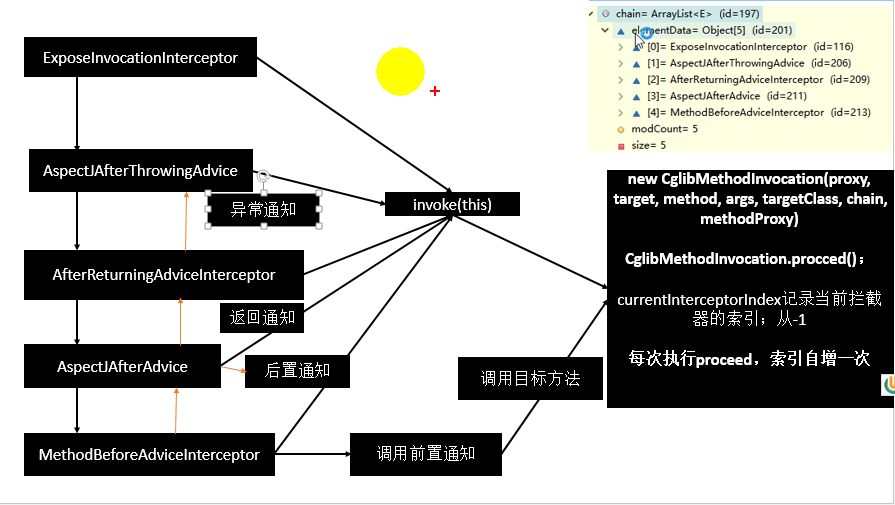
我们看到链中的顺序是AspectJAfterThrowingAdvice、AfterReturningAdviceInterceptor、AspectJAfterAdvice、MethodBeforeAdviceInterceptor,这些拦截器是按顺序执行的,那我们来看看第一个拦截器AspectJAfterThrowingAdvice中的invoke方法
AspectJAfterThrowingAdvice
 @Override

 public Object invoke(MethodInvocation mi) throws Throwable {

     try {

         //直接调用MethodInvocation的proceed方法

         //从proceed()方法中我们知道dm.interceptor.invoke(this)传过来的参数就是ReflectiveMethodInvocation执行器本身

         //这里又直接调用了ReflectiveMethodInvocation的proceed()方法

         return mi.proceed();

     }

     catch (Throwable ex) {

         if (shouldInvokeOnThrowing(ex)) {

             invokeAdviceMethod(getJoinPointMatch(), null, ex);

         }

         throw ex;

     }

 }
第一个拦截器AspectJAfterThrowingAdvice的invoke方法中,直接调用mi.proceed();,从proceed()方法中我们知道dm.interceptor.invoke(this)传过来的参数就是ReflectiveMethodInvocation执行器本身,所以又会执行proceed()方法,拦截器下标currentInterceptorIndex自增,获取下一个拦截器AfterReturningAdviceInterceptor,并调用拦截器中的invoke方法,,此时第一个拦截器在invoke()方法的第七行卡住了,接下来我们看第二个拦截器的执行
AfterReturningAdviceInterceptor
 @Override

 public Object invoke(MethodInvocation mi) throws Throwable {

     //直接调用MethodInvocation的proceed方法

     Object retVal = mi.proceed();

     this.advice.afterReturning(retVal, mi.getMethod(), mi.getArguments(), mi.getThis());

     return retVal;

 }
AfterReturningAdviceInterceptor还是直接调用mi.proceed(),又回到了ReflectiveMethodInvocation的proceed()方法中,此时AfterReturningAdviceInterceptor方法卡在第四行,接着回到ReflectiveMethodInvocation的proceed()方法中,拦截器下标currentInterceptorIndex自增,获取下一个拦截器AspectJAfterAdvice,并调用AspectJAfterAdvice中的invoke方法
AspectJAfterAdvice
 @Override

 public Object invoke(MethodInvocation mi) throws Throwable {

     try {

         //直接调用MethodInvocation的proceed方法

         return mi.proceed();

     }

     finally {

         invokeAdviceMethod(getJoinPointMatch(), null, null);

     }

 }
AspectJAfterAdvice还是直接调用mi.proceed(),又回到了ReflectiveMethodInvocation的proceed()方法中,此时AspectJAfterAdvice方法卡在第五行,接着回到ReflectiveMethodInvocation的proceed()方法中,拦截器下标currentInterceptorIndex自增,获取下一个拦截器MethodBeforeAdviceInterceptor,并调用MethodBeforeAdviceInterceptor中的invoke方法
MethodBeforeAdviceInterceptor
 @Override

 public Object invoke(MethodInvocation mi) throws Throwable {

     //终于开始做事了,调用增强器的before方法,明显是通过反射的方式调用

     //到这里增强方法before的业务逻辑执行

     this.advice.before(mi.getMethod(), mi.getArguments(), mi.getThis());

     //又调用了调用MethodInvocation的proceed方法

     return mi.proceed();

 }
第5行代码终于通过反射调用了切面里面的before方法,接着又调用mi.proceed(),我们知道这是最后一个拦截器了,此时this.currentInterceptorIndex == this.interceptorsAndDynamicMethodMatchers.size() - 1应该为true了,那么就会执行 return invokeJoinpoint();,也就是执行bean中的目标方法,接着我们来看看目标方法的执行
@Nullable

protected Object invokeJoinpoint() throws Throwable {

    return AopUtils.invokeJoinpointUsingReflection(this.target, this.method, this.arguments);

}

    @Nullable

public static Object invokeJoinpointUsingReflection(@Nullable Object target, Method method, Object[] args)

        throws Throwable {

    // Use reflection to invoke the method.

    try {

        ReflectionUtils.makeAccessible(method);

        //直接通过反射调用目标bean中的method

        return method.invoke(target, args);

    }

    catch (InvocationTargetException ex) {

        // Invoked method threw a checked exception.

        // We must rethrow it. The client won't see the interceptor.

        throw ex.getTargetException();

    }

    catch (IllegalArgumentException ex) {

        throw new AopInvocationException("AOP configuration seems to be invalid: tried calling method [" +

                method + "] on target [" + target + "]", ex);

    }

    catch (IllegalAccessException ex) {

        throw new AopInvocationException("Could not access method [" + method + "]", ex);

    }

}
before方法执行完后,就通过反射的方式执行目标bean中的method,并且返回结果,接下来我们想想程序该怎么执行呢?
1 、MethodBeforeAdviceInterceptor执行完了后,开始退栈,AspectJAfterAdvice中invoke卡在第5行的代码继续往下执行, 我们看到在AspectJAfterAdvice的invoke方法中的finally中第8行有这样一句话 invokeAdviceMethod(getJoinPointMatch(), null, null);,就是通过反射调用AfterAdvice的方法,意思是切面类中的 @After方法不管怎样都会执行,因为在finally中
2、AspectJAfterAdvice中invoke方法发执行完后,也开始退栈,接着就到了AfterReturningAdviceInterceptor的invoke方法的第4行开始恢复,但是此时如果目标bean和前面增强器中出现了异常,此时AfterReturningAdviceInterceptor中第5行代码就不会执行了,直接退栈;如果没有出现异常,则执行第5行,也就是通过反射执行切面类中@AfterReturning注解的方法,然后退栈
3、AfterReturningAdviceInterceptor退栈后,就到了AspectJAfterThrowingAdvice拦截器,此拦截器中invoke方法的第7行开始恢复,我们看到在 catch (Throwable ex) { 代码中,也就是第11行 invokeAdviceMethod(getJoinPointMatch(), null, ex);,如果目标bean的method或者前面的增强方法中出现了异常,则会被这里的catch捕获,也是通过反射的方式执行@AfterThrowing注解的方法,然后退栈
总结
这个代理类调用过程,我们可以看到是一个递归的调用过程,通过ReflectiveMethodInvocation类中Proceed方法递归调用,顺序执行拦截器链中AspectJAfterThrowingAdvice、AfterReturningAdviceInterceptor、AspectJAfterAdvice、MethodBeforeAdviceInterceptor这几个拦截器,在拦截器中反射调用增强方法
spring5 源码深度解析----- AOP目标方法和增强方法的执行(100%理解AOP)的更多相关文章
- spring5 源码深度解析----- @Transactional注解的声明式事物介绍(100%理解事务)
面的几个章节已经分析了spring基于@AspectJ的源码,那么接下来我们分析一下Aop的另一个重要功能,事物管理. 事务的介绍 1.数据库事物特性 原子性多个数据库操作是不可分割的,只有所有的操作 ...
- spring5 源码深度解析----- 被面试官给虐懵了,竟然是因为我不懂@Configuration配置类及@Bean的原理
@Configuration注解提供了全新的bean创建方式.最初spring通过xml配置文件初始化bean并完成依赖注入工作.从spring3.0开始,在spring framework模块中提供 ...
- spring5 源码深度解析----- AOP代理的生成
在获取了所有对应bean的增强后,便可以进行代理的创建了.回到AbstractAutoProxyCreator的wrapIfNecessary方法中,如下所示: protected static fi ...
- spring5 源码深度解析----- AOP的使用及AOP自定义标签
我们知道在面向对象OOP编程存在一些弊端,当需要为多个不具有继承关系的对象引入同一个公共行为时,例如日志,安全检测等,我们只有在每个对象里引入公共行为,这样程序中就产生了大量的重复代码,所以有了面向对 ...
- spring5 源码深度解析----- Spring事务 是怎么通过AOP实现的?(100%理解Spring事务)
此篇文章需要有SpringAOP基础,知道AOP底层原理可以更好的理解Spring的事务处理. 自定义标签 对于Spring中事务功能的代码分析,我们首先从配置文件开始人手,在配置文件中有这样一个配置 ...
- spring5 源码深度解析----- 创建AOP代理之获取增强器
在上一篇的博文中我们讲解了通过自定义配置完成了对AnnotationAwareAspectJAutoProxyCreator类型的自动注册,那么这个类到底做了什么工作来完成AOP的操作呢?首先我们看看 ...
- spring5 源码深度解析----- 事务增强器(100%理解事务)
上一篇文章我们讲解了事务的Advisor是如何注册进Spring容器的,也讲解了Spring是如何将有配置事务的类配置上事务的,实际上也就是用了AOP那一套,也讲解了Advisor,pointcut验 ...
- spring5 源码深度解析-----ApplicationContext容器refresh过程
在之前的博文中我们一直以BeanFactory接口以及它的默认实现类XmlBeanFactory为例进行分析,但是Spring中还提供了另一个接口ApplicationContext,用于扩展Bean ...
- spring5 源码深度解析----- 事务的回滚和提交(100%理解事务)
上一篇文章讲解了获取事务,并且通过获取的connection设置只读.隔离级别等,这篇文章讲解剩下的事务的回滚和提交 回滚处理 之前已经完成了目标方法运行前的事务准备工作,而这些准备工作最大的目的无非 ...
随机推荐
- poj1273 Drainage Ditches (最大流板子
网络流一直没学,来学一波网络流. https://vjudge.net/problem/POJ-1273 题意:给定点数,边数,源点,汇点,每条边容量,求最大流. 解法:EK或dinic. EK:每次 ...
- CodeForces 765 F Souvenirs 线段树
Souvenirs 题意:给你n个数, m次询问, 对于每次一次询问, 求出询问区间内绝对值差值的最小值. 题解:先按查询的右端点从小到大sort一下,然后对于塞入一个数的时候, 就处理出所有左端点到 ...
- JOBDU 1199 找位置
题目1199:找位置 时间限制:1 秒 内存限制:32 兆 特殊判题:否 提交:2645 解决:1286 题目描述: 对给定的一个字符串,找出有重复的字符,并给出其位置,如:abcaaAB12ab12 ...
- Erlang模块supervisor翻译
概要: 通用监督者行为 描述: 一个实现监督者的行为模块,一个监督被称为子进程的其它进程的进程.一个子进程可以是另一个监督者或工作者进程.工作者进程通常的实现使用gen_event,gen_fsm ...
- 使用Idea第一次创建一个Mavne工程时没有src目录
在使用idea创建一个maven工程时没有src目录,可能出现的问题很多,我先把我自己的问题分享上来 因为没有src,可能是因为maven插件还没下载到本地仓库.maven插件的版本和jdk版本冲突或 ...
- asp.net core 使用 NLog日志
NLog是一个配置灵活的日志记录类库,拥有输出日志到文件.存储入库.发送到udp地址的高级功能 1 添加 nlog nuget包 Nlog和NLog.Web.AspNetCore 安装完成后 2 ...
- android 拍照 相册 剪切以及显示功能
一.概述 android的 图片拍照 ,相册选图,以及图片剪切功能可以说非常常用. 尤其是图片上传功能,必然用到此功能. 而公司最近的一个项目中正好用到该功能. 记录下来以便以后再次用到,直接拿来使用 ...
- OPC—— KepServer.ServerState返回值为3和OPCConfig.exe配置文件的根目录
做开发没有对电脑的绝对管理员权限的问题,会出现很多意外,调试OPC是总是连接状态有时莫明返回3,提示 not configuration,问题在于: 没有以管理员权限运行OPCConfig.exe,导 ...
- 自定义JDBC工具类
因为数据库的连接代码都是固定的,为了将减少重复的代码的书写,可以将这些代码封装为一个工具类,获取数据库的连接对象. import java.sql.Connection; import java.sq ...
- jmeter 查看结果树数据分析 优化
1.点击查看结果树,配置 2.筛选功能项